This site is supported by our readers. We may earn a commission, at no cost to you, if you purchase through links.
You’ve probably heard coconut oil praised as a miracle cure for every hair problem under the sun. Yet if you have low porosity hair, this popular ingredient might be sabotaging your routine.
The same molecular properties that help coconut oil penetrate certain hair types can create a stubborn barrier on tightly-sealed cuticles, trapping your strands in a frustrating cycle of buildup and dryness. When your hair’s tightly packed cuticle layers already resist moisture absorption, adding a heavy, water-repelling oil only compounds the problem.
Understanding whether coconut oil works with or against your hair’s structure means you can finally break free from products that leave your hair feeling coated instead of nourished, and discover lightweight alternatives that actually deliver the hydration your strands desperately need.
Table Of Contents
- Key Takeaways
- What is Low Porosity Hair?
- How Coconut Oil Interacts With Low Porosity Hair
- Problems Caused by Coconut Oil on Low Porosity Hair
- When Coconut Oil Might Be Beneficial
- Best Lightweight Oils for Low Porosity Hair
- Oils and Ingredients to Avoid
- Proper Oil Application Methods
- Tips to Prevent Product Buildup
- Signs Coconut Oil Isn’t Working for You
- Top 8 Oils and Products for Low Porosity Hair
- Frequently Asked Questions (FAQs)
- Is coconut oil good for low porosity hair?
- Which oil is not good for low porosity hair?
- Is coconut oil good for low porosity?
- What is low porosity hair?
- Does coconut oil make hair greasy?
- Is fractionated coconut oil good for hair?
- Can I mix coconut oil with other oils?
- How often should I clarify low porosity hair?
- Does water temperature affect oil absorption?
- Are silicones bad for low porosity hair?
- Conclusion
Key Takeaways
- Coconut oil’s heavy molecular structure often sits on low porosity hair’s tightly sealed cuticles instead of penetrating, creating buildup and blocking moisture absorption despite occasional benefits when used as a pre-shampoo protein protector.
- Lightweight alternatives like jojoba, argan, grapeseed, and sweet almond oils absorb more easily through compact cuticle layers without leaving greasy residue or triggering the dryness cycle that heavier oils cause.
- Low porosity hair requires strategic product choices—clarifying every 2-4 weeks, avoiding heavy butters and waxes, and using water-based leave-ins before sealing with minimal lightweight oil to prevent persistent buildup.
- Warning signs that coconut oil isn’t working include increased brittleness, persistent greasy film after washing, poor moisture absorption, and hair that feels coated rather than hydrated despite regular conditioning.
What is Low Porosity Hair?
Low porosity hair might feel like it has its own playbook—and that’s because it does. Before we talk about coconut oil and whether it belongs in your routine, you need to understand what’s actually happening on your hair’s surface.
Let’s break down the defining traits that make low porosity hair unique and why it responds so differently to products.
Key Characteristics of Low Porosity Hair
Low porosity hair has tightly packed cuticle layers that form a smooth, compact barrier—think of roof shingles overlapping snugly. This dense structure dramatically slows moisture absorption and extends your drying time. Your hair repels water initially, resisting quick saturation.
The tradeoff? Once hydrated, your strands retain moisture longer. However, this same tight cuticle layer causes product buildup, since conditioning ingredients can’t penetrate deeply. This is because moisture absorption is difficult with low porosity hair.
Understanding this fundamental characteristic is essential for choosing products that actually work with your hair’s natural structure, not against it.
Common Signs and Challenges
You’ll recognize low porosity hair by several telltale signs. Water beads up on your strands rather than soaking in—that slow absorption means your hair takes forever to fully wet and dry. Product buildup accumulates quickly, leaving your hair feeling coated and weighed down despite regular washing.
You likely struggle with persistent dryness and brittleness, even after applying moisturizers. Detangling issues arise because conditioners can’t penetrate deeply enough to provide slip.
These challenges stem directly from your hair’s tightly sealed cuticles, which limit what gets in—and what gets absorbed. This is because low porosity hair has a natural resistance to product penetration.
Importance of Hair Porosity for Product Choice
Understanding your hair’s porosity transforms how you select products. Research shows that porosity-based selection improves hydration efficiency by 30–50% compared to choosing by curl pattern alone. Low porosity hair demands lightweight formulations with water as the first ingredient, because penetration viscosity matters—heavier products simply won’t absorb.
Choosing products by porosity instead of curl pattern alone can boost your hair’s hydration efficiency by 30–50%
Consider porosity when balancing protein and moisture:
- Water-based leave-ins work better than rich creams
- Lightweight oils absorb faster than heavy butters
- Clarifying frequency depends on product weight
- Heat during conditioning temporarily opens cuticles
Matching your routine to your porosity prevents buildup and dryness before they start.
How Coconut Oil Interacts With Low Porosity Hair

Now that you understand what low porosity hair is, it’s time to look at how coconut oil actually works with it. Coconut oil gets a mixed reputation for this hair type, and there’s a reason—its molecular structure and how it interacts with tightly sealed cuticles creates both benefits and challenges.
Let’s break down exactly what happens when coconut oil meets your low porosity strands.
Molecular Structure of Coconut Oil
Coconut oil’s heavy molecular weight comes from its unique fatty acid composition—about 92% saturated fats, with medium-chain triglycerides making up roughly 65% of the total. These shorter chains pack tightly together, creating a semi-solid consistency at room temperature.
What does this mean for your hair? The oil’s strong hydrophobicity and low water solubility render it water-resistant, which is why it sits differently on low porosity strands than lighter alternatives.
| Feature | Coconut Oil | Lightweight Oils |
|---|---|---|
| Molecular Weight | High | Low |
| Saturation Level | 92% saturated | Mostly unsaturated |
| Room Temp State | Semi-solid | Liquid |
Penetration Vs. Surface Buildup
Does coconut oil actually penetrate your hair, or does it just sit on top? Here’s the reality: research shows coconut oil diffuses into your hair cortex, creating a hydrophobic barrier that blocks water movement. However, on low porosity hair, this creates challenges:
- Cuticle penetration occurs slowly due to tightly sealed cuticles
- Buildup effects accumulate with repeated applications, forming a persistent film
- Oil absorption favors surface retention over internal distribution
The result? Your hair feels coated and greasy rather than moisturized, because the diffusion pathways become blocked.
Moisture Retention and Protein Protection
Despite the buildup problem, coconut oil offers real benefits through its protein-binding chemistry. The lauric acid in coconut oil creates strong bonds with keratin, cutting protein loss by up to 39% during washing. This fiber strengthening matters because every wash cycle causes hygral fatigue—repeated swelling and shrinking that weakens your strands. The hydrophobic barrier from coconut penetration actually shields against this damage.
| Coconut Oil Effect | Impact on Low Porosity Hair |
|---|---|
| Protein binding | Reduces breakage during combing |
| Hygral fatigue protection | Limits water-induced swelling cycles |
| Fiber strengthening | Improves tensile strength over time |
| Moisture retention trade-off | Blocks external water but preserves internal moisture |
| Hydrophobic barrier formation | Protects cortex proteins from leaching |
Problems Caused by Coconut Oil on Low Porosity Hair

Even though coconut oil has its benefits, it can create real headaches for low porosity hair. The same heavy molecules that protect protein can also trap your strands in a cycle of buildup and dryness.
Here’s what often goes wrong when you use coconut oil on tightly sealed cuticles.
Product Buildup and Greasy Residue
Heavy oils like coconut don’t dissolve in water, so they cling to your hair shaft long after you rinse. On low porosity hair, that means trouble: the tight cuticles can’t absorb the oil, leaving a slick film that regular shampoo struggles to shift.
Here’s what happens when coconut oil builds up:
- Visible greasiness returns within 24–48 hours, forcing you to wash more often
- Cuticle coating blocks new products from reaching the strand
- Escalating shampoo frequency strips natural oils, creating a frustrating cycle
Moisture Blockage and Dryness
When your cuticles already form a tight barrier, slapping on a hydrophobic oil creates a second wall. Coconut oil’s occlusive layers sit atop your strands, blocking water-based conditioners from reaching the cortex—so you end up with shiny-looking hair that feels parched inside.
| Effect | Mechanism | Result |
|---|---|---|
| Oil Barriers | Hydrophobic film on cuticle | Reduced sorption of water |
| Trapped Dryness | Moisture can’t enter fiber | Persistent brittle feel |
| Conditioner Interference | Humectants blocked | Poor moisture penetration |
Increased Brittleness and Breakage
Fiber stiffness spikes when coconut oil binds tightly to keratin in low porosity hair—2022 tensile tests showed it boosts strength but cuts flexibility versus lighter blends. That reduced elasticity concentrates mechanical stress during combing, raising breakage risk.
Frequent use can tip you toward protein overload, leaving strands rigid and snapping under everyday styling forces.
Maintaining moisture balance becomes tricky when your cuticles stay coated rather than hydrated from within.
When Coconut Oil Might Be Beneficial
Coconut oil isn’t a total disaster for low porosity hair if you know when and how to use it. The key is treating it as a strategic tool rather than your everyday go-to product.
Here’s when coconut oil can actually work in your favor.
Pre-Poo Treatment for Protein Loss
Coconut Pre-Poo stands out as a strategic application method because of its unique protein affinity. When you apply coconut oil 30–60 minutes before shampooing, you’re giving lauric acid—a medium-chain fatty acid—time to create a hydrophobic barrier inside your hair shaft.
This barrier does three things:
- Reduces protein loss during washing by blocking surfactant penetration
- Limits keratin-derived peptide release into rinse water
- Minimizes hygral fatigue from repeated water exposure
This targeted prepoo treatment leverages coconut oil benefits through oil penetration, protecting hair protein without daily buildup.
Occasional Use Vs. Daily Application
That 30–60 minute window matters—but repeating it daily? That’s where low porosity hair runs into trouble.
Textured-hair specialists report once-weekly coconut oil use helps balance moisture penetration without triggering buildup potential. Daily application, however, layers hydrophobic films faster than your cuticles can handle, blocking water uptake and creating the paradox you’re trying to avoid: coated strands that feel dry underneath.
Application frequency directly shapes structural impact.
Factors Influencing Individual Results
Your results with coconut oil depend on more than hair porosity alone. Several factors determine whether you’ll see benefit or buildup:
- Genetic factors shape your cuticle structure and baseline moisture absorption patterns.
- Hair damage from heat or chemicals alters how your strands respond to hair oil benefits.
- Product layering amplifies occlusive effects when you combine multiple thick formulas.
- Climate effects influence whether coconut oil seals in moisture or traps dryness.
- Scalp condition affects your tolerance for heavy oils near the root zone.
Best Lightweight Oils for Low Porosity Hair
If coconut oil isn’t working for you, don’t worry—there are plenty of lighter alternatives that play nicely with low porosity hair. These oils have smaller molecular structures, so they actually absorb instead of just sitting on the surface.
Let’s look at five standout options that can hydrate your strands without the heavy buildup.
Jojoba Oil

Your tightly closed cuticles need something lighter than coconut oil, and jojoba oil delivers. With a molecular weight around 300 daltons, it slips through compact strands more easily than heavier alternatives.
It mimics your scalp’s natural sebum, helping regulate oil without greasy buildup. Rich in vitamin E and B-complex, jojoba absorbs quickly and leaves a non-greasy feel—making it one of the best oils for low porosity hair.
Grapeseed Oil

Grapeseed oil’s 70–76% linoleic acid content gives it a lightweight texture and rapid absorption—perfect when coconut oil leaves buildup. Formulation guidelines suggest 2–10% in leave-on products because of its non-greasy feel:
- Its thin consistency delivers moisture without residue
- High linoleic acid aids your hair’s barrier function
- Low comedogenic profile reduces product buildup
- Quick absorption suits compact cuticles
You’ll notice shine without heaviness on your low porosity hair.
Sweet Almond Oil
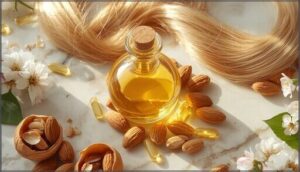
Sweet almond oil strikes a middle ground—light enough for low porosity hair yet rich in vitamin E. When coconut oil feels too heavy, this gentle alternative offers moisture without excessive buildup if you apply it sparingly.
| Feature | Sweet Almond Oil | Coconut Oil |
|---|---|---|
| Weight | Light to medium | Heavy |
| Absorption | Moderate | Low |
| Buildup risk | Low (small amounts) | High |
| Best use | Light sealing | Pre-poo only |
| Daily suitability | Yes, sparingly | No |
You’ll get softness without the greasy film.
Argan Oil

When coconut oil weighs down your low porosity hair, argan oil steps in with essential fatty acids and vitamin E that smooth the cuticle without dense occlusion.
Hair oils like this add shine and softness while offering antioxidant protection against heat styling and UV damage.
Apply a few drops to damp hair—lightweight properties mean you’ll skip the greasy buildup and keep your strands manageable.
Avocado Oil

Avocado oil delivers oleic acid for hair lubrication and fiber flexibility, yet formulation percentages matter when you’re choosing lightweight blends for low porosity hair.
Unlike coconut oil’s buildup risk, avocado oil conditions and adds slip without overwhelming your compact cuticles—as long as you use it sparingly.
Keep concentrations moderate in your hair oils routine to balance the benefits of hair porosity care with manageability.
Oils and Ingredients to Avoid

Not all oils play nicely with low porosity hair, and some can actually make your moisture struggles worse. Heavy oils and thick butters create a barrier on your tightly sealed cuticles, blocking hydration instead of delivering it.
Here are the main culprits you’ll want to skip or use sparingly.
Olive Oil
Olive oil’s density makes it a poor match for low porosity hair. Its dense monounsaturated structure sits on tightly closed cuticles rather than penetrating, leaving a heavy coating that weighs hair down.
You’ll notice absorption difficulties and slower drying times. Regular use increases the need for clarifying needed to remove surface residue.
Lighter alternatives like jojoba or argan oil offer better results without the greasy buildup.
Castor Oil
Castor oil’s thick, sticky viscosity creates a substantial challenge for low porosity hair. Nearly 90% ricinoleic acid content produces such heavy consistency that penetration through tightly packed cuticles becomes nearly impossible, leaving tacky buildup instead.
While castor oil benefits scalp health, daily application on hair lengths traps moisture at the surface rather than within strands. Dilution methods or occasional pre-shampoo use work better than neat applications.
Shea Butter
Shea butter’s solid-at-room-temperature structure creates thick layers on your hair shaft, blocking water-based products from reaching the cortex. Low porosity hair already resists moisture penetration—heavy butters like shea butter worsen this by forming rigid films that require strong clarifying shampoos for removal.
Shea butter application works better when whipped with lightweight oils, reducing buildup while preserving shea butter benefits like scalp nourishment without sacrificing hair moisture penetration.
Mineral Oil
Unlike coconut oil, mineral oil—a common petroleum derivative—doesn’t penetrate your hair shaft at all. It forms a strong occlusive barrier on the surface, blocking moisture from entering and accelerating dryness over time.
You’ll often find mineral oil used for product dilution in conditioners and stylers. Label checking becomes essential here: if you see “mineral oil” listed, skip it.
Low porosity hair already struggles with moisture prevention, and this ingredient makes absorption nearly impossible without clarifying shampoos.
Heavy Butters and Waxes
Shea butter and cocoa butter sound luxurious, but their high-density fats create thick layers that cling stubbornly to your hair shaft. These butters block water-based products from reaching the cortex, leaving you with persistent dryness despite your best efforts.
Key concerns with heavy butters and waxes:
- Buildup potential increases dramatically when solid-at-room-temperature fats coat tightly sealed cuticles
- Absorption difficulty worsens because melting points require strong surfactants for removal
- Residue concerns grow as layered products cause flaking, dullness, and extended drying times
Wax alternatives and lighter oils deliver butter benefits without the weight.
Proper Oil Application Methods

Choosing the right oil is only half the battle—how you apply it makes all the difference. Low porosity hair responds best when you work with its natural structure instead of against it.
Let’s look at three practical methods that help lightweight oils actually reach your hair shaft and deliver the moisture you need.
Pre-Poo With Lightweight Oils
Before shampooing, apply lightweight oils like jojoba or grapeseed to dry hair in sections. Their low molecular weight helps prevent buildup on low porosity hair, where coconut oil might feel heavy. Pair your pre-poo treatment with a warm towel for 20–30 minutes—heat application temporarily lifts cuticles. This routine protects strands and allows for pre-poo detangling, making these hair oil alternatives smarter choices than heavier options.
| Step | Why It Matters |
|---|---|
| Section dry hair | Ensures even coverage |
| Apply lightweight oil | Prevents heavy buildup |
| Add gentle heat | Opens tight cuticles |
| Wait 20–30 minutes | Maximizes protection |
LCO Method for Moisture Sealing
The LCO method—liquid, cream, oil—works well for low porosity hair because you seal moisture after your hair absorbs it.
Here’s how to apply it:
- Start with a water-based leave-in on damp hair for initial hair hydration.
- Layer a lightweight cream with humectants to boost moisture retention.
- Finish with a thin oil like jojoba to lock everything in without product buildup.
Repeat every few days, adjusting application frequency based on dryness.
Deep Conditioning With Heat
Deep conditioning with heat opens your cuticles just enough to let moisture reach the cortex—a real advantage for low porosity hair that normally resists hydration.
Apply a lightweight, water-based conditioner, then sit under a hooded dryer or use a thermal cap for 20–45 minutes on medium heat. This ideal timing boosts product absorption without causing buildup risks or damage, especially when you pair heat with non-greasy formulas instead of coconut oil.
Tips to Prevent Product Buildup

Product buildup is the silent saboteur of low porosity hair, quietly blocking moisture and weighing down your strands until nothing seems to work anymore.
The good news is that a few smart habits can keep your hair receptive to hydration without constantly fighting residue. Here’s how to stay ahead of buildup and keep your routine working for you.
Using Clarifying Shampoos
When heavy oils like coconut oil coat your low porosity hair, clarifying shampoos become essential allies in buildup removal. These formulas use stronger surfactants that lift product films and restore your hair’s responsiveness.
For low porosity hair, clarifying every two to four weeks prevents chronic accumulation without over-drying your strands.
If you live in a hard-water area, chelating shampoos work even better—they dissolve mineral deposits that trap oils and block moisture absorption.
Limiting Heavy Product Use
Beyond clarifying your low porosity hair, the smartest defense against buildup is simply using less product. Layering multiple creams, gels, and heavy oils like coconut oil creates moisture blockage and triggers the cycle you’re trying to escape.
To support scalp health and moisture absorption through lightweight routines and buildup prevention, limit your hair product buildup by:
- Applying one leave-in product per wash day
- Using dime-sized amounts of styling aids
- Skipping oils on wash-and-go days
- Choosing water-based formulas over butters
- Reducing product quantity during humid weather
Balancing Protein and Moisture
Your low porosity hair holds about 80–95% keratin protein by weight, so adding too much protein through treatments can leave strands stiff and brittle. Balance comes from listening to your hair: if it feels rigid, increase moisture with humectant-rich conditioners. If it’s limp, reintroduce a mild protein product.
| Sign | Action |
|---|---|
| Rigid, straw-like feel | Pause protein treatments; add moisture |
| Excessive softness, limp strands | Introduce gentle protein support |
| Normal bounce and flexibility | Maintain current routine |
| Persistent dryness after coconut oil | Switch to lightweight oils; clarify buildup |
Monitor hair elasticity and adjust your routine every 4–6 weeks to prevent protein overload while supporting your cuticle structure.
Signs Coconut Oil Isn’t Working for You
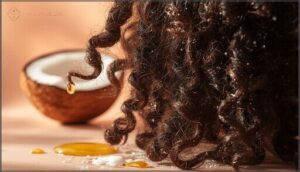
Coconut oil won’t work for everyone, and your hair will tell you when it’s not a good match. If you’re using it regularly and noticing things getting worse instead of better, that’s your cue to step back and reassess.
Here are the main warning signs that coconut oil isn’t doing your low porosity hair any favors.
Increased Dryness or Brittleness
When you notice your hair snapping more easily during detangling or feeling stiff despite regular conditioning, coconut oil may be causing protein overload and fiber fragility. The perceived dryness happens because your strands develop a waxy coating that blocks moisture from reaching the cortex, leading to increased hair breakage over time.
Key signs mitigating damage is needed include:
- Hair feels brittle and breaks mid-shaft during gentle combing
- Strands look shiny but snap instead of stretching when pulled
- Moisture blockage persists despite deep conditioning treatments
Persistent Greasy Film
If your strands still look slick hours after washing, coconut oil is likely forming a stubborn oily coating that refuses to budge. This greasy film on low porosity hair creates a visible residue thickness of 2–5 microns, raising surface tension by 25% and causing a 40% volume reduction. The persistent buildup increases styling difficulty by 60%, making your hair look limp and unwashed despite multiple clarifying sessions.
| Symptom | Measurement | Impact |
|---|---|---|
| Residue Thickness | 2–5 microns | Visible oily coating |
| Surface Tension Increase | 25% | Moisture blockage worsens |
| Volume Reduction | 40% | Hair looks flat, lifeless |
| Styling Difficulty | 60% increase | Unmanageable strands |
Poor Moisture Absorption
When moisture just sits on your hair instead of sinking in, you’ll know the cuticle layer resistance has become too severe. Coconut oil’s buildup creates a 30% drop in moisture absorption within two weeks, making strands repel water like a raincoat. Your low porosity hair already struggles with water repellency—adding coconut oil worsens moisture blockage despite regular conditioning.
Watch for these warning signs of poor oil penetration:
- Products pool on the surface without absorbing
- Hair feels dry even immediately after conditioning
- Water beads up and rolls off during washing
- Heat application fails to improve product uptake
- Strands remain stiff and resistant to styling
Top 8 Oils and Products for Low Porosity Hair
Now that you know what to avoid, let’s talk about what actually works. The right oil can make a real difference for low porosity hair—it just needs to be lightweight enough to penetrate those tightly sealed cuticles without sitting on top like a slick.
Here are eight oils and products that strike that balance, giving your hair the moisture it needs without the greasy buildup.
1. Organic Cold Pressed Moroccan Argan Oil
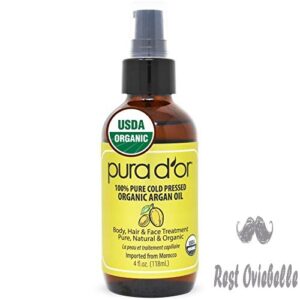
You’ll find organic cold-pressed Moroccan argan oil at the top of the list for low porosity hair care. Its lightweight molecular structure slips closer to your cuticle without the heavy buildup castor or mineral oils leave behind.
Rich in oleic and linoleic acids—about 80% unsaturated fats—argan oil adds shine and controls frizz while your tightly sealed cuticles stay protected. Just a few drops on damp ends work wonders, giving you that gloss and manageability without greasy residue or stiffness.
Best For: Anyone with low porosity hair looking for a lightweight oil that adds shine and fights frizz without weighing hair down or causing buildup.
- Fast-absorbing formula rich in vitamin E and fatty acids works on multiple areas—skin, hair, scalp, nails, and cuticles—so you get serious versatility for the price.
- Cold-pressed and unrefined process preserves the natural antioxidants and nutrients that help protect hair from damage while keeping it soft and manageable.
- Sustainably sourced through Moroccan women’s cooperatives and free from harsh chemicals, parabens, and sulfates, so you can feel good about what you’re putting on your body.
- Some users noticed quality differences between batches, with a few reporting an unexpected eucalyptus scent in newer bottles.
- The lightweight texture means you might need to reapply more often than with thicker oils if you have very dry or damaged hair.
- A few people found it left their hair feeling oily or sticky when they used too much, so you’ll need to figure out the right amount for your hair type.
2. Organic Sweet Almond Oil For Skin
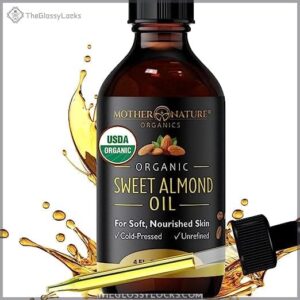
Sweet almond oil stands out for hair health too—its 62% oleic acid content makes it lighter than argan, so it won’t weigh down your strands. A few drops smooth through damp hair care routines seal hydration without the greasiness heavier oils bring.
With organic certification under USDA standards, you’re avoiding synthetic residues that can interfere with moisture absorption.
Cosmetic applications show it aids your skin barrier repair and adds vitamin E and linoleic acid for antioxidant protection. The safety profile is solid: patch tests up to 25% concentration found it non-irritating.
Best For: People with dry or sensitive skin looking for a lightweight, certified organic moisturizer that doubles as a hair treatment without feeling heavy.
- High in oleic and linoleic acids that strengthen your skin barrier and lock in hydration without clogging pores
- USDA Organic certification means no synthetic pesticides or chemical residues interfering with absorption
- Clinically tested safe up to 25% concentration with non-irritating results, plus vitamin E for antioxidant protection
- Reviews are split on the scent—some find it pleasant, others don’t care for the natural almond smell
- Glass dropper quality issues reported by some customers, with liquid not staying in the dropper properly
- People with tree nut allergies need to avoid it completely, as topical exposure can still trigger allergic reactions
3. Majestic Pure Sweet Almond Oil
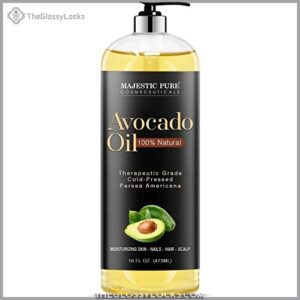
Majestic Pure Sweet Almond Oil delivers triple-A grade quality imported from Spain, with a peroxide value of just 0.2 mEq O₂/kg—proof it won’t oxidize quickly on your hair.
Unlike coconut oil, this lightweight blend absorbs fast into low porosity hair, thanks to its 62–86% oleic acid profile. You’ll get vitamin E and linoleic acid without the buildup.
The comedogenic rating sits at 2, so it won’t clog follicles. Market reception hovers around 4.6 stars, backing claims of non-greasy moisture that respects your cuticle structure.
Best For: Anyone with low porosity hair who wants lightweight moisture that actually sinks in without leaving a greasy film or clogging follicles.
- High oleic acid content (62–86%) means it absorbs quickly into resistant low porosity strands without sitting on top like heavier oils.
- Extremely low peroxide value (0.2 mEq O₂/kg) indicates fresh, stable oil that won’t go rancid or irritate your scalp.
- Packed with vitamin E and has a comedogenic rating of only 2, so it moisturizes without blocking pores or weighing hair down.
- Some customers report the scent is inconsistent or barely noticeable, which might disappoint if you’re expecting a strong almond aroma.
- The bottle packaging isn’t always secure—several users have dealt with leaks or breakage during shipping.
- Oil thickness can vary between batches, and some find it thicker than expected for a “lightweight” carrier oil.
4. Organic Japanese Camellia Seed Oil
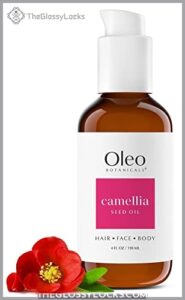
You’ll notice that camellia seed oil carries over 80% oleic acid—a fatty-acid profile that puts it in the lightweight league alongside argan and almond. Unlike coconut oil, which sits on low porosity hair, this cold-pressed Japanese staple absorbs into the hair shaft without the greasy residue.
Its comedogenic rating hits zero, so it won’t clog follicles along your hairline. Geisha relied on camellia benefits for centuries to smooth cuticles and boost shine, and modern testing confirms it stabilizes damaged hair structure while respecting skin compatibility.
Best For: People with low-porosity or fine hair who want a lightweight conditioning oil that won’t weigh down strands, plus anyone looking for a versatile face and body moisturizer that won’t clog pores.
- Cold-pressed formula keeps over 80% oleic acid intact, so it penetrates hair and skin easily without sitting on the surface like heavier oils.
- Zero comedogenic rating means you can use it along your hairline, face, and scalp margins without worrying about breakouts or blocked follicles.
- Works double-duty as both a hair conditioner and facial oil, which saves you from buying separate products for different routines.
- The bottle doesn’t include clear dosing instructions, so you’ll have to experiment to figure out how much to use and how often.
- Even though it’s labeled hypoallergenic, individual reactions can still happen—there’s no guarantee it’ll work perfectly for every skin or hair type.
- At 4 fluid ounces, the bottle is fairly small for the price point, especially if you’re using it daily on both hair and skin.
5. Japanese Camellia Tsubaki Hair and Skin Oil
A true staple in Japanese beauty secrets, Tsubaki hair and skin oil delivers camellia oil benefits with its lightweight, rapidly absorbing formula. If you’re searching for low porosity solutions, this oil stands out for its moisturizing properties and shine-enhancing effect—without leaving your hair greasy or weighed down.
Its similarity to natural sebum means it’s gentle on your scalp and strands. For anyone seeking hair oil alternatives, Tsubaki hair care offers a practical, non-greasy way to support healthy cuticles and vibrant, manageable hair.
Best For: Anyone with low porosity hair looking for a lightweight, fast-absorbing oil that adds shine and moisture without the greasy feel or heavy buildup.
- Absorbs quickly into hair and skin thanks to its high oleic acid content (around 82%), so it conditions from within instead of just sitting on the surface.
- Packed with antioxidants and vitamins A, B, D, and E that help protect against environmental damage while keeping your scalp and skin barrier healthy.
- Non-greasy and similar to natural sebum, making it versatile enough for hair, skin, nails, and scalp without clogging pores or weighing hair down.
- Can be pricey compared to other carrier oils, which might be a dealbreaker if you’re on a tight budget.
- The pump dispenser can be tricky—some users report it dispenses too much oil at once or has leaking issues.
- Not ideal if you have sensitive skin or nut allergies, as some people have reported reactions or irritation.
6. Organic Baobab Oil Skin and Hair
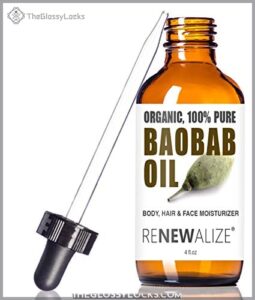
Derived from Africa’s iconic “tree of life,” organic baobab oil delivers hair nourishment and skin hydration without the heavy residue that plagues low porosity hair.
This lightweight oil absorption champion penetrates tightly bound cuticles thanks to its balanced omega fatty acids—approximately 33–37% linoleic and 25–35% oleic—making it a smart addition to your hair care routine for low porosity hair.
Clinical data shows a 51% reduction in water loss, proving baobab oil benefits extend beyond simple conditioning. Hair softening happens naturally, and you won’t sacrifice volume for moisture.
Best For: Anyone with low porosity hair who struggles with product buildup, plus people with mature or sensitive skin looking for a lightweight moisturizer that won’t clog pores.
- Absorbs quickly without leaving a greasy film, so it works well on hair that usually rejects heavier oils and on skin that needs hydration without shine
- Clinically proven to cut water loss by 51% and boost elasticity by 42%, which means real improvements in skin barrier function and firmness
- Packed with omega 3, 6, and 9 fatty acids plus vitamins A, D, E, and K, giving you multi-purpose benefits for hair softness, scalp health, and skin rejuvenation
- Can cause irritation or reactions in some people, especially if you have sensitivities to seeds or tree nuts
- Solidifies when it gets cold, so you’ll need to warm it up if you store it in the fridge or use it in winter
- Priced higher than many competing oils, which might be a dealbreaker if you’re on a tight budget
7. Organic Jojoba Oil for Skin and Hair
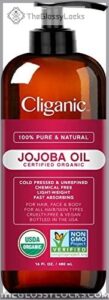
If you’ve been hunting for a natural moisturizer that won’t sit on your scalp like grease, jojoba oil deserves your attention. Its wax-ester structure mirrors human sebum, giving you skin hydration and hair nourishment without clogging pores—it rates just a 2 on the comedogenicity scale.
For your hair care routine for low porosity hair, this lightweight oil reduces water loss by about 30% within hours, making it one of the smartest organic products for sealing moisture while actually dissolving buildup instead of adding to it.
Best For: Anyone with low porosity or fine hair who wants a lightweight oil that mimics natural sebum to seal in moisture without buildup, plus people with sensitive or combination skin looking for non-greasy hydration.
- Structurally similar to human sebum so it absorbs quickly, boosts skin hydration by 30% within 30 minutes, and strengthens your moisture barrier without feeling heavy or clogging pores (rated only 2/5 for comedogenicity)
- Works across multiple uses—scalp massage to dissolve excess oil and residue, hair sealant for shine and manageability, face and body moisturizer, even as a massage oil base
- USDA organic certified, 100% pure single ingredient with no synthetic additives, vegan, cruelty-free, and oxidatively stable so it won’t go rancid quickly like other plant oils
- Some users report an odd or unpleasant natural scent, which can be off-putting if you prefer fragrant oils in your routine
- Pump packaging may dispense more than needed, and you’ll need to work it into skin or hair thoroughly to avoid a greasy appearance if you over-apply
- At $24.69 for 16oz it’s pricier than basic carrier oils, though the bulk size and stability offer better long-term value than smaller bottles
8. Aunt Jackie’s Argan Hair Oil
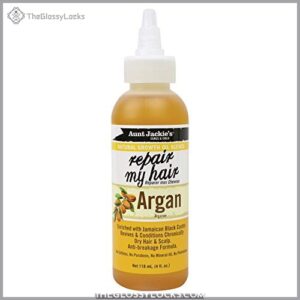
Aunt Jackie’s Repair My Hair Argan Oil blends argan, castor, and coconut oils into a 4 oz treatment that targets breakage and dryness. You’ll find tocopherols from the argan oil alongside ricinoleic acid from castor, but the formula also includes C12-15 alkyl benzoate to lighten the feel.
For low porosity hair, use it sparingly as a pre-shampoo treatment rather than a daily sealant—apply a quarter-sized amount, cover for 10 minutes, then rinse to gain argan oil benefits and natural hair growth support without heavy buildup.
Best For: People with textured, coily, or chronically dry hair who need a targeted treatment oil to tackle breakage and brittleness without committing to a heavy daily product.
- Combines argan, castor, and coconut oils with vitamin E to address protein loss and reduce breakage, especially on damaged or over-manipulated strands.
- Works as a flexible 10-minute rinse-out treatment or light leave-in, so you can adjust intensity based on your hair’s thickness and porosity.
- Affordable at around $8 for 4 oz and free from sulfates, parabens, and mineral oil, fitting cleanly into natural hair routines.
- The castor oil base feels thick and can leave a sticky film if you use too much or have fine, straight, or low-porosity hair that doesn’t absorb oils easily.
- Not ideal as a daily sealant for low porosity types—overuse leads to buildup quickly, so you’ll need to dose carefully and rinse often.
- Some users report needing multiple bottles per month for longer or denser hair, which drives up the cost despite the low per-unit price.
Frequently Asked Questions (FAQs)
Is coconut oil good for low porosity hair?
Coconut oil isn’t a slam dunk for low porosity hair care. Its heavy molecular structure often sits on tightly sealed cuticles rather than penetrating, causing buildup and blocking moisture—though occasional pre-shampoo use may protect protein.
Which oil is not good for low porosity hair?
Heavy oils like coconut oil, castor oil, olive oil, mineral oil, and shea butter aren’t good for low porosity hair. Their thick molecular structure causes product buildup and blocks moisture balance, leaving strands coated rather than hydrated.
Is coconut oil good for low porosity?
It’s a double-edged sword—coconut oil can strengthen your low porosity hair when used as a pre-poo treatment, yet daily application often leads to buildup that blocks moisture and leaves strands feeling stiff and coated.
What is low porosity hair?
Low porosity hair has a tightly packed cuticle layer that resists moisture absorption.
Water and products bead on the surface instead of penetrating the hair shaft, making hydration challenging despite protective benefits.
Does coconut oil make hair greasy?
Yes—coconut oil’s dense molecular structure often sits on your hair shaft like a raincoat on pavement, preventing absorption. This leads to greasy residue, especially on low porosity hair, where product buildup prevention matters most.
Is fractionated coconut oil good for hair?
Fractionated coconut oil offers lightweight moisturizers ideal for low porosity hair. Its smaller molecules penetrate more easily than virgin coconut oil, reducing buildup.
These hair oil benefits make fractionated coconut oil a smart coconut oil alternative in hair oil blends.
Can I mix coconut oil with other oils?
You can blend coconut oil with lightweight carrier oils like argan, jojoba, or grapeseed to reduce buildup on low porosity hair.
Keep coconut oil below 20% of your mixture for better absorption and less heaviness.
How often should I clarify low porosity hair?
If you thought clarifying shampoos were just for “dirty hair,” think again. For low porosity hair prone to product buildup, clarify every 2–4 weeks to restore moisture balance and prevent coating that blocks hydration.
Does water temperature affect oil absorption?
Water temperature directly impacts oil absorption. Warm water swells hair by 30%, lifting cuticles and improving penetration by 20-30% in low porosity hair.
Cold water keeps cuticles sealed, blocking moisture uptake completely.
Are silicones bad for low porosity hair?
Silicones can form a double-edged barrier: they smooth the cuticle and control frizz, but on low porosity hair, non–water-soluble types often trap product residue, blocking moisture and requiring clarifying shampoos to restore cuticle health.
Conclusion
Don’t let coconut oil slip through the cracks of your hair care routine if your strands aren’t responding. The answer to “is coconut oil bad for low porosity hair” depends on your individual experience, but most people with tightly sealed cuticles find lighter oils work better.
Test products carefully, watch for buildup signs, and remember that what works for someone else’s hair won’t necessarily work for yours. Your hair deserves ingredients that truly nourish it.
- https://onlinelibrary.wiley.com/doi/abs/10.1111/ics.12774
- https://pmc.ncbi.nlm.nih.gov/articles/PMC9447460/
- https://www.medicinenet.com/is_applying_coconut_oil_good_for_your_hair/article.htm
- https://library.scconline.org/v054n02/73
- https://yuaiahaircare.com/blogs/knowledge-base/is-coconut-oil-bad-for-low-porosity-hair