This site is supported by our readers. We may earn a commission, at no cost to you, if you purchase through links.
Every time you spray that cloud of hold onto your styled hair, you’re coating each strand with a cocktail of polymers, alcohols, and chemicals designed to lock everything in place. The question isn’t whether hairspray affects your hair—it absolutely does—but whether those effects cross the line from helpful styling tool to genuine damage.
Most people reach for the can daily without knowing that certain ingredients, like high-concentration alcohols and synthetic polymers, can strip moisture and create stubborn buildup that weakens hair over time.
The good news? Understanding what’s actually in your hairspray and how it interacts with your specific hair type gives you the control to style confidently without compromising hair health.
Table Of Contents
- Key Takeaways
- What is Hairspray and How Does It Work?
- Does Hairspray Damage Your Hair?
- How Hairspray Ingredients Affect Hair Health
- Common Side Effects of Hairspray Use
- Safe Hairspray Application Practices
- Are There Safer Alternatives to Hairspray?
- How to Repair and Prevent Hairspray Damage
- Frequently Asked Questions (FAQs)
- Does using hairspray every day damage your hair?
- Is it better to not use hairspray?
- What can I use to hold my hair instead of hairspray?
- Is it OK to use hairspray everyday?
- Is hairspray damaging to your hair?
- Does hairspray cause hair thinning?
- Is leaving hairspray in your hair bad?
- Can hairspray cause hair loss or thinning?
- Is it safe to use hairspray during pregnancy?
- How often should I wash out hairspray?
- Conclusion
Key Takeaways
- Hairspray damage depends on formula and frequency—alcohol-heavy products used daily strip moisture and create buildup that weakens strands, while occasional use with alcohol-free formulas rarely causes lasting harm.
- The polymer film that creates hold doesn’t penetrate your hair’s internal structure, but alcohol solvents do extract surface moisture, making proper removal through clarifying shampoos essential to prevent brittleness and breakage.
- Different hair types react differently to hairspray—fine hair shows buildup faster and loses elasticity quickly, while curly and coily textures experience extreme dryness due to higher porosity trapping residue.
- You can maintain both style and hair health by spraying from 20-30 centimeters away, alternating with styling creams or mousses, and washing thoroughly with clarifying products to remove film-forming polymers before they accumulate.
What is Hairspray and How Does It Work?
Hairspray has been a styling staple since the 1940s, but most people don’t know what’s actually in that aerosol cloud or how it works on their hair. Essentially, hairspray is a blend of polymers, solvents, and propellants designed to create a flexible film that holds your style in place.
While convenient for holding curls and volume, understanding how hairspray affects your hair’s health can help you choose formulas that protect rather than damage your strands.
To understand whether it’s safe for regular use, you need to know what goes into the formula, how those ingredients interact with your strands, and what makes different hairsprays work so differently.
If you’re looking for reliable options, check out these best products for long-lasting hold that combine effective formulas with hair-safe ingredients.
Common Ingredients in Hairspray
Most hairsprays contain three categories of cosmetic additives: film formers like PVP VA copolymer that create hold, solvents such as ethanol that help the product dry quickly, and spray propellants like butane that push the mist from the can.
Professional stylists often recommend choosing aerosol formulas with 55–80% VOC depending on whether you’re working with keratin-treated hair or creating high-hold styles for special events.
You’ll also find conditioning agents, plasticizers to keep the polymer flexible, and fragrances to mask the sharp alcohol smell. Fragrances are also among the most common allergens found in hair products, as highlighted in this hair product allergen overview.
Mechanism of Hair Hold
Once the alcohol evaporates from your hair, something interesting happens: those dissolved polymers solidify into an ultra-thin film that wraps each strand. This film formation creates tiny connection points where your hair fibers cross, and electrostatic forces help the coating cling to your hair’s naturally negative surface.
After the alcohol evaporates, hairspray polymers harden into an ultra-thin film that bonds hair strands together through electrostatic forces
The result? A three-dimensional network that locks your style in place through polymer bonding:
- Spray droplets coat each strand and dry within seconds
- Polymers harden into microfilms that link neighboring hairs
- Crossover points act like miniature joints resisting movement
- The density of these bonds determines your hold strength
For those seeking a softer, workable finish, consider the benefits of a weightless flexible hold formula.
Types of Hairsprays and Their Effects
Now that you understand the polymer bonding behind hold strength, you’ll want to choose the right formula for your needs. Hairspray usage and effects vary dramatically across categories, each engineered for specific styling goals while affecting hair health and damage differently.
| Type | Primary Function | Best For |
|---|---|---|
| Flexible Hold | Workable styling with movement | Daily wear, brushable curls |
| Strong Hold | Long-lasting lock for finished styles | Events, updos, sleek looks |
| Volumizing Sprays | Root lift and body | Fine or thin hair needing fullness |
| Shine Finishing | Gloss and light hold | Polished styles, flyaway control |
| Anti Humidity | Moisture barrier against frizz | Humid climates, summer weather |
Flexible hold formulas stay lightweight and can be layered during heat styling, making them ideal for hair care and maintenance routines. Strong hold types create rigid structures that resist wind and movement but require thorough shampooing to prevent buildup.
Volumizing sprays target roots to support lifted sections without the heaviness of gels. Meanwhile, shine finishing products use silicones to smooth surfaces and amplify color vibrancy.
Anti-humidity sprays seal your cuticle against moisture swelling, which is vital for cosmetic product safety in damp conditions—though alcohol-free versions reduce dryness risks while still delivering frizz control.
For comprehensive strategies on restoring hydration and vitality, explore these proven hair maintenance tips for dry hair.
Does Hairspray Damage Your Hair?
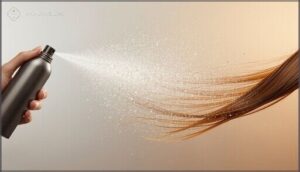
Hairspray won’t ruin your hair overnight, but the answer isn’t quite that simple. How much damage it causes depends on how often you use it, what type of hair you have, and what the research actually shows.
Let’s break down what happens when hairspray becomes part of your daily routine.
Impact of Daily and Occasional Use
Hairspray usage and effects depend heavily on frequency—your hair care and maintenance routine makes all the difference. Daily use can create noticeable buildup within a week, making strands stiffer and dulling your natural shine, while occasional use benefits include minimal residue and less dryness.
To minimize buildup, pair hairspray with a sulfate-free shampoo designed for Asian hair that gently cleanses without stripping natural oils.
- Daily use effects: Buildup accumulates faster, reducing elasticity in fine hair and increasing breakage risk
- Hair hold variance: Stronger formulas create longer-lasting films that require more aggressive cleansing
- Spray application tips: Hold the can 10-12 inches away and focus on mid-lengths to reduce scalp exposure
Hairspray buildup prevention starts with understanding that frequency directly impacts hair health—sparingly applied hairspray rarely causes hair damage, but daily spraying demands consistent clarifying to maintain healthy strands.
Differences Between Hair Types
Your hair texture plays a major role in how hairspray affects hair health. Straight, wavy, curly, and coily curl patterns each respond differently to polymer films—strand thickness and hair porosity determine how much product you need and how quickly hair damage appears.
| Hair Type | Hairspray Impact | Key Concern |
|---|---|---|
| Straight | Shows buildup faster, looks greasy | Oil travels easily down shaft |
| Wavy | Frizz increases in humidity | Uneven cuticle distribution |
| Curly | Loses moisture quickly | Higher porosity, reduced hair elasticity |
| Coily | Extreme dryness, breakage | Tight spirals trap residue |
Fine hair types accumulate stiffness rapidly, while thicker strands tolerate heavier formulas before showing visible harm.
Scientific Findings on Hair Damage
Research shows polymer buildup disrupts your cuticle layer and weakens keratin structure over time. Laboratory analysis reveals three primary mechanisms of hair follicle damage:
- Alcohol strips surface lipids, increasing oxidative stress and hair shaft breakage
- Polymer films reduce elasticity, making strands snap during brushing
- Repeated coating prevents moisture exchange, accelerating hair breakage
Proper hair care minimizes these risks while maintaining hair health.
How Hairspray Ingredients Affect Hair Health

Not all hairspray ingredients affect your hair the same way. Some work to hold your style in place without much drama, while others can quietly strip moisture or irritate your scalp over time.
Let’s break down the main players in your hairspray formula and what they’re actually doing to your strands.
Role of Alcohols and Solvents
Think of alcohols as the delivery vehicle in spray formulations—they dissolve polymers, then vanish into thin air. Ethanol and isopropanol are common solvent systems with high evaporation rates that leave styling film behind.
While they extract some hair moisture during this quick-dry process, occasional hairspray usage usually won’t cause lasting hair damage. The alcohol effects you feel are mostly surface-level dryness.
Polymers and Hair Structure
Styling polymers act like microscopic scaffolding on your hair fiber, forming a thin film across the cuticle layer. These large molecules don’t penetrate your molecular structure or disrupt keratin bonds—they simply coat the surface.
That’s why hairspray holds your style without altering hair’s internal architecture. The polymer interactions remain reversible, so proper cleansing removes them without causing permanent hair damage.
Fragrances and Potential Irritants
You might love the scent, but fragrance allergens in hairspray—limonene, linalool, and oakmoss derivatives—can trigger skin irritation, scalp redness, or respiratory effects in sensitive users. Cosmetic product safety regulations require disclosure of certain scented products ingredients, yet proprietary blends often hide specifics.
If you experience discomfort, fragrance-free hair care options offer effective hold without the allergenic risk, supporting both hair damage prevention and safer styling.
Common Side Effects of Hairspray Use
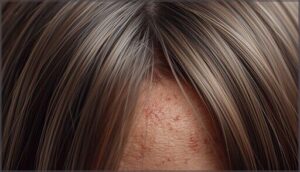
Even when you use hairspray correctly, your hair and scalp can still react to the ingredients in ways you mightn’t expect. The effects range from subtle texture changes to more noticeable discomfort, depending on how often you spray and what’s in your formula.
Here’s what usually happens when hairspray becomes part of your regular routine.
Dryness and Brittleness
Alcohol-based hairsprays strip water from your hair cuticle, leaving strands feeling rough and looking dull over time. When hair loses moisture, it becomes rigid and prone to snapping—especially during brushing or styling.
You’ll notice brittle ends, increased frizz, and that straw-like texture as the cortex dehydrates. Daily use accelerates hair breakage, turning soft hair into structurally weakened strands that resist moisture retention.
Scalp Irritation and Sensitivity
Beyond dryness, your scalp may react to fragrances, alcohols, and preservatives in hairspray with burning, itching, or redness—especially if you have sensitive scalps. Irritant reactions trigger discomfort around hair follicles, leaving your scalp tender and tight. Watch for these signs:
- Burning or stinging sensations after application
- Redness and warmth across treated areas
- Flaking or scaling when barrier function weakens
- Persistent itchiness requiring itch relief
- Tenderness to touch hours later
Scalp soothing routines help restore balance.
Product Build-up and Residue Issues
Repeated hairspray use creates a stubborn polymer film on your strands that regular shampoos struggle to lift—especially if you have porous hair that absorbs more product.
This buildup prevention challenge dulls shine, attracts dirt, and weighs down your style.
For effective residue removal and better scalp health, clarifying shampoos break through film formation without stripping natural oils when used weekly.
Safe Hairspray Application Practices
Using hairspray the right way can make all the difference between healthy styling and long-term damage. The good news is that you don’t need to avoid hairspray entirely—you just need to know how to apply it properly and when to give your hair a break.
Let’s walk through the key techniques that’ll help you get great hold without compromising your hair’s health.
Correct Spraying Distance and Technique

Getting the distance right makes all the difference in hairspray usage—hold the can 20 to 30 centimeters from your hair to create a light, even veil instead of a wet, stiff patch.
Master these application tips for better hair styling:
- Keep the can moving in steady passes to prevent heavy buildup
- Spray mid-lengths and ends first, finishing lightly at the crown
- Use short bursts rather than continuous streams for flexible hold
Different spray patterns suit different hair textures and styling techniques.
Frequency and Amount of Use

How often you use hairspray matters just as much as technique. Most people apply it one to three times per styling session—enough for hold duration without oversaturating strands.
Daily hairspray usage works fine if you’re washing regularly, but watch for buildup on fine hair. Thick or coarse textures handle frequent application better, though spacing out use prevents residue from dulling your hair’s natural movement and shine.
Proper Removal to Prevent Buildup
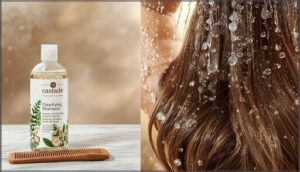
Washing your hair thoroughly breaks down film-forming polymers before they settle into stubborn buildup. Clarifying shampoos with higher surfactant concentration dissolve resinous hairspray residue more effectively than regular formulas, though you might need a second wash for stronger hold products.
For complete residue removal and buildup prevention:
- Massage your scalp gently during washing to dislodge trapped particles without irritating skin
- Rinse with warm water first to loosen film-forming agents, then finish with cool water to seal cuticles
- Use a wide-toothed comb on wet hair to lift loosened residue from your scalp
- Apply a lightweight conditioner after clarifying to restore moisture stripped during hair clarifying
- Alternate between regular and clarifying shampoos to prevent long-term accumulation
Thorough final rinsing ensures no hairspray film remains on your scalp or strands.
Are There Safer Alternatives to Hairspray?

If traditional hairspray is leaving your hair dry or damaged, you don’t have to give up on styling altogether. Several alternatives can hold your style in place without the harsh ingredients found in many conventional formulas.
Let’s look at a few options that can reduce your reliance on alcohol-heavy aerosols while still giving you the control you need.
Alcohol-Free and Natural Formulations
You don’t have to choose between hold and hair health—alcohol-free hairsprays with natural ingredients offer both. These gentle formulas replace drying ethanol with aloe vera, glycerin, or botanical extracts like chamomile, so your strands stay hydrated while polymers lock in your style.
Sulfate-free, eco-friendly hair products deliver the control you need without stripping moisture, making them smarter choices for long-term hair care.
Styling Creams, Gels, and Mousses
Creams, gels, and mousses give you serious hold techniques without hairspray’s drying alcohols. Styling creams lock in moisture and definition for textured hair, gels build medium to strong hold while reducing frizz, and mousses boost hair volume on fine strands.
Each hair product targets different styling tips—creams for softness, gels for shape, mousses for lift—so you can customize your hair care routine to match your hair texture perfectly.
DIY and Low-Residue Options
You can whip up homemade sprays with cornstarch, sugar water, or aloe for gentle hold without synthetic polymers. Natural formulas using glycerin or citric acid deliver low residue styling that won’t weigh down your strands.
These eco-friendly hair styling and products let you maintain hair health and damage prevention while ditching alcohol-based hairspray—just mix, mist, and style with confidence in your hair maintenance routine.
How to Repair and Prevent Hairspray Damage
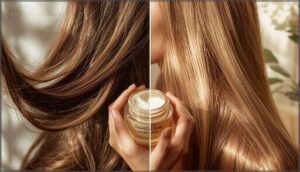
If hairspray has left your hair dry, brittle, or damaged, the good news is that you can restore its health with the right approach. Repairing existing damage requires targeted moisture treatments, while prevention focuses on smarter styling habits and reducing your reliance on spray products.
Here’s how to bring your hair back to life and keep it strong moving forward.
Deep Conditioning and Moisturizing
If your hair feels dry or brittle from hairspray, deep treatment sessions can rebuild what alcohol and polymers strip away.
Moisture masks rich in humectants like glycerin draw water into each strand, restoring hair hydration that solvents deplete.
Apply conditioner generously, leave it for twenty to thirty minutes under a warm towel, then rinse with cool water—these conditioning tips seal the cuticle and lock in hair repair for lasting hair health.
Protective Styling and Maintenance
Styles that tuck your ends away reduce hair breakage and limit daily manipulation that hairspray often tries to fix.
Keep your scalp health strong by accessing it for gentle detangling and cleansing every few weeks—moisture balance matters even under braids or twists.
Refresh styles every four to eight weeks to protect style longevity without sacrificing hair health, and always wrap hair nightly in satin to preserve both the look and underlying hair care and maintenance.
Reducing Dependence on Hairspray
Once protective styling habits are in place, you’ll find you don’t need to reach for the can every morning. Hairspray alternatives like light styling creams or mousse give you flexible hold without constant buildup. Rotate your styling product options throughout the week to minimize repetitive stress on your strands.
With smarter hair care routines, damage prevention becomes seamless—and your hair health improves naturally.
Frequently Asked Questions (FAQs)
Does using hairspray every day damage your hair?
Most styling routines lean on a quick spritz to lock everything in place. If you’re reaching for that can daily, you won’t necessarily wreck your hair—but daily hair risks do climb when alcohol-heavy formulas pull moisture out faster than your routine can replace it.
Is it better to not use hairspray?
You don’t need to abandon hairspray entirely—moderation is key.
Balance your use with nourishing treatments, explore hairspray alternatives like styling creams for natural hold, and prioritize damage prevention to maintain long-term hair health.
What can I use to hold my hair instead of hairspray?
You can switch to texturizing sprays, mousses, or styling creams for flexible hold without drying alcohols.
Sugar-based sprays, aloe gels, and flaxseed solutions offer natural hold methods that keep hair touchable while maintaining your style.
Is it OK to use hairspray everyday?
You can use hairspray every day if you choose the right formula and remove buildup regularly. Daily use works best with alcohol-free options and gentle washing to prevent dryness or dependency on heavy styling products.
Is hairspray damaging to your hair?
Like pouring water on parched soil, daily hairspray use can gradually dry out strands and trigger Hair Damage Risks—brittleness, breakage, and dullness—especially when alcohol-based formulas strip natural moisture without proper Hair Care Routines.
Does hairspray cause hair thinning?
Hairspray doesn’t directly cause hair loss or kill hair follicles, but heavy buildup can irritate your scalp and weaken strands.
Breakage from stiff, brittle hair creates the illusion of thinning over time.
Is leaving hairspray in your hair bad?
Yes, overnight use can lead to hairspray buildup, dryness, and brittleness over time. Washing it out before bed prevents long-term effects like weakened strands and scalp irritation, protecting your hair’s overall health.
Can hairspray cause hair loss or thinning?
True permanent hair loss from hairspray alone isn’t typical. Instead, you’ll see breakage from stiff strands snapping during brushing.
Product buildup can weigh hair down, making thinning more noticeable and affecting scalp health.
Is it safe to use hairspray during pregnancy?
When sprayed in well-ventilated spaces, hairspray poses minimal pregnancy risks to maternal health or fetal safety.
Choose phthalate-free cosmetic products and limit chemical exposure during hair styling to protect baby protection concerns.
How often should I wash out hairspray?
You’ll want to wash out hairspray every one to three days to prevent buildup and maintain scalp health.
Daily users should shampoo more often, while occasional sprayers can extend washout frequency without damaging hair renewal.
Conclusion
Think of hairspray like seasoning in cooking—the right amount enhances everything, but too much ruins the dish. Whether hairspray is bad for your hair depends entirely on what’s inside the bottle and how you use it.
Choose alcohol-free formulas when possible, spray from a safe distance, and always remove buildup with proper cleansing. Your hair doesn’t have to choose between great style and lasting health—you can absolutely have both with informed choices.
- https://kilgourmd.com/blogs/news/is-your-hairspray-damaging-your-hair-expert-insights
- https://www.sittingprettyhalohair.com/blogs/news/hairspray-is-killing-your-hair-growth-heres-how
- https://www.drziyayavuz.com/is-hairspray-bad-for-your-hair/
- https://thickleavein.com/blogs/digital-magazine-blog/does-hairspray-damage-hair
- https://www.getfue.com/blog/34-hairspray-hair-loss