This site is supported by our readers. We may earn a commission, at no cost to you, if you purchase through links.
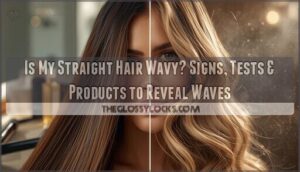
You’ve flat-ironed your hair for years, wrestled it into submission with round brushes, and accepted your stick-straight fate. But lately, you’ve noticed something odd—those stubborn sections that never quite lie flat, the way your ends flip out no matter how much you smooth them down, or how your hair looks three inches shorter by afternoon than it did fresh out of the shower.
Here’s the thing: what you’ve been calling “straight hair with attitude” might actually be wavy hair that’s been suppressed into submission. Your natural texture has been hiding under layers of heat styling, the wrong products, and techniques designed for truly straight strands.
The difference between genuinely straight hair and wavy hair that’s been trained to behave shows up in subtle tells—shrinkage, persistent frizz, those weird bends that appear from nowhere.
Table Of Contents
Key Takeaways
- Your “straight” hair might actually be wavy if it shrinks when dry, develops frizz easily, refuses to stay flat after heat styling, or reveals S-shaped bends when you let it air-dry naturally.
- The real test is simple: wash your hair, scrunch it while wet, blot gently with a microfiber towel, and let it air-dry without touching it—whatever texture shows up is what you’ve been suppressing all along.
- Wavy hair falls into three types (2A, 2B, 2C) ranging from subtle bends to loose spirals, each with different thickness and frizz levels that need specific products and techniques instead of generic straight-hair routines.
- Switching from heat tools to wave-friendly products like microfiber towels, curl-enhancing balms, and moisture-rich treatments lets your natural texture finally emerge without the damage or daily fight.
Signs Your Straight Hair May Be Wavy
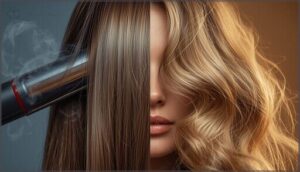
You might’ve spent years fighting your hair with flat irons and blow dryers, never realizing it was trying to tell you something. Straight hair doesn’t usually shrink, frizz up like it has a mind of its own, or refuse to stay sleek no matter what you do.
If you’re noticing significant shrinkage, that’s actually a telltale sign of natural curl or wave pattern—and understanding how much hair grows on average in one month can help you track your texture’s true behavior over time.
Here are the telltale signs that your “straight” hair is actually wavy and just waiting for you to let it be itself.
If you’re noticing bends or texture when your hair air-dries, you might actually have 1B hair, which sits right between straight and wavy.
Hair Shrinks in Length When Dry
Here’s a telltale sign: your hair looks longer when wet, then magically shortens as it dries. That’s dry shrinkage in action.
If you’re trimming at home, washing your beard before trimming helps you see its true length and avoid cutting off more than you planned.
As moisture evaporates, your hair geometry shifts—cuticle layers settle flat and hidden wave patterns emerge. This isn’t damage or actual length loss.
It’s your natural curl pattern revealing itself, a quiet rebellion against the “straight hair” label you’ve been wearing.
Your hair’s natural curl pattern is quietly rebelling against the straight-hair label you’ve worn for years
Ends Flick Out or Look Puffy
Another giveaway? Those puffy ends that flick out at odd angles, refusing to cooperate. This happens because your hair tapers at the tips, creating less friction and more airiness—especially when moisture messes with your cuticle lift.
It’s your hair texture fighting back, hinting at a natural curl pattern that heat styling has been flattening. Wavy hair craves moisture balance, not more straightening.
Once you understand which wavy hair type you have, you can finally give it the specific care it’s been asking for.
Sections Difficult to Fully Straighten
Ever notice certain sections refuse to stay straight, no matter how many times you run that flat iron through? Your crown or mid-lengths might spring back with stubborn bends—that’s wavy hair texture fighting your straightening tips.
Hair porosity plays a role too; uneven moisture absorption creates frizz and kinks that wave enhancement products could actually work with instead of against.
Natural Texture Appears After Air-Drying
The real reveal happens when you skip the blow dryer. Within 20 to 60 minutes of air-drying, your hair might surprise you with gentle bends or soft S-shapes that weren’t there when it was soaking wet. This wave formation shows your natural texture coming through as moisture redistributes along each strand—your hair porosity and texture enhancement potential on full display.
Air drying tips for uncovering hidden waves:
- Let your crown and mid-lengths dry naturally without touching
- Watch for texture changes as moisture balance shifts
- Notice how humidity brings out more definition in your wavy hair
Frizz and Tangles Are Frequent Issues
If frizz flares up the moment humidity hits, or your hair tangles within an hour of washing, you’re likely dealing with wavy hair.
Higher hair porosity lifts the cuticle, inviting frizz and knots that straight hair rarely battles. This signals your strands crave moisture balance and cuticle care—key pillars of frizz control and tangle prevention in proper wavy hair care routines.
Simple Steps to Identify Wavy Hair
If you’ve been wrestling with your hair’s identity, it’s time to put it to the test. The best way to find out if you’re secretly wavy is to step back and let your hair do its thing without all the usual heat and styling interference.
Before you start this experiment, make sure you’re already following solid hair breakage prevention methods so your natural texture can shine through without damage getting in the way.
Here’s a simple routine that’ll show you what’s really going on with your natural texture.
Shampoo and Condition Normally

You’d be surprised how much your wash routine affects texture. Start with your usual shampoo frequency and sulfate-free formula—nothing fancy, just gentle cleansing that respects your hair type. Focus conditioner tips on mid-lengths to ends, then rinse thoroughly.
This baseline keeps your hair care honest so wavy hair patterns can actually show up during air drying. Think of it as letting your hair texture analysis begin from neutral ground, not weighed down by product buildup or stripped by harsh detergents. Clean slate, real results.
Understanding your hair type classification is vital for effective hair care.
Scrunch Hair While Wet
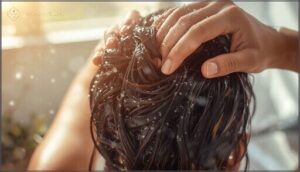
Right after conditioning, flip your head and cup handfuls of dripping hair toward your scalp. This wet hair scrunching technique breaks those temporary hydrogen bonds and kickstarts wave formation by compressing strands into S-shaped bends. Repeat the motion gently—upward, not downward—so you’re encouraging curl enhancement and frizz control instead of stretching out latent waves.
Your hair texture analysis starts here, while water still saturates every strand. To minimize frizz, understanding proper scrunching techniques is essential for achieving the best results.
Blot Excess Water With Microfiber Towel
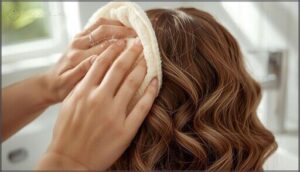
After scrunching, grab a microfiber towel and gently press it against sections of your hair—don’t rub. Microfiber benefits include water absorption that’s three times faster than cotton, plus frizz reduction because the smooth fibers won’t rough up your cuticle.
This gentle blotting preserves those fresh S-bends you just created, keeping your wavy hair texture identification accurate and your wave type visible.
Let Hair Air Dry Without Styling

Now comes the revealing part—step away and let your hair do its thing. Air dry benefits include wave enhancement without heat damage, which lets your natural texture emerge instead of being forced flat.
This patience-game gives you real intel on hair porosity and moisture management. Avoid touching or product-fiddling during this phase; it’s your golden ticket to accurate wavy hair identification and understanding your hair texture identification needs for future hair care routines.
Observe for S-Shaped Waves or Bends
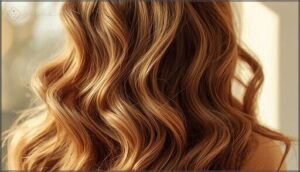
Once your hair is completely dry, it’s time for the big reveal. Look for those telltale S-shaped waves or bends running from roots to ends—that’s your wave pattern identification in action.
Check multiple sections under natural light; wavy hair characteristics include loose curves that create movement instead of hanging pin-straight. This simple hair texture observation tells you everything about your true wave type.
Wavy Hair Types and Key Characteristics
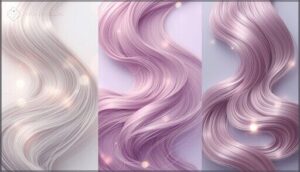
Not all waves are created equal. Wavy hair actually falls into three distinct categories, each with its own personality and quirks.
Let’s break down the differences so you can figure out exactly where your texture lands.
Type 2A: Fine, Subtle Waves
If you’ve got type 2A hair, you’re working with the loosest wave pattern in the hair typing system. Your fine strands form a barely-there S wave that starts mid-length and gets more relaxed toward the roots.
This wavy hair characteristic means your hair texture can look almost straight—especially when it’s shorter—but those subtle bends reveal themselves with gentle styling and the right wave type approach.
Type 2B: Defined S-Waves, Prone to Frizz
Step up to type 2B and you’ll notice those S-waves actually show up—starting closer to the roots with real definition. Your hair density sits at medium, and while that wave pattern gives you natural body and movement, here’s the catch: frizz loves this texture.
Humidity and dryness both mess with your moisture balance, so sulfate-free shampoos and lightweight hydration become your best friends for keeping those waves smooth without weighing them down.
Type 2C: Coarse, Loose Spirals
Now we’re at the boldest end of the wavy hair spectrum. Type 2C brings coarse texture with loose spirals that form wider, irregular patterns—think less tidy S-wave, more free-spirited spiral.
Your strands have serious presence and volume, which means frizz control methods matter, but the good news? Your curl pattern holds strong against humidity.
This texture thrives with rich moisture and curl enhancement techniques that respect its natural bulk.
How to Distinguish Wavy From Curly or Straight
Understanding where your texture falls on the spectrum clears up a lot of confusion. Here’s what separates wavy from its neighbors:
- Follicle shape: Round follicles produce straight hair, slightly oval ones create waves, and flattened follicles yield curls or coils
- Pattern: Straight hair lacks bends, wavy forms side-to-side S-shapes, curly creates spiral ringlets
- Spring factor: Wavy stretches and bounces back gently; curly hair contracts tightly when released
- Frizz response: Straight stays smooth in humidity, wavy puffs moderately, curly expands dramatically
- Typing systems: The Andre Walker method places wavy as Type 2 (2A–2C), curly as Type 3
Wave pattern identification gets easier once you know these markers—your hair morphology tells the real story.
Top 5 Products for Revealing Wavy Hair
The right products can be the difference between fighting your natural texture and finally setting it free. Think of them as tools to coax out those hidden waves without weighing your hair down or leaving it crunchy.
Here are five game-changers that work with your hair’s natural pattern, not against it.
1. Curly Girl Microfiber Hair Towel
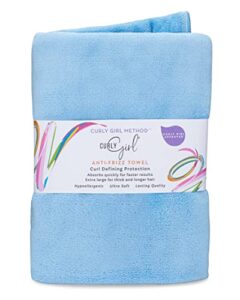
Your wavy hair care tips start with what you dry with—regular cotton towels rough up your cuticle and trigger frizz.
The Curly Girl microfiber towel flips that script. Its ultra-fine polyester fibers absorb up to seven times their weight in water, cutting drying time nearly in half while keeping your waves intact.
That flat, smooth weave glides over strands instead of snagging them, so you’ll see less breakage and way more definition. Blot gently instead of rubbing, and watch those S-shaped bends emerge without the halo of frizz.
| Best For | People with wavy or curly hair who want to cut down on frizz and drying time without roughing up their curl pattern. |
|---|---|
| Hair Type | Curly |
| Cruelty-Free | Not specified |
| Paraben-Free | Not specified |
| Primary Benefit | Frizz reduction |
| Form | Towel |
| Size | 7″L x 11″W |
| Additional Features |
|
- Absorbs water fast—up to seven times its weight—so you spend half the time waiting for your hair to dry and less time under a blow-dryer’s heat.
- The smooth microfiber weave doesn’t snag or lift your cuticle the way cotton does, which means fewer split ends and stronger strands over time.
- Keeps your waves and curls defined instead of fluffing them into a frizzy mess, especially if you blot instead of rub.
- The hanging loop can rip off after regular use, and the edges may start looking ratty after a few months.
- Some users with certain hair types found it heavy or said it actually made their frizz worse instead of better.
- You have to skip fabric softener and high heat in the wash to keep the fibers working right, which adds a small extra step to laundry day.
2. Curlsmith Soft Hold Styling Balm
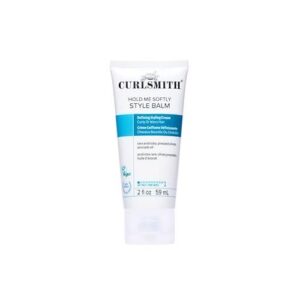
If you’re ready to lock in those loose bends without the crunch, Curlsmith Soft Hold Styling Balm delivers just enough grip to keep waves defined all day. This balm glides on damp hair and melts right in—no stiff helmet hair or greasy residue.
It’s packed with conditioning agents that smooth frizz and boost curl definition, especially on medium-porosity, type 2 waves.
Use a dime-sized amount, rake it through mid-lengths to ends, then scrunch. You’ll get soft, touchable texture that holds its shape through humidity.
| Best For | Anyone with wavy to curly hair who wants soft, flexible hold and frizz control without stiffness or crunch. |
|---|---|
| Hair Type | Wavy, Curly, Coily |
| Cruelty-Free | Yes |
| Paraben-Free | Yes |
| Primary Benefit | Curl definition |
| Form | Cream |
| Size | 2 fl oz |
| Additional Features |
|
- Melts into hair easily with no sticky residue or white flakes
- Enhances natural wave and curl definition while keeping hair soft and touchable
- Works across multiple hair types and pairs well with other styling products for layered hold
- Small 2-ounce size may not last long for frequent use or longer hair
- May not provide enough hold for those needing stronger all-day structure
- Scent preferences vary and might not appeal to everyone
3. Curlsmith Deep Quencher Moisturizer
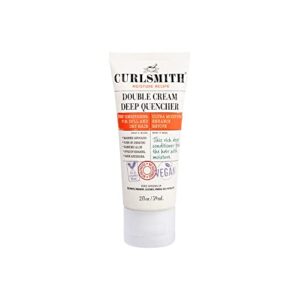
Dry, thirsty waves need deep hydration to bounce back, and Curlsmith Deep Quencher Moisturizer gets the job done. This thick, buttery lotion sinks into each strand to restore moisture balance without weighing down your hair texture.
It’s ideal for low-porosity waves that resist absorbing product—glycerin and lightweight oils seal in hydration while smoothing frizz and boosting curl definition.
Apply it mid-lengths to ends once a week, let it sit for ten minutes, then rinse. You’ll notice softer, shinier waves with better frizz control and definition.
| Best For | People with dry, low-porosity wavy hair who need intense moisture without heavy buildup or greasiness. |
|---|---|
| Hair Type | Wavy, Curly, Coily |
| Cruelty-Free | Yes |
| Paraben-Free | Not specified |
| Primary Benefit | Moisturizing |
| Form | Lotion |
| Size | 2 oz |
| Additional Features |
|
- Deeply hydrates and smooths frizz while enhancing wave definition and shine
- Vegan, cruelty-free formula with nourishing ingredients like Andiroba and Resurrection Flower
- Works well as a weekly treatment or hair mask for ultra-dry, damaged strands
- Small 2oz size for $12.50 may not last long with regular use
- Thick texture can weigh down fine or thin hair if you use too much
- Not ideal for oily scalps or very low-porosity hair without careful application
4. Not Your Mothers Sea Salt Spray
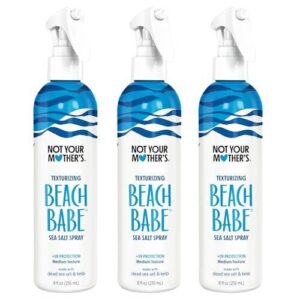
If you want beachy texture without any beach, Not Your Mother’s Sea Salt Spray delivers. The spray formulation uses dead sea salt and sea kelp to add grit and separation, making fine strands look fuller while coaxing out hidden bends.
Sea salt benefits include wave enhancement that mimics ocean air—you’ll see more defined S-shapes and volume.
Spritz it on damp hair, scrunch, and let air dry. It works on wet or dry wavy hair, though it can dry out your strands if overused, so pair it with conditioner.
| Best For | Anyone with fine or wavy hair who wants effortless beachy texture and volume without the ocean. |
|---|---|
| Hair Type | All |
| Cruelty-Free | Yes |
| Paraben-Free | Yes |
| Primary Benefit | Texturizing |
| Form | Spray |
| Size | 24 fl oz (3-pack) |
| Additional Features |
|
- Dead sea salt and sea kelp create natural-looking waves and separation that make hair look fuller
- Works on both wet and dry hair, so you can refresh second-day styles or build texture from scratch
- Sulfate-free, paraben-free, vegan formula with a tropical vanilla coconut scent
- Can dry out your hair if you use it too often, so you’ll need to keep up with conditioner
- May not work well on very straight hair without extra styling effort
- Some users have reported issues with packaging and shipping quality
5. Mielle Mongongo Heat Protectant Spray
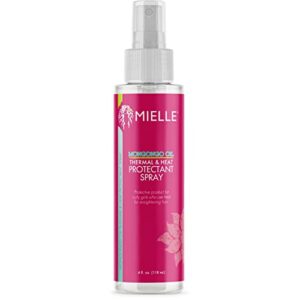
Heat styling can undo the waves you’re working to reveal, but Mielle Mongongo Heat Protectant Spray shields your strands before you reach for a diffuser or iron.
This lightweight hair serum uses Mongongo oil to lock in moisture and cut down on frizz control issues that plague wavy hair.
Spritz it on damp hair before blow-drying or flat ironing—it protects against heat damage while keeping your texture intact.
For those moving from straight hair styling techniques, this product review confirms it’s a solid pick that won’t weigh down emerging waves.
| Best For | Anyone with wavy, curly, or coily hair who uses heat tools regularly and wants to protect their texture without weighing it down. |
|---|---|
| Hair Type | All |
| Cruelty-Free | Not specified |
| Paraben-Free | Yes |
| Primary Benefit | Heat protection |
| Form | Spray |
| Size | 4 fl oz |
| Additional Features |
|
- Lightweight formula with Mongongo oil keeps waves moisturized and frizz-free without feeling heavy or greasy
- Works on damp or dry hair and doubles as a leave-in conditioner for added flexibility
- Affordable at $9.35 and paraben-free, making it a budget-friendly option for everyday heat styling
- Can leave hair feeling damp or wet after application, so you’ll need to wait a bit before styling
- Scent and texture aren’t universally loved—some users find it too flowery or not quite right for their preference
- Results vary depending on your hair type and porosity, so it might take some trial and error to see how well it works for you
Frequently Asked Questions (FAQs)
Can wavy hair become straight over time?
Your waves might loosen their grip as you age—hormones, heat styling, and even stress can coax wavy hair toward straighter territory, though genetics usually keep some texture hanging around.
Does cutting hair change its natural texture?
Trimming effects don’t alter hair fiber structure or follicle science—your natural texture stays the same. However, cutting techniques can reveal hidden waves by removing weight, making texture modification appear real when it’s just better definition.
Why is my hair wavy only underneath?
Your hair’s playing favorites—the underpart holds moisture differently thanks to hair porosity, while heat styling stretches the top layers.
Undercut layers and uneven moisture distribution create those sneaky wave patterns underneath.
How often should I deep condition wavy hair?
You’ll want to deep condition one to two times weekly for most wavy hair types.
If your waves feel dry or damaged, bump it up to twice a week until moisture balance and hair health improve.
Can hormones or diet affect wave patterns?
Your body’s internal shifts—puberty, pregnancy, even menopause—can subtly reshape hair texture.
Nutrient deficiency or omega-3-rich diets may influence wave definition, though genetic predisposition remains the strongest architect of your hair’s natural blueprint.
Conclusion
Your hair has been whispering its truth all along—you just needed to know how to listen. Those bends, that frizz, the way it shrinks when dry? All breadcrumbs leading you back to your natural texture.
Now that you know the answer to “is my straight hair wavy,” you can stop fighting what’s already there. Trade your flat iron for scrunching techniques, swap silicones for moisture, and let those waves finally breathe. Your real hair’s been waiting.
- https://elsevier.blog/sub-points-outlining-organization/
- https://github.com/vinhphunguyen/how-to-write-a-paper/blob/master/how-to-write-paper.out
- https://www.boucleme.us/blogs/news/curly-hair-types-how-do-i-work-out-my-curl-pattern
- https://www.belgraviacentre.com/blog/ghd-hair-straighteners-team-warns-of-heat-styling-hair-damage-risks
- https://www.vogue.co.uk/article/carrie-bradshaw-curls