This site is supported by our readers. We may earn a commission, at no cost to you, if you purchase through links.

Silk protein doesn’t just soften your skin—it engineers a biomechanical response that redefines how moisture interacts with your stratum corneum. When fibroin and sericin components deposit onto your skin’s surface, they construct a breathable film that reduces transepidermal water loss by up to 20%, a figure that places silk proteins among the most effective natural moisture-retention agents available.
This dual-action mechanism—film formation paired with hygroscopic moisture binding through hydrophilic amino acids—distinguishes silk protein from conventional emollients that rely solely on lipid replenishment or occlusive barriers.
Your skin doesn’t need another heavy cream that sits on the surface; it needs a functional ingredient that works with your natural barrier architecture to lock in hydration while maintaining breathability.
Table Of Contents
- Key Takeaways
- Is Silk Protein an Emollient?
- How Silk Protein Functions in Skincare
- Key Benefits of Silk Protein as an Emollient
- Silk Protein Vs. Other Emollient Ingredients
- Applications of Silk Protein in Skincare Products
- Frequently Asked Questions (FAQs)
- What is the difference between silk protein and other emollients?
- How does silk protein work to moisturize skin?
- Is silk protein safe for use on all skin types?
- Where can I find silk protein emollients?
- Can silk protein cause allergic reactions in users?
- How is silk protein extracted from silkworm cocoons?
- Is silk protein suitable for oily skin types?
- Does silk protein work well with acne treatments?
- What concentration of silk protein is most effective?
- Conclusion
Key Takeaways
- Silk protein functions as a dual-mechanism emollient that forms a breathable film on your skin while binding moisture through hydrophilic amino acids, reducing transepidermal water loss by up to 20% and increasing hydration measurements by 6–12% after four weeks of use.
- Unlike conventional plant oils that rely on lipid replenishment or synthetic emollients that create occlusive barriers, silk-derived proteins combine fibroin’s structural film formation with sericin’s hygroscopic moisture binding to strengthen your skin barrier without feeling heavy or greasy.
- Silk protein demonstrates exceptional biocompatibility with minimal irritation risk in patch testing, making it particularly suitable for sensitive, dry, or compromised skin when formulated at concentrations between 0.5% to 2% by weight in moisturizers, serums, and masks.
- The protein works by interacting with your skin’s natural ceramides and fatty acids to stabilize lipid organization, creating measurable improvements in softness, elasticity (5–12% increase after 8 weeks), and texture refinement (3–8% roughness reduction in 6 weeks) beyond surface-level moisturization.
Is Silk Protein an Emollient?
Silk protein operates as an emollient through a dual mechanism that combines film-forming characteristics with moisture-binding capacity, differentiating it from purely occlusive or humectant agents. When you apply silk-derived proteins to your skin, fibroin and sericin components create a thin, protective film on the stratum corneum surface that reduces transepidermal water loss—clinical studies document reductions of up to 20% in standard skin models.
Pairing silk protein with targeted peptide blends—like those in the best hair serums for coloured hair—can amplify both moisture retention and cuticle resilience for chemically treated strands.
This protein film doesn’t merely block water evaporation; it actively binds moisture within the outermost skin layers through hydrophilic amino acid side chains, particularly glycine, alanine, and serine. The result is improved skin hydration measured as a 6–12% increase in corneometry readings after four weeks, alongside enhanced softness and smoothness that users consistently report in dermatological assessments.
Understanding the language patterns can help researchers better analyze the complex interactions between skin proteins and moisturizing agents.
How Silk Protein Functions in Skincare
Understanding how silk protein works on your skin reveals why it’s become such a valued ingredient in modern formulations.
The protein operates through several distinct mechanisms that work together to improve skin health and appearance.
For daily care, choosing gentle cleansers designed for dry skin helps preserve these protective mechanisms while removing impurities.
Let’s examine the primary ways silk protein functions when you apply it topically.
Film-Forming and Moisture Retention
When you apply formulations containing silk proteins, you’ll notice something interesting happening on your skin’s surface. Film formation creates a thin, breathable layer that:
- Reduces transepidermal water loss by creating a semi-occlusive moisture barrier
- Traps a delicate water layer to support skin hydration
- Maintains emollient properties without feeling heavy or greasy
This film acts like a gentle shield, enhancing water retention while your skin breathes naturally.
Hydration and Barrier Protection
Beyond surface moisture, silk proteins work to fortify your skin barrier from within. They boost water retention dynamics by supporting lipid repair in the stratum corneum, helping restore moisture balance after irritation.
In models of mild skin stress, silk-protein moisturizers reduce water loss markedly—often within 24 hours—strengthening skin health and hydration without disrupting your skin’s natural renewal cycle.
These formulas work by locking in moisture and reinforcing your skin’s protective barrier, which helps prevent irritation and keeps your complexion balanced.
Interaction With Skin Lipids
What makes this retention so effective? Your skin lipids—ceramides and fatty acids—organize into protective layers, and silk peptides can interact with them to improve their alignment.
This protein-lipid partnership stabilizes the skin barrier, optimizes moisture retention, and enhances emollient effects in your moisturizer. You’ll see improved skin hydration as this interaction strengthens overall skin health through better lipid barrier function.
When choosing skin nourishing face creams, look for formulas that combine these protein-lipid complexes with ceramides for maximum barrier restoration.
Key Benefits of Silk Protein as an Emollient
When you apply silk protein to your skin, you’re not just adding moisture—you’re creating a protective environment that lets your skin function at its best. The benefits go beyond surface-level hydration, touching on everything from how your skin feels to how well it holds onto water throughout the day.
If you’re dealing with sensitivity, pairing silk protein with alcohol-free toners designed for delicate skin can amplify hydration while keeping irritation at bay.
Here’s what silk protein can do for you as an emollient ingredient.
Enhanced Skin Softness and Smoothness
When you run your fingers across your face, you’re feeling the results of your skincare’s texture work. Silk proteins deliver this smoothness enhancement by forming a delicate film that binds moisture to your skin’s surface, reducing roughness and improving how your moisturizer performs.
The texture improvement happens through several mechanisms:
- Film-forming properties even out minor surface irregularities
- Water-binding peptides support sustained skin hydration throughout the day
- Interaction with your moisture barrier reduces friction for silkier feel
- Regular use gradually refines skin softness beyond immediate moisturizing effects
Reduction of Water Loss
Your skin’s hydration hinges on its ability to hold water, and silk protein excels at evaporation control by forming a protective water barrier that lowers transepidermal water loss. This moisture retention effect stems from silk peptides binding water molecules and stabilizing lipid protection within your skin barrier.
Studies show that silk-based moisturizers can reduce transepidermal water loss by up to 20%, maintaining skin moisturization and improved skin hydration throughout the day. The effectiveness of silk protein as an emollient can be further verified through scientific study summaries that assess methodological rigor.
Improved Skin Texture and Elasticity
Smooth, supple skin depends on proteins like collagen and elastin working together to maintain structural integrity and moisture balance. Silk protein bolsters this foundation through multiple pathways:
- Collagen repair accelerates with silk fibroin, yielding a 5–12% elasticity boost after 8 weeks
- Skin firming improves as moisture balance stabilizes the skin barrier
- Anti aging benefits emerge from enhanced hydration retention (15–25% over 12 weeks)
- Skin texture refines with 3–8% roughness reduction in 6 weeks
- Elastin production correlates with measurably firmer feel after 10–12 weeks
Silk Protein Vs. Other Emollient Ingredients
When you’re choosing an emollient for your skincare routine, understanding how silk protein compares to conventional options helps you make informed decisions about what works best for your skin.
Unlike many plant oils or synthetic ingredients, silk-derived proteins offer a distinct combination of functional properties that set them apart in both performance and sensory characteristics.
The following comparisons highlight key differences in how silk protein functions relative to other emollient ingredients commonly found in cosmetic formulations.
Comparison With Plant Oils and Synthetics
When you’re weighing your moisturizer options, consider how silk proteins stack up against familiar alternatives. Plant oils replenish lipids and boost surface hydration by roughly 15% in the short term, while silk proteins offer film-forming benefits that reduce water loss by 10–30% over four weeks. Synthetic emollients provide durable slip through silicone derivatives, but silk proteins form biopolymer networks that offer occlusion without relying on mineral oil, enhancing the skin barrier and hydration with superior biocompatibility in skincare formulations.
| Feature | Silk Proteins | Plant Oils | Synthetic Emollients |
|---|---|---|---|
| Moisture Retention | 10–30% reduction in water loss (4 weeks) | ~15% hydration increase (short-term) | Durable film, variable occlusion |
| Mechanism | Biopolymer networks, film-forming | Lipid replenishment, triglycerides | Low-MW esters, silicone derivatives |
| Sensory Feel | Silky, non-greasy, lightweight | Varies—some heavier, may leave residue | High slip, tight film, sometimes synthetic feel |
| Biocompatibility | High, low irritation risk | Variable—nut/seed oils may sensitize | Stable but may carry additive risks |
| Formulation Stability | Compatible with aqueous phases, stable emulsions | Requires specific surfactants for stability | Precise texture control, compatibility varies |
Unique Properties of Silk-Derived Proteins

What sets silk proteins apart from other emollients is their dual-component architecture—fibroin and sericin work together to deliver both structural film formation and hygroscopic moisture binding. This biopolymer structure, rich in glycine, alanine, and serine, creates flexible, breathable films that retain hydration while supporting barrier function, a balance you won’t find in single-molecule synthetics or plant lipids.
Silk proteins uniquely combine fibroin’s structural film with sericin’s moisture binding to create breathable hydration that synthetics and plant oils cannot match
| Property | Silk Proteins | Conventional Emollients |
|---|---|---|
| Structure | Dual biopolymer (fibroin + sericin) | Single lipid or ester molecule |
| Amino Acid Composition | Glycine, alanine, serine-rich | N/A (non-protein based) |
| Film Formation | Flexible, breathable, semi-occlusive | Occlusive or non-film-forming |
| Moisture Binding | Hydrophilic side chains + hygroscopic properties | Variable lipid or humectant action |
Biocompatibility and Sensory Experience
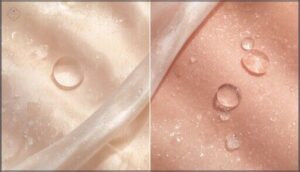
When you’re choosing an emollient, human tolerance matters just as much as performance. Silk proteins excel in biocompatibility tests, showing minimal skin irritation in patch studies and low inflammatory potential in keratinocyte models. This biopolymer creates a breathable skin barrier that reduces water loss without greasiness, delivering dermatological safety and sensory perception that feel genuinely comfortable—your skin moisturizing routine shouldn’t compromise on biocompatible materials.
| Attribute | Silk Proteins | Conventional Emollients |
|---|---|---|
| Patch Test Irritation | Minimal (high biocompatibility) | Variable (some cause sensitivity) |
| Skin Feel | Smooth, non-greasy, low tack | Often occlusive or heavy |
| Barrier Function | Breathable semi-occlusion | Full occlusion or none |
Applications of Silk Protein in Skincare Products
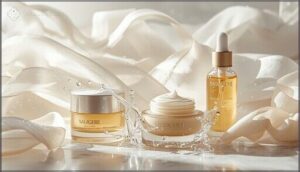
Silk protein’s emollient properties make it a flexible ingredient across multiple skincare formulations, where its film-forming and moisture-binding capabilities improve product performance.
You’ll find silk-derived proteins incorporated into products designed for hydration, barrier support, and sensory improvement, often appearing in formulations targeted toward compromised or sensitive skin.
The following sections examine specific product categories where silk protein functions as an effective emollient ingredient.
Moisturizers and Creams
Cream formulations rely on silk protein to boost moisturizer efficacy, creating a delicate film that reduces transepidermal water loss and reinforces moisture barriers without overwhelming your skin. You’ll notice that emollient properties from silk interact with your natural moisturizing factor, stabilizing the stratum corneum and promoting skin hydration in facial products.
- Enhanced softness: Moisturizing formulations with silk deliver a silky, non-greasy texture you’ll actually look forward to applying.
- Lasting hydration: Film-forming action locks moisture in, so your skin stays plump and comfortable longer.
- Visible refinement: Consistent use in moisturizer development minimizes roughness, revealing smoother, more resilient skin.
Serums and Masks
Serums leverage silk serum benefits by delivering lightweight hydration that absorbs quickly, while mask formulations create occlusive environments where sericin and fibroin boost skin hydration during wear.
You’ll appreciate how protein stability in these products bolsters skin barrier function without clogging pores, amplifying emollient effects through improved occlusivity.
Pairing silk proteins with humectants or ceramides in skincare optimizes moisturizer development, yielding measurable reductions in transepidermal water loss and sustained comfort.
Suitability for Sensitive and Dry Skin
If you’re dealing with sensitive or dry skin, silk protein’s gentle profile makes it a smart pick. Patch tests show virtually no irritation, and its breathable film cuts transepidermal water loss without clogging pores—key for maintaining your skin barrier and moisture levels.
Here’s why silk protein delivers hydration benefits for compromised skin health and wellness:
- Low allergenicity with minimal sensitization risk, even for atopic dermatitis-prone individuals
- Barrier support through improved lipid organization under dry conditions
- Measurable hydration with 6–12% corneometry increases after four weeks
- Reduced flaking and tightness reported consistently in dry skin cohorts
- Compatible formulation base for fragrance-free, hypoallergenic skincare
Introduce silk-containing products gradually to monitor your tolerance, prioritizing fragrance-free options that pair silk with humectants like glycerin for enhanced hydration without irritant exposure.
Frequently Asked Questions (FAQs)
What is the difference between silk protein and other emollients?
Silk protein forms a flexible, water-binding film that strengthens your skin barrier.
Plant oils rely on occlusion, and synthetic emollients may carry sensitivities—silk’s biocompatible structure offers smoothness with lower irritation risk.
How does silk protein work to moisturize skin?
Your complexion stays plump when silk proteins bind moisture through hygroscopic properties and form protective films that limit water evaporation.
This process enhances skin hydration while supporting barrier function with their unique protein structure and emollient properties.
Is silk protein safe for use on all skin types?
Generally, silk proteins demonstrate excellent tolerance across most skin types in dermatological testing, though individuals with protein allergies should exercise caution—patch testing helps prevent skin irritation and ensures your sensitive skin responds well to skincare formulations.
Where can I find silk protein emollients?
You can discover silk proteins in skincare at beauty counters, online retailers, and specialty stores.
Cosmetic databases help filter personal care products by ingredient, while manufacturer sites list formulations containing these cosmetic ingredients.
Can silk protein cause allergic reactions in users?
Though your vanity may scoff at the notion, silk proteins can trigger allergic reactions—commonly contact dermatitis—in sensitive individuals.
Making allergen testing advisable for those with protein hypersensitivity or dermatitis risk history before skincare use.
How is silk protein extracted from silkworm cocoons?
You’ll start with cocoon harvesting, then the degumming process removes sericin from silk fibroin using hot water or mild alkaline solutions, achieving 90–99% removal—after that, fibroin dissolves in concentrated lithium bromide for protein purification and extraction methods.
Is silk protein suitable for oily skin types?
Like a feather landing on water, silk protein glides onto oily skin without adding weight.
Its lightweight film regulates moisture and balances hydration, helping stabilize sebum production.
It delivers antiaging skincare benefits through efficient silk protein absorption and emollient efficacy.
Does silk protein work well with acne treatments?
You can safely layer silk proteins with most acne treatments—retinoids, benzoyl peroxide, salicylic acid—since formulation studies show strong ingredient interactions and skin compatibility.
Though monitoring for irritation during combination use remains wise skincare practice.
What concentration of silk protein is most effective?
Most effective silk protein concentration ranges from 5% to 2% by weight. Higher protein dosage enhances moisture retention and skin absorption, while concentrations beyond 2% can compromise texture without improving efficacy rates or skincare benefits.
Conclusion
When you cut through the marketing noise, the question “is silk protein an emollient” reveals a more intricate answer: it functions as a film-forming humectant with emollient properties, creating a moisture-retention system that adjusts to your skin’s unique needs.
This protein doesn’t compete with conventional emollients—it complements them by addressing hydration mechanics that oils and butters can’t touch. Your barrier gets structural support, not just surface coverage, making silk protein a strategic addition worth understanding beyond its luxury reputation.
- http://ovidsp.ovid.com/ovidweb.cgi?T=JS&PAGE=linkout&SEARCH=17168872.ui
- https://doi.org/10.1111/j.1473-2165.2005.00200.x
- https://www.lens.org/lens/search/patent/list?q=reference_cited.npl.ids.pmid:17168872
- https://www.sciencedirect.com/science/article/pii/S0749208123000268
- https://www.scribd.com/document/356795007/Research-Methods-Knowledge-Base