This site is supported by our readers. We may earn a commission, at no cost to you, if you purchase through links. This content is for general informational and educational purposes only and is not a substitute for professional medical, dermatological, or nutritional advice.
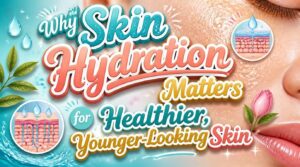
Most people reach for moisturizer when their skin feels tight or flaky—and stop thinking about it the moment that sensation disappears. But that tightness isn’t just discomfort. It’s your skin barrier signaling that something structural has broken down.
Your skin isn’t a passive wrapper. It’s a layered, active system built from lipid structures, protective proteins, and a carefully maintained pH environment that keeps moisture in and harmful microbes out. When hydration drops, that entire system starts to fail—quietly, and often before you notice anything visible.
Skin hydration affects everything from how your cells turn over to how deeply a wrinkle appears in certain lighting. Understanding what’s actually happening beneath the surface makes it far easier to protect it.
Table Of Contents
- Key Takeaways
- Why Skin Hydration Matters
- Signs Your Skin Needs Hydration
- How Hydration Supports Healthy Aging
- Best Ways to Hydrate Skin
- Lifestyle Habits for Hydrated Skin
- Frequently Asked Questions (FAQs)
- What happens if you don’t hydrate your skin?
- How do I tell if my skin needs hydration?
- Why is hydration important?
- Why is hydration important for skin health & appearance?
- What is skin hydration?
- How does hydration Improve Your complexion?
- How to keep your skin hydrated?
- Why is topical hydration important?
- Why is hydration so important for skin?
- What happens when you don’t hydrate your skin?
- Conclusion
Key Takeaways
- Your skin barrier is a structural system—when hydration drops, its lipid layers, pH balance, and antimicrobial defenses all break down, making you more vulnerable to irritants and infection.
- Dehydration doesn’t create new wrinkles, but it makes existing lines look deeper by causing cells to shrivel and scatter light unevenly rather than reflecting it smoothly.
- Topical products like ceramide creams and hyaluronic acid serums are essential because drinking water alone can’t adequately hydrate the stratum corneum or stop transepidermal water loss.
- Lifestyle habits—limiting hot showers, avoiding harsh cleansers, using a humidifier, and reducing alcohol and caffeine—have a direct, measurable impact on how well your skin retains moisture day to day.
Why Skin Hydration Matters
Your skin does a lot more work than most people realize — it’s your body’s first line of defense against everything the environment throws at it. Keeping it hydrated isn’t just about looking good; it’s about helping your skin actually function the way it’s meant to. Here’s why hydration is the foundation your skin can’t afford to skip.
From targeted serums to barrier-repair creams, effective skin hydration products can make a real difference in how well your skin holds up day to day.
Stronger Skin Barrier
Your skin barrier is the first line of defense between your body and everything the world throws at it — pollution, pathogens, irritants.
Three reasons a strong barrier matters:
- Ceramide lipid structures form intercellular mortar that seals skin cells together
- Acid mantle pH creates a surface environment that resists harmful microbes
- Antimicrobial peptide defense limits microbial growth when barrier integrity holds
When hydration drops, skin barrier repair becomes harder, and vulnerability increases fast. Maintaining the stratum corneum layer is essential for preventing internal water loss.
Reduced Water Loss
Even a strong barrier can’t hold its ground if water keeps slipping out. Transepidermal water loss is the silent process of moisture evaporating straight through your skin — no visible sweating involved.
| Hydration Factor | Effect on Skin Moisture |
|---|---|
| Dry or windy air | Speeds up evaporation rate |
| Occlusive creams | Slow water escape from surface |
| Humectants | Bind water inside the stratum corneum |
| Higher humidity | Reduces moisture loss naturally |
Occlusive barrier films — petrolatum, dimethicone — work like a lid, preserving your dermal moisture balance before it disappears.
Better Daily Protection
Hydrated skin isn’t just comfortable — it’s more resilient against daily stressors. A well-moisturized barrier holds up better against UV radiation, pollution, and even indoor window light.
Your daily protection plan:
- Apply broad-spectrum SPF 30+ every morning
- Reapply sunscreen every two hours outdoors
- Wear UV-blocking clothing and a wide-brim hat
- Seek shade between 10am and 4pm
- Protect eyes with UV-blocking sunglasses
Healthier Cell Function
Your skin cells aren’t just sitting there — they’re constantly working, repairing, and communicating. Aquaporin proteins move water across cell membranes, keeping that machinery running smoothly.
When hydration drops, enzyme activity slows, protein folding becomes less efficient, and cellular signaling pathways falter. Mitochondria generate less energy for repair. Think of dehydration as a power brownout — everything still runs, just poorly.
Dehydration is a cellular power brownout — everything still runs, just poorly
Softer Skin Texture
Touch your face right now — that smoothness (or lack of it) tells you a lot. Moisture balance directly affects how skin cells stack and shed.
Well-hydrated skin cells shed more evenly, which is why maintaining healthy skin moisture balance can transform both texture and glow over time.
When hydrated, dead cells release more evenly, smoothing skin flakes and reducing surface friction. Emollients fill the gaps between rough cells, softening keratin buildup and helping light reflect more uniformly off your skin’s surface.
Signs Your Skin Needs Hydration

Your skin is pretty good at sending signals when it’s running low on moisture — you just need to know what to look for. Some signs are obvious, while others are easy to mistake for something else entirely. Here are the most common indicators that your skin is telling you it needs more hydration.
Tight or Itchy Skin
That tight pull after a shower signals skin dehydration. When moisture balance drops, the weakened skin barrier lets nerves overreact — triggering the itch-scratch cycle that worsens damage and raises contact dermatitis risks.
Five signs to watch:
- Post-shower tightness
- Persistent itching without rash
- Sensitivity to mild products
- Unexplained redness
- Repeated urge to scratch
Restoring barrier lipids breaks the cycle.
Dull, Rough Texture
Run your fingers across dehydrated skin and you’ll notice it — that slightly grainy, uneven feel that no amount of foundation quite hides. When dead cells don’t shed evenly, keratin builds up and follicle openings become partially blocked, scattering light instead of reflecting it smoothly. The result: a matte, lackluster surface.
Consistent skin hydration and exfoliation restore that luminous complexion by supporting uniform cell turnover and barrier flexibility.
Fine Lines Look Deeper
Dehydrated skin doesn’t create new lines — it makes existing ones look more etched and defined. When water content drops, the surface compresses into tiny folds, and light scatters across micro-rough patches instead of gliding over them. That contrast sharpens shallow creases visually.
Skin moisture levels also affect rebound — dry skin recovers more slowly after facial movement, leaving expression lines looking deeper between moments.
Redness and Sensitivity
When your skin barrier is compromised, even mild triggers — wind, a new cleanser, temperature shifts — can spark inflammatory cytokine release, turning your cheeks warm and visibly flushed.
Barrier lipid deficiency lets irritants reach deeper layers, driving capillary vasodilation and that persistent redness. Burning or tingling sensations often follow. Restoring hydration rebuilds skin strength and calms this overreactive cycle at its source.
Oiliness With Dryness
Your skin can look shiny and feel parched at the same time — that’s not a contradiction, it’s a sebum versus water imbalance. Dehydration means low water, not low oil, so sebaceous glands keep producing surface shine while deeper layers stay moisture-starved.
Post-cleansing tightness despite visible oil is a classic barrier mismatch sign. Stripping products worsen it, triggering even more oil to compensate.
How Hydration Supports Healthy Aging

Hydration doesn’t just make your skin look better today — it actively works against the aging process over time. As your skin matures, keeping moisture levels steady becomes one of the most effective things you can do to maintain a youthful appearance. Here’s how proper hydration helps healthy aging from the inside out.
Plumper-Looking Skin
Water is your skin’s natural volumizer. Epidermal water retention keeps cells plump, creating that dewy surface luster many associate with youth.
- Hydration line filling softens shallow fine lines visibly
- Light reflective radiance evens your skin’s surface glow
- Voluminous skin profile reads as fuller and healthier
- Proper skin hydration reduces that flat, deflated look
When moisture drops, so does that bounce.
Improved Elasticity
Plumpness gets the attention, but elastic recoil efficiency is what keeps skin snapping back after every expression and movement. Elastin fibers allow skin to stretch and return — but they need a hydrated extracellular matrix to function well.
When moisture drops, that collagen-elastin balance shifts, tissues feel stiffer, and skin loses the bounce that makes it look genuinely youthful.
Smoother Cell Turnover
Beyond elasticity, hydration keeps cellular turnover on schedule. Skin renews every 28–40 days — but only when desquamation enzyme activity stays active and corneocyte flexibility is maintained.
Without enough moisture:
- Dead cells accumulate, creating rough texture
- Lipid granule function weakens the barrier
- Cell clumping causes uneven tone
- Epidermal differentiation slows renewal
Adequate hydration keeps shedding consistent and your surface genuinely refreshed.
Less Visible Wrinkles
Consistent cell turnover sets the stage, but hydration-induced plumpness is what actually softens how wrinkles read on the skin’s surface. When dehydration sets in, cells shrivel, deepening crease depth and increasing texture shadow reduction — those micro-shadows that make fine lines look sharper than they are.
Moisturizing agents like hyaluronic acid restore surface fullness, visually smoothing lines without altering skin anatomy. Hydrated skin simply reflects light better.
More Even Tone
Dry skin scatters light unevenly, making pigment patchiness and hyperpigmentation look worse than they actually are. When your skin is well-hydrated, it reflects light more consistently — and discoloration becomes far less noticeable.
Barrier lipids in moisturizers reduce irritation-driven redness that disrupts skin tone. That’s why pairing hydration with brightening ingredients creates real brightening results: a smoother, calmer surface where melanin distribution simply reads more uniform.
Best Ways to Hydrate Skin
Good news: keeping your skin hydrated doesn’t require a complicated routine or expensive treatments. A few consistent habits and the right products can make a noticeable difference in how your skin looks and feels. Here are the most effective ways to get started.
Apply Moisturizer Daily
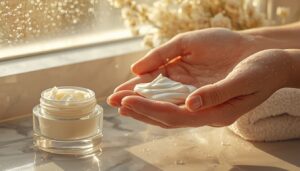
Your moisturizer is your skin’s daily armor. Applying it right after cleansing reduces transepidermal water loss and steadily repairs your dermal moisture barrier before damage accumulates.
For lasting results, focus on these three habits:
- Apply within 60 seconds of washing your face
- Use it morning and evening for long-term skin stability
- Choose hydrating skincare products with occlusives for all-day protection
Use Hyaluronic Acid
Think of hyaluronic acid as a sponge embedded in your skin — it draws moisture in and holds it there. Apply it to slightly damp skin right after cleansing, then seal it with your moisturizer to lock hydration in. Without that seal, it can backfire, pulling moisture out instead.
Products with multi-weight hyaluronic acid target both surface and deeper layers for better texture and bounce.
Choose Ceramide Creams
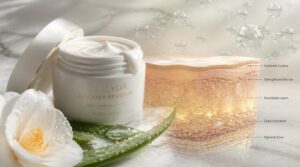
Your skin barrier is built from lipids — and ceramides are its foundation. When reading labels, look for:
- Multiple ceramide species (NP, EOP, AP)
- Pairing with cholesterol and fatty acids
- Supporting ingredients like niacinamide or panthenol
- A texture suited to your skin — gel-cream for oilier, rich balm for dry
That combination rebuilds what daily life quietly strips away.
Avoid Harsh Cleansers
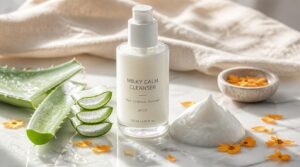
Your cleanser sets the tone for everything after. Sulfate-based surfactants strip natural oils, leaving your barrier exposed and reactive. Fragrance and alcohol accelerate moisture loss and irritation. pH disruption adds more stress. Choose a gentle, pH-balanced formula to protect skin strength and epidermal health.
| Ingredient | Risk |
|---|---|
| Sulfates | Strip oils |
| Fragrance | Irritates skin |
| Alcohol | Dries the barrier |
| High pH | Disrupts balance |
Limit Hot Showers

Hot water feels relaxing, but above 39°C, it rapidly strips the oils protecting your skin barrier.
- Keep showers to 5–10 minutes max
- Stay at or below 41°C (105°F)
- Moisturize your skin immediately after
- Avoid high heat with eczema or rosacea
- Lukewarm water preserves your protective oils
Heat dismantles your hydrolipidic film, triggering dryness, irritation, and inflammation your skin doesn’t need.
Lifestyle Habits for Hydrated Skin
Your skincare products can only do so much if your daily habits are working against them. The good news is that a few straightforward lifestyle changes can make a real difference in how well your skin holds onto moisture. Here are the habits worth building into your routine.
Drink Enough Water
Your skin is roughly 64% water, so what you drink shows up on your face. Aim for eight glasses daily to replenish what your body loses through sweat and normal function. If you’re active or it’s hot outside, increase that amount.
Coconut water offers electrolytes like potassium that support fluid balance — just avoid overdoing plain water rapidly, which risks hyponatremia.
Eat Healthy Fats
Water hydrates from the inside out, but healthy fats seal that moisture in. Omega-3 fatty acids — found in salmon, sardines, and walnuts — help maintain cell membrane integrity, so your skin cells hold water more effectively.
Swapping butter for olive oil promotes better cholesterol and skin health. Aim for 30g of unsalted nuts daily and seafood two to three times weekly.
Use a Humidifier
Dry indoor air pulls moisture right out of your skin, undoing much of what healthy fats work to preserve.
A humidifier kept between 30–50% humidity gives your skin barrier a fighting chance — use a hygrometer to stay precise rather than guessing. Clean the tank regularly, use distilled water to prevent mineral buildup, and place it where air circulates freely.
Wear Daily Sunscreen
Protecting your skin from UV damage is just as important as keeping it hydrated — sun exposure breaks down the barrier you’re working hard to maintain.
Use a broad-spectrum SPF 30 or higher every morning, even on cloudy days, since UV rays penetrate cloud cover easily. Reapply every two hours outdoors, and choose water-resistant formulas for active days.
Limit Alcohol and Caffeine
Both alcohol and caffeine quietly drain your skin’s moisture. Each pulls water from tissues, leaving skin dull and tight.
Limit them with these habits:
- Alternate alcoholic drinks with water
- Choose herbal tea over coffee
- Cap caffeine at one daily cup
- Replenish with coconut water
Skin health depends on what goes in — not just what goes on.
Frequently Asked Questions (FAQs)
What happens if you don’t hydrate your skin?
Think of your skin as a brick wall — skip hydration, and the mortar crumbles. Barrier vulnerability sets in, transepidermal water loss accelerates, and skin turns tight, dull, and reactive, aging faster than it should.
How do I tell if my skin needs hydration?
Your skin sends clear signals when it’s thirsty. Watch for tightness after cleansing, itchiness, dull or rough texture, deeper-looking fine lines, and patches of redness — these are your skin’s way of asking for more moisture.
Why is hydration important?
Your skin is working hard every hour of every day — defending, renewing, and holding moisture in. Hydration keeps that system running, supporting immune defense, collagen production, and your skin’s ability to bounce back against environmental aggressors.
Why is hydration important for skin health & appearance?
Your skin works as a living shield — and hydration is what keeps it functioning. Without adequate moisture, barrier integrity breaks down, leaving you vulnerable to pathogens, irritants, and environmental damage every single day.
What is skin hydration?
Ironically, your skin holds water yet constantly loses it. Skin hydration refers to the water levels within your epidermis and dermis — especially the stratum corneum, the outermost layer governing how much moisture your skin retains.
How does hydration Improve Your complexion?
Hydrated skin reflects light more evenly, giving your complexion a luminous skin glow. It softens rough texture, evens tone, and refines pore appearance — leaving your face looking supple, smooth, and visibly refreshed.
How to keep your skin hydrated?
Keeping your skin hydrated is like giving it a daily drink. Layer a humectant serum first, seal with a ceramide or occlusive cream, use gentle cleansers, and support internal hydration with water and electrolyte-rich foods.
Why is topical hydration important?
Drinking water alone won’t fully hydrate your skin. Topical products work directly on the stratum corneum, reducing transepidermal water loss and restoring the barrier where it matters most — at the surface.
Why is hydration so important for skin?
Your skin is basically your body’s security system. Barrier integrity and water retention keep pathogens out, support cellular repair, and maintain the strength against the elements your skin needs to stay healthy and radiant every day.
What happens when you don’t hydrate your skin?
Skipping hydration doesn’t just leave skin thirsty — it breaks down your barrier, letting irritants in and moisture out. Texture turns rough, lines look deeper, and sensitivity spikes fast.
Conclusion
Your grandmother didn’t have a twelve-step routine — yet she knew never to leave the house without cold cream. That old-fashioned instinct was tracking something real.
Skin hydration isn’t vanity; it’s maintenance for a system that protects you every single day. A compromised barrier ages you faster, reacts more, and recovers slower.
The steps aren’t complicated. Cleanse gently, moisturize consistently, and protect what you’ve built. Your skin remembers everything you give it.