This site is supported by our readers. We may earn a commission, at no cost to you, if you purchase through links. This content is for general informational and educational purposes only and is not a substitute for professional medical, dermatological, or nutritional advice.

Your hairline doesn’t care about your feelings, but modern medicine does. Over 80 million Americans experience hair loss, and the pharmaceutical industry has responded with FDA-approved treatments that actually change follicle biology.
Minoxidil widens blood vessels around your scalp, finasteride blocks the hormone that shrinks follicles, and newer medications target immune pathways that attack hair growth. The catch? These medicines require daily commitment, and results won’t show up for months.
Beyond prescriptions, you’ll find supplements claiming to restore thickness, laser devices promising follicle stimulation, and procedures that relocate hair from donor areas. Knowing which treatments have clinical backing versus marketing hype determines whether you’ll spend money wisely or waste it chasing empty promises.
Table Of Contents
- Key Takeaways
- FDA-Approved Medicines for Hair Growth
- Over-the-Counter and Prescription Alternatives
- Top 7 Hair Growth Products Reviewed
- Supplements and Nutrients for Hair Regrowth
- Choosing The Right Hair Growth Medicine
- Frequently Asked Questions (FAQs)
- Which remedy is best for hair growth?
- Do hair growth pills work?
- Is there a drug to regrow hair?
- What supplements are good for hair growth?
- What works best for hair growth quickly?
- Should you take hair growth supplements?
- What is a hair growth product?
- What are the best hair growth products?
- Can hair growth supplements help thinning hair?
- Do hair growth products work?
- Conclusion
Key Takeaways
- FDA-approved minoxidil and finasteride deliver measurable hair regrowth in clinical trials, but both require daily use for 3–6 months before results appear and continuous treatment to maintain gains.
- Supplements like biotin, iron, and zinc only work if you have a documented nutrient deficiency—most people don’t need them, and high doses of biotin can interfere with medical lab tests.
- Hair transplantation and platelet-rich plasma (PRP) therapy offer alternatives when topical treatments fail, though transplants permanently relocate follicles while PRP requires multiple sessions with variable outcomes.
- A dermatologist consultation is essential to identify the specific cause of your hair loss—whether genetic, hormonal, or nutritional—so you can match the right treatment to your biology instead of wasting money on products that won’t address your root issue.
FDA-Approved Medicines for Hair Growth
The FDA has approved several medications proven to slow hair loss and stimulate regrowth in clinical trials.
For those noticing early signs like a receding hairline, starting treatment quickly often yields the best results.
These treatments work through different mechanisms—some you apply directly to your scalp, others you take as a pill. Understanding how each medication functions will help you make an informed choice about what’s right for your hair loss pattern.
Minoxidil: How It Works and Effectiveness

Minoxidil works by widening blood vessels around your follicles and pushing hair from resting into active growth phases. You’ll apply the foam or liquid once or twice daily to affected areas.
About half of users see thicker hair within 4 to 12 months, though results vary. For more details on hair restoration medications a summary at a glance, see the latest official guidance.
Key points:
- Available in 2% and 5% strengths
- Requires consistent daily application
- Improvements plateau after one year
- Must continue use to maintain gains
- Women respond similarly to men
Finasteride: Mechanism and Results

Propecia blocks dihydrotestosterone (DHT), the hormone that shrinks your follicles. By inhibiting the 5-alpha reductase enzyme, finasteride achieves these effects through its well-studied mechanism of DHT reduction.
Finasteride stops about 70% of scalp DHT production, letting follicles recover and thicken over three to six months. Nearly 90% of men see slower hair loss, and roughly two-thirds regrow visible hair with daily 1 mg tablets.
Finasteride blocks 70% of scalp DHT, helping nearly 90% of men slow hair loss and two-thirds regrow visible hair within months
| Aspect | Details |
|---|---|
| Mechanism | Blocks DHT hormone production by 60–70% |
| Efficacy | 85% experience regrowth or reduced shedding |
| Timeline | Results emerge within 3–6 months |
| Dosage | 1 mg daily (Propecia standard dose) |
| Maintenance | Continuous use required; gains reverse within 12 months if stopped |
Spironolactone: Use in Hair Loss Treatment

Women battling female pattern hair loss often turn to spironolactone, an androgen blocker that addresses hormone-driven shedding at the source. This off-label hair loss treatment reduces androgens that attack your follicles, stabilizing hair regrowth over several months.
The treatment works by:
- Blocks androgen receptors on scalp follicles
- Lowers testosterone effects driving baldness prevention
- Typical doses range 25–100 mg daily
- Enhances scalp health when paired with minoxidil
- Requires monitoring for potassium and blood pressure
Side Effects and Safety Considerations

Before starting any pharmaceutical interventions, you need to know what side effects might appear. Minoxidil can trigger scalp irritation in up to 5 percent of users, while finasteride may cause decreased libido in some men.
Hormonal changes from medications like spironolactone require treatment monitoring for potassium levels and blood pressure. Always discuss medication interactions with your doctor to guarantee patient safety.
Over-the-Counter and Prescription Alternatives

Beyond the standard FDA-approved medications, you have access to several treatment alternatives that range from non-invasive devices to sophisticated medical procedures.
These options work through different mechanisms—some stimulate follicles with light energy, while others use your body’s own healing factors or surgical techniques. Here’s what you need to know about each approach and whether it might work for your specific type of hair loss.
Low-Level Laser Therapy (LLLT) Devices
Laser therapy devices send specific wavelengths—usually 630 to 655 nanometers—directly to your scalp to trigger hair regrowth at the follicle level. While device safety is strong with FDA-cleared options, treatment outcomes from scalp stimulation remain inconsistent.
Most FDA-cleared devices follow protocols similar to strategies that support healthier hair growth, combining consistent light exposure with proper scalp care routines.
Common formats include:
- Handheld combs for targeted hair restoration
- Cap-style helmets covering larger areas
- Portable USB units for home use
- Clinician-grade arrays delivering higher power
- Built-in safety sensors preventing misuse
Expect 16 to 24 weeks before seeing hair growth changes.
Platelet-Rich Plasma (PRP) Therapy
Your dermatologist draws your blood, spins it to concentrate platelets 5 to 10 times normal levels, then delivers those growth factors—PDGF, VEGF, and EGF—via scalp injections to wake up sleeping hair follicles. PRP effectiveness varies widely; you might see hair regrowth after several months and multiple sessions, though treatment outcomes depend on your age, genetics, and the specific platelet-rich plasma protocol your clinic uses.
| PRP Therapy Aspect | What Happens | Timeline & Notes |
|---|---|---|
| Blood draw & preparation | Centrifuge concentrates platelets | 60–90 minutes per session |
| Scalp injections | Growth factors stimulate hair follicle cells | Mild soreness, redness common |
| Hair growth phase | Anagen cycle extends, density may increase | Noticeable changes: 3–6 months |
| Repeat sessions | Multiple treatments sustain improvements | Every 4–6 weeks initially |
| Hair loss candidacy | Best for early thinning, not severe balding | Consult dermatologist for suitability |
Emerging Prescription Treatments (e.g., Dupilumab)
Biologic targets now offer hope beyond minoxidil and finasteride for immune system disorders like alopecia areata. Dupilumab therapy, approved for eczema, blocks inflammation reduction pathways—IL-4 and IL-13—and early research suggests it may promote hair regrowth in select patients.
Stem cell treatments and other pharmaceutical therapy options targeting inflammation show promise, though you’ll need your dermatologist to assess candidacy and monitor safety during these medications for hair loss.
Hair Transplantation Procedures
When topical solutions and pills don’t cut it, hair regrowth through follicular extraction or transplant surgery offers a permanent fix. Your dermatologist harvests grafts from dense donor areas—usually the back of your scalp—and moves them to thinning zones.
Donor management matters: overharvesting weakens future options. Scalp restoration with hair grafting delivers natural results in 9 to 12 months.
Top 7 Hair Growth Products Reviewed
You’ve got options in the area of products that actually work for hair growth. Some are backed by decades of clinical evidence, while others combine nutrients and herbal extracts shown to support healthier hair.
Here are seven products worth considering, based on their ingredients, research, and real-world results.
1. Maryruth Liquid Multivitamin Hair Growth Supplement
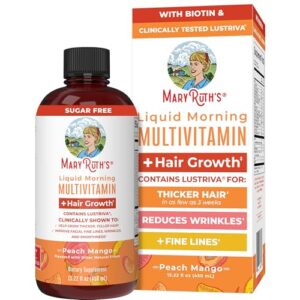
You’re probably scrolling past a dozen supplements that promise lush locks, but MaryRuth’s Liquid Morning Multivitamin brings something different to the table. It contains Lustriva, an inositol-stabilized arginine silicate that clinical studies credit with increasing hair thickness in women within weeks.
Each two-tablespoon serving delivers 10,000 mcg of biotin as magnesium biotinate for better absorption, plus B vitamins and vitamin D3 to support follicle health. The peach mango or dragon fruit melon flavors make daily dosing easier than swallowing pills.
| Best For | Women looking for a multivitamin that supports hair growth and thickness while also providing essential nutrients for skin, nails, and overall wellness in an easy-to-take liquid form. |
|---|---|
| Form | Liquid |
| Primary Ingredient | Biotin 10,000mcg |
| Target Users | Women |
| Results Timeline | Several months |
| Daily Use | Yes |
| Clinical Testing | Yes |
| Additional Features |
|
- Contains clinically tested Lustriva formula that studies show increases hair thickness in women within weeks
- High-dose biotin (10,000 mcg) in a more absorbable form, plus comprehensive vitamins for hair, skin, and metabolic health
- Vegan, allergen-free (dairy, gluten, nut, sugar), and comes in pleasant fruit flavors that skip the pill-swallowing hassle
- More expensive than standard multivitamins, which adds up over time
- Takes several months of consistent use to see noticeable results, and effectiveness varies by person
- Some users find the taste unappealing, and certain flavors or sizes may be hard to find
2. Minoxidil Hair Growth Serum
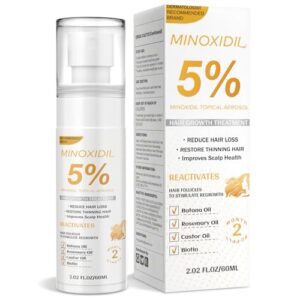
You might already know minoxidil from drugstore shelves, but the ZYXN 5% serum bundles it with biotin, batana, and rosemary for extra nourishment. This lightweight spray opens potassium channels in your scalp, boosting blood flow to follicles so they thicken and stay in the growth phase longer.
Apply it twice daily to thinning spots, let it dry completely, then wash your hands. Around 40 to 60 percent of users see denser hair after consistent use for six months, especially on the crown.
| Best For | Anyone dealing with thinning hair or a receding hairline who’s willing to commit to twice-daily applications for several months to see results. |
|---|---|
| Form | Spray |
| Primary Ingredient | Minoxidil 5% |
| Target Users | Men & Women |
| Results Timeline | 8 weeks |
| Daily Use | Yes |
| Clinical Testing | Yes |
| Additional Features |
|
- Clinically proven 5% minoxidil formula backed by decades of research, plus bonus ingredients like biotin and rosemary for scalp health
- Lightweight spray format makes it easy to target specific areas without greasy residue or mess
- Works for men and women on all hair types, and can even be used to fill in patchy beards
- Patience required—you won’t see visible changes until around 8 weeks, and best results take up to 6 months of consistent use
- Results vary widely from person to person, with only 40-60% of users experiencing significant regrowth
- May cause irritation on sensitive skin despite being dermatologist-tested, so a patch test is smart before going all-in
3. Nature’s Bounty Biotin Vitamins
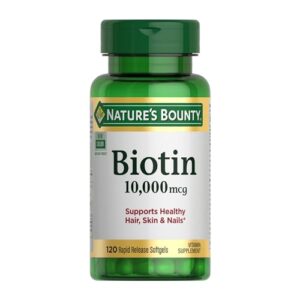
Topical treatments won’t cut it if your hair thinning stems from nutrient gaps. Nature’s Bounty Biotin delivers 10,000 mcg per rapid-release softgel—double the dose of many competitors—to support keratin production in your follicles, skin, and nails.
You’ll take one daily with a meal, and because biotin is water-soluble, your body flushes out excess without building up toxicity. Results usually appear around three months, so stay consistent and flag any high-dose biotin use before lab work to avoid false readings.
| Best For | Anyone dealing with hair thinning, brittle nails, or dull skin who wants a high-dose biotin supplement that’s affordable and easy to take daily. |
|---|---|
| Form | Spray |
| Primary Ingredient | Minoxidil 5% |
| Target Users | All Adults |
| Results Timeline | 8 weeks |
| Daily Use | Twice daily |
| Clinical Testing | Yes |
| Additional Features |
|
- Delivers 10,000 mcg per softgel—twice the strength of typical biotin supplements for faster nutrient support
- Rapid-release formula helps your body absorb biotin quickly, and excess flushes out naturally since it’s water-soluble
- Gluten-free and free from sugar or artificial flavors, making it suitable for most dietary preferences
- Results take around three months of consistent use, so you won’t see immediate changes
- High-dose biotin can interfere with lab test results, so you’ll need to inform your doctor before blood work
- Some users reported quality control issues like unsealed packaging or inconsistent effectiveness
4. Viviscal Hair Growth Supplement
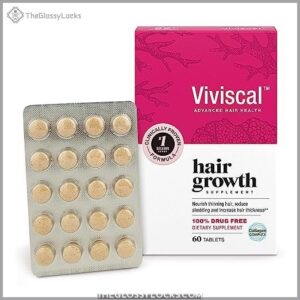
Viviscal takes a different route with its AminoMar Marine Complex—a blend of marine proteins, biotin, zinc, and vitamin C designed to nourish follicles from inside your scalp. You’ll take two tablets daily and wait roughly three months before spotting thicker strands and less shedding.
It’s drug-free, works across all hair types, and pairs well with color treatments. Expect to stick with it; stopping use can reverse gains just like minoxidil.
| Best For | Women looking for a drug-free supplement to combat thinning hair caused by stress, hormonal changes, postpartum recovery, or aging. |
|---|---|
| Form | Softgel |
| Primary Ingredient | Biotin 10,000mcg |
| Target Users | Men & Women |
| Results Timeline | 3 months |
| Daily Use | Yes |
| Clinical Testing | No |
| Additional Features |
|
- Clinically proven formula with marine collagen and essential vitamins that nourish hair from within
- Safe for all hair types including color-treated and fine hair
- Drug-free alternative to topical treatments like minoxidil
- Results take up to 3 months of consistent use to appear
- Benefits may reverse if you stop taking the supplement
- Higher price point compared to some other hair growth options
5. Nutrafol Women Hair Growth Supplement
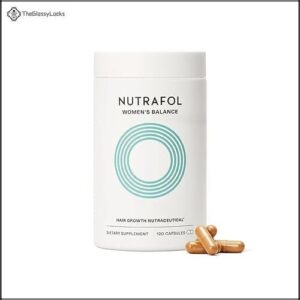
Nutrafol Women targets six root causes—stress, hormones, nutrition, aging, metabolism, and menopause—with 21 botanicals and marine collagen in a physician-formulated blend. You’ll take four capsules daily and wait three to six months for visible thickness and reduced shedding.
It’s 100% drug-free, dermatologist-recommended, and clinically tested for women ages 18 to 44. The downsides? An $88 monthly price tag and possible stomach discomfort. You’ll need consistent use to maintain results, but it’s an evidence-backed choice if you prefer natural ingredients.
| Best For | Women 45+ experiencing hormone-related hair thinning who want a clinically proven, natural supplement and can commit to 3-6 months of daily use. |
|---|---|
| Form | Tablet |
| Primary Ingredient | Marine Collagen |
| Target Users | Women |
| Results Timeline | 3 months |
| Daily Use | Yes |
| Clinical Testing | Yes |
| Additional Features |
|
- Targets six root causes of thinning hair with a dermatologist-recommended formula of 21 vitamins, minerals, and botanicals
- Clinically proven to deliver visibly thicker, fuller, stronger hair with consistent use
- Drug-free and suitable for use alongside other hair growth treatments
- Expensive at $88 per month for a one-month supply
- May cause acid reflux or stomach discomfort in some users
- Requires 3-6 months of daily use (4 capsules) before visible results appear
6. Force Factor Hair Growth Accelerator
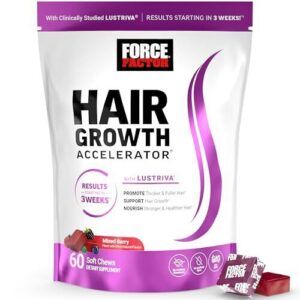
Force Factor Hair Growth Accelerator pairs biotin (10,000 mcg) with silicon in a chewable form you’ll actually want to take. The Lustriva complex promises thicker hair within three weeks, supported by marine collagen, ashwagandha for stress-related shedding, and saw palmetto for follicle health.
You’ll pay less than Nutrafol—about $30 monthly—for a mixed-berry chew. The catch? High biotin doses might interfere with lab tests, and FDA oversight is absent. If you’re seeking a budget-friendly, natural option with multiple active ingredients, it’s worth considering.
| Best For | Budget-conscious shoppers who want a natural hair growth supplement with multiple active ingredients and prefer a tasty chewable over swallowing pills. |
|---|---|
| Form | Capsule |
| Primary Ingredient | Proprietary Blend |
| Target Users | Women 45+ |
| Results Timeline | 3-6 months |
| Daily Use | Yes (4 capsules) |
| Clinical Testing | Yes |
| Additional Features |
|
- Affordable at around $30/month compared to pricier alternatives like Nutrafol
- Convenient mixed-berry chews that taste good and are easy to take anywhere
- Contains multiple hair-supporting ingredients including biotin, silicon, marine collagen, ashwagandha, and saw palmetto
- High biotin dose (10,000 mcg) may interfere with certain medical lab tests
- Not FDA-evaluated, so quality and efficacy claims aren’t officially verified
- May cause allergic reactions in people sensitive to Lustriva or other ingredients
7. Amazon Minoxidil Hair Regrowth Treatment
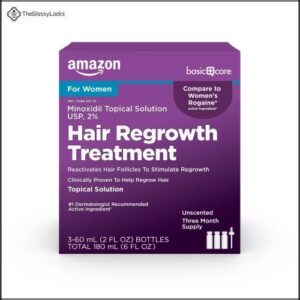
Amazon’s generic minoxidil 2% solution delivers the same active ingredient as Women’s Rogaine at a fraction of the cost—around $20 for three 2-ounce bottles. You’ll apply it twice daily to thinning areas on your scalp’s crown, and clinically proven regrowth can start within four months.
The unscented formula won’t clash with your styling products, but expect possible scalp dryness or itching. Stop using it, and new hair falls out—this treatment demands commitment, not convenience.
| Best For | Women experiencing general thinning on the top of the scalp who want a budget-friendly alternative to brand-name treatments and can commit to twice-daily application for at least 4-8 months. |
|---|---|
| Form | Chewable |
| Primary Ingredient | Lustriva + Biotin |
| Target Users | Men & Women |
| Results Timeline | Varies |
| Daily Use | Yes |
| Clinical Testing | Yes |
| Additional Features |
|
- Costs about $20 for a three-pack, significantly cheaper than Women’s Rogaine while containing the same 2% minoxidil active ingredient
- Clinically proven to reactivate hair follicles and regrow hair on the scalp’s crown area
- Unscented formula won’t interfere with your regular hair products or styling routine
- Results require patience—you may need 4-8 months of consistent use before seeing noticeable regrowth
- Requires lifelong commitment since stopping treatment causes new hair to fall out again
- May cause scalp itchiness, dryness, or changes in hair color and texture
Supplements and Nutrients for Hair Regrowth

While medications like minoxidil and finasteride get most of the attention, your body needs specific nutrients to grow healthy hair in the first place.
Deficiencies in certain vitamins and minerals can slow regrowth or make thinning worse, even if you’re using prescription treatments. Here’s what actually matters regarding supplements for hair health.
Biotin and B-Vitamin Complexes
Biotin and vitamin B complex supplements target hair follicle health by supporting energy production and nutrient absorption at the cellular level. Biotin benefits include strengthening keratin formation, which may improve hair growth promotion in some individuals.
While biotin deficiency is rare, supplementing with B vitamins as part of hair loss treatment or hair regrowth strategies can help maintain healthy growth cycles—though results vary by person.
Collagen and Hair Follicle Health
Collagen benefits your scalp by reinforcing follicle structure and boosting scalp hydration—two factors that directly impact hair growth. Collagen peptides deliver proline-rich amino acids that fuel keratin production, while aiding the dermal layer around hair follicles.
Here’s how collagen promotes hair regrowth strategies: 1. Strengthens follicle anchoring by stabilizing the extracellular matrix 2. Increases growth factor signaling in scalp tissue 3. Improves nutrient delivery through enhanced blood flow. Consistent use over 8–12 weeks may improve hair thickness and facilitate effective hair regrowth methods.
Iron, Zinc, and Other Essential Minerals
Your hair follicles demand iron, zinc, magnesium, selenium, and copper to sustain healthy hair growth. Mineral deficiency—especially iron or zinc shortage—disrupts nutrient absorption and triggers hair thinning by weakening hair follicle function. Dietary supplements can restore mineral balance when food sources fall short, supporting hair regrowth methods.
| Mineral | Primary Role | Deficiency Impact |
|---|---|---|
| Iron | Oxygen transport in blood | Hair loss, slowed growth |
| Zinc | Enzyme regulation, gene expression | Hair thinning, immune issues |
| Selenium | Antioxidant protection | Follicle oxidative stress |
Herbal Extracts: Saw Palmetto and Horsetail
Two botanical extracts—saw palmetto and horsetail—target hair follicle health through distinct pathways. Saw palmetto may reduce testosterone conversion to dihydrotestosterone, a hormone linked to hair thinning, while horsetail delivers silica benefits that strengthen keratin in hair shafts.
These natural supplements and herbal remedies complement medications rather than replace treatment options, offering modest support against hair loss when used consistently.
Choosing The Right Hair Growth Medicine

Picking the right hair growth treatment isn’t about grabbing the first product you see—it’s about understanding what’s actually causing your hair loss and matching that to the treatment most likely to work for you.
Your age, gender, hair type, and the pattern of thinning all play a role in determining which medicine will give you real results. Here’s what you need to take into account before starting any treatment.
Identifying The Cause of Hair Loss
Before you choose a treatment, pinpointing what’s driving your hair thinning is essential. Genetic factors and hormonal imbalance are leading hair loss causes, but nutrient deficiency, scalp conditions like alopecia, and environmental stress also trigger shedding.
A dermatologist can diagnose the specific reason—whether it’s androgenetic alopecia, thyroid issues, or iron deficiency—so you’re not guessing.
Matching Treatments to Hair Type and Gender
Once you know the root cause, you’ll want to align your treatment with your biology. Minoxidil works on hair density in both men and women, though concentrations differ. Finasteride targets follicle miniaturization in men, while spironolactone suits women with androgen-related thinning. Gender differences matter—finasteride and spironolactone carry fetal risks, so pregnancy planning affects your options.
Consider these factors when matching therapies to your needs:
- Fine, oily hair in men: Finasteride with a lightweight topical won’t weigh strands down
- Dry, curly hair in women: Pair minoxidil with hydrating serums for better tolerance
- Chemically treated hair: Bond-building products protect during medical therapy
- Porous hair: Gentle cleansing maintains strength throughout treatment
- Scalp health: Managing dermatitis maximizes follicle care and treatment outcomes
Your dermatologist can adjust concentrations and switch therapies as your hair responds.
Consulting Dermatologists for Personalized Care
A professional dermatologist consult gives you control over your hair growth journey. During your visit, expect scalp analysis using dermatoscopy, a full medical history review, and customized plans that match your biology. Your provider coordinates medications, treatment options, and hair care tips into one roadmap. Don’t guess—get the targeted dermatology guidance that actually works for your needs.
| What Happens | Why It Matters |
|---|---|
| Digital scalp imaging | Tracks progress over time objectively |
| Blood work for iron, thyroid | Reveals hidden causes of thinning |
| Medication tolerance review | Prevents unsafe drug interactions |
| Follow-up schedule | Adjusts therapies based on real response |
Setting Expectations for Results and Safety
Your dermatologist’s plan comes with realistic outcomes and specific treatment durations—now you need to set the right expectations. Here’s what safety profiles and patient monitoring teach us about hair growth.
- Most medications show visible regrowth patterns after 3 to 6 months of consistent use
- Minoxidil can cause mild scalp irritation in up to 10 percent of users
- Early shedding may occur as follicles shift to new growth cycles
- Complete restoration rarely happens without combining multiple treatment options
Frequently Asked Questions (FAQs)
Which remedy is best for hair growth?
Minoxidil stands out as your most effective option, with finasteride close behind for men.
Both target follicle stimulation directly and have proven regrowth strategies backed by solid clinical data over decades of use.
Do hair growth pills work?
Think of hair growth pills as targeted support—they work best when you have a nutritional gap or hormonal imbalance.
Biotin, iron, and other supplements address deficiencies, while DHT blockers like finasteride target pattern baldness mechanisms directly.
Is there a drug to regrow hair?
Yes, FDA-approved drugs like Minoxidil and Finasteride promote hair regrowth by enhancing follicle stimulation and blocking DHT.
These treatments improve scalp health and alter regrowth patterns, with Rogaine showing drug efficacy across various hair growth cycle stages.
What supplements are good for hair growth?
Biotin, iron, and zinc support Hair Follicles when deficiency exists.
Collagen provides Amino Acids for keratin.
Saw palmetto and horsetail offer Herbal Remedies.
Vitamin Benefits include D for Hair Growth Cycle and C for collagen synthesis.
What works best for hair growth quickly?
For fast results, combine minoxidil with scalp stimulation and daily gentle massages.
This treatment option promotes hair regrowth within four months, though medications work better than natural remedies or quick fixes for accelerating hair loss reversal.
Should you take hair growth supplements?
Hair growth supplements work when you’re deficient in nutrients like iron, biotin, or zinc. Most people don’t need them. Check with your dermatologist before starting any supplement regimen.
What is a hair growth product?
A hair growth product is a topical or oral treatment containing active components like minoxidil or finasteride that targets hair follicles to reduce shedding and stimulate regrowth in areas experiencing thinning.
What are the best hair growth products?
When you’re fighting thinning hair, the battlefield is crowded with options.
The best hair growth products include minoxidil, finasteride, Nutrafol, Viviscal, and low-level laser therapy devices—each targeting different causes of hair loss.
Can hair growth supplements help thinning hair?
Supplements can address nutrient deficiencies that contribute to thinning hair causes.
Viviscal and Nutrafol target hair growth factors through biotin, collagen, and minerals—regrowth strategies that support follicle health when dietary intake falls short, though supplement efficacy varies individually.
Do hair growth products work?
Yes, proven medications like minoxidil and finasteride show treatment outcomes in clinical studies.
Product efficacy depends on consistent use, scalp health, and individual growth patterns.
You’ll see the best hair regrowth tips from dermatologist-guided hair growth options.
Conclusion
The medicine for hair growth exists, but patience doesn’t come in a bottle. FDA-approved treatments like minoxidil and finasteride deliver measurable results after months of consistent use, while supplements and procedures offer support when matched to your specific type of loss.
Your dermatologist remains your best resource for identifying causes and building a treatment plan that balances clinical evidence with realistic expectations. Hair restoration requires commitment, not magic.