This site is supported by our readers. We may earn a commission, at no cost to you, if you purchase through links.
Your scalp produces sebum, a natural oil that keeps your skin barrier intact and protected. But when cold air, hot showers, or overwashing strip away that protective layer, your scalp sends distress signals—itching, flaking, tightness.
The instinct? Reach for medicated shampoos or heavy-duty treatments. But here’s what most people miss: harsh products often worsen the cycle, leaving your scalp even drier than before.
The solution isn’t found in complicated routines or expensive formulas. Learning to keep scalp moisturized naturally means working with your skin’s biology, not against it. From choosing the right oils to adjusting your washing habits, small shifts in your approach can restore balance and comfort without stripping your scalp further.
Table Of Contents
- Key Takeaways
- Causes of Dry Scalp and Moisture Loss
- Signs Your Scalp Needs Moisture
- Choosing Natural Oils for Scalp Hydration
- Herbal and Plant-Based Remedies
- Nutrition and Hydration for Scalp Health
- Gentle Cleansing and Shampoo Practices
- Scalp Massage and Exfoliation Techniques
- DIY Moisturizing Scalp Masks
- Top 4 Natural Scalp Moisturizing Products
- Daily Habits for a Naturally Moisturized Scalp
- Frequently Asked Questions (FAQs)
- How to hydrate scalp naturally?
- How to keep scalp moisturized without oil?
- Can scalp moisture affect hair growth rate?
- How does sleep quality impact scalp hydration?
- Are there scalp-friendly natural hair dye alternatives?
- Does chlorine from swimming pools dry scalp?
- Can stress hormones directly cause scalp dryness?
- Conclusion
Key Takeaways
- Your scalp produces sebum to protect its moisture barrier, but hot water, overwashing, and harsh sulfates strip this natural oil faster than it can regenerate—leading to dryness, flaking, and irritation that worsens with repeated use of medicated products.
- Natural oils like jojoba and coconut penetrate deeply to mimic sebum and restore hydration, while gentle cleansing 1-2 times weekly with sulfate-free shampoos prevents the cycle of oil stripping and moisture loss.
- Environmental factors like indoor heating and cold weather accelerate moisture evaporation, so using a humidifier to maintain 40-60% humidity and wearing protective headwear outdoors helps preserve your scalp’s natural hydration.
- Hydration works from the inside out—omega-3s, vitamins A and E, and adequate water intake strengthen your skin barrier and support moisture retention, making external treatments more effective.
Causes of Dry Scalp and Moisture Loss
Your scalp loses moisture for reasons you mightn’t even notice throughout the day. Some causes are hiding in your environment, while others come from your daily hair routine or underlying skin issues.
Fortunately, you can restore moisture to your dry scalp with the right combination of products and lifestyle adjustments.
Let’s look at the main culprits behind that dry scalp so you can tackle the problem at its source.
From targeted shampoos to soothing treatments, effective dry scalp solutions can help restore moisture and comfort to your irritated skin.
Environmental Factors (weather, Indoor Heating)
When cold air sweeps through your home, indoor heating kicks in and strips away the humidity your scalp needs. Central heating systems circulate dry air that can drop relative humidity to 20–30 percent, pulling natural moisture straight from your scalp and leaving it tight, flaky, and irritated.
Fortunately, proven dry scalp treatments can restore balance by targeting both environmental triggers and your skin’s barrier function.
- Humidity control: Run a humidifier to restore indoor levels to 40–60 percent and protect your scalp’s moisture barrier.
- Weather patterns: Wind and severe cold accelerate evaporation, so cover your head outdoors during temperature fluctuations.
- Indoor heating: Radiant and forced-air systems dry scalp faster—vent rooms regularly to prevent overly arid microclimates.
- Air quality management: Balance ventilation to avoid sealed, moisture-starved spaces that worsen scalp irritation and flaking.
Overwashing and Harsh Shampoos
Daily shampooing with sulfate shampoos strips away your scalp’s protective lipid barrier—sodium lauryl sulfate can remove around 90 percent of surface oils in one wash. That oil stripping triggers scalp irritation, microbiome disruption, and chronic dry scalp by accelerating moisture loss and throwing off your scalp pH balance.
Understanding how to maintain your scalp’s natural pH between 4.5 and 5.5 can help you protect that crucial acid mantle and avoid the damage sulfates cause.
Gentle cleansing two or three times weekly helps you moisturize naturally and restore your scalp oil without the cycle of dryness.
Maintaining a healthy scalp depends on understanding the role of intercellular lipid matrix function in protecting moisture and overall barrier integrity.
Skin Conditions (eczema, Seborrheic Dermatitis)
Sometimes the problem isn’t what you’re washing with—it’s what’s happening beneath the surface.
Eczema triggers like allergens and skin barrier dysfunction create inflammation causes that lead to itchy, flaky patches, while seborrheic dermatitis symptoms include oily scales and redness in sebum-rich zones. Psoriasis adds thick, silvery plaques.
These skin conditions disrupt scalp moisturizing and need targeted natural remedies beyond simple hydration. Learning more about the diagnosis and treatment options for scalp conditions can help guide effective management.
Product Irritation and Allergies
Even gentle products can backfire if your scalp doesn’t agree with the ingredients. Fragrance allergies and irritant ingredients like sulfates or certain essential oils can trigger allergic reactions—redness, itching, and peeling that worsen dryness.
Patch testing new formulas helps you spot trouble early. If you have a sensitive scalp prone to skin conditions, swap suspect products for fragrance-free options and prioritize natural remedies that support scalp care without aggravating scalp irritation.
Signs Your Scalp Needs Moisture
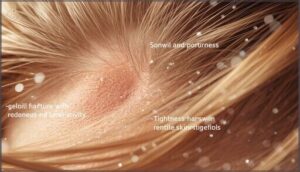
Your scalp won’t always send you a memo when it’s thirsty, but it will give you signs if you know what to look for. Catching dryness early means you can fix the problem before it gets uncomfortable or leads to more serious irritation.
Here are the three key signals that tell you your scalp needs some extra moisture.
Pairing these moisture checks with natural remedies for alopecia can help restore balance and strengthen thinning areas.
Itching and Flaking
When your scalp starts flaking, it’s not just annoying—it’s your skin begging for moisture. That itchiness you feel happens because nerve endings get exposed when dryness breaks down your scalp’s protective barrier.
Here’s what’s triggering those symptoms:
- Environmental dryness strips moisture faster than your scalp can replenish it
- Hot water and harsh shampoos remove natural oils that keep skin supple
- Malassezia yeast overgrowth releases irritating byproducts that intensify dandruff-related itch
- Product allergies create inflamed, itchy patches within hours of exposure
- Chronic skin conditions like eczema cause recurring flare-ups during stress
The good news? Understanding these flake causes puts you in control of finding scalp soothing dryness remedies that work. Light, powdery flakes signal simple dry scalp, while larger, yellowish ones often point to seborrheic dermatitis. Either way, itch relief starts with restoring moisture and calming irritation management through gentle, targeted scalp moisturizing.
Tightness or Discomfort
That band-like pressure circling your head signals scalp tension from moisture loss. When skin feels tight, you’ll notice hair pulling sensations during styling, plus sensitive spots where gentle touch brings discomfort.
These itchy sensations worsen after washing with hot water. Dry flaking often accompanies the tightness.
Regular scalp moisturizing with natural oils addresses scalp irritation directly, helping you moisturize before discomfort escalates into chronic scalp care issues.
Visible Dryness or Redness
Patches of white scaling paired with pink or red zones reveal inflammation from moisture balance disruption. Redness causes include overwashing, allergic reactions to products, and underlying conditions like eczema or seborrheic dermatitis that trigger scalp inflammation.
These irritation signs intensify when you scratch, spreading redness across dry scalp areas. Consistent scalp moisturizing with gentle dry scalp treatment restores comfort and calms visible scalp irritation naturally.
Choosing Natural Oils for Scalp Hydration
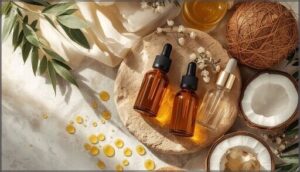
Natural oils are one of the safest ways to restore moisture to your scalp without harsh chemicals. Each oil offers unique benefits—from mimicking your skin’s natural sebum to delivering deep hydration and anti-inflammatory support.
Here’s what you need to know about the top oils for scalp health.
Benefits of Jojoba Oil
Jojoba oil stands out among natural scalp moisturizers because it mirrors your skin’s own sebum. This liquid wax penetrates follicles without leaving greasiness, making it perfect for sebum regulation—whether your scalp swings dry or oily.
Jojoba oil mimics your scalp’s natural sebum, penetrating deeply to regulate moisture without greasiness—perfect for both dry and oily types
Its natural ingredients deliver scalp healing through anti-inflammatory compounds while providing hair nourishment that reduces flaking. You’ll find this adaptable natural remedy helps moisturize your scalp while soothing irritation and supporting healthier follicles.
Using Coconut Oil for Moisture
You’ve probably heard coconut oil praised for everything under the sun—but for dry scalp, it actually delivers. With roughly 47 percent lauric acid, this natural hydration remedy penetrates deeper than most oils, helping you moisturize and lock moisture right where you need it.
Here’s how to utilize coconut oil benefits with smart oil application methods:
- Choose virgin over refined for gentler, antioxidant-rich scalp moisturizing that won’t irritate sensitive skin
- Warm a teaspoon between your palms before massaging directly onto your scalp in sections—this scalp massage technique boosts absorption
- Leave it on for 30 minutes minimum or overnight under a cap for deeper natural hair care moisture
- Wash once or twice with sulfate-free shampoo to remove residue while keeping hydration intact
The high-fat content calms irritation and reduces flaking by softening that outer skin layer. Just don’t overdo it—fine hair gets weighed down fast, and some people with seborrheic dermatitis find their symptoms worsen since Malassezia yeast feeds on those medium-chain fatty acids.
Argan and Olive Oil Properties
When you’re choosing between argan oil and olive oil for scalp moisturizing, it comes down to how each fits your natural hair care routine.
Argan oil packs roughly 620 mg per kilogram of vitamin E—double that of olive oil—and its low oil comedogenicity means it won’t clog pores, making it ideal for sensitive scalps needing antioxidant effects and moisture retention without weight.
Herbal and Plant-Based Remedies
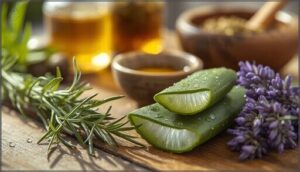
Beyond oils, plants offer some of the most effective ingredients for healing a dry scalp. These herbal remedies work by calming inflammation, restoring balance, and delivering moisture where you need it most.
Here’s how three standout botanicals can bring your scalp back to life.
Aloe Vera for Soothing Dryness
Aloe vera gel delivers quick dry scalp relief without weighing down your hair. Its 99 percent water content floods thirsty cells with hydration, while natural anti-inflammatory compounds calm the itching and tightness that drive you crazy.
Massage a thin layer onto clean, damp skin and let it absorb—those hygroscopic polysaccharides will lock moisture in and keep flaking at bay.
Tea Tree Oil for Scalp Balance
Tea tree oil brings powerful antifungal properties to your scalp care routine, helping you control the microbes that fuel flakes and itching. Dilute it to 1–5 percent with a carrier oil before massaging in—this concentration promotes scalp pH balance and microbial control without stripping moisture.
- Reduces dandruff-causing fungal load when used consistently
- Calms inflammation and soothes irritated skin
- Works best in mild, sulfate-free formulas
Witch Hazel for Irritation Relief
Witch hazel tightens pores and cuts excess oil while calming redness tied to seborrheic dermatitis or product reactions. Soak a cotton pad with alcohol-free witch hazel and dab it onto itchy patches—or dilute it one-to-two with water in a spray bottle for broader coverage.
| Application Method | Best For | Frequency |
|---|---|---|
| Cotton pad spot treatment | Localized redness or itching | 1–2 times per week |
| Diluted scalp spray | Oily buildup or protective styles | 2–3 times per week |
| Pre-shampoo soak | Stubborn product residue | Once per week |
| After-wash toner | Lingering inflammation | 1–2 times per week.” |
Choose alcohol-free formulas to avoid stripping your scalp’s natural barrier.
Nutrition and Hydration for Scalp Health

Your scalp’s health doesn’t just depend on what you put on it—what you put in your body matters just as much. The right nutrients and proper hydration work from the inside out to support your skin’s natural moisture barrier, including the delicate skin on your head.
Let’s look at the key dietary factors that keep your scalp naturally hydrated and healthy.
Importance of Omega-3s and Vitamins
Your scalp needs fuel from the inside out—and that starts with what you eat. Omega three benefits include reducing inflammation that can dry out your scalp, while vitamins A and E strengthen your skin’s moisture barrier.
Fatty acid role and nutrient absorption work together to support scalp nutrition, helping you moisturize naturally. When vitamin deficiencies show up, your scalp care and hair health suffer, making natural hair care harder to maintain.
Staying Hydrated for Internal Moisture
Drinking enough water daily keeps your fluid balance in check and helps your scalp hold onto moisture from the inside.
When your water intake promotes healthy electrolyte levels and body temperature, you’re also hydrating your skin barrier—making every moisturizing treatment work better.
Think of daily hydration as the foundation for scalp moisture and lasting hair hydration.
Foods That Support Scalp Hydration
Omega-rich foods like salmon and walnuts deliver fats that strengthen your scalp’s lipid barrier and calm inflammation.
Vitamin E sources—almonds, avocados—shield follicles from oxidative stress while antioxidant fruits such as berries boost collagen production.
Zinc supplements and probiotic diets support tissue repair and a balanced microbiome, giving you stronger scalp moisture and healthier natural hair care from within.
Gentle Cleansing and Shampoo Practices
Your shampoo routine has more power over scalp moisture than you might think. The products you choose, how often you wash, and even your water temperature can either protect your scalp’s natural barrier or strip it dry.
Let’s look at three key practices that’ll help you cleanse without compromising hydration.
Selecting Sulfate-free Shampoos
Look for shampoos that skip sodium lauryl sulfate and sodium laureth sulfate—these harsh detergents strip your scalp’s natural oils and disrupt scalp pH balance. Gentle cleansers like sodium cocoamphoacetate and lauryl glucoside deliver sulfate-free benefits without the tight, dry feeling.
For sensitive scalp care, choose hydrating shampoo with moisturizing ingredients such as glycerin or aloe to maintain scalp moisture while using effective moisturizing techniques in your daily scalp care routine.
Washing Frequency to Prevent Dryness
Overwashing triggers a moisture crisis—your scalp can’t rebuild sebum fast enough. For dry scalp, limit shampooing to one or two times weekly to preserve natural oils and maintain sebum balance.
Curly or coily hair types benefit from this scalp wash schedule, while fine hair may need every two to three days. These hair type considerations are essential scalp moisturizing techniques that support dryness prevention and long-term moisture retention through proper scalp treatment.
Avoiding Hot Water During Washing
Hot showers feel incredible—until your scalp starts flaking. Water temperature above 86°F strips protective oils faster than your skin can replace them, triggering the dry scalp cycle you’re trying to break.
Switch to lukewarm washing and finish with a cool water rinse for better moisture retention and scalp pH balance. This gentle rinsing approach is essential in any effective hair care routine focused on scalp treatment and lasting moisturizing benefits.
Scalp Massage and Exfoliation Techniques
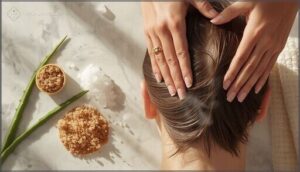
Your scalp needs more than moisture—it needs movement and occasional reset.
Gentle massage increases blood flow and helps natural oils spread, while exfoliation clears away the buildup that blocks hydration from getting through.
Here’s how to incorporate both techniques into your routine without overdoing it.
Finger and Brush Massage Benefits
Gentle scalp stimulation through massage techniques isn’t just relaxing—it’s one of the smartest moves you can make for scalp health and natural hair care. Regular scalp massage boosts blood flow to your follicles, which delivers the oxygen and nutrients your scalp craves while supporting hair growth and making your hair care routine work harder.
- Distribute natural oils: Soft circular motions help spread sebum from roots to strands, reducing dry patches and creating better moisture balance across your scalp.
- Improve product absorption: Massage before applying oils or serums lets moisturizing ingredients penetrate deeper into your scalp’s surface layers.
- Lower stress hormones: Just ten minutes of relaxation methods like temple and nape massage can drop cortisol levels, calming stress-driven dryness and itch.
Exfoliating With Natural Scrubs
Beyond massage alone, scalp exfoliation with natural scrubs takes your routine a step further.
Sugar, fine coffee grounds, or ground oats offer gentle removal of dead cells and product buildup without harsh edges that irritate. Mix your chosen exfoliant ingredients with coconut or jojoba oil to create a moisturizing base, then apply using light circular motions during your next wash.
How Often to Exfoliate The Scalp
Finding the right exfoliation frequency protects scalp health while managing buildup. Most healthy scalps do well with weekly routines, while dry scalp or scalp sensitivity calls for gentle scrubbing every two to three weeks.
Here’s how to time your scalp exfoliation:
- Normal scalps: Once weekly to prevent buildup
- Oily types: One to two times per week
- Dry scalp: Every seven to fourteen days
- Sensitive skin: Every two to three weeks
- With natural exfoliants: Adjust based on comfort
Watch for tightness or redness—that’s your cue to dial back hair moisturizing efforts and give your scalp moisturizing barrier time to recover.
DIY Moisturizing Scalp Masks
You don’t need to hit the drugstore to give your scalp some serious hydration.
A few simple ingredients from your kitchen can work wonders when combined into nourishing masks.
Here are three easy DIY recipes that help restore moisture and calm irritation naturally.
Coconut Oil and Honey Mask
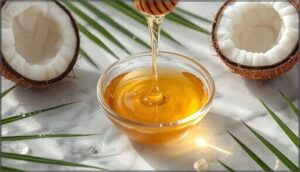
This powerhouse duo transforms dry scalp treatment. Mix equal parts coconut oil and honey—one tablespoon each works perfectly for most people. The coconut oil penetrates your hair shaft to lock in moisture while honey pulls hydration from the air like a magnet. Apply to damp hair, cover with a shower cap, and let it work its magic for 20 to 30 minutes.
| Ingredient | Primary Benefit |
|---|---|
| Coconut Oil | Reduces water loss, strengthens barrier |
| Honey | Attracts moisture, antimicrobial action |
| Combined Mask | Deep hydration, softer hair |
| Application Time | 20-40 minutes for best results |
Rinse thoroughly with lukewarm water, then shampoo as usual to avoid greasiness.
Aloe Vera and Olive Oil Blend
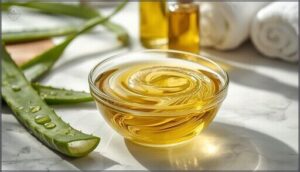
This cooling blend pairs aloe vera’s lightweight hydration with olive oil’s emollient fatty acids. Mix equal parts pure aloe gel and extra virgin olive oil—about two tablespoons each for shoulder-length hair. The aloe soaks in quickly to calm irritation while olive oil seals moisture against your scalp.
Quick Application Guide:
- Apply the smooth mixture directly onto dry scalp sections
- Massage gently with fingertips for five minutes to boost absorption
- Cover with a warm towel for 20 to 30 minutes
- Rinse and shampoo with a sulfate-free cleanser
Use this natural scalp moisturizer once or twice weekly to keep your scalp supple and comfortable.
Avocado and Yogurt Hydrating Mask
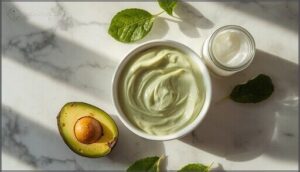
Mash half a ripe avocado with three tablespoons plain yogurt until creamy. This powerhouse blend delivers vitamins A, C, and E from avocado alongside lactic acid from yogurt to gently exfoliate and lock in moisture.
Spread evenly on your scalp, leave for fifteen minutes, then rinse. It’s one of the most effective natural scalp moisturizers for replenishing dry patches.
Top 4 Natural Scalp Moisturizing Products
When you’re ready to bring in some extra support, the right products can make all the difference without compromising your natural approach. I’ve seen countless patients transform their scalp health with formulas that work with your skin’s biology, not against it.
Here are four dermatologist-recommended options that deliver real hydration using ingredients your scalp will actually recognize.
1. SheaMoisture Aloe Pre Wash Hair Masque
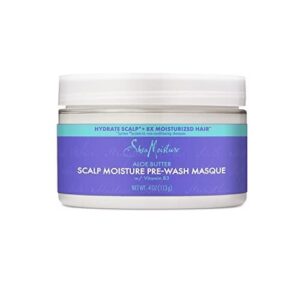
This pre-wash treatment works like a moisture reset button for your scalp. You’ll massage the cream directly onto damp hair and scalp before shampooing, giving aloe butter and Fair Trade shea butter up to 30 minutes to sink in.
The formula includes vitamin B3 to strengthen your scalp’s natural barrier, while glycerin pulls water into dry patches. Studies show this system leaves hair eight times more moisturized than cleansing alone. Apply it weekly to stop that tight, uncomfortable feeling after washing.
| Best For | People with dry, itchy scalps who want a deep treatment that works before shampooing, especially if regular conditioners aren’t cutting it. |
|---|---|
| Form | Cream |
| Cruelty-Free | Yes |
| Vegan | No |
| Target Use | Dry scalp & hair |
| Size | 4.97 oz |
| Price Range | Budget-friendly |
| Additional Features |
|
- Actually targets your scalp, not just your hair—helps with that tight, flaky feeling
- The aloe butter and vitamin B3 combo strengthens your scalp’s moisture barrier over time
- Pre-wash formula means you rinse it out, so it won’t weigh down fine hair
- The 4oz container runs out fast if you’re using it weekly on longer hair
- Can over-moisturize if you already have oily hair or use too much product
- You’ll need to budget time—works best when you leave it on for 20-30 minutes before showering
2. Living Proof Dry Scalp Treatment
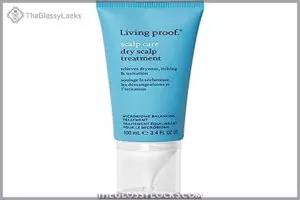
Relief arrives in a bottle with Living Proof Dry Scalp Treatment. If your scalp feels tight, itchy, or flaky, this lightweight gel delivers instant hydration without leaving greasy residue.
You’ll find hyaluronic acid and niacinamide working together to soothe irritation and support your scalp’s natural barrier. The citrus scent is fresh but not overpowering, and it’s gentle enough for color-treated or chemically processed hair.
Use three times weekly—most users report visible comfort and less dryness in about a month.
| Best For | People dealing with dry, itchy, or flaky scalp who want a lightweight, non-greasy treatment that works with color-treated or chemically processed hair. |
|---|---|
| Form | Gel |
| Cruelty-Free | Yes |
| Vegan | Yes |
| Target Use | Dry scalp & flakiness |
| Size | 3.4 fl oz |
| Price Range | $42.00 |
| Additional Features |
|
- Soothes irritation and reduces flakiness with hyaluronic acid and niacinamide
- Lightweight gel formula that doesn’t leave residue or weigh hair down
- Safe for color-treated, chemically processed hair and certified cruelty-free
- Pricey at $42 for 3.4 ounces compared to drugstore alternatives
- Requires consistent use (three times weekly) and may take a month to see full results
- Citrus scent might not appeal to those who prefer fragrance-free products
3. Christophe Robin Hydrating Cream Scrub
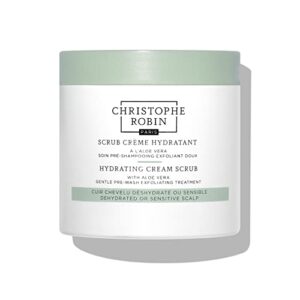
Think of this scrub treatment as a spa treatment for your scalp. Christophe Robin’s Hydrating Cream Scrub combines gentle jojoba particles with aloe vera to exfoliate without aggravating sensitive skin.
You’ll massage it into dry or damp hair before shampooing—it lifts buildup while flooding your scalp with moisture from shea butter and sweet almond oil. The creamy texture rinses clean without leaving residue.
Use it weekly if your scalp feels parched or shows visible redness. At $43 for 8.4 ounces, it’s an investment that delivers softer, shinier hair.
| Best For | People with dry, sensitive, or irritated scalps who need gentle exfoliation without harsh scrubbing or stripping away moisture. |
|---|---|
| Form | Cream |
| Cruelty-Free | Yes |
| Vegan | Yes |
| Target Use | Dehydrated scalp |
| Size | 8.4 fl oz |
| Price Range | $43.00 |
| Additional Features |
|
- Combines exfoliation with deep hydration using aloe vera, shea butter, and sweet almond oil to calm redness and soothe parched scalps
- Gentle jojoba particles remove buildup and dead skin without irritating sensitive skin
- Leaves hair noticeably shinier and smoother while treating the scalp like a spa experience
- Pricey at $43 for 8.4 ounces, which might not fit every budget
- Only designed for dry and sensitive scalp types, so it won’t work for oily or normal scalps
- Requires pre-shampoo application, adding an extra step to your routine
4. Necessaire Scalp Serum For Hair Growth
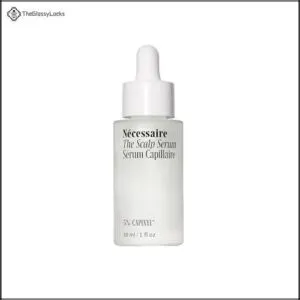
Your scalp craves deep hydration and fuller-looking hair at the same time. Necessaire’s Scalp Serum delivers both with 1% hyaluronic acid that pulls moisture into dry, irritated skin while 5% Capixyl peptides support thicker strands.
The fragrance-free formula won’t trigger flare-ups if you’re managing eczema or dermatitis. Apply it daily to damp or dry hair—it absorbs without greasiness. At $48 for one ounce, it’s pricey, but you’re getting National Eczema Association approval and vegan ingredients that respect sensitive scalps.
| Best For | Anyone with a dry, sensitive scalp who wants to hydrate irritated skin while encouraging thicker, healthier-looking hair growth. |
|---|---|
| Form | Liquid |
| Cruelty-Free | Yes |
| Vegan | Yes |
| Target Use | Dry scalp |
| Size | 1 fl oz |
| Price Range | $48.00 |
| Additional Features |
|
- Hyaluronic acid and Capixyl work together to hydrate your scalp and support fuller strands without harsh ingredients
- Fragrance-free and hypoallergenic formula is gentle enough for eczema-prone or sensitive scalps
- Absorbs cleanly into damp or dry hair for daily use without leaving a heavy residue
- At $48 for one ounce, it’s significantly more expensive than most scalp treatments
- Some users report it leaves hair feeling semi-oily on styling days or causes irritation and flaking
- Results require consistent daily application, so you’ll need to commit to the routine long-term
Daily Habits for a Naturally Moisturized Scalp

The best scalp care routines aren’t just about what you apply—they’re about what you do every single day. Small, consistent habits protect your scalp from moisture loss and keep irritation at bay before it starts.
Here are three daily practices that make a real difference in maintaining natural scalp hydration.
Limiting Heat Styling and Sun Exposure
Your styling tools and the midday sun are silently stealing moisture from your scalp with every use. Excess heat styling damages the scalp by breaking down natural oils, while UV exposure accelerates moisture loss—especially on thinning hair. Limiting sessions to twice weekly and avoiding peak sun hours protects your scalp health and promotes natural hair care.
Heat Styling Tips and Sun Protection Methods:
- Air dry when possible to minimize thermal damage prevention needs and preserve hydration
- Keep flat irons below 180°F to maintain moisture between washes
- Schedule outdoor time before 10 a.m. or after 4 p.m. to dodge intense UV rays
- Apply heat protectant serums that create a barrier against direct thermal transfer
- Use ceramic or tourmaline gentle hair tools for even heat distribution and fewer hot spots
Wearing Protective Headwear Outdoors
Beyond avoiding direct sun, you’ll want the right headwear materials for complete scalp coverage and outdoor safety.
Wide-brim hats with UPF 50+ fabrics block up to 97 percent of UV rays, preventing scalp irritation prevention issues and moisture loss.
Choose breathable options with moisture-wicking bands—your natural hair care routine depends on consistent sun protection that keeps your scalp health intact year-round.
Customizing Your Scalp Care Routine
Your hair care routine deserves the same attention to detail as your protective headwear. Start with scalp type analysis to match products to your unique needs.
Rotate moisturizers every 2-3 months to prevent tolerance buildup, and adjust frequency when seasons shift.
Tailored solutions work best when you track what your scalp tells you through these scalp care tips and natural remedies for skin conditions.
Frequently Asked Questions (FAQs)
How to hydrate scalp naturally?
You can restore hydration by applying jojoba or coconut oil directly to your scalp, drinking plenty of water, and eating foods rich in omega-3s and vitamins that support moisture retention.
How to keep scalp moisturized without oil?
You don’t need oils to achieve scalp hydration—water-based serums, aloe vera gel, and gentle cleansing work beautifully.
Exfoliating scrubs remove buildup, while moisturizing masks and hydrating shampoos deliver natural scalp moisturizers without greasy residue.
Can scalp moisture affect hair growth rate?
Yes, scalp moisture directly influences hair growth. Adequate hydration nourishes your follicles, maintains a balanced pH, and reduces irritation that can shorten the growth cycle—keeping your scalp moisturized optimizes follicle hydration and growth cycle performance.
How does sleep quality impact scalp hydration?
Quality sleep patterns directly strengthen your skin barrier and regulate hormones that control scalp hydration.
Poor rest disrupts circadian rhythms, increasing moisture loss and reducing microcirculation efficiency—leaving your scalp dry and irritated.
Are there scalp-friendly natural hair dye alternatives?
Plant powders like henna, indigo, and cassia offer gentle formulas that color hair without scalp-stripping chemicals.
Non-toxic brands with herbal additives—aloe, chamomile—support hair health while avoiding ammonia and PPD irritants.
Does chlorine from swimming pools dry scalp?
Chlorine relentlessly strips your scalp’s protective oils, leaving skin rough, tight, and itchy after every swim. Long pool sessions intensify dryness, while sun and indoor heating worsen moisture loss—triggering flaking and irritation.
Can stress hormones directly cause scalp dryness?
Cortisol and other stress hormones can trigger scalp inflammation and weaken your skin barrier, increasing moisture loss.
This hormonal imbalance disrupts oil production and immune responses, worsening dry scalp and irritation.
Conclusion
Ironically, the best way to keep scalp moisturized naturally is often doing less—not more. Your scalp doesn’t need rescue from elaborate routines; it needs freedom from what’s stripping its defenses.
Swap harsh shampoos for gentle cleansers. Trade daily washing for strategic hydration. Let nourishing oils work alongside your skin’s natural rhythms, not against them.
When you stop fighting your biology and start supporting it, moisture balance isn’t something you chase—it’s something you maintain effortlessly.
- https://www.verywellhealth.com/home-remedies-for-dry-scalp-8735766
- https://www.medicalnewstoday.com/articles/home-remedies-for-a-dry-scalp
- https://yuaiahaircare.com/blogs/knowledge-base/argan-oil-for-dry-scalp
- https://www.diviofficial.com/blogs/wellness/the-power-of-natural-remedies-for-a-dry-scalp-protecting-your-hair-health
- https://laquattacosmetics.com/blogs/diy-hair-care-guide/diy-hydration-boost-with-aloe-vera-and-glycerin