This site is supported by our readers. We may earn a commission, at no cost to you, if you purchase through links. This content is for general informational and educational purposes only and is not a substitute for professional medical, dermatological, or nutritional advice.

Most naturals spend years collecting products before realizing the problem was never what they bought—it was the order they applied them. A curl cream sitting on top of dry hair doesn’t moisturize; it coats. An oil applied before a leave-in doesn’t seal hydration; it blocks it. The sequence matters more than the price tag on the bottle.
Layering products on natural hair follows a specific logic built around how your cuticle absorbs and retains water. Once that logic clicks, every wash day changes. The routine ahead breaks it down, step by step, so your hair finally gets the moisture it’s been waiting for.
Table Of Contents
Key Takeaways
- The order you apply products—liquid first, then cream, then oil—matters more than the products themselves, because oil applied before a water-based leave-in blocks moisture instead of sealing it in.
- Your hair’s porosity determines which layering method works best: LOC for low-porosity hair, LCO for high-porosity, and LOB for very dry strands that need the heaviest seal.
- Starting with clean, damp hair is non-negotiable—build-up blocks ingredients from penetrating the strand, making every product you apply after it essentially useless.
- Over-layering is just as damaging as under-moisturizing, so watch for curl collapse, scalp irritation, and sticky texture, then reset with a clarifying shampoo before rebuilding your routine.
Start With Clean, Damp Hair

Before a single drop of product touches your strands, your hair needs the right foundation. Clean, damp hair absorbs moisture-rich layers far more effectively than hair weighed down by old buildup or dried out from skipping steps.
Think of it as a clean slate—hair that’s lost its vitality can’t hold moisture the way healthy strands can, so starting fresh makes every product work harder.
Here’s what that starting point actually looks like.
Why Clean Hair Layers Products Better
When residue builds up on your strands, no amount of careful layering can save you. Product buildup blocks ingredient penetration, leaving your natural hair feeling stiff and dull.
Residue removal through a clarifying shampoo resets the scalp health and opens the door for real moisture retention and curl definition. Incorporating a double shampooing technique ensures thorough cleansing before product layering.
Clean hair means:
- Better cuticle smoothing for lasting shine
- Stronger moisture penetration layer by layer
- More reliable results from layering hair products for maximum moisture retention
Shampoo Vs. Co-Wash Before Layering
Once your scalp is clean, the next step is deciding whether shampoo or a co-wash suits your needs. Shampoo’s surfactant potency ensures thorough scalp oil control, particularly after heavy product layering. Co-washes produce less foaming action but may cause co-wash buildup over time.
For natural hair, the frequency of cleansing is crucial: alternate between both methods, clarifying every four to five washes. This approach enables effectively layering hair products while prioritizing maximum moisture retention.
Conditioning Mid-Lengths and Ends First
After rinsing out your cleanser, apply conditioner using the Even Coverage Method—section your hair into four parts, then apply product from mid-lengths to ends.
This Mid-length Moisture Boost improves Slip Optimization, making detangling far easier.
End-Focused Conditioning targets the oldest, driest strands, while your Targeted Rinse Technique removes excess without stripping the moisture you’re layering hair products for maximum moisture retention.
Damp Hair Vs. Dry Hair Application
Once your conditioner is rinsed, timing matters. Damp hair—not soaking wet, not fully dry—opens your Absorption Window for water-based products to penetrate the strand effectively.
- Damp hair aids Slip Optimization, spreading leave-ins evenly for Frizz Reduction.
- Wet hair over-dilutes creams; dry hair blocks them entirely.
- Damp application enhances Curl Definition and anchors the LOC Method effectively.
Sectioning Natural Hair for Even Coverage
Uniform section sizing is what separates a routine that actually works from one that leaves dry patches hiding at the back. Using rat-tail parting to create clean boundaries, then securing each section with clips, keeps your workflow deliberate. Work section by section, misting each with a spray bottle before sectional product application.
This structured approach ensures techniques like the LOC Method and moisture sandwich deliver consistent hydration through every curl.
Follow The Right Layering Order
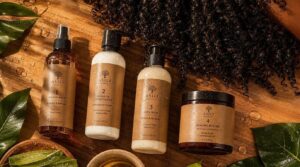
The order you apply your products matters more than most people realize — skip a step, and you’re basically locking moisture out instead of in.
Natural hair thrives when each layer builds on the last, from the lightest to the heaviest. Stack your products for results that actually last.
Liquid Leave-in as The First Layer
Your liquid leave-in conditioner serves as the foundational step in your routine, with everything else building upon it. Applied to damp hair, its water-based formula delivers weightless hydration directly to the mid-shaft, where dryness typically begins. As the first step in the LOC Method and moisture sandwich layering technique, it ensures optimal product sequencing for maximum effectiveness.
The conditioner’s strategic formulation and application offer four key advantages:
- Slip Enhancement — easier detangling, less breakage
- Humectant Balance — glycerin and panthenol attract moisture without overloading
- Film Former Benefits — light coating smooths the shaft for even layering
- Mid-shaft Targeting — consistent placement means no dry spots when creams follow
Creams for Moisture and Softness
After your leave-in settles, a moisture cream is where real softness begins. Think of it as the filling in your moisture sandwich—humectant power from glycerin and panthenol draws water in, while emollient slip from shea butter and ceramides smoothes every strand.
Just like your hair needs change with the seasons, so does your moisture routine—understanding how your skin type shifts year-round can help you dial in the right balance of humectants and emollients every time.
That ingredient synergy gives you immediate softness and texture spreadability across your natural hair, making product layering feel easy.
Oils for Sealing Hydration
Sealing oils—think jojoba, grapeseed, or argan—coat the hair shaft and slow moisture evaporation, completing the moisture sandwich concept in hair care. Once your cream settles, oil becomes your seal.
Oil weight matters: Lightweight oils for low porosity hair prevent buildup, while castor suits drier textures.
For sealant application, smooth a pea-sized amount along mid-lengths and ends only.
Butters for Extra-Dry Natural Hair
When hair butter steps in as the final seal, it reinforces the moisture sandwich concept for extra-dry or high-porosity hair. Heavy butters create a denser barrier, preventing rapid moisture loss in high-porosity types.
Apply using this butter application technique:
- Warm shea butter between palms to activate vitamins A and E, which soften and protect strands.
- Use cupuaçu butter on brittle ends as a spot treatment for intense replenishment.
- Reach for mango butter on mid-lengths to hydrate without heaviness.
A small amount of quality hair butter goes far—work ends-upward to seal moisture where needed most.
Gels, Mousses, and Styling Finishers
Styling products go on last, after your moisture layers are sealed. Gels use film formation to lock curl definition in place, and choosing one with humidity resistance ensures your style won’t puff out by noon.
For fine or wavy textures, mousse adds lift without weight, providing volume without compromising movement.
Finish with a finisher-shine spray to seal everything cleanly—maximum moisture, held beautifully.
Where Heat Protectant Fits in The Routine
Heat protectant slots in right after your leave-in—think of it as your post‑leave‑in barrier before any tool touches the hair. Give each layer an absorption pause of one to two minutes, then apply evenly.
- Choose spray versus cream based on hair density
- Work in sectioned distribution, root to tip
- Apply pre-heat coating before blow-drying or flat-ironing
- Keep oils and butters for after heat styling
Choose LOC, LCO, or LOB
Not every moisture method works the same way for every hair type, and that’s exactly why LOC, LCO, and LOB exist.
Your porosity, curl density, and season can shift which approach actually holds moisture in your strands.
Here’s how each method works and how to figure out which one belongs in your routine.
LOC Method for Low-Porosity Hair
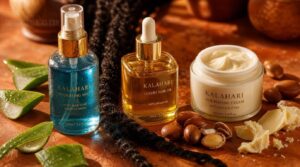
Low-porosity hair needs careful pore prep—you’re cuticles resist moisture naturally, so product layering must work with that resistance, not against it.
The LOC method sequences liquid leave-in conditioner, oil, then cream, using viscosity sequencing to build ingredient synergy layer by layer. This moisture sandwich concept effectively locks hydration into natural hair.
Track your moisture retention to confirm the method’s effectiveness.
LCO Method for High-Porosity Hair
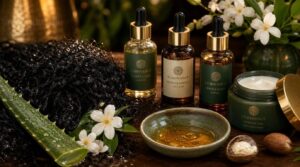
High-porosity hair absorbs moisture fast—but loses it just as quickly. That’s where the LCO Method changes everything. Unlike LOC, you apply your leave-in conditioner first, then cream, then oil last to seal.
- Start with a water-based leave-in conditioner
- Layer a heavier cream for deeper hydration
- Seal with oil to lock moisture in
- Use porosity testing to confirm retention
LOB Method for Very Dry Hair
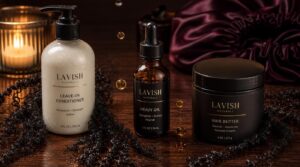
When even LCO isn’t enough, the LOB Method steps in. Designed for very dry, high-porosity hair, this method layers leave-in conditioner, then heavy oil, then hair butter—prioritizing Sealant Layering with maximum weight. It focuses on Length Prioritization, applying the Heavy Oil Choice and Hybrid Cream Mix to mid-lengths and ends to seal in moisture.
| Step | Product Type | Purpose |
|---|---|---|
| 1st | Leave-in Conditioner | Hydrate the strand |
| 2nd | Heavy Oil | Slow moisture evaporation |
| 3rd | Hair Butter | Seal in moisture completely |
Finish with Nighttime Moisture Lock using a satin bonnet to maximize hydration retention.
Moisture-Sandwich Layering Explained
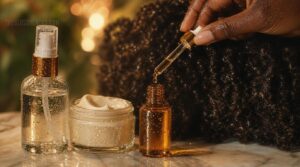
The moisture-sandwich concept in hair care acts as your hair’s hydration blueprint. It involves layering products by viscosity sequencing—starting with a water-based leave-in conditioner on damp strands, followed by a cream for slip enhancement, and sealed with an oil. Absorption timing is critical: wait 1–2 minutes between each layer.
- Apply leave-in for immediate moisture retention.
- Follow with cream to improve product ratio balance.
- Finish with oil to lock in hydration using layering order importance.
How to Test Which Method Works
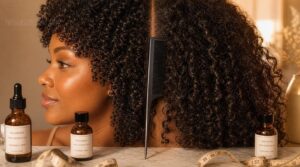
Wondering which method actually suits your strands? Divide your hair into sections using a standardized section size, then apply LOC to one side and LCO to the other—same products, same absorption timing, different order.
Track results using a quantitative softness rating, shrinkage measurement technique, and frizz count over several days under consistent humidity control.
| Metric | LOC Result | LCO Result |
|---|---|---|
| Softness Rating | /10 | /10 |
| Shrinkage Level | Low/Med/High | Low/Med/High |
| Frizz Count | # flyaways | # flyaways |
Adjusting Layers for Curl Density
Curl density changes everything about how you layer. Low-density hair requires lightweight layering and curl lift strategies—prioritizing mousse over heavy creams. High-density strands demand bulk reduction techniques and carefully balanced product ratios to prevent a weighted-down feel.
The moisture sandwich concept applies universally: start with a liquid, followed by a density-specific viscosity cream, then seal. This method adapts to hair thickness, not curl pattern, ensuring tailored hydration and definition.
Always match the method to your hair’s actual thickness, not its curl pattern. This approach guarantees optimal results, whether managing fine or coarse textures.
Avoid Product Buildup Mistakes
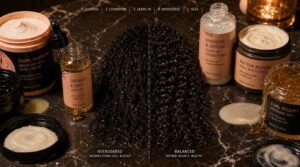
Getting your layering method right is only half the battle — how much you use and where you put it matters just as much. Even the best products can work against you, leaving your hair weighed down, greasy, or starved for moisture.
Here are the most common buildup mistakes to watch for and how to fix them.
Using Too Much Product at Once
More product doesn’t mean more moisture — it often means more problems. Residue accumulation starts the moment you cross that invisible line between enough and too much, and your curls pay the price.
Watch for these signs of heavy product weight and potential drawbacks of overlayering:
- Curl Definition Loss — excess slip causes strands to clump unevenly
- Tacky, sticky texture after drying instead of smooth definition
- White flaking from dried product buildup on the hair shaft
- Rinse efficiency drops — oils and butters resist full removal
- Scalp Irritation — trapped sweat and residue disrupt your scalp’s natural balance
Managing product buildup and scalp health means respecting the moisture sandwich concept in hair care: balancing lightweight and heavy products in intentional, measured layers — not stacking everything at once.
Applying Heavy Products Near The Scalp
Your scalp isn’t a sponge — it’s living skin. Heavy butters for high porosity hair belong on the mid-shaft to ends, not pressed against the root area.
Root area saturation blocks scalp breathability and invites buildup fast. Scalp contact minimization is crucial here: use application distance techniques, and if spraying, narrow nozzle usage keeps product exactly where needed.
This ensures moisture lock strategies actually work, preventing root-area congestion while targeting treatment to the hair’s most vulnerable sections.
Mixing Incompatible Ingredients
Not every product plays well with others — and when they don’t, your hair pays the price.
Emulsion breakdown, pH clash, salt interference, film former mismatch, and fragrance separation are the five most common ingredient interactions that derail product cocktailing:
- Emulsion breakdown – Water and oil bases separate without a shared emulsifier, leaving patchy distribution
- pH clash – Combining high- and low-pH formulas shifts conditioning performance, making hair feel stiff
- Salt interference – Sodium chloride reduces polymer solubility, increasing residue during custom blending
- Film former mismatch – Overlapping resins trap dryness underneath instead of sealing moisture in
- Fragrance separation – Incompatible solvent systems cause uneven curl definition when layering versus mixing hair products
Layering Oils Before Water-Based Products
Ingredient incompatibility isn’t the only order problem — sequence matters just as much. Applying oil before your water-based leave-in blocks absorption because oils are hydrophobic and repels moisture rather than welcoming it. Think of it as locking an empty room.
Applying oil before your leave-in locks moisture out, not in
Viscosity sequencing solves this: start light, layer heavier. Use oil after your leave-in for proper occlusion timing, slip enhancement during detangling, and to genuinely seal in moisture.
Signs Your Hair is Over-Layered
Over-layering announces itself clearly once you know what to look for.
Heavy formulation stacking — especially silicone buildup on top of oils — creates a greasy coating that looks shiny but feels slippery, not hydrated. Your curls may experience curl collapse within hours, and rapid tangling follows as strands catch on residue rather than glide. Watch for these five signals:
- Hair carries a heavy feel even after light leave-in application
- Scalp itchiness or oily flakes develop within one to two days
- Curls lose definition and clump unevenly rather than springily
- Tangles form faster than usual, requiring extra detangling passes
- Reviving with water alone doesn’t restore softness — only clarifying does
How to Refresh Without Adding Buildup
Once you’ve spotted the signs of over-layering, your refresh strategy matters just as much as your wash-day routine. Start with a water-only mist — a simple hydrating mist lets curls revert without adding new product layers.
If needed, follow with a light leave-in reapply on mid-lengths only. Scalp-safe handling means keeping product away from roots entirely.
Minimal product layers and smart refresh timing intervals are your best buildup prevention tools.
Build a Weekly Layering Routine
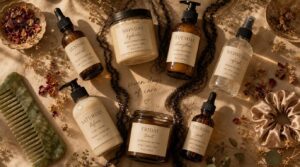
Knowing how to layer products is one thing—making it stick week after week is where real progress happens.
A consistent routine takes the guesswork out of wash day and keeps your hair responding well between sessions.
Here’s how to structure your week so your curls stay moisturized from start to finish.
Wash-Day Product Layering Steps
Wash day isn’t just about cleanliness—it’s your reset, your foundation. Pre‑wash detangling removes knots before water hits your strands, making moisture mapping across every section far more precise. Think of layering order importance like building a wall: skip a brick and the whole thing shifts.
- Cleanse, then condition mid-lengths and ends before styling
- Apply leave‑in conditioner first—using leave‑in conditioners as the moisture foundation locks hydration into the shaft
- Follow the LCO Method or your chosen order, allowing layer absorption timing of 1–2 minutes between each step
This step-by-step hair product application process helps every layer seal in moisture fully.
Midweek Moisture Refresh Routine
Between wash days, your curls need a reset—not a full routine. Start with a scalp hydration mist or refresh spritz, timing it so hair is damp, not drenched.
Understanding hair porosity and selecting the right method matters here: a lightweight, silicone-alternative leave-in works as your moisture foundation for midweek frizz control.
Seal with a light oil to lock in moisture, then scrunch to restore curl redefinition.
Protective Style Layering Tips
Once your products are layered and your style is set, protecting that moisture becomes the real work. Use a refresh spritz technique to lightly reactivate curls midweek without disturbing your base layers.
Edge sealants keep your perimeter smooth and polished through nighttime cover-ups like satin bonnets. These smooth shift methods extend protective style longevity, ensuring your layering techniques for curly hair stay effective longer.
Seasonal Adjustments for Natural Hair
Your layering routine can’t stay the same year-round.
Summer demands humidity management and UV shielding—swap heavy butters for lighter leave-ins and add UV-protective layers. Summer scalp care requires more frequent cleansing.
Autumn moisture sealing becomes critical as air dryness increases.
Winter calls for winter protein treatments alongside deeper conditioning to combat brittleness.
Seasonal adjustments to hair product layering protect moisture retention through every climate shift.
Clarifying to Reset Product Layers
Think of clarifying as hitting the reset button on your strands. Product buildup from gels, butters, and leave-ins blocks moisture retention over time.
Use a clarifying shampoo every few weeks—more often with hard water mineral deposits—focus your scalp massage on the roots first.
Clarifier rinse time matters, so rinse thoroughly. Follow immediately with post-clarifying conditioning to restore softness before restarting your product layering routine.
Tracking What Your Hair Responds To
Your hair keeps a record—you just have to pay attention. After each wash day, take photos from multiple angles in consistent lighting so you can actually compare texture and curl response over time.
Progress journaling connects product timing to real results: note what you applied, in what order, and how your scalp zone monitoring reveals buildup patterns.
That data tells you whether your porosity methods are truly working.
Frequently Asked Questions (FAQs)
Can layering products help with scalp health?
Consistent ceramide enrichment and barrier sealing support scalp health by locking in scalp hydration and microbiome support.
Anti-inflammatory layering through strategic product layering technique promotes scalp oil balance and maximum moisture for natural hair care.
Does water quality affect how products absorb?
Yes, absolutely. Hard water residues and mineral buildup interfere with product absorption substantially.
The pH balance effect on your cuticle, plus temperature absorption shifts, determines how well water-based products actually penetrate your natural hair’s porosity.
How does diet impact natural hair moisture retention?
Protein consumption builds keratin, while healthy fats support scalp comfort. Vitamin A regulates sebum production, and iron ensures adequate oxygen supply to follicles. Water maintains overall hydration from within.
Can layering products slow natural hair breakage?
Layering products correctly reduces friction, seals hydration, and boosts elasticity—making strands more flexible and far less likely to snap during stress-free detangling sessions or everyday handling.
Do hair tools affect how layered products perform?
The tools you use matter more than most people realize.
A diffuser’s gentle airflow lets layered products set evenly, while rough brush friction can shift creams mid-strand and undo everything underneath.
Conclusion
The cheapest product in your cabinet, applied in the right order, will outperform a luxury serum used wrong every single time. That’s the quiet truth behind layering products on natural hair—sequence is the skill, not the spending.
Now that you understand how liquid, cream, and oil each serve a distinct role, your wash days aren’t guesswork anymore. They become a system.
Build it consistently, adjust it honestly, and your curls will show you exactly what they’ve needed all along.
- https://www.heycurls.com/blogs/thehue/the-loc-method-vs-the-lco-method?srsltid=AfmBOorJCiB_v1M7VVLocDXirOI3OXshu5ScMBvyTiHrzMwOzNz0t8Hf
- https://cecred.com/blogs/cecred-space/how-to-use-the-loc-method-for-maximum-moisture?srsltid=AfmBOoplVEV-nFJ1zmPJ8tWUqxHUUB123IL260tizOikacYzpyHrLpbr
- https://calianatural.com/blogs/news/all-you-need-to-know-about-hair-porosity