This site is supported by our readers. We may earn a commission, at no cost to you, if you purchase through links.
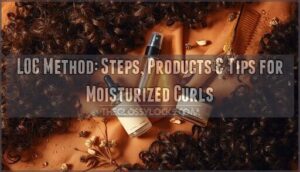
Most curly hair routines fail not because of the products—but because of the order. Moisture escapes before it ever gets a chance to sink in, leaving curls dry, frizzy, and impossible to define no matter how many products you pile on.
The LOC method fixes that at the root. By layering liquid, oil, and cream in a specific sequence, you create a moisture seal that actually holds through humidity, heat, and everything else the day throws at you. Once you understand why the order matters, your whole approach to wash day changes—and so do your curls.
Table Of Contents
- Key Takeaways
- What is LOC Method
- LOC Method Steps
- Top 5 LOC Products
- LOC Method Frequency
- LOC Method Variations
- Frequently Asked Questions (FAQs)
- Which is better, loc or lco?
- What is the loc method lush?
- Should you put LOC method on wet or dry hair?
- What is the loc process?
- Which LOC method is better?
- What is the difference between LCO method and LOC method?
- How often should I do the loc method?
- Do you do the LOC method on wet hair?
- What oils are best for LOC method?
- How often should I do the LOC method?
- Conclusion
Key Takeaways
- The LOC method locks moisture into curly hair by layering liquid, oil, and cream in a specific order, preventing dryness and frizz.
- Your hair’s porosity determines which variation—LOC, LCO, or LOCO—will work best and how often you should repeat the routine.
- Applying products to clean, damp hair and using the right oils and creams for your texture and porosity are key to lasting hydration and defined curls.
- Consistent use and adjusting for climate or hair changes help keep curls soft, manageable, and healthy between wash days.
What is LOC Method
The LOC method is a simple three-step routine — Liquid, Oil, Cream — designed to lock moisture into curly and textured hair.
Each step works together to build lasting hydration, which is why wetting natural hair the right way matters more than most people realize.
It’s been a breakthrough for naturals dealing with dryness, and once you understand how each layer works, it’s easy to make it your own. Here’s what you need to know.
Definition and Benefits
The LOC method — Liquid, Oil, Cream — is one of the most reliable moisturization techniques in curly hair care. It works by layering products in a specific order to increase moisture retention from the inside out. The liquid hydrates, the oil seals, and the cream reinforces that barrier.
Together, they tackle frizz reduction, improve elasticity, support scalp health, and improve curl definition — turning dry, brittle strands into something genuinely soft. consistent application is key.
How It Works for Curly Hair
Curly hair loses moisture fast — and that’s exactly what the LOC Method solves. Each layer has a job. The leave-in conditioner floods your strands with water‑based hydration, opening the door. Then sealing oil creates a hydrophobic film over the cuticle, slowing moisture loss considerably. The cream locks everything in with a thicker barrier. The result? Real frizz reduction, better curl definition, and softer strands that last for days.
The LOC method layers liquid, oil, and cream to seal moisture into curly hair for days of defined, frizz-free softness
Here’s why it works so well:
- Cuticle sealing reduces direct exposure to air and heat
- Porosity impact shapes which oils and creams work best for your hair
- Moisturization builds from inside out, not just surface‑level coating
- High porosity curly hair benefits most — gaps in the cuticle get filled
- Frizz reduction comes from keeping moisture retention consistent between wash days
The LOC method also emphasizes the importance of hair porosity when selecting oils.
History and Origin
The science behind moisture retention didn’t appear overnight. Rochelle Graham‑Campbell — founder of Alikay Naturals — coined the LOC Method during her own natural hair journey, drawing on Chicoro Book Influence from Grow It to translate organic chemistry into something anyone could use.
She shared it with her YouTube followers, and early online spread did the rest — Curly Nikki featured it in 2013, and curly hair communities ran with it.
Here’s how it took root:
- Natural Hair Roots tied it to the 2000s movement away from chemical relaxers
- Graham‑Campbell trademarked it, later releasing an official Alikay Naturals Trademarked Products kit
- Blogs and forums made the LOC method a household name for textured hair
- The LCO Method soon followed as a low‑porosity variation
LOC Method Steps
The LOC method works best when you follow each step in the right order. Skipping or rushing a step can leave your curls dry, no matter how good your products are.
Here’s exactly how to do it.
Preparing The Hair

Good prep is half the battle. Start with a gentle cleansing routine using a paraben-free shampoo, then follow up with a solid conditioning routine to replenish moisture. Your damp hair prep matters — aim for 80–90% dry before layering anything.
| Prep Step | Why It Matters |
|---|---|
| Gentle Cleansing | Removes buildup without stripping oils |
| Deep Conditioning | Restores moisture to porous strands |
| Sectioning Technique | Ensures even product distribution |
| Damp Hair Prep | Boosts absorption of each layer |
| Prep Tools (microfiber, clips) | Reduces frizz and breakage |
Your hair porosity guides every choice here.
Knowing whether your strands are low, medium, or high porosity helps you pick treatments that actually absorb — check out these deep conditioning options matched to hair porosity and texture to find what your hair is really craving.
Applying Leave-in Conditioner

Getting this step right transforms everything. Apply your leave-in conditioner to damp hair — not soaking wet, not almost dry — right after washing. That’s your sweet spot for Hair Wetness Timing.
Use a coin-sized amount for medium hair, walnut-sized for long strands. Divide into sections for even coverage, and rake product from mid-shaft to ends. This Sectioning Technique prevents Scalp Buildup Prevention issues while honoring Texture-specific Application needs.
Fine hair needs less; coily hair drinks it up.
Locking in Moisture With Oil
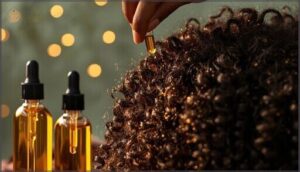
Layering oil over your leave-in conditioner is where the LOC Method really starts working. This is Oil Barrier Science in action — the oil forms a hydrophobic film that cuts moisture loss by up to 50%.
Choose your oil based on Hair Porosity: grapeseed for low, castor for high. Apply 2–4 drops per section using your fingertips, focusing on ends.
That’s your Moisture Retention Benefits locked in.
Sealing With Cream
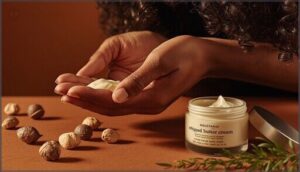
Sealing with cream is your final power move — the step that locks everything in place. Think of your styling cream as the vault door to all the moisture you’ve built up with liquid and oil.
For porosity matching, go butter‑based and heavier for high porosity hair, lighter for low porosity:
- Press using the praying hands technique, root to end
- Rake fingers through for even cream distribution
- Scrunch upward to boost curl definition
- Shea or mango butter adds frizz control and shine enhancement
Don’t overdo it — too much weighs curls down.
Top 5 LOC Products
The right products can make or break your LOC routine.
Not every oil or cream works the same way for every curl pattern, so knowing where to start saves you time and money.
Here are five solid options worth adding to your lineup.
1. Grapeseed Oil Skin Care Moisturizer
Think of grapeseed oil as curls’ invisible shield. As a lightweight hair moisturizer in your LOC routine, it absorbs fast, leaving zero greasiness behind.
Its non‑comedogenic properties keep your scalp clear, while antioxidant benefits — vitamin E, C, and resveratrol — fight environmental damage. Vegan sourcing from winemaking by‑product makes it a clean natural hair product you can feel good about.
A little goes a long way with the 10.58‑oz bottle.
| Feature | Detail |
|---|---|
| Texture | Lightweight, fast-absorbing |
| Key Nutrients | Vitamins E, C, linoleic acid |
| Sourcing | Vegan, expeller-pressed |
| Scalp Safety | Non-comedogenic |
| Seasonal Application | Year-round, ideal for high porosity |
1. Organic Jojoba Oil for Hair Skin and Face
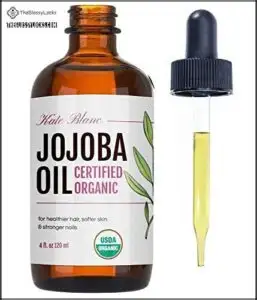
Jojoba oil is nature’s closest match to your scalp’s own sebum — which means your hair actually recognizes it. That’s a big deal in your LOC routine.
Use it as your oil step: massage 3–5 drops into damp hair after your leave‑in, and it seals in moisture without weighing curls down.
It’s USDA Certified Organic, cold‑pressed, and vegan. Fine or low‑porosity hair especially benefits from its lightweight feel, and paired with a cream, it can lock in hydration for up to 7 days.
| Feature | Detail |
|---|---|
| Texture | Lightweight, non-greasy |
| Key Nutrients | Vitamin E, B-complex, eicosenoic acid |
| Certification | USDA Organic, cruelty-free, vegan |
| Best For | Fine or low-porosity hair |
| Moisture Retention | Up to 7 days with cream sealer |
- 100% pure, cold-pressed, and USDA Certified Organic — no sketchy additives or harsh chemicals
- Works for pretty much everything: hair, skin, scalp, cuticles, lips, you name it
- Super lightweight and non-greasy, so it won’t leave you feeling like a grease trap
- The faint natural smell isn’t for everyone
- The amber glass bottle looks great but can be a leak or breakage risk
- Not the best pick if you have specific skin conditions or sensitivities — worth checking the ingredients first
3. Coconut Curl Shine Hair Conditioner
Want curls that actually bounce back? SheaMoisture’s Coconut & Hibiscus Conditioner is your LOC method’s "L" — a leave‑in conditioner that delivers serious curl definition and frizz control from the first application.
Its vegan formulation combines:
- Fair Trade Shea Butter — deep moisture for thick, coily textures
- Hibiscus extract — boosts elasticity to cut breakage
- Neem Oil — smooths cuticles for a real shine boost
No sulfates, no silicones. Just clean coconut benefits for moisturized, defined curl hair.
4. Haitian Black Castor Oil Serum
Your curls just got a serious upgrade from the coconut conditioner — now it’s time to seal that moisture in place with something deeply nourishing.
Haitian Black Castor Oil Serum is the oil step your LOC routine has been waiting for. Its nutrient profile is impressive: naturally packed with 90% ricinoleic acid, plus omega fatty acids that strengthen strands and reduce breakage. The seeds are roasted and hand‑crushed in Haiti, then boiled — no refining — which preserves every bit of that hair growth benefit.
For application techniques, massage a few drops into damp, sectioned hair after your leave‑in conditioner. Hair porosity matters here — this heavier oil works best for high‑porosity hair that struggles to retain moisture. Sustainable sourcing aids local Haitian women, so every drop counts twice.
2. Organic Olive Oil Skin Care
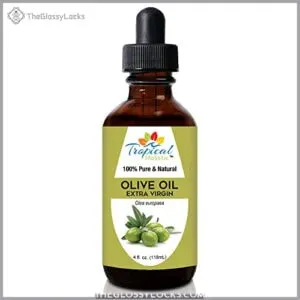
After the castor oil seals high-porosity strands, you need something lighter — and that’s where Organic Olive Oil Skin Care earns its spot.
Cold-pressed and unrefined from Tunisia, it locks in moisture without that heavy greasy feeling.
Its oleic acid (up to 83%) penetrates the hair shaft, while vitamin E fights oxidative damage.
A few drops go a long way — just $14.99 for 4 ounces.
For low-to-medium porosity hair, this keeps moisture sealed beautifully.
- Cold-pressed and unrefined, so you’re getting the real deal — no fillers, just pure olive oil straight from Tunisia
- Works for pretty much everything: hair, skin, nails, even baby care
- High oleic acid content actually penetrates the hair shaft instead of just sitting on top
- At 4 ounces, the bottle runs out faster than you’d expect — especially if you’re using it head to toe
- The dropper tends to drip, so you’ll likely waste a bit of product over time
- If you need a large supply on hand, this size probably won’t cut it
LOC Method Frequency

How often you use the LOC method depends on your hair, not a fixed schedule. Some people need it every wash day, while others only use it few times a week.
A few key factors can help you figure out what works best for your curls.
How Often to Apply
Most people apply the LOC method every 3 to 5 days — but your hair writes its own schedule. Porosity scheduling is the real starting point here.
High porosity hair loses moisture fast, so refresh intervals land closer to every 2 to 3 days.
Low porosity hair, on the other hand, is prone to product buildup timing issues, so once or twice a week is plenty.
Seasonal adjustments matter too — humidity shifts change how your curly hair management routine performs.
Watch for frizz, dryness, or sluggish curl definition. Those are your hair’s way of saying it’s time.
Factors Affecting Frequency
Your hair porosity, curl pattern, damage level, climate humidity, and product weight all shape how often your LOC method routine needs renewing.
- Hair Porosity: High porosity curls lose moisture fast — every 1 to 2 days versus low porosity’s 5 to 7.
- Curl Pattern: Type 4C coils dry 20% faster than wavy textures.
- Climate Humidity: Dry winters cut moisture retention by 30%.
- Damage Level: Color-treated or heat-damaged hair demands more frequent leave-in conditioner layering for real moisture retention.
Tips for Maintaining Moisture
Keeping your curls moisturized goes beyond wash day.
For nighttime protection, a satin bonnet retains up to 90% more hydration than cotton.
Refresh between washes every 2–3 days with a light water mist and gentle detangling using your fingers — not a comb.
Watch your product application amounts: less is more for fine hair.
In humid weather, layer your cream last as a humidity defense shield.
Consistent leave‑in conditioner layering is your best moisture retention strategy.
LOC Method Variations
The LOC method isn’t one-size-fits-all — and that’s actually a good thing. Depending on your hair’s porosity and how thirsty your curls tend to get, there’s a variation that might work even better for you.
Here are three worth trying.
LCO Method for Low Porosity Hair
If your curls drink in product slowly — or barely at all — you’re likely dealing with low porosity hair. Those tightly closed cuticles need a smarter approach to Hair Moisturizer layering.
That’s where the LCO Method flips the script. Start with a Leave-in Conditioner for Moisture Penetration Techniques, layer cream next to soften resistance, then seal with Lightweight Oil Choices like argan or jojoba.
This Product Layering Ratio prevents buildup while boosting Hair Porosity Understanding and long-term scalp health.
LOCS Method for Extra Hydration
For high porosity hair that loses moisture almost as fast as you add it, the LOCS Method is your secret weapon. It takes the classic LOC Method one step further — adding a Sealant Butter Types layer after your Leave‑in Conditioner, Porosity Oils, and cream steps.
Think of it as the final lock on the door:
- Shea butter seals moisture for up to 5–7 days
- Cocoa butter shields against humidity
- Mango butter works as a lighter option for medium textures
- Apply before Protective Style Prep for week‑long Hair Hydration
- Use Midweek Refresh Techniques with a light liquid spray between wash days
LOCO Method for Optimum Moisture Retention
The LOCO Method (Liquid, Oil, Cream, Oil) is your upgrade when standard LOC Method routines fall short on Hair Moisturizing.
Dual oil layering — a lightweight coconut oil first, then heavier castor to seal — sandwiches your cream for enhanced Curl Definition and Curl clumping techniques.
Use Porosity‑specific oils and a quality Leave‑in Conditioner to match your Hair Porosity.
Try Seasonal humidity tweaks and Lightweight cream alternatives to keep fine-to-medium textures bouncy and frizz-free for days.
Frequently Asked Questions (FAQs)
Which is better, loc or lco?
Think of it like choosing the right tool for the job. LOC Method suits high porosity hair; LCO Method fits low porosity hair.
Your hair porosity determines which wins for lasting hair moisturizing results.
What is the loc method lush?
Lush takes the LOC Method and builds it around ethically sourced, natural ingredients.
Their lineup — Super Milk, Renee’s Shea Souffle, and Curl Power Cream — walks you through liquid, oil, and cream for serious curl care.
Should you put LOC method on wet or dry hair?
Damp hair is your sweet spot.
It keeps cuticles slightly open for better leave-in conditioner absorption, seals moisture without dilution, and gives you the curl definition and moisture retention that dry hair simply can’t match.
What is the loc process?
Start with a leave-in conditioner on damp hair, layer oil to seal in hydration, then finish with cream to lock everything in — your curls stay defined and moisturized all day.
Which LOC method is better?
Neither one wins universally — it depends on your hair’s porosity, density, and climate. High-porosity curls thrive with LOC; low-porosity hair usually prefers LCO. Test both for a few wash days.
What is the difference between LCO method and LOC method?
Think of it like layering a jacket — order changes everything.
LOC seals oil before cream, trapping moisture fast. LCO flips that, finishing with oil as the outermost shield.
Same steps, different results.
How often should I do the loc method?
Apply it every 3 to 5 days for most hair types. High porosity hair may need it every 2 to 3 days, while low porosity hair does well once or twice weekly.
Do you do the LOC method on wet hair?
Yes — do the LOC method on damp hair, right after washing. That sweet spot lets your leave-in conditioner absorb deeply, while oil and cream seal every drop of moisture in.
What oils are best for LOC method?
Not all oils work the same way.
Jojoba and grapeseed are lightweight oil options for fine hair.
Coconut and avocado offer penetrating oil benefits for dry strands.
Castor delivers sealing oil choices for high porosity curls.
How often should I do the LOC method?
Most people do well applying it once or twice a week.
Your hair porosity, texture, and climate all shape the right schedule — high porosity hair often needs it every two to three days.
Conclusion
Your curls finally have the order they’ve been waiting for. The LOC method isn’t just a routine—it’s a system that works with your hair’s natural logic, locking moisture in before it ever gets the chance to escape.
Start with clean, damp hair, layer with intention, and trust the sequence. Some days your curls will surprise you.
Once moisture actually stays where you put it, everything else falls into place—strand by strand.
- https://www.carolsdaughter.com/blog/hair/hair-care-tips/loc-method-for-natural-hair.html
- https://www.aveda.com/living-aveda-article-the-loc-method-easy-how-to
- https://us.davines.com/blogs/news/loc-method
- https://cecred.com/blogs/cecred-space/how-to-use-the-loc-method-for-maximum-moisture
- https://www.madison-reed.com/blog/all-about-the-loc-the-liquid-oil-cream-method