This site is supported by our readers. We may earn a commission, at no cost to you, if you purchase through links.

Your hair looks healthy, resists damage beautifully, and somehow still feels parched no matter how much conditioner you slather on. That’s the low porosity paradox. When your cuticles lie flat and tight like overlapping roof shingles, moisture can’t penetrate the shaft—it just pools on the surface, leaving you with product buildup and persistent dryness.
The right low porosity hair deep conditioners change this equation entirely. They use heat-activated humectants and lightweight penetrating oils to slip past your hair’s fortress-like barrier. With the correct formula and technique, you can finally achieve the soft, hydrated strands your hair has been capable of all along.
Table Of Contents
- Key Takeaways
- What is Low Porosity Hair?
- Signs You Have Low Porosity Hair
- Why Deep Conditioning Matters
- Choosing Deep Conditioners for Low Porosity Hair
- Top 10 Deep Conditioners for Low Porosity Hair
- 1. As I Am Hydration Elation
- 2. Alikay Naturals Avocado Moisture Hair Mask
- 3. Carol’s Daughter Almond Milk Mask
- 4. Curl Junkie Argan Olive Hair Conditioner
- 5. Giovanni Eco Chic Hydrating Conditioner
- 6. Jessicurl Deep Conditioning Treatment Citrus Lavender
- 7. Kinky Curly Knot Today Conditioner
- 8. Mielle Babassu Mint Deep Conditioner Protein
- 9. Silk Protein Ultra Moisturizing Conditioner
- 10. Mielle Mongongo Oil Hydrating Conditioner
- How to Deep Condition Low Porosity Hair
- Maximizing Deep Conditioning Results
- Ingredients to Avoid and Embrace
- Tips for Maintaining Healthy Low Porosity Hair
- Frequently Asked Questions (FAQs)
- Conclusion
Key Takeaways
- Low porosity hair’s tightly sealed cuticles block moisture absorption, requiring heat-activated deep conditioners with lightweight humectants (glycerin, panthenol) and penetrating oils (jojoba, argan) rather than heavy butters that sit on the surface.
- Protein-free formulas work best for most low porosity hair since the structure already contains abundant keratin—adding more protein increases brittleness by up to 40%, though occasional hydrolyzed protein treatments help when damage appears.
- Proper application means clarifying first to remove buildup, sectioning hair, applying conditioner mid-length to ends, then processing for 20-30 minutes with heat to lift cuticles and boost absorption by roughly 60%.
- Clarify every 4-6 weeks to prevent product buildup from accumulating on resistant cuticles, then immediately follow with deep conditioning to restore moisture balance without the residue that sabotages future treatments.
What is Low Porosity Hair?
Low porosity hair has tightly closed cuticles that act like a locked door, making it tough for moisture to get inside the hair shaft.
This structural characteristic creates a unique set of challenges when you’re trying to hydrate and nourish your strands.
Understanding what low porosity hair actually is helps you choose the right products and techniques that work with your hair’s natural structure instead of against it.
Key Characteristics of Low Porosity Hair
Your low porosity hair has tightly compacted cuticle layers that lie flat against the shaft, creating a smooth, protective barrier. This compact structure limits how quickly water and conditioners penetrate, leading to that signature bead-on-the-surface effect when you wet your hair.
Genetic factors largely determine this cuticle arrangement, which ironically gives you excellent damage resistance. Those tightly sealed scales shield against environmental stress and breakage better than more porous hair types.
Steam treatments can help open the cuticle, allowing for better moisture absorption.
Common Challenges With Low Porosity Hair
While that compact hair cuticle delivers protection, it comes with real trade-offs. You’ll notice moisture resistance that leaves strands feeling dry even after conditioning, plus extended drying times that can stretch for hours. Product buildup becomes a recurring frustration as formulas sit on the surface instead of penetrating.
Color resistance makes salon treatments unpredictable, and imbalanced hydration creates that paradox where your hair feels simultaneously wet outside yet parched inside. This is because low porosity hair struggles with moisture absorption.
How Hair Porosity Affects Moisture Absorption
Porosity dictates how water moves through your hair. Low porosity hair shows around 31% water uptake by weight—considerably less than damaged strands that exceed 40%. Those tightly overlapped cuticles create a “low absorption, high retention” profile: moisture enters slowly but stays longer once inside.
Low porosity hair absorbs moisture slowly but retains it longer thanks to tightly overlapped cuticles that limit water penetration
That’s why your strands float during porosity tests while porous hair sinks immediately, revealing fundamental differences in cuticle structure and conditioning agent penetration.
Signs You Have Low Porosity Hair

Not sure if your hair is actually low porosity? There are a few telltale signs that go beyond just feeling dry.
Let’s walk through the most common indicators so you can figure out what you’re working with.
Dryness and Extended Drying Time
Your hair can feel parched on the surface because water and deep conditioners struggle to slip past those tightly packed cuticle scales. Low porosity hair often stays damp for eight hours or more after washing, thanks to restricted moisture movement.
Heat benefits absorption by temporarily lifting the cuticle, letting humectant balance and lightweight formulas reach the cortex. Drying techniques like microfiber blotting speed the process while locking in hair hydration and improving hair moisture retention.
Product Buildup and Limp Appearance
Because low porosity hair repels moisture so effectively, conditioners and styling products often sit on the surface instead of penetrating. That surface coating dulls shine, flattens volume, and leaves strands feeling heavy—classic buildup indicators. Silicone impact and scalp congestion worsen over time, blocking fresh treatments from working.
- Clarifying shampoos every 2–4 weeks strip residue and restore movement
- Lightweight formulas prevent future coating and maintain hair texture
- Volume restoration happens fast once you remove accumulated films
Difficulty Absorbing Moisture and Color Treatments
The lipid-rich F-layer on your cuticle acts like a waterproof membrane—water beads instead of sinking in, and color molecules can’t penetrate evenly. You’ll notice hair takes forever to get soaked in the shower and dye lifts patchy or washes out fast. Heat activation opens those cuticle barriers temporarily, letting moisture absorption finally happen.
| Sign | Why It Happens |
|---|---|
| Water beads on surface | Lipid barriers repel aqueous formulas |
| Patchy color results | Color resistance from compact cuticle structure |
| Products sit on top | Product buildup due to low moisture retention |
Why Deep Conditioning Matters
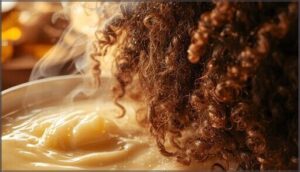
Deep conditioning isn’t just a nice-to-have for low porosity hair—it’s the workaround your tightly sealed cuticles need to actually absorb moisture. Without it, you’re basically asking a locked door to let water through.
Here’s what happens when you get it right.
Benefits for Low Porosity Hair
When you’re dealing with low porosity hair, deep conditioners become your best defense against chronic dryness. Heat-assisted treatments lift those tightly packed cuticles, allowing hydration benefits that can last for days instead of hours.
You’ll notice breakage reduction as your strands gain strength, plus a manageability boost that makes detangling far less frustrating.
The shine enhancement and styling responsiveness you get from consistent weekly treatments transform how your hair looks and behaves.
Improved Moisture Retention and Elasticity
Think of your hair shaft as a water bottle with a tight seal—once you crack it open with the right deep conditioners, you can finally fill it up. Studies show that heat-assisted treatments boost moisture absorption up to 60% in low porosity hair.
Humectant penetration with ingredients like panthenol keeps hydration locked in longer than glycerin alone. That sustained moisture directly improves hair elasticity, reducing snap-back breakage during styling and everyday manipulation.
Reducing Breakage and Enhancing Shine
Breakage prevention starts with understanding protein sensitivity—low porosity hair already has abundant keratin, so too much protein increases brittleness by 40%.
Instead, focus on moisture penetration using lightweight humectants like glycerin and argan oil, which boost shine by 50% within four weeks.
Deep conditioners prevent product buildup while delivering shine enhancement and reducing breakage by 30% when you choose protein-free formulas strategically.
Choosing Deep Conditioners for Low Porosity Hair
Not all deep conditioners work the same on low porosity hair. The right formula depends on what’s actually inside the bottle and how those ingredients interact with your tightly sealed cuticles.
Let’s break down what to look for and how to decide between protein-free and protein-infused options.
Ingredients to Look For
When shopping for deep conditioners for low porosity hair, you want formulas built on water-based bases with film-forming humectants like glycerin, panthenol, or aloe vera to draw moisture in.
Look for lightweight oils rich in linoleic acid—grapeseed, sunflower, or jojoba—that won’t sit on top.
Cationic agents such as behentrimonium methosulfate improve slip, while botanical extracts like algae and amla offer antioxidant support without heaviness.
Protein-Free Vs. Protein-Infused Formulas
Once you’ve identified the right ingredients in deep conditioners, you’ll need to decide between protein-free and protein-infused formulas. Low porosity hair usually thrives on protein-free options rich in humectants, reserving hydrolyzed proteins for occasional use when damage appears. Here’s how to balance moisture and avoid protein overload:
- Prioritize protein-free formulas for weekly conditioning to maintain hair moisture without buildup
- Introduce lightweight hydrolyzed proteins like silk or rice protein monthly if breakage occurs
- Watch for protein sensitivity signs—stiffness or snap-prone strands signal overload
- Use clarifying treatments before occasional protein sessions to improve penetration
- Maintain a 70–90% protein-free routine for best moisture balance in low porosity hair
Top 10 Deep Conditioners for Low Porosity Hair
Now that you know what to look for in a deep conditioner, it’s time to explore the products that actually deliver results for low porosity hair.
Each of these formulas has been selected based on ingredient composition, moisture penetration ability, and real-world performance.
Here are the top 10 deep conditioners that work with your hair’s unique structure instead of against it.
1. As I Am Hydration Elation
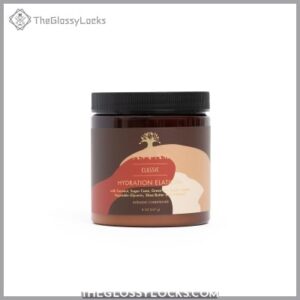
As I’m Hydration Elation Intensive Conditioner delivers what low porosity hair needs most: deep moisture without heavy buildup. This protein-free formula centers on coconut oil, glycerin, and shea butter—ingredients proven to hydrate without overwhelming tightly-closed cuticles.
Application techniques matter here: apply to clean hair, cover with a plastic cap, and process for 15–30 minutes. Adding heat from a hooded dryer boosts absorption by up to 60%.
User experiences show improved manageability within two weeks when used every 2–3 weeks. The 8 oz jar suits medium porosity best, though higher-porosity users may need added protein from styling products for best results.
Best For: People with curly or coily hair looking for a deep conditioning treatment that hydrates without protein, especially if you have medium porosity hair or struggle with dryness and tangles.
- Delivers serious moisture with coconut oil, glycerin, and shea butter without weighing hair down or leaving buildup on low to medium porosity hair
- Works fast with the right technique—15–30 minutes under a cap (or hooded dryer for better results) gives you softer, more manageable curls
- Protein-free formula means less risk of stiffness or crunch, making it ideal if your hair gets overloaded easily
- The 8 oz jar runs out quickly if you have long or thick hair, and restocking regularly gets pricey
- High porosity hair might need extra protein from a separate styling product since this conditioner doesn’t provide strengthening on its own
- Some users with fine hair find it too rich and greasy, and there are occasional complaints about leaky packaging
2. Alikay Naturals Avocado Moisture Hair Mask
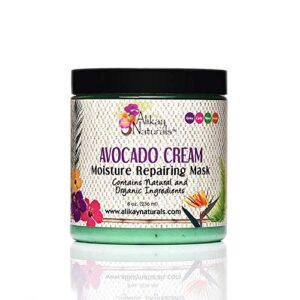
Alikay Naturals Avocado Cream Moisture Repairing Hair Mask addresses low porosity hair with a thoughtful formulation. Avocado oil—containing 55–83% oleic acid—and aloe vera juice combine with behantrimonium methosulfate to smooth cuticles and boost elasticity.
Apply to wet hair in sections, cover with a plastic cap, and process for 30 minutes. With heat, you’ll cut that to 20 minutes while improving absorption.
Users report increased shine and softer strands, though you may need added water during application to activate slip on compact cuticles.
Best For: People with low porosity hair who need a heat-activated deep conditioner that smooths cuticles and adds shine without weighing hair down.
- High oleic acid content (55–83%) from avocado oil improves elasticity and reduces breakage through enhanced shaft lubrication.
- Works with or without heat—30 minutes cold or 20 minutes under a dryer—giving you flexibility in your wash routine.
- Safe for color-treated hair and includes peppermint oil for a cooling scalp experience during treatment.
- Some users report the product leaves hair feeling oily or greasy, especially if too much is applied.
- Requires added water during application on low porosity hair to activate slip and spread evenly.
- At $21.33 for 8 oz, it’s relatively expensive compared to other deep conditioners, and some buyers have reported receiving counterfeit products.
3. Carol’s Daughter Almond Milk Mask
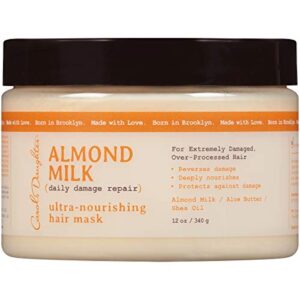
Carol’s Daughter Almond Milk Ultra-Nourishing Hair Mask combines water, behentrimonium chloride, and sweet almond oil to repair damaged hair while suiting low porosity needs. Its lightweight humectants—glycerin and propanediol—draw moisture in, while shea butter and coconut oil seal cuticles without excess weight.
Apply to damp, clarified hair mid-length to ends, add heat for 20–30 minutes, then rinse thoroughly. This deep conditioner improves elasticity and shine, though its silicones and multiple oils mean buildup potential exists—clarify every 3–4 weeks to maintain penetration and prevent limp strands.
Best For: Anyone with low porosity, damaged, or over-processed hair who needs deep weekly conditioning with heat to restore softness and elasticity without daily heaviness.
- Combines lightweight humectants (glycerin, propanediol) with rich oils and butters to hydrate low porosity hair when used with heat, improving penetration without immediate weight.
- Contains behentrimonium chloride and fatty alcohols that coat and smooth damaged cuticles, delivering noticeable slip, detangling, and shine after a single 20–30 minute treatment.
- Includes low-molecular-weight proteins (hydrolyzed vegetable protein, keratin) that temporarily reinforce weakened strands without the stiffness of heavy protein treatments.
- Multiple silicones and oils can cause buildup on low porosity hair if used too often, requiring clarifying washes every 3–4 weeks to maintain product effectiveness.
- May feel too heavy for fine or thin low porosity hair, leading to limp or greasy roots if applied near the scalp or used more than weekly.
- Protein content could contribute to stiffness or brittleness if layered with other protein-rich products, especially for low porosity hair that typically needs less protein reinforcement.
4. Curl Junkie Argan Olive Hair Conditioner
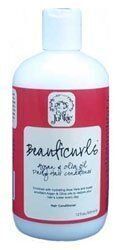
Curl Junkie Beauticurls Argan and Olive Oil Daily Hair Conditioner blends aloe vera, argan, olive, jojoba, and virgin coconut oils with behentrimonium methosulfate for slip and detangling. Though marketed as a daily rinse-out, you can use it for deep conditioning on low porosity hair. Its lightweight formula hydrates without heavy buildup when thoroughly rinsed.
Apply to damp hair, add indirect heat for 15–20 minutes, then rinse completely. Skip adding extra oils; the formulation already balances moisture and lubrication, preventing surface residue that blocks absorption.
Best For: People with low porosity curly or textured hair who want a lightweight daily conditioner that detangles and moisturizes without weighing hair down or causing buildup.
- Infused with multiple nourishing oils (argan, olive, jojoba, coconut) plus aloe vera that hydrate and calm frizz without heavy residue when rinsed properly
- Free from parabens, sulfates, artificial colors, and fragrances, making it a cleaner option for sensitive scalps
- Provides excellent slip for detangling and can double as a deep conditioner with heat, offering flexibility in your routine
- Expensive at $46.25 for a 12 oz bottle, which may not fit every budget for a daily-use product
- Some users find the consistency too thin or watery, which can make application less satisfying
- Contains coconut oil, so it won’t work for hair that reacts poorly to coconut-based ingredients
5. Giovanni Eco Chic Hydrating Conditioner
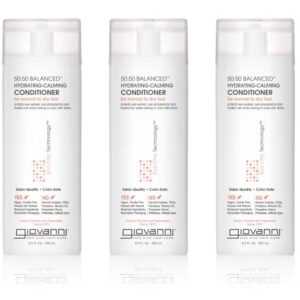
Looking for a lighter option that won’t weigh your strands down? Giovanni 50:50 Balanced Hair Moisturizer Conditioner delivers hydration mechanisms through glycerin and panthenol, helping low porosity hair absorb moisture without heavy buildup.
This vegan formulation uses botanical extracts like aloe vera and sunflower seed oil alongside behentrimonium methosulfate for slip. Its pH balance promotes cuticle smoothing, and user experiences confirm it penetrates rather than sits on the surface.
Apply with heat for 15–20 minutes as a deep conditioner to boost hair moisture and hydration effectively.
Best For: People with low porosity hair who need lightweight moisture that actually absorbs instead of sitting on top of their strands.
- Contains glycerin and panthenol that help moisture penetrate without heavy buildup or weighing hair down
- Silicone-free formula with botanical extracts like aloe vera and sunflower seed oil provides slip and detangling without residue
- PH balanced and works well with heat application for deeper conditioning in 15–20 minutes
- May not provide enough moisture for extremely dry or high porosity hair types
- Smaller bottle sizes mean you might run through it quickly if you have thick or long hair
- Some users find it pricier compared to other conditioners on the market
6. Jessicurl Deep Conditioning Treatment Citrus Lavender
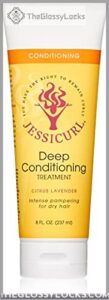
This protein-free profile features shea butter, avocado oil, and cocoa butter—ideal for low porosity hair that tends toward protein overload. The Citrus Lavender scent comes from essential oils, not synthetic fragrance.
Apply to damp hair for 15–30 minutes under a heat cap weekly to boost hair moisture and hydration. Users report improved curl clumping and reduced frizz without weighing down fine curls.
It’s a solid choice for low-porosity suitability when you pair it with periodic clarifying to prevent buildup.
Best For: Curly or coily hair with low porosity that’s prone to protein overload and needs deep moisture without heaviness.
- Protein-free formula with shea butter, cocoa butter, and avocado oil delivers intense hydration for dry, damaged curls without risking buildup from protein.
- Works well for low porosity hair when used weekly with heat for 15–30 minutes, improving curl clumping and reducing frizz.
- Sulfate-free, silicone-free, and vegan formulation is safe for color-treated hair and won’t leave residue when rinsed thoroughly.
- Thick cream texture can be difficult to squeeze from the bottle and may need diluting with water for easier application on low porosity hair.
- Contains multiple essential oil fragrance allergens (limonene, linalool, citral) that may trigger sensitivity in some users—patch testing recommended.
- Not suitable if your hair needs protein-based conditioning, and very fine or very coarse hair types may find it either too rich or not moisturizing enough.
7. Kinky Curly Knot Today Conditioner
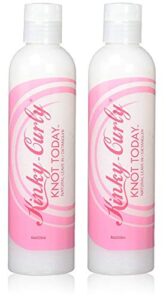
Kinky Curly Knot Today is a leave-in conditioner that doubles as a detangling treatment for low porosity hair. Its oil-free formula prevents buildup while supporting hair moisture and hydration, making it ideal for Low-Porosity Suitability.
Ingredient Analysis reveals slippery elm and marshmallow root botanicals that create impressive slip without heavy oils.
Application Methods matter: work it through soaking wet hair in sections for best results.
The Safety Profile is clean—vegan, protein-free, and silicone-free—perfect when you need gentle, effective detangling without weight.
Best For: People with low porosity, fine, or easily weighed-down curly and coily hair who need serious detangling power without heavy oils or buildup.
- Provides exceptional slip for painless detangling thanks to slippery elm and marshmallow root, reducing breakage during comb-out
- Lightweight, oil-free formula won’t cause buildup on low porosity hair and works as both a rinse-out and leave-in conditioner
- Clean ingredient list that’s vegan, protein-free, and silicone-free, making it safe for sensitive scalps and fungal-acne-prone skin
- Won’t provide enough moisture on its own for very dry or high-density curls—you’ll need a separate deep conditioner for intensive treatment
- Can cause frizz or limpness in humid weather if not paired with a stronger styler, since it doesn’t offer much hold by itself
- Pricey for the amount you get, especially if you have long or thick hair that requires generous application
8. Mielle Babassu Mint Deep Conditioner Protein
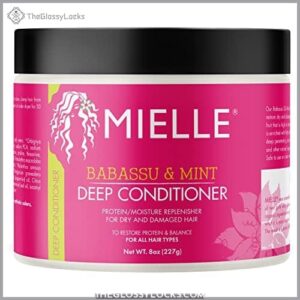
Mielle’s Babassu Oil Mint Deep Conditioner brings balanced protein and moisture to low porosity hair that needs both strength and hydration. The formula centers on babassu oil—a lighter alternative to coconut oil—rich in medium-chain fatty acids that penetrate without heavy buildup.
You’ll find free amino acids acting as protein-like building blocks to strengthen hair fibers, addressing Protein Sensitivity concerns gently. Peppermint oil stimulates your scalp through increased microcirculation, delivering those invigorating Mint Scalp Effects.
For Application Techniques, section damp hair after shampooing, leave 15–30 minutes under a cap, then rinse thoroughly to balance Hydration vs. Protein needs effectively.
Best For: Low porosity hair that needs gentle protein reinforcement without heavy buildup, plus a scalp boost from mint’s circulation-stimulating effects.
- Babassu oil’s medium-chain fatty acids penetrate easily without weighing down fine or low porosity hair, reducing the risk of surface buildup common with heavier oils.
- Free amino acids provide mild strengthening similar to hydrolyzed proteins, helping repair damage while staying light enough for regular rotation in a low porosity routine.
- Peppermint oil increases scalp microcirculation and offers antimicrobial benefits, creating an invigorating treatment experience that supports a healthier scalp environment.
- The 8 oz size may be too small for those with thick or long hair, making the $11.19 price point feel steep per application.
- Mint oils can irritate sensitive scalps, especially if left on for the full 30-minute treatment window recommended for heat use.
- May not deliver noticeable results for severe scalp issues or significant hair fall, as it’s formulated primarily as a conditioning treatment rather than a therapeutic intervention.
9. Silk Protein Ultra Moisturizing Conditioner
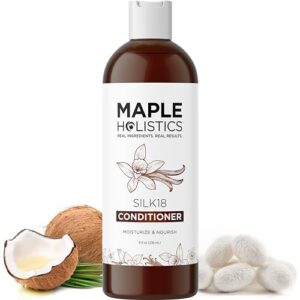
When your low porosity hair refuses every heavy cream, silk protein benefits shine through with molecular weights between 300–5,000 Da—small enough to slip past those stubborn cuticles.
Formula architecture in silk protein ultra moisturizing conditioners pairs hydrolyzed silk under 1% with cetrimonium chloride for electrostatic attraction, depositing moisture deep where you need it.
User outcomes report 48-hour frizz control and improved shine. You’ll find these lightweight deep conditioners avoid the buildup trap while delivering real hair moisture and hydration—perfect protein balance for finicky low porosity strands.
Best For: People with low porosity hair who need lightweight moisture that won’t cause buildup, especially if you struggle with frizz and want shine without the weight of heavy oils.
- Small silk molecules (300–5,000 Da) actually penetrate tight cuticles instead of sitting on top like heavier proteins
- Delivers up to 48 hours of frizz control while keeping hair soft and manageable in humid weather
- Works as both a regular conditioner and a deep treatment without the greasy feeling that weighs down fine or low porosity hair
- Some users find it overpriced for the 8 oz size, especially since you’re getting less than 1% silk protein in the formula
- Can feel too heavy if you use it as a leave-in on thin hair—better as a rinse-out for most people
- The scent isn’t for everyone, and a few customers reported increased shedding or no real conditioning effect for their specific hair type
10. Mielle Mongongo Oil Hydrating Conditioner
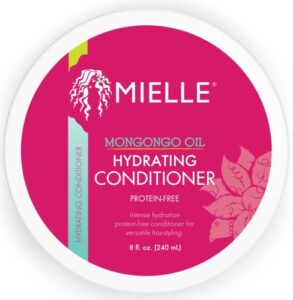
Your search for slip without buildup ends with Mielle Mongongo Oil Hydrating Conditioner’s protein-free formula. This deep conditioner layers mongongo, argan, and sacha inchi oils at molecular sizes low porosity hair actually accepts—no heavy waxes blocking cuticle pathways. Behentrimonium methosulfate provides cationic grip for a user-friendly detangling experience reviewers rate 4/5, while caprylic/capric triglyceride locks in hair moisture and hydration for days.
Ingredient analysis confirms PPG-3 benzyl ether myristate delivers shine minus silicone buildup. Mongongo oil benefits include photoprotection alongside hydration effectiveness that keeps curls separated and frizz-free.
Best For: People with low porosity or protein-sensitive hair who need serious slip for detangling without the stiffness or buildup that comes from protein treatments or heavy butters.
- Protein-free formula with mongongo, argan, and sacha inchi oils gives you lightweight moisture that actually penetrates low porosity hair instead of sitting on top
- Fantastic slip from behentrimonium methosulfate makes detangling way easier—reviewers consistently mention needing less product and spending less time working through knots
- Keeps curls hydrated for multiple days without that greasy, weighed-down feeling, plus the PPG-3 benzyl ether myristate adds shine without silicone buildup
- Won’t work if your hair actually needs protein for strength—this is a moisture-only formula, so damaged hair that requires repair might feel limp
- Some people find the scent too strong, even though most reviews say it’s pleasant
- At around $15 for 8 oz, it’s mid-tier pricing—not a budget option if you’re watching every dollar
How to Deep Condition Low Porosity Hair
Getting the most out of your deep conditioner isn’t just about slathering it on and hoping for the best. Low porosity hair needs a strategic approach to actually let that moisture sink in.
Here’s what you need to know about application, timing, and how often to treat your strands.
Proper Application Techniques
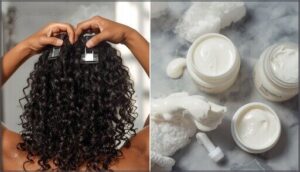
Start with freshly clarified hair—removing buildup before deep conditioning improves absorption by up to 40%.
Section your low porosity hair into 4–8 parts, then apply product to damp (not dripping) strands, working from ends upward. This sectioning approach reduces missed areas by about 32% and cuts detangling time considerably.
Use a moderate amount per section; thick conditioners benefit from slight water dilution to improve penetration without weighing hair down.
How Long to Leave on Deep Conditioner

After applying your deep conditioner, leave it on for 20–30 minutes with heat. Low porosity hair benefits most within this window—heat lifts cuticles, improving moisture absorption by roughly 60% without risking hygral fatigue or protein overload.
Exceeding 45 minutes rarely adds value and can trigger product buildup. For protein-infused formulas, cap treatment at 20 minutes to prevent stiffness and maintain best hair hydration.
Frequency of Deep Conditioning Treatments
Timing matters, but porosity and hair health set the baseline. For undamaged low porosity hair, deep conditioning every 10–14 days prevents buildup while sustaining moisture. If your strands are severely dry or chemically treated, weekly sessions help rebuild strength until breakage drops.
Adjust frequency based on:
- Climate exposure – cold or arid conditions may warrant weekly treatments
- Heat styling habits – frequent thermal tools increase cuticle stress
- Product load – heavy creams demand clarifying every 4–6 weeks, followed by deep conditioning
- Wash rhythm – align treatments with shampoo days for better penetration
Over-conditioning risks limp, mushy hair and extended drying times, so listen to your strands.
Maximizing Deep Conditioning Results

Getting the product onto your hair is only half the battle—you also need to create conditions that let those ingredients actually sink in. Low porosity hair responds dramatically better to deep conditioning when you use a few strategic techniques.
Let’s look at three proven methods that’ll help your conditioner work harder for you.
Using Heat or Steam for Better Absorption
Think of your hair cuticles as stubborn doors—heat and steaming methods help swing them open. Laboratory tests show hair swelling increases by 12–18% at 50–60°C, allowing deep conditioners to penetrate low porosity hair more effectively. Use hooded dryers, heat caps, or steamers for 15–30 minutes to increase moisture absorption without risking damage.
| Method | Key Benefit |
|---|---|
| Hooded Dryers | Even heat distribution for uniform conditioning |
| Heat Caps | Portable, convenient for 15-minute treatments |
| Hair Steaming | Adds moisture while opening cuticles gently |
Applying to Ends and Working Upwards
Your ends carry the most damage—years of UV exposure, styling, and chemical weathering—so they deserve first dibs on your deep conditioner. Targeted application from ends upward prevents scalp buildup while ensuring even distribution across the hair shaft where low porosity hair needs it most.
- Focus product on the last few centimeters where split ends and breakage cluster
- Avoid roots to prevent follicular buildup and maintain natural volume
- Work upward in sections to control product quantity and boost moisture where hair porosity is lowest
Diluting Thick Conditioners for Easier Penetration
When your deep conditioner sits on the surface like wax on a windshield, dilution unlocks penetration. Reducing viscosity by 30–50% with distilled water improves spreadability across compact cuticles without sacrificing cationic surfactant performance. This simple technique boosts moisture absorption, especially when paired with heat activation for low porosity hair.
| Dilution Ratio | Best For |
|---|---|
| 1:1 (conditioner:water) | Very thick butter-based formulas |
| 2:1 | Medium-viscosity protein-free conditioners |
| 3:1 | Lightweight humectant-rich products |
| Spray bottle application | Even distribution on soaking-wet hair |
| Warm water mix | Enhanced flow and cuticle lifting |
Mix small batches in your palm or a spray bottle—diluted conditioner loses preservative stability after a few weeks, so refrigerate leftovers or discard. Apply to damp hair in sections, allowing the thinner formula to coat each strand evenly without the heaviness that plagues low porosity hair. Pair with gentle heat for maximum hair hydration and improved moisture retention.
Ingredients to Avoid and Embrace

Not all ingredients work the same way on low porosity hair. Some create barriers that lock moisture out, while others actually help it slip in and stay put.
Here’s what you should dodge and what deserves a spot in your routine.
Avoiding Heavy Oils and Silicones
Your low porosity hair doesn’t need a heavy coat—it needs access. Non-water-soluble silicones and thick oils like shea butter create barriers on your already-tight cuticles, blocking moisture instead of delivering it.
Here’s what happens:
- Silicone buildup forms hydrophobic films that repel water-based treatments
- Oil penetration fails when heavy butters sit on the surface
- Clarifying shampoos become necessary to strip accumulated residue
Lightweight formulas deliver better performance outcomes without the weight.
Embracing Humectants and Lightweight Oils
Your low porosity hair thrives on humectants like glycerin and panthenol—they bind up to 25% their weight in water, drawing moisture into compact cuticles. Pair them with lightweight oils (jojoba, argan) that penetrate the shaft rather than coat it.
This humectant combination delivers hydration balance without buildup. Just watch climate considerations: high dew points above 60°F can trigger frizz, so adjust formulas seasonally for ideal low porosity hair care.
Understanding Protein Sensitivity
Protein overload sneaks up on low porosity hair when keratin or hydrolyzed proteins stack on closed cuticles, creating stiffness instead of strength. If your strands feel brittle after protein treatments, switch to protein-free deep conditioner for 6–8 weeks to restore moisture balance.
Hair protein works best sparingly—once monthly prevents product buildup while maintaining elasticity without triggering that telltale rigid texture.
Tips for Maintaining Healthy Low Porosity Hair

Deep conditioning is just one piece of the puzzle for managing low porosity hair. Your daily habits and product routine play an equally important role in keeping your hair hydrated and healthy.
Let’s look at three key practices that will help you maintain moisture and avoid common pitfalls.
Preventing Product Buildup
Since low porosity hair resists absorption, you’ll notice hair product buildup faster than other types. Lightweight formulas win here—babassu and jojoba oils hydrate without coating strands. Product layering matters: stick to three products max (leave-in, moisturizer, oil) to prevent ingredient interactions that flake or film over your cuticles.
- Keep your routine simple—fewer products mean less residue accumulating on already resistant strands
- Choose water-based mists over heavy butters that sit on hair instead of penetrating
- Layer products from thinnest to thickest so each one has a fighting chance to absorb
- Watch for warning signs like sudden dryness or waxy texture—your hair’s telling you it’s oversaturated
Clarifying and Balancing Your Routine
Even gentle styling products stack up on resistant cuticles, so clarifying frequency matters for low porosity hair. Most routines benefit from clarifying every 4–6 weeks with a dedicated shampoo, though hard water demands chelating shampoos every 2–4 weeks to remove mineral deposits.
Scalp cleansing resets your hair care routine without stripping essential lipids—pair each clarifying session with your deep conditioner to restore flexibility and keep buildup from sabotaging routine adjustment.
Regular Moisturizing and Gentle Styling
After you’ve clarified and reset your routine, consistent moisture frequency becomes your foundation. Apply leave-in conditioners 2–3 times per week to support gradual water uptake through those tight cuticles.
Protective styling, nighttime protection with satin or silk, and gentle detangling on damp hair with a wide-tooth comb reduce mechanical stress that would otherwise increase hair breakage and compromise the hair health your deep conditioner worked to restore.
Frequently Asked Questions (FAQs)
Can I deep condition overnight safely?
While tempting to lock in moisture overnight, leaving deep conditioner on low porosity hair for extended periods invites hygral fatigue and scalp issues—stick to 20–45 minutes with heat for safe, effective hydration.
What water temperature works best for rinsing?
Lukewarm water around 95–100°F works best for rinsing deep conditioner on low porosity hair. It cleanses effectively without excessive cuticle damage, while a brief cool rinse afterward smooths the hair cuticle and boosts shine.
Should I shampoo before or after conditioning?
For low porosity hair, shampoo first. Clean hair absorbs deep conditioner better since product buildup won’t block penetration.
Some do reverse washing or pre-poo treatments, but clarifying before conditioning optimizes moisture absorption.
How do I know if Im overconditioning?
Your strands feel mushy when wet, appear limp and lack volume, experience prolonged drying time, show loss of curl definition, or face increased breakage risk—signs of protein overload disrupting hair elasticity beyond what deep conditioner alone causes.
Can hard water affect deep conditioning results?
Yes—mineral buildup from hard water blocks your hair cuticle like rust on a hinge, reducing treatment efficacy.
Chelating shampoos remove calcium deposits, restoring moisture retention and letting your deep conditioner actually penetrate low porosity hair.
Conclusion
Your cuticles won’t budge overnight, but the right approach transforms stubborn strands into manageable, hydrated hair. The low porosity hair deep conditioners we’ve covered use science-backed ingredients that actually penetrate your tight cuticle layer—heat, humectants, and lightweight oils working in concert.
Apply them correctly, stay consistent with clarifying, and you’ll finally break free from that endless cycle of dryness and buildup. Your hair’s been waiting for this shift.
- https://jayceenaturals.com/blogs/news/low-porosity-hair-care-the-truth-about-what-actually-works
- https://themestizamuse.com/deep-conditioners-for-low-porosity-hair-the-key-ingredients/
- https://ristoranteumbria.com/article/10-best-low-porosity-deep-conditioner-2025-update-just-a-taste
- https://viori.com/blogs/updates/the-science-of-deep-conditioning-for-4c-low-porosity-hair-breaking-through-the-moisture-barrier
- https://controlledchaoshair.com/blogs/curly-hair-news/protein-free-deep-conditioner