This site is supported by our readers. We may earn a commission, at no cost to you, if you purchase through links. This content is for general informational and educational purposes only and is not a substitute for professional medical, dermatological, or nutritional advice.
Scalp psoriasis can turn an ordinary shower into a standoff: flakes on the towel, a burning hairline, and the urge to scratch that only makes the skin angrier. It isn’t poor hygiene, and treating it like dandruff can leave stubborn plaques untouched.
The goal isn’t to scour your scalp clean. It’s to calm inflammation, soften scale, and protect the skin barrier without setting off another flare. Natural remedies for scalp psoriasis, from chilled aloe to a careful coconut-oil soak, can offer comfort when used thoughtfully.
Know when home care stops, which triggers matter, and when a dermatologist should step in.
Table Of Contents
- Key Takeaways
- Recognizing Scalp Psoriasis and Common Triggers
- Natural Remedies for Scalp Psoriasis
- Diet, Supplements, and Lifestyle Support
- Safe Scalp Care During Flare-Ups
- When Natural Remedies Are Not Enough
- Frequently Asked Questions (FAQs)
- Can natural remedies interact with prescribed medications?
- Do natural treatments cause scalp irritation or allergies?
- How long before seeing results from remedies?
- Are natural remedies safe for children’s scalps?
- Can scalp psoriasis cause temporary hair loss?
- Is scalp psoriasis contagious to other people?
- How often should I wash my hair?
- Can hair dye worsen scalp psoriasis symptoms?
- Are natural remedies safe during pregnancy?
- Conclusion
Key Takeaways
- Scalp psoriasis causes well-defined, inflamed, thick scale that can resemble dandruff but often affects the hairline, ears, neck, and back of the scalp.
- Gentle options such as chilled aloe vera, coconut oil, and fragrance-free colloidal oatmeal may ease itch and soften scale, but patch-test first and stop anything that burns or irritates.
- Protect your scalp during flares by loosening scales rather than scraping them, avoiding scratching and harsh products, using lukewarm water, and managing triggers such as stress, smoking, alcohol, infections, and skin trauma.
- See a dermatologist if plaques spread, disrupt sleep, cause noticeable shedding, bleed, look infected, or fail to improve, since home remedies support but do not replace proven treatment.
Recognizing Scalp Psoriasis and Common Triggers
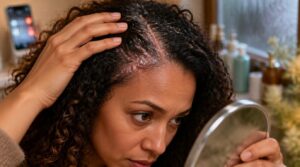
Scalp psoriasis can be easy to mistake for ordinary dandruff, especially when it’s hidden beneath your hair. Knowing what to look for—and what often sets off a flare—helps you make smarter care choices. Here are the main signs, look-alikes, triggers, and risk factors to know.
Gentle scalp exfoliation for dandruff control may also help lift product buildup that can worsen flaking.
Typical Plaques and Affected Areas
Think of scalp psoriasis beyond dandruff. Its well-defined plaques are thick, dry, scaly, often clustered where the scalp meets skin. These raised, thick-scaled plaques can range from small spots to larger connected areas. Check these common affected areas:
- back of scalp
- along hairline
- behind or around ears
- back of neck
Flakes may shed onto clothing, but plaques can cover much of your scalp. Recognizing patterns helps home remedies and natural remedies with confidence.
Appearance Across Different Skin Tones
Plaques don’t look red on every scalp. On lighter skin, they’re often pink or red with silvery scale. On darker skin, look for violet, brown, gray, or darker patches with gray-white scale.
Color can linger after a flare. Aloe vera, coconut oil, oatmeal bath, tea tree oil, and other natural antiinflammatory options may soothe itch, but they won’t change pigment overnight.
Psoriasis Versus Dandruff and Sebopsoriasis
Flaking can mean different things. Dandruff produces dry, loose flakes on the scalp only, with no real inflammation.
Sebopsoriasis sits somewhere between two conditions, showing yellowish, greasy scale with deeper redness and defined borders, often spreading to your eyebrows and behind the ears.
Scalp psoriasis brings thicker, silvery-white scales with clear inflammation underneath. If the flaking won’t quit, it’s worth looking closer.
Common Triggers and Risk Factors
So what actually lights the fire? Unlike dandruff, scalp psoriasis reacts to internal triggers that push skin cell overproduction into overdrive.
- Stress: anxiety fuels immune system dysfunction, worsening flares quickly
- Skin trauma: harsh brushing or scratching triggers new lesions
- Infections: strep throat is a well-known culprit
- Diet and lifestyle: smoking, alcohol, and obesity increase inflammation
Natural Remedies for Scalp Psoriasis
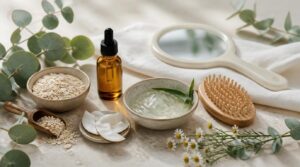
You don’t need a prescription to start feeling better — your kitchen and medicine cabinet might already have something worth trying. These remedies won’t cure psoriasis, but they can take the edge off itching, soften stubborn scales, and give your scalp some breathing room. Here’s what’s actually worth your time.
Aloe Vera for Itch Relief
That cool, slippery gel from an aloe vera plant is one of nature’s quiet overachievers. Among natural remedies for scalp itch relief, it’s a standout topical treatment calming irritated skin fast.
For a fuller routine, explore ingredients that support faster, healthier hair growth without aggravating a sensitive scalp.
The inner gel contains anti-inflammatory compounds that soothe on contact. Chill it in the fridge first for maximum skin soothing effect, then apply a thin layer and repeat daily.
Coconut Oil for Softening Scales
While aloe soothes the itch, coconut oil targets scalp psoriasis scale buildup head-on. As a moisturizing scalp treatment, it coats dry, scaly patches, softening them just enough for easier lifting.
Massage around 10 ml into your scalp, leave it on for two full hours, then rinse with a gentle shampoo. For skin barrier repair, always reach for virgin coconut oil.
Colloidal Oatmeal for Calming Irritation
Think of colloidal oatmeal as a calm-down coat for an angry scalp. Its antiinflammatory oat compounds support skin hydration and can ease itch from scalp psoriasis.
Use natural topical applications wisely:
- Choose a fragrance-free colloidal oatmeal cream or wash.
- Apply to damp scalp patches.
- Leave on as directed.
- Stop if burning or rash develops.
It soothes, but won’t replace medical treatment.
Dead Sea and Epsom Salt Soaks
Salt baths soften scale but aren’t a scalp-only shortcut. For scalp psoriasis, dissolve Dead Sea salt or Epsom salt in warm bathwater, about 95°F (35°C), then soak 12 minutes.
Use one cup Dead Sea salt or 1¼ cups Epsom salt. Skip jetted tubs, patch-test first, rinse, moisturize. Like an oatmeal bath, these are natural remedies for inflammation, not cures alone.
Diluted Vinegar and Tea Tree Oil
Apple cider vinegar and tea tree oil can sting an inflamed scalp, so treat them as cautious topical treatment options, not miracle fixes.
- Mix 1 tablespoon vinegar with 1 cup water.
- Add 1–2 drops tea tree oil, then shake.
- Patch-test; rinse after 5 minutes.
Tea tree, among antimicrobial essential oils, has a natural antiinflammatory reputation. Stop for burning or redness.
Diet, Supplements, and Lifestyle Support

Scalp care matters, but your daily habits can influence flares too. Food choices, supplements, stress, sleep, and overall health may all play a supporting role. Here’s what’s worth considering, and where a little caution helps.
Omega-3 Fats and Fish Oil
Omega-3 fatty acids may support dietary psoriasis management by helping calm inflammatory signals. Fish oil supplies EPA and DHA, while flaxseed provides ALA, a plant-based form. Aim for fatty fish, such as salmon or sardines, twice weekly before relying on pills.
Fish oil isn’t a cure-all. Product doses vary widely, and supplements can interact with blood thinners. Ask your dermatologist or pharmacist before starting one.
Turmeric and Curcumin Supplements
After fish oil, you may wonder about turmeric. Its active compound, curcumin, appears in antiinflammatory remedies and may influence immune modulation, but evidence for dietary psoriasis management remains limited. Use turmeric in food if you enjoy it.
Curcumin supplements can be hard to absorb, and high-dose products may affect liver or interact with medicines. Check with your dermatologist first.
Vitamin D and Safe Sunlight
Vitamin D matters because UVB light helps your skin make it, and controlled UVB can also calm psoriasis. Still, Safe Sunlight means brief, regular exposure, not long, unprotected sessions. Your needs vary with skin tone, season, clothing, and location.
Consider Phototherapy for persistent flares. It delivers measured UVB light safely, without unnecessary scalp sunburn from casual sunbathing on your own.
Anti-Inflammatory Foods and Healthy Weight
Food choices won’t replace treatment, but diet and psoriasis can intersect through weight and inflammation. Build meals around vegetables, fruit, beans, oats, fish, nuts, seeds, and olive oil. These fiber-rich foods support inflammation reduction and steady weight changes.
Prioritize omega3 fatty acids from salmon, sardines, chia, or flax. Turmeric can flavor meals. Try glutenfree only if gluten clearly worsens symptoms.
Stress Reduction and Better Sleep
Those anti-inflammatory habits work better when your nervous system gets a break. Stress can worsen itching and disrupt sleep, creating a frustrating loop.
- Take five slow belly breaths.
- Try ten minutes of Meditation.
- Do gentle Yoga.
- Dim lights before bed.
- Keep a steady bedtime.
Stress management helps better sleep and inflammation reduction. If worry persists, ask a clinician for help.
Safe Scalp Care During Flare-Ups
During a flare, your scalp needs a light touch and a steady routine. The goal is to ease discomfort without pulling at plaques or adding more irritation. These practical steps can help you care for your scalp safely between treatments.
Gently Loosening and Removing Scales
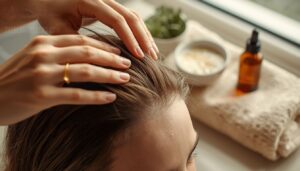
Loosen, don’t scrape. For scalp psoriasis, soften buildup first with a warm, not hot, 10- to 15-minute soak. A salicylic acid product can help lift thick scales; colloidal oatmeal may calm itch.
Afterward, pat dry, then use a soft comb gently. Skip fingernails, picking, and vigorous scalp exfoliation. Low-friction care protects attached skin and gets the scalp ready for scalp moisturization.
Moisturizing Without Irritating Plaques
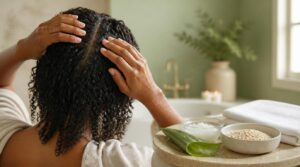
Scalp moisturization works best right after washing, while your scalp is still slightly damp. Dab, don’t rub, then lightly smooth on a fragrance-free product along the hair direction.
Try natural emollients such as coconut oil to soften stubborn dryness. Aloe vera or colloidal oatmeal can calm itch. Patch-test first, use a small amount, and avoid heavy scrubbing, scented products, or thick layers that leave greasy buildup.
Using Medicated Tar Shampoo Safely
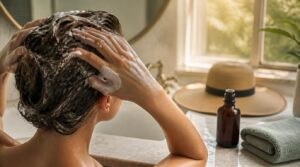
Coal tar medicated shampoo can reduce thick scale and itch from scalp psoriasis. Wet your hair, massage it onto the scalp, and leave the lather for 5 to 10 minutes before rinsing well.
Because scalp psoriasis and other inflammation can loosen hairs, it helps to understand how scalp inflammation leads to hair shedding and what to watch for.
If you’re torn between coal tar and salicylic acid formulas, this guide to choosing between T Gel and T Sal shampoo breaks down which one suits your scalp best.
- Follow the label’s schedule
- Keep it off broken skin
- Wear a hat outdoors
An overthecounter psoriasis shampoo may support topical treatments, but coal tar can increase sun sensitivity for 24 hours.
Avoiding Scratching and Harsh Ingredients
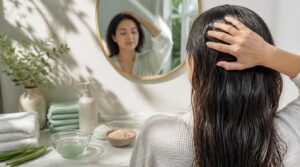
Don’t scratch, even when the itch feels impossible. Nails can tear plaques, cause bleeding, and invite infection. Press your palm on the spot, use a cool compress, or apply aloe vera for temporary relief.
Protect scalp hydration with plain coconut oil or oatmeal baths. Choose fragrance-free, sulfate-free shampoos, and avoid dyes, strong fragrance, and harsh scrubs. Introduce one product at a time, patch test first. Stress trigger management matters too.
When Natural Remedies Are Not Enough
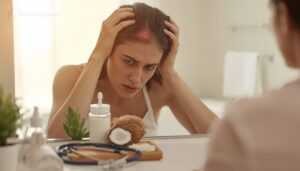
Natural remedies can calm mild scalp psoriasis, but they don’t always control a stubborn flare. Knowing when to bring in medical care protects your scalp and helps prevent complications. Watch for these signs and safety points.
Signs You Need Dermatologist Care
Don’t white-knuckle a worsening flare. Dermatologist recommended care helps you regain control of this inflammatory skin condition, driven by immune system dysfunction, when home steps stall.
- Itch or burning disrupts sleep.
- Shedding becomes noticeable.
- Plaques spread beyond your scalp.
- New spots change shape or color.
A dermatologist can sort out scalp psoriasis vs dandruff and build a chronic skin disorder management plan that actually fits your life.
Broken, Bleeding, or Infected Skin
Broken skin changes the plan. This inflammatory skin condition and skin cell overproduction can leave scalp flaking vulnerable.
| Sign | Do now | Get help |
|---|---|---|
| Bleeding | Pressure, clean bandage | Won’t stop |
| Swelling | Rinse | Pain increases |
| Pus | Keep covered | Same day |
For itchy scalp relief, don’t pick. Chronic skin disorder management protects open areas, seek urgent care for severe bleeding or embedded material.
Combining Home and Medical Treatments
Once open areas heal, pair home remedies with your prescribed plan, not instead of it. For scalp psoriasis, this helps itch while medical care targets inflammation and skin cell turnover regulation.
- Use medicated shampoo as directed.
- Moisturize at night.
- Wait 30 minutes between products.
- Patch-test new oils.
- Track redness and burning.
Tell your dermatologist about supplements. Stop anything that stings.
Safe Phototherapy and Sun Exposure
Once your home routine is steady, ask whether phototherapy fits scalp psoriasis. Medical light therapy uses measured UVB doses, goggles, and careful timing to calm inflammation without guessing.
Don’t copy treatment with sunlight. Sun can burn scalp plaques and raises cumulative skin-cancer risk. Vitamin D matters, but seek clinician-guided advice, protective clothing, shade, and broad-spectrum SPF 30 sunscreen when outdoors.
Never substitute sunlight for medical phototherapy: protect scalp plaques with shade, clothing, and broad-spectrum SPF 30 sunscreen
Supplement and Medication Interactions
Sunlight can be unpredictable, and supplements can be, too. Some alter medicines, affect your Immune system, or increase bleeding. Before using Omega3 fatty acids, Turmeric, Vitamin D, or Fish oil, give your dermatologist and pharmacist this full list:
- Product names, active ingredients
- Dose, timing, and instructions
- Why you use each product
- Other medicines you take
- Bruising, bleeding, or new symptoms
Frequently Asked Questions (FAQs)
Can natural remedies interact with prescribed medications?
Yes. Natural remedies can cause interactions with prescribed medications, sometimes changing drug effects or side effects. Tell your clinician about every supplement, herb, and oil you use for scalp psoriasis so medical help can check safely.
Do natural treatments cause scalp irritation or allergies?
Natural treatments can cause scalp irritation or allergic reactions, especially tea tree oil and fragranced botanicals. For scalp psoriasis, patch-test home remedies first, stop if burning or rash occurs, and seek dermatology advice.
How long before seeing results from remedies?
Patience pays off, but give it time: Aloe vera and Oatmeal baths may soothe itch within days; Coconut oil softens scales quickly. Expect Turmeric and Medicated shampoo to need 2–8 weeks for more durable improvement.
Are natural remedies safe for children’s scalps?
Children’s scalps are sensitive. Patch-test first and use diluted aloe vera, coconut oil, or oatmeal baths. Prioritize skin hydration. Avoid tea tree oil and vinegar. Stop irritation promptly, and ask a dermatologist before medicated shampoo.
Can scalp psoriasis cause temporary hair loss?
Think of a flare as a storm around each follicle: scalp psoriasis can cause temporary hair loss from inflammation, scalp flaking, and scratching. Itchy scalp relief and scalp hydration help while inflammation settles, allowing regrowth.
Is scalp psoriasis contagious to other people?
No. Scalp psoriasis isn’t contagious. You can’t catch or pass this immune-mediated skin condition through touching, hugging, sharing meals, air, or water. New plaques reflect psoriasis activity, not infection. Chronic skin condition care helps control.
How often should I wash my hair?
Like tending a fussy houseplant, wash every 2–3 days with lukewarm water. During flares, alternate coal tar shampoo 2–3 times weekly; avoid capsaicin, Oregon grape, colloidal oatmeal, and Sea or Epsom salt on irritated skin.
Can hair dye worsen scalp psoriasis symptoms?
Yes. Hair dye can irritate sensitive skin or cause allergic dermatitis, worsening scalp psoriasis itching and plaques. For flareup prevention and scalp sensitivity reduction, patch-test, choose highlights, and avoid dyeing during flares; use topical treatments.
Are natural remedies safe during pregnancy?
Pregnancy calls for extra caution. Aloe vera, coconut oil, turmeric, Vitamin D, and herbal supplements aren’t automatically safe. Tell your obstetric clinician before use, especially with medicines, since ingredients can affect you and your baby.
Conclusion
You may think natural options are too gentle to make a difference, but steady, careful care can reduce itch, loosen scale, and make flares easier to manage.
Use natural remedies for scalp psoriasis as supportive tools, not a test of willpower or a replacement for proven treatment.
If plaques persist, spread, bleed, or disrupt sleep, call a dermatologist.
Your scalp doesn’t need punishment or apology; it needs a calmer routine and timely help now.