This site is supported by our readers. We may earn a commission, at no cost to you, if you purchase through links.
You don’t need a salon appointment to transform dull, lifeless strands into glossy, light-catching hair. The secret lies in understanding what your hair craves—and it’s simpler than the beauty industry wants you to believe.
Your hair’s shine depends on two things: smooth cuticles that reflect light and the right balance of moisture that keeps each strand flexible. When product buildup, heat damage, or harsh ingredients disrupt this balance, your hair loses its natural luster.
Natural remedies for shiny hair work by addressing these root causes without stripping away your hair’s protective oils. From kitchen-cabinet ingredients to simple scalp rituals, you can reclaim your hair’s brilliance using methods that nourish rather than mask the problem.
Table Of Contents
- Key Takeaways
- What Makes Hair Shiny Naturally?
- Best Natural Oils for Shiny Hair
- DIY Hair Masks and Rinses for Shine
- Scalp Care and Healthy Hair Habits
- Nutrition and Lifestyle Tips for Hair Shine
- Frequently Asked Questions (FAQs)
- How to naturally gloss your hair?
- What is a natural alternative to hair gloss?
- How to bring shine back to dull hair?
- How to make your hair shine naturally?
- How do I make my hair shiny?
- How to get shiny hair & dandruff naturally?
- Can coconut oil make your hair shiny?
- How to hydrate hair naturally?
- How to make your hair shinier?
- How do I make my natural hair shine?
- Conclusion
Key Takeaways
- Your hair’s natural shine depends on flat, smooth cuticles that reflect light cleanly and the right balance of moisture—not expensive salon products or chemical treatments.
- Natural oils like coconut, argan, and jojoba work because they mimic your scalp’s sebum, penetrating the hair shaft to seal cuticles and lock in moisture without stripping protective oils.
- Simple DIY treatments like apple cider vinegar rinses remove product buildup and restore pH balance, while cool water rinses seal cuticles for immediate shine enhancement.
- What you eat directly affects your hair’s luster—omega-3s from fatty fish, biotin, and adequate hydration (2-3 liters daily) support follicle health and natural shine from within.
What Makes Hair Shiny Naturally?
Your hair’s natural shine comes from a surprisingly simple equation: healthy cuticles plus the right amount of moisture. When your hair cuticle lies flat and smooth, it reflects light like a mirror instead of scattering it in all directions.
That’s why proper conditioning is essential—it helps seal the cuticle and lock in the moisture your hair needs to maintain that reflective quality.
Understanding what creates that shine—and what destroys it—gives you the power to transform dull, lifeless hair without expensive salon treatments.
Role of Natural Oils and Moisture
Your scalp’s sebaceous glands produce sebum, a natural oil that coats each strand and creates built-in shine. This lipid layer fills gaps in your hair’s structure, smooths the surface, and locks in moisture levels so strands stay flexible instead of brittle.
Coconut oil and olive oil mimic this function, balancing hair porosity and restoring nourishment when your natural oils run low.
For more information, learn how sebum production affects hair health.
Hair Cuticle Health and Light Reflection
Hair shine comes down to your cuticle structure. When those keratin scales lie flat and tight, light reflection bounces cleanly off the surface—pure gloss. Lifted or damaged cuticles scatter light in every direction, killing your shine. Fiber alignment matters too: straight, aligned strands create a mirror-like finish, while rough, porous hair breaks up that reflection.
Hair shine is built on flat, tightly aligned cuticles that reflect light cleanly—damage scatters it, killing your gloss
Five signs your cuticles need help:
- Hair looks dull even after washing
- Strands feel rough when you run fingers down the shaft
- Color fades faster than it should
- Tangles form constantly
- Frizz appears in humid weather
Smooth cuticles seal moisture, improve hair porosity balance, and boost hair shine enhancement. Scalp health feeds this process—healthy roots produce better fiber alignment from day one. When you focus on hair cuticle sealing through pH-balanced products and gentle handling, you’re working with your hair’s natural architecture instead of fighting it. An important part of this process is learning about a, which helps keep both cuticles and hair shine in prime condition.
Common Causes of Dull Hair
Knowing how cuticles work is half the battle—understanding what destroys them completes the picture. Moisture loss strips your hair of its natural defense system, leaving strands flat and lifeless. Product buildup and mineral deposits coat the surface, blocking light reflection entirely. Heat damage breaks down protein structure, while environmental stress from UV rays and pollution accelerates dullness.
These causes of dull hair demand real solutions, not guesswork.
Best Natural Oils for Shiny Hair
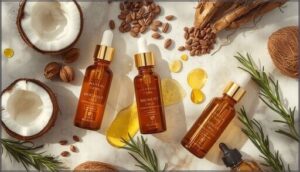
Natural oils have been the foundation of shiny hair for centuries, and they work by penetrating the hair shaft to lock in moisture and smooth the cuticle.
Each oil offers unique benefits depending on your hair type and specific needs.
Here’s a breakdown of the most effective natural oils you can use to restore your hair’s natural luster.
Coconut Oil for Moisture and Shine
You can take back control of dull strands with coconut oil, which contains around 47 percent lauric acid that penetrates deep to smooth your hair shaft from the inside out.
If you’ve recently bleached your hair, pairing coconut oil treatments with the right post-bleach shampoo routine can help restore moisture and minimize damage.
A pea-sized amount spread through mid-lengths and ends works as a finishing gloss, sealing lifted cuticles so your hair reflects more light and looks noticeably shinier without relying on silicone serums.
Argan Oil for Gloss and Hydration
Switch to lightweight argan oil if you want gloss without the weight. This natural shine booster packs oleic and linoleic acids that soften your hair shaft so light bounces off evenly, plus vitamin E protects against dullness.
A few drops work as hair gloss tips for fine or medium hair—just smooth through ends for instant hydration and frizz control that looks polished, not greasy.
Olive and Sesame Oils for Conditioning
Reach for extra virgin olive oil or sesame oil when your thick, coarse strands need serious conditioning power. Olive oil’s oleic acid and squalene smooth rough patches and boost light reflection, while sesame oil locks in moisture and shields you from UV damage.
Olive Oil Benefits and Sesame Oil Uses for shine enhancement:
- Olive oil works best on thick or very dry hair—a small amount tames frizz and adds gloss
- Sesame oil creates a protective film that seals in hydration and leaves hair smoother
- Blend warm sesame with jojoba oil for medium-weight shine on low-porosity hair
- Sesame oil offers natural UV protection to prevent sun-induced dullness
- Extra virgin olive oil delivers rich emollients that help hair reflect light evenly
Castor Oil for Thickness and Luster
Castor oil’s ricinoleic acid coats each strand with a varnished gloss that makes your hair look fuller and feel thicker.
You’ll get the best luster enhancement by blending a few drops with jojoba or sesame oil—this lighter mix avoids sticky buildup at your roots while giving mid-lengths and ends that high-shine, cushioned look you want.
Jojoba and Avocado Oils for Nourishment
Jojoba oil mimics your scalp’s natural sebum, so it balances oil production while giving fine or oily hair a healthy sheen without the heavy film. Avocado oil delivers vitamin E and essential fatty acids that soften rough strands and lock in moisture.
Try these nourishing hair tips:
- Mix a few drops of jojoba oil into your conditioner for slip and shine that rinses clean.
- Blend avocado oil with jojoba for a lightweight oil blend recipe that smooths textured hair.
- Apply an avocado hair mask once weekly to boost hair nourishment and moisture in dry, dull strands.
DIY Hair Masks and Rinses for Shine
You don’t need a salon to bring out your hair’s natural shine. Simple kitchen ingredients can transform dull strands into glossy, healthy hair when you know what works.
Here are five DIY masks and rinses that smooth cuticles, remove buildup, and restore your hair’s natural luster.
Aloe Vera Gel for Smoothing Cuticles
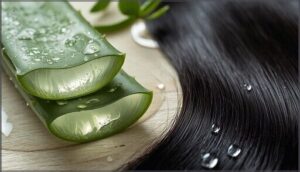
Aloe vera benefits your hair by sealing the cuticle at its natural pH of 4.5 to 5.5, so strands reflect light more evenly and feel smoother.
Apply a small amount of aloe vera gel to damp, clean hair from mid-length to ends, leave for fifteen to thirty minutes, then rinse. This lightweight treatment improves cuticle alignment, boosts hair shine, and aids natural hair care without weighing your strands down.
Apple Cider Vinegar Rinse for Residue Removal
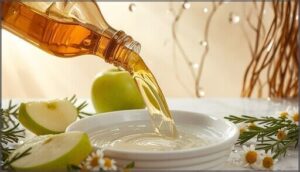
Mix one part apple cider vinegar with five parts water to clear product buildup and hard-water minerals from your hair shaft.
Spray or pour this rinse on wet hair after shampooing, massage gently into your scalp for one to two minutes, then let it sit five minutes before rinsing.
The acetic acid dissolves residue while restoring pH balance, sealing your cuticles for better light reflection and noticeable hair shine.
Green Tea and Rice Water Rinses
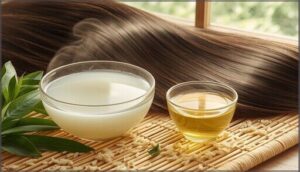
Both green tea and rice water rinses work fast to boost shine by smoothing your cuticle layer and removing dull buildup.
Brew two tea bags in hot water, cool, then pour over clean hair for ten to twenty minutes before rinsing.
For rice water treatment, soak or ferment rice in water, strain, apply weekly, and follow with conditioner to keep your hair soft and glossy without stiffness.
Flaxseed Gel for Definition and Shine

Flaxseed gel delivers hold and gloss without the crunch of commercial products. Simmer whole flaxseeds in water for eight to ten minutes until the liquid thickens like ribbons, strain while hot, then cool before use. Apply to damp hair in sections for curl enhancement and frizz control. This shine booster works on every texture, from tight coils to loose waves.
- Omega-3s and vitamin E smooth the cuticle so your strands reflect more light naturally
- Flexible hold defines curls without that stiff helmet feel you get from harsh gels
- Store batches in the fridge for one to two weeks or freeze portions for later
Herbal Masks Using Reetha and Shikakai
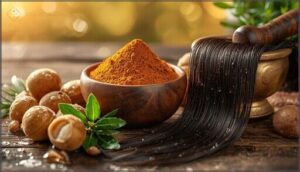
Reetha and shikakai are standout Ayurvedic hair care staples, prized for their gentle cleansing power and natural conditioning effects. Reetha excels at lifting buildup, while its rich blend of vitamins A, D, E, and K smooths each strand, enhancing light reflection. Shikakai, on the other hand, softens tangles and tames frizz without stripping natural oils.
To harness their benefits, blend ten grams of reetha, fifteen grams of shikakai, and warm water into a paste. Apply the mixture to your hair for twenty to thirty minutes before rinsing.
| Ingredient | Amount | Purpose |
|---|---|---|
| Reetha powder | 10 grams | Cleanses without residue |
| Shikakai powder | 15 grams | Conditions and detangles |
| Warm water | As needed | Forms smooth paste |
Scalp Care and Healthy Hair Habits

Your scalp is where the magic happens, so taking care of it isn’t optional if you want hair that actually shines. Beyond what you put on your hair, how you treat it daily makes all the difference between lackluster strands and head-turning gloss.
Here are the essential habits that protect your hair’s natural shine and keep it looking its best.
Scalp Massage for Oil Distribution
Your scalp holds the secret to shine you own. Regular scalp massage moves natural oils from roots down the hair shaft, coating strands that often stay dry.
Use gentle fingertip circles across your whole head for 5 to 10 minutes daily. This scalp stimulation boosts circulation, nourishes hair follicle health, and balances oil production—so you get consistent shine without heavy products.
Cold Water Rinses to Seal Cuticles
A quick cool rinse won’t magically seal your hair cuticle like a vault, but it does help. After conditioning, switch your water temperature to around 59–68°F for 15 to 60 seconds—enough to reduce frizz and leave more product on the surface for hair shine.
This cold rinse benefits your scalp comfort and aids hair moisture without the shock of ice-cold water, balancing cuticle smoothing with real-world ease.
Regular Trims and Gentle Brushing
Regular trims every 6 to 8 weeks remove frayed tips before split end prevention becomes an uphill battle, keeping your strands smooth enough to catch light instead of scattering it.
Pair that with gentle detangling using a boar-bristle brush—start at the ends, work upward—and you’ll spread natural oils while dodging hair breakage. This brush technique protects your cuticle and delivers real hair shine and growth without the drama.
Limiting Heat Styling and Using Protectants
Unfortunately, flat irons and curling irons can damage up to 85 percent of your hair’s keratin proteins, stripping shine fast. That’s why dialing back heat styling to a few times weekly—and always using a protectant spray or cream—matters for thermal damage control:
- Fine hair needs 250 to 300 degrees Fahrenheit maximum.
- Medium hair tolerates 300 to 350 degrees Fahrenheit safely.
- Thick hair often requires 350 to 400 degrees Fahrenheit.
- Apply protectant evenly from mid-lengths to ends before heat.
- Let water-based products dry completely to avoid sizzling.
These heat styling tips shield your cuticle, preserve natural oils, and keep hair shine and growth on track without constant thermal damage.
Nutrition and Lifestyle Tips for Hair Shine

Your hair’s shine doesn’t just come from what you put on it—it starts from within. What you eat, how much water you drink, and how you manage daily stress all play a direct role in your hair’s natural luster.
Here’s what you need to focus on to support shine from the inside out.
Foods Rich in Healthy Fats and Antioxidants
Your diet can break you free from dull, lifeless strands. Fatty Fish Benefits shine through when you eat salmon or mackerel twice weekly—100 grams packs 2 grams of Omega-3 fatty acids that strengthen follicles and boost natural luster.
Antioxidant Sources like berries deliver vitamin C for collagen production.
Add Omega Rich Foods such as walnuts and chia seeds, plus Nutrient Dense Meals featuring spinach and avocados, to fuel healthy, glossy hair from within.
Staying Hydrated for Hair Health
Think water is just for your body? Your follicles need hydration benefits too. Hair health and wellness starts with scalp moisture—aim for 2 to 3 liters daily to keep strands supple and light-reflective.
- Water intake tips: Space drinks throughout the day for steady follicle support
- Electrolyte balance: Pair water with fruits and vegetables for better moisture retention
- Hair hydration: Well-hydrated shafts resist breakage and frizz
- Hair nourishment and moisture: Combine hydration with natural oils and remedies for maximum shine
Stress Management for Hair Wellness
High cortisol from chronic pressure pushes follicles into shedding, so Cortisol Management and Stress Reduction become front-line defenses for Hair Wellness. Try ten minutes of daily breathwork or gentle Scalp Health and Massage to lower stress hormones by up to 25 percent in six months.
Combine Mindful Hair Care with Ayurvedic Hair Remedies, steady sleep, and moderate exercise for Comprehensive Hair Wellness that fosters both Emotional Balance and scalp vitality.
Importance of Biotin and Key Nutrients
Beyond relaxation and whole foods, specific Biotin Benefits and Vitamin Balance power your strands from the inside. Biotin acts as a cofactor for keratin enzymes, smoothing cuticles so hair reflects light better. Pair it with these for complete Hair Nourishment:
- B complex for protein metabolism and steady Hair Growth
- Zinc to prevent shedding and dullness from Mineral Deficiency
- Iron for oxygen delivery and fuller volume
- Vitamin C to boost Nutrient Absorption and collagen support
- Omega-3s for moisture and improved Hair Health
Smart Hair Supplements fill gaps when diet alone falls short.
Frequently Asked Questions (FAQs)
How to naturally gloss your hair?
Your hair will practically blind people with brilliance if you nail the hair basics. Massage nourishing oils like coconut or argan into your scalp, rinse with cool water to seal cuticles, and protect strands from heat damage.
What is a natural alternative to hair gloss?
Cold-pressed argan oil or an apple cider vinegar rinse acts as a natural hair gloss alternative. Both smooth the cuticle and boost light reflection, delivering shine without silicones or synthetic shine enhancers found in salon treatments.
How to bring shine back to dull hair?
Start with scalp exfoliation to remove buildup, then apply oil treatment like argan or coconut.
Use apple cider vinegar rinses, and finish washes with cool water to seal cuticles for immediate hair shine restoration.
How to make your hair shine naturally?
You can transform lifeless strands by mastering three Natural Hair Care pillars: regular Hair Oil Therapy with plant oils, gentle Scalp Detox Methods to remove buildup, and smart Daily Hair Rituals like cool rinses for lasting Natural Shine Boosters.
How do I make my hair shiny?
You need a solid hair care routine that includes oil treatments, regular scalp massage, and proper hair conditioning.
Focus on hair moisturizing, gentle cleansing, and protecting strands from heat to boost natural hair shine.
How to get shiny hair & dandruff naturally?
A healthy scalp is the root of shiny hair. Massage natural hair oil blends like jojoba into your scalp to ease dandruff and boost shine, then follow with apple cider vinegar rinses.
Can coconut oil make your hair shiny?
Yes, coconut oil can make your hair shiny by smoothing the cuticle and locking in moisture.
Apply a small amount to damp ends, focusing on dry sections, to boost light reflection without greasiness.
How to hydrate hair naturally?
Spray clean water directly onto your hair before applying natural oils like argan or jojoba to seal moisture in.
Use hydrating masks weekly and drink plenty of water to support scalp treatment and hair conditioning from within.
How to make your hair shinier?
You can boost hair shine by sealing the cuticle with cool rinses, using lightweight natural oils like argan or jojoba on damp lengths, and protecting strands from heat damage with targeted shine boosters.
How do I make my natural hair shine?
Smooth strands start with simple shifts in your scalp massage routine, daily habits, and DIY hair masks.
Shiny hair tips center on natural oils, gentle cleansing, and cold water rinses that seal cuticles and boost light reflection.
Conclusion
The industry’s claim that shine requires expensive formulas? False. Natural remedies for shiny hair work because they address what chemical products often ignore: your cuticle layer and scalp ecosystem.
When you choose oils that mimic your sebum, rinses that balance pH, and habits that protect strand integrity, you’re not chasing shine—you’re removing the barriers blocking it.
Your hair already knows how to gleam. You just needed to stop interfering with the process.
- https://kopelmanhair.com/blog/oil-for-hair-growth/
- https://us.tangleteezer.com/blogs/inspiration/the-7-different-types-of-hair-oil-and-their-benefits
- https://www.mindbodygreen.com/articles/why-you-should-rinse-your-hair-with-this-diy-apple-cider-vinegar-recipe
- https://floracurl.com/blogs/curl-blog/aloe-vera-the-scientific-benefits-to-curly-natural-hair
- https://www.empresshaircare.com/diy-herbal-rinses-for-healthy-hair.html