This site is supported by our readers. We may earn a commission, at no cost to you, if you purchase through links.
A patchy beard doesn’t mean you’re out of options. While genetics play the lead role in facial hair growth, you can still nudge your follicles in the right direction with the right approach. Peppermint oil has caught attention in beard care circles for its potential to stimulate hair growth—and there’s actually some science backing it up.
Studies show this mint-derived essential oil can increase blood flow to hair follicles and may even extend the active growth phase of hair. Before you start dousing your face in minty goodness, though, you need to understand how to use it safely and what realistic results look like.
Getting peppermint oil right means knowing proper dilution ratios, application techniques, and how to spot potential skin reactions before they become problems.
Table Of Contents
- Key Takeaways
- What is Peppermint Oil?
- How Peppermint Oil Stimulates Beard Growth
- Key Benefits of Peppermint Oil for Beards
- Comparing Peppermint Oil to Other Beard Growth Solutions
- Proper Application of Peppermint Oil for Beard Growth
- Diluting Peppermint Oil Safely for Facial Use
- DIY Peppermint Beard Oil Recipes
- Preventing and Managing Skin Sensitivity
- Potential Side Effects and Safety Precautions
- Optimizing Your Beard Care Routine With Peppermint Oil
- Frequently Asked Questions (FAQs)
- How fast will my beard grow when using peppermint oil?
- Is peppermint oil better than minoxidil?
- Does peppermint oil help grow hair?
- Does peppermint oil work on patchy beards?
- How long until I see visible results?
- Can I use peppermint oil on dyed beards?
- Will peppermint oil cause beard hair to fall out?
- Does peppermint oil expire or lose effectiveness over time?
- Conclusion
Key Takeaways
- Peppermint oil stimulates beard growth by increasing blood flow to hair follicles and prolonging the active growth phase, with studies showing a 92% improvement in mice compared to 55% with minoxidil after four weeks.
- You must dilute peppermint oil to 0.5-1% concentration in a carrier oil like jojoba or argan before applying to your face, as undiluted oil can cause severe skin irritation or allergic reactions.
- Most users see subtle changes around 4-6 weeks with clearer beard growth by 3 months, though peppermint oil can’t reactivate completely dormant follicles in truly patchy areas since genetics still play the lead role.
- While peppermint oil shows promise based on animal studies, it lacks controlled human trials and regulatory approval unlike minoxidil, so you’re working with experimental evidence rather than proven treatment.
What is Peppermint Oil?
Peppermint oil comes from the peppermint plant, a natural hybrid of watermint and spearmint. It’s been used for centuries in traditional remedies, and today it shows up in everything from aromatherapy to skincare products.
Let’s look at where this oil comes from, what makes it work, and how people have put it to use over the years.
Source and Extraction Process
Peppermint oil comes from Mentha piperita, a hybrid mint grown worldwide. Producers harvest the aerial parts and use steam distillation—heating chopped plant material for about an hour—to extract the essential oil.
Drying methods matter too; hot air at 50–70°C preserves quality while shortening processing time. Some facilities use CO2 extraction for purer menthol-rich yields, though steam distillation still dominates global production.
The average yield of fresh peppermint plant material is about 15-20 tons per hectare.
Key Active Compounds (Menthol, Methyl Salicylate)
Once you’ve distilled peppermint oil, menthol does the heavy lifting. Analytical quantification shows menthol usually makes up 38–69% of the total oil—it triggers TRPM8 activation, creating that cooling sensation while boosting blood circulation through vasodilation effects. You’ll also see trace salicylate absorption from formulated blends, contributing antiinflammatory properties. A gas chromatography method can accurately measure these compounds.
- Menthol percentage determines potency and follicle stimulation
- Vasodilation effects deliver more oxygen to beard roots
- Combined compounds support healthier skin beneath your beard
Traditional and Modern Uses
For centuries, healers applied peppermint preparations for digestive troubles and respiratory ailments—Ancient Medicinal Uses date back to 1550 BCE Egyptian records.
Today, this essential oil does more than soothe IBS Symptom Relief or provide Topical Pain Relief. You’ll find it in everything from beard growth serums to Cosmetic Applications like lip balms.
Hair Product Use now includes formulas promoting hair growth, as peppermint oil benefits extend from your stomach to your follicles.
How Peppermint Oil Stimulates Beard Growth
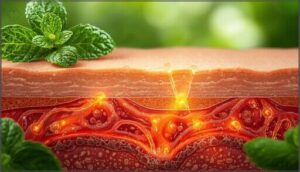
Peppermint oil doesn’t just sit on your skin—it actually gets to work at the follicle level to encourage your beard to grow thicker and faster. The secret lies in how its active compounds interact with your hair follicles and the surrounding skin.
Let’s break down the specific ways peppermint oil aids beard growth.
Blood Circulation and Follicle Stimulation
When you apply menthol to your skin, it activates TRPM8 channels—tiny receptors that trigger menthol vasodilation, more than tripling blood circulation in treated areas. This surge in nutrient delivery and follicle oxygenation creates an ideal environment for hair follicle health. Research shows menthol increases dermal thickness around hair follicles, supporting:
- Enhanced oxygen supply to beard roots
- Improved waste removal from follicle tissues
- Strengthened anchoring structures for each hair
- Optimized conditions for stimulating beard growth
Prolonging The Hair Growth (Anagen) Phase
Beyond boosting circulation, peppermint oil prolongs the anagen phase—the active growth window your hair follicles need to produce thicker beard strands. Mouse studies show it triggers IGF-1 upregulation in the dermal papilla, signaling follicles to stay in growth mode longer.
Enhanced vascular support feeds follicle structure, helping you get the most out of each hair growth cycle and achieve fuller facial hair over time.
Supporting Scientific Evidence
Although no beard-specific trials exist yet, animal model data from a 2014 mouse study offers compelling support: 3% peppermint oil outpaced minoxidil in hair growth speed and dermal thickness.
A 2014 mouse study found that 3% peppermint oil outperformed minoxidil in promoting hair growth and increasing dermal thickness
Key findings include:
- 92% growth increase versus 55% for minoxidil after four weeks
- Enhanced blood circulation via menthol mechanisms
- Considerably greater hair follicles stimulation
- Elevated IGF-1 expression promoting hair growth
- Strong topical safety profile with no systemic toxicity
Comparative efficacy remains preclinical but promising.
Key Benefits of Peppermint Oil for Beards
You already know peppermint oil can spark new growth, but that’s just the beginning. Beyond waking up dormant follicles, it addresses some of the most frustrating problems men face when growing a beard.
Here’s what makes it worth adding to your routine.
Promoting Thicker and Fuller Beard
Want a beard that turns heads? Peppermint oil delivers by boosting follicle density and accelerating anagen entry—your hair’s active growth phase.
A 3% concentration increases microcirculation around hair follicles, pumping more nutrients to your facial hair. Research shows this enhances shaft robustness, producing visibly thicker coverage.
You’re basically giving each follicle what it needs for healthier beard growth at safe concentrations.
Reducing Beard Itch and Dandruff
Beard itch and flakes aren’t just annoying—they’re signs of inflammation and fungal overgrowth. Peppermint oil’s menthol cooling effect calms irritation, while its antifungal properties target Malassezia, the yeast behind beard dandruff.
Mix it at safe dilution levels with carrier oil benefits for anti-inflammatory properties that soothe skin. You’ll notice beard itch relief and dandruff reduction within consistent use.
Enhancing Beard Shine and Softness
Think of shine as light bouncing off smooth surfaces—peppermint oil helps flatten the cuticle through fiber softening and sensory cooling while carrier oils deliver moisturizing properties. Proper formulation practices blend sebum balancing with cuticle smoothness, improving beard texture without grease.
- Menthol boosts circulation, delivering nutrients that support healthier, glossier beard hair
- Jojoba and argan carriers mimic natural oils, enhancing moisture and softness
- Diluted blends (2–3%) condition fibers while peppermint oil adds a revitalizing finish
Comparing Peppermint Oil to Other Beard Growth Solutions

You’ve probably seen plenty of beard growth options out there, from prescription treatments to natural oils and everything in between.
It’s hard to know what actually works and how peppermint oil stacks up against the competition.
Let’s compare it to other popular solutions so you can make an informed choice for your beard.
Peppermint Oil Vs. Minoxidil
If you’re weighing your options for hair growth stimulation, here’s what the clinical evidence shows. Minoxidil has decades of regulatory status as a proven drug, backed by controlled human trials showing 15–18 new hairs per cm² over 6 months. Using peppermint oil for beard growth relies on promising mouse studies—one found peppermint oil outpaced 3% minoxidil at 4 weeks—but human data remains scarce.
| Feature | Peppermint Oil | Minoxidil |
|---|---|---|
| Efficacy Comparison | Strong in mice; no human beard trials | Proven scalp regrowth; off-label for beards |
| Safety Profiles | Skin irritation if undiluted; sensitization risk | Local dermatitis (~2–6%); rare systemic effects |
| Mechanism Differences | Menthol vasodilation + TRPM8 activation | Potassium channel opening + anagen prolongation |
Peppermint Oil Vs. Other Essential Oils
Other essential oils offer different growth pathways than peppermint oil. While peppermint’s 92% hair recovery in mice outpaced alternatives at 4 weeks, rosemary oil matched 2% minoxidil in a 6-month human trial—stronger clinical evidence. Each brings unique benefits:
- Rosemary: gradual microcirculation boost, proven human data
- Tea tree: targets beard dandruff, antifungal action
- Cedarwood: balances sebum, normalizes follicle environment
- Lavender: soothing, often blended for combined effects
Safety profiles remain similar across essential oils when properly diluted in carrier oils like jojoba.
Natural Vs. Chemical Beard Growth Products
When you’re comparing peppermint oil to minoxidil and other beard growth treatments, the choice comes down to what you value most. Chemical products like minoxidil show consistent efficacy—around 55% improvement in beard density at 16 weeks—but carry higher irritation risk.
Natural remedies appeal to growing consumer preferences for plant-based ingredients, though clinical data remains thinner. Market demand increasingly favors botanicals, yet the regulatory landscape doesn’t require equal proof of effectiveness.
Proper Application of Peppermint Oil for Beard Growth
Applying peppermint oil correctly makes all the difference between seeing real results and dealing with irritation. You’ll want to follow a clear method that protects your skin while giving your beard follicles the boost they need.
Let’s walk through exactly how to use peppermint oil safely and effectively for beard growth.
Step-by-Step Usage Guide

Before applying peppermint oil, start with pre-application cleansing using lukewarm water and a gentle beard shampoo to remove sebum and debris.
Next, focus on dilution preparation by mixing 10–20 drops of peppermint oil into 30 mL of carrier oil—this step is key for safe essential oil application.
Use proper application technique by warming the blend between your palms, then massage it into your beard from roots to tips.
Finish with post-application hygiene by combing through for even distribution.
Frequency and Timing for Best Results
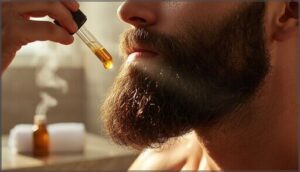
Once you’ve mastered the application technique, you’ll want to apply your diluted peppermint oil once daily—ideally after showering, when your beard is towel-dried and slightly damp.
Start with every-other-day use if you have sensitive skin, then gradually increase to daily as your skin adapts.
Most people see visible effects after 4–8 weeks of consistent use, so patience pays off.
Beard Grooming Tools for Application
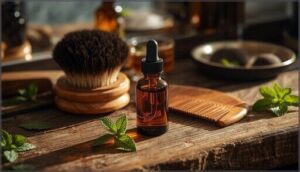
The right tools make all the difference. Use a dropper bottle to measure your dose—3 to 5 drops is plenty. Then massage the oil into your beard and skin with your fingertips.
Follow up with a beard comb or boar bristle brush to distribute it evenly from root to tip, ensuring every follicle gets nourished.
Diluting Peppermint Oil Safely for Facial Use
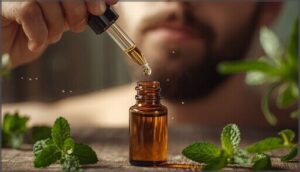
Peppermint oil is far too strong to apply directly to your face without dilution. You’ll need to mix it with a carrier oil to protect your skin from irritation while still getting the beard growth benefits.
Let’s look at why carrier oils matter, the safest mixing ratios, and which oils work best for your beard.
Importance of Carrier Oils
Diluting peppermint oil isn’t optional—it’s essential for safe essential oil usage on your face. Undiluted peppermint oil can trigger profound dermatitis, but carrier oils dramatically lower that risk while strengthening your skin barrier and improving how well the active compounds reach your follicles.
- Irritation reduction: Carrier oils cut sensitization incidents by keeping menthol concentration below reaction thresholds
- Facial compatibility: Non-comedogenic options like jojoba won’t clog pores under your beard
- Enhanced delivery: Lipophilic carriers improve absorption and keep volatiles in contact with follicles longer
Recommended Dilution Ratios
For leave-on facial use, you’ll want to keep peppermint oil between 0.5% and 1% of your total blend—that’s about 3 to 6 drops per ounce of carrier oil. Sensitive skin demands even gentler ratios, around 0.25% to 0.5%.
| Dilution Safety | Drops per 30 mL | Best For |
|---|---|---|
| 0.25–0.5% | 1.5–3 drops | Sensitive skin or compromised barrier |
| 0.5–1% | 3–6 drops | Normal facial application area |
| 1–2% | 6–12 drops | Short-term spot use (not routine) |
| 3–5% | 18–30 drops | Body only—never beard region |
Start conservative and adjust upward only if you experience zero irritation after a week.
Suitable Carrier Oil Options
Your carrier choice matters as much as your dilution ratio. Jojoba oil mimics your natural sebum and suits all skin types, while grapeseed oil works beautifully for acne-prone faces beneath beards.
Argan oil delivers concentrated vitamin E for nourishment, and sweet almond oil softens coarse whiskers.
Skip coconut oil if you’re prone to breakouts—it clogs pores more readily than jojoba or grapeseed alternatives.
DIY Peppermint Beard Oil Recipes
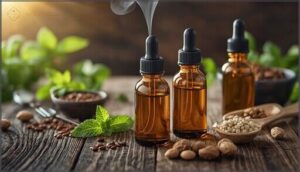
Making your own peppermint beard oil is straightforward and lets you control exactly what goes on your face. You’ll mix peppermint oil with carrier oils and, if you want, add other ingredients to target specific beard concerns.
Here are three recipes you can start with today.
Basic Peppermint Beard Oil Blend
Making your own peppermint beard oil is simpler than you might think. Start with a 1 oz dark glass bottle and fill it with jojoba or argan oil as your carrier.
Add just 9 drops of peppermint oil for a safe 1% dilution. Shake gently to blend, then massage a few drops into your beard daily for best results.
Nourishing Beard Oil With Added Ingredients
You can boost your basic blend by layering in ingredients with proven skin and hair benefits. Consider these carrier oil and active combinations for a formula that nourishes while it stimulates:
- Jojoba oil + argan oil for a vitamin E–rich, lightweight base
- Sweet almond oil to calm itchy, flaky skin under your beard
- Fractionated coconut oil for faster absorption and moisturizing effects
- Tea tree oil (1–2 drops) for antimicrobial protection against beard dandruff
- Lavender oil (1–2 drops) to soothe inflammation and sensitivity
This multi-ingredient approach mirrors the market trend toward fortified beard oils—products that combine circulation-boosting peppermint with carrier oil benefits and targeted actives.
The result is a softer, shinier beard supported by healthier skin.
Customizing Recipes for Specific Beard Needs
Your beard’s unique challenges call for specific solutions. Patchy density frustrates you? Increase peppermint to 1% and apply twice daily to sparse zones. Coarse hair? Blend jojoba and argan at 70–80% for slip and shine.
Oily skin requires light, non-comedogenic carriers like fractionated coconut oil at lower volumes—around 4–6 drops.
Seasonal adjustments matter too: switch to heavier nighttime formulas in winter for added conditioning.
Preventing and Managing Skin Sensitivity
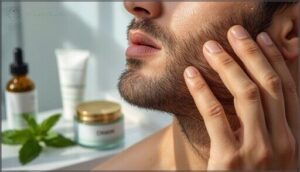
Peppermint oil can work wonders for beard growth, but it’s not for everyone—some guys experience redness, burning, or other reactions when they first try it.
The good news is that most sensitivity issues are preventable if you know what to watch for and how to adjust your routine. Here’s how to keep your skin happy while you grow that fuller beard.
Performing a Patch Test
Before you apply peppermint oil to your entire beard, you’ll want to run a simple patch test to check for skin sensitivity. Here’s how:
- Mix your dilution: Combine 1–2 drops of peppermint oil with half a teaspoon of carrier oil—dilution ratios around 1–2% work well for the test area.
- Apply to inner forearm: Place a few drops on your inner arm and cover with a bandage.
- Observe for 24–48 hours: This observation period catches most allergic reactions. Don’t wash the spot during the reading timeline.
- Check for irritation: Redness, itching, or swelling signals reaction relevance—skip peppermint oil if you see these signs.
This quick patch test respects peppermint oil safety precautions and helps prevent unwanted skin irritation down the road.
Recognizing Signs of Irritation or Allergy
Knowing your skin’s signals helps you catch trouble early. Irritation vs allergy matters: irritant reactions often flare within hours as burning or stinging at the application site, while allergic reactions build over 24–72 hours with intense itching, redness, or even blisters. Watch for systemic symptoms like headache or widespread rash.
Population data shows about 0.6% of patch-tested individuals react to peppermint oil—awareness of these prevalence indicators protects your skin.
Adjusting Usage for Sensitive Skin
If you’ve noticed redness or stinging, tone down your approach. Start by lowering dilution to 0.5–1% instead of 2–3%—that cuts concentration by half or more, reducing skin irritation prevention concerns.
Switch to gentler carrier oils like jojoba or sweet almond, and apply every other day rather than daily.
Patch testing a simplified formula helps allergy screening before you commit to regular use.
Potential Side Effects and Safety Precautions
While peppermint oil can work wonders for your beard, it’s not without potential drawbacks. Even natural ingredients can cause problems if you’re not careful about how you use them.
Let’s look at the side effects you should watch for, situations where you shouldn’t use it, and how to store it properly.
Common Adverse Reactions
While peppermint oil offers real benefits, you might experience skin sensitivity and allergies. Contact dermatitis affects about 0.6% of people who patch test positive, with reactions ranging from mild to severe.
You could also notice sensory irritation—burning or stinging—especially on compromised skin. Some folks develop allergic reactions like redness and itching, though respiratory effects and systemic reactions remain rare with proper topical use.
When to Avoid Peppermint Oil
Certain situations call for skipping peppermint oil entirely, even when you’re enthusiastic about beard growth. You should avoid it if:
- Infant exposure risks: Never apply near young children’s faces—menthol can trigger breathing problems and respiratory distress in kids under 30 months.
- Pregnancy concerns: High concentrations aren’t safe during pregnancy or breastfeeding due to limited safety data.
- GI disorders and drug interactions: Avoid use if you have gallstones, severe reflux, or take medications metabolized by CYP3A4, as peppermint oil side effects include worsening symptoms and altered drug levels.
Contact dermatitis and skin damage from repeated exposure are also concerns.
Safe Storage and Handling Practices
To keep your peppermint oil effective and safe, proper handling matters more than you might think. Store bottles in cool, dark cabinets away from children and pets—accidental ingestion triggers serious peppermint oil side effects. Always tighten caps to prevent oxidation issues and keep away from flames due to flammability risks.
| Storage Priority | Why It Matters |
|---|---|
| Child Safety locks | Prevents toxic ingestion |
| Dark glass bottles | Blocks light degradation |
| Cool temperatures | Slows oxidation rates |
| Secure caps | Limits Pet Exposure risks |
After application, wash hands thoroughly to avoid skin contact with eyes and reduce allergic reactions or contact dermatitis from accidental transfer.
Optimizing Your Beard Care Routine With Peppermint Oil
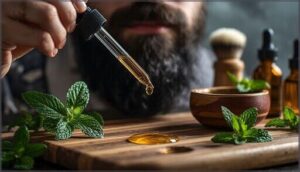
You’ve learned about the benefits and safety considerations—now it’s time to put that knowledge into action. Building an effective beard care routine with peppermint oil doesn’t have to be complicated, but it does require some planning and consistency.
Let’s walk through how to weave peppermint oil seamlessly into your daily grooming habits, pair it with your existing products, and set yourself up for long-term beard success.
Integrating Peppermint Oil Into Daily Regimen
Building a daily beard care routine with peppermint oil doesn’t have to be complicated. You’ll see better results when you keep it simple and consistent:
- Daily cleansing with a mild beard wash gets your skin ready for better absorption.
- Proper dilution means mixing 1–2 drops of peppermint oil into a tablespoon of carrier oil.
- Application frequency of two to three times weekly prevents overloading your skin.
- Layering products works best when you apply your DIY beard oil blend right after cleansing, before heavier balms.
- Monitoring response helps you catch irritation early and adjust your peppermint oil application as needed.
Incorporating peppermint oil into your beard care routine becomes second nature when you follow these straightforward steps for product application.
Combining With Other Beard Care Products
You can stack peppermint oil with other products, but smart layering prevents irritation. Commercial beard oils already blend 3–6 carrier oils with essential oils like peppermint, so adding your DIY beard oil on top doubles your exposure.
Here’s how different beard care routine products work together:
| Product Type | Peppermint Role | Best Practice |
|---|---|---|
| Beard oils | Stimulation + conditioning | Use oil or balm daily, not both |
| Balm and butters | Fragrance + mild tingling | Apply after oil for moisture lock |
| Shampoo integration | Cooling during cleanse | Limit to 2–3 times weekly |
| Growth agents (minoxidil) | Experimental pairing | Separate by hours; patch test first |
Synergy oils like rosemary pair well with peppermint—just keep total essential oils under 2–3% of your blend. Rotating between a peppermint-dominant formula and other beard oil ingredients reduces sensitization risk while maintaining follicle stimulation.
Tips for Long-Term Beard Health and Growth
Peppermint oil works best when your whole routine bolsters facial hair growth. Think beyond topicals—your beard thrives when you address the fundamentals that fuel follicles from within.
Here are five key habits to incorporate into your routine:
- Dietary Protein: Aim for 0.8 g per kg body weight daily to feed keratin production and maintain healthy growth cycles.
- Sleep Quality: Protect testosterone levels with 7–8 hours nightly; chronic sleep loss disrupts hormones critical for beard density.
- Physical Activity: Moderate-to-high intensity exercise acutely boosts androgens that drive terminal hair thickness.
- Skin Health: Control seborrheic dermatitis with medicated shampoos twice weekly to prevent inflammation that compromises follicles.
- Lifestyle Risks: Avoid smoking—vasoconstriction starves follicles of oxygen, weakening beard hair and increasing breakage over time.
Consistent beard maintenance with natural remedies like peppermint oil, paired with skin hydration and these evidence-based habits, creates the foundation for long-term beard health.
Frequently Asked Questions (FAQs)
How fast will my beard grow when using peppermint oil?
Your facial hair growth rate is determined largely by genetics and hormones—usually around 1–5 cm monthly. Peppermint oil may support healthier follicles, but won’t drastically accelerate natural beard growth speed.
Is peppermint oil better than minoxidil?
Human trials show minoxidil produces consistent hair growth results, while peppermint oil lacks controlled studies. Minoxidil has regulatory approval and proven efficacy evidence, making it the more reliable choice despite peppermint oil’s promising animal research.
Does peppermint oil help grow hair?
Evidence from a mouse study shows promising results, yet human trials remain limited.
The safety profile looks favorable when diluted, though menthol vasodilation and anagen promotion in people need more research.
Does peppermint oil work on patchy beards?
Many men face uneven facial hair growth, while others enjoy dense coverage. Peppermint oil may improve existing follicles through improved blood circulation, but clinical evidence shows it can’t reactivate dormant follicles in truly patchy beard areas.
How long until I see visible results?
Most users notice subtle changes around 4–6 weeks, with clearer beard growth by 3 months.
Individual variation, consistency, and your baseline hair density all influence how quickly visible results appear with peppermint oil.
Can I use peppermint oil on dyed beards?
Yes, you can use peppermint oil on dyed beards. Dilute it properly to minimize oil penetration and color fading.
Wait 48 hours after dyeing, perform patch testing first, and avoid heavy application to preserve your beard’s color.
Will peppermint oil cause beard hair to fall out?
Worried about losing hair? When diluted properly, peppermint oil actually promotes growth rather than shedding.
Irritation risks exist at high concentrations, though, so performing patch tests prevents side effects and protects individual sensitivity.
Does peppermint oil expire or lose effectiveness over time?
Peppermint oil generally lasts one to three years when stored properly in a cool, dark place. Oxidation effects gradually weaken its potency.
Watch for off-odors, color changes, or thickened texture—these signs indicate reduced effectiveness.
Conclusion
Your beard’s potential isn’t locked behind your genetics alone. Smart application matters. Consistency matters. Safety matters most.
When you dilute peppermint oil for beard growth correctly, apply it with patience, and watch for your skin’s response, you’re giving those follicles their best shot at waking up.
The path from patchy to fuller takes months, not days—but with the right approach, you’re already ahead of where you started.