This site is supported by our readers. We may earn a commission, at no cost to you, if you purchase through links. This content is for general informational and educational purposes only and is not a substitute for professional medical, dermatological, or nutritional advice.

Month two. You’re staring at your jawline in the bathroom mirror, hunting for proof. Nothing yet, and it’s tempting to quit.
Don’t. Minoxidil beard growth results rarely show up on your schedule. Most men see real change between months six and twelve, and the fuzz you can barely detect today is vellus hair, quietly preparing to thicken and darken. Quit early and you never meet it.
Patience matters, but so does technique. Dose, timing, foam versus liquid, and the side effects worth watching for all shape what happens on your face. Here’s what to expect, and how to get there.
Table Of Contents
- Key Takeaways
- What Minoxidil Beard Growth Results Can You Realistically Expect?
- How Minoxidil Works for Beard Growth: Evidence and Limitations
- Minoxidil Beard Growth Timeline: Early Changes to Long-Term Results
- How to Apply Minoxidil for Beard Growth: Foam, Liquid, and Consistency
- Is Minoxidil Safe for Beard Growth? Off-Label Use and Precautions
- Frequently Asked Questions (FAQs)
- Can you really grow a beard with minoxidil?
- How long does it take for minoxidil to show results on a beard?
- What is the 3 month beard rule?
- Is minoxidil good for beard growth?
- Can minoxidil actually grow a beard?
- What happens after 2 years of minoxidil?
- How long does it take minoxidil to grow a beard?
- How realistic is minoxidil beard results?
- Does minoxidil help grow a beard?
- Are minoxidil beard results permanent?
- Conclusion
Key Takeaways
- You won’t see real results for six to twelve months, so give it time, because minoxidil only wakes up dormant follicles and can’t create new ones.
- Expect some shedding around weeks two to four, peaking near month two, and don’t quit, since that’s normal follicle reset rather than failure.
- Apply about 1 ml twice a day, roughly 12 hours apart, and keep it consistent, because your genetics and consistency decide how far you get.
- Stop and get medical help if you notice chest pain, dizziness, swelling or a spreading rash, and skip it entirely if you’re pregnant, under 18 or have heart or kidney problems, since this is an off-label use.
What Minoxidil Beard Growth Results Can You Realistically Expect?

Most men notice a real change after six to twelve months of steady use. Not week two. Not month one.
Since hair grows slowly and shedding cycles take time to settle, it helps to understand the benefits of collagen for hair so your expectations stay realistic while you stay consistent.
So what should your realistic before-after expectations look like? Think gradual upgrade, not overnight transformation. Minoxidil wakes dormant follicles. It can’t build new ones.
Expect a gradual upgrade, not an overnight transformation, because minoxidil wakes dormant follicles but can’t build new ones
Patchy area progress usually comes first: cheeks and the jawline soften as fine hairs darken and thicken. Density and coverage gains follow slowly, and perceived fullness onset often hits around month four, when friends start noticing before you do. A beard growth kit with derma roller plus a light beard oil can keep skin comfortable while those fine hairs thicken.
Patience pays here. Your genetics set the ceiling, and consistency gets you toward it. Terminal conversion into thick, pigmented hairs usually occurs between months six and twelve, as vellus follicles transition into terminal ones. Track your progress with monthly photos in the same light, because daily mirror checks lie to you. Ready to play the long game?
How Minoxidil Works for Beard Growth: Evidence and Limitations
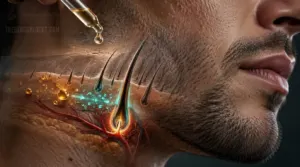
So why does a blood pressure drug grow facial hair? Because Minoxidil opens potassium channels in vascular smooth muscle. That triggers vasodilation and follicle turnover: more blood flow, a longer growth phase, a shorter rest phase.
Here’s the catch. Minoxidil is a prodrug. Your follicles need the SULT1A1 enzyme to convert it into its active form. Roughly 30 to 40 percent of users lack enough of it, which explains non-responders.
What it actually does:
- Stimulates existing hair follicles, including dormant vellus ones.
- Boosts prostaglandins that favor growth.
- Prolongs anagen.
- Won’t create new follicles or change hormones.
Evidence for beard growth is promising but small. Results often take six to twelve months, and they fade if you stop.
While you wait for it to fill in, keep it tidy with this guide to beard grooming for professional settings, so patchy stages still look intentional at work.
Minoxidil Beard Growth Timeline: Early Changes to Long-Term Results
Your beard won’t change overnight, and that’s normal. Minoxidil works on a follicle-level schedule, so knowing what comes when puts you back in control. Here’s what to expect, from the first odd shedding to the day you stop.
Early Growth and Possible Shedding
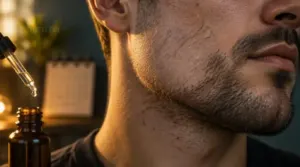
Wait, my beard is falling out?" Yes, and no, that’s not failure. Around weeks 2 to 4, expect a shedding phase as resting hairs exit and follicles reset.
It usually peaks near month two, then settles by months three or four. Before that, watch for early texture changes: finer vellus hairs, more peach fuzz visibility. Stay consistent. Patience wins.
Vellus Hairs Versus Terminal Hairs

So you’ve got fuzz. Now, is it vellus or terminal?
Vellus hairs are short, pale, and soft. Terminal hairs are thicker, darker, and coarse. True vellus-to-terminal conversion shows up as:
- Wider hair shaft diameter
- Darker pigment
- Longer growth
- Coarser texture
- Slower change, over months
More hairs isn’t maturation. Track terminal hair maturation patiently.
What Happens After Stopping Minoxidil?

You might wonder what happens when you stop. Honestly, nobody knows precisely. Most evidence on discontinuation regression comes from scalp work, not beards, so hair density reversion can’t be predicted exactly.
Dependent hairs may thin over weeks to months. Matured ones might stay put. Set realistic before-after expectations, and judge long-term sustainability of topical minoxidil use with your clinician before quitting.
How to Apply Minoxidil for Beard Growth: Foam, Liquid, and Consistency

Apply minoxidil twice per day, about 12 hours apart. Tie it to habits you already have, like after brushing your teeth in the morning and again before bed. Missed a dose? Skip it and carry on.
Here’s how to apply minoxidil for beard growth: cleanse, pat dry, then use 1ml per application. That’s one marked dropper of liquid, or half a capful of foam. Massage it in with your fingertips. Don’t scrub.
Foam spreads easily over short stubble and skips propylene glycol, so it’s gentler. Liquid reaches through thicker hair with precision.
- Wash your hands right after.
- Protect your skin contact duration by waiting four hours before washing.
- Moisturize only once it’s dry.
Patience wins here.
Is Minoxidil Safe for Beard Growth? Off-Label Use and Precautions

Minoxidil works, but "works" isn’t the same as "risk-free." It’s an off-label beard treatment, so you should know where the safety lines sit before you commit months of daily use. Here’s what to watch, who should sit this one out, and which popular add-ons are worth your time.
Common Side Effects and Skin Care
Facial skin isn’t scalp skin. Common Side Effects and Skin Care start here.
| Issue | Sign | Fix |
|---|---|---|
| Skin dryness | Flaking | Barrier repair moisturizers |
| Irritation | Burning | Try foam |
| Contact dermatitis | Red rash | Stop, see doctor |
Expect some skin dryness early. Relax. Apply barrier repair moisturizers an hour after minoxidil, preferably four. Persistent irritation or a spreading rash? Stop and ask your dermatologist.
Who Should Avoid Facial Minoxidil?
It’s just a topical foam, how risky can it be?" Fair question. For most people, not very. But systemic side effects are real, and some people shouldn’t risk them.
Skip it if you’re pregnant, breastfeeding, under 18, or have heart disease, kidney impairment, or uncontrolled hypertension. Got a history of contact dermatitis or propylene glycol allergy? Avoid it. Same goes for irritated, infected, or sunburned skin.
Warning Signs That Require Medical Care
Most beard irritation is boring. Some signs aren’t. Minoxidil can cause systemic side effects if it gets into your bloodstream, so know the red flags.
Stop applying and get help fast if you notice:
- Severe chest pain or an irregular heart rate
- Dizziness, fainting, or sudden swelling and weight gain
- Allergic reactions: hives, facial swelling, trouble breathing
Don’t wait it out.
Do Microneedling, Oils, or Supplements Help?
Tempted by add-ons? Hold on. Microneedling for beard growth lacks controlled trials, and needling before minoxidil may raise irritation. Oils only condition hair; skip undiluted essential oils. Even with proper essential oil dilution, they won’t add follicles.
LCarnitine, platelet-rich plasma and supplement blends? Truly unproven. Fix documented deficiencies only. Longterm sustainability beats gimmicks: stay consistent, stay patient, stay skeptical.
Frequently Asked Questions (FAQs)
Can you really grow a beard with minoxidil?
Funny thing, the bottle that grew your scalp hair won’t make you a lumberjack. Yes, you can thicken a patchy beard. Consistent use lifts facial hair density modestly, so keep realistic before/after expectations.
How long does it take for minoxidil to show results on a beard?
Most users notice change between weeks 4 and Apply twice per day with consistent use, and protect the four-hour absorption window.
Judge realistic before-after results at 16 weeks, as the anagen growth phase unfolds.
What is the 3 month beard rule?
Ninety days is the rule. Skip trimming, let patchy zone recovery play out, and judge your beard enhancement phase with realistic before-after expectations. Minoxidil beard growth results? Still unfolding. Keep your four-hour absorption window consistent.
Is minoxidil good for beard growth?
Yes, minoxidil is fertilizer, not seed. Minoxidil beard growth results depend on existing follicles, so facial hair density improves only for responders. Trust the application process, ignore four hours of mirror-checking, and compare beforeandafter results.
Can minoxidil actually grow a beard?
In one 48-man trial, minoxidil added about 5 hairs over 16 weeks, versus 35 for placebo. So yes, it works. Minoxidil beard growth results depend on vellus hairs your follicles already hold.
What happens after 2 years of minoxidil?
By year two, your follicle responsiveness variations have mostly played out. Responders now carry thick, dark terminal strands, and coverage holds steady. That’s your longterm stability. Stop, and regression follows within months. Keep applying.
How long does it take minoxidil to grow a beard?
Overnight beards? Adorable. Minoxidil must ride your hair regrowth cycle and anagen growth phase, so set realistic before-after expectations: density at three to six months, peak near twelve. How to apply: twice daily, four hours.
How realistic is minoxidil beard results?
Can minoxidil grow a beard from bare skin? No. Realistic before/after expectations mean thicker vellus hairs. Off-label efficacy is modest, so compare genuine before/after photos, keeping your beard area dry through the four hour absorption window.
Does minoxidil help grow a beard?
Picture a lawn with thin patches: minoxidil is fertilizer, not seed. It nudges dormant hair follicles into a longer growth phase and boosts blood flow. Your genetics decide the rest. No follicles, no beard growth.
Are minoxidil beard results permanent?
Wondering about permanence? Terminal hairs usually stay, given androgen sensitivity. Vellus fuzz doesn’t. It sheds as the telogen phase resets your hair growth cycle within three to six months.
Offlabel efficacy means maintenance beats permanence.
Conclusion
Think a year is too long to wait? Hair doesn’t care about your calendar. Follicles run on biology, not impatience.
Your minoxidil beard growth results will reflect how steadily you show up. Apply it twice daily, protect your skin, and stop if irritation or dizziness appears. Photograph your jawline monthly, because progress hides in comparison, not in mirrors.
Skip the shortcuts. Stay consistent, stay curious, and give those quiet vellus hairs the runway they need.