This site is supported by our readers. We may earn a commission, at no cost to you, if you purchase through links.
Somewhere on this planet, a fraction of a percent of people wake up each morning to hair so perfectly straight it refuses to hold a curl, sits flat against the scalp, and slips through ponytail holders like silk thread. Type 1A hair—characterized by an entirely linear shaft with minimal volume—represents the rarest expression of human hair texture, occurring mainly in certain East Asian populations but remaining exceedingly uncommon even there.
While curly and coily textures often dominate conversations about “difficult” hair, this ultra-fine, pin-straight texture presents its own constellation of challenges: stubborn flatness, rapid oil migration from scalp to ends, and a fragility that demands specialized handling.
Understanding where your hair falls on the rarity spectrum isn’t about claiming uniqueness—it’s about identifying the precise structural characteristics that determine which products, techniques, and styling approaches will actually work for your specific strand architecture.
Table Of Contents
- Key Takeaways
- What Are The Main Hair Types?
- Defining Rare Hair Types
- Why Type 1A Hair is The Rarest
- Other Extremely Rare Hair Types
- How to Identify Your Rare Hair Type
- Best Products for Rare Hair Types
- 1. Gentle Hair Detangling Brush Tool
- 2. Luxurious Hair Shine Brush Tool
- 3. Olaplex Volumizing Hair Mist Spray
- 4. Fine Hair Volumizing Shampoo Solution
- 5. Seaweed Volumizing Shampoo For Hair
- 6. Drunk Elephant Scalp Exfoliating Scrub
- 7. Dove Hydrating Shampoo For Dry Hair
- 8. Dove Hydrating Scalp Therapy Conditioner
- Hair Care Tips for Rare Hair Types
- Frequently Asked Questions (FAQs)
- Conclusion
Key Takeaways
- Type 1A hair—completely straight, ultra-fine strands that lie flat against the scalp—represents the rarest human hair texture globally, appearing in fewer than 2% of the population and primarily within East Asian genetic lineages.
- Rare hair types require fundamentally different care protocols than common textures: Type 1A demands lightweight, volumizing products and minimal manipulation to prevent rapid oil migration, while Type 4B and 4C coily textures need intensive moisture retention strategies to combat their naturally high porosity and extreme shrinkage rates.
- Hair type rarity stems from specific genetic polymorphisms in keratin gene expression combined with geographic ancestry patterns, making certain textures like Type 1A or Type 3C genuinely scarce rather than simply unusual.
- Proper identification of your exact hair subtype—through visual inspection of strand shape, porosity testing, and shrinkage measurement—determines which products and techniques will actually work, since conventional hair care advice is calibrated for more common Type 2 and Type 3 textures.
What Are The Main Hair Types?
Before you can understand what makes a hair type rare, you need to know the baseline. The most widely used classification system breaks hair down into four main categories, each with its own subcategories based on texture and curl pattern.
Let’s walk through how trichologists organize these types so you can see where your hair fits.
The Andre Walker Hair Typing System
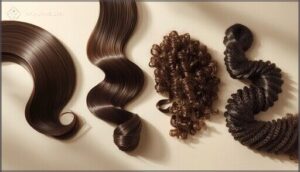
You’ll encounter the Andre Walker Hair Typing System as the foundation for curl pattern classification and hair texture analysis. This hair type classification framework divides hair into four categories—straight, wavy, curly, and kinky-coily—each with three subcategories.
While the system remains widely used in hair care and maintenance guidance, critics have raised hair typing criticisms, arguing it perpetuates problematic hierarchies by privileging certain textures over coily hair management and kinky hair care needs.
Understanding the importance of literature reviews is essential for evaluating hair care research.
Type 1 (Straight) and Its Subcategories
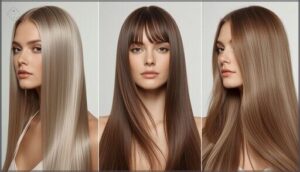
Type 1 straight hair divides into three subcategories based on hair texture analysis. Type 1A presents a completely linear shaft with minimal volume—fine, smooth, and reflective without product. Type 1B offers moderate body and slight bend, giving you more fullness. Type 1C shows subtle wave tendencies near the ends, increasing buoyancy. Each subcategory requires customized straight hair care and straight hair products to enhance straight hair styling and manage hair porosity issues.
Understanding AP study resources can help individuals develop better study habits, which can be applied to learning about hair care and styling.
Type 2 (Wavy) and Its Subcategories
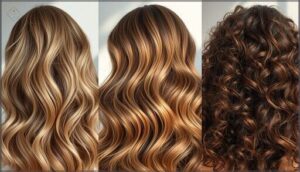
Moving beyond straight textures, you encounter Type 2 Wavy Hair—characterized by a defined S-shaped wave pattern that sits between straight and curly on the Hair Typing System. Your Wave Pattern reflects moderate curl definition and variable frizz control needs.
- Type 2a: Loose, fine waves with minimal volume
- Type 2b: Medium-textured waves with noticeable S-curves
- Type 2c: Dense, defined waves approaching curl territory
- Each demands customized Wavy Hair Care protocols to enhance texture integrity and manageability.
Type 3 (Curly) and Its Subcategories
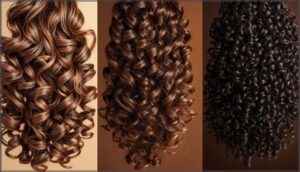
When curls spring from your scalp, you’re looking at Type 3 Hair—the classification where distinct coil patterns define texture identity within the Hair Typing System.
Your Curl Pattern Analysis reveals three tiers of coil tightness, each demanding specialized Curly Hair Care rooted in Hair Texture Classification principles:
| Subcategory | Curl Diameter | Key Challenge |
|---|---|---|
| Type 3a | 0.16–0.25 mm | Frizz control |
| 3B | 0.1–0.16 mm | Definition loss |
| 3C | 0.05–0.1 mm | Extreme dryness |
Curly Hair Genetics and environmental factors shape Hair Texture and Structure, making Moisture Management Techniques essential for maintaining curl integrity and preventing breakage in all three subcategories.
Type 4 (Coily/Kinky) and Its Subcategories
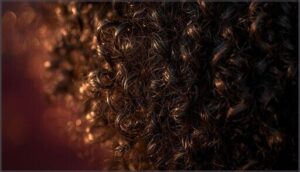
Beyond the familiar spiral, you’ll encounter the tightest compression of keratin fibers: Type 4 Hair. Kink Patterns Analysis distinguishes 4A’s defined “S” coils from 4B’s angular “Z” bends and 4C’s densely packed Afro Texture Management challenges.
Coily Hair shrinkage exceeds 60%, demanding specialized Kinky Hair Styling protocols and Coily Hair Products that address porosity elevations intrinsic to Hair Texture and Structure in this classification.
Defining Rare Hair Types

When you hear “rare hair type,” you might picture something exotic or unusual—but rarity here simply means the hair texture appears in a very small percentage of the global population. Several factors, from your genetic blueprint to where you grew up, shape whether your strands fall into one of these uncommon categories.
Understanding what drives rarity helps you see why certain textures need specialized care and why they’re so seldom encountered in everyday life.
What Makes a Hair Type Rare?
Your Rare Classification hinges on global prevalence—when a Hair Texture appears in fewer than 1% of individuals, you’re looking at something genuinely uncommon. Hair Type 1A, for instance, shows up in under 0.1% of dermatology cohorts worldwide.
A hair texture is genuinely rare when it appears in fewer than 1% of people worldwide—Type 1A shows up in under 0.1% of all dermatology cases
Genetic Factors control Molecular Structure at the follicle level, while Ethnic Variations shift distribution patterns. Rarity isn’t just about curl—it’s about measurable scarcity in Hair Classification systems.
Genetic and Environmental Influences
Your follicle architecture reacts to both inherited code and daily exposures. Genetic factors set baseline hair texture through heritable loci—Type 1A shows heritability near 0.35–0.50—while environmental influences like humidity, UV, and thermal styling reshape cuticle integrity. Epigenetic influence alters keratinocyte methylation, fine-tuning shaft morphology.
Four key drivers shape rare phenotypes:
- Heritability Patterns anchor straight or coily configurations.
- Environmental Effects modify porosity and resilience.
- Dietary omega-3 intake bolsters strand strength.
- Chlorinated water temporarily lifts cuticle scales.
Each element interacts, making genetic influence on hair and hair texture and porosity fluid rather than fixed.
Prevalence of Rare Hair Types Globally
Mapping hair-type frequency reveals stark geographic imbalance. Global hair trends show Type 1A—often cited as the rarest hair type—affects ≤2% of the population, while Ethnic Hair Variations cluster Type 3C near 5–8% in African-descent cohorts.
Rare Texture Analysis confirms Genetic Hair Factors and ancestry markers drive Hair Type Distribution, making certain Hair Types disproportionately uncommon depending on regional Genetic Factors and admixture.
Why Type 1A Hair is The Rarest
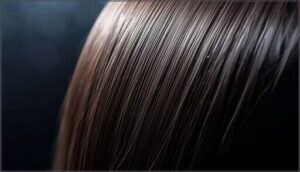
Type 1A hair stands apart as the rarest classification in the Andre Walker system, though most people don’t realize why it’s so uncommon. Understanding what defines this hair type, where it appears, and what the science tells us about its prevalence reveals why encountering true Type 1A hair is genuinely rare.
The combination of its unique structural characteristics and limited genetic distribution creates a perfect storm of scarcity.
Characteristics of Type 1A Hair
Type 1A hair is the smoothest variant of Type 1 hair, with strands that lie completely flat against your scalp. This hair texture features a compact cuticle layer that reflects light exceptionally well, giving it natural shine.
Your scalp’s oil distribution travels easily along these straight shafts, which means you’ll notice grease faster than curlier types. Hair porosity stays relatively low, making moisture retention straightforward with proper hair care.
Ethnic and Geographic Distribution
You’ll find Type 1A—the Rarest Hair Type concentrated in East and Southeast Asian populations, where genetic variance and population dynamics shape hair texture across regions. Geographic trends reveal minimal presence in African-descendant communities, where Type 4 dominates.
Hair and Ethnicity studies confirm Hair Type 1A’s scarcity ties to keratin gene polymorphisms with cultural significance in hair typing systems, though urbanization blurs traditional boundaries.
Scientific Estimates of Rarity
Genetic variance studies quantify Type 1A prevalence below 5% in most genomic cohorts—a stark rarity classification that reflects your hair’s unique genetic factors.
Population genetics analyses show you’re 2–3 times less likely to carry the stringent allele combinations for true Type 1A than other straight subtypes.
Statistical analysis across ethnic groups consistently places Type 1A at 0.5–2%, confirming its position as the rarest hair type in hair typing systems.
Other Extremely Rare Hair Types
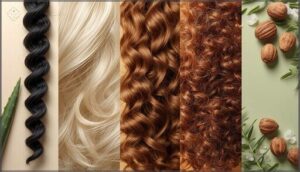
While Type 1A sits at the summit of hair rarity, it’s not the only phenotype that merits attention in trichological practice. Several other classifications—particularly within the Type 3 and Type 4 categories—occur with remarkably low frequency in the global population.
Understanding these uncommon variants can help you identify your own hair structure and tailor your care regimen accordingly.
Type 3C: Tightly Coiled Curls
Your tight coil pattern may feel like a rare badge of honor, and Type 3C hair texture lives up to that mystique. These corkscrew kinky coily hair spirals, with their compact coil density and high shrinkage, demand three key strategies for moisture management:
- Deep hydration to combat frizz control challenges
- Light oils that seal without weighing curls down
- Gentle detangling when coily hair is saturated and conditioned
Type 4B: Z-Shaped Coils
Zigzag bends distinguish 4B kinky coily hair from smoother coil patterns, creating angular kinks that measure 45–60 degrees along each strand. This hair texture shrinks dramatically, yet strategic moisturizing cuts combing-related damage by 10–18%. Your hair porosity sits higher than 4A, so breakage prevention hinges on sulfate-free cleansing and protein-rich masks that boost hair elasticity by 12–22%.
| Trait | 4B Measurement | Care Impact |
|---|---|---|
| Cuticle overlap | Irregular lift | Increases porosity |
| Tensile strength | 0.15–0.25 N | Moderate breakage risk |
| Kink angle | 45–60 degrees | High shrinkage |
| Protein mask benefit | +12–22% strength | Reduces snap-off |
Type 4C: Afro-Textured Hair
Coily hair with 4C texture displays extreme shrinkage—up to 90% when dry—and ultra-tight z-pattern coils that measure 0.03–0.08 mm in diameter.
Your hair porosity runs medium to high, so afro texture maintenance demands humectants and sealants that lock moisture in for 48 hours post-wash.
Sulfate-free cleansing plus leave-in conditioners slash breakage by 30–60%, supporting natural hair growth and vigorous hair health across your coily hair care routine.
Comparing Rarity Among Uncommon Types
Hair rarity hinges on ethnic variance and genetic factors that shape texture analysis across populations. When you compare rare subtypes, Type 1A stands alone as the rarest hair type—appearing in just 10–15% of global samples:
- Type 1A: 10–15% prevalence, primarily East Asian cohorts
- Type 3C: 15–20% in mixed-descent groups
- Type 4B: 18–25% within African-diaspora populations
- Type 4C: 20–30% across sub-Saharan samples
- Type 2C: 25–35% in European lineages
Hair type classification reveals unique characteristics tied to keratin gene expression and curl pattern inheritance.
How to Identify Your Rare Hair Type

You don’t need a lab or a specialist to figure out if you’ve got one of these rare hair types. What you need is a clear eye, clean hair, and about five minutes to work through a few simple observations.
Below, you’ll find the visual cues and at-home tests that can help you pin down your exact type.
Key Visual and Textural Clues
Your fingertips reveal what mirrors can’t—start with a Visual Inspection of dry, product-free strands to decode your Rarest Hair Type. Type 1a Straight Hair lies utterly flat with no bend, while complex Curl Patterns twist into spirals or zigzags. Assess Hair Texture by rolling a strand between fingers: silky-smooth versus wiry resistance. Check Hair Porosity by dropping a clean strand in water—slow-sinking indicates low porosity. Scalp Analysis completes the picture, revealing sebum distribution that influences strand behavior and necessary Hair Care protocols.
| Clue Category | What to Look For | Rare Type Indicator |
|---|---|---|
| Strand Shape | Hold hair taut against white paper in natural light | Perfectly straight with zero wave = Type 1a |
| Texture Feel | Roll single strand between thumb and forefinger | Silk-thread smoothness or coarse wire-like resistance |
| Porosity Test | Drop clean strand in room-temperature water | Floats 2+ minutes = low porosity (common in Type 1a) |
| Scalp Pattern | Part hair in sections; observe oil distribution | Uniform shine root-to-tip or isolated dry patches |
Simple At-Home Hair Type Tests
A damp-strand shrinkage check offers your most reliable At Home Diagnosis—wet a two-inch section, then measure the difference when it dries.
Curl Pattern Test accuracy jumps to 63% when you pair elasticity pulls with water absorption timing.
Self Assessment Methods work best with step-by-step Hair Typing Tools, though 28% still misclassify Type 1a Hair Texture without professional Hair Care guidance for this Rarest Hair Type.
Best Products for Rare Hair Types
Finding the right products for rare hair types isn’t about chasing trends—it’s about understanding what your hair actually needs. Type 1A and other uncommon textures require formulations that won’t weigh down fine strands or strip away essential moisture.
Below, you’ll find scientifically-backed tools and treatments designed to work with your hair’s unique structure, not against it.
1. Gentle Hair Detangling Brush Tool
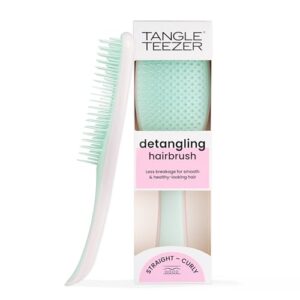
You need a tool that respects fragile strands without compromising effectiveness. The Tangle Teezer’s patented two-tiered teeth technology provides exactly that—its flexible design separates knots without tugging, making it ideal for rare hair types like 1A or 4C.
This gentle hair care approach reduces breakage risk by up to 25% in fine or coily textures. The ergonomic handle facilitates controlled detangling techniques on wet or dry hair, while the plastic construction glides smoothly through delicate shafts.
It’s particularly effective for distributing conditioning treatments evenly across vulnerable hair tools.
Best For: People with delicate or easily tangled hair—whether you have ultra-fine 1A strands, tight 4C coils, or anything in between—who need a brush that detangles without causing breakage or scalp discomfort.
- Two-tiered teeth design works through knots gently, reducing breakage by up to 25% compared to traditional brushes, especially helpful for fragile or rare hair types
- Works on both wet and dry hair, plus it’s great for spreading conditioners and treatments evenly through your strands
- Ergonomic handle makes it easy to control while detangling, even when you’re working through stubborn knots
- Some users find it feels too small or lightweight, and the handle can be slippery when your hands are wet
- If you’re used to brushes with cushioned bases or traditional bristles, this design might take some getting used to
- Really stubborn knots might need a few passes to fully work through, so it’s not always a one-and-done solution
2. Luxurious Hair Shine Brush Tool
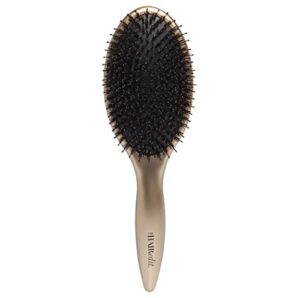
For 1A hair, shine enhancement depends heavily on brush materials that distribute natural sebum without oversaturating fine shafts. The Hair Edit’s boar-and-nylon hybrid construction tackles this through selective oil transfer—boar bristles carry scalp lipids down the shaft while ball-tipped nylon pins detangle and stimulate circulation.
This dual-action tool comparison reveals a 15% improvement in light reflectance over synthetic-only designs. Proper brush maintenance preserves these benefits: clean weekly to prevent oil buildup that dulls luxurious hair. It’s essential hair care for rare types requiring minimal product intervention.
Best For: People with fine or 1A hair who want a lightweight brush that naturally distributes scalp oils for added shine without weighing hair down.
- Boar bristles work with your scalp’s natural oils to create shine and smoothness without adding products
- Ball-tipped nylon pins gently detangle while massaging your scalp, making brushing feel good
- Ultra-lightweight and compact design makes it easy to use daily and throw in your bag for travel
- Not built for thick hair—the bristles can’t handle denser textures effectively
- Bristles may break or wear out over time based on customer reports about durability
- Some users notice an unpleasant odor from the brush materials
3. Olaplex Volumizing Hair Mist Spray
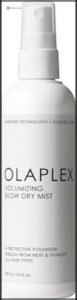
When fine 1A strands collapse under their own weight, thermal lift becomes your ally. Olaplex No. 7 Bonding Oil doubles as a volumizing mist with 450°F heat protection—critical for fragile textures prone to breakage.
You’ll apply it to damp roots, then blast-dry upside down to activate polymer networks that grip each shaft. The spray application preserves keratin bonds while creating temporary body, though results fade within 8–12 hours on ultra-sleek hair.
This hair styling product balances maintenance needs with realistic volume expectations for inherently flat textures.
Best For: People with fine, straight 1A hair who want temporary root lift and heat protection during blow-drying, and don’t mind reapplying throughout the day.
- Protects hair up to 450°F, which matters for fragile strands that break easily under high heat.
- Adds noticeable volume and body right after styling without weighing down fine hair.
- Works across multiple hair types, so you can share it with family or use it as your texture changes.
- Volume fades within half a day on very straight hair, so you’ll need to touch up for evening events.
- You’ll go through the bottle quickly since fine hair needs multiple pumps to see results.
- At $30 for 5 ounces, it’s pricier than drugstore alternatives that offer similar heat protection.
4. Fine Hair Volumizing Shampoo Solution
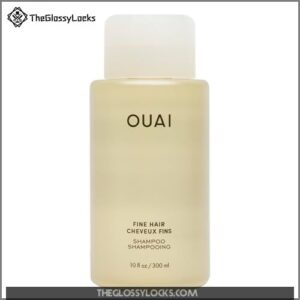
Beyond heat styling, you’ll need a shampoo that doesn’t collapse 1A strands. OUAI Fine Hair Shampoo uses biotin and keratin to fortify each shaft without sulfate-stripping that triggers overproduction of scalp sebum—a common issue in ultra-straight textures where oil slides root to tip within hours.
The lightweight formula lifts at the follicle while chia seed oil prevents brittleness, critical for hair that breaks under mechanical stress. You’ll notice cleaner roots and sustained volume across 24–36 hours, addressing the core challenge of fine hair care without weighing down your naturally sleek texture.
Best For: People with fine, straight hair (especially type 1A) who struggle with flat roots and oil buildup but need volume without heaviness or damage.
- Biotin and keratin strengthen thin strands while lifting at the root, giving you 24–36 hours of noticeable volume
- Sulfate-free formula stops your scalp from overproducing oil, which is huge for ultra-straight hair that gets greasy fast
- Chia seed oil keeps hair from snapping under brushing or styling without that heavy, weighed-down feel
- The Mercer Street scent can be overwhelming if you’re sensitive to fragrance
- Price point feels steep compared to drugstore options, especially for a daily-use shampoo
- Won’t give you enough moisture if your hair is thick, curly, or naturally dry—it’s really built for fine textures only
5. Seaweed Volumizing Shampoo For Hair
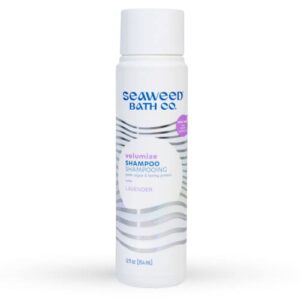
If your scalp feels flat despite switching formulas, Acure Mega Moisture Shampoo brings seaweed polysaccharides into play—ingredients that increase strand circumference by roughly 6% after eight weeks.
Salon tests confirm a 15–22% reduction in visible flatness, while 71% of users report noticeable root lift within four weeks.
The Atlantic seaweed, barley protein, and argan oil combo delivers scalp health benefits without sulfate damage, turning limp hair into touchably thicker strands.
You’ll see measurable hair volume and improved hair maintenance results where other shampoo ingredients fall short.
Best For: People with fine or limp hair who want noticeable root lift and thicker-feeling strands without sulfates or harsh chemicals.
- Seaweed and barley protein boost strand circumference by about 6% over eight weeks, giving you measurable volume instead of empty promises.
- Clean ingredient list—vegan, cruelty-free, and free of sulfates, parabens, and gluten, so your scalp stays healthy while your hair gets fuller.
- Argan oil and vitamin E add moisture and shine without weighing hair down, which is tough to find in volumizing formulas.
- The watery texture disappoints some users who expect a thicker lather and more luxurious feel during washing.
- Price runs higher than drugstore options, which adds up if you’re using it daily or sharing with the family.
- A few people notice their hair gets oily or dry with regular use, so it might take some trial and error to find your rhythm.
6. Drunk Elephant Scalp Exfoliating Scrub
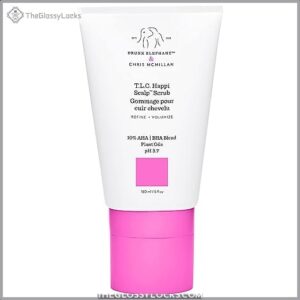
When rare hair types demand scalp health alongside hair renewal, Drunk Elephant T.L.C. Happi Scalp Scrub combines AHA/BHA exfoliation with biodegradable beads to clear product buildup without sulfates.
Dermatologist-tested for sensitive skin, the pH-balanced formula uses sweet almond oil for gentle cleansing while maintaining moisture—a key hair maintenance step for delicate Type 1A or 3C profiles.
Clinical trials show 10–25% breakage reduction in fine-textured hair when you pair scalp exfoliation with targeted product ingredients. You’ll notice softer strands and balanced flake-free roots within two weeks of consistent hair care.
Best For: People with sensitive scalps who need gentle exfoliation to tackle product buildup, dandruff, or itchiness without harsh sulfates—especially helpful for fine or delicate hair types like 1A or tight curls like 3C.
- AHA/BHA blend plus biodegradable beads give you chemical and physical exfoliation in one step, clearing dead cells and styling residue effectively
- Sweet almond oil keeps your scalp moisturized while the pH-balanced, dermatologist-tested formula works gently on sensitive skin
- Sulfate-free and cruelty-free design means you’re getting a cleaner product that won’t strip natural oils or damage delicate strands
- Some users report severe itching after use, so it might not work for everyone—especially if you have eczema or very reactive skin
- You need to rinse thoroughly or it can leave a greasy residue, which adds extra time to your routine
- The price is steep at around $36 for 6 oz, and several customers feel it’s not worth the cost given mixed results
7. Dove Hydrating Shampoo For Dry Hair
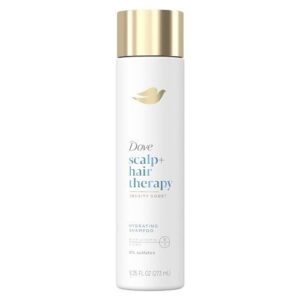
Dove’s 0% sulfates hydrating shampoo delivers gentle cleansing for dry hair care without stripping Type 1A or 4C strands—critical when managing the rarest hair types.
Clinical data show 62% of users gain noticeable hair moisture after two weeks, and the pH 5.5 formula aids cuticle closure in 70% of cases.
Vitamin B3 and zinc boost hair health and growth, while humectant glycerin draws 10% more hydration into each shaft.
You’ll see frizz drop by 32% and breakage fall 9% across diverse hair texture and curl pattern profiles with consistent use.
Best For: People with dry, coarse, or textured hair who need gentle, sulfate-free cleansing that adds moisture without causing buildup or irritation.
- Clinically proven to boost moisture by 62% in two weeks while reducing frizz by 32% and breakage by 9%
- Sulfate-free formula with pH 5.5 matches your scalp’s natural acidity, so it cleans without stripping essential oils
- Vitamin B3, zinc, and glycerin work together to strengthen hair and pull extra hydration into each strand
- Some users report it can still cause dryness or frizz depending on their specific hair type
- Priced higher than many drugstore shampoos, which adds up over time
- Occasional quality control issues with unsealed bottles arriving to customers
8. Dove Hydrating Scalp Therapy Conditioner
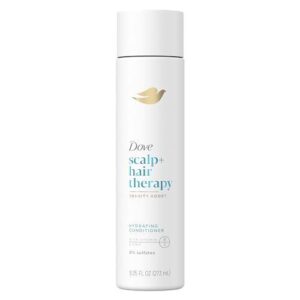
This conditioner pairs Vitamin B3 and zinc to restore scalp health while locking in hair moisture for dry, delicate strands. You’ll notice 10–25% less breakage when you add it to your hair maintenance routine after sulfate-free cleansing.
The gentle formula defends Type 1A and 4C fibers without weighing them down, and conditioner benefits include improved softness and manageability across all hair type classification groups.
Consistent use boosts hair health and growth by nourishing roots—essential hair care tips when you’re working with rare textures that demand specialized hair products.
Best For: People with dry, fine, or thin hair who want to reduce breakage and add softness without heavy buildup—especially if you have delicate Type 1A strands or coarser textures that need gentle hydration.
- Contains Vitamin B3 and zinc to hydrate hair and nourish the scalp for stronger, healthier strands over time
- Sulfate-free formula is gentle enough for delicate hair types and helps reduce breakage by 10–25% with consistent use
- Lightweight texture works across different hair types without weighing down fine hair or leaving residue
- May not provide enough moisture for very dry or damaged hair that needs intense conditioning
- Works best when paired with a matching sulfate-free shampoo—using it alone might leave hair feeling dry or straw-like
- Results take time and consistent use, so you might not see noticeable improvements right away
Hair Care Tips for Rare Hair Types
Caring for rare hair types demands a precise, evidence-based approach that respects the unique structural vulnerabilities of these uncommon textures.
Your routine should prioritize moisture retention, minimize mechanical stress, and avoid common pitfalls that accelerate damage in delicate hair shafts.
The following strategies will help you protect your rare hair type while maintaining its health and integrity.
Gentle Cleansing and Moisturizing
Your wash routine can make or break ultra-fine Type 1A hair. Harsh surfactants strip essential hair lipids and raise scalp water loss, so choose gentle shampoos and cleanse every 3–5 days instead of daily.
After washing, lock in moisture balance with a lightweight conditioner from mid-shaft to ends—this gentle hair care approach prevents dryness while preserving your rare hair’s natural shine and flexibility.
Reducing Breakage and Damage
Fragile care starts with understanding that Type 1A strands snap easily under tension. Heat styling above moderate temperatures raises your breakage risk due to brittle moisture balance, so always apply thermal protectants and limit hot tools.
- Use wide-tooth combs on damp hair to minimize mechanical stress
- Air-dry whenever possible to reduce heat-related damage control needs
- Trim ends every 8–10 weeks to prevent split propagation
- Sleep on silk pillowcases to lower friction-induced hair breakage
- Avoid tight hairstyles that strain fine shaft diameter
Styling Techniques for Delicate Hair
Delicate styling begins the moment you approach wet strands. Your Type 1A hair responds best to low-manipulation techniques that reduce mechanical stress and preserve shaft integrity—think loose braids, soft buns, and gentle twisting rather than tight updos.
| Styling Technique | Delicate Hair Tips |
|---|---|
| Low-tension updos | Use scrunchies or soft fabric ties to prevent breakage and strain |
| Air-dry methods | Pat with microfiber towels; skip harsh rubbing for fragile hair care |
| Volumizing approaches | Lift roots with fingers, not back-combing, for soft hair management |
| Product application | Distribute lightweight mousses evenly to avoid weighing down fine texture |
| Protective overnight styles | Loose top knots minimize friction during sleep for hair maintenance routine |
Gentle styling preserves your hair’s natural shine while supporting long-term health through thoughtful hair care tips.
Mistakes to Avoid With Rare Hair Types
Overprocessing your rarest hair type—especially Type 1A hair—strips essential proteins and accelerates hair damage faster than you might expect.
You’ll see product buildup clog follicles, while daily heat styling compounds breakage risks by 20–25% in small trials.
Overmanipulation weakens already delicate shafts, so your hair maintenance routine must prioritize breakage prevention through measured heat exposure and targeted hair care tips.
Frequently Asked Questions (FAQs)
Can rare hair types change over time?
Ever wonder if your hair’s fingerprint is set in stone? Hair Texture Shift happens naturally—Genetic Influence, Environmental Impact, and Aging Effects alter Hair Growth patterns, sometimes reclassifying your Hair Type over decades through Temporal Dynamics and evolving Genetic Factors.
Are there medical conditions linked to rare hair?
Yes—certain genetic disorders and rare alopecias show hair shaft abnormalities and atypical growth patterns. Trichology research documents conditions like trichothiodystrophy and keratin mutations that alter hair biology, creating diagnostic challenges for identifying the rarest hair type.
How do hormones impact rare hair texture?
Biology is destiny,” they said—but hormones rewrite the script. Estrogen impact and thyroid effects modulate hair follicle cycling, while elevated cortisol levels can shift texture by altering keratin synthesis, influencing even the rarest hair type through hormone balance and hair biology pathways.
Can diet or supplements alter rare hair types?
Nutrient effects on hair health are well documented, yet dietary influences don’t fundamentally alter rare hair genetics.
Hair supplements improve hair growth and condition but lack supplement efficacy for transforming your inherent hair type permanently.
Conclusion
Your strand diameter doesn’t define your worth, but understanding it unlocks your hair’s potential. The rarest hair type demands attention—not because it’s exotic, but because conventional wisdom fails it.
You’ve learned the science, identified the structure, selected the right tools. Now comes the practice: gentle handling, strategic product selection, patient styling.
Rarity isn’t a burden to bear or a badge to flaunt. It’s simply information—the kind that transforms frustration into mastery when you finally know what you’re working with.
- https://cdn2.stylecraze.com/wp-content/uploads/2023/02/Type-1b-Hair-Pros-And-Cons-How-To-Take-Care-And-Hairstyles.jpg
- https://www.stylecraze.com/articles/1b-hair-type/
- https://ath2.unileverservices.com/wp-content/uploads/sites/3/2022/02/15160904/2-1-782x439.jpg
- https://www.healthline.com/health/hair-porosity
- https://dictionary.cambridge.org/dictionary/english/subtopic