
This site is supported by our readers. We may earn a commission, at no cost to you, if you purchase through links.

Razor burn isn’t bad luck—it’s what happens when your skin meets a blade it wasn’t ready for. Most people blame the razor, but the real damage usually starts before the first stroke. A dull blade drags, dry skin fights back, and coarse stubble that hasn’t softened doesn’t cut cleanly—it tears.
The result is that familiar sting, those red bumps, and skin that stays irritated for hours.
The good news: razor burn is largely preventable, and the fix lives entirely in your prep routine. Get these steps right, and the blade almost glides itself.
Table Of Contents
Key Takeaways
- Razor burn almost always starts before the blade touches your face — dull razors, dry skin, and unsoftened stubble are the real culprits, not the shave itself.
- Warm water (85–100°F) applied for 1–2 minutes softens hair enough that your blade cuts cleanly instead of dragging, and skipping this step makes every other prep effort weaker.
- pre-shave oil on damp skin — jojoba for oily skin, argan for dry — add a protective layer that reduces friction and micro-tears before lather even goes on.
- three mechanical habits are the three mechanical habits that prevent blade blade5–7 sh,, holding it at a 30-degree angle, and using light pressure prevent most post-shave irritation.
What Triggers Razor Burn
Razor burn doesn’t just happen — something specific causes it every time. Most cases come down to a handful of common mistakes that are easy to fix once you know what to look for.
In some cases, what feels like minor irritation can signal something deeper — especially for those dealing with razor burn on sensitive skin.
Here’s what’s actually behind that post-shave sting.
Dull Blades and Extra Friction
When a blade loses its edge, it stops cutting and starts scraping — and that’s where razor burn begins. Blade edge wear forces you to apply more pressure, which increases friction instead of reducing it.
Keep your pass count to one or two strokes per area, maintain a consistent stroke angle, and replace blades after 5–7 shaves for reliable razor glide.
Dry Shaving and Poor Hydration
Friction doesn’t just come from dull blades — dry skin is just as guilty. Without proper hydration, moisture loss weakens your skin barrier function, leaving it vulnerable to friction irritation with every pass.
Stubble rigidity increases when hair isn’t softened by warm water preshave, forcing extra strokes. Evaporative cooling mid-shave worsens barrier disruption.
A preshave oil fixes this fast.
Against-the-Grain Prep Mistakes
Misreading grain direction is one of the sneakiest causes of razor burn. Hair doesn’t grow uniformly — cowlicks and swirls mean you can’t assume one direction covers everything.
An early against-grain pass before the stubble is softened increases tugging quickly. Hold the razor at a 30-degree angle, use light pressure, and always reassess growth direction.
Skipping grain reassessment between passes compounds irritation stroke by stroke.
Sensitive Skin and Coarse Hair Risks
Grain direction isn’t the only hidden risk. If your skin is sensitive or your stubble feels like wire, blade pressure becomes your biggest enemy.
Coarse hair resists the razor, and without proper hydration or pre-shave oil, hair grain stiffness leads directly to micro-tear formation and barrier disruption.
Light pressure protects you here. Even aggressive pass causes post-shave irritation that lingers for days.
Why Rushed Routines Cause Irritation
Speed is the silent saboteur of any shaving technique. When you rush pre-shave preparation, moisture shortage leaves stubble stiff and resistant.
You press harder — too much pressure — and blade angle drift follows naturally. Multiple passes scrape the same raw skin.
Rinse skipping lets buildup clog the blade. Aftercare omission leaves heat and friction festering. Every shortcut stacks the odds toward razor burn.
Cleanse Skin Before Shaving

Cleansing your skin before shaving isn’t just a nice-to-have — it’s what separates a smooth shave from a red, irritated mess.
The right cleanser, the right water temperature, and a quick once-over of your skin can make a real difference. Here’s what to do before the blade ever touches your face.
Choose The Right Cleanser by Skin Type
Not all cleansers work the same — and using the wrong one before a shave sets you up for irritation before the razor even touches your face.
dry skin cleanser should use mild, barrier-friendly formulas with glycerin or ceramides.
oily skin cleanser benefits from salicylic acid.
For sensitive skin, fragrance-free grooming products are non‑negotiable.
Combination skin needs balance — gentle cleansing without stripping.
Use Lukewarm Water, Not Harsh Soap
Temperature matters more than most guys think. Here’s why lukewarm water wins every time:
- Lukewarm Rinse Benefits — Water around 32–38°C softens hair without over-dilating blood vessels.
- Skin Barrier Protection — Gentle cleanser preserves natural oils, harsh soap strips away.
- Soap Residue Reduction — Thorough rinsing removes film that increases blade drag.
- Temperature Controlled Cleansing — Hot water accelerates moisture loss, leaving skin rougher.
- Gentle Hydration Technique — Lukewarm water keeps your barrier intact before the blade touches skin.
Massage Cleanser for 30 Seconds
Thirty seconds is all it takes — but technique matters. Work your gentle cleanser in small circles using the Circular Motion Technique, keeping Finger Pressure Control light so you don’t stress the skin barrier.
This Foam Distribution Timing lets surfactants lift oil and grime cleanly. Then rinse fully — Rinse Residue Removal ensures nothing interferes with your lather later.
Check for Dry Patches and Existing Irritation
After rinsing, take 10 seconds for a quick Pre-Shave Irritation Assessment — your skin tells you a lot if you pay attention.
Run clean fingertips across your face for a Tactile Texture Test. Then scan for redness using a Visual Skin Inspection. Finally, do a Sensory Warmness Check — warm or tender spots signal stress.
Watch for:
- Rough, flaky patches needing moisturization before the blade touches
- Red or swollen follicles that indicate a compromised skin barrier
- Tight, dull areas where Environmental Dryness Impact has already set in
When Gentle Exfoliation Helps Before Shaving
Think of your skin as a canvas — dead cells are the rough patches that throw off every stroke. A light exfoliant right before lathering clears that surface, letting the blade track cleanly.
| Method | Best For | Exfoliation Timing |
|---|---|---|
| Soft washcloth (Physical Exfoliation) | Daily shavers | 2–3 min before lather |
| Lactic acid (Chemical Exfoliation) | Sensitive skin | 5 min before lather |
| Exfoliating mitt | Coarse hair | 3 min before lather |
Follow immediately with pre-shave oil — Post-Exfoliation Hydration is non-negotiable. Frequency Guidelines: 1–3 times weekly keep razor burn prevention realistic without over-stripping your barrier.
Soften Hair With Warm Water

Warm water is one of the simplest things you can do to prevent razor burn — and most people skip it or rush through it. softens your stubble so the blade cuts cleanly instead of dragging across stiff hair.
Here’s what you need to know to get it right.
Warm Washcloth Vs Hot Shower
Both the warm washcloth method for shaving and the shower method for pre-shave warmth get the job done — but they work differently. A hot towel gives you targeted heat distribution and moisture retention exactly where you need it, making residue management simpler.
Skin reactivity matters here too: reactive skin often endures brief washcloth warmth better than prolonged shower heat. For convenience timing, the washcloth wins on busy mornings.
Best Water Temperature for Shave Prep
Once you’ve settled on your method, the next question is simple: how hot? The ideal temperature range for shave prep sits around 85–100°F — lukewarm comfort level, not steamy.
That softens stubble without stripping your skin’s natural oils. Using excessively hot water can strip your skin’s natural protective barrier.
- Lukewarm water reduces pre‑shave irritation risk
- Hot towel or warm washcloth method both work within this range
- Temperature control in shaving protects your skin barrier
- Skin type calibration matters: sensitive skin prefers the cooler end
A reliable temperature testing method: if your wrist feels soothed, not scalded, you’re good.
How Long to Apply Warm Water
Temperature matters, but so does time. The best contact time for warm water is 1 to 2 minutes — enough for a real hair softening duration without overdoing it.
The warm washcloth method for shaving usually takes 1 to 3 minutes. A quick shower method for pre-shave warmth works equally well.
Sensitive skin? Stick to the 30–45‑second skin sensitivity window to stay comfortable.
Signs Your Stubble is Soft Enough
Your stubble tells you when it’s ready — you just have to know what to listen for.
Run a fingertip softness check: press lightly and feel if the hair compresses and springs back without prickling. That’s the green light. You’ll also notice consistent skin slip across the surface, and lather forms a uniform lather film instead of beading off.
Look for these three signs:
- Minimal blade drag when you drag a dry fingertip across the grain
- Soft hair compression — stubble bends under light pressure instead of pushing back stiffly
- Even lather coverage — the cream clings to hair rather than sliding off dry patches
Why Overheating Skin Can Backfire
Hot water feels like the right move, but push it too far and your skin pays for it. Overheating strips barrier lipids, triggering heat-induced redness before the blade even touches your face.
Overheating your skin before the blade even arrives strips barrier lipids and triggers redness
Nerve sensitization kicks in, so every stroke feels sharper than it should.
Accelerated lather evaporation leaves dry patches mid-pass, causing increased blade grip and more irritation.
Keep your warm water pre‑shave routine around 98–105°F.
Apply Pre-Shave Oil Properly
Pre-shave oil is one of those steps that looks optional but makes a real difference once you try it. The right oil softens hair, adds a layer of glide, and keeps the razor from dragging across dry skin.
Here’s what you need to know to use it well.
Choosing The Right Pre-Shave Oil

Not all pre‑shave oils are created equal. For razor burn prevention and real skin barrier support, ingredient purity matters more than price.
Look for fragrance‑free formulas if your skin is sensitive — synthetic scents are a common hidden irritant.
Check the shelf life too; expired oils lose their protective edge.
Sustainable sourcing often signals better‑quality raw ingredients, making cost performance stronger over time.
jojoba oil mimics natural sebum helps maintain skin balance during shaving.
Jojoba Vs Argan for Different Skin Types

Both oils earn their place in pre-shave preparation, but your skin type decides the winner. Jojoba oil closely mirrors your skin’s natural sebum, making sebum balancing easy — especially for oily or combination skin. Its faster oil absorption rate keeps lather clean and even.
Argan oil suits dry skin better, thanks to its richer moisture barrier support and anti-inflammatory benefits that calm razor burn before it starts. Both carry a low non-comedogenic rating, so clogged pores aren’t a concern.
How to Apply Pre-Shave Oil

Timing before lather matters more than most guys realize. After cleansing, apply a few drops of pre-shave oil to warm, damp skin — that skin warmth impacts the oil’s absorption quickly.
Use your fingertips and rub in small circles, focusing on oil layer thickness and avoiding oil puddles. Wait 30–60 seconds, then lather directly on top.
How Much Oil to Use

Less is more with pre-shave oil.
Follow these Drop Count Guidelines: 1–3 drops cover one shave zone cleanly. Spread them into a water-thin sheen — that’s your Film Thickness Control target. The Coverage Ratio is simple: blade path only, no excess. For Skin Sensitivity Adjustments, start with one drop and build up. Skip Reapplication Timing mid-shave — one layer before lather is enough.
Can Coconut Oil Work as a Substitute?

Ever wondered if coconut oil can truly stand in for a classic preshave oil? Its Lubrication Benefits rival top creams, reducing blade drag and nicks. You also get Antibacterial Protection and deep Skin Barrier Hydration. But watch for Comedogenic Risks—especially on acne‑prone skin. Its low Melting Point makes application easy, but always patch‑test first for safe, effective pre‑shave preparation.
- Excellent lubrication reduces razor drag
- Natural antibacterial properties protect follicles
- Deep hydration helps skin barrier protection
- High comedogenic rating can clog pores on some skin
Build a Protective Lather

Getting the lather right is where a lot of shaves go wrong — and it’s easier to fix than you’d think. The right product for your skin type, a good application method, and a little patience before the first stroke make a real difference.
Here’s what to get right before your razor touches your face.
Choose Cream, Gel, or Soap by Skin Type
Not all shaving products work the same way — and the wrong pick can be a silent razor burn cause. Match your formula to your skin type first.
| Skin Type | Best Choice | Why It Works |
|---|---|---|
| Dry skin | Dry Skin Cream | Glycerin locks in moisture |
| Oily skin | Oily Skin Gel | Rinses clean, no residue |
| Sensitive/Eczema | Sensitive Skin Soap (syndet) | Fragrance-free, less stripping |
Coarse hair needs a cushion-rich shaving cream to help the blade glide cleanly.
Ingredients That Help Reduce Razor Burn
Once you’ve matched your product to your skin type, the ingredients inside it matter just as much. The right formula does more than lubricate — it actively protects your skin during every stroke.
- Aloe Vera Gel — calms irritation fast; pure aloe reduces redness by 40%
- Chamomile Extract — blocks inflammation within 20 minutes of contact
- Glycerin Moisturizer — softens hair shafts by 30% and cuts friction substantially
- Vitamin E Oil — repairs your skin barrier 50% faster post‑shave
- Tea Tree Antimicrobial — prevents bacteria and folliculitis without harsh chemicals
Also look for ceramides and witch hazel — ceramides lock in moisture, witch hazel soothes on contact. Tea tree oil at 5% concentration keeps things clean without stinging sensitive skin.
How to Use a Shaving Brush
A good shaving brush transforms your lather from flat to rich. Start with the brush soaking technique: dip the bristles in warm water for 30 seconds.
These bristle softening tips matter — softened fibers hold more water and build better foam.
Swirl a quarter-sized amount of cream using light pressure and circular strokes. That’s your lather consistency control in action.
How Thick The Lather Should Be
Once your shaving brush has done its job, lather thickness becomes your next checkpoint. Think heavy cream — glossy, slippery, and clinging to stubble without dripping.
Here’s how to nail foam consistency every time:
- Cushion Thickness: Press a fingertip in — it should feel cushioned, not tacky
- Water Content: Matte or chalky lather needs more water, not more product
- Lather Slip: Proper lather formation leaves the blade gliding silently
- Thickness Adjustment: Add water in small drops during shave prep to loosen stiff lather
- Coverage Check: Patchy bare spots mean your shaving cream isn’t doing enough
How Long to Wait Before The First Pass
Once your lather is on, don’t rush straight to the blade. If your warm water prep was thorough — at least two to three minutes — your skin moisture pause can be brief.
On a wet face, lather soak duration is about one to two minutes max. Longer pre-shave rest risks the cream drying out and losing glide.
Trust your pre-shave steps, and start when the lather still looks glossy.
Prep Razor and Final Checks
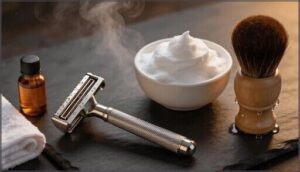
Your lather is ready, but the razor itself deserves a quick once-over before that first stroke. A few final checks can mean the difference between a smooth shave and unnecessary irritation.
Here’s what to confirm before you begin.
Choose a Sharp, Skin-Friendly Blade
Your blade is doing most of the work — so its quality matters more than most people realize. Look for stainless steel blades with platinum alloy benefits and PTFE glide technology; these blade coating types reduce friction and irritation noticeably.
Edge retention metrics vary by brand, so replace yours every 5–7 shaves.
blade geometry design and consistent blade maintenance keep every stroke smooth and clean.
Why Single-Blade Razors Reduce Irritation
Single-blade razors reduce irritation because fewer blade edges mean less recutting, reduced drag, and lower heat generation on your skin. Each stroke cuts hair once, so consistent lubrication stays intact and razor glide stays smooth.
Maintain a 30-degree angle with light pressure, and you’ll notice the difference fast — fewer inflamed bumps, less burning, and calmer skin after every pass.
Clean and Rinse The Razor Before Shaving
A clogged razor is a setup for irritation before you even start.
Rinse the blade under warm running water — warm water clears lather better than cold.
Use the razor tilt technique: angle the head downward so gravity does the work.
Water pressure tips matter too — a steady stream beats a quick splash.
Shake off the excess, then pat dry with a lint-free cloth.
Clean equipment, clean shave.
Map Hair Growth Before The First Stroke
Your face isn’t a single grain — it’s a map. Use the Zone Marking Touch method before your first pass: rub clean fingertips slowly across each area to feel where hair resists.
- Use Grain Direction Mapping on cheeks, chin, and neck separately
- Apply light Skin Tension Technique to reveal follicle angles
- Note any Whorl Identification zones — especially under the jaw
First Pass Pressure stays lowest where grain shifts unexpectedly.
Final Prep Checklist for a Low-Irritation Shave
Think of this as your final systems check before takeoff.
| Step | What to Check | Why It Matters |
|---|---|---|
| pre-shave preparation | Warm water applied 2–3 min, pre-shave oil on damp skin | Softens hair, reduces friction |
| Blade sharpness & Blade Angle | Fresh blade, 30° tilt, light Razor Grip | Prevents tugging and micro-tears |
| Shave Frequency & Post-Shave Hydration | Every 2–3 days, moisturizer within 5 min | Allows skin recovery, seals hydration |
Pressure Control is the last thing to lock in — let the weight of the razor do the work, not your hand. Apply shaving cream evenly, and you’re ready.
Frequently Asked Questions (FAQs)
Can electric razors prevent razor burn entirely?
Electric razors reduce razor burn risk, but they don’t eliminate it. The Foil Barrier Effect limits blade contact, yet pressure sensitivity and pass reduction limits mean irritation can still happen.
How soon can I reshave after razor burn?
Wait until redness, stinging, and bumps fully calm — usually 24 hours for mild burns. If skin still feels hot or tender, give it another day before reshaving.
Does diet or hydration affect shaving irritation?
Yes, both matter. Dehydrated skin is tighter and more reactive, making razor burn worse.
Omega-3s and antioxidant-rich foods reduce inflammation. Cut sugar, drink water before shaving, and your skin manages the blade better.
Should I shave differently in cold weather?
Cold weather shifts the rules a bit.
Dry air, lower indoor humidity, and stiffer stubble all demand slower prep, warmer towel application, and better moisture retention to keep your skin protected after every pass.
Can stress or hormones worsen razor burn?
Stress and hormones absolutely can. Elevated cortisol slows skin barrier healing, making irritation linger longer.
Hormonal cycle effects and medication skin reactivity can heighten sensitivity, turning a normal shave into unexpected skin inflammation.
Conclusion
Prepare your skin like a canvas and your razor like a precision tool.
Cleanse thoroughly, soften with warmth, and lubricate generously—each step builds a protective barrier against irritation.
Warm water opens pores, oils protect, and a sharp blade glides.
These reduce razor burn preparation steps transform the shave from a battle into a smooth ritual.
Master them, and the familiar sting becomes a distant memory.
Your skin deserves this thoughtful care. Start tomorrow with intention, and feel the difference.
- https://www.aad.org/public/everyday-care/skin-care-basics/hair/how-to-shave
- https://www.dove.com/us/en/stories/tips-and-how-to/sweating-tips/how-to-stop-razor-burn-when-shaving.html
- https://www.businessinsider.com/how-to-avoid-razor-burn-when-shaving-neck-2019-8
- https://smartshave.co.uk/razor-burn-after-shaving-9-proven-ways-men-can-prevent-it-instantly/
- https://www.philips.com.au/c-e/mens-grooming-tips/shaving/how-to-prevent-razor-burn