This site is supported by our readers. We may earn a commission, at no cost to you, if you purchase through links.
Last season, I watched a half-marathoner hobble into my clinic with stress fractures—all because her “women’s” shoes were just scaled-down men’s models that ignored her biomechanics. Women don’t need pink versions of men’s shoes; you need footwear engineered for narrower heels, wider forefeet, and different Q-angles that affect how force travels through your legs.
The right running shoes for women transform every stride from a jarring impact into controlled energy return, letting you chase down PRs without wrecking your joints. Whether you’re logging easy miles or tackling technical trails, understanding what separates marketing gimmicks from legitimate performance features allows you to invest in shoes that actually match your foot structure and running goals.
Table Of Contents
- Key Takeaways
- Top 6 Running Shoes for Women
- Key Features of Women’s Running Shoes
- How to Choose The Right Running Shoe
- Running Shoe Technologies Explained
- Running Shoes for Different Terrains
- Maintaining and Replacing Running Shoes
- Maximizing Comfort and Injury Prevention
- Frequently Asked Questions (FAQs)
- Conclusion
Key Takeaways
- Women’s running shoes require engineering design that addresses narrower heels, wider forefeet, and different Q-angles—not just scaled-down men’s models in pink colorways.
- Proper shoe selection hinges on matching foam density, arch support, and heel-to-toe drop to your specific biomechanics, weekly mileage, and pronation pattern rather than chasing marketing hype.
- Premium foam technologies and construction materials directly impact injury prevention by maintaining cushioning integrity for 500-700 miles versus standard foams that compress after 300-500 miles.
- Rotating between multiple pairs extends shoe lifespan by 30-50 percent while giving midsole foam time to decompress, protecting your joints and maximizing your investment.
Top 6 Running Shoes for Women
You don’t need to settle for shoes that leave your feet aching or your stride feeling off.
Finding the right running shoes for beginners means getting proper support and comfort without overspending.
The right pair transforms every run—whether you’re chasing speed, crushing miles, or just getting started.
Here are six shoes that actually deliver on performance, comfort, and the freedom to run your way.
1. Asics Novablast Running Shoes
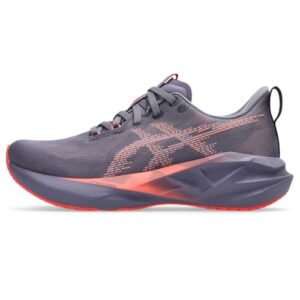
The Asics Novablast 5 ($149.95) dominates as your go-to daily trainer with its FF Blast Max cushioning delivering that trampoline-like bounce you’ll crave mile after mile.
The engineered jacquard mesh upper breathes like a dream while the tongue wing construction actually stays put—no more mid-run adjustments. At just 1.44 pounds, this shoe won’t weigh you down during tempo runs or easy recoveries.
The reflective details keep you visible when you’re chasing dawn or dusk miles, and that responsive ride transitions smoothly from heel strike to toe-off.
| Best For | Runners seeking a cushioned daily trainer that delivers energetic bounce for training runs, tempo sessions, and races up to half marathon distance. |
|---|---|
| Upper Material | Engineered jacquard mesh |
| Primary Use | Running and walking |
| Cushioning Type | FF BLAST MAX |
| Weight | 1.44 lbs |
| Price Range | $149.95 |
| Sole Material | Rubber outsole |
| Additional Features |
|
- FF Blast Max cushioning provides exceptional energy return with a responsive, trampoline-like feel that makes long runs more enjoyable
- Lightweight design at 1.44 pounds won’t slow you down while still offering substantial cushioning for daily mileage
- Tongue wing construction keeps the fit locked in without annoying mid-run slippage or adjustments
- White colorway shows dirt easily and the material can be challenging to clean thoroughly
- Sizing may require trial and error as some runners need to go up or down from their typical size
- Not ideal for runners with specific pronation needs, particularly those who overpronate
2. Under Armour HOVR Sonic Running Shoe
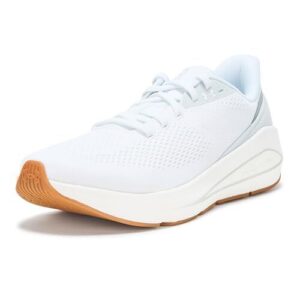
If you’re hunting for best-bang-for-your-buck energy return, the Under Armour HOVR Sonic 7 ($100) deserves serious attention. That HOVR midsole wraps responsive foam in a supportive energy web—biomechanically speaking, you get consistent rebound without the squishy instability cheaper trainers offer.
The triple jacquard upper keeps your feet cool during interval work while the 3D-molded sockliner actually molds to your foot shape. At 7.5 ounces with an 8mm offset, this shoe tackles everything from recovery jogs to HIIT sessions. Just know the fit runs snug if you’ve got wider feet.
| Best For | Runners and fitness enthusiasts who want responsive cushioning for everything from daily runs to HIIT workouts without breaking the bank. |
|---|---|
| Upper Material | Triple jacquard |
| Primary Use | Running and workouts |
| Cushioning Type | UA HOVR |
| Weight | 7.5 oz |
| Price Range | Mid-range |
| Sole Material | Rubber outsole |
| Additional Features |
|
- HOVR cushioning delivers solid energy return and responsiveness that holds up across different workout types
- Triple jacquard upper keeps feet cool and breathable during intense training sessions
- Versatile enough to handle running, walking, HIIT, and light weightlifting in one shoe
- Fit runs narrow, so people with wider feet may need to size up or look elsewhere
- White colorway shows dirt and wear quickly with regular use
- Durability concerns reported by some users, including sole separation issues
3. Hoka Bondi Women’s Running Shoe
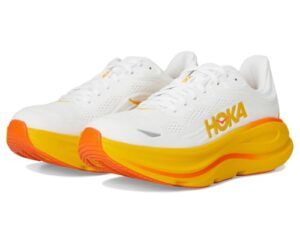
When maximum cushioning becomes non-negotiable—say, for 10+ mile training blocks or all-day wear—you need the Hoka Bondi’s oversized EVA midsole. That plush platform delivers serious joint protection without the dead-leg feeling budget foam creates.
The engineered mesh upper conforms to your foot shape while the padded collar prevents that ankle irritation you’d normally get after hour three. At 12.36 x 9.84 x 5.28 inches and available in multiple widths, this shoe accommodates wider toe boxes without sacrificing the Meta-Rocker geometry that keeps your stride smooth through heel-to-toe transitions.
| Best For | Runners and walkers who need maximum cushioning for long distances, people with plantar fasciitis or joint issues, and anyone who spends all day on their feet. |
|---|---|
| Upper Material | Engineered mesh |
| Primary Use | Walking and running |
| Cushioning Type | Premium foam midsole |
| Weight | 1.87 lbs |
| Price Range | $174.99 |
| Sole Material | Durabrasion rubber |
| Additional Features |
|
- Thick EVA midsole provides exceptional cushioning without feeling heavy or sluggish
- Engineered mesh and padded collar offer comfortable, breathable fit that works for extended wear
- Meta-Rocker design keeps your stride smooth and natural from heel to toe
- Higher price point compared to standard running shoes
- Sizing runs inconsistent—you might need to order a half size up or down
- Limited color choices, with some options being brighter than what many buyers prefer
4. Nike Vomero Women’s Running Shoes
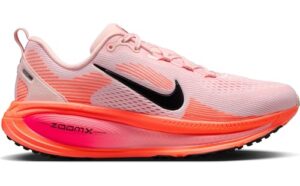
For runners craving responsive bounce without sacrificing plush landings, the Nike Vomero 18 stacks ZoomX foam atop ReactX for a dual-density midsole that responds to your pace.
Pairing that cushioned ride with proper arch alignment is crucial, especially if you’re managing discomfort—explore options in our guide to running shoes for plantar fasciitis.
That engineered mesh upper wraps your foot in breathable security while the 10mm drop balances cushioning with ground feel. At 9.4 ounces, you’re getting serious protection without the clunky weight—though some testers found the tongue pressing on the instep, so consider sizing up half if you’ve got higher arches.
| Best For | Runners who want maximum cushioning for everyday training runs and people dealing with hip or lower back pain who need serious shock absorption. |
|---|---|
| Upper Material | Engineered mesh |
| Primary Use | Running and walking |
| Cushioning Type | ZoomX and ReactX foam |
| Weight | 1.69 lbs |
| Price Range | $168.29 |
| Sole Material | Rubber outsole |
| Additional Features |
|
- Dual-density midsole (ZoomX over ReactX) delivers responsive bounce with plush landings
- Engineered mesh upper provides breathable comfort without feeling flimsy
- Redesigned outsole pattern creates smooth heel-to-toe transitions for natural running flow
- $168 price tag puts it in premium territory
- Tongue design can press uncomfortably on the top of the foot for some runners
- Narrower toe box means you might need to go up half a size
5. Hoka Bondi Running Shoes
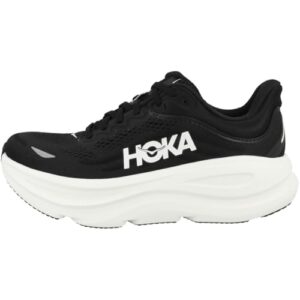
If pure, leg-saving plush is your non-negotiable, the Hoka Bondi delivers an oversized EVA midsole that swallows miles without bottoming out. That wide forefoot platform and Active Foot Frame lock down stability while the engineered mesh—crafted with recycled polyester—keeps your feet cool through summer marathons.
At $174.99, you’re paying premium, but testers confirm the 3D molded collar eliminates ankle chafe and the Durabrasion rubber outlasts cheaper trainers. Just know some runners size up half for that famously roomy toe box.
| Best For | Runners who need maximum cushioning for long distances, those dealing with plantar fasciitis or joint pain, and anyone who spends long hours on their feet. |
|---|---|
| Upper Material | Engineered mesh |
| Primary Use | Running and walking |
| Cushioning Type | Premium foam midsole |
| Weight | 1.87 lbs |
| Price Range | $174.99 |
| Sole Material | Durabrasion rubber |
| Additional Features |
|
- Premium foam midsole delivers exceptional cushioning that handles everyday training and marathon distances
- 3D molded collar and engineered mesh construction provide excellent support while preventing hot spots and chafing
- Durable Durabrasion rubber outsole holds up better than budget alternatives, justifying the investment
- $174.99 price point puts them out of reach for casual runners on a budget
- Sizing runs inconsistent—many users need to size up or down from their usual shoe size
- The curved design around the ball of the foot doesn’t appeal to everyone aesthetically
6. Brooks Glycerin Gts Running Shoe
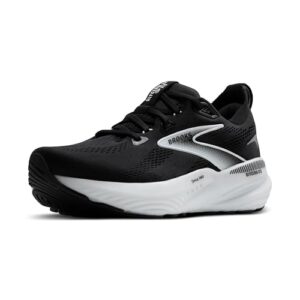
For runners who overpronate or need all-around support without sacrificing that plush ride, the Brooks Glycerin GTS 22 pairs DNA Loft v3 foam with GuideRails technology that stabilizes your heel and midfoot through miles of pavement pounding.
The double jacquard knit upper flexes where your foot moves while the broad platform keeps transitions smooth. At true-to-size fit across widths, you’ll get bouncy cushioning that doesn’t compress fast—though some testers with wider forefeet sized up half for breathing room.
| Best For | Runners who overpronate and want maximum cushioning with stability support for long road runs and daily training. |
|---|---|
| Upper Material | Double jacquard knit |
| Primary Use | Running and walking |
| Cushioning Type | DNA Tuned midsole |
| Weight | Not specified |
| Price Range | Mid-range |
| Sole Material | Rubber |
| Additional Features |
|
- DNA Loft v3 foam delivers plush, responsive cushioning that maintains bounce over time
- GuideRails technology provides holistic support without overcorrecting your natural stride
- Double jacquard knit upper adapts to foot shape while broad platform ensures stable transitions
- Toe box runs narrow for some users, potentially requiring a half-size up for wider feet
- Sole durability concerns reported by a subset of long-term users
- Break-in period needed for certain foot shapes despite most finding immediate comfort
Key Features of Women’s Running Shoes
The right running shoe isn’t just about picking a pretty color—it’s about finding features that work with your body’s unique biomechanics.
When you’re scanning specs and trying on pairs, you’ll notice certain design elements show up again and again across top-rated women’s trainers.
Here’s what separates a shoe that’ll carry you through hundreds of miles from one that’ll leave you limping back home.
Cushioning and Comfort

Think of cushioning as your personal shock therapist—every foot strike generates forces up to three times your body weight, and impact absorption is what stands between you and joint fatigue. Foam density matters: softer midsole systems cradle your stride, while firmer blends boost stability.
Cushioning is your shock therapist—every foot strike hits three times your body weight, and foam density is what stands between you and joint fatigue
Heel padding eases those early-mile jitters. For the best running shoes for women, prioritize cushion longevity so your comfortable shoes stay responsive mile after mile. Understanding the importance of can help you make more informed choices for comfort and injury prevention.
Breathable Mesh Uppers

Your feet sweat up to half a pint per day—so airflow design matters more than most womens running shoes buying guides admit. Engineered mesh delivers 20 to 40 percent more ventilation in the forefoot, accelerating sweat evaporation and dropping foot temps by several degrees.
Breathability impacts mesh durability too; proper temperature control through womens road running shoes prevents moisture damage. Smart running shoe selection means checking those ventilation zones.
For a deeper understanding of upper materials and construction, considering how different technologies impact breathability and support is vital.
Lightweight Construction
Every ounce you shave off your women’s running shoes translates to less energy burned over miles. Ultralight materials like EVA-based foams deliver 15 to 25 percent weight reduction in midsole design, while flyknit upper construction cuts another 10 to 20 grams per pair. Structural optimization techniques remove non-critical material without sacrificing support.
Here’s what lightweight construction gives you:
- Freedom to fly longer — Less foot fatigue means you control when your run ends, not your shoes
- Rebel against clunky trainers — Break free from heavy women’s athletic footwear that holds you back
- Command your pace — Responsive, featherlight builds let you dictate tempo changes effortlessly
Running shoe reviews consistently show weight matters for performance and breathability synergy.
Traction and Stability
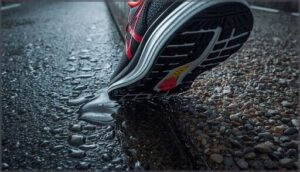
Grip control starts where your foot meets pavement—and on wet surfaces, the difference between confidence and caution is measurable.
Multi-directional traction systems use high-density rubber with micro-textures to prevent hydroplaning, while stability features like medial posting and torsion plates guard against overpronation.
Ground adaptation through segmented outsoles gives you reliable foot support across mixed terrain, letting you own every stride.
How to Choose The Right Running Shoe
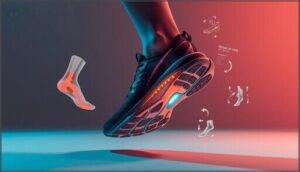
You can’t just grab any shoe off the shelf and expect it to work with your biomechanics. The right running shoe depends on how your foot strikes the ground, what you’re training for, and whether your arches need a little backup or prefer to go solo.
Let’s break down what actually matters when you’re choosing your next pair.
Foot Type and Arch Support
Your arch type dictates the biomechanics of every stride you take. Neutral arches balance weight naturally, while overpronation causes excessive inward roll that demands extra midfoot stability.
A supportive heel counter locks your rearfoot in place, preventing pronation-related motion inside the shoe. When reading women’s running shoes reviews, match arch support to your foot health and support needs—your plantar fascia and toe alignment depend on it.
Fit and Toe Box Width
Proper fit starts with toe box depth—you need about 1 to 1.5 thumb widths beyond your longest toe for natural toe splay.
Forefoot fit shouldn’t pinch after 20 minutes, while heel comfort requires a locked-in feel without slippage. Women’s running shoes reviews often highlight how toe box width affects numbness and hotspots, so test jog in-store to verify your toes wiggle freely without crowding.
Heel-to-Toe Drop Considerations
Drop range—basically heel stack minus forefoot stack—shapes your foot mechanics more than you’d think. Higher drops around 8 to 12 mm cushion heel strike and ease Achilles tension, while low drops (0 to 6 mm) boost ankle mobility but demand calf strength.
Womens running shoes reviews prove drop choice drives injury prevention:
- Start moderate (6 to 8 mm) when switching styles
- Shift gradually in 2 mm steps
- Match drop to your injury history
- Log comfort changes during runs
Running Experience and Goals
Your running pace and training volume shape every footwear call you make. Beginners banking 15 miles weekly thrive in forgiving daily trainers, while seasoned athletes chasing performance goals need lighter tempo shoes for interval work and plush models for long run strategies.
Womens running shoes reviews confirm injury prevention hinges on matching your shoe to your actual weekly mileage—not your Instagram aspirations.
Running Shoe Technologies Explained

You don’t need a PhD in materials science to understand what makes one shoe feel like butter and another like bricks on your feet.
The real difference comes down to the tech hiding inside—foams that either bounce back or bottom out, materials that breathe or suffocate, and construction methods that can make or break your run. Let’s break down the technologies that separate the game-changers from the shelf-warmers.
Premium Vs. Standard Foams
Think of foam density as your midsole’s secret weapon. Premium foams—engineered at 28 to 40 kg per cubic meter—deliver exceptional energy return and durability, maintaining their cushioning systems for 500 to 700 miles.
Standard options (20 to 28 kg) keep costs down but compress faster, usually flattening after 300 to 500 miles. Your athletic footwear investment depends on how you prioritize foam durability versus budget.
Midsole and Outsole Materials
Your midsole foam and outsole grip determine whether you’ll finish strong or limp home. Here’s what smart runners examine before checkout:
- EVA blends absorb 15 to 40 percent more impact than dense alternatives, protecting your joints mile after mile
- Carbon-infused rubber compounds resist wear at high-contact zones while maintaining traction
- Silica-enhanced outsoles channel water away through siping for wet-weather grip
- Bio-based polyurethanes cut petroleum reliance without sacrificing cushioning systems
- Multidirectional lugs stabilize your gait during lateral transitions
These running shoe technology elements work together—durability meets eco materials in today’s performance footwear.
Upper Construction and Breathability
Heat regulation starts at the top. Mesh materials and engineered knit patterns create ventilation systems that push warm air out while your foot flexes—think strategically zoned breathable linings where you sweat most.
Moisture management fabrics wick perspiration before it pools. Upper construction choices between synthetic weaves and hybrid overlays balance airflow with the structural integrity your stride demands, making breathability non-negotiable in any running shoe buying guide for women’s athletic footwear.
Running Shoes for Different Terrains
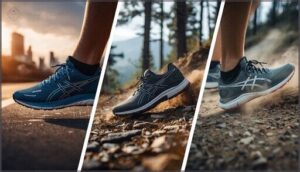
Your running surface changes everything about the shoe you need. Pavement demands different biomechanical support than rocky trails or mixed terrain, and choosing the wrong match can throw off your gait pattern and leave you hurting.
Let’s break down the three main terrain categories so you can find your perfect ground game.
Road Running Shoes
Pavement demands a specific weapon in your arsenal. Road running shoes are engineered with rubber compounds that grip asphalt through rain or shine, while EVA foam midsoles cushion every foot strike without weighing you down. Your running style dictates the ideal shoe weight and heel-to-toe drop.
- Injury prevention starts with choosing road-specific geometry that matches your biomechanics
- Nike Pegasus exemplifies the balanced road trainer with firm yet responsive cushioning
- Road grip outlasts generic athletic footwear by 200+ miles on concrete
Trail Running Shoes
You can’t conquer single-track descents in road shoes—trail running demands aggressive outsoles with 4-6mm lugs that claw through mud and scree.
Women’s athletic footwear built for terrain variety features reinforced toe caps and rock plates protecting your feet during offroad techniques.
Trail running shoes weighing 7.5-10.5 ounces balance shoe durability with agility, while gusseted tongues prevent debris infiltration that derails trail safety.
Versatile Everyday Trainers
You don’t need separate footwear for gym sessions, grocery runs, and easy five-milers—daily trainers blur those boundaries.
These athletic shoes merge plush cushioning with durable rubber outsoles that handle urban running routes and errands alike, while breathable uppers keep your feet cool whether you’re logging miles or meeting friends.
Trainer versatility transforms running shoe care from complicated rotation systems into one reliable pair.
Maintaining and Replacing Running Shoes
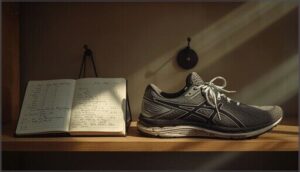
Your running shoes are your most important training partner—treat them right, and they’ll return the favor mile after mile. Knowing when to clean them, when to retire them, and how to rotate pairs can literally save your legs from unnecessary wear.
Here’s what you need to know to squeeze every last quality mile out of your investment.
Cleaning and Care Tips
Your running shoes take a beating—mud, sweat, and miles add up fast. Skip the washing machine; hand wash with mild detergent and cool water to protect foam midsoles and fabric integrity. Proper shoe sanitizing and odor control keep your athletic shoes fresh for longer training cycles.
- Remove debris with a soft brush before washing to prevent sole scratches
- Air dry at room temperature away from heat sources to maintain water resistance
- Sprinkle baking soda inside for effective shoe deodorizing between runs
- Clean insoles separately and replace every few months for ideal fabric protection
When to Replace Your Shoes
Clean sneakers won’t save you from biomechanical breakdown. Track your mileage religiously—most shoes deliver ideal shock absorption for 300 to 500 miles before foam compression sabotages your stride. Watch for worn outsole tread, midsole creases, or new aches in your knees and ankles. These replacement signs trump arbitrary timelines every time.
| Replacement Indicator | What to Look For | Action Needed |
|---|---|---|
| Mileage Tracking | 300–500 miles logged | Schedule replacement |
| Shoe Wear | Balding tread, sidewall creases | Assess durability loss |
| Comfort Changes | New knee pain, heavy feel | Replace immediately |
| Visual Damage | Mesh tears, compressed heels | Prioritize running safety |
Rotating Pairs for Longevity
Swap between two or three pairs to extend each shoe’s lifespan by 30 to 50 percent. Alternating your womens athletic footwear gives midsole foam time to decompress fully between runs, preserving cushioning integrity and durability far longer than solo-shoe grinding.
This pair rotation strategy also builds knowledge redundancy—you’ll spot wear patterns faster and master different underfoot feels, sharpening your running techniques and tips across varied terrains.
Maximizing Comfort and Injury Prevention
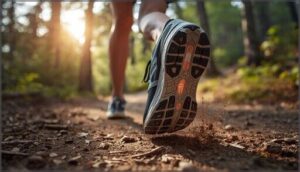
The right running shoe doesn’t just feel good—it keeps you injury-free mile after mile. Your biomechanics, the way your foot strikes the ground, and how well your shoe cushions your unique gait all determine whether you’re building strength or courting pain.
Let’s break down three essential factors that’ll transform your shoes from just footwear into genuine injury prevention tools.
Proper Sizing and Fit
Your foot shape dictates everything—a proper heel fit locks your ankle in place while your toe box needs a fingertip’s worth of breathing room.
Women’s athletic footwear sizing varies wildly across running shoe collections, so test lacing systems with your usual socks. Sock interaction changes daily fit, and smart shoe reviews and comparisons confirm this: nail that first fitting, or your running techniques suffer mile after mile.
Support for Long Runs
Distance demands gear that fights back against fatigue. Your long run tips should center on supportive shoes with medial posting to counter overpronation across 4 to 6 degrees while you log marathon training miles.
Endurance strategies require carbon rubber outsoles delivering 20 percent better wear resistance for running shoe durability. Match your foot strike analysis to heel cushioning that smooths transitions—your running performance thrives when injury prevention and recovery tactics align with running techniques and tips proven across long distance running.
Reducing Risk of Common Running Injuries
Injury prevention starts before your foot hits pavement. Supportive shoes counter overpronation beyond 2 degrees, while refined running form shields joint health from repetitive trauma.
- Warm up 5 to 10 minutes to prime neuromuscular coordination and reduce overuse mitigation failures
- Build weekly volume under 10 percent increases for muscle recovery and running techniques and tips compliance
- Rotate two pairs to vary loading patterns and support injury prevention and recovery cycles
- Monitor pronation patterns through gait analysis to match shoe stability features
Frequently Asked Questions (FAQs)
What are the best women’s shoes for running?
You need shoes that match your biomechanics and goals.
The Asics Novablast 5 stands out as the best overall women’s running shoe, balancing responsive cushioning with lightweight construction for everyday training and long runs.
How do womens running shoes differ from mens?
Most brands engineer women’s footwear with narrower heel counters and softer midsole foam to match lighter body mass and different pronation patterns, while men’s versions prioritize roomier foot shape accommodation and firmer arch support for neutral pronation.
What socks work best with running shoes?
Choose socks with blister prevention zones and moisture-wicking fibers like merino wool blends. Cushioned heel pockets and smooth toe constructions reduce friction points, protecting foot health during high-mileage training blocks.
Can running shoes be used for walking daily?
Absolutely—you’ll actually extend shoe longevity since walking creates less impact than running.
The cushioning, breathable mesh uppers, and durable outsoles handle urban terrain beautifully, delivering unparalleled walking comfort and foot health benefits daily.
How should new running shoes feel initially?
Your new running shoes should feel snug through the midfoot support with secure heel security, allowing toe box space for natural splay.
Initial comfort matters—expect cushioning, shoe flexibility, and breathability without pressure points.
Are expensive running shoes worth the extra cost?
Premium materials and longevity benefits often justify higher running shoes costs.
Carbon-plated models improve efficiency, while denser foams resist compression.
However, budget options deliver solid performance—your cost analysis should weigh weekly mileage against shoe lifespan.
Conclusion
Like Cinderella’s slipper, the perfect fit changes everything—except you’re not waiting for magic, you’re engineering biomechanical efficiency. Your investment in proper running shoes for women isn’t just about comfort; it’s about claiming ownership over every mile without sacrificing your skeletal health.
Stop settling for shoes that fight your anatomy. Choose footwear that respects your Q-angle, bolsters your arch, and transforms pavement into possibility. Your feet carry your ambitions—demand they get the respect they’ve earned.