This site is supported by our readers. We may earn a commission, at no cost to you, if you purchase through links. This content is for general informational and educational purposes only and is not a substitute for professional medical, dermatological, or nutritional advice.
Your hair appointment is booked, your roots are showing, and then two pink lines change everything. For many pregnant women, the question of safe hair coloring during pregnancy lands somewhere between genuine concern and reluctant surrender—because the honest answer is more reassuring than most people expect.
Research consistently shows that scalp absorption of hair dye chemicals remains low, and exposure levels during routine coloring fall well beneath thresholds considered harmful to a developing baby. That said, timing, technique, and ingredient choices all shift the risk picture meaningfully.
What follows covers exactly what the evidence says—and what practical steps actually matter.
Table Of Contents
- Key Takeaways
- Is Hair Dye Safe During Pregnancy
- Best Trimester for Hair Coloring
- Safest Hair Dye Ingredients
- Coloring Methods With Less Exposure
- Precautions Before and During Coloring
- Bleach and Lighteners During Pregnancy
- Top 5 Safer Hair Dyes
- When to Ask Your Doctor
- Frequently Asked Questions (FAQs)
- What hair dye is safe while pregnant?
- How long should you wait to dye your hair after pregnancy?
- Can you get a Brazilian hair treatment while pregnant?
- Can I get balayage while pregnant?
- Can hair dye affect babys hair color?
- Do pregnancy hormones alter dye effectiveness?
- Is root touch-up safer than full coloring?
- How soon postpartum can I color hair?
- Will hair dye affect prenatal testing results?
- Can hair dye affect breast milk during lactation?
- Conclusion
Key Takeaways
- Hair dye is generally safe during pregnancy because your scalp absorbs very little of the chemicals, and real-world exposure stays well below harmful levels. For extra peace of mind, waiting until the second trimester or choosing highlights (which touch less scalp) are easy tweaks, and our guide on dyeing hair twice in one day covers safe reapplication if you do color at home.
- Wait until after week 12 to color your hair, since the first trimester is when your baby’s organs are forming and the risk window is at its highest.
- Choose ammonia-free, peroxide-free, or plant-based dyes and use techniques like balayage or highlights that keep color off your scalp entirely.
- Always do a 48-hour patch test, wear gloves, work in a well-ventilated space, and talk to your doctor if you have scalp conditions, past dye reactions, or any concerns about fumes.
Is Hair Dye Safe During Pregnancy

Hair dye during pregnancy is one of those topics that often stirs up a lot of worry — but the science is actually more reassuring than most people expect. The short answer is that when used correctly, it’s generally considered safe, though a few key factors shape that conclusion.
Most experts suggest waiting until after the first trimester, and exploring pregnancy-safe hair color styles and techniques can help you make confident, informed choices.
Here’s what the evidence says.
What Current Evidence Says About Fetal Risk
Most experts consider hair dye safe when used as directed during pregnancy. Epidemiology findings and animal toxicity data both support this conclusion. Dose thresholds tested in lab settings were far higher than any real-world placental exposure from routine coloring. Regulatory assessments haven’t flagged standard cosmetic use as a fetal risk.
For those navigating color choices during pregnancy, safe hair dyeing techniques for home use can help minimize scalp contact and reduce any residual uncertainty.
The effects of hair coloring chemicals on fetal development, based on current toxicology of hair dyes, remain reassuringly low at typical exposure levels.
The highest chemical exposure risk occurs during the first twelve weeks of pregnancy.
Why Scalp Absorption is Considered Minimal
Your scalp’s outermost layer — the stratum corneum — acts like a gatekeeper. Intact skin lipids make it hard for chemicals to pass through, so scalp absorption remains low. Molecular size limitation also plays a role: larger dye molecules simply can’t slip through easily.
Short contact time and low dose exposure further ensure safety. Together, these factors mean maternal exposure from prenatal hair treatment stays well within safe limits.
Why Occasional Use is Lower Risk Than Frequent Coloring
How often you color matters as much as what you use. Each session adds to cumulative exposure — more contact frequency means more VOC buildup and a higher sensitization risk to ingredients like PPD. Hair integrity suffers with repeated chemical treatments.
A straightforward risk assessment of prenatal exposure to hair dyes shows that choosing low-risk hair dye methods during pregnancy, spaced well apart, keeps dosage exposure low.
Why Following Product Directions Matters
Spacing out sessions helps, but how you follow directions matters just as much. Every box includes specific mix ratio precision, application sequence, and exposure limits — ignore them and you raises your risk. Check the product shelf-life before you start.
Do the patch test, use the minimum time, and never exceed the maximum application time. That’s how guidelines for hair coloring while pregnant actually protect you.
Best Trimester for Hair Coloring
Timing matters more than most people realize regarding hair coloring during pregnancy. Your baby’s development stage can shape how cautious you need to be.
The first trimester calls for the most caution, and understanding how ultrasound hair differs from your newborn’s actual hair can help set realistic expectations alongside those early safety decisions.
Here’s what you should know about each trimester before booking that appointment.
Why Many Experts Suggest Waiting Past Week 12
Most obstetric recommendations on hair dye exposure share one consistent message: wait past week 12. This isn’t a hard ban — it’s a precautionary buffer built on guideline consensus and evidence uncertainty about the fetal sensitivity window.
The American College of Obstetricians and Gynecologists acknowledges that guidelines for pregnant women regarding cosmetic products lean cautious during those first 12 weeks because:
- Maternal immunity shifts during the first trimester, potentially altering how your body processes chemicals.
- The fetal sensitivity window is at its peak before week 13.
- Delaying is simple, low-cost, and removes doubt.
First-trimester Caution During Organ Development
The first trimester is when organogenesis timing matters most. Between weeks 3 and 13, critical structures like the heart, limbs, neural tube, and lip-palate actively form. Dose timing’s impact is real—the same exposure affects development differently depending on the exact week. This sensitivity drives safety guidance for practices like hair dye use during pregnancy, with fetal development risk assessment during this period shaping recommendations.
During weeks 3 to 13, the same chemical exposure can affect fetal development very differently depending on the exact week
| Body Structure | Formation Window | Teratogenic Risk Level |
|---|---|---|
| Neural tube | Weeks 3–4 | High |
| Heart | Weeks 4–6 | High |
| Limbs | Weeks 5–8 | Moderate–High |
| Lip and palate | Weeks 6–9 | Moderate |
| Major organs complete | Week 13 | Lower |
The neural tube exhibits peak sensitivity before many women confirm pregnancy (weeks 3–4), while limb formation risk follows closely (weeks 5–8). After week 13, structural vulnerability drops considerably as major organogenesis concludes.
Why Second Trimester is Often Preferred
Once major organ development wraps up around week 13, the second trimester becomes the preferred window for hair coloring. Reduced nausea, improved energy, and hormonal stability all make appointments easier to manage. Lower fetal risk during this stage aligns with pregnancy trimester guidelines that support cosmetic services.
Still, consultation with healthcare providers before salon visits remains important — safety of hair dye use during pregnancy isn’t one-size-fits-all.
Third-trimester Considerations Before Salon Visits
By the 3rd trimester, comfort becomes the real agenda. A growing belly makes long salon sessions harder—back pain, swollen feet, and fatigue set in quickly. Flexible booking and hydration breaks help, but travel logistics require advance planning.
Choose a salon close to home, confirm ventilation and ergonomic stool availability, and ensure an emergency protocol is ready. These steps reduce physical strain and enhance safety during visits.
Consultation with healthcare providers before salon visits remains a smart step to prioritize well-being.
Safest Hair Dye Ingredients

Not all hair dyes are created equal, and during pregnancy, what’s in the bottle really does matter. Some formulas are gentler on your body and easier on your lungs.
Here’s what to look for when choosing the safest option for you and your baby.
Ammonia-free Hair Color Options
Ammonia-free dyes are worth knowing about. Instead of ammonia, these formulas use MEA chemistry or oil carrier systems to move pigment into the hair. Many include a conditioning infusion that leaves hair softer.
Newer ammonia-free bases also offer real gray coverage efficacy, so you don’t have to sacrifice results.
Look for plant-based henna dyes or other natural hair dyes to support safe hair coloring practices for pregnant women.
Peroxide-free Formulas and Lower Fume Exposure
Peroxide-free formulas skip the oxidizing step entirely, directly cutting down on harsh fumes. Many use MEA chemistry instead, producing noticeably less odor during processing.
Cream-based application helps the color stay put rather than running across your scalp.
Pair that with source-capture ventilation, fragrance-free options, and reduced processing time, and you’re thoughtfully choosing low-chemical hair coloring products.
Semi-permanent Vs Permanent Dye Safety
Permanent color uses ammonia and peroxide to push pigment deep — that’s what makes it last. Semipermanent color skips that chemistry, so it fades in weeks but brings less chemical exposure overall.
For the safety of hair dye use during pregnancy, semipermanent is often the gentler pick:
- Lower sensitizer content means fewer allergy triggers
- Less processing time reduces scalp contact
- Milder fumes are easier on nausea
Plant-based and Henna-style Color Choices
Plant-based options go a step further than semipermanent formulas. Vegetable and henna dyes skip synthetic oxidants entirely.
The henna shade palette ranges from warm copper to auburn — lawsone, henna’s active molecule, bonds directly to hair protein without chemical reactions. Indigo mixing methods shift that red base toward brown or black. Cassia blonde blends lighten or condition without darkening. Amla tone adjustment cools brassiness in brunette mixes.
| Plant Ingredient | Color Result | Best For |
|---|---|---|
| Pure Henna | Red, copper, auburn | Light or gray hair |
| Henna + Indigo | Brown to black | Gray coverage, brunettes |
| Cassia | Blonde, golden | Light or pre-lightened hair |
| Amla blend | Cooler brown | Reducing red/orange tones |
| Henna + Amla + Indigo | Soft light brown | Fine-tuned brunette shades |
Using natural and ammonia-free dyes while pregnant reduces fume exposure greatly. Safe hair coloring practices for pregnant women often include plant-based henna dyes as a lower-chemical alternative.
Before applying henna, it’s worth checking this guide on henna safety during pregnancy, which walks through proper skin patch testing and other precautions.
One firm caution: black henna warnings exist for good reason. "Black henna" often contains PPD — a synthetic additive linked to severe allergic reactions and scarring. Choosing low-risk hair dye methods during pregnancy means reading ingredient lists carefully and sticking to pure plant powders.
How to Read Labels for Harsh Chemicals
Reading a label is simpler than it looks. Begin with the product identifier — the exact name or code matching the safety sheet. Check the signal word: "Danger" indicates a higher hazard than "Warning."
Hazard statements describe potential risks, while pictogram meanings flag dangers like fumes or skin irritation. These visual cues and descriptions clarify what could go wrong.
Precautionary advice provides actionable steps to stay safe. Scan for chemical components listed early in the formula, as these appear in the highest concentrations.
Coloring Methods With Less Exposure
How you apply hair dye matters just as much as what’s in it. Some techniques keep color away from your scalp entirely, which cuts down on how much your skin actually absorbs.
Here are the methods worth knowing about.
Highlights and Lowlights Away From The Scalp
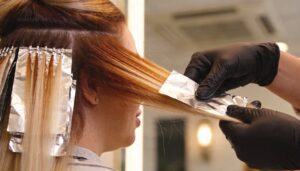
Highlights and lowlights keep the lightener several inches below your roots — usually 2.5 to 3 inches — so it never touches your scalp.
Mid-length highlights and face-framing accents deliver brightness without direct skin contact. Selective sectioning and spacing precision control exactly where color lands.
Still, always wear gloves, work in a well-ventilated space, and use protective equipment throughout.
Balayage and Foil Techniques for Reduced Contact

Balayage sweeps color onto mid-lengths and ends using freehand paint control, so it rarely touches your scalp at all. Foil techniques add a foil heat boost that speeds processing while keeping product away from skin. Together, they offer custom placement and a gentle fade blend with less direct contact.
The hybrid foilayage method combines both — a smart choice when choosing low-risk hair dye methods during pregnancy.
Why Full-root Applications Increase Scalp Exposure

Root touchups coat your entire scalp — roughly 600 square centimeters of skin — with direct chemical contact, a much larger surface than highlights ever touch. The scalp’s barrier thickness is thinner near new growth, allowing greater skin absorption.
Add follicle infiltration, 20–30 minutes of processing duration, and mild heat elevation from the oxidation reaction. These factors collectively amplify exposure.
This combination results in meaningfully higher fetal exposure through the root coverage area compared to strand-only methods.
Avoiding Dye on Broken or Irritated Skin

Broken skin changes everything. Cracks, eczema patches, or even sunburn can allow dye chemicals to absorb several times faster than through healthy skin.
Before coloring, perform a scalp inspection—checking for cuts, redness, or flaking. Apply a petroleum jelly seal along your hairline as a barrier cream. Allow a full healing timeline of one to two weeks before proceeding.
A patch test helps catch contact dermatitis or allergic reactions linked to skin sensitivity early.
Choosing Strand-focused Services Over All-over Color

If you want color with less exposure, strand-focused services are your best option. Highlights, lowlights, and balayage use customized placement on a small section of hair rather than coating the scalp like single-process color does. This maintains hair integrity, allows reduced appointments through softer growth management, and offers budget-friendly options over time.
Always do a strand test before committing to any service.
Precautions Before and During Coloring

Even if you’ve chosen the safest dye and the right timing, how you actually apply it matters just as much.
A few simple steps before and during the process can meaningfully reduce your exposure. Here’s what to keep in mind.
Do a Patch Test 48 Hours First
Before you color, do a patch test — it’s a simple step that can prevent a serious reaction. Apply a small amount of dye to the inner elbow or behind the ear. Leave it undisturbed for 48 hours, as delayed reactions often don’t appear until day two.
If you notice redness, itching, or swelling, don’t use the product. This result interpretation is critical for avoiding adverse effects.
Repeat the test before every session, even with the same brand. This practice is one of the core guidelines for pregnant women using hair dye, ensuring ongoing safety.
Try a Strand Test Before Full Application
A strand test is your test run before the full commitment. After your patch test clears, take a small hidden section near your nape and apply the formula root to tip. This step provides essential insights:
- Shade Preview — see the actual color on your hair, not just the box
- Porosity Check — spot how evenly your hair absorbs the dye
- Damage Indicator — feel if strands turn brittle or gummy
- Development Timing — confirm how long the formula truly needs
- Formula Adjustment — decide if the mix needs tweaking before going all over
As a precaution for hair coloring during pregnancy, guidelines recommend waiting up to 48 hours after rinsing a strand test—some plant-based colors continue to shift as they oxidize. This small step offers invaluable answers.
Wear Gloves During Mixing and Application
Once your strand test is done, turn your attention to your hands. Mixing is the step where chemical contact is highest — so wear gloves before you open anything.
| Feature | Why It Matters | What to Choose |
|---|---|---|
| Chemical-resistant gloves | Prevents skin absorption | Nitrile or neoprene |
| Proper glove fit | Maintains control, reduces spills | Snug but not tight |
| Cuff length protection | Blocks wrist splashes | Extended forearm coverage |
Follow safe glove disposal after use: peel off carefully, then wash hands immediately.
Use a Well-ventilated Room or Salon
Hair dye releases fumes that can trigger nausea, especially during pregnancy.
Choose a well-ventilated space: open windows on opposite sides for cross-ventilation, or pick a salon with source capture exhaust and mechanical ventilation.
Airflow optimization isn’t optional here — it’s your simplest protective measure.
Follow Processing Time and Rinse Thoroughly
Ventilation manages the air — now let’s handle the clock. Timer Discipline matters more than most people realize. Set a timer immediately after applying the dye. Garnier Nutrisse caps at 25 minutes, while Wella Color Touch requires only 20. Don’t guess—precision is critical.
Once the time is up, employ the Emulsification Technique: add warm water and massage gently for one to two minutes. Then rinse your scalp thoroughly until the water runs clear. Both Rinse Duration and Water Temperature influence residue removal. A quick Residue Inspection under bright lighting confirms completeness.
Following application directions precisely is among the simplest precautions for hair coloring during pregnancy. Safe practices don’t get more straightforward than this.
Bleach and Lighteners During Pregnancy

Bleach and lighteners work differently than regular hair dye, and that difference matters during pregnancy.
They tend to produce stronger fumes and can be harsher on your scalp, so there are a few things worth knowing before your next appointment.
Here’s what to keep in mind.
How Bleach Differs From Standard Hair Dye
Bleach and standard hair dye work very differently — and that distinction matters when you’re pregnant.
Bleach uses oxidative chemistry and alkaline agents to strip pigment from your hair shaft, giving it much stronger lift potential and causing more hair damage than regular dye.
Here’s a quick comparison:
- Bleach breaks down natural pigment through aggressive oxidation
- Permanent dye deposits color using milder peroxide chemistry
- Temporary dye coats hair without any peroxide at all
Higher Odor and Irritation Concerns
If you’ve ever wrinkled your nose at bleach fumes, pregnancy makes that reaction stronger.
Ammonia fumes and other volatile agents released during lightening can cause nasal irritation, scalp burning, and a real chemical inhalation risk — especially without a well-ventilated space.
Fragrance sensitivity also spikes during pregnancy, amplifying discomfort from odor. Poor ventilation turns manageable skin irritation into a genuinely unpleasant experience.
Don’t underestimate these fumes.
Why Scalp-free Lightening Methods Are Preferred
Foils and balayage give you targeted color placement with minimal skin contact — the lightener stays on the hair shaft, not the scalp. That’s one of the strongest hair bleaching considerations while pregnant.
You also get softer regrowth adjustment, fewer repeat sessions, and decreased odor exposure throughout the process.
For precautions for hair coloring during pregnancy, scalp-free methods simply make the most sense.
When to Postpone Bleaching Sensitive Hair or Skin
Some situations call for a clear pause before bleaching. If your hair shows cuticle damage, high porosity, or recent chemical stress, bleach can push fragile strands to breakage. These conditions demand caution to avoid further harm.
If your strands need more repair before any color work, waiting it out and comparing highlights cost against full foil bleaching can help you plan a gentler approach.
Skin sensitivity also warrants waiting. Conditions like active eczema, scalp infection, or inflammatory hyperpigmentation increase reactivity to dyes, risking irritation or damage. Additionally, retinoid use thins the barrier further, exacerbating vulnerability.
These precautions align with standard precautions for using bleach and relaxers during pregnancy. Prioritizing scalp and hair health during this time is critical, as hormonal changes may heighten sensitivity to chemicals. Always consult a professional before proceeding.
Extra Caution if Pregnancy Nausea is Triggered by Fumes
Fumes can turn a simple color appointment into a rough hour fast. If bleach smells push you to nausea, take these protective measures seriously when applying hair dye during pregnancy:
- Mask Usage – wear a mask to cut direct fume inhalation.
- Fume Breaks – step outside between mixing and application.
- Appointment Timing – book when you’re least queasy, never hungry or tired.
- Nausea Remedies – keep ginger candy nearby.
- Personal Air Filtration – choose a well-ventilated space with strong airflow.
Top 5 Safer Hair Dyes
Not all hair dyes are created equal, and a few stand out as safer picks during pregnancy.
These options tend to skip the harshest chemicals without sacrificing results. Here are five worth considering.
1. Schwarzkopf Simply Color Intense Espresso
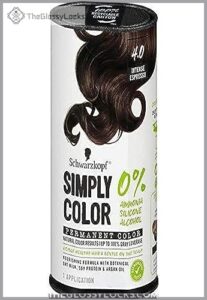
Schwarzkopf Simply Color Intense Espresso 4.0 ticks several key boxes for pregnancy-safe coloring. It’s free of ammonia, PPD, and PTD — chemicals worth avoiding during this cautious period.
The formula blends argan oil and soy protein, delivering conditioning benefits alongside color. This ensures hair remains nourished while achieving 100% gray coverage, all without harsh fumes.
Always apply it in a well-ventilated space, wear the included gloves, and follow the timing instructions closely for optimal safety and results.
| Best For | Anyone with dye sensitivities — including pregnant women — who wants full gray coverage at home without harsh chemicals. |
|---|---|
| Ammonia Free | Yes |
| PPD Free | Yes |
| Gray Coverage | 100% |
| Formula Type | Permanent |
| Vegan Formula | Yes |
| Patch Test Required | Yes |
| Additional Features |
|
- Free of ammonia, PPD, and alcohol, so it’s gentler on the scalp with far less irritation risk
- Argan oil and soy protein leave hair feeling soft and conditioned after coloring, not stripped
- Solid 100% gray coverage at a budget-friendly price with eco-conscious packaging
- Thick or long hair will likely need two boxes, which bumps up the cost
- Color can fade in 3–4 months, so touch-ups are part of the deal
- Shade options are limited — if espresso brown isn’t your target, you’ll need to look elsewhere
2. MANIC PANIC Hot Hot Pink
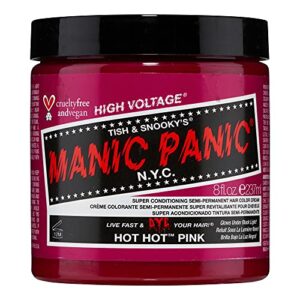
Manic Panic Hot Hot Pink is a semi-permanent dye that skips ammonia, PPD, peroxide, and developer entirely. This makes it one of the gentler options if you’re craving a bold color change during pregnancy.
The formula is vegan and conditioning, ensuring it won’t strip your hair while coloring. It works best on pre-lightened hair, and by avoiding harsh oxidizing chemicals, it keeps scalp exposure low.
Still, apply it in a ventilated space and wear gloves throughout for safety.
| Best For | Anyone who wants a vivid, damage-friendly pink without harsh chemicals — great for DIY use at home or in a salon. |
|---|---|
| Ammonia Free | Yes |
| PPD Free | Yes |
| Gray Coverage | Not applicable |
| Formula Type | Semi-permanent |
| Vegan Formula | Yes |
| Patch Test Required | Yes |
| Additional Features |
|
- No ammonia, developer, or PPD, so it’s much gentler on hair and scalp
- Conditioning formula leaves hair soft, and the resealable tub makes touch-ups easy
- UV-reactive pigment gives a serious pop under black lights — perfect for festivals or cosplay
- Works best on level 9–10 blonde hair; darker hair may get a muted or uneven result
- Color longevity can be hit or miss — some batches fade in as little as 1–2 weeks
- The dye stains fast, so bathroom surfaces and sinks need a quick wipe-down right after use
3. Herbatint 6N Dark Blonde Hair Dye
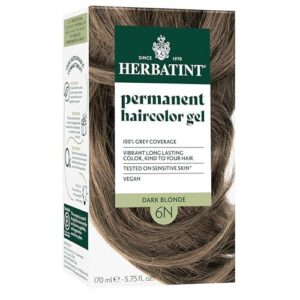
Herbatint 6N Dark Blonde offers a quieter alternative with its permanent, ammonia-free formula, built around 8 certified organic extracts like aloe and echinacea. It excludes PPD, resorcinol, parabens, and alcohol, prioritizing scalp safety for cautious users.
The dye fully covers gray hair and lifts color by up to two shades. Its gentle formulation ensures effective results without harsh chemicals, making it suitable for those seeking a less aggressive coloring experience.
Herbatint emphasizes safety, recommending a patch test before use and advising pregnant individuals to consult their doctor before applying any permanent dye. These precautions align with its commitment to user well-being.
| Best For | Anyone with sensitive skin or chemical allergies who wants a gentle, long-lasting color that covers grays without the harsh smell or scalp irritation of traditional dyes. |
|---|---|
| Ammonia Free | Yes |
| PPD Free | Yes |
| Gray Coverage | 100% |
| Formula Type | Permanent |
| Vegan Formula | Yes |
| Patch Test Required | Yes |
| Additional Features |
|
- Ammonia-free and packed with 8 organic extracts, so it’s much kinder to your scalp and hair than most permanent dyes
- Covers 100% of gray hair and stays vibrant for 6–8 weeks, cutting down on how often you need to recolor
- Vegan, cruelty-free, and free of parabens, SLS, resorcinol, and gluten — a solid pick for eco-conscious shoppers
- Can only lift color up to 2 shades, so if you’re starting dark and want a true blonde, you’ll need to bleach first
- The color can run a little warm or reddish in the first couple of weeks, which might surprise anyone expecting a cool ash tone
- Very dry or coarse hair may need extra conditioning after use since the formula doesn’t add a ton of moisture on its own
4. Clairol Natural Instincts Medium Brown
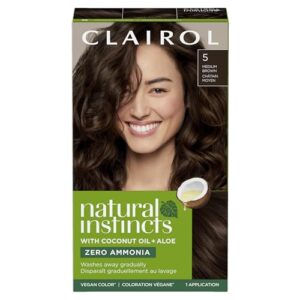
Clairol Natural Instincts Medium Brown is worth a look for those seeking a gentle and budget-friendly option. Priced under $8, this ammonia-free, demi-permanent formula includes coconut oil and aloe, ensuring it conditions while it colors. While it won’t fully cover heavy gray, it blends it naturally.
Processing takes just 20–35 minutes, and its mild scent is ideal if pregnancy has heightened sensitivity to strong odors. Always prioritize safety by conducting the 48-hour patch test first.
For more guidance on choosing the right shade and formula, hair dyes formulated specifically for Asian hair cover everything from undertones to application tips.
| Best For | Anyone who wants a low-commitment, budget-friendly color that gently blends grays without the harsh chemicals of a permanent dye. |
|---|---|
| Ammonia Free | Yes |
| PPD Free | Yes |
| Gray Coverage | Blends only |
| Formula Type | Demi-permanent |
| Vegan Formula | Not specified |
| Patch Test Required | Yes |
| Additional Features |
|
- Ammonia-free formula with coconut oil and aloe — colors and conditions at the same time
- Super affordable at under $8, and the kit comes with everything you need
- Mild scent and gentle on sensitive scalps, with a quick 20–35 minute processing time
- Won’t fully cover heavy gray — it blends rather than masks, so results can look patchy on very gray hair
- Color fades within 4–6 weeks, meaning regular reapplication to keep things looking fresh
- Can’t lighten hair at all, and results may be uneven on previously colored or porous hair
5. ONC Natural Black Hair Dye
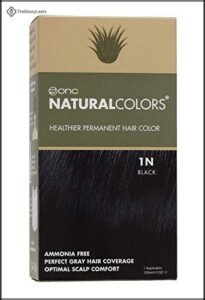
ONC Natural Black is worth considering if you want something gentler on your scalp. This heat-activated formula skips ammonia, parabens, resorcinol, and sulfates entirely. Instead, it uses certified organic ingredients like argan oil, aloe vera, and coconut oil to deposit color with low-pH chemistry.
You’ll need a heat cap or hair dryer to activate it, but that’s a fair trade for less chemical exposure.
It contains under 1% PPD, so a patch test is still a must.
| Best For | Anyone with a sensitive scalp who wants permanent gray coverage without the harsh chemicals found in most box dyes. |
|---|---|
| Ammonia Free | Yes |
| PPD Free | No (under 1%) |
| Gray Coverage | 100% |
| Formula Type | Permanent |
| Vegan Formula | Not specified |
| Patch Test Required | Yes |
| Additional Features |
|
- Free from ammonia, parabens, sulfates, and silicone — loaded with organic ingredients like argan oil and aloe vera instead
- Full gray coverage with a softer grow-out line, so regrowth isn’t as obvious
- Color washes off skin with just water — no barrier cream needed
- You need a heat cap or hair dryer to activate it, which adds time and an extra step
- Color results aren’t always consistent — some users see unexpected red tones or patchy gray coverage
- Pricier than most drugstore dyes, and getting the right shade sometimes means mixing colors
When to Ask Your Doctor

Most of the time, hair coloring during pregnancy is a personal call you can make with some basic precautions.
But there are a few situations where it’s worth running things by your doctor first. Here’s when to pick up the phone before you pick up the dye.
Coloring Hair Before The Second Trimester
If you’re in that early trimester anxiety zone and wondering whether to color your hair, talk to your doctor first. The first 12 weeks are when major organs form — it’s the most cautious window for timing hair treatments according to trimester.
| Week | Recommendation |
|---|---|
| 1–4 | Avoid all dye |
| 5–8 | Consult doctor |
| 9–12 | Non‑dye alternatives preferred |
| 13+ | Lower risk window |
| Any | Ask if uncertain |
Risks of chemical absorption from hair dye during early pregnancy remain low but aren’t fully studied.
Existing Scalp Irritation, Eczema, or Psoriasis
If your scalp has active eczema or psoriasis, talk to your doctor before coloring. Damaged skin means the barrier is already compromised — dye can sting, trigger inflammation, and worsen flares. Skincare pre-color and inflammation management matter here.
- Wait until flares resolve before any scalp contact
- Choose off-scalp techniques for barrier repair support
- Ask about corticosteroid use and post-color soothing options
Past Allergic Reactions to Hair Dye
If you’ve had a reaction to hair dye before, don’t skip the doctor conversation. Allergy history matters more during pregnancy because treating contact dermatitis while pregnant limits your options. Sensitizer identification through dermatology consultation helps clarify your actual trigger — often PPD.
| Concern | What to Do |
|---|---|
| Past redness or swelling | Avoid same product |
| Cross-reactant Awareness | Ask about related dyes |
| Alternative Shades | Choose PPD-free formulas |
| Patch testing importance | Test 48 hours before |
Concerns About Salon Fumes or Chemical Sensitivity
If salon fumes bother you, don’t brush it off — tell your doctor before your next appointment.
Chemicals like ammonia and formaldehyde can trigger headaches, nausea, and breathing problems, especially in pregnancy.
- Ask about sensitivity screening if odors make you feel sick
- Request salons with local exhaust ventilation and air quality monitoring
- Discuss odor mitigation strategies, protective masks, and protective gloves for safer chemical exposure and fetal health
Frequently Asked Questions (FAQs)
What hair dye is safe while pregnant?
Ammonia-free, fragrance-free options with organic certification and low-ppm formulas are your safest choices. Dermatologist-approved brands using mineral colorants tend to minimize scalp irritation and keep hair dye toxicity concerns low.
How long should you wait to dye your hair after pregnancy?
No medical rule sets a firm waiting period. Many people dye their hair once they feel well enough, though waiting one to three months aids postpartum recovery, especially after a cesarean.
Can you get a Brazilian hair treatment while pregnant?
Brazilian treatments can be risky during pregnancy. Heat activation releases formaldehyde exposure concerns, and even products with non-heat alternatives may emit fumes.
Ask your doctor first and confirm salon ventilation and product certification before booking.
Can I get balayage while pregnant?
Yes, balayage is one of the lower-risk options during pregnancy. Color stays off your scalp, so absorption stays minimal. It’s a smart choice, especially when trimester guidelines suggest extra caution.
Can hair dye affect babys hair color?
No, hair dye can’t affect your baby’s hair color. Fetal melanin activation is purely genetic, and the placental barrier limits any dye molecule size from reaching fetal tissue. That myth is debunked.
Do pregnancy hormones alter dye effectiveness?
Yes, they can. Rising estrogen and progesterone change your hair’s cuticle porosity. Hormone-induced porosity means color absorbs faster or resists uptake entirely.
This altered porosity can lead to unexpected shade results, as trimester color uptake may surprise you with inconsistent absorption.
Is root touch-up safer than full coloring?
Root touch-ups cover less scalp surface than full root-to-tip color change, so your chemical load and exposure duration stay lower.
That smaller cumulative dose makes touch-ups the gentler choice.
How soon postpartum can I color hair?
Once the dust settles postpartum, most people can color their hair as soon as they feel ready.
There’s no mandatory postpartum recovery window, but waiting 6–8 weeks gives your body and healing scalp guidance.
Will hair dye affect prenatal testing results?
Hair dye doesn’t interfere with prenatal assay interference markers like hCG or fetal DNA.
Blood chemistry impact is negligible.
False result risk from maternal dye metabolism isn’t supported by current evidence.
Can hair dye affect breast milk during lactation?
Nursing mothers can breathe easy. Dermal absorption keeps hair dye toxicity at trace levels, making significant milk transfer unlikely. Current lactation risk assessments and milk transfer studies confirm that infant exposure levels remain low under normal use.
Conclusion
An ounce of prevention is worth a pound of cure—and that holds true here. Safe hair coloring during pregnancy isn’t about giving up your routine.
It’s about making smarter choices: timing your appointment, picking gentler formulas, and keeping the dye off your scalp when possible. The evidence is reassuring, but small steps still matter.
Talk to your doctor if anything feels uncertain. Your health and your baby’s health are always worth that conversation.