
This site is supported by our readers. We may earn a commission, at no cost to you, if you purchase through links.
That relentless itch on your scalp isn’t just annoying—it’s your skin sending an SOS. When scalp eczema flares up, you’re dealing with more than a bad hair day. Your scalp becomes a battlefield of inflammation, flaking, and sensitivity that no amount of regular shampooing can fix.
The good news? You don’t have to white-knuckle through another flare-up. With the right scalp eczema relief tips, you can calm the irritation, identify what’s triggering your symptoms, and reclaim the comfort you deserve.
Understanding how your scalp reacts to triggers—from harsh products to stress—gives you the power to break the cycle and find lasting relief.
Table Of Contents
Key Takeaways
- Scalp eczema shows up differently across skin tones—lighter skin displays red patches while darker skin often reveals ashy or grayish areas with hyperpigmentation, making accurate diagnosis crucial for effective treatment.
- Your flare-ups aren’t random; they’re triggered by specific culprits like harsh hair products, humidity, stress hormones, and genetic predisposition that weaken your scalp’s natural barrier and amplify inflammation.
- Effective relief starts with lukewarm water (98°F-104°F), fragrance-free shampoos with pH around 5.5, and washing only 2-3 times weekly—while keeping nails short and using cold compresses stops the scratch-damage cycle.
- When home treatment fails after four weeks, or you spot infection signs like pus, spreading redness, or fever, it’s time to call a dermatologist for prescription corticosteroids, antifungals, or tailored treatment plans.
Recognizing Scalp Eczema Symptoms
Your scalp’s been trying to tell you something, and it’s time to listen. Eczema doesn’t always show up the same way for everyone—it can look and feel different depending on your skin tone and what’s actually going on up there.
Let’s break down the telltale signs so you can spot what you’re dealing with and stop second-guessing yourself.
If you’re leaning toward natural remedies, here’s how to treat dandruff naturally without harsh chemicals or complicated routines.
Common Signs (itchiness, Redness, Flaking)
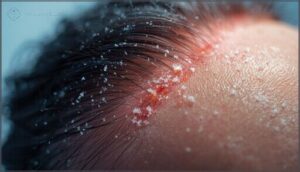
Your scalp eczema symptoms tell a story. Itchy scalp starts the scene—mild tingles or relentless urges to scratch that follow itch patterns along your hairline and behind your ears. Redness levels vary with inflammation stages, showing up as pink patches or angry crimson zones.
Then comes flaky skin: white dustings or thick, yellowish crusts. Scalp sensitivity spikes during flare-ups, turning everyday touches into uncomfortable reminders.
Variations in Appearance on Different Skin Tones
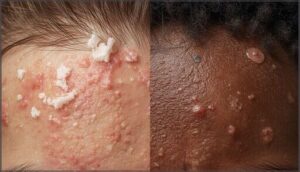
Skin tone variations change how eczema visibility plays out. On lighter skin, you’ll spot red patches easily. But darker skin shows hyperpigmentation effects—ashy, grayish areas or dark spots instead. Flakes pop against higher-contrast tones, while texture changes hide better.
If scalp eczema is causing thinning or breakage, gentle care strategies that protect your follicles can help you rebuild healthier growth over time.
Cultural awareness gaps create diagnostic challenges, and erythema fades on deeper complexions. That’s why scalp eczema symptoms need a dermatologist who understands eczema management across all skin tones. Accurate diagnoses also require methodological rigor to guarantee effective treatment.
Differentiating From Similar Scalp Conditions
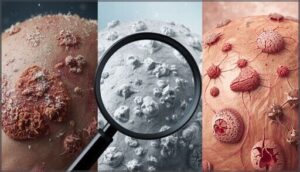
You’re dealing with an itchy head—but is it actually eczema? Dandruff comparison reveals oily, yellowish scales versus eczema’s dry patches. Psoriasis symptoms show thick, silvery buildup with sharp edges. Fungal infections cause patchy hair loss and broken strands. Sometimes dermatological tests or a scalp biopsy clarify whether you’ve got seborrheic dermatitis, atopic dermatitis, or contact dermatitis—protecting your scalp health starts with knowing what you’re fighting. Understanding language patterns can help identify the root cause of scalp conditions.
- Persistent itch spreading to your neck screams eczema, not simple dandruff
- Well-defined silvery scales with nail changes? That’s psoriasis territory
- Patchy bald spots with tender bumps suggest fungal trouble
- Localized redness after using new products points to contact dermatitis
Identifying Triggers and Risk Factors

Your scalp eczema doesn’t just show up out of nowhere. It’s usually responding to something in your environment, your daily routine, or even your genetic makeup.
One simple shift—switching to gentler cleansers like sulfate-free shampoos—can stop stripping your scalp’s natural defenses and calm the flare-ups before they start.
Let’s break down what might be setting off those flare-ups so you can start taking back control.
Understanding the causes of oily scalp and treatment options can help you identify patterns and work with your dermatologist to find the right solution.
Environmental and Lifestyle Contributors
Think of your environment as a backstage crew—either setting you up for success or sabotage. Climate Impact matters more than you’d guess: humid, sweaty conditions can turn your Scalp Eczema into a full-blown flare festival. Those fragrant shampoos and heavy styling gels? They’re trapping irritants against your skin like a bad house guest.
Sweat Management and smarter Daily Habits—like ditching harsh Hair Product choices—are your first line of defense. Meanwhile, pollution and dust act as invisible aggressors, sneaking into your routine. Lifestyle Modifications focused on Scalp Health and Wellness can dramatically shift your symptoms, paving the way for gentler Natural Remedies for Eczema and effective Eczema Treatment. Stress Reduction completes the picture.
| Trigger Type | Common Culprits | Your Action Step |
|---|---|---|
| Climate & Sweat | Humidity, heat, excessive perspiration | Rinse scalp post-workout; use breathable hats |
| Hair Products | Fragrances, dyes, alcohol-heavy gels | Switch to fragrance-free, gentle formulas |
| Environmental Exposure | Dust, pollution, allergens | Wash hair regularly; protect with scarves outdoors |
| Lifestyle Stress | Poor sleep, chronic tension | Prioritize rest; try meditation or breathing exercises |
The Role of Genetics and Stress
Your family tree holds clues—Genetic Predisposition raises your Scalp Eczema risk, especially if relatives battled Atopic Dermatitis. Certain Gene Expression patterns weaken barrier function and ramp up your Inflammatory Response, inviting flare-ups.
But here’s the twist: chronic stress activates hormones that mess with your Immune System and intensify itching, creating a vicious cycle. Epigenetic Factors mean stress can dial up inflammation genes even if you weren’t born with a red flag.
Chronic stress triggers hormones that worsen itching and can activate inflammation genes, creating a relentless cycle even without genetic predisposition
Smart Stress Management—think meditation, sleep hygiene—can lower flare frequency and boost your Eczema Treatment results. Address both your DNA and your daily tension for real relief.
Gentle Scalp Care Practices

You don’t need a ten-step routine to calm your scalp—just a few smart, gentle habits. Think of your scalp like sensitive skin anywhere else: it craves simplicity, not a chemistry experiment.
Here’s how to wash, soothe, and protect your scalp without making things worse.
Choosing Mild, Fragrance-free Shampoos
Your shampoo bottle might be sabotaging your scalp eczema management. Fragrance-free shampoos with sulfate alternatives are your secret weapon—studies show they cause markedly less irritation than fragranced products.
Look for these winning features:
- pH balance around 5.5 to support scalp barrier function
- Gentle formulas free from essential oils and masking fragrances
- Shampoo ingredients vetted through patch testing with your dermatologist
Medicated shampoos and tar shampoos offer targeted relief when flares strike.
Proper Washing Techniques and Water Temperature
Water temperature makes all the difference when you’re managing scalp eczema symptoms. Lukewarm water—think 98°F to 104°F—protects your scalp barrier without the harsh stripping hot water causes.
Gentle cleansing two to three times weekly beats daily washing for most people. Scalp massage with your fingertips (never nails!) distributes shampoo evenly, while thorough rinsing techniques for at least 30 seconds remove irritating residue completely.
Tips for Avoiding Scalp Scratching and Damage
Your nails are sharp weapons against vulnerable skin—keep them short for serious damage control. When itch management feels impossible, cold compresses deliver instant scalp protection without trauma.
Try soft cotton gloves at night to curb unconscious scratching, or redirect that urge with gentle massage using non-irritating oil. These scratch prevention tactics keep scalp eczema symptoms from spiraling into raw, weepy disaster zones.
Effective Treatment Options

Once you’ve nailed down your gentle care routine, it’s time to bring in the treatments that actually tackle inflammation and irritation at the source.
You’ve got a solid mix of options—from medicated shampoos and prescription creams to natural remedies that soothe your scalp without harsh chemicals.
Here’s what works and how to choose the right approach for your skin.
Medicated Shampoos (e.g., Nizoral, Vanicream)
When your scalp feels like it’s staging a full rebellion, medicated shampoos can be your first line of defense. These eczema treatment options target the root causes—especially fungal infections and inflammation.
Here’s what works:
- Nizoral (ketoconazole) fights Malassezia yeast, the culprit behind seborrheic dermatitis, reducing itching and flaking when used 2–3 times weekly
- Zinc pyrithione shampoos offer gentler antifungal action if ketoconazole causes scalp irritation
- Always follow medication dosage instructions to avoid over-drying your scalp
Topical Corticosteroids and Antifungals
When medicated shampoos aren’t cutting it, your dermatologist might prescribe topical corticosteroids like hydrocortisone 1% or clobetasol propionate for severe scalp inflammation. These eczema treatment options calm angry skin fast—but use them exactly as directed to dodge steroid side effects like thinning skin.
Pairing corticosteroid therapy with antifungal treatments (ketoconazole 2%) addresses both inflammation and fungal resistance in seborrheic dermatitis, giving you dual-action relief.
Natural Remedies and Emollient Moisturizers
Beyond prescriptions, emollient therapy can work wonders for scalp eczema. Natural oils like jojoba or squalane deliver barrier repair without heavy buildup, while ceramide-rich scalp moisturizers restore your skin’s protective layer.
Here’s your gentle cleansing gameplan:
- Apply fragrance-free emollient moisturizers daily to lock in hydration
- Test natural remedies (coconut oil, aloe) on a small patch first
- Choose sulfate-free, pH-balanced shampoos that won’t strip moisture
These moisturizing strategies complement your eczema treatment beautifully.
Preventing Scalp Eczema Flare-Ups
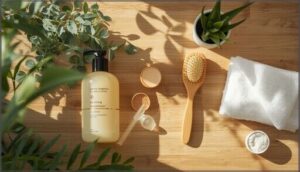
You’ve got treatment options that work—now let’s talk about keeping flare-ups at bay. Prevention isn’t about flawlessness; it’s about building a routine that protects your scalp before trouble starts.
Here’s how to create your defense plan with daily habits, smart choices, and scalp-friendly styling.
Moisturizing Routines for Scalp Health
Consistency is your scalp’s best friend regarding moisture retention and barrier repair. A simple moisturizing routine—applying a humectant-rich serum (think glycerin) followed by a lightweight emollient therapy like coconut oil—locks in scalp hydration and calms inflammation.
Here’s a quick roadmap:
| Step | Product Type | Frequency |
|---|---|---|
| Cleanse | Fragrance-free shampoo | 2–3x/week |
| Hydrate | Humectant serum | Daily |
| Seal | Emollient oil/balm | Daily or as needed |
This skin care routine aids your scalp’s natural defenses against scalp eczema flares.
Avoiding Known Triggers and Allergens
Once you’ve nailed your moisturizing routine, trigger identification becomes your next power move. Allergen avoidance isn’t guesswork—it’s detective work. Keep a symptom diary tracking product ingredients, stress spikes, and environmental changes.
Common culprits? Fragrances, sulfates, nickel from hair clips, and dyes containing para-phenylenediamine. Switching to gentle products designed for sensitive skin can prevent allergic contact dermatitis and irritant contact dermatitis, stopping eczema flares before they start.
Protective Hairstyles and Scalp-friendly Accessories
Your hair care routine matters just as much as your products. Tight braids and high ponytails create friction that can trigger scalp eczema flare-ups, so opt for loose buns or low styles instead.
Swap metal hair ties for silk scrunchies—gentler styling tips that reduce traction. Choose breathable headbands made from natural fabrics, not synthetic materials that trap sweat and worsen inflammation.
When to Seek Professional Help

You’ve been managing your scalp eczema at home, but sometimes your skin needs backup. Knowing when to call in a dermatologist can save you from weeks of unnecessary discomfort and frustration.
Here’s when it’s time to book that appointment.
Persistent or Worsening Symptoms
If you’ve been treating your scalp eczema for over four weeks without relief, that’s your cue to call for backup. Watch for symptom escalation—worsening itch, spreading lesions, or increased scalp inflammation despite treatment failure.
Flare management gets trickier when oozing, crusting, or fever join the party, especially with seborrheic dermatitis or itchy scalp conditions. These red flags mean infection risks are climbing, and professional eczema treatment isn’t optional anymore.
Signs of Infection or Severe Discomfort
Infection signs demand action—pus, spreading redness, or fever symptoms aren’t just annoying, they’re dangerous. Severe itching that steals your sleep, sharp scalp pain, or skin ulceration means your scalp inflammation has crossed a line.
With scalp eczema, that itchy scalp or dry scalp can spiral into something serious fast. Don’t wait when eczema treatment clearly isn’t cutting it anymore.
Importance of Dermatologist Guidance
Precision matters when you’re dealing with scalp eczema or seborrheic dermatitis. A dermatologist brings skin analysis expertise that over-the-counter remedies can’t match—they’ll nail the diagnosis process through clinical examination and rule out fungal infections with swabs or scrapings.
Their medical guidance delivers tailored treatment plans and tracks your response to eczema treatment options, adjusting corticosteroids or antifungals as your scalp heals.
Frequently Asked Questions (FAQs)
Is scalp eczema contagious to other people?
Good news travels fast—and here’s the best kind: scalp eczema isn’t contagious. You can’t spread dermatitis through skin contact, shared hairbrushes, or hugs. It’s inflammatory, not infectious, so eczema transmission simply doesn’t happen.
How long does a typical flare-up last?
Most scalp eczema flares last one to four weeks.
Your treatment timing matters—starting medicated shampoos early can cut flare duration nearly in half, while delays stretch symptoms beyond three weeks.
Can scalp eczema cause permanent hair loss?
Most hair loss from scalp eczema is reversible shedding—your follicles bounce back once scalp inflammation calms down.
But chronic, untreated cases can rarely lead to permanent alopecia if scarring develops.
Are there specific vitamins that support scalp healing?
Your body needs vitamin D, biotin, and vitamin E to strengthen your scalp’s defenses. Omega-3s fight inflammation, while vitamin A balances oil production—dermatologist-approved scalp nutrition that aids eczema management and hair growth naturally.
Conclusion
The best defense against scalp eczema is knowing when to stop fighting. Constantly scratching and stressing only fuels the fire.
Instead, arm yourself with these scalp eczema relief tips: gentle products, trigger awareness, and proven treatments that actually work. Your scalp doesn’t need to be a war zone.
With consistency and the right care, you can transform those flare-ups from unbearable to manageable—and finally get back to feeling like yourself again.
- https://medicine.uams.edu/dermatology/faculty/vivian-shi/
- https://jddonline.com/articles/seborrheic-dermatitis-in-skin-of-color-clinical-considerations-S1545961619P0024X
- https://links.e.response.mayoclinic.org/EmailPreview-GeneralHealth
- https://mcforms.mayo.edu/mc5200-mc5299/mc5256-01.pdf
- https://x.com/godofprompt/status/1990526288063324577