This site is supported by our readers. We may earn a commission, at no cost to you, if you purchase through links. This content is for general informational and educational purposes only and is not a substitute for professional medical, dermatological, or nutritional advice.
Somewhere between ancient Ayurvedic temples and modern trichology clinics, a deceptively simple technique has been quietly delivering results: applying consistent fingertip pressure to the scalp.
A 2016 clinical trial found measurable increases in hair thickness after just 24 weeks of daily four‑minute sessions. No prescriptions. No expensive treatments.
A 2019 survey of 340 participants backed this up, with 69% reporting visible improvement in hair loss.
Scalp massage benefits for hair go deeper than relaxation—mechanoreceptors beneath the skin trigger vasodilation, dormant follicles wake up, and nutrient delivery to the roots improves substantially.
What follows breaks down exactly how it works.
Table Of Contents
- Key Takeaways
- What is Scalp Massage and How Does It Work?
- Scalp Massage Benefits for Hair Growth
- What The Science Says About Scalp Massage
- Best Scalp Massage Techniques for Hair Growth
- Best Oils and Tools to Use During Scalp Massage
- How to Add Scalp Massage to Your Hair Routine
- Frequently Asked Questions (FAQs)
- Can head massage lower blood pressure?
- Does scalp massage help telogen effluvium?
- Can scalp massage help reverse hair thinning?
- Are there risks of over-massaging the scalp?
- What is the best time for scalp massage?
- Does scalp massage benefit dry or oily scalps more?
- Can scalp massage help with postpartum hair loss?
- Does scalp massage work for chemotherapy-induced alopecia?
- What nutrients support scalp massage hair benefits?
- Can stress-related hair loss be reversed with massage?
- Conclusion
Key Takeaways
- A 2016 clinical trial showed that four minutes of daily scalp massage increased measurable hair thickness after 24 weeks — no prescriptions, no products. Pairing that habit with a scalp massager designed for thinning hair can make the four minutes feel effortless and consistent.
- Fingertip pressure triggers vasodilation (widening of blood vessels), which can boost blood flow to your scalp by up to 120%, delivering more oxygen and nutrients directly to your hair follicles.
- Some follicles aren’t permanently lost — consistent mechanical stimulation can reactivate dormant ones by engaging growth signaling pathways and reducing chronic inflammation that stalls the hair cycle.
- Results compound over time, but most people see meaningful changes in hair density and thickness within 8 to 12 weeks of regular sessions.
What is Scalp Massage and How Does It Work?
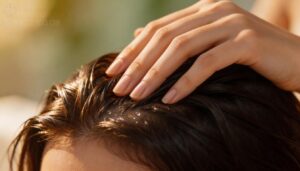
Scalp massage is one of those simple habits that’s been around for centuries — long before hair-care brands made it trendy.
It works best when paired with the right routine — something worth exploring if you’re dealing with hair loss during washing.
It works by stimulating the scalp through pressure and movement, and the details behind that process are more interesting than you’d expect.
Here’s what you need to know, starting with where it came from and how it actually gets results.
Origins in Ayurvedic and Traditional Chinese Medicine
Scalp massage isn’t a modern wellness trend — it goes back thousands of years.
In Ayurveda, it’s called Shiroabhyanga, a ritual built around dosha balancing and Marma point stimulation to restore harmony in the body.
Traditional Chinese Medicine takes a similar approach through Meridian Energy Theory, treating the scalp as a convergence point for Qi-Blood harmony and whole-body health.
It’s classified under Murdhni Taila, a subset of external oleation, as described in the Murdhni Taila classification.
Manual Vs. Tool-Assisted Techniques
From ancient oil rituals to modern brushes and massage tools, you’ve got options. Manual scalp massager techniques use your fingertips for flexible Pressure Depth and instant Motion Speed control.
Electric scalp massager tools deliver consistent rhythm, but require careful Tool Hygiene.
If your Scalp Sensitivity is high, manual methods let you adjust easily.
Cost Comparison? Brushes and massage tools span every budget.
How Fingertip Pressure Activates The Scalp
Your fingertips do more than you might think. Even light to medium pressure triggers mechanoreceptor stimulation — waking up touch-sensitive nerve endings just beneath the skin. This kicks off neurovascular reflexes that widen tiny blood vessels, boosting blood circulation to hair follicles.
Here’s what’s happening under the surface:
- Tissue deformation from small circles stretch follicle-supporting cells
- Mechanical stimulation activates growth-related signaling pathways
- Inflammatory modulation calms excess scalp irritation
- Lymphatic drainage clears fluid buildup around follicles, improving nutrient delivery
Scalp Massage Benefits for Hair Growth
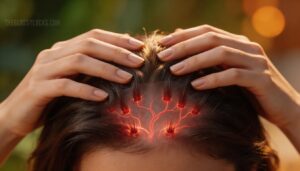
Scalp massage does more than just feel good — it sets off a chain of real, physical changes at the follicle level. These changes can affect everything from how fast your hair grows to how much of it you actually keep.
Here’s a closer look at what’s happening beneath the surface.
Increases Blood Circulation to Hair Follicles
Every time you press your fingertips into your scalp, you’re triggering vessel dilation mechanics — your blood vessels widen, and microvascular activation kicks in almost immediately. That boost in microcirculation drives oxygen nutrient delivery straight to your follicles.
| Mechanism | Effect | Timeframe |
|---|---|---|
| Warm oil circulation | Improves tissue pliability | During session |
| Blood flow to scalp | Feeds follicle stimulation | Within minutes |
| Exercise synergy | Sustains scalp circulation | Post-activity |
Stimulates Dormant Follicles for New Growth
Some follicles aren’t dead — they’re just waiting. Regular massage sends mechanical signal transduction deep into scalp tissue, triggering follicle activation signals that wake dormant roots. Here’s what that pressure actually does:
Over time, that sustained pressure pays off — studies tracking scalp massage results for hair thickness and growth found measurable gains in strand diameter after just six months of consistent sessions.
- Activates dermal papilla activation to restart stalled growth cycles
- Initiates microenvironment reset by clearing buildup around follicle openings
- Triggers stem cell stimulation in the follicle’s outer root sheath
- Drives inflammation modulation, reducing the chronic irritation that pauses growth
- Amplifies blood circulation to fuel newly active follicles
Scalp massage techniques and protocols stimulate hair growth where you need it most.
Strengthens Hair Roots and Reduces Breakage
Strong roots don’t happen by accident — they’re built through consistent care. Scalp massage delivers follicle strengthening by boosting blood circulation right where hair anchors in the skin, improving root hydration and product absorption along the way.
| Massage Benefit | Hair Health Impact |
|---|---|
| Scalp tension relief | Less mechanical stress on roots |
| Mechanical detangling | Fewer break points along the shaft |
| Follicle activation | Stronger, more resilient hair growth |
Benefits of scalp massage for hair health compound over time, making hair breakage prevention a natural result.
Boosts Hair Thickness, Volume, and Shine
Regular scalp massage does more than stimulate growth — it transforms the look and feel of your hair. Increased circulation delivers nutrients that support hair thickness and volume, while Lipid Smoothing oils improve Light Reflection for natural shine.
- Scalp Hydration reduces dryness and tangles
- Keratin Infusion fills surface gaps for smoother strands
- Volume Boosting comes from cleaner, lighter roots
- Hair shine improves with even oil distribution
Balances Sebum Production and Reduces Dandruff
Your scalp produces sebum naturally — but too much creates the perfect environment for Malassezia yeast, the main driver behind dandruff.
Scalp massage helps sebum regulation by distributing oils evenly, so buildup doesn’t concentrate in one spot. This flake loosening technique also lifts dead skin cells, improving anti-inflammatory scalp relief and product runoff prevention when you shampoo.
Consistent massage keeps your scalp balanced, not greasy.
What The Science Says About Scalp Massage

Scalp massage has been around for centuries, but what does modern research actually show? A handful of studies have looked at real outcomes — from hair thickness to stress hormones — and the findings are worth knowing.
Here’s a closer look at what the science has uncovered so far.
2016 Study on Hair Thickness After 24 Weeks
One study gave researchers something concrete to work with. In 2016, nine men performed daily 4‑minute scalp massages for 24 weeks — and hair thickness measurably increased by the end.
Here’s what made this scientific evidence of scalp massage for hair growth credible:
- Measurement methodology tracked standardized hair thickness, not guesswork
- Participant demographics were consistent throughout
- Placebo comparison isolated massage as the variable
- Hair density gains showed real follicle response
- Statistical significance confirmed results weren’t random
2019 Survey Findings on Alopecia Improvement
A 2019 survey of 340 participants found that roughly 69% reported alopecia improvement after twice-daily scalp massage. That’s patient satisfaction data — especially since many noted real quality-of-life gains, including a self-esteem boost tied to visible regrowth.
As a nonpharmaceutical approach to promote hair growth, massage met recognizable improvement thresholds. It won’t replace clinical care, but the findings add weight to growing scientific evidence.
Evidence on Blood Flow and Cortisol Reduction
Beyond satisfaction scores, the physiology tells a compelling story. A single scalp massage session can boost local blood flow by up to 120% — measurable microcirculation metrics that matter for follicle nourishment. Meanwhile, cortisol biomarkers drop after just 15 minutes of massage, supporting vasodilation mechanisms through improved endothelial function. Lower stress hormones mean vessels relax more efficiently, delivering oxygen where your follicles need it most.
A single scalp massage can surge blood flow by 120% while cutting cortisol within minutes
Here’s what the research confirms:
- Blood flow surges up to 120% during massage, improving nutrient delivery via vasodilation mechanisms
- Cortisol biomarkers decrease within 15–25 minutes, easing stress hormone pathways that restrict vessels
- Endothelial function improves when chronic stress drops, allowing better microcirculation metrics over time
- Hair growth benefits compound as reduced stress hormones support a healthier follicle environment long-term
Current Limitations and Need for Larger Trials
The science is promising, but it’s not complete. Most clinical study findings on hair regrowth come with real caveats — sample size constraints, short follow-up periods, and no Protocol Standardization across trials.
Adherence Variability and Safety Data Gaps make it harder to draw firm conclusions.
Larger randomized trials are needed before scalp massage earns a definitive place among nonpharmaceutical approaches to promote hair growth.
Best Scalp Massage Techniques for Hair Growth
Knowing that scalp massage works is one thing — knowing how to do it well is another. The technique you use matters more than most people realize, and a few small adjustments can make a real difference in your results.
If you want a walkthrough of proper finger placement, pressure, and timing, this scalp massage guide breaks down each step clearly.
Here are the core methods worth adding to your routine.
Circular Friction From Hairline to Nape
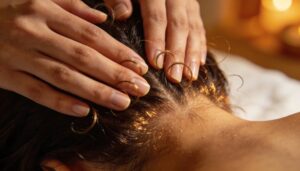
Start at your hairline and work backward — that’s the foundation of circular friction. This front-to-back motion naturally follows your scalp’s surface, reducing tugging while covering every zone methodically.
Spend about 30 seconds per zone, using comfortably firm pressure to boost scalp warmth, increase and support hair follicle stimulation. Smaller circles also improve product spread efficiency, distributing oils evenly as you go.
Kneading, Tapping, and Raking Methods
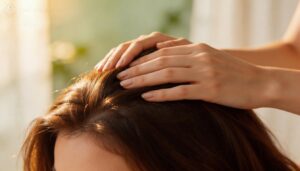
circular friction covers the whole scalp, but kneading, tapping, and raking go deeper into your hair growth toolkit.
Kneading uses mild-to-moderate pressure with finger pads — push, compress, release.
Tapping works best when your scalp feels sensitive; keep the rhythm light and steady, alternating hands for wrist control.
Raking distributes oils without tugging.
Zone sequencing and consistent finger spacing keep every pass even.
How to Massage With Oils Pre-Shampoo
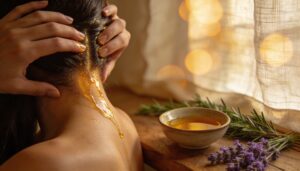
Before shampooing, a quick oil warm-up prepares your scalp for better oil absorption. Apply your chosen carrier or essential oil in sections — hairline to nape — on dry hair.
Use steady massage rhythm patterns to work it in, maintaining scalp moisture balance without oversaturating.
Think of it as a prewash conditioner step.
Leave it on for 30 minutes, then rinse thoroughly with shampoo.
For best results with sensitive scalps, check out this complete guide to treating baldness with castor oil, which also covers overnight application tips.
Recommended Session Length and Frequency
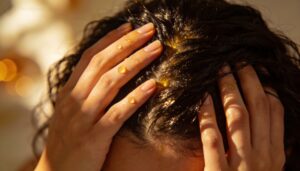
Most people do best with a 5–10 minute daily routine, but you don’t have to start there. A four-minute scalp massage is a solid entry point.
- Ideal Session Duration: Divide into quadrants — 1–3 minutes each for even pressure time allocation
- Scalp Massage Frequency: Begin 3–5 sessions weekly; scale toward twice-daily scalp massages as tolerated
- Frequency Adjustment Guidelines: Watch for irritation signs — redness or itching means dial back immediately
Best Oils and Tools to Use During Scalp Massage

The oil you choose and the tool you use can make a real difference in how effective your scalp massage actually is. Some options work better for certain hair types, scalp conditions, or goals like growth versus moisture balance.
Here’s what’s worth knowing before you reach for anything.
Top Carrier Oils — Coconut, Castor, and Almond
Not all oils behave the same on your scalp.
Coconut oil’s lauric-acid base gives it natural antimicrobial action and a barrier-forming quality that shields strands while conditioning.
Castor oil — nearly 90% ricinoleic acid — has a high viscosity that helps moisture retention right where you apply it.
Almond oil’s lighter fatty acid composition spreads easily, making it ideal for regular scalp massage without heavy buildup.
Rosemary and Peppermint Essential Oil Benefits
Think of rosemary and peppermint oils as your scalp’s synergistic duo. Rosemary oil delivers Antioxidant Protection through rosmarinic and carnosic acid, supporting Follicle Energy Support at the cellular level.
Peppermint oils produce a Cooling Sensation via menthol, while both offer Antimicrobial Cleanliness that keeps your scalp balanced. Together, they provide Aromatic Stress Relief — making every massage session genuinely therapeutic for hair volume and growth.
Manual Silicone Massagers Vs. Electric Devices
Choosing the right scalp massaging tool comes down to four practical factors: Pressure Consistency, Power Portability, Cleaning Hygiene, and Customization Settings.
- Pressure Consistency: Electric devices like the Comfier Cordless Hair Scalp Massager deliver steady vibration; manual tools like the Jupiter Scalp Brush let you control pressure zone by zone.
- Power Portability: Silicone brushes need no charging — use them anywhere.
- Cleaning Hygiene: Silicone rinses clean instantly; electric heads need careful drying.
- Customization Settings: Electric models offer preset intensity modes; manual technique adapts naturally.
- Overuse Risk: High-vibration settings can irritate faster than you’d expect.
Choosing The Right Tool for Your Hair Type
Your hair type is the real decision-maker here. Fine hair does best with a soft silicone scalp brush — gentle pressure, no irritation.
Coily or thick hair needs firmer contact pads and solid pressure control features. The Jupiter Scalp Brush suits straight-to-wavy hair, while the Comfier Cordless Hair Scalp Massager offers adjustable head angles and ergonomic handle design for those with limited grip strength.
Always prioritize material cleanliness tips — rinse tools after every use.
How to Add Scalp Massage to Your Hair Routine
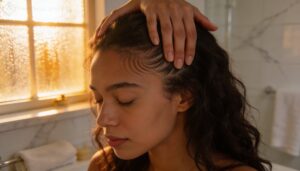
Adding scalp massage to your routine doesn’t have to be complicated. A few small adjustments to what you’re already doing can make a real difference over time.
Here’s how to build it in the right way.
Daily 5-Minute Routine for Stress and Growth
You don’t need an hour — just five minutes and your fingertips. Think of it as a daily reset for both your scalp and your mind.
Here’s a simple routine to follow:
- Set a timer guidance cue — four-minute scalp massage minimum, five preferred
- Use circular scalp massage techniques and protocols to boost blood circulation
- Add a post-massage stretch as your relaxation cue
Consistency drives hair growth.
Tracking Progress Over 8 to 12 Weeks
Consistency is only half the work — tracking is the other half. Keep a Shedding Log after each wash day, note your Scalp Comfort Scale rating, and photograph the same angles weekly for reliable Photo Documentation.
Hair Texture Metrics like detangling ease also reveal gradual shifts.
Clinical study findings on hair regrowth show meaningful hair density increase usually appears on a Hair Growth Results Timeline with Regular Massage spanning 8 to 12 weeks.
Precautions and Who Should Avoid Scalp Massage
Tracking progress tells you when massage is working — but it also helps you notice when something’s off. Stop and consult a doctor if you have open scalp wounds, skin infections, scalp inflammation, or eczema flares.
Bleeding disorders, pregnancy contraindications, and recent scalp procedures all require medical consultation first.
Potential side effects and safety considerations are real, and precautions and contraindications for scalp massage aren’t optional—fine print.
Combining Massage With Other Hair-Care Practices
Massage works best when it’s part of a complete hair care routine, not a standalone habit. Use a pre-shampoo oil for 15–60 minutes, then cleanse with a mild formula.
Apply leave-in conditioner to your ends afterward. Time your scalp exfoliant use once weekly, separate from essential oils.
Always add heat protectant before styling. A consistent nighttime routine, paired with good nutritional factors, compounds every benefit.
Frequently Asked Questions (FAQs)
Can head massage lower blood pressure?
Yes, it can. A head massage activates vasodilation effects and autonomic modulation, lowering cortisol levels and shifting your autonomic nervous system toward calm — gently nudging blood pressure down.
Does scalp massage help telogen effluvium?
Scalp massage won’t fix telogen effluvium on its own, but it can support recovery.
It boosts blood circulation, eases stress-induced hair loss, and encourages gentle hair follicle stimulation while your body heals the root cause.
Can scalp massage help reverse hair thinning?
It can help, but it won’t reverse genetic or hormonal thinning on its own. Think of it as support — not a cure.
Consistent dermal papilla activation through massage works best alongside proven treatments.
Are there risks of over-massaging the scalp?
Over-massaging can cause skin irritation, hair breakage, folliculitis bumps, and scalp headaches.
Too much pressure also triggers increased shedding and scalp inflammation.
Keep sessions gentle and brief to avoid these side effects.
What is the best time for scalp massage?
Like brushing your teeth, consistent timing matters more than ideal. Morning Routine or Evening Relaxation both work — pick whichever fits your daily selfcare routine and stick with it consistently.
Does scalp massage benefit dry or oily scalps more?
Both scalp types benefit, but dry scalps normally see more gains.
Massage aids flake mitigation and scalp moisture balance through natural oil production spread.
Oily scalps get gentler buildup management with pressure sensitivity in mind.
Can scalp massage help with postpartum hair loss?
Postpartum hair loss — technically called telogen effluvium — is temporary. Scalp massage enhances nutrient circulation boost and stress-induced shedding relief by improving blood flow to follicles as hormones stabilize naturally.
New moms recovering from postpartum shedding can pair this simple technique with a broader at-home hair spa routine for even deeper nourishment and relaxation.
Does scalp massage work for chemotherapy-induced alopecia?
Yes, it can help. A clinical trial found reflexology massage — three 15-minute sessions daily for three months — markedly improved hair regrowth in women with chemotherapy-induced alopecia (p
What nutrients support scalp massage hair benefits?
You are what you eat — and so is your hair. Iron intake, protein sources, zinc benefits, vitamin D role, and biotin supplementation all directly support nutrient delivery to follicles.
While these nutrients work from within, topical care matters too—understanding whether hair oils contain protein can help you build a more complete hair care routine.
Can stress-related hair loss be reversed with massage?
Massage won’t reverse stress-induced hair loss overnight, but it aids Telogen Effluvium Management by promoting stress reduction, improving blood flow, and encouraging follicle nourishment — key steps toward restoring Hair Cycle Regulation naturally.
Conclusion
Like a gentle rain that nourishes the roots, scalp massage brings life to your hair. By stimulating blood flow and awakening dormant follicles, you can say goodbye to thinning patches and hello to a lusher mane.
The scalp massage benefits for hair are undeniable – with regular practice, you can boost growth, thickness, and shine.
Make it a daily habit, and watch your locks transform. Consistency is key; patience and dedication will be your greatest allies.