
This site is supported by our readers. We may earn a commission, at no cost to you, if you purchase through links.
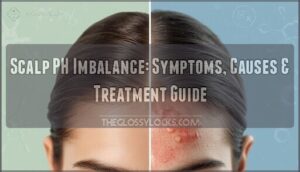
Your scalp’s pH level sits at around 4.5 to 5.5, slightly acidic by design. This delicate balance protects your skin’s barrier, regulates oil production, and keeps harmful bacteria at bay. When that pH shifts even half a point, your scalp responds quickly—sometimes with persistent itching and flakes, other times with excessive grease that returns hours after washing.
The culprits range from your shampoo’s alkaline formula to hormonal shifts during pregnancy, hard water deposits, or chronic stress that alters sebum chemistry.
Recognizing these scalp pH imbalance symptoms early gives you a clear advantage, because most cases respond well to targeted adjustments in your hair care routine, water filtration, or professional treatments that restore your scalp’s natural acidity.
Table Of Contents
Key Takeaways
- Your scalp maintains a healthy pH between 4.5 and 5.5, and when that balance shifts even slightly, you’ll see symptoms like persistent itching, flaking, excess oil, redness, or rapid color fading in treated hair.
- Common culprits disrupting your scalp’s pH include alkaline shampoos, hard water with high mineral content, hormonal changes, chronic stress, and underlying conditions like seborrheic dermatitis or psoriasis.
- Treatment typically works within three to four weeks using pH-balanced shampoos, apple cider vinegar rinses, water filtration, and targeted lifestyle adjustments—but persistent symptoms beyond that window require professional dermatological assessment.
- Prevention relies on choosing sulfate-free products formulated at 4.5-5.5 pH, maintaining adequate hydration and omega-3 intake, managing stress levels, and establishing a consistent scalp care routine that includes gentle cleansing and periodic exfoliation.
What is Scalp PH Imbalance?
Your scalp has a natural pH level, a delicate balance that protects your skin and hair from damage. When that balance shifts too far in either direction, you’ll notice changes in how your scalp feels and how your hair behaves.
Choosing the right shampoo and conditioner set designed for your scalp’s pH can make all the difference in maintaining that healthy balance.
Let’s break down what pH means for your scalp health, what the ideal range looks like, and what can throw things off course.
Getting the pH balance levels right is one of the most overlooked parts of keeping your scalp comfortable and your hair thriving.
The Role of PH in Scalp Health
Your scalp’s pH level—normally between 4.5 and 5.5—isn’t just a number. This acidic environment maintains your scalp barrier, protecting against harmful bacteria while supporting microbiome health.
When pH shifts too high, you may notice dryness, irritation, or excess oil—signs it’s time to explore natural ways to restore your scalp’s pH balance.
When pH balance shifts, your scalp’s protective acid mantle weakens, compromising both barrier function and hair growth.
That’s why scalp acidity matters: it keeps your skin’s defenses intact, allowing pH-balanced shampoo and proper care to work effectively.
Optimal PH Range for The Scalp
Your scalp functions best within a precise window: 4.5 to 5.5 on the pH scale. This acidic environment isn’t arbitrary—it protects your barrier, aids hair growth, and keeps microbes in check.
Studies confirm that products formulated at 4.5–5.5 reduce irritation and water loss. Some people need the lower end of that range for ideal scalp health, which is why pH balance and its importance can’t be overstated.
Factors Influencing Scalp PH
Several forces shift your scalp’s acidity—some you control, others you don’t. Genetic predisposition sets your baseline, while hormonal fluctuations during stress or pregnancy alter sebum output and pH level. Environmental toxins, hard water (often pH 7.0–8.5), and nutrient deficiencies weaken barrier integrity. A disrupted scalp microbiome—Malassezia thrives at wrong pH—worsens the imbalance. Recognizing these drivers helps you restore scalp pH balance effectively.
Your scalp’s pH shifts through genetics, hormones, hard water, nutrient gaps, and microbial imbalance—recognize these to restore balance
- Water quality and product formulation
- Hormones and systemic hydration
- Diet, stress, and microbial shifts
Common Symptoms of Scalp PH Imbalance
Your scalp will tell you when something’s off, you just need to recognize the signs. When pH balance shifts out of that ideal 4.5-5.5 range, your body responds with noticeable changes in how your scalp looks, feels, and behaves. Here’s what to watch for.
Incorporating natural skincare products for teenagers like aloe vera gel can help restore balance and calm irritation when your scalp signals distress.
Dryness, Itchiness, and Flaking

Think of your scalp’s acid mantle like a protective shield—when it breaks down, your skin shows it fast. You’ll notice white flakes dusting your shoulders, persistent itchiness that won’t quit, and skin that feels tight or rough to the touch.
These dryness symptoms signal your scalp pH balance has drifted outside the healthy 4.5-5.5 range, leaving your scalp health compromised and vulnerable.
Excess Oiliness and Greasy Scalp
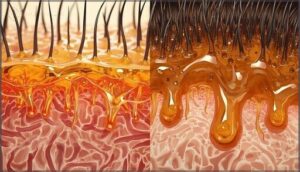
When your scalp pH swings alkaline, your sebaceous glands kick into overdrive, flooding hair follicles with excess oil. You might spot these telltale signs of disrupted sebum regulation:
- Roots feel sticky or heavy within 1–3 days after washing
- Crown area develops noticeable shine from rapid oil accumulation
- Hair strands near your scalp appear visibly greasy despite regular cleansing
- Brush glides with unusual resistance due to sebum buildup
- Scalp feels slick to the touch, signaling compromised acid mantle function
This greasy hair pattern reflects your body’s confused response to pH imbalance, not poor hygiene. Restoring proper scalp pH balance through targeted scalp purification and a consistent scalp care routine helps normalize sebum production, bringing your oily scalp back to equilibrium and improving overall scalp health.
Chronic stress can worsen pH imbalance and trigger excess oil production, so watch for signs of an unhealthy scalp like persistent greasiness or irritation.
Redness, Irritation, and Burning Sensations
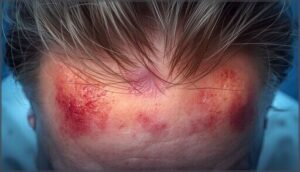
Discomfort signals a deeper problem: when pH levels stray from the 4.5–5.5 range, your scalp’s protective barrier weakens, triggering skin irritation and scalp inflammation.
You’ll notice redness spreading across your crown, persistent itchy scalp episodes, or sharp burning sensations when applying products. These redness causes stem from barrier dysfunction, leaving nerve endings exposed and vulnerable to everyday stressors that healthy scalp conditions normally deflect without issue.
Hair Texture Changes and Color Fading
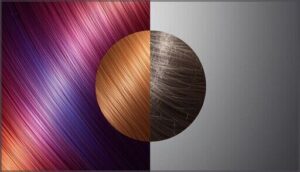
Your hair reveals pH trouble before you might notice scalp changes, with texture shifts and rapid color fading showing compromised hair chemistry and cuticle damage. When pH strays from the 4.5–5.5 range, hair porosity increases, moisture escapes faster, and protective layers weaken—accelerating hair damage that undermines both texture restoration and fading prevention efforts.
- Coarse, dry ends contrasting with oily roots signal uneven hair moisture distribution
- Color-treated strands turning dull or brassy within weeks point to color shift causes
- Increased breakage and static reveal weakened cuticle integrity from pH fluctuations
Causes of Scalp PH Disruption
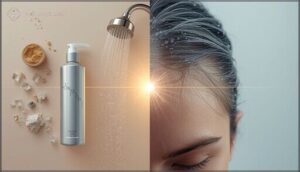
Your scalp’s pH doesn’t shift on its own—something in your routine or environment is pushing it off balance. The culprits range from the shampoo you use every morning to the water flowing through your shower head, and even what’s happening inside your body.
Let’s break down the most common causes so you can spot what’s disrupting your scalp’s natural chemistry.
Hair Products and Chemical Treatments
Your hair products might be working against your scalp’s natural chemistry. Chemical treatments—dyes, perms, relaxers—can temporarily spike your scalp pH beyond the ideal 4.5-5.5 range, triggering irritation and flaking.
Modern pH-balanced shampoos and sulfate-free products respect your acid mantle, minimizing disruption. If you’ve recently colored or chemically treated your hair, consider scalp therapy options with soothing ingredients like allantoin or panthenol to restore barrier function.
Water Quality and Environmental Factors
Your tap water isn’t as neutral as you’d think. Hard water—loaded with calcium and magnesium—can push your scalp pH toward alkaline territory, disrupting your microbiome and triggering dryness. Chlorine effects strip protective lipids, while environmental toxins and water pollution add oxidative stress.
Consider these contributors to pH imbalance:
- Hard water mineral buildup (pH 7.0–8.5)
- Chlorinated municipal supplies
- Seasonal aquifer shifts
- Airborne pollutants settling on hair
- Regional water quality fluctuations
Diet, Hydration, and Lifestyle Choices
What you put in your body shapes scalp health more than you realize. Diets rich in omega-3 fatty acids calm inflammation, aiding a balanced pH level, while high-sodium foods worsen dryness. Hydration is key; drinking enough water daily helps regulate sebum and maintain your scalp’s barrier. B vitamins and zinc deficiencies can disrupt hair growth, altering scalp pH balance through nutrient imbalances that affect oil production and overall scalp nutrition.
| Dietary Influences | Impact on Scalp pH Balance | Practical Application |
|---|---|---|
| Omega-3 fatty acids | Anti-inflammatory, reduces irritation | Eat salmon, walnuts, flaxseeds |
| High-sodium foods | Increases dehydration, worsens dryness | Limit processed snacks |
| B vitamins & zinc | Aids skin barrier, hair growth | Include eggs, legumes, nuts |
| Adequate hydration | Regulates sebum, maintains moisture | Drink 8 glasses of water daily |
| Fermented foods | Aids microbiome balance | Add yogurt, kimchi regularly |
Lifestyle factors, such as stress management and consistent hydration, directly influence your scalp’s ability to maintain its protective acid mantle.
Underlying Scalp Conditions
Sometimes, no matter how well you eat or hydrate, your scalp still rebels—and that’s often a sign of an underlying condition shifting your pH out of range. Dermatological Aspects of Scalp Health reveal several culprits:
- Fungal Infections like seborrheic dermatitis disrupt your scalp’s acid mantle
- Skin Disorders including psoriasis alter pH through inflammation
- Hormonal Fluctuations during pregnancy or menopause affect sebum production
- Autoimmune Diseases compromise your scalp’s natural protective barrier
These Scalp Conditions and Treatments require targeted intervention beyond routine scalp care.
Diagnosing and Assessing Scalp PH Imbalance
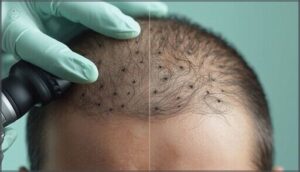
You don’t need expensive lab tests to figure out if your scalp’s pH is off balance. Most people can spot the warning signs just by paying attention to how their hair and scalp behave during their daily routine.
However, there are specific situations where a professional scalp analysis becomes necessary, and knowing when to make that call can save you weeks of guesswork.
Signs to Watch for in Daily Hair Care
You can catch pH imbalance early by noticing small shifts in your daily hair care routine. A daily itch that wasn’t there before, unusual product reactions, or increased hair shedding during washing all signal scalp health disruption.
Check for unexpected hair texture changes, persistent scalp irritation, or greasiness that won’t quit, even after shampooing. These warning signs mean your scalp pH balance needs attention.
When to Seek Professional Assessment
When symptoms don’t resolve after two weeks of home care, book a dermatologist visit. Persistent itching, hair loss with redness, or painful scalp infection signs—pustules, bleeding, crusting—require professional evaluation. Unresponsive flaking despite pH-balanced products may indicate seborrheic dermatitis or psoriasis. Non-healing sores warrant urgent assessment for skin cancer.
Early intervention prevents permanent damage and tackles underlying scalp health issues affecting your hair. It’s vital to acknowledge hair loss signs to determine the best course of action for treatment.
Effective Treatments for Scalp PH Imbalance
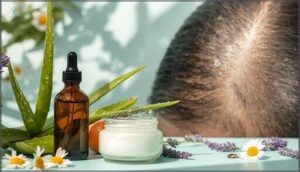
Once you’ve identified a pH imbalance, the good news is that your scalp can often recover with the right approach. Treatment isn’t one-size-fits-all; it depends on whether your scalp has tilted too alkaline or too acidic.
Let’s walk through the most effective options, from simple at-home fixes to professional interventions.
PH-Balanced Shampoos and Conditioners
Switching to pH-balanced shampoo and conditioner can restore your scalp’s protective acid mantle, usually within four to eight weeks. Look for formulas targeting the 4.5 to 5.5 range—your scalp’s natural sweet spot. Here’s what makes pH-balanced products work:
- Sulfate-free options with gentle surfactants like cocamidopropyl betaine clean without stripping oils
- Buffering agents such as citric acid maintain stable pH levels during washing
- Natural moisturizers including humectants preserve hydration without altering acidity
- Scalp-friendly ingredients free from harsh colorants or fragrances reduce irritation risk
Natural Remedies (Apple Cider Vinegar, Aloe Vera)
You’ll find relief through simple kitchen-cabinet solutions that work alongside pH-balanced products.
Apple cider vinegar rinses—diluted one tablespoon per cup of water—restore acidity after shampooing, addressing the itch and flaking that accompany alkaline buildup.
Aloe vera gel provides gentle hydration without disturbing your scalp’s natural pH level, making it an ideal soother for irritated skin seeking both moisture and balance.
Professional Scalp Treatments
When home remedies aren’t enough, in-clinic interventions—scalp exfoliation, medicated peels with salicylic acid, and low-level laser therapy—target stubborn pH imbalances directly. These professional scalp treatments address underlying conditions like seborrheic dermatitis, restoring balance that aids your daily scalp care routine and prevents relapse.
Your dermatologist combines therapeutic masks, scalp massage for circulation, and pH-balanced products customized to your scalp health and issues.
Step-by-Step Scalp Care Routine
A consistent scalp care routine transforms pH balance from concept to reality. Start by testing your scalp’s baseline pH with strips, then cleanse gently using sulfate-free, pH-balanced products in lukewarm water. Weekly scalp exfoliation removes buildup without overdoing it—once every two to four weeks is plenty. Finish with a scalp massage during hair oiling to boost circulation, seal cuticles with cool water, and monitor your scalp health closely.
- Begin with pH testing to understand your starting point
- Use gentle cleansing methods that preserve natural oils
- Incorporate scalp treatment steps like massage for better absorption
Preventing Future Scalp PH Issues
Once you’ve restored your scalp’s pH, the real work is keeping it stable. Prevention isn’t complicated, but it does require a few consistent habits around the products you use, what you eat, and how you manage daily stressors.
Let’s walk through the key areas that’ll keep your scalp in balance for the long haul.
Choosing The Right Hair Products
Your hair products can make or break your scalp’s pH balance. Look for pH-balanced shampoo and sulfate-free formulas labeled between 4.5–5.5, matched to your hair type. Choose fragrance-free options if you’re prone to irritation, and apply conditioner to hair lengths only, not directly on your scalp.
| Product Feature | Why It Matters |
|---|---|
| pH-balanced products (4.5–5.5) | Maintains scalp barrier, prevents stripping natural oils |
| Sulfate-free formulas | Reduces irritation, maintains moisture balance |
| Lightweight conditioners | Avoids buildup, keeps follicles clear |
Healthy Diet and Hydration Habits
What you eat and drink directly impacts your scalp’s pH balance. Adequate hydration maintains moisture regulation, while omega-rich foods like salmon and flaxseed strengthen your skin barrier.
Try these dietary changes for nutrient balance:
- Water intake: Aim for 8 glasses daily to maintain scalp hydration
- Antioxidant-rich produce: Berries and leafy greens support follicle health
- Fermented foods: Kimchi and yogurt influence your gut-skin axis
- Reduce inflammatory triggers: Limit excess caffeine and sugar consumption
Regular Scalp Maintenance Tips
Think of scalp maintenance as routine tune-ups, not emergency repairs. You need a consistent washing schedule customized to your scalp type, preventing buildup that shifts pH balance. Use a pH-balanced shampoo targeting 4.5 to 5.5, rinse thoroughly with lukewarm water, and apply conditioner only mid-length down to avoid scalp overload.
Periodically reassess your hair care products for sulfates or harsh fragrances that disrupt scalp health and maintenance.
| Maintenance Practice | Frequency | pH Benefit |
|---|---|---|
| Gentle Cleansing | 2-3 times weekly | Removes residue without stripping |
| Scalp Massage | Daily, 2-3 minutes | Stimulates circulation, distributes oils |
| Hair Oiling | Weekly | Nourishes barrier, locks moisture |
| Scalp Exfoliation | Monthly | Clears buildup, resets pH balance |
| Product Rotation | Every 3 months | Prevents ingredient overexposure |
Managing Stress and Environmental Exposure
Beyond products and routines, your daily habits shape scalp pH balance more than you’d think. Chronic stress elevates cortisol, triggering excess sebum that throws off your scalp’s natural acidity.
Pair that with environmental toxins—pollutants, UV rays, harsh chemicals—and your scalp barrier weakens fast.
Prioritize stress reduction through mindfulness, wear breathable head protection outdoors, and maintain a healthy lifestyle with adequate sleep and hydration for lasting scalp health and maintenance.
Frequently Asked Questions (FAQs)
Can scalp pH imbalance cause hair loss?
Where there’s smoke, there’s fire—scalp pH imbalance doesn’t directly trigger hair loss, but it creates an environment where inflammation thrives, follicle damage occurs, and scalp health deteriorates, ultimately affecting hair growth.
How long does pH restoration typically take?
Most people notice scalp pH balance improving within 7 to 14 days using pH-balanced shampoo consistently. Your scalp recovery and acid balance restoration depend on how disrupted your pH levels were initially.
Are home pH testing kits accurate enough?
Home kits show significant variability, like using a sundial for precision timing.
Digital meters offer better pH measurement accuracy than strips, but calibration methods matter.
For reliable scalp pH balance assessment, professional laboratory testing remains the benchmark.
Does scalp pH change with age or hormones?
Yes, scalp pH balance shifts slightly during hormonal transitions like puberty and menopause. Aging effects also alter sebum production, influencing scalp sensitivity, though most people maintain relatively stable pH levels throughout life.
Can medication affect your scalps pH level?
Certain medications can shift your scalp’s pH level by altering sebum composition, modifying sweat chemistry, or disrupting microbial balance.
Topical treatments, antibiotics, antifungals, and hormonal drugs all impact scalp sensitivity and pH-balanced equilibrium differently.
Conclusion
An ounce of prevention beats a pound of cure, especially when your scalp signals distress. Once you recognize scalp pH imbalance symptoms, treatment becomes straightforward: switch to pH-balanced formulas, filter hard water, and introduce weekly apple cider vinegar rinses. Most cases resolve within three to four weeks of consistent intervention.
When symptoms persist beyond that window, schedule a professional scalp analysis—underlying conditions like seborrheic dermatitis or psoriasis require targeted medical protocols your dermatologist can prescribe.
- https://elsevier.blog/sub-points-outlining-organization/
- https://sensorex.com/what-does-ph-stand-for/?srsltid=AfmBOooTeKfNOVnGR08h1Nho3LyLl2rLJEMSIvqI9L6z_8OTX9k9MO9r
- https://www.redken.com/blog/why-the-ph-of-your-hair-is-important.html
- https://www.lorealparisusa.com/beauty-magazine/hair-care/damaged-hair/what-is-hair-cuticle
- https://www.sciencedirect.com/