This site is supported by our readers. We may earn a commission, at no cost to you, if you purchase through links. This content is for general informational and educational purposes only and is not a substitute for professional medical, dermatological, or nutritional advice.
That itchy red bump on your jawline after shaving isn’t just irritation. It’s your hair curling back and piercing the skin, and your body is treating it like a splinter. Curly and coarse hair types face this constantly, sometimes within a day or two of a routine shave.
The good news: shaving bumps treatment doesn’t require guesswork. Warm compresses, the right acids, and a few smart shaving habits can calm inflamed skin fast and keep new bumps from forming.
You’ll find clear, step-by-step guidance ahead, from quick fixes for flare-ups to daily habits that stop them before they start.
Table Of Contents
- Key Takeaways
- Razor Bumps: Causes, Symptoms, and Risks
- How to Treat Shaving Bumps Quickly
- Best Over-the-Counter Razor Bump Treatments
- Home Remedies for Razor Bump Relief
- Prevent Razor Bumps After Shaving
- When Razor Bumps Need Medical Care
- Frequently Asked Questions (FAQs)
- How to get rid of shaving bumps quickly?
- Does vaseline help razor bumps?
- How long will shaving bumps last?
- Will razor bumps go away if I don’t shave?
- How do you get rid of razor bumps?
- What should I do if I get a bump after shaving?
- How to prevent razor bumps when shaving?
- How do you treat razor bumps in the pubic area?
- How do you get rid of razor bumps in the shower?
- Do shaved hairs cause bumps?
- Conclusion
Key Takeaways
- Razor bumps happen when a cut hair curls back and pierces the skin, which is different from razor burn, an immediate flat irritation that shows up right after shaving.
- You can calm a flare-up fast by using a warm compress to loosen the hair, gently releasing it with sterilized tweezers, then following up with a cool compress, salicylic or glycolic acid, and avoiding the urge to pick.
- The best prevention comes down to technique: shave with the grain, use a sharp single-blade razor, prep your skin with warm water and gentle exfoliation, and moisturize right after.
- See a dermatologist if bumps last longer than two weeks, show signs of infection like pus or fever, or keep coming back, since prescription treatments and laser hair removal can break the cycle for good.
Razor Bumps: Causes, Symptoms, and Risks
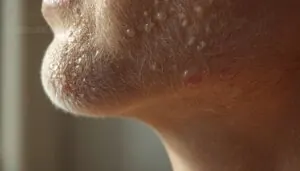
Razor bumps can feel confusing when you don’t know what’s actually happening under your skin. The truth is, a few key factors decide whether you’ll deal with them and how bad they get. Here’s what’s really going on, from why they form to how they show up on your skin.
Once ingrown hairs and irritation set in, knowing your options matters, and this guide to effective remedies for razor bumps breaks down what actually helps your skin heal.
Ingrown Hair Formation
A trapped hair is the root problem. When a cut hair shaft curves back and pierces the follicle wall, your body reacts fast: fluid rushes in, blocking the exit and inflaming the area.
- The sting of a hidden bump under your skin
- Redness that won’t calm down
- That nagging urge to pick
Skin tension while shaving worsens re-entry. Gentle strokes, proper hair growth direction, and light exfoliation keep follicles clear. Regular exfoliation helps prevent ingrown hairs from forming.
Curly and Coarse Hair
Not all hair behaves the same under a razor. Curl pattern behavior means coiled strands spring back toward the follicle after cutting, raising follicle angle risk. Coarse hair adds thickness and dryness to the mix.
That combination explains why curly-haired and coarse-haired individuals see more ingrown hairs. Moisture needs run higher too, so hydration helps easier, smoother shaving and fewer razor bumps.
Razor Bumps Versus Razor Burn
Coarse or curly, your skin can still confuse two different problems.
Razor burn shows up immediately, flat red irritation that stings right after shaving. Razor bumps take longer, often 1 to 2 days, as hair curls back and gets trapped under skin. Burn stays flat; bumps raise up, sometimes with visible trapped hair beneath.
Common PFB Symptoms
Once bumps form, pseudofolliculitis barbae follows a fairly predictable pattern. Expect itching within a day or two, along with redness, swelling, and tenderness when touched.
Small papules appear first, often 2 to 5 mm, sitting on a reddish base. Left alone, some progress into pustule formation, resembling whiteheads. Sound familiar? That’s your skin’s inflammatory response to ingrown hairs.
Possible Skin Complications
Left untreated, razor bumps can spiral into bigger problems. Ongoing inflammatory response inflammatory response invites folliculitis, bacterial infection, or abscess formation needing drainage. Skin may darken, causing hyperpigmentation and pigmentary changes lasting months. Chronic irritation risks keloid scarring, especially on the neck and jawline. Keloid prevention and early nodule management** matter, since firm nodules and satellite lesions signal it’s time to intervene.
How to Treat Shaving Bumps Quickly
Razor bumps can look alarming, but you don’t need to panic when they show up. Quick, careful action at home often calms the skin within days. Here’s what actually helps, step by step.
Pause Shaving Temporarily

Sometimes the fastest fix is simply stopping. Pause shaving for 24-48 hours once bumps or burn appear, extending to 72 hours if severe. Skin barrier repair starts within 48 hours.
Meanwhile:
- Trim instead of shaving
- Try depilatory creams
- Let hair grow 3-5 days
Chronic cases may need dermatologist-guided pauses of 2-4 weeks. Resume gradually once redness fully clears.
Apply a Warm Compress
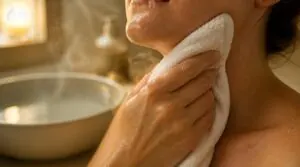
Heat softens skin and coaxes ingrown hairs toward the surface. Soak a clean washcloth in warm water, comfortably warm, never hot, around 120°F max, and wring until damp.
Follow the warm compress with a gentle colloidal oat scrub, one of the natural exfoliants that soothe irritated skin, to help clear the way for smoother, bump-free skin.
Press it over irritated skin for 10 to 20 minutes, rewarming every 5 minutes as needed. Watch closely: remove immediately if skin turns bright red or increasingly painful. Pat dry before moving on to postshave care.
Release Trapped Hairs Safely
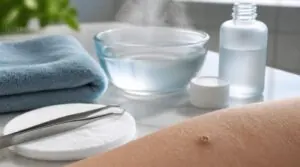
Only attempt release once the hair tip is visible at the surface, ideally after a warm washcloth soak or gentle exfoliating scrub. Sterilize tweezers with rubbing alcohol first.
Insert parallel to skin, hook the loop, lift gently. Never dig or force a sterile incision and extraction. Stop after three tries; wait 24 hours before retrying.
Soothe With Cool Compresses
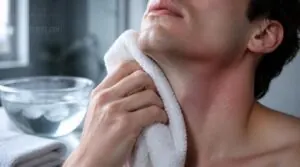
Once you’ve extracted a trapped hair, your skin needs calm, not more friction. A cool compress eases razor burn fast: soak a soft washcloth in cold water, wring it out, and press gently for three to five minutes.
Re-cool as needed. This simple soothing compress therapy curbs inflammation and redness in razor bumps and ingrown hairs, easing that raw, post-shave skin irritation.
Avoid Picking and Squeezing
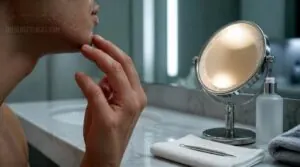
That urge to squeeze is strong, especially under bright mirror lighting. Resist it.
Picking causes deeper tissue trauma, raising infection and scarring risk. It also worsens pigmentation risk in darker skin tones.
Instead, practice safe hair release methods only, using sterile tools on clearly visible loops. Distraction techniques help break the picking cycle when boredom or stress triggers the habit.
Best Over-the-Counter Razor Bump Treatments
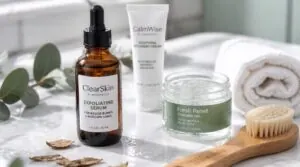
Sometimes patience alone isn’t enough, and your skin needs a little extra help. The right over-the-counter products can calm irritation, clear follicles, and stop new bumps from forming. Here are five options worth keeping in your medicine cabinet.
If a razor nick is what’s behind the irritation, these simple ways to stop shaving cuts from bleeding can help you calm things down fast.
Salicylic Acid Exfoliants
Salicylic acid is oil soluble, so it slips into clogged pores and clears debris trapping ingrown hairs. Reach for a leave-on exfoliant instead of a cleanser, since contact time matters. Start with lower strengths a few times weekly. Apply after shaving, not during, and pair with moisturizer to prevent dryness or irritation.
Glycolic Acid Products
If salicylic acid combats oil-clogged pores, glycolic acid works on the skin’s surface, smoothing texture and easing hair curvature. Look for 5-10% concentrations, with beginners starting lower. It comes as pads, serums, or sticks, used two to three times weekly. Expect smoother skin in 7 to 14 days. Always patch test first and pair with sunscreen.
Short-Term Hydrocortisone Use
When redness won’t quit, hydrocortisone cream calms inflamed razor bumps fast. Use 1% strength, 2 to 4 times daily on clean, dry skin.
Skip broken or irritated areas, and for sensitive zones, limit to 3 to 4 applications. Not for kids under 2 without medical guidance.
Store between 68-77°F, and pair with antibacterial creams only as directed.
Antimicrobial Creams
When bumps look infected, pus-filled, or slow to heal, an antibiotic cream like bacitracin or neomycin combos can help. These target Staphylococcus, common on skin.
Antiseptic options such as diluted povidone iodine also work, covering a broader antimicrobial spectrum. Apply a thin layer once or twice daily.
Watch for skin irritation risk, especially with neomycin, and stop if redness worsens.
Noncomedogenic Moisturizers
Skin barrier repair matters just as much as treating bumps. Look for glycerin hydration and sodium hyaluronate for moisture retention, plus niacinamide for barrier support.
Dimethicone adds smooth texture without clogging pores, while vitamin C offers antioxidant protection.
Choose a noncomedogenic product for your daily skin care routine, especially in postshave care, when skin needs gentle, breakout-free moisture most.
Home Remedies for Razor Bump Relief

Not every remedy needs to come from a bottle. Your kitchen and bathroom cabinet likely hold a few things that calm irritated skin just as well. Here are five simple options worth trying at home.
Pure Aloe Vera Gel
That gel-filled plant on your windowsill does more than decorate a kitchen counter.
Pure aloe vera gel contains 75+ active compounds, including vitamins A, C, and E, plus acemannan, a polysaccharide that signals real purity. Look for gel processed below 40°C, since heat above 60°C destroys these benefits.
- Calm angry, irritated skin
- Reduce visible redness
- Lock in lasting hydration
- Support your skin’s healing
Diluted Tea Tree Oil
Straight from the bottle, tea tree oil is too harsh, so dilution matters.
Mix 3 drops into 1 tablespoon of jojoba, coconut, or almond oil for roughly a 1% concentration. Its antibacterial and anti-inflammatory effects help calm bumps.
| Concentration | Best Use | Frequency |
|---|---|---|
| 0.5% | Sensitive skin | Daily |
| 2% | Body/scalp | Occasional |
Always patch test first and watch your skin tolerance.
Soothing Oatmeal Paste
Your kitchen holds a surprisingly effective remedy: colloidal oatmeal, FDA-approved as a skin protectant.
Mix 100g ground oatmeal, 100g plain yogurt, and 1 teaspoon honey into a smooth paste. Apply to clean skin for 30 minutes, twice daily for three days.
Oats contain anti-inflammatory phenols and beta-glucan, which restores your skin’s barrier and calms irritated follicles. Patch test first.
Chilled Cucumber Compress
Cold works wonders once irritation sets in. Mix one peeled cucumber with 60ml milk, chill 10-15 minutes until cold to touch, then apply with gentle circular motions.
Cucumber delivers deep hydration, while milk’s proteins soothe inflamed skin. Leave on 5-10 minutes; the cooling effect calms redness fast, easing razor bumps and irritated ingrown hairs without harsh chemicals.
Raw Honey Application
Honey isn’t just a pantry staple, it’s a legitimate antibacterial agent. Its acidic pH and hydrogen peroxide release create real antibacterial properties, while sugars pull fluid from swollen follicles for anti-inflammatory relief.
Apply 1-2 teaspoons to clean skin for 15-20 minutes, 2-3 times daily. Add sugar for exfoliation. Avoid honey on pus-filled bumps, and skip it entirely for infants under 12 months.
Prevent Razor Bumps After Shaving
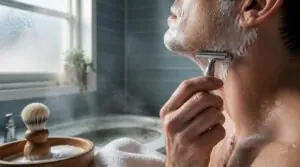
Prevention beats treatment every time with razor bumps. Your shaving routine matters just as much as any product you apply afterward. Here’s what to change, step by step.
Prepare Skin Before Shaving
Getting your skin ready matters as much as the shave itself.
- Cleanse with a noncomedogenic wash to clear debris
- Rinse with warm water to soften hair and skin
- Apply a warm washcloth for five minutes
- Follow with gentle exfoliation, never harsh scrubbing
Sensitive skin needs extra care here. Skip aggressive scrubs, and keep your razor clean before you begin.
Use Moisturizing Shaving Cream
Once your skin is prepped, what you shave with matters just as much. A moisturizing shaving cream with glycerin draws water into the skin, while shea butter and aloe vera protect the barrier and calm irritation. Vitamin E helps repair afterward. Together, they cut down on razor burn and keep sensitive skin comfortable through the whole shave.
Shave With Hair Growth
Now for the technique itself. Run your fingers over your skin first to feel which way hair grows, then shave in that same direction.
Going against the grain looks smoother short-term, but it drives hair tips back into follicles. Shaving with hair growth respects your natural pattern and cuts Razor Bumps and ingrown hairs a lot.
Shaving against the grain looks smoother now, but it drives hair back into the follicle later
Choose The Right Razor
Your razor matters as much as your technique. A single-blade razor gives curly or coarse hair the cleanest cut without pulling hair below the follicle.
- A dull edge that tugs and irritates
- Sharp blades gliding with barely any pressure
- Multi-blade heads packing bumps beneath skin
- Electric razors set to 1mm for stubborn curls
- Hypoallergenic grips built for sensitive skin
Replace blades every 5-7 shaves.
Follow Proper Aftercare
Once the blade is down, your work isn’t finished. Rinse with cool water to close pores, then pat dry and apply an alcohol-free moisturizer within a minute.
| Step | Purpose |
|---|---|
| Cool rinse | Closes pores, cuts irritation |
| Post shave balm | Locks in moisture |
| Fragrance-free formula | Prevents dryness |
| Aloe or niacinamide | Soothes redness |
Choose noncomedogenic, fragrance-free formulas for lasting moisture retention.
When Razor Bumps Need Medical Care
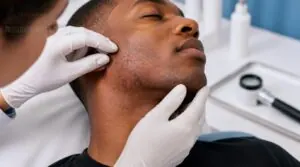
Most razor bumps clear up with home care, but not always. Some cases need a closer look from a professional. Here’s when it’s time to seek medical attention, and what that care might involve.
Infection Warning Signs
Not every bump is harmless. Watch for redness spreading beyond the area, warmth, or worsening pain, signs of bacterial folliculitis or an abscess forming.
- Pus drainage or bad odor
- Fever or chills
- Swollen lymph nodes
- Pain that intensifies
Any of these warrants a dermatologist consultation promptly, since untreated infection can worsen quickly and may need antifungal treatment if fungal causes are suspected.
Persistent or Severe Bumps
When bumps outlast two weeks, that’s your cue: chronic inflammation is setting in, not fading on its own.
| Duration | What It Signals |
|---|---|
| 2+ weeks | Chronic inflammation |
| 4-6 weeks post-shaving | Treatment resistance |
| 6+ weeks | Permanent skin changes, early scarring |
Unchanged papules, stubborn pustules, or topical corticosteroids failing to help all point toward professional care, before Pseudofolliculitis Barbae becomes lasting scar tissue.
Professional PFB Diagnosis
A dermatological consultation starts with a close look, checking papule size, location, and how long they’ve lingered.
Dermoscopy lets your provider spot embedded hair shafts without cutting skin. If findings stay unclear, a biopsy confirms diagnosis through histopathology analysis. Differential diagnosis rules out folliculitis barbae and fungal infections. Clinical documentation tracks everything, giving your treatment plan a solid, evidence-based foundation.
Prescription Treatment Options
Sometimes home care isn’t enough, and that’s okay. Your dermatologist may prescribe:
- Topical corticosteroids or retinoid therapy to calm inflammation
- Oral antibiotic therapy for moderate, widespread cases
- Topical antibiotic creams for targeted anti-inflammatory effects
- Eflornithine cream to slow regrowth between shaves
- Prescription antibacterial lotions for stubborn flare-ups
These treatments work faster and stronger than anything on drugstore shelves.
Laser Hair Removal
Tired of the shave-bump cycle? Laser hair removal targets melanin in the follicle, weakening regrowth over time. Wavelength choice (755-1064nm) depends on your skin type and hair color, with session frequency spaced around your natural hair growth cycle.
Results build gradually, offering long-term reduction, especially on legs. It won’t erase ingrown hairs overnight, but it can break the pattern for good.
Frequently Asked Questions (FAQs)
How to get rid of shaving bumps quickly?
Start with a warm washcloth held on the area for five minutes to loosen ingrown hairs, then gently release trapped hairs. Follow with salicylic acid, a cool compress, and stop shaving until irritation calms.
Does vaseline help razor bumps?
Yes, it soothes, it seals, it protects. Vaseline’s moisture barrier eases razor bumps and helps preventive skincare for sensitive skin, though it won’t remove ingrown hairs, just calm the skin while your body works them out naturally.
How long will shaving bumps last?
Most bumps clear in 3 to 7 days, though coarse or curly hair can stretch recovery to two weeks. Pausing shaving and avoiding picking speeds healing and lowers your risk of lingering hyperpigmentation.
Will razor bumps go away if I don’t shave?
Funny how the razor you reach for daily is often the real culprit. Stop shaving, and razor bumps and ingrown hairs from Pseudofolliculitis Barbae usually calm down as the follicle recovers, though deeply trapped hairs may need more healing time.
How do you get rid of razor bumps?
Try a warm compress first, then gently exfoliate with salicylic or glycolic acid to clear follicles. Release visible trapped hairs carefully, follow with a cool compress, and skip picking, which only worsens irritation and scarring.
What should I do if I get a bump after shaving?
Panicking and grabbing tweezers isn’t a treatment plan, it’s a horror movie prequel. Instead, apply a warm compress, gently release trapped hair, follow with aloe vera or salicylic acid, and seek medical care if infection appears.
How to prevent razor bumps when shaving?
Prevention starts before the blade touches skin. Prep skin wet, always shave with grain, and rinse blades often. Keep a sharp blade, exfoliate gently, and finish with a cool compress to calm sensitivity.
How do you treat razor bumps in the pubic area?
Let’s not "bare" the brunt of bad habits down there. For pubic area care, use warm compresses with green tea bags, gentle exfoliation, tea tree oil, and steroid cream spot treatment. Skip harsh scrubbing near sensitive skin.
How do you get rid of razor bumps in the shower?
Shower steam works in your favor. Let hot water run over your skin for a few minutes, then exfoliate gently and shave with the grain. Rinse with a cool compress to finish, closing pores and calming irritation.
Do shaved hairs cause bumps?
Not the hair itself, but its re-entry into the skin. Cutting at an angle lets curly strands curl back, triggering follicle inflammation, ingrown hairs, and bumps, especially in coarse, tightly curled hair types.
Conclusion
Those little bumps aren’t a punishment for shaving, they’re just your skin asking for a gentler approach. Effective shaving bumps treatment comes down to patience: calm the flare, clear the follicle, then adjust your technique before the next pass.
Skip the harsh scrubbing and the urge to pick. Give your skin consistent care instead of quick fixes.
Bumps fade, habits stick, and smoother skin becomes the routine, not the exception.