This site is supported by our readers. We may earn a commission, at no cost to you, if you purchase through links. This content is for general informational and educational purposes only and is not a substitute for professional medical, dermatological, or nutritional advice.
Your razor drags, your cheeks burn, and by noon the red patches have shown up like unwanted guests. Most guys blame the blade. The real culprit usually sits in the can.
The right shaving cream for beard care cushions every pass, lifts hair away from the skin, and gives the blade room to glide. The wrong one leaves you with nicks, razor burn, and ingrown hairs that linger for days.
Good news: you can fix this with a few small changes. Pick a cream that fits your skin, prep your beard the smart way, and use the right strokes. Smooth, comfortable shaves start here.
Table Of Contents
- Key Takeaways
- Choose Shaving Cream for Your Beard
- Prepare Your Beard Before Applying Shaving Cream
- Apply Shaving Cream for Smooth Razor Glide
- Shave and Shape Your Beard Without Irritation
- Moisturize Your Beard and Skin After Shaving
- Frequently Asked Questions (FAQs)
- What is the 3 month beard rule?
- What is the best shaving cream for beard?
- What should I moisturize my beard with?
- What should I put on my beard after shaving?
- Can shaving cream impact beard growth rate?
- Does shaving cream expire or lose effectiveness?
- Are there vegan shaving cream options for beard care?
- How does water hardness affect shaving cream performance?
- What’s the shelf life of opened shaving cream?
- How often should I replace my razor blade?
- Conclusion
Key Takeaways
- Match your shaving cream to your skin type and beard texture, choosing a thick, glycerin-rich lather for coarse hair and a fragrance-free formula if you’re sensitive.
- Soak your beard in warm water for two to three minutes and add a pre-shave oil so the hair softens and your razor glides instead of tugging.
- Shave with the grain using short, light strokes over a thick, even lather, and switch to clear gel when you want to see your lines for crisp edging.
- Pat your face with cool water and apply an alcohol-free, fragrance-free balm or moisturizer right away, since your skin stays vulnerable for up to 72 hours.
Choose Shaving Cream for Your Beard
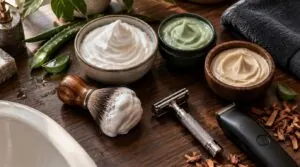
The right shaving cream makes every pass of the razor feel easier. You’ll want to match it to your skin type, your beard’s texture, and the kind of edging you plan to do. Here are three simple ways to narrow down your options!
If your beard is coarse or your skin runs sensitive, this guide to the best shaving creams for beards can help you pick a formula that softens hair and cuts down on razor burn.
Matching Cream to Your Skin Type
You’ll get a smoother shave when your shaving cream matches your skin type. Smart shaving product selection is the heart of good beard care, and it keeps skin irritation low.
- Oily: pick oil-free, non-comedogenic cream.
- Dry: look for glycerin, shea butter, or aloe.
- Sensitive: choose fragrance-free, antiirritation formula.
- Acne-prone: avoid heavy oils and lanolin.
Choosing Cream for Coarse Beard Hair
Coarse hair needs a cream that builds a thick, cushiony lather. Thin foam collapses fast, and your razor will tug.
Look for glycerin to pull in moisture, plus shea butter or coconut oil for slip. If you can, add a pre-shave cream first and let it sit for a minute. Use a brush to whip up a dense, creamy lather. Reapply between passes. These shaving tips protect your skin! Applying a pre-shave oil or glycerin cream and waiting 30–90 seconds adds glide and cushion under your lather.
Shaving Cream Versus Gel for Edging
Cream builds a great cushion, but it hides your blade. For crisp edges, try shaving gel instead. It goes on clear, so you can see your lines.
If you’re using an electric shaver, a step-by-step guide to getting a close shave with an electric shaver shows how prep products affect your results.
Here’s why gel wins for edging:
- Clear blade visibility lets you see every stroke.
- It spreads thin, so the blade sits closer to your skin.
- It rinses off your razor easily.
Work fast, though. Gel dries quickly!
Prepare Your Beard Before Applying Shaving Cream

Once you’ve picked your cream, good shaving preparation sets you up for a smoother result. Skip it, and even the best cream can’t save you! Treat this as the first of your shaving steps in any beard grooming routine.
Start by washing your face with warm water to clear away oil and debris. Then gently exfoliate with a boar bristle brush, which also lifts flat-lying hairs. Next, wet your skin and beard for two to three minutes so the hair softens fully.
| Step | Why It Helps |
|---|---|
| Cleanse | Clears oil and debris |
| Brush | Lifts hairs, removes dead cells |
| Soak | Softens hair for easier cutting |
| Oil | Reduces friction and nicks |
Take your time here, because rushed prep is where most irritation begins.
A warm towel, a few minutes of pre-shave oil, and a proper lather all soften the hair first, and these wet shaving preparation methods explain exactly how to set up your skin.
Apply Shaving Cream for Smooth Razor Glide
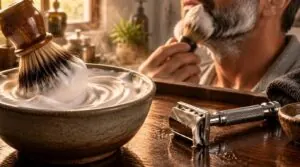
Dampen your badger brush, then load it with a small scoop of shaving cream. Whip it into a thick, dense lather in a bowl or your palm. Air bubbles cause drag, so keep working until the foam looks smooth and creamy.
Follow these steps for better razor glide:
- Keep your skin damp, not dripping.
- Brush the lather on in circles to lift hairs.
- Cover the whole area with a thick, even layer.
- Smear a thin film of cream on your blade.
- Reapply cream between passes if the lather breaks down.
Don’t skip the blade step! A dry blade pulls hairs instead of cutting them cleanly. Solid shaving technique plus slick lather turns your beard grooming into a truly smooth shave.
A sharp blade matters as much as lather, so keep fresh safety razor replacement blades on hand and swap them every few shaves.
Shave and Shape Your Beard Without Irritation
Your cream is on, and now it’s time to put the razor to work! A clean shave comes down to two things: the right direction and sharp, tidy edges. Here’s how to handle both so your skin stays calm and your beard looks sharp.
Shaving With Your Beard’s Growth Direction
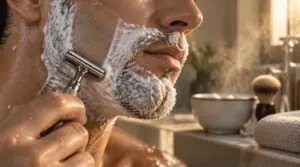
Your hair growth direction shifts across your face, so map it first. Feel where stubble lies flat.
Now shave with the grain, using your shaving cream for glide. Short, light strokes mean a truly smooth shave with far less irritation.
| Area | Typical Direction | Tip |
|---|---|---|
| Cheeks | Downward | Light strokes |
| Chin | Swirls | Short passes |
| Jaw | Forward | Follow flow |
| Neck | Upward | Stretch skin |
Defining Cheek and Neck Lines
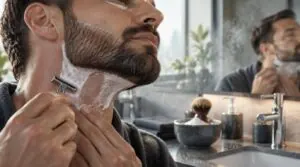
Picture a crisp frame around a portrait: that’s what clean lines do for your beard.
Set your neck line two finger-widths above your Adam’s apple. Curve your cheek line from sideburn to mustache corner, below natural growth. Hold the razor at 30 degrees over fresh shaving cream, stretch your skin, and use short strokes. Check symmetry in bright light for a smooth shave without irritation.
Moisturize Your Beard and Skin After Shaving

Picture your cheeks right after the razor pass: warm, a little tight, and slightly pink, like a sunburn in miniature. That’s your cue to act fast!
Right after the razor pass, your cheeks feel warm, tight, and slightly pink, like a tiny sunburn, so act fast
Pat your face with cool water, leaving it damp. Then smooth on your postshave moisturizer while the skin can still soak it up. Massage a small amount over your cheek and neck lines, and work a little into your beard too. This simple shaving aftercare step seals in skin hydration and calms the sting.
Here’s what to look for:
- Alcohol-free aftershave balm for soothing
- Fragrance-free formulas for sensitive skin
- Squalane or saccharide isomerate for lasting moisture
- Aloe, chamomile, or vitamin E to ease redness
- Lightweight gel balms if you break out easily
Your skin stays vulnerable for up to 72 hours, so keep moisturizing daily.
Frequently Asked Questions (FAQs)
What is the 3 month beard rule?
Think of your beard like a garden: you can’t judge it after one week. The three month rule means you let it grow untouched for about three months, counting from your last shave, before you decide.
What is the best shaving cream for beard?
You’d think there’s a million shaving creams out there, and there nearly is! Pick a non-comedogenic formula that matches your skin. For skin irritation prevention, try Sandalwood Shaving Cream. Heavy SHAVE CREAMS cushion coarse hair best.
What should I moisturize my beard with?
Does oil alone hydrate? No. It seals water in but adds none.
After shaving cream, pat on a lightweight jojoba moisturizer, then seal with oil. Skip fragranced aftershave; it undermines skin care and invites irritation.
What should I put on my beard after shaving?
Apply product within 5 minutes of rinsing, while skin’s damp. For postshave care, pat dry, then use an alcohol-free aftershave balm or moisturizer.
Got length? Add 3–5 drops of beard oil. Skip fragrance and alcohol!
Can shaving cream impact beard growth rate?
The idea that shaving cream speeds up growth is a myth. Follicles sit beneath your skin, so the cream can’t reach them. Dermatology research agrees.
Exfoliate gently, avoid irritation, and use moisturizer for fuller-looking hair.
Does shaving cream expire or lose effectiveness?
Think a can that looks fine can’t have gone bad? Think again. Yes, shaving cream expires. Most last 12 to 36 months, and the PAO symbol shows usable months once opened. Toss it if it smells off.
Are there vegan shaving cream options for beard care?
A friend ditched canned foam and his face thanked him! Vegan shaving cream is easy to find.
Pacific Shaving Company and MÜHLE use natural shaving ingredients, skipping tallow and other irritants in your personal grooming.
How does water hardness affect shaving cream performance?
Hard water fights your shaving cream. Calcium and magnesium bind to soap, so your lather collapses fast. Use warm water, not cold water, and pick a gentle, glycerin-rich shaving product to calm your shaving sensitivity.
What’s the shelf life of opened shaving cream?
Opened shaving cream lasts 6 to 12 months in a tube or tub, and 2 to 3 years in an aerosol can. Check the open-jar symbol for your exact timeline.
How often should I replace my razor blade?
Think a blade lasts forever? It doesn’t! Do razor blade replacement after five to seven shaves, or when it tugs.
Rinse off shaving cream and dry it. Smart razor maintenance really stretches razor blade lifespan.
Conclusion
Picture Marcus, who used to dread Monday mornings because every shave left his neck raw. Then he switched creams, soaked his beard first, and followed his hair’s grain. Two weeks later, the redness was gone.
Your turn is coming. The right shaving cream for beard care, a warm prep, and steady strokes make smooth, comfortable shaves the new normal. Finish with moisturizer, trust your hands, and take back control of your face. You’ve got this!