
This site is supported by our readers. We may earn a commission, at no cost to you, if you purchase through links.

Few grooming rituals spark debate like the choice between hot or cold water before a shave. Step into any barbershop, and you’ll hear stories—some swear by a steaming towel, others praise the bracing chill of a cold rinse.
The truth is, your skin’s response hinges on more than comfort; water temperature can shape everything from blade glide to inflammation. If you’ve ever noticed your skin feeling tight and dry after a hot shave, or struggled with razor burn after a cold splash, you’re not alone.
Understanding how water temperature interacts with your skin’s unique needs can turn a daily routine into a science-backed ritual.
Table Of Contents
- Key Takeaways
- Should You Shave With Hot or Cold Water?
- How Water Temperature Affects Shaving Results
- Benefits of Shaving With Cold Water
- Benefits of Shaving With Hot Water
- Drawbacks of Hot Water Shaving
- Drawbacks of Cold Water Shaving
- Choosing Water Temperature for Your Skin Type
- Shaving Techniques for Hot and Cold Water
- Expert Opinions on Shaving Water Temperature
- Frequently Asked Questions (FAQs)
- Conclusion
Key Takeaways
- Water temperature affects shaving outcomes through three primary mechanisms: hair softening (warm water hydrates keratin fibers and reduces cutting resistance by approximately 65%), skin barrier integrity (hot water above 100°F increases transepidermal water loss by nearly 70% and raises irritation risk, while cold water preserves lipids and reduces inflammation by 15–20%), and blade efficiency (warm water improves glide and can reduce pass count by 25%, though cold water minimizes post-shave redness and pore congestion).
- Your optimal water temperature depends entirely on your skin type and shaving goals: sensitive or acne-prone skin responds best to lukewarm water (85–100°F) with cold rinses to prevent barrier disruption and sebum rebound, oily skin benefits from warmer cleansing temperatures (105–110°F) for effective sebum removal, while dry or combination skin requires careful zone-specific temperature control (95–100°F) with immediate moisturization to prevent lipid stripping.
- Hot water shaving delivers a closer shave and beard-softening benefits but carries significant drawbacks, including increased dryness, compromised skin barrier function, elevated acne and folliculitis risk (particularly above 120°F), and potential for thermal burns—making proper temperature control (ideally 100–110°F for 60–90 seconds) and post-shave hydration essential for minimizing adverse effects.
- Cold water shaving offers distinct advantages, including reduced inflammation and razor burn, time efficiency (eliminating 8–12 minutes of preparation), immediate alertness from dopamine and norepinephrine surges, and lower risk of bacterial contamination, though it increases hair rigidity and razor resistance, potentially requiring multiple passes and sharper blade maintenance to achieve comparable closeness without tugging or irritation.
Should You Shave With Hot or Cold Water?
How do you decide between hot and cold water when you’re standing at the sink with a razor in hand? The answer isn’t one-size-fits-all. Survey data from wet-shaving communities show that about 70–80% of people prefer warm or hot water, leaving 20–30% who’ve adopted cold-water shaving routines. Each approach affects your skin differently, and temperature myths often overshadow what actually works for your individual needs.
Water temperature and shaving are linked to how your hair responds, how your skin reacts, and even blade longevity. Whether you’re drawn to the benefits of cold water shaving or the softer beard that hot water provides, understanding the trade-offs helps you tailor your routine.
Factors like water hardness, shaving frequency, and even water conservation can influence your choice, making this decision more nuanced than you might expect. Some historical texts even advocate for cold water shaving, citing its efficiency.
How Water Temperature Affects Shaving Results
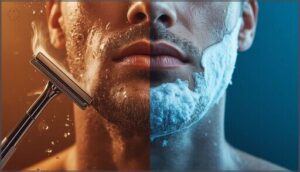
Water temperature isn’t just a matter of personal preference—it directly influences how your skin reacts to the razor and how cleanly your beard cuts. The temperature you choose affects everything from hair stiffness to pore behavior, which in turn shapes your overall shaving outcome.
Here’s how water temperature impacts three key aspects of your shave.
Hair Softening and Follicle Opening
When you soak your beard, hair hydration rates climb quickly—within just a few minutes, even at room temperature. This softens keratin fibers and lowers cutting stress, making each stroke easier. Here’s what matters most:
- Warm-water soaks increase follicle pliability
- Beard softening reduces razor effort
- Cold water keeps whiskers stiff
- Hot water accelerates cuticle hydration
Water penetration softens hair, as keratin softens considerably.
Skin Irritation and Sensitivity
Once your beard is softened, water temperature shapes how your skin responds. Hot water can double your risk of razor burn and redness, especially if you have sensitive skin or product sensitivity.
Cooler water helps with redness reduction and can lower the chances of ingrown hairs. If avoiding skin irritation matters to you, pay close attention—skin health and shaving go hand in hand.
Razor Glide and Efficiency
If you’re chasing a smooth shave, water temperature matters for blade sharpness and pass reduction. Warm water boosts lubrication importance and lets your razor blade glide easily, often reducing strokes. With cold water, shaving angle and razor maintenance become essential—less softening means more resistance. Your shaving routine and techniques should always balance comfort, safety, and efficiency.
- Enhances blade glide
- Reduces razor passes
- Highlights shaving safety and precautions
Benefits of Shaving With Cold Water
If you’ve ever wondered what cold water can do for your shave, you’re not alone. Switching up your routine brings more than just a change in temperature. Here’s what you can expect when you reach for the cold tap.
Reduced Skin Irritation and Inflammation
Ever noticed how cold water feels soothing after a shave? That’s not just comfort—it’s science at work. Cooler rinses calm Inflammation Mechanisms, lower Erythema Reduction, and limit TEWL Impact, making post-shave redness and Razor Burns less likely. Sensitive Skin and AcneProne Skin both benefit from reduced Vascular Responses, helping you avoid irritation, ingrown hair, and lingering discomfort.
| Skin Type | Hot Water Effect | Cold Water Benefit |
|---|---|---|
| Sensitive Skin | More irritation | Calms redness |
| AcneProne Skin | Triggers flare | Soothes bumps |
| Dry Skin | Dries barrier | Locks moisture |
Tighter Pores and Fewer Breakouts
Although cold water won’t shrink pores permanently, it does prompt a temporary Pore Size Reduction and helps with Sebum Production Control—especially for Acne-Prone Skin. If you’re searching for Breakout Reduction Methods, try these Cold Water Shaving Benefits:
- Minimize visible pore size
- Calm skin irritation
- Limit excess oil
- Support Acne Prevention Tips with gentler cleansing
Time and Convenience Advantages
Beyond skin benefits, cold water shaving can trim 8–12 minutes from your morning routine by eliminating hot water wait time and simplifying preparation steps. You’ll skip the 2–4 minute warm-up at the tap and cut multi-step hot-towel rituals, creating efficient routines even in limited resources like travel or dorm settings. That immediacy makes timesaving shaving techniques surprisingly practical for busy schedules.
Refreshing and Invigorating Sensation
Cold water shaving delivers an unmistakable physiological wake-up response that transforms your morning routine. When you splash 10–15°C water on your face, you trigger an immediate mental energy surge—dopamine jumps 250% and norepinephrine climbs 530%, sharpening focus before your day begins.
This cold water shave experience offers distinct benefits:
- Enhanced circulation floods skin with oxygenated blood
- Sensory skin tightening creates a firmer, refreshed texture
- Perceptual refreshment reduces anxiety within seconds
- Invigorating sensation outperforms warm methods for alertness
Benefits of Shaving With Hot Water

Hot water shaving has remained the go-to method for most men, and there are solid physiological reasons behind this preference. When you use warm water on your face before and during shaving, several beneficial processes occur that can improve your results.
Let’s examine the three main advantages that make hot water shaving worth considering for your routine.
Softer Beard and Easier Shaving
Hot water transforms facial hair through keratin softening and hair hydration, making your beard noticeably easier to cut. When you soak whiskers for about 2 minutes in warm water—ideally between 100–110°F—the fibers absorb moisture and require roughly 65% less razor resistance than dry hair.
This thermal effect reduces tugging, letting your blade glide smoothly whether you’re using shaving cream or not.
Closer Shave Potential
Warm water can deliver a genuinely closer shave by maximizing blade glide and follicle exposure. When you keep temperatures around 100–110°F, you reduce the pass count needed to reach skin-level stubble—sometimes by 25% on dense beards—while maintaining ideal skin tension for the razor blade to approach hair exit points without tissue interference.
- Hydrated hair cuts with 30% less force, minimizing tug and uneven patches
- Smoother lather lubrication allows efficient shaving techniques across coarse areas
- Reduced dermal swelling at moderate warmth keeps follicles exposed for a smooth shave
Relaxation and Therapeutic Effects
Shaving with hot water does more than soften your beard—it can actively calm your nervous system. Warm water around 100–110°F lowers heart rate by roughly 15%, while dilated blood vessels ease muscle tension and reduce inflammation.
That gentle heat may even improve sleep quality and mood, offering stress reduction that turns your morning routine into a therapeutic pause rather than a chore.
Drawbacks of Hot Water Shaving

While hot water offers clear benefits for shaving, it’s not without its downsides. Your skin pays a price when temperatures climb too high, and the effects aren’t always obvious right away.
Here’s what you need to watch out for when you rely on hot water for your shave.
Increased Skin Dryness
When you use hot water for shaving, you’re actually increasing transepidermal water loss—research shows hot water can raise TEWL by nearly 70 percent compared to cold water. That barrier damage leads to dry skin, especially if you shave daily or take hot showers without immediately applying moisturizer.
Over time, frequent hot-water cleansing strips away protective lipids, leaving your face tight and parched.
Higher Risk of Irritation and Acne
Beyond dryness, you’ll face a heightened risk of irritation and acne when shaving with hot water. Studies show that 68% of people with sensitive skin experience more irritation above 100°F, while temperatures over 120°F greatly worsen razor burns and ingrown hair. Hot water temporarily enlarges pores, letting shaving debris and bacteria slip inside. That compromised skin barrier becomes a breeding ground for folliculitis—particularly concerning since hot tubs harbor Pseudomonas aeruginosa in 67% of cases. Oil stripping triggers your glands to overproduce sebum, clogging those expanded pores and sparking breakouts. If you’re prone to acne aggravation or have sensitive skin, hot-water prep can spread bacteria through microtrauma, worsening inflammation and redness.
Key irritation and acne risks from hot water shaving:
- Skin barrier disruption raises transepidermal water loss and pH, weakening your defenses
- Pore effects trap debris and bacteria, forming blackheads and inflamed pimples
- Irritation prevalence spikes in middle-aged shavers and those with reactive skin
- Folliculitis association increases as hot conditions help bacteria invade follicles
- Acne aggravation stems from compensatory oil production and bacterial spread
Possibility of Burns or Overheating
Hot water poses real burn risks that go beyond razor burn. Water at 140°F can scald your facial skin in roughly five seconds, while even 120°F exposure over ten minutes causes first-degree burns.
Your face is especially vulnerable—temps above 110°F trigger irritation and burning sensations during shaving.
Chronic heat exposure damages your skin barrier progressively, raising transepidermal water loss and leaving you prone to long-term sensitivity.
Drawbacks of Cold Water Shaving
While cold water shaving offers several advantages, it’s not the perfect solution for everyone. The same properties that tighten pores and reduce inflammation can also create challenges during the shaving process itself.
Here are the main drawbacks you should consider before switching to cold water exclusively.
Tougher Beard and Increased Razor Resistance
Cold water keeps your whiskers firmer and less pliable, increasing Hair Rigidity. When your Blade Angle meets stiffer hair, you’ll feel more Shaving Pressure and drag with each stroke.
This tougher resistance accelerates Blade Dullness, forcing you to press harder or make additional passes—both of which raise your risk of Razor Burn, especially if you’re shaving dense growth without proper preparation.
Potential for Less Comfortable Shave
Although cold water shaving can feel invigorating, you may notice increased tugging and a need for multiple passes, especially if your stubble is dense. Numbness and reduced feedback can make it harder to judge blade pressure, and the overall shaving experience often feels less relaxing. These factors can reduce comfort, particularly if your skin is sensitive to irritation.
- Increased Tugging on coarse hair
- Multiple Passes for closeness
- Numbness and Reduced Feedback
- Less Relaxing overall shaving experience
Hidden Disadvantages for Some Skin Types
If your skin is sensitive or atopic, cold water shaving can quietly worsen issues like razor burn or persistent dryness. For rosacea, abrupt temperature shifts may trigger visible redness.
Those with PFB concerns or acne-prone skin might see more irritation or breakouts. Sensory thresholds vary—what feels invigorating for one skin type could aggravate discomfort or prolong recovery for another.
Choosing Water Temperature for Your Skin Type

Finding the right water temperature for shaving really comes down to your skin’s unique needs. What works for one person won’t always suit another.
The best water temperature for shaving depends entirely on your skin’s unique needs and personal comfort
Here’s how different skin types respond to hot and cold water during shaving.
Sensitive or Acne-Prone Skin
Ever notice how your face feels after a shave? Sensitive or acne-prone skin thrives with lukewarm water benefits—think 85–95°F—softening hair without barrier disruption or triggering the sebum rebound effect.
For better shaving and skin health:
- Limit warm exposure to 20–30 seconds.
- Use gentle razors to reduce skin irritation.
- Try post-shave cooling for fewer razor burns.
Oily Skin Considerations
If you’ve battled post-shave shine or stubborn pore congestion, your skin type likely craves a smarter approach. Oily skin responds best to a cleansing temperature near 105–110°F—warm enough for effective sebum emulsification and removal of lipid residues.
Cold water shaving, while invigorating, won’t clear excess oil as thoroughly, so save it for a finishing touch rather than your main prep.
Dry or Combination Skin
Think of your face as a patchwork quilt—each zone demands its own care. For dry or combination skin, Hydration Importance and Lipid Preservation matter most. Stick to a Temperature Range of 95–100°F, and adjust for Zone Preparation:
- Short, warm-water prep
- Immediate Moisturizing Regimen
- Cooler water for drier areas
- Avoid prolonged hot water to limit skin irritation
Shaving Techniques for Hot and Cold Water
No matter which water temperature you prefer, your shaving technique can make all the difference. The right steps help you get a smoother, safer shave and healthier skin. Here’s what you’ll want to keep in mind as you go.
Proper Skin Preparation

Whether you prefer warm or chilly water, proper skin preparation for shaving can dramatically reduce irritation and improve your shaving routine. Start by cleansing your face with lukewarm water around 90–98°F to remove oils and debris without disrupting your skin barrier.
Pre-shave exfoliation one to three times weekly helps lift hairs and clear follicles.
For hydration importance, apply products after warming your skin—showering timing and towel usage matter, as moisturizing beard hair for 2–3 minutes softens stubble considerably.
Blade Selection and Maintenance
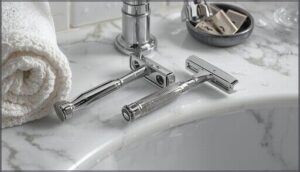
Once your skin is prepared, blade sharpness becomes your most important shaving tool. Studies show that razor blades operating around 50 grams of cutting force cause noticeable pulling and irritation, while extremely sharp blades in the low 30-gram range can nick sensitive skin.
For replacement frequency, change disposable razors after 5–7 shaves and safety razor blades after 5–10 uses. Store your razor in a dry location outside the shower—moisture retention accelerates corrosion and mineral buildup that degrades performance.
Single-blade safety razors consistently produce less post-shave redness than multi-blade cartridges, which tend to cut hair below the skin surface and increase ingrown hair risk. Rinse your blade thoroughly after each shaving session, and replace it when you notice tugging or skipping during your shave.
Shaving With or Against The Grain
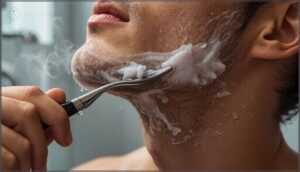
After you’ve selected a sharp blade, hair direction becomes your most important decision. A 2019 review on razor bumps confirmed that shaving against the grain greatly increases inflammatory papules, especially in curly hair types.
Dermatologists consistently recommend shaving with the grain to reduce ingrown hairs and razor burns. For extra closeness, re-lather and shave across the grain before attempting any against-the-grain passes.
Post-Shave Care Tips
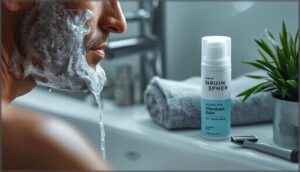
Once you’ve finished shaving, rinse thoroughly with cold water to calm inflammation—a 2022 study found this reduced redness by 15–20%. Pat your face dry, then apply an alcohol-free aftershave balm or moisturizer to restore hydration and prevent irritation.
Replace blades every 5–7 shaves for hygiene and healthy skin, and store your razor in a dry spot to minimize bacterial growth.
Expert Opinions on Shaving Water Temperature

In choosing the right water temperature for shaving, professionals from different fields offer valuable perspectives based on their expertise and experience. Dermatologists focus on how water temperature affects skin health, while barbers and grooming specialists prioritize technique and results.
Historical practices also reveal how shaving traditions have evolved across cultures and time periods.
Dermatologist Recommendations
Dermatologists recommend warm water temperature guidelines between 95–110°F, adjusted for skin sensitivity and age. Here’s what matters most for irritation reduction and skin care:
- Warm water for 60–90 seconds softens beard hair, reducing blade passes by 25% on coarse growth.
- Sensitive skin thrives at 95–100°F, preserving your moisture barrier without stripping natural oils.
- Cold rinses post-shave calm inflammation in 90% of reactive skin cases.
- Seniors need cooler temps (90–98°F) to minimize nicks on thinner skin.
- Post-shave care with hydrocortisone soothes heat-induced razor burn effectively.
Barber and Grooming Expert Insights
Professional barbers blend traditional practices with modern grooming techniques, applying hot towels for 1–3 minutes to boost client comfort and soften hydrated keratin in your beard. While warm-water prep cuts blade passes by roughly 25%, many experts now recommend cool rinses afterward to minimize post-shave irritation and lipid loss. Testing different temperatures across several shaves helps you pinpoint your skin’s sweet spot.
Historical and Cultural Practices
Throughout history, grooming routines have shaped your understanding of water temperature’s role in shaving. Ancient civilizations like Egypt and Rome used heated water as a status symbol, while military grooming standards forced soldiers to shave with whatever was available—often ice-cold streams.
Consider these historical grooming practices:
- Elite Roman citizens combined thermae visits with warm-water shaves in the 1st century BCE
- World War I soldiers maintained hygiene using cold water in front-line trenches
- 19th-century debates framed cold shaving as efficient and hot water as an unnecessary luxury
- Modern wet-shaving revivals draw from both barbershop traditions and historical techniques
These patterns reveal how your routine connects to centuries of evolving grooming wisdom.
Frequently Asked Questions (FAQs)
Does water hardness affect shaving results or comfort?
Water hardness directly impacts shaving comfort and results. Mineral-rich water increases skin irritation, weakens lather and glide, and can trigger acne and bumps. Geographic variation means your shaving routine may need mitigation strategies to protect skin health.
Can cold water shaving help with razor bumps?
Shaving with cold water benefits those prone to razor bumps by reducing irritation, preserving your skin barrier, and calming post-shave inflammation. This practical approach lessens ingrown hair risk and promotes healthier skin—especially if you struggle with shaving-related irritation.
Is cold water shaving suitable for electric razors?
Cold water shaving works with Wet/Dry Razors, provided you follow cleaning methods and allow extra drying to prevent corrosion risks.
Shaving efficiency may drop slightly, but for skin sensitivity, cold water remains a safe facial hair removal method.
How does water temperature impact shaving cream performance?
Like a chef coaxing eggs into stiff peaks, warmer water boosts surfactant solubility and initial foam volume, yet cold water preserves lather viscosity, preventing rapid drainage—so your shaving cream’s stability hinges on balancing temperature with polymer-enhanced formulations.
Are there seasonal considerations for water temperature when shaving?
Yes, seasonal adjustments matter. Winter dryness favors lukewarm-to-cool water for barrier preservation, while summer vasodilation calls for cooler rinses to calm heat-stressed skin and minimize post-shave inflammation in your shaving routine.
Conclusion
Think of water temperature as a dial, not a switch—your skin’s response shifts with each degree. Whether you shave with hot or cold water ultimately depends on your skin type, tolerance, and what you’re optimizing for: comfort, closeness, or resilience.
Test both approaches, observe how your skin reacts, and adjust accordingly. The best shave isn’t about following tradition; it’s about listening to what your skin tells you after each pass of the blade.
- https://www.getjackblack.com/blog/post/2023/04/07/more-blades-do-not-equal-a-closer-shave
- https://atwar.blogs.nytimes.com/2010/01/28/shave-every-day-shower-every-two-months/?hp
- https://www.artofmanliness.com/style/shaving/cold-water-shaving/
- https://sharpologist.com/water-temperature-vs-age-for-wet-shaving/
- https://blog.fendrihan.com/2013/06/cold-water-shaving-pros-and-cons/