This site is supported by our readers. We may earn a commission, at no cost to you, if you purchase through links.
You can’t reverse time, but you can stop your hair from acting like it’s aging faster than you are. When your hair suddenly sheds more than usual, thins at the crown, or feels brittle despite your best efforts, damaged hair follicles are likely the culprit.
These tiny structures beneath your scalp don’t just hold your hair in place—they’re the command center for growth, strength, and texture. Once they’re compromised by poor nutrition, harsh styling, or hormonal shifts, the effects show up fast.
Recognizing the warning signs early gives you the power to intervene before temporary shedding turns into lasting loss.
Table Of Contents
Key Takeaways
- Your hair follicles control growth speed, strand thickness, and whether thinning areas can regrow—weak follicles mean slower growth and increased shedding over time.
- Early warning signs include finding clumps of hair in the shower, noticing your scalp showing through in bright light, or feeling texture changes like sudden brittleness or frizz that won’t smooth down.
- Poor nutrition, hormonal shifts, chronic stress, and overuse of heat tools or chemical treatments directly damage follicles and trigger visible hair loss.
- You can reverse follicle damage by eating protein-rich foods, reducing heat styling, massaging your scalp to boost circulation, and seeking professional treatments like medicated shampoos or prescription topicals when home care isn’t enough.
What Are Hair Follicles?
Hair follicles are the small, tube-like structures beneath your skin where each strand of hair begins its life. They’re not just simple holes in your scalp—they’re complex systems that feed your hair, control its color and texture, and determine whether it grows or falls out.
These follicles also influence how your hair responds to treatments like henna, which is why understanding how long to leave henna on hair depends partly on your individual follicle structure and porosity.
Understanding how follicles work helps you spot the early warning signs when something goes wrong.
Structure and Function of Hair Follicles
Think of a hair follicle as a tiny pocket in your skin—shaped like a tube sock—where each strand of hair lives and grows. Understanding the hair follicle biology is essential for maintaining healthy hair.
At the base sits the bulb, where keratin production happens and cells multiply. Blood vessels feed the root, while the sebaceous gland releases oil to keep your hair moisturized.
If you notice your hair takes forever to dry, that’s often a sign of high porosity where moisture gets trapped inside the strands.
Stem cells in the bulge area enable follicle regeneration when damage occurs.
Role in Hair Growth and Health
Your follicles don’t just hold hair in place—they actively control how fast it grows, when it falls out, and whether it comes back at all. The health of your hair growth process is vital for maintaining strong and vibrant hair.
Each follicle moves through growth cycles that determine hair thickness and follicle health. When scalp nutrition reaches the root, hair regeneration happens naturally.
Your follicles control:
- How quickly new strands push through your scalp
- When hair enters its resting phase before shedding
- Whether thinning areas can support hair regrowth
- The diameter and strength of each strand
- How well your scalp reacts to damage or stress
Weak follicles mean slower hair growth and increased hair loss over time.
Causes of Damaged Hair Follicles

Your hair follicles don’t just break down on their own. Several factors can weaken or damage them over time, and most are more preventable than you might think.
Hair follicles don’t damage themselves—most harm comes from preventable factors you can control
Let’s look at the main culprits behind follicle damage.
Nutritional Deficiencies
A diet lacking protein, iron, zinc, and essential vitamins won’t just leave you feeling drained—it’ll starve your follicles from the inside out. Without adequate hair nutrition, your strands can’t build the keratin they need.
Iron insufficiency slows growth, while zinc deficiency triggers shedding. Mineral imbalance and vitamin deficit weaken the follicle’s foundation, leading to damaged hair that breaks easily and struggles to thrive.
If you notice persistent scalp odor alongside thinning hair, understanding why your hair smells like wet dog can help you pinpoint whether it’s a nutrient issue or something else.
Hormonal and Genetic Factors
Sometimes the damage runs deeper than what you eat—hormonal shifts and your genetic blueprint can quietly sabotage follicles no matter how well you fuel your body. Hormone imbalance from thyroid issues or menopause effects can trigger hair loss, while genetic predisposition sets the stage for androgenetic alopecia.
Androgen sensitivity weakens hair follicles over time, stunting hair growth before you notice what’s slipping away.
A dermatologist can also recommend aftershave balms for acne-prone skin that won’t clog pores or aggravate inflammation while you address underlying hair loss concerns.
- Thyroid issues disrupt the cycle, causing shedding
- Menopause effects thin hair through estrogen decline
- Androgenetic alopecia follows your family’s pattern
- Androgen sensitivity shrinks follicles gradually
- Hormone imbalance affects texture and strength
Environmental and Lifestyle Triggers
Your scalp doesn’t live in a bubble—pollution, stress, and daily habits chip away at follicles faster than you think.
Air pollution clogs follicles with toxins, while poor water quality strips protective oils.
Chronic stress disrupts growth cycles, and irregular sleep patterns weaken hair follicle health.
A poor diet balance accelerates hair breakage and hair loss, turning damaged hair follicles into visible hair damage you can’t ignore.
Overuse of Hair Products and Styling
Heat tools, chemical treatments, and sticky styling products pile up on your scalp like layers of grime—and your follicles pay the price. Constant heat styling risks weaken roots, while chemical overload strips natural protection.
Product buildup effects clog openings, trapping oils and debris. This hair product abuse creates a perfect storm—damaged hair follicles struggle under styling tool damage, leading to visible hair breakage you can’t hide.
Early Signs of Damaged Hair Follicles
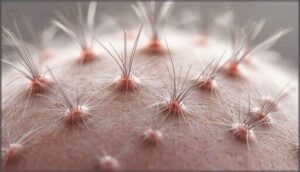
Your hair follicles don’t usually send up warning flares when something’s wrong. Instead, they give you quiet signals that are easy to miss if you’re not paying attention.
Here are the earliest signs that your follicles need help before the damage gets worse.
Increased Hair Shedding
If you’re finding more hair than usual on your pillow, in the shower drain, or wrapped around your brush, your follicles might be waving a red flag. Normal hair shedding sits around 50-100 strands daily.
Here’s what excessive hair loss patterns look like:
- Clumps coming out when you shampoo
- Visible strands covering your shoulders
- Your ponytail feeling noticeably thinner
- Bald patches appearing on your scalp
- Hair coating your hairbrush after one use
Damaged hair follicles disrupt your hair growth cycle, pushing more strands into the shedding phase too early. This isn’t just about vanity—it’s your body signaling that follicle health needs attention. Scalp conditions, nutritional gaps, or harsh styling can trigger this cascade. The good news? Catching increased hair shedding early gives you the upper hand in shedding prevention and protecting your hair growth before damage becomes permanent.
Noticeable Hair Thinning
When your part starts widening or your scalp shows through in bright lighting, damaged follicles are shrinking the diameter of each hair strand they produce. This miniaturization weakens follicle health and triggers progressive hair thinning you can’t ignore.
| Thinning Location | Possible Cause |
|---|---|
| Crown and temples | Hormonal hair loss patterns |
| Hairline edges | Traction alopecia from tight styles |
| Overall scalp | Nutritional deficits affecting follicles |
| Patchy areas | Scalp conditions or inflammation |
Damaged hair follicles struggle with hair regrowth, making thinning causes critical to identify early.
Changes in Hair Texture
Hair that once had bounce and body can turn limp, brittle, or coarse when hair follicles lose their ability to produce healthy keratin. You’ll notice changes in curl patterns, increased frizz that won’t smooth down, or sudden shifts in hair porosity affecting how products absorb.
Damaged hair follicles disrupt normal texture analysis, leaving strands that snap easily during elasticity tests—clear signs your hair damage needs immediate attention for proper hair growth restoration.
Visible Symptoms on The Scalp and Hair
Some changes on your scalp and hair are easier to spot than others.
These visible symptoms can give you important clues about what’s happening under the surface.
Here’s what to look out for next.
Redness, Irritation, or Bumps
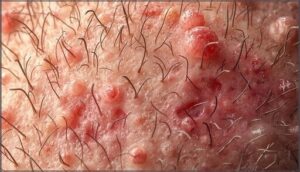
Small red bumps or patches of irritation on your scalp often signal that your hair follicles are inflamed or infected. This condition, called folliculitis, happens when bacteria or fungi get trapped in your follicles.
You might notice:
- Tender scalp sores that hurt when touched
- Small pus-filled bumps around hair roots
- Itching that worsens throughout the day
- Clusters of redness in specific areas
Follicle inflammation needs prompt attention to prevent lasting damage.
Dry, Flaky, or Oily Scalp
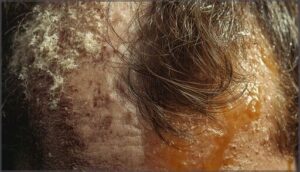
Your scalp’s oil production tells you a lot about what’s happening beneath the surface—when follicles can’t regulate sebum properly, you’ll see either a desert of flakes or a greasy buildup that won’t quit.
Damaged hair follicles disrupt scalp balance, causing dryness or excess oiliness. You might notice white flakes dusting your shoulders or roots turning slick hours after washing. These scalp conditions reveal follicle distress that needs correction.
Premature Graying
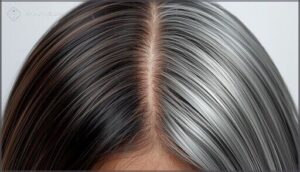
While most people don’t expect silver strands before their thirties, damaged follicles can cut pigment production short and turn your hair gray years ahead of schedule. When follicle health declines, pigment cells stop working properly, leaving strands colorless. Vitamin deficiency, chronic stress, and hair damage all accelerate graying causes beyond normal aging factors.
Watch for these early warning signs of premature graying:
- Gray patches appearing at your temples or crown before age 30
- Sudden increases in silver strands over just a few months
- Complete loss of hair pigmentation in isolated sections
- Gray regrowth showing darker roots (indicating follicle recovery)
- Brittle texture accompanying new gray hair growth
How Damaged Follicles Affect Hair Health
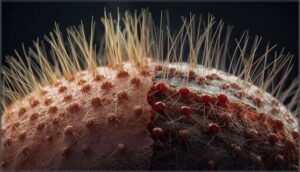
When your follicles aren’t working right, the damage shows up in ways you can see and feel. Your hair becomes fragile, grows slower than it should, and may start falling out in uneven patches.
Here’s what happens when follicles can’t do their job properly.
Breakage and Split Ends
Damaged follicles can’t deliver the proteins and moisture your hair needs, so strands become weak and prone to snapping. You’ll see hair fracture midway down the shaft, creating frizzy hair that won’t behave. Split ends are one of the most visible signs—those frayed tips signal your damaged hair follicles aren’t doing their job.
| Sign | What You’ll See | Why It Happens |
|---|---|---|
| Hair breakage | Short broken pieces on your pillow | Follicles can’t supply keratin |
| Dry ends | Rough, straw-like texture | Oil glands aren’t working properly |
| Split ends | Forked or frayed tips | Hair damage from weak follicle support |
Slowed or Stunted Hair Growth
If you’ve been waiting months for your hair to reach your shoulders and it’s barely budged, your follicles might be stuck in a rut. Damaged hair follicles disrupt the hair growth cycle, keeping strands in a resting phase instead of actively growing.
Here’s what slows your hair growth and regrowth:
- Blocked follicles trap debris and oil, preventing hair regeneration
- Poor blood flow starves follicles of growth factors they need
- Inflammation interrupts the normal hair cycle rhythm
- Nutrient deficiencies leave follicles unable to produce healthy strands
- Scarring from severe follicle health damage stops growth permanently
Regular scalp stimulation through massage can wake up sluggish follicles. You might notice your hair stays the same length for months, or grows unevenly across your scalp. This isn’t normal shedding—it’s a sign your follicles need repair before hair loss and thinning become permanent.
Patchy Hair Loss Areas
Bald spots that appear out of nowhere can shake your confidence faster than anything else. When damaged hair follicles can’t support hair growth and regeneration, you’ll see circular thinning areas or scattered patches across your scalp.
Folliculitis and scarring block follicle repair, making these bald spots permanent without treatment. Early scalp health intervention gives you the best shot at hair regrowth.
Restoring and Protecting Hair Follicles

You can reverse follicle damage if you act quickly and make the right changes. The key is rebuilding strength from the inside out while protecting what’s already there.
Here’s how to restore your follicles and keep them healthy for the long haul.
Nutritional and Lifestyle Adjustments
What you eat and how you live can make or break your follicles’ ability to recover. Damaged hair follicles and repair start with simple, healthy habits that support hair growth and regeneration.
Here’s what works:
- Dietary changes: Load up on protein, iron, and zinc for hair nutrition and diet.
- Vitamin supplements: Fill nutrient gaps with biotin and essential vitamins.
- Stress management: Lower cortisol to protect hair restoration methods.
- Sleep patterns: Get 7-8 hours nightly for ideal hair growth.
Gentle Hair Care Practices
Switching to gentler hair care routines can stop further damage and give your follicles the breathing room they need to heal. Use gentle shampoo to avoid stripping natural oils.
Try hair oiling and hair masks weekly for hair damage and repair. Practice soft combing to reduce breakage.
Add scalp massage to boost circulation and support damaged hair follicles and repair through better hair care and maintenance.
Scalp Treatments and Professional Help
Sometimes your scalp needs more than home remedies—it needs a professional who can dig deeper and prescribe targeted treatments. A dermatologist can assess scalp health and treatment options suited to your follicle repair needs:
- Medicated shampoos for inflammation
- Prescription topicals for hair restoration
- Platelet-rich plasma injections
- Laser therapy for follicle repair
Professional guidance gives you real answers and hair damage repair that works.
Frequently Asked Questions (FAQs)
Can damaged hair follicles fully heal over time?
Good news: your follicles are resilient fighters. With proper nutrition, gentle care, and reduced stress, damaged hair follicles can recover through natural follicle repair and restoration within the hair growth cycle’s healing process.
Do hair follicles close permanently after damage?
Hair follicles don’t always close permanently after damage. Follicle regeneration depends on damage severity—minor follicle damage allows hair restoration, but extensive scarring can cause permanent follicle closure, preventing hair regeneration and damage reversal.
What medications help repair damaged hair follicles?
Ironically, no medication truly “repairs” follicles—but minoxidil and finasteride stimulate regrowth.
These pharmaceutical treatments don’t fix damage; they wake dormant follicles and slow further loss, supporting hair regeneration when follicle stimulators meet consistency.
How long does follicle recovery typically take?
Recovery timelines depend on damage type. Telogen effluvium shows regrowth within six to twelve months after removing triggers.
Chemotherapy-induced hair loss usually begins regrowing three to six months post-treatment, reaching full cosmetic recovery around twelve months.
Are hair transplants effective for damaged follicles?
Transplant outcomes depend on the damage type. Graft survival reaches 89 percent in non-scarred areas with good vascular supply, but scar tissue reduces success.
Follicle remodeling can partially restore hair growth when inflammation stops.
Conclusion
You don’t need expensive treatments to start seeing results. Addressing the signs of damaged hair begins with small, consistent changes—eating protein-rich foods, reducing heat styling, and massaging your scalp to boost circulation.
These actions protect the hair follicles you have left and create conditions for regrowth. Ignore the damage and thinning accelerates. Act now and you reclaim control over your hair’s future before the window closes.
- https://www.ncbi.nlm.nih.gov/books/NBK538178/
- https://www.happyhead.com/blog/hair-follicle-miniaturization
- https://my.clevelandclinic.org/health/diseases/24582-scarring-alopecia
- https://metrobostoncp.com/blogs/scarring-vs-non-scarring-alopecia/
- https://jamanetwork.com/journals/jamadermatology/fullarticle/1359506