This site is supported by our readers. We may earn a commission, at no cost to you, if you purchase through links. This content is for general informational and educational purposes only and is not a substitute for professional medical, dermatological, or nutritional advice.

Leave henna on for 45 minutes, and you might walk away with barely a hint of color. Leave it on too long without accounting for your hair’s porosity, and you could end up with a shade far darker or brasher than you planned. That’s the tricky part: how long to leave henna on hair isn’t a fixed number, it depends on your color goal, your strand’s condition, and how your body chemistry interacts with lawsone molecules during oxidation.
Get the timing right, though, and henna rewards you with rich, lasting color and genuinely healthier strands. Below, you’ll find exact timeframes for every color goal and hair type, so you can stop guessing and start coloring with confidence.
Table Of Contents
- Key Takeaways
- How Long Should You Leave Henna on Hair?
- Choose Henna Timing by Color Goal
- Adjust Processing Time for Your Hair Type
- Keep Henna Moist and Active While Processing
- Rinse, Set, and Protect Henna Color
- Frequently Asked Questions (FAQs)
- How long should I leave henna on my hair?
- How long do you leave henna dye in?
- How long does Henna take to absorb?
- How long should henna be applied?
- What happens if you leave henna on too long on hair?
- Does henna work on all hair types and textures?
- Can I use henna if I am pregnant or breastfeeding?
- What are some good brands or recipes for henna hair dye?
- What can I do if I don’t like the color after applying henna to my hair?
- Can henna cover gray hair completely?
- Conclusion
Key Takeaways
- Henna processing time isn’t fixed—it ranges from 1–3 hours for subtle tones, 4–5 hours for rich red, and up to 6 hours for deep saturation or gray coverage, depending on your color goal and hair’s porosity.
- Hair type matters as much as timing: fine or high-porosity hair absorbs color fast and needs shorter windows, while coarse or low-porosity hair requires longer contact for full pigment penetration.
- Keeping the paste moist and warm throughout processing (using plastic wrap, gentle heat, and non-metallic tools) is essential, since dried-out paste stops releasing color-forming lawsone molecules.
- Color isn’t final at rinse time—it continues to oxidize and deepen for 24–48 hours afterward, so avoiding shampoo and heat styling during this window helps lock in the truest, longest-lasting shade.
How Long Should You Leave Henna on Hair?
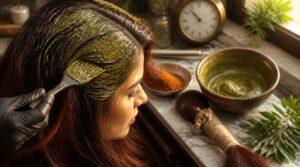
There’s no single right answer, since henna timing shifts with your color goal, your hair type, and even the room’s temperature.
What works for a subtle tint won’t come close to the saturation needed for deep red or full gray coverage. Here’s a quick breakdown to help you find your window.
Quick Timing Guide
One number matters more than any other here: your target shade. Henna processing time isn’t one-size-fits-all—it hinges on desired color intensity and hair type.
Since results vary so much strand to strand, it’s worth checking how long henna hair dye actually lasts before settling on a processing time.
- Subtle tones: 1–3 hours
- Copper/red: 4–5 hours
- Deep saturation: up to 6 hours
Timing vs. intensity is the real trade-off. Longer windows deepen color development but demand attention to porosity along the way.
Subtle Color: 1–3 Hours
If you want a natural tint rather than a bold statement, keep henna on for 1 to 3 hours. This window favors warm caramel undertones over red saturation, especially on fine hair, which absorbs pigment fast.
Expect gentle conditioning benefits and smoother strands afterward. Just know color development stays shallow here, so short-term color longevity means you’ll likely refresh sooner than with deeper processing times.
Rich Red: 4–5 Hours
Push past the caramel stage and you’re chasing something bolder: a true copper-red with real depth. That means 4 to 5 hours of henna paste on strand, letting lawsone molecules fully saturate the cortex.
- Vibrant copper reflection in sunlight
- Deep midshaft pigment concentration
- Rich saturation on porous strands
- A red that turns heads
- Color that oxidizes into warmth over 48 hours
Deep Coverage: 6 Hours
Six hours is where henna commits fully—this is the window for gray hair coverage and resistant, coarse strands needing complete cortex dye diffusion. Keep paste moist throughout; cracking stalls development.
Expect uniform root coverage with deeper mid-length saturation on porous hair. This extended session rewards patience, with true color revealing itself over 24-48 hours of oxidation.
Boxed Henna: 45–75 Minutes
Forty-five to seventy-five minutes covers most boxed henna blends, since manufacturers pre-formulate these for faster color development than pure henna. Fine hair or lighter copper goals lean toward 45 minutes; coarse, porous, or gray hair benefits from the full 75 to get the best results.
Preventing overprocessing risks means checking strand color at 60 minutes before committing to the longer window. It’s also essential to perform a skin spot test to make sure of safety before a full application.
Choose Henna Timing by Color Goal
Since lawsone molecules bind differently depending on what result you’re chasing, your ideal color goal should drive your timing decisions, not a generic rule of thumb.
If you’re aiming for deeper, richer results, check out this guide on how soon you can safely reapply henna for bolder color before layering in indigo.
Whether you want subtle conditioning, bold copper, or full gray coverage, each outcome calls for its own contact window. Here’s how to match your processing time to the exact shade you’re after.
Conditioning Without Strong Color
Not every henna treatment is about bold color — sometimes you just want healthier, glossier hair. A 1-to-3-hour application delivers subtle pigment buildup without dramatic shifts, enhancing natural gloss while maintaining hair porosity.
Benefits include:
- Gradual color shifts over time
- Minimizing regrowth lines
- Deep conditioning and hair nourishment
- Improved hair texture
Think of it as a moisturizing conditioning treatment with a whisper of color.
Copper and Red Tones

Wondering how long to leave henna on for that fiery copper glow? For soft coppery red tones, aim for 4–5 hours; deep red-orange saturation needs the full 6-hour window.
Warm and olive skin tones shine brightest here, while green or hazel eyes pop against the warmth. Expect color to oxidize and deepen over 24–48 hours after rinsing.
Brown Henna Blends
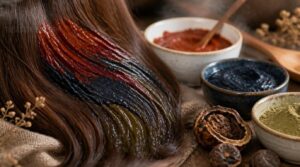
Pure red henna too bold? Mix it with indigo at a 1:1 to 1:3 ratio for cooler, neutral browns, processed 3 hours max to avoid unwanted red flashes.
Amla tones down brassiness while conditioning strands; walnut husk deepens color without extra red. Cassia softens undertones for warmth. Porous or previously treated hair often absorbs these mixes more intensely.
Black Henna Blends
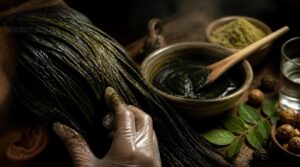
Getting to true black takes patience: 2 to 6 hours, depending on your indigo-to-henna ratio and how deep you want to go.
Higher indigo can push toward blue undertones, so mix carefully.
Skip commercial "black henna"—many contain PPD, a known allergy risk. Stick to pure plant dyes, add amla for conditioning, and always patch test 48 hours beforehand.
Gray Hair Coverage
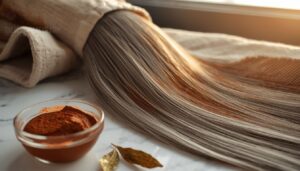
Gray strands are stubborn because they’re resistant to pigment, so plan for the full 6-hour window to achieve effective coverage. Coarse, low-porosity gray hair needs that extended development time for lawsone molecules to penetrate fully.
For softer results, try blending techniques—mixing henna with surrounding natural color instead of full saturation. Root touch-ups every 4–6 weeks maintain coverage without repeating the entire process.
If you’re unsure where your hair falls, running a quick low porosity hair test for henna coverage beforehand helps you set realistic expectations for gray coverage.
Adjust Processing Time for Your Hair Type
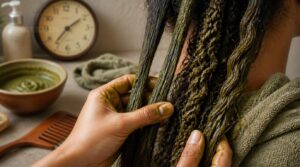
Your color goal sets the baseline timing, but your hair’s texture and history fine-tune it.
Strand thickness and porosity change how fast lawsone molecules penetrate the cuticle, and that shifts your ideal window by an hour or more in either direction. Here’s how to read your specific hair type before you set that timer.
Fine or Thin Hair
Rarely does fine or thin hair need more than 1 to 3 hours of henna contact. Narrow strand diameter and lower density mean pigment absorbs fast, but overprocessing risks breakage and flattened volume.
Watch for scalp show-through—uneven root coverage exaggerates it. A shorter window protects strand integrity while still delivering solid pigment density and noticeable color payoff.
Coarse or Thick Hair
Coarse or thick hair sits at the opposite end from fine strands, often needing 4 to 6 hours for full pigment penetration. Remember: coarse relates to strand thickness, while thick refers to density—your hair could be both.
Watch for coarse hair’s dryness tendency, which affects paste moisture retention:
- Keep paste hydrated to prevent patchiness
- Check porosity before setting your timer
- Prioritize uniform color application across dense sections
High-Porosity Hair
If your strands have raised, gap-filled cuticles from color processing or heat styling, henna practically races into the shaft—which means your pigment absorption happens fast, sometimes cutting effective processing to 2–3 hours.
Watch closely: high-porosity hair grabs dye eagerly but fades unevenly. Strand test hourly, and expect quicker dye uptake with less predictable color intensity across the length.
Low-Porosity Hair
On the opposite end sits low-porosity hair, where a flat, tightly sealed cuticle resists pigment absorption and often demands extended henna application time—up to the full 6-hour window. Expect slower water saturation and possible product buildup on the shaft’s surface.
Add gentle heat to encourage deeper penetration; once lawsone molecules finally breach the cuticle, moisture retention benefits mean color intensity holds impressively well.
Previously Dyed Hair
Why does previously dyed hair behave so unpredictably under henna? Blame artificial pigment buildup and repeated cuticle lift, which create uneven color uptake between roots and ends.
Ends often show higher porosity, absorbing dye faster than virgin regrowth. Test-strand first, then adjust: shorter processing on porous zones, standard timing at the root, protecting color intensity and long-term color retention across your hair type.
Keep Henna Moist and Active While Processing
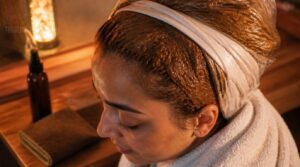
Once you’ve settled on a processing time, keeping that paste active for every minute of it matters just as much. Henna needs consistent warmth and moisture to keep releasing lawsone molecules onto your hair shaft, and letting it dry out cuts that process short.
Here’s how to protect your results from start to finish.
Cover With Plastic Wrap
Sealing in every drop matters. Wrap hair snugly (never tight) with plastic to lock moisture against your scalp, boosting dye release and preventing paste clumping.
- Keep wrap off the paste’s surface
- Use fresh sheets each session
- Avoid metal contact
- Skip reuse to prevent contamination
- Check comfort, not just coverage
This containment also curbs odor and dripping, giving low-porosity strands the sustained contact they need.
Add Gentle Heat
Warmth speeds dye uptake, but only when applied with restraint. A low-wattage heating pad, warm towel, or gentle steam raised no higher than 45°C (113°F) encourages faster color development without scorching your scalp.
Check temperature every 5 minutes, keep sessions under 60 minutes total, and stop immediately if you feel burning. Coarse or gray hair benefits most; fine strands need less heat exposure.
Prevent Paste From Drying
A crusted-over paste stops releasing lawsone molecules, cutting your color short before it’s earned.
- Mix henna powder to a smooth, yogurt-like consistency
- Add a humectant like glycerin (5-10% concentration)
- Seal with proper plastic wrap techniques
- Hold humidity between 40-60%
Porosity and hair type affect drying speed, so check the paste’s surface every 30 minutes and mist lightly if it stiffens.
Check Color Progress
Guessing is the enemy of good henna results. Pull a strand test from the crown every hour after the two-hour mark, rinse it in natural daylight, and compare it to your target shade.
| Check Time | What to Look For |
|---|---|
| 30–60 min | Light copper emerging |
| 2–3 hrs | Rich red developing |
| 4+ hrs | Deep brown saturation |
Record any shade discrepancy immediately—it guides your next interval.
Avoid Metal Tools
That mixing bowl in your kitchen drawer could quietly sabotage hours of careful work. Aluminum and steel react with henna’s acidic compounds, causing iron leaching that shifts your color tone unpredictably. Just as picking the right non-metallic bowl protects henna’s chemistry, choosing the right organic mulch for moisture retention protects your garden’s soil from unwanted reactions and evaporation.
- Choose glass, ceramic, or plastic bowls
- Use a silicone spatula for even, non-reactive mixing
- Skip metal spoons entirely when blending henna powder
Non-metallic tools protect dye release and keep your natural hair dye performing exactly as intended.
Rinse, Set, and Protect Henna Color

Once your timer hits zero, the real work of locking in that color begins. What you do in the next 48 hours matters just as much as how long the paste sat on your strands. Here’s exactly how to rinse, set, and protect your results the right way.
Rinse Without Shampoo
Rinsing thoroughly with cool to lukewarm water strips henna without shampoo disrupting your scalp’s oil balance or triggering irritation. Skip shampoo entirely during this shampoo-free window to let color development continue undisturbed.
| Water Temp | Effect | Result |
|---|---|---|
| Warm | Loosens paste | Easier removal |
| Cool | Tightens cuticle | More shine |
| Hard water | Mineral buildup | Faster fading |
Rinse until water runs clear for desired color intensity.
Wait 24–48 Hours
Once your hair runs clear, patience becomes part of the process. Lawsone molecules keep binding and darkening for 24 to 48 hours, so avoid shampoo, minimize sun exposure, and skip heat styling. In that window:
- Pigment continues oxidizing
- Color deepens naturally
- Cuticles reseal fully
- Fading risk drops
- True shade emerges
Expect Color Oxidation
Oxidation isn’t a switch — it’s a slow chemical handshake between lawsone molecules and oxygen that keeps reshaping your color for days.
Oxidation is a slow chemical handshake between lawsone molecules and oxygen, reshaping hair color over days
| Factor | Effect on Oxidation |
|---|---|
| UV exposure | Deepens or dulls tone |
| Humidity | Alters warmth/intensity |
| Porosity | Faster shifts, redder tones |
| Scalp oils | Slight pigment change |
| Time (24–72 hrs) | Color richens naturally |
Expect warmer undertones to surface gradually as your desired intensity fully develops.
Restore Hair Moisture
Rinsing strips moisture faster than pigment sets it, so follow immediately with a sulfate-free conditioner to seal the cuticle. Look for glycerin or other humectants that draw water into the shaft. Skip alcohol-heavy additives that reverse your work.
A leave-in product afterward maintains hydration between washes, keeping texture soft rather than straw-like as oxidation continues.
Maintain Long-Lasting Color
Once your color has fully oxidized, protect your investment by sticking to sulfate-free shampooing and protein-free conditioning from now on. Sulfates strip natural pigment deposition, while protein buildup can dull vibrancy over time.
Limit heat styling for the first week, since high temperatures accelerate color fading prevention efforts working against you. Cool water rinsing during future washes also helps maintain the pigment saturation you worked hard to achieve.
Frequently Asked Questions (FAQs)
How long should I leave henna on my hair?
Your ideal henna processing time depends on desired color intensity and hair type: 1–3 hours for subtle tones, 4–5 for rich red, up to 6 for deep saturation—always balancing dye uptake against hair dryness risks.
How long do you leave henna dye in?
Somewhere between a quick tint and an all-day commitment, timing depends entirely on your desired color intensity and hair type.
Testing color depth every hour, while maintaining paste moisture, ensures the best oxidation periods and steady dye uptake without overprocessing fine or coarse strands.
How long does Henna take to absorb?
Dye uptake starts fast but builds gradually: the paste stays active for 2 to 6 hours, with lawsone molecules penetrating hair shafts based on porosity and desired color intensity, while overnight processing maximizes absorption for the deepest, longest-lasting stain.
How long should henna be applied?
Application time depends on your color goal and hair type: 1–3 hours for subtle tones, 4–5 for rich red, 6 for deep coverage or gray hair, and 45–75 minutes for boxed henna blends.
What happens if you leave henna on too long on hair?
Overnight henna or extended paste contact past maximum absorption time risks hair brittleness, scalp irritation, uneven patching, and stiffer texture.
Moisture loss leaves ends dry, while high-porosity strands overshoot color intensity faster than expected during dye uptake.
Does henna work on all hair types and textures?
Yes—henna binds to keratin in every hair type, so straight, wavy, curly, and coily textures all respond. Curly hair gains extra frizz control, but porosity determines saturation: high-porosity strands absorb dye faster, while low-porosity hair needs longer contact time.
Can I use henna if I am pregnant or breastfeeding?
Whether you’re expecting or nursing, the same rule applies: choose pure, natural hair dye with ingredient transparency. Skip black henna’s PPD risks—patch test first, watch for scalp irritation, and confirm with your provider before coloring.
What are some good brands or recipes for henna hair dye?
For pure powders, look to The Henna Guys, Henna Sooq, or Godrej Nupur’s herbal blends. Skip synthetic dyes entirely. DIY? Mix henna paste with lemon juice for acidity, or add indigo afterward for deeper brown-black botanical color.
What can I do if I don’t like the color after applying henna to my hair?
Patience is a virtue, but so is action: try a clarifying shampoo wash, warm oil lifting treatments, or gentle correction. Wait for color oxidation to settle before adjusting future henna mixes with cassia for brighter tones.
Can henna cover gray hair completely?
Full opacity isn’t realistic here—melanin deficiency in gray hairs means the dye release process behaves unevenly.
Because henna pigment stays translucent, most colorists rely on layering application techniques or two-step methods with indigo color shifting for uniform gray hair coverage.
Conclusion
Forty-five rushed minutes versus six patient hours: that gap is the whole story of henna. Knowing how long to leave the henna on hair turns guesswork into control, letting porosity and hair type guide your clock instead of chance.
Rush it, and color fades fast. Respect the timing, and lawsone molecules bond deep, rewarding you with rich, lasting pigment and stronger strands. Set your timer, trust the process, and let patience do what shortcuts never could.