This site is supported by our readers. We may earn a commission, at no cost to you, if you purchase through links.
Your skin feels tight an hour after moisturizing, or maybe you’re noticing breakouts clustering around your jawline despite a consistent routine. These aren’t just annoying quirks—they’re your skin sending clear distress signals that your moisturizer isn’t doing its job.
Most people stick with the same product for years, assuming all moisturizers work the same way, but your skin’s needs shift constantly based on hormones, climate, and aging. What worked beautifully last winter might be clogging your pores this spring, or that lightweight gel that felt perfect in summer could leave you flaking come December.
Recognizing these warning signs early means you can course-correct before minor irritation becomes a full-blown skin crisis.
Table Of Contents
Key Takeaways
- If your skin feels tight, dry, oily, or irritated soon after moisturizing, your current product likely isn’t meeting your skin’s needs.
- Breakouts, clogged pores, or persistent rough patches often mean your moisturizer contains comedogenic or barrier-damaging ingredients.
- Seasonal changes, climate shifts, and aging can quickly alter what your skin requires, so reassess your moisturizer regularly to keep up.
- Choosing formulas with the right balance of humectants, emollients, and occlusives—and avoiding fragrances or harsh preservatives—helps maintain comfort and skin health.
Key Signs Your Moisturizer Isn’t Working
Your moisturizer should make your skin feel comfortable, balanced, and healthy—not like you’re fighting a losing battle. When the formula isn’t right, your skin will send clear signals that something needs to change (and no, you’re not imagining it).
If you’re constantly reapplying and still dealing with dryness or irritation, it might be time to rethink how often you’re applying your moisturizer and whether your routine matches your skin’s actual needs.
Here are the key warning signs that it’s time to switch things up.
If you’re dealing with persistent flakes or irritation, exploring options like the best shampoo for dandruff control can help you find relief and restore balance.
Persistent Dryness or Tightness
If your skin feels tight or parched an hour after moisturizing, you’re likely missing key humectants or occlusives. This persistent dryness signals your moisturizer can’t lock in hydration or repair your skin barrier—especially when indoor heating drops humidity below 30%.
You can find affordable dry skin remedies that combine both humectants and occlusives to keep your skin hydrated all day.
Look for formulas with glycerin, hyaluronic acid, and ceramides to restore lipid balance and truly support skin hydration for your dry skin type.
For sensitive skin types, a gentle cleanser with barrier-protecting ingredients helps maintain hydration without irritation.
Excess Oiliness or Shine
On the flip side, if your T-zone looks like a midday disco ball, your moisturizer formulas might be too emollient for your skin type. Overly rich creams can spike oiliness within two to four hours, especially when humidity and sweating enter the chat.
Switch to lightweight, oil-free options that support skin pH balance—your skincare routine (and your blotting papers) will thank you.
Increased Redness or Irritation
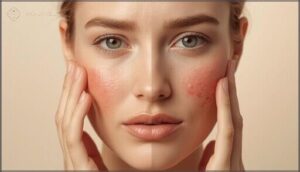
Burning, stinging, or visible facial erythema that shows up shortly after you smooth on your moisturizer isn’t just annoyance—it’s your skin waving a red flag. Fragrance, preservatives, and other irritants trigger allergic responses or irritant reactions, especially on sensitive skin. When redness correlates with your skincare routine, it’s time to stop that product. Recognizing skin sensitivity issues is essential for maintaining healthy skin.
- New burning or stinging within minutes of application
- Patches of erythema matching where you apply moisturizer
- Worsening irritation despite continued use
- Improved comfort when you skip that specific product
Frequent Breakouts or Clogged Pores
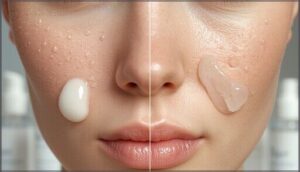
If your face is suddenly sprouting whiteheads, closed comedones, or those stubborn little bumps that won’t pop (don’t try), your moisturizer might be suffocating your pores instead of hydrating them. Understanding the role of non comedogenic ingredients can help you choose a better moisturizer for your skin.
Heavy formulas trap sebum, dead cells, and bacteria—the classic acne recipe—leading to breakout patterns that disrupt your skincare routine and often require a dermatologist visit for clog prevention.
| What You’re Seeing | Why It’s Happening |
|---|---|
| Closed comedones along your forehead, chin, or cheeks | Thick occlusive ingredients block pores, preventing natural skin purification |
| New cystic acne where you didn’t break out before | Comedogenic oils or butters trigger inflammation in sensitive skin |
| Persistent congestion despite regular cleansing | Your moisturizer overwhelms your skin’s ability to self-regulate sebum for pore minimization |
Switch to lightweight, oil-free formulas labeled “non-comedogenic” to give congested skin room to breathe—acne causes matter less when you’re not feeding the problem twice daily.
Visible Flakiness or Rough Texture
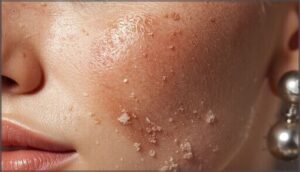
Roughness that persists midday or flakes that appear within an hour of application signal that your moisturizer isn’t repairing your skin barrier properly. Dry skin needs ceramides, glycerin, and occlusive agents—not just water-based hydrators—to restore barrier function and lock in moisture.
Basic lotions often lack the moisturizer ingredients required for genuine barrier repair, leaving rough skin solutions incomplete despite consistent use.
How Skin Type Affects Moisturizer Needs

Your skin type isn’t just a label—it’s the foundation of what your skin actually needs to stay balanced and healthy. What works beautifully for your friend’s oily T-zone might leave your dry cheeks feeling worse, and sensitive skin requires an entirely different approach.
If dryness is your main concern, exploring options like the best body lotions for dry skin can help you find formulas designed to restore and protect your skin’s moisture barrier.
Let’s break down how different skin types send distinct signals about moisturizer compatibility.
Oily Vs. Dry Skin Signals
Your skin type dictates the moisturizer game plan, and getting it wrong shows up fast. Oily skin produces visible shine within one to two hours of cleansing, particularly across your T-zone, while dry skin feels tight immediately after washing and displays flaky, rough patches (especially on cheeks). Here’s what to watch for:
- Oily profiles show enlarged pores and makeup that slides off quickly
- Dry complexions reveal dullness and fine lines that look more pronounced
- Combination patterns need targeted products per zone, not one-size-fits-all solutions
Sensitive Skin Reactions
Reactivity separates sensitive skin from every other type—up to half of you with delicate complexions report irritation from new moisturizers, often within minutes.
Redness, stinging, and contact dermatitis stem from fragrances (present in 30–80% of products), essential oils, and preservatives like parabens.
Your dermatologist will recommend fragrance-free, hypoallergenic formulas to dodge these allergic responses and calm skin irritation fast.
Changes in Skin Type Over Time
Hormonal shifts, aging skin, and seasonal adaptation reshape your moisture needs—what worked at twenty may dry you out at forty. As sebum production drops, especially around the eyes and cheeks, your skin barrier weakens and moisture retention plummets.
Cold winters or dry climates accelerate this shift, so reassess your moisturizer yearly (or when flakiness appears) to protect skin health and maintain balance.
Ingredient Red Flags to Watch For

Not all moisturizer ingredients play nice with your skin, and some can quietly sabotage your routine without you realizing it. Certain formulas contain known irritants or pore-cloggers, or they may be missing protective elements that leave your complexion vulnerable.
Here’s what to watch for when you’re scanning that ingredient list (or wondering why your skin isn’t cooperating).
Common Irritants and Allergens
Your moisturizer’s ingredient list might read like a chemistry experiment, but a few common culprits are often the real troublemakers behind irritation and allergic reactions.
Fragrance—both synthetic and natural—tops the allergen awareness list, frequently triggering irritant reactions in sensitive skin. Preservatives like parabens and formaldehyde-releasers can compromise skin barrier function, while certain alcohols strip moisture and worsen dermatological conditions.
When you spot these, consider switching to fragrance-free formulas.
Comedogenic Vs. Non-Comedogenic Ingredients
Pore clogging can be mysterious—sometimes your moisturizer is the silent culprit. Comedogenic ingredients like isopropyl myristate or heavy coconut oil may trap sebum and prompt breakouts, while non comedogenic formulas (think glycerin, hyaluronic acid) let skin breathe.
- Check ingredient labels for notorious pore-blocking esters
- Opt for fragrancefree, lightweight textures if you’re acne-prone
- Monitor skin reactions over four to six weeks before deciding
Lack of SPF or Protective Elements
Beyond clogged pores, many moisturizers skip sunscreen entirely—leaving you vulnerable to daily UV exposure. Studies show products without broad-spectrum SPF correlate with higher photoaging markers and sunburn events.
If your moisturizer lacks at least SPF 30, you’re missing critical daily defense against UVA and UVB damage. Pair it with dedicated sunscreen alternatives, or switch to a formula that manages both hydration and skin shielding in one step.
Seasonal and Environmental Triggers

Your moisturizer might work perfectly now, but skin doesn’t exist in a vacuum—it reacts to everything from winter wind to tropical humidity. What keeps your face balanced in July could leave you flaking by December, and a move across state lines can flip your entire routine upside down.
Your skin doesn’t exist in a vacuum—it reacts to weather, humidity, and climate shifts that can turn your perfect moisturizer into the wrong choice overnight
Here’s how weather patterns and your physical environment signal it’s time to adapt your moisturizer.
Adapting to Weather Changes
Weather dictates how well your moisturizer performs—sometimes dramatically. Seasonal switching isn’t just optional; it’s essential for skin health and protection. Here’s what to adjust:
- Humidity Effects: High humidity may let you use lighter formulas, while dry air demands richer creams with barrier-supporting ingredients.
- Temperature Control: Cold weather slows sebum production, so switch to thicker moisturizers (bonus points for SPF year-round).
- Wind Protection: Harsh winds strip moisture fast—look for occlusives like ceramides.
- Seasonal Switching: Don’t fight the calendar; your skin won’t either.
Geographic and Climate Considerations
Climate impact extends far beyond seasonal changes—your zip code shapes your skin’s behavior. Regional skincare demands shift with latitude, altitude, and local pollution levels. Humidity effects alone can double transepidermal water loss in arid zones compared to coastal regions.
Here’s how geographic moisture needs vary:
| Climate Type | Primary Challenge | Moisturizer Priority |
|---|---|---|
| Arid/Desert | Severe dryness, high UV exposure | Thick creams with ceramides + broad-spectrum SPF |
| Humid/Tropical | Excess oil, clogged pores | Lightweight gels, non-comedogenic formulas |
| Urban/Polluted | Weakened skin barrier function | Antioxidant-rich moisturizers with protective elements |
| High Altitude | Intense UV radiation, low humidity | SPF 50+, barrier-repair ingredients |
Water quality also plays a significant role in skincare. Hard water in certain areas can exacerbate dryness and compromise the skin’s protective barrier, necessitating the use of more emollient-rich formulas to maintain skin health.
Steps to Find The Right Moisturizer

Finding the right moisturizer doesn’t have to feel like guesswork. Once you know what’s not working, you can take a more strategic approach to choosing a product that actually fits your skin.
Here’s how to zero in on the right formula and get expert guidance when you need it.
Identifying Your Skin’s Needs
You need a proper skin analysis before any moisturizer matching makes sense—think of it as creating a tailored blueprint.
Start by observing hydration levels throughout the day (does tightness appear within an hour?), then assess your actual skin type, not what it used to be.
If you’re dealing with barrier repair needs, sensitive skin care requires gentler humectants like hyaluronic acid over heavy oils.
Choosing The Right Texture and Formula
Texture and formula selection should match your skin’s current behavior, not aspirations. Gel moisturizers drain fast and suit oily or combination types, while creams deliver richer hydration for dry patches. Emulsions split the difference with balanced water-oil blends.
Check ingredient lists for humectants (hyaluronic acid draws moisture in), emollients (ceramides smooth roughness), and occlusives (petrolatum seals hydration)—your skin compatibility depends on getting this trio right.
Consulting Skincare Professionals
When persistent issues resist your troubleshooting, professional guidance cuts through guesswork. A dermatologist consult offers skin analysis with objective hydration measurements, patch testing for hidden allergens, and expert recommendations customized to your history.
Licensed estheticians can map your skincare routine and pinpoint formulation conflicts, while medical oversight rules out conditions like rosacea masquerading as product failure—turning months of trial-and-error into weeks of real progress.
Frequently Asked Questions (FAQs)
Can face moisturizer expire or lose effectiveness?
Absolutely—moisturizers don’t last forever (shocking, right?). Most have a shelf life of 6 to 24 months after opening. Ingredient degradation, product separation, and moisturizer oxidation all signal it’s time to toss yours.
Should morning and nighttime moisturizers be different?
Yes, you’ll usually benefit from different moisturizer formulas. Day creams provide SPF and antioxidants for protection, while night moisturizers focus on repair with retinoids and barrier-supporting ingredients when your skin recovers.
How long to test new moisturizer before switching?
A twenty-something switched moisturizers after her usual cream left her skin tight every winter—but gave up after three days when nothing changed.
Patch testing for seven to ten days catches reactions, while four to six weeks reveals whether your skin type actually tolerates and benefits from the new facial moisturizer in your skincare routine.
Does drinking water reduce need for moisturizer?
Drinking water promotes skin health, but it won’t replace your moisturizer. Water intake hydrates from within, yet moisturizer alternatives don’t exist—topical products create the skin barrier protection that drinking habits alone can’t provide against dryness.
Can over-moisturizing damage your skin barrier?
Ironically, yes—too much moisturizer can overwhelm your skin barrier function, disrupt its natural barrier repair cycle, and even trigger moisturizer dependence, where your skin loses resilience and stops producing adequate oils independently.
Conclusion
Your skin won’t wait for you to figure things out—ignoring these signs you need a different face moisturizer only deepens the damage. That tightness, those breakouts, the flaking you’ve been dismissing? They’re not stubborn quirks, they’re your epidermis demanding better support.
Switching moisturizers isn’t admitting defeat, it’s reclaiming control over your skin’s health. Pay attention, adjust accordingly, and you’ll notice the difference within two weeks. Your face will thank you.
- https://pmc.ncbi.nlm.nih.gov/articles/PMC3016930/
- https://www.healthline.com/health/non-comedogenic-oils
- https://emedicine.medscape.com/article/1049353-overview
- https://www.sciencedirect.com/science/article/pii/S1578219014002455
- https://www.actasdermo.org/en-allergic-contact-dermatitis-due-cosmetics-articulo-S1578219016300087