This site is supported by our readers. We may earn a commission, at no cost to you, if you purchase through links.
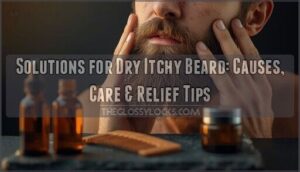
persistent itch beneath your beard isn’t just annoying—it’s your skin sending a signal.
Dry skin, ingrown hairs, fungal overgrowth, and conditions like seborrheic dermatitis all share one symptom: relentless irritation that no amount of scratching resolves.
Most men treat the itch without addressing what’s driving it, which is why the problem keeps coming back. The good news is that effective solutions for dry itchy beard skin exist at every level—from daily hygiene habits to targeted medical treatments—and understanding the root cause makes all the difference.
Table Of Contents
- Key Takeaways
- Common Causes of Dry Itchy Beard
- Daily Beard Hygiene Practices
- Moisturizing and Hydrating Solutions
- Preventing and Treating Beard Dandruff
- Addressing Persistent Itch and Medical Issues
- Frequently Asked Questions (FAQs)
- Why is my beard suddenly really itchy?
- How do I get rid of a dry, itchy beard?
- How do you rehydrate a dry beard?
- How do I stop dry skin in my beard?
- Which oil is good for beard itching?
- How often should men trim their beards?
- Can diet affect beard health and itchiness?
- Are natural beard care products more effective?
- What causes patchy or uneven beard growth?
- Does stress impact beard hair and skin?
- Conclusion
Key Takeaways
- Most beard itch has a specific cause—dry skin, ingrown hairs, fungal infection, or a skin condition like seborrheic dermatitis—and treating the right one is what actually stops it.
- Daily habits like washing with a sulfate-free cleanser, drying gently, and applying jojoba or argan oil directly to the skin beneath your beard prevent most cases before they start.
- If you see persistent redness, pus-filled bumps, or hair loss patches lasting more than two to three weeks, that’s your cue to see a dermatologist—not reach for another beard oil.
- Diet and lifestyle quietly shape your skin’s health too—omega-3s, zinc, vitamin D, and managing stress all support the skin barrier that keeps itch away long-term.
Common Causes of Dry Itchy Beard
An itchy beard isn’t just annoying — it usually means something specific is going on with your skin. Several common conditions can trigger that persistent irritation, and knowing which one you’re dealing with makes all the difference. Here are the most frequent causes to look out for.
Once you’ve pinpointed the cause, beard itch relief home remedies can go a long way toward calming irritated skin fast.
Dry Skin and Dehydration
Dry skin — clinically called xerosis — is one of the most common reasons your beard itches. Hot shower effects strip natural sebum faster than your skin can replenish it. Low indoor humidity accelerates moisture loss, and poor oil distribution beneath longer beards worsens the problem.
Prioritize water intake, use hydrating products like beard conditioner, and focus on skin barrier repair to moisturize effectively. Regular exfoliation removes dead skin cells, reducing itchiness. regular exfoliation removes dead skin
Ingrown Hairs and Folliculitis
Beyond dry skin, ingrown hairs and folliculitis are common culprits behind beard itch. Poor shaving technique — like shaving against the grain — lets cut hairs curl back into skin, creating razor bumps. Folliculitis follows when bacteria infect those irritated follicles.
regular beard cleansing helps keep follicles clear and reduces inflammation.
Here’s what helps:
- Use exfoliation methods weekly to free trapped hairs
- Apply warm compresses to calm inflamed bumps
- Topical antibiotics treat bacterial folliculitis effectively
- Support your skin barrier with gentle, fragrance-free cleansers
- For chronic ingrown hair issues, laser prevention offers lasting relief
Skin Conditions (Eczema, Psoriasis, Seborrheic Dermatitis)
Sometimes itch runs deeper than dryness.
Eczema, psoriasis, and seborrheic dermatitis each raise inflammatory markers that disrupt your skin’s natural defenses. Eczema cracks and weeps; psoriasis builds thick silvery plaques; seborrheic dermatitis leaves greasy yellow flakes caught in your beard.
Barrier repair strategies — including targeted moisturizing agents and careful topical steroid use — help manage flares, especially when dietary triggers or seasonal changes push symptoms into overdrive.
Fungal and Bacterial Infections
When skin conditions don’t explain the itch, a fungal infection or bacterial infection might be the real culprit.
Tinea barbae triggers red, ring-shaped rashes and kerion management becomes critical — those inflamed, pus‑filled nodules can scar if ignored. Folliculitis diagnosis is straightforward: look for tender pustules clustering around hair follicles.
- Use antifungal medications like oral terbinafine for tinea barbae
- Apply antibiotic creams such as mupirocin twice daily for folliculitis
- Wash with ketoconazole shampoo to target fungal overgrowth, including seborrheic dermatitis
- Avoid sharing razors or towels — staph spreads fast
- Disinfect grooming tools regularly, especially after contact with animals
Environmental and Seasonal Factors
Your environment does more damage than you might think. In winter months, cold weather and indoor heating can drop humidity below 30%, pulling moisture from both your beard and the skin beneath it.
Switching to a beard wash made for dry, flaky skin can make a real difference when winter air strips your beard of its natural moisture.
Summer sweat clogs follicles, while UV exposure weakens hair structure and wind stripping removes natural oils fast. Low humidity, seasonal shifts, and poor skin hydration all quietly fuel that persistent itch.
Daily Beard Hygiene Practices
Good hygiene is the foundation of a comfortable, itch-free beard.
How you wash, dry, and care for your beard daily makes a bigger difference than most people realize.
Here are the key practices worth building into your routine.
Choosing The Right Beard Cleanser
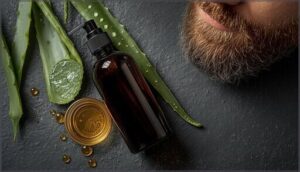
Not all beard washes are created equal. The right one works with your skin, not against it. Look for these four things:
- Sulfate Free formula to protect natural oils
- pH Balance close to skin’s natural 5–6 range
- Fragrance Free if you have dry or reactive skin
- Ingredient Transparency — glycerin, aloe vera, and lightweight oils support skin hydration without buildup
Gentle Washing Techniques

Washing the beard the right way makes a real difference. Use a lukewarm rinse — hot water strips your skin’s natural oils quickly. Apply your beard wash with a circular massage, working fingertips gently down to the follicles. Keep it friction‑free.
| Step | Technique | Why It Matters |
|---|---|---|
| Cleanse | Circular massage with fingertips | Lifts debris without irritating follicles |
| Rinse | Lukewarm water until hair isn’t slippery | Prevents residue‑triggered itch |
| Detangle | Gentle detangling from tips upward | Reduces breakage and trapped flakes |
Complete rinsing matters more than most men realize — leftover cleanser is a hidden itch trigger. Finish with gentle detangling to prep skin for beard moisturizing products like beard oil.
Proper Drying Methods

How you dry matters just as much as how you wash.
Pat with a microfiber towel using the Towel Patting Technique — no rubbing — until about 60% dry. Then try a Low‑Heat Blowdry with constant motion, holding the dryer 6–10 inches away.
Pre‑Dry Oil Application with argan or jojoba protects against heat.
Comb‑While‑Dry detangles and shapes.
Airflow Enhancement Techniques, like a low fan, finish the job safely.
Avoiding Product Buildup
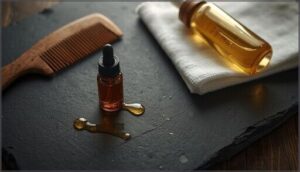
Think of product buildup like sediment in a pipe — it accumulates quietly until things stop flowing correctly. To keep your beard clean and skin healthy, follow these five habits:
- Lightweight Oil Selection — Choose jojoba or argan over mineral oil‑based products
- Silicone‑Free Formulas — Avoid non‑water‑soluble silicones that trap dirt and oil buildup
- Label Ingredient Checks — Scan the first five ingredients for heavy waxes or comedogenic products
- Clarifying Wash Frequency — Deep‑cleanse every two to four weeks to reset residue
- Application Amount Control — A few drops of beard moisturizers are enough; more isn’t better
Moisturizing and Hydrating Solutions
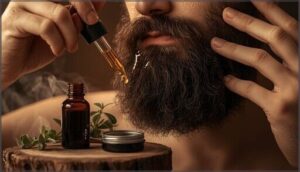
Moisturizing is where real relief begins.
The right products don’t just soften your beard — they treat the dry skin underneath, which is often where the itch actually starts.
Here’s what works.
Benefits of Beard Oils and Balms
Oils and balms do more than soften — they’re your beard’s daily defense. Jojoba oil mimics your skin’s natural sebum for softening texture without greasiness, while argan oil reduces frizz and wiry strands.
Beard balm adds styling hold to tame flyaways.
Tea tree oil provides antimicrobial relief against bacteria and fungal irritants. Together, they form a protective barrier and deliver meaningful flake reduction.
Moisturizing The Skin Beneath The Beard
Your beard hair doesn’t moisturize the skin beneath it — that job falls to you. Without consistent attention, that skin dries out fast, leaving you dealing with flakes and itch. Follow these five steps to keep moisture locked in:
Your beard won’t moisturize itself — neglect the skin beneath it and the itch begins
- Product Absorption Timing – Apply moisturizer seconds after your shower, while pores stay open.
- Massage Techniques – Work jojoba oil or argan oil in small circular motions down to the skin.
- Exfoliation Frequency – Exfoliate one to three times weekly to clear dead cells blocking absorption.
- Hydration from Within – Drink enough water daily; skin moisture starts internally.
- Brush Type Benefits – Use a boar bristle brush to push aloe vera or skin moisturizers evenly beneath the beard.
Selecting Hydrating Beard Products
Not every product on the shelf is worth skin’s trust. When choosing beard moisturizers, check for ingredient transparency first — jojoba and argan should appear early in the list.
Consider oil viscosity: lightweight beard oil suits shorter growth, while a thicker beard balm works better for coarse hair. Always prioritize fragrance-free formulas, non‑comedogenic claims, and proper pH balance to protect the skin beneath.
Layering Products for Maximum Moisture
Choosing the right products matters — but so does the order you use them. For Damp Beard Application, towel‑dry first, then layer:
- Apply beard oil to hydrate the skin beneath the beard
- Wait 3–5 minutes for absorption
- Work in beard butter using the Oil‑Butter‑Balm Sequence
- Seal with balm for moisture retention with balms
- Follow Product Quantity Guidelines — less is more for short beards
This Humectant‑Occlusive Balance keeps dryness locked out all day.
Preventing and Treating Beard Dandruff
Beard dandruff is more common than most people think, and it’s usually very treatable. Knowing what to look for makes the process a lot easier. Here’s what you need to know to get it under control.
Recognizing Signs of Beard Dandruff
Spotting beard dandruff early makes treatment much simpler. You’ll notice white or yellowish flakes along your jawline, chin, and mustache — greasy in texture, unlike powdery dry skin particles. Redness patterns vary too: pink on lighter skin, gray or purple on darker tones.
Itch intensity with seborrheic dermatitis is persistent and burning, not just mild tightness. That’s your signal to act.
Anti-Dandruff Beard Washes
Treating dandruff at the source means picking the right wash. Look for these active ingredients:
- Zinc Pyrithione Action — 1% concentration controls Malassezia yeast and bacteria
- Ketoconazole Effectiveness — antifungal shampoo like Nizoral reduces flaking by nearly 89%
- Salicylic Acid Exfoliation — dissolves dead cells and sebum buildup
- Fragrance-Free Formulas — prevent irritation, especially with seborrheic dermatitis
- Warm Water Pre-Wash — prepares skin before moisturizing beard wash application
Home Remedies for Flakiness
Several kitchen staples work surprisingly well for beard flakiness.
A Coconut Oil Treatment penetrates hair shafts and moisturizes your beard while its antimicrobial properties combat seborrheic eczema-related fungal growth.
A diluted Tea Tree Mix calms inflammation, while Aloe Vera Hydration soothes dry skin in minutes.
An Apple Cider Rinse restores pH balance, and Olive Oil Soothing replenishes natural oils to balm lock moisture effectively.
Medicated Creams and When to Use Them
When home remedies aren’t cutting it, medicated creams step in. Here’s when to reach for each:
- Hydrocortisone — Start when itch persists beyond a week; limit to 7 days
- Antifungal cream — Apply for 2–4 weeks if yellow scales appear
- Antibiotic ointment — Use for pus‑filled follicles or bacterial infection
- Clobetasol — Reserve for severe, unresponsive cases under medical guidance
Addressing Persistent Itch and Medical Issues

Sometimes an itchy beard doesn’t respond to the usual fixes — and that’s a sign something deeper might be going on. Persistent itch can point to a medical condition that needs more than a good beard oil to resolve.
Here’s what to know about when to get professional help and how to manage the issue long-term.
When to Seek Dermatological Advice
Most beard itch clears up with basic care — but some signs demand a dermatologist’s attention.
Persistent redness lasting over two to three weeks, unhealing sores, repeated boils, or hair loss patches signal deeper skin inflammation.
Fever and chills alongside a worsening rash need urgent evaluation.
Don’t wait on these.
Underlying dermatological causes of itchy beard require clinical prescription therapy, not another beard oil.
Prescription Treatments for Chronic Itch
When over-the-counter options stop working, prescription treatments step in. Your dermatologist may recommend Topical Steroids like clobetasol (Cormax) or desonide (Desonate) — a corticosteroid cream that calms acute flares fast. Calcineurin Inhibitors offer a steroid-free alternative for sensitive skin. Other targeted options include:
- Oral Antihistamines like hydroxyzine for allergy-driven itch
- Oral Antifungals or topical antifungal therapy for tinea barbae
- Topical Antibiotics like mupirocin for bacterial folliculitis
Managing Underlying Skin Conditions
Each condition calls for a different approach.
Eczema responds well to Barrier Repair Strategies — ceramide-rich creams and fragrance‑free moisturizers that rebuild damaged skin.
Seborrheic eczema or dermatitis needs Targeted Antifungal Therapy with ketoconazole to restore Skin Microbiome Balance.
Psoriasis benefits from Anti‑Inflammatory Ingredients like salicylic acid and aloe vera.
Your dermatologist may also prescribe Prescription Topical Steroids — a topical corticosteroid cream — to calm flares quickly.
Preventing Recurrence of Beard Itch
Once your skin stabilizes, keeping it that way comes down to consistent daily habits.
Brush with a boar bristle brush to support sebum distribution — your Brush Technique matters more than most people realize. Swap to a Silk Pillowcase to cut overnight friction, follow an Exfoliation Schedule two to three times weekly, and support your skin barrier function from within through an Omega‑3 Diet and Regular Trimming.
Frequently Asked Questions (FAQs)
Why is my beard suddenly really itchy?
That sudden itch usually signals dry skin, folliculitis, or dermatitis flaring up.
Growth phase itch, shaving angle, weather humidity, product allergens, and stress hormones all trigger razor bumps and skin irritation fast.
How do I get rid of a dry, itchy beard?
Getting rid of a dry, itchy beard starts with consistent beard care: moisturize your beard daily using beard oil ingredients like jojoba or argan oil.
Treat folliculitis early.
And address seborrheic eczema with gentle, medicated cleansers.
How do you rehydrate a dry beard?
applying beard oil daily — a few drops warmed in your palms, massaged into the hair and skin beneath.
Conditioning the beard with emollients like jojoba restores moisture fast and reliably.
How do I stop dry skin in my beard?
To stop dry skin in your beard, apply jojoba-based beard oil daily, exfoliate gently with natural exfoliation tools weekly, and build a nighttime hydration routine using emollients to maintain scalp‑beard moisture year‑round.
Which oil is good for beard itching?
Think of the right oil as a daily prescription for your skin.
Jojoba Oil Benefits, Argan Oil Hydration, Coconut Oil Soothing, Tea Tree Antiseptic, and Cedarwood Oil Relief all Moisturize your beard effectively.
How often should men trim their beards?
Trim frequency depends on your beard length and growth rate.
short beards need edging every one to two weeks, medium styles every two to three weeks, and long beards every four to six weeks.
Can diet affect beard health and itchiness?
Yes, diet directly affects beard health.
Omega‑3s reduce skin inflammation, Biotin intake strengthens hair strands, Zinc supplementation balances follicle hormones, and Vitamin D sources support skin barrier function.
Hydrating foods combat dry skin from within.
Are natural beard care products more effective?
Natural beard oils absorb faster, hydrate deeper, and carry vitamins your skin actually uses. Synthetics can trigger irritation and clog pores. For long-term beard health, the natural alternative usually wins.
What causes patchy or uneven beard growth?
Patchy beard growth often comes down to genetics, hormonal sensitivity to dihydrotestosterone, age maturity, or autoimmune alopecia attacking hair follicles. Your testosterone levels and genetic density quietly shape every strand.
Does stress impact beard hair and skin?
Stress absolutely affects your beard.
Elevated cortisol suppresses testosterone, shrinks follicles, and triggers telogen effluvium — pushing hairs into early shedding.
Blood flow reduction limits nutrients, while barrier disruption and inflammation increase and worsen dry skin and seborrheic eczema beneath androgenic hair.
Conclusion
your beard isn’t trying to ruin your life—it’s just asking for basic attention. Most men slather on random products and hope for the best, then act shocked when the itch returns.
The real solutions for dry itchy beard skin aren’t complicated: clean properly, moisturize consistently, and treat the cause instead of chasing the symptom.
Do that, and your skin stops sending distress signals. Simple, really—once you actually listen.
- https://www.aad.org/public/everyday-care/skin-care-basics/hair/how-to-shave
- https://copperjohns.com/blogs/news/importance-of-water-for-your-beard-and-skin
- https://cptnbeardco.com/blogs/cptnsblog/hydration-and-its-effects-on-hair-and-beard-health
- https://www.seychelle.com/blogs/news/the-hidden-effects-of-dehydration-on-skin-hair-and-aging
- https://www.ocean-pharma.de/en/expert-tips/dry-skin-with-heating-air-causes-care-tips/