This site is supported by our readers. We may earn a commission, at no cost to you, if you purchase through links. This content is for general informational and educational purposes only and is not a substitute for professional medical, dermatological, or nutritional advice.

Dry clipper blades grind against each other like a pair of rusty scissors. You hear it first as a faint rasp, then you feel it as a tug on every hair.
That friction builds heat, and heat irritates skin, strains the motor, and drains a cordless battery faster than you’d expect. Two drops of the right oil stop all of it.
This step by step clipper lubrication guide shows you which oil suits your blades, where each drop goes, and how often to repeat it. You’ll also learn how to fix pulling, noise, and rust, so your clippers cut smooth for years.
Table Of Contents
Key Takeaways
- Oil your clippers with light clipper oil that matches your blade material, and skip WD-40, cooking oils, and heavy machine oil, since they strip, spoil, or clog.
- Unplug, brush the blades clean, add one drop to each upper corner and one along each lower side, run the motor 10 to 20 seconds, then wipe off the excess.
- Add a drop before every use and top up every 3 to 4 haircuts, because dry blades create heat that irritates skin, strains the motor, and drains a cordless battery.
- If your clippers still pull or rattle after oiling, check the blade screws and tooth alignment first, and store them clean, oiled, and dry in a steady, low-humidity spot to prevent rust.
Why Blade Lubrication Matters for Hair Clippers
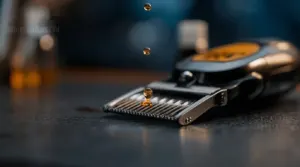
A clipper blade runs like a tiny pair of scissors, and scissors hate being dry. Without lubrication, the two blades grind against each other. That friction does real damage.
A few drops of rust-resistant clipper oil, applied as this guide to lubricating electric shaver blades shows, keep the metal gliding smoothly instead of grinding.
Heat builds fast at the contact point. Hot blades tug at hair and can irritate skin, which nobody wants. Dry metal also forces the motor to push harder, so it strains and wears out sooner.
Then there’s rust. Steel blades pick up moisture from air, sweat, and damp hair. A thin film of blade oil keeps that moisture away and protects the edge, so you avoid blade wear and dull cuts.
The payoff? Clean, quiet, even cuts. Well-lubricated blades glide through hair instead of snagging it, and they hold their factory alignment longer. Cordless models benefit too, since less resistance means less battery drain and fewer surprise shutoffs mid-fade.
How to Choose The Right Clipper Oil
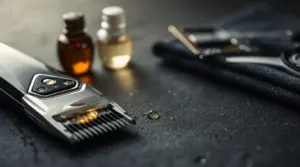
Not every bottle on the shelf belongs near your blades. Start with the material. Stainless steel pairs well with standard mineral oil, ceramic needs a lighter lubricant that won’t leave residue, and titanium-coated blades like non-acidic, non-corrosive formulas. Sensitive to petroleum? Non-mineral oils work too.
Next, look at thickness. Thin oil slips between fine teeth without gumming. Thick oil clings longer but grabs debris. Most clipper oil sits between 10 and 30 mm²/s at 40 °C, a sweet spot worth checking on the label.
Run through this quick check before you buy:
- Match the oil to your blade material.
- Pick a low-viscosity formula for fine teeth.
- Choose synthetic if you clip for long, hot sessions.
- Grab a 4 oz bottle, which lasts months at home.
Skip WD-40, cooking oils, and heavy machine oil. They strip, spoil, or clog.
How to Oil Hair Clippers Step by Step
Oiling your clippers takes about two minutes, and the routine is simple. Follow the five steps below in order, and your blades will cut cleaner and run cooler. Ready to keep your blades sharp?
If you’re unsure how often to clean and oil, this daily vs weekly blade cleaning routine for clippers explains which steps suit each schedule.
Step 1: Switch Off and Unplug
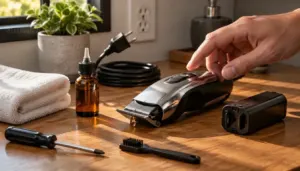
Stop the motor, steady your hands, and clear your bench. Before any blade oil touches metal, turn off and unplug your electric clippers, including Wahl clippers. It’s quick, and it’s motor protection too.
| Check | Risk | Fix |
|---|---|---|
| Cord | Exposed wires | Replace it first |
| Hands | Wet shock | Dry them fully |
| Switch | Sudden blade movement | Unplug first |
| Battery | Stored energy | Remove the battery |
Step 2: Brush Away Hair and Debris
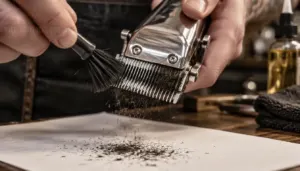
Power’s off, so now clear the hair. Hold the clippers blade-down over a trash bin or paper. Gravity helps you here.
Use a small brush and sweep perpendicular to the teeth, short strokes outward. Don’t brush along the cutting direction. That just packs hair deeper.
Packed debris blocks oil and dulls steel fast. Check the light, then confirm the blades look clean.
Step 3: Oil The Recommended Blade Points
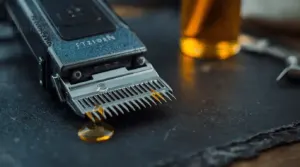
The right spots matter more than the amount. Whether you own Wahl clippers or another brand, apply oil to blades like this:
- Tilt the clippers so oil flows inward.
- Add one drop to each upper corner.
- Add one drop along each lower side.
- Aim for the metal, never plastic.
- Keep oil away from motor vents.
Stay light: two drops max.
Step 4: Run Clippers to Spread Oil
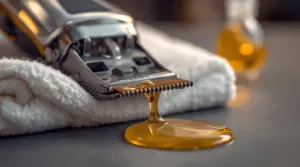
Turn the clippers on and let them run for 10 to 20 seconds. That’s all it takes. Your motor drives the blades back and forth thousands of times a minute, shearing the oil into a thin film across the teeth, the guide channel, and the hinge.
Hold the clippers over a towel, since extra oil will fling off. Stop at 20 seconds. More running won’t help.
Step 5: Switch Off and Wipe Excess
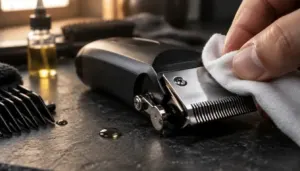
Stop the blades. Let them settle. Then wipe.
Don’t touch the teeth until they’re fully still. Grab a lint-free cloth and clean the blade teeth. Excess oil attracts dust and clumps your hair. Check for:
- Oil pooling at the hinge
- Shifted cutter alignment
- Slick residue on the housing
- Droplets near the guide comb
Dry, clean metal cuts best.
When and How Often to Oil Clippers

Picture a barber finishing a busy Saturday of fades on thick, coarse hair. By the sixth cut, the blades are hot and the motor sounds strained. Sound familiar?
Your schedule beats guesswork. Add a drop of blade oil before every use, and top up every 3 to 4 haircuts or after 10 to 15 minutes of nonstop running.
Oil sooner when you notice:
- Louder motor noise or blade rattling
- Blades snagging hair instead of cutting
- Heat building at the blade
- Dense or damp hair in the chair
- Daily, high-volume professional use
Pros running Wahl clippers all day should also do a full lubrication and blade cleaning monthly. That’s solid clipper maintenance.
Don’t overdo it, though. Too much oil attracts clippings and builds an abrasive gunk between the blades. Aim for light, even oil distribution, never a flood. Wipe extra.
Troubleshooting Pulling, Heat, and Noise After Oiling
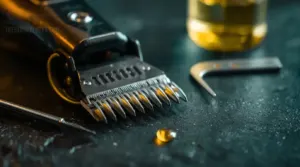
Oiled your clippers and they still tug, burn, or rattle? Don’t panic. The oil is rarely the villain. Usually it’s how the blades sit or how the oil got there.
Start with the screws. Over-tight blades grind together, so friction and heat climb fast. Loosen them slightly until the blades glide. Loose blades do the opposite, vibrating, buzzing, and pulling hair. Tighten evenly until they sit flush.
Next, check the teeth. If the bottom blade’s teeth aren’t sitting 1 to 2 mm back from the top ones, they’ll catch hair instead of slicing it. Realign them so the tips stay level and parallel.
Still struggling? Check your bottle. Thick motor oil or WD-40 drags and causes overheating. Switch to light clipper oil, then run the clippers for just 10 to 30 seconds so it spreads across every blade.
How to Store Clippers to Prevent Rust

Rust is a patient thief. It sneaks in during the quiet weeks your clippers sit untouched.
Corrosion strikes quietly, creeping onto idle steel during the weeks when nobody is paying attention
Start with prep. Brush out every stray hair, add two or three drops of blade oil, then run the motor briefly. Wipe off the excess and make sure everything’s dry. Wait until the clippers reach room temperature, too, or condensation will form inside the housing.
Now pick the spot. Skip bathrooms, basements, and garages, where humidity swings daily. Aim for a steady 10°C to 25°C and humidity below 50 percent.
Three habits make the biggest difference:
- Hang the clippers or stand them upright so oil can’t pool in the motor.
- Tuck a VCI packet and a silica gel pack beside them.
- Cover the blades with a non-abrasive guard.
Storing them for over a month? Use an airtight container. Pull out the batteries from cordless models, too.
Check blades monthly for orange spots, and reapply oil every 3–6 months.
Frequently Asked Questions (FAQs)
Can I use WD-40 to lubricate hair clippers?
Spray WD-40 on your clippers and you’ll basically hand your blades a one-way ticket to the scrap heap. Don’t use it. It’s a solvent, not a lubricant, so it strips real protection away.
Do I need to oil my clippers before first use?
Wondering if new clippers can go straight to the first cut? Don’t. Oil them first. Put a few drops on the blades, run the motor briefly, and wipe off the excess. Your clippers will run smoother.
Regular oiling also reduces friction between blades, which helps prevent rust and keeps cutting smooth without pulls or snags.
How do I oil cordless clippers differently?
Here’s the twist: cordless clippers need less oil, yet they’re the ones that punish you for skipping it. Skip the motor. Dab one drop on each blade corner and one across the center teeth.
Does clipper oil expire or go bad?
Found a bottle in your drawer from 2021? Don’t trust it blindly.
Yes, clipper oil goes bad. Unopened lasts two to five years, opened one to two. Cloudy, smelly, or gummy oil? Toss it fast.
Can I mix different clipper oil brands?
Picture two cooks stirring one pot with different spices. It might taste fine, or it might not. Mixing clipper oil brands works the same way. Most are light mineral oil, so topping off is usually safe. Wipe blades clean first.
How much does clipper oil usually cost?
Expect to pay $4 to $10 for a standard 4 oz bottle. Wahl and Andis sit near the low end, Oster runs a bit higher, and store brands can dip to $ Multi-packs online cut the cost further.
Conclusion
Brush the blades. Oil the points. Run the motor. Wipe the excess. That’s the whole routine, and it takes less time than a coffee refill.
Follow this step by step clipper lubrication guide, and your clippers will glide through hair instead of fighting it. Oil after every cleaning, match the oil to your blades, and store them dry. Two small drops protect your skin, your motor, and your battery.
Oil them well. They’ll cut clean.