
This site is supported by our readers. We may earn a commission, at no cost to you, if you purchase through links.

Most guys quit growing a beard somewhere between week two and week four. Not because they can’t grow one—because they don’t know how to handle what’s happening on their face.
The itch kicks in, the shape looks messy, and without a daily routine to manage it, the whole thing feels out of control.
Here’s what most people miss: a growing beard isn’t a passive process. It rewards guys who work with it daily, not the ones who just wait.
Your genetics set the foundation, but how you style growing beard daily—oil, comb, trim, repeat—determines whether you end up with something sharp or something scraggly.
The difference is mostly habit.
Table Of Contents
- Key Takeaways
- Daily Beard Growth: What to Expect
- Essential Beard Care Routine
- Styling Techniques for Growing Beards
- Trimming and Shaping as You Grow
- Skin and Beard Health Tips
- Nutrition and Lifestyle for Beard Growth
- Frequently Asked Questions (FAQs)
- How do I properly treat my beard daily?
- Does finasteride prevent beard growth?
- Can beard dye damage hair follicles over time?
- How do climate and humidity affect beard texture?
- Does exercise influence beard growth or thickness?
- When should you see a dermatologist about growth?
- How do different face shapes affect beard styling?
- Conclusion
Key Takeaways
- Most guys quit growing a beard in weeks two through four, not because of bad genetics, but because they skip a daily routine of oil, comb, and light trimming that keeps growth looking intentional.
- Your genetics set the ceiling, but daily habits — beard oil right after your shower, combing with upward then downward strokes, and waiting until week four before your first trim — determine whether you end up with something sharp or something scraggly.
- Skin health drives beard health, so exfoliate twice a week, moisturize with glycerin or hyaluronic acid, and treat itch and beardruff with tea tree oil before they become a reason to shave everything off.
- What you eat and how you sleep matters more than any product — aim for 7–9 hours of sleep, stay hydrated, and stack your diet with biotin-rich foods like eggs, zinc from oysters or pumpkin seeds, and enough protein to feed strong, thick growth from the inside out.
Daily Beard Growth: What to Expect
Before you can style your beard, it helps to understand what’s actually happening beneath the surface.
Knowing your growth direction and density makes it much easier to pull off these stylish winter beard ideas without fighting your natural texture.
Growth isn’t random — it follows patterns shaped by your biology, your age, and your genetics.
Here’s what you can expect as your beard starts taking shape.
Typical Beard Growth Rate
Beard growth isn’t random — it’s biology on a schedule. On average, your facial hair grows 0.3 to 0.5mm daily, stacking up to about 1 to 1.5cm monthly. Hormonal influence, age impact, and seasonal variation all shift that number. Spring and summer? Growth runs nearly 60% higher.
- Track progress weekly, not daily — small wins add up fast
- Expect peak density between ages 25 and 35
- Summer months accelerate follicle stimulation naturally
Check the average daily facial hair growth for detailed rates.
Genetics and Growth Patterns
Growth rate gets the spotlight, but genetics quietly runs the show.
Your follicle density, DHT sensitivity, and ethnic patterns are hardwired before you’re born — polygenic influence means dozens of genes, not just one, shape your beard density and coverage.
Epigenetic modifiers like stress and sleep can dial things up or down, but they can’t rewrite your blueprint.
Know your range, then own it.
Research shows that follicle density determines beard is a key factor.
Stages of Beard Development
blueprint sets the ceiling — but the clock sets the pace.
In days 1 through 5, the Early Stubble Feel is rough and prickly because blunt hair ends press against skin.
By week 6 to 8, Mid‑Stage Density fills the jaw, Neckline Emergence clarifies naturally, and Cheek Line Definition sharpens.
Around week 8, Beard Maturity Shift kicks in — coarser, darker, fully committed.
Managing Patchy or Uneven Growth
Patches happen. Even after that week‑8 maturity shift, some spots just lag behind. Here’s how to work with them:
- Targeted Minoxidil Use — Apply 3% twice daily to sparse cheeks; vellus hairs appear within 1–3 months.
- Derma Roller Protocol — Weekly 0.5 mm rolling boosts absorption and stimulates dormant follicles.
- Strategic Styling Tricks — Goatees and stubble at 3–5 mm are your best patch‑concealing, product‑free options.
Facial massage benefits round it all out — five minutes daily moves nutrients exactly where patchy beard zones need them most.
Essential Beard Care Routine

A solid beard doesn’t happen by accident — it’s built one day at a time with the right habits. Think of your daily routine as the foundation everything else rests on.
Here’s what your beard care routine should actually look like.
Morning Cleansing and Hydration
Start with a 30-second Warm Water Prep — it opens the cuticles and loosens overnight buildup before you even touch a product.
Then work in a pH Balanced Cleanser (4.5–6.0 range) using a Gentle Massage from roots to tips.
Follow with a Lukewarm Rinse, finish with a cool splash, and lock everything in with a Facial Moisture Lock hydristurizer with eucalyptus for lasting hydration and skin health.
Applying Beard Oil and Balm
Getting the most from your beard oil starts with timing — right after your shower is ideal. Open pores and damp hair absorb better.
- Timing After Shower: Apply to towel-dried hair, never soaking wet
- Drop Quantity Guidelines: 2–3 drops for short beards; 6–10 for longer ones
- Warm Palm Technique: Rub jojoba or argan oil between palms first
- Layering Sequence: Oil penetrates first, then shea butter balm seals and shapes
Adjust your Seasonal Adjustments — add a drop or two in winter.
Combing and Detangling Techniques
Detangling is where most guys go wrong. Grab a wide-tooth comb — teeth spaced wide enough to glide through coarse hair without snagging.
Work upward strokes first, lifting from the neckline to separate and fluff. Then smooth downward strokes set the shape.
For knot-removal methods, start at the tips and work inward. Combing frequency? Short beards need two to three times weekly; longer ones, daily.
Nightly Care for Healthy Growth
Your night routine does more heavy lifting than your morning one ever will. While you sleep, your skin repairs itself — so give it the right tools.
- Hydrating night rinse with lukewarm water removes daily buildup without stripping oils
- Nightly oil massage using 3–5 drops of jojoba works deeper into hair shafts on a damp beard
- Butter night treatment seals moisture in; leave-in conditioner takes care of the rest
Sleep on a silk pillowcase. Seriously.
Styling Techniques for Growing Beards
Getting your beard to look intentional during the growth phase takes more than patience — it takes a few smart moves. Even short, early-stage growth responds well to the right techniques.
Here’s what actually works.
Training Hair Direction With Combs
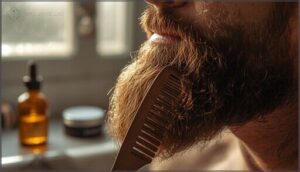
Think of a beard comb as a map — it tells your hairs where to go, every single day.
Your Comb Tooth Selection matters more than most guys realize. Wide-tooth combs handle thick beards; fine-tooth wins on mustache precision. The Fluffing Method comes first: comb outward and upward to lift follicles before applying the Downward Stroke Technique — 10 to 15 smooth passes per section. Apply 3–5 drops of oil beforehand for zero friction. That’s your Product Integration locked in.
| Step | Technique | Timing |
|---|---|---|
| Fluffing Method | Comb upward from neck | 30 seconds pre-styling |
| Downward Stroke Technique | Cheeks to chin, smooth passes | 2 minutes daily |
| Comb Tooth Selection | Wide for thick, fine for mustache | Every session |
| Product Integration | Oil before combing, balm after | Morning routine |
| Consistency Timing | Daily for 4–6 weeks | Morning + evening |
Consistency Timing is the real catalyst. Miss a day and you’re sliding back three to five days in trained direction. Stick with your beard grooming routine — brush direction becomes muscle memory fast.
Shaping During Early Growth

Early growth stages are where most guys mess up — trimming too soon or too low. Wait two to four weeks before finalizing your Cheek Line Definition or Neckline Positioning.
Patchy Area Management means working with what you have, not against it. Use Guard Size Selection wisely — start at 6mm. Face Shape Adjustments come later. Let density reveal itself first.
Temporary Styles for Short Beards

Once you’re past the early patience test, short beard styles start opening up.
A Stubble Fade sits clean at 4–5mm.
The Goatee Hybrid or Anchor Mini keeps cheeks clear while building chin definition.
Corporate Slick works with a sharp 3–5mm trim.
A Boxed Trim adds structure fast.
These beard styling tips give your daily grooming routine real direction.
Adapting to Awkward Growth Phases

Those short beard styles help right now, but weeks 3 to 6 will test your mindset and motivation hard. Hair sticks out, patchy or uneven areas look obvious, and the mirror isn’t your friend.
Don’t quit. Snap weekly photos for visual progress tracking — changes are real but slow.
One confidence boost tip: define your neckline. It instantly makes awkward‑phase scruff look intentional.
Trimming and Shaping as You Grow

Trimming while your beard is still growing feels sharp look, but it’s actually what separates a sharp look from a scraggly mess. Done right, it keeps your shape clean without costing you length.
Here’s what you need to know to trim with confidence.
When to Trim for Best Results
Timing your trim matters more than most guys realize. Watch for Growth Phase Indicators — flyaways, frizzy ends, or a shapeless jawline — those are your signals.
Hold off until week four before your first cut, then trim lightly every two to four weeks during the awkward phase. Monthly Split End Management keeps strands healthy without sacrificing length.
Tools for At-Home Trimming
Once timing’s dialed in, the right tools make all the difference. A quality beard trimmer with a solid Guard Selection Guide takes the guesswork out — a #2 guard for stubble, #4 for fuller looks.
Keep Battery Life Tips in mind: the Wahl A-Lign runs 90 minutes cordless. Add scissors for stray ends, a beard comb with smart Comb Material Choices, and a 7x mirror for Mirror Magnification Benefits.
Defining Necklines and Cheek Lines
Place your neckline one to two finger-widths above your Adam’s apple — that’s your Neckline Placement Rules foundation.
From there, Cheek Line Height depends on your face shape: round faces go higher, square faces stay low. Always check Side Profile Blending so lines flow naturally into your jaw.
Line Shape Options, sideburn to chin, should curve gently, never look ruler‑straight.
Preventing Over-Trimming Mistakes
Over-trimming is the silent beard killer. One bad session can erase weeks of progress. Guard Size Monitoring keeps you honest — always start longer than you think you need.
- Sectional Trimming Method: Work one zone at a time
- Visual Length Assessment: Step back every 30 seconds
- Trim Frequency Planning: Every 2–4 weeks, not weekly
- Blade Sharpness Checks: Dull blades tug and mislead
Skin and Beard Health Tips
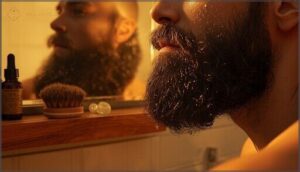
A great beard starts with healthy skin underneath — skip that part, and even the best grooming routine falls flat.
Itch, beardruff, and ingrown hairs are the most common complaints guys run into as their beard fills in, and all three are completely preventable. Here’s what you need to know to keep both your skin and beard in good shape.
Preventing Itch and Beardruff
Beard itch and beardruff aren’t a rite of passage — they’re fixable.
Gentle Cleansing two to three times weekly keeps buildup from triggering irritation.
Boar Bristle Exfoliation a couple times a week clears dead skin and improves skin hydration.
Tea Tree Antimicrobial oil addresses fungal flakes at the source, while Shea Butter Hydration seals moisture in.
Use noncomedogenic products only — clogged pores make everything worse.
Moisturizing for Skin Under Beard
Your skin under that beard is thirsty — and beard oil alone won’t cut it.
Ingredient Selection matters: reach for a skin moisturizer with glycerin, hyaluronic acid, and squalane for real skin hydration and barrier support.
Water Quality affects absorption, so rinse with filtered water when possible.
Massage Technique counts too — press product through to skin for 20–30 seconds right after your shower while pores are open.
Managing Ingrown Hairs
Ingrown hairs are basically your beard turning on you — curly strands doubling back into skin instead of growing outward. Here’s how to shut that down fast:
- Exfoliation Techniques: Use a beard brush weekly for skin exfoliation — it clears dead cells blocking follicles
- Warm Compress Benefits: 10–15 minutes of heat daily softens skin and coaxes trapped hairs out
- Proper Shaving Angle: Always shave with the grain using a single-blade razor
- Tweezing Safety: Sterilize tweezers first, lift the hair loop gently, then pull in the growth direction — no digging
- Infection Signs: Swelling, heat, or a bump lasting two weeks? See a doctor
Run a beard comb through daily and keep a good moisturizer on the skin underneath.
Nutrition and Lifestyle for Beard Growth

what you put in your body matters just as much as what you put on your beard. Growth happens from the inside out, and your daily habits either support that or slow it down.
Here’s what actually moves the needle.
Foods That Support Beard Health
What you eat shows up in your beard — plain and simple. Nutrition for beard health isn’t complicated, but it’s specific.
| Nutrient | Best Food Sources |
|---|---|
| Biotin-rich foods | Eggs, almonds, sweet potatoes |
| Zinc sources | Oysters, pumpkin seeds, beef |
| Omega-3 fats | Salmon, walnuts, mackerel |
| Vitamin D intake | Sardines, mushrooms, egg yolks |
| Protein power | Chicken breast, turkey, eggs |
Essential vitamins and minerals — biotin, zinc, a high-protein diet — build stronger, thicker strands from the inside out.
Hydration and Its Role
Food fuels your beard — but water keeps it alive. Follicle Hydration is what moves biotin and nutrients from your plate to your roots. Aim for 8 glasses daily for a real Circulation Boost. Dehydration Effects hit fast: brittle strands, patchy spots, slowed growth.
Water isn’t optional — it’s the delivery system that carries every nutrient straight to your follicles
- Water Intake Benefits: delivers oxygen to follicles
- Hydrated skin resists flaking and irritation
- Skin Oil Balance stays steady with proper intake
- A moisturizer with eucalyptus helps your skin barrier from outside
Sleep and Stress Management
Drinking enough water sets the stage — but sleep seals the deal. Seven to nine hours nightly keeps your testosterone where it needs to be for real beard growth. Drop to five hours, and hormone levels fall fast.
That’s where Sleep Hygiene and REM Quality matter. Pair that with daily Cortisol Reduction through exercise or meditation, and your follicles stay fueled.
Supplements for Optimal Growth
Sleep manages hormones — supplements fill the nutritional gaps your diet misses.
- Biotin Dosage: 2,000–5,000 mcg daily strengthens keratin along each hair shaft.
- Zinc Benefits: 15–30 mg aid oil glands and tissue repair around follicles.
- Vitamin D Role: 20–50 ng/mL triggers testosterone and creates new follicles.
- MSM Sulfur + Collagen Support: 1,000–3,000 mg MSM paired with collagen boosts thickness noticeably within weeks.
Add B complex and consistent protein intake to lock it all in.
Frequently Asked Questions (FAQs)
How do I properly treat my beard daily?
Your beard grooming routine starts with temperature control — lukewarm water, never hot.
Apply beard oil, then beard balm using massage technique.
Daily product selection and tool sanitation keep skin healthy and growth consistent.
Does finasteride prevent beard growth?
Finasteride won’t stop your beard cold. Clinically, 9% of users saw zero change in thickness. DHT inhibition effects are real but mild — your existing follicles keep working.
Can beard dye damage hair follicles over time?
Short answer: no. Dye penetration limits keep chemicals at the shaft level — follicle toxicity isn’t the real threat. Long-term shaft weakening and chemical irritation effects on your skin barrier are.
How do climate and humidity affect beard texture?
Climate quietly shapes your beard more than any product can.
High humidity triggers Humidity‑Induced Frizz by swelling cuticles, while Dry‑Air Brittleness cracks shafts.
Seasonal Oil Production, Heat‑Related Split Ends, and Altitude Texture Changes all demand smart seasonal adjustments to protect hair texture.
Does exercise influence beard growth or thickness?
Yes. Strength Training and HIIT Benefits are real — exercise boosts testosterone levels, improves Blood Flow and Circulation Gains to follicles, and reduces cortisol levels, supporting thicker, healthier growth over time.
When should you see a dermatologist about growth?
If you notice sudden bald patches, folliculitis symptoms lasting over two weeks, persistent itching that won’t quit, or unusual growth spikes, see a dermatologist.
Don’t wait — alopecia signs and skin infections need professional eyes fast.
How do different face shapes affect beard styling?
Your face shape is the blueprint — your beard is the architect.
Oval face options are endless.
Round face elongation needs chin length.
Square face softening wants rounded edges.
Heart face balancing adds jaw width.
Diamond face rounding fills the chin.
Conclusion
What separates a sharp beard from a forgotten one? Consistency.
When you style your growing beard daily—oil in the morning, comb through, clean up the lines—it stops feeling like maintenance and starts feeling like ownership.
Your beard won’t fix itself on hard days, but the routine will carry you through them.
Stay with the process long enough, and the guy staring back in the mirror won’t look like someone still figuring it out.
- https://cremocompany.com/blogs/blog/beard-grooming-101-the-complete-guide-to-beard-care
- https://meanbeardco.com/pages/beard-care-101-tips-for-stepping-up-your-beard-care-routine
- https://livebearded.com/blogs/do-better/spencers-morning-beard-grooming-routine-revealed
- https://copperjohns.com/blogs/news/facial-hair-growth-guide
- https://villagecuts.com/beard-trimming-tips/