
This site is supported by our readers. We may earn a commission, at no cost to you, if you purchase through links.

Most guys give up on their beard the moment it starts coming in patchy. They assume it’s broken, unfixable, a genetic dead end.
Here’s what years behind the chair taught me: uneven growth isn’t the problem—it’s just information. Your beard is telling you where it wants to go.
The guys who figure out how to style uneven beard growth instead of fighting it almost always end up with something that looks deliberate, even sharp. The right cut, the right technique, and a little patience turn a patchy beard from a frustration into a signature.
Table Of Contents
- Key Takeaways
- Common Causes of Uneven Beard Growth
- Choosing a Style for Patchy Beards
- Strategic Trimming for Symmetry
- Grooming Techniques to Enhance Appearance
- Boosting Beard Growth Naturally
- Maintenance Tips for Lasting Results
- Frequently Asked Questions (FAQs)
- How to fix a beard growing unevenly?
- How to fix patchy beard growth?
- Why is my beard only growing ok on one side?
- Can beard dye help disguise patchy areas?
- Does shaving frequently make beards grow thicker?
- How does sleep quality affect facial hair growth?
- Are beard growth supplements safe to use?
- Can stress cause permanent damage to hair follicles?
- Conclusion
Key Takeaways
- Patchy growth isn’t a flaw to fix — it’s a pattern to work with, and the right trim style can make it look completely intentional.
- Genetics, hormones, and sleep quality are the biggest drivers of uneven growth, so fixing your beard often starts with fixing your habits.
- Heavy stubble like a goatee do more to hide patchiness than length ever will — lean into what’s already growing strong.
- Consistency beats everything: a simple routine of brushing, oiling, and trimming every 7–10 days will move the needle faster than any single product.
Common Causes of Uneven Beard Growth
Uneven beard growth rarely comes out of nowhere — there’s usually a reason behind it.
Most of the time, it traces back to genetics, skin health, or habits — and an uneven beard trimming guide can help you work with your natural pattern instead of against it.
A few key factors tend to be the main culprits, and knowing which one applies to you makes fixing it a whole lot easier.
Here’s what’s most likely going on.
Genetics and Age Factors
Here’s the truth about uneven beards — genetics and age run the show. Your follicle density variation, androgen receptor sensitivity changes, and puberty timeline effects all shape what grows where. Most men hit their maturation peak age around 25–30. After 50, age thinning effects kick in.
- Inherited follicle count (10,000–30,000) determines coverage
- Low receptor sensitivity creates patchy zones
- Cheeks fill in later than chin
- Density peaks between 25–35
regular trimming prevents split ends and promotes uniform growth.
Hormonal Influences
Genetics sets the stage, but hormones run the show.
Low testosterone — anything under 300 ng/dL — slows follicle activation and thins coverage fast.
DHT sensitivity varies across your face, which is why one cheek fills in while another stalls.
Chronic stress spikes cortisol, cutting testosterone by 15 % in a single month. Thyroid imbalances and elevated prolactin quietly wreck density too.
excess DHT effects can further thin beard hair.
Lifestyle and Nutrition
What you eat and how you live show up in your beard — plain and simple.
- Protein‑Rich Meals feed keratin production — aim for eggs, chicken, or beans daily
- Hydration Strategies matter — 64 ounces of water keeps follicles fed
- Sleep Optimization — 7–9 hours drops cortisol and spikes growth hormones
- Stress Management, Vitamin D, Zinc, Biotin, and omega‑3 fatty acids fill the gaps a healthy diet alone sometimes misses
Improper Grooming Habits
Your diet sets the stage — but bad beard grooming techniques can undo it fast.
Overwet trimming stretches hairs longer, so they curl uneven once dry.
Wrong tool choice means dull blades that tear instead of cut.
Excess product use clogs follicles.
If you’re dealing with buildup affecting growth, fixing patchy beard trouble spots often starts with cutting back on heavy styling products that suffocate the follicle.
Inconsistent brushing and skipping conditioning leave patches looking worse.
Small habit fixes make a big difference in your beard grooming routine.
Choosing a Style for Patchy Beards
The right style can do a lot of heavy lifting when your beard doesn’t grow in evenly.
Some cuts work with patchiness instead of fighting it, and that changes everything.
Here’s what I think about when you’re figuring out what works for your face.
Short Vs. Long Beard Styles
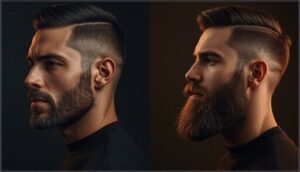
Length is everything with a patchy beard. Short styles — think heavy stubble or a close trim — shrink the contrast between thin and full areas, giving you better beard symmetry without much effort. Longer styles demand more density, or they’ll highlight every gap.
Three beard lengths to evaluate by face shape compatibility and workplace acceptance:
- Stubble — low maintenance, high visual impact, office‑friendly
- Medium trim — works with styling accessories like balm for better shape
- Goatee — redirects attention, hides weak cheeks entirely
Embracing Natural Growth Patterns

Working with your beard’s organic shape — not against it — is one of the best beard styling tips nobody talks about enough. Your natural growth patterns aren’t flaws. They’re yours.
Your natural beard growth patterns are not flaws to fix, they are yours to own
| Growth Zone | What to Do |
|---|---|
| Dense chin | Let it lead |
| Thin cheeks | Keep short |
| Uneven sides | Embrace asymmetry |
| Strong mustache | Build around it |
| Sparse patches | Train with brushing |
That’s texture acceptance in practice — and it’s where real confidence mindset begins.
Beard Inspiration for Sparse Areas
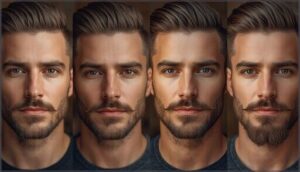
Some styles were basically built for sparse facial hair. Instead of fighting your patches, let the right cut do the heavy lifting.
- Goatee Variations — focus on chin and upper lip, skip the cheeks entirely
- Chin Strap Styling — frames your jaw without needing cheek coverage
- Balbo Adaptations — disconnected mustache and chin beard, clean sides
- Van Dyke Highlights — pointed goatee, detached mustache, zero patch visibility
Solid beard inspiration doesn’t require a full face of hair.
Strategic Trimming for Symmetry

fix the problem is where most guys either fix the problem or make it worse.
Done right, it’s best tool for making an uneven beard look intentional.
Here’s how to use it to your advantage.
Evening Out Fuller Areas
Fuller areas are the ones running the show — and they need to be brought back in line.
Start with a Guard Length Gradient: longer guards on dense zones, shorter as you move outward.
The Blend Fade Technique smooths harsh transitions between thick and thin.
Use Cheek Line Shaping to clean edges, and apply Bulk Removal Tips by combing out first, then trimming what sticks up.
Tapering Patchy Spots
Patchy spots don’t need hiding — they need shaping.
Start your Guard Length Gradient short over thin zones, stepping up toward fuller growth.
Use Adjustable Guard Use to nudge lengths in small increments, not big jumps.
Vertical Section Trimming keeps both sides balanced.
A Flicking Motion softens edges instead of leaving harsh lines.
Clean your Cheek Line Curve low, and the patches look intentional.
Tools for Precise Trimming
The right tools make all the difference.
An Adjustable Guard Trimmer lets you dial in exact lengths — some models move in 0.25 mm steps — so both sides stay even. Pair it with Shaping Templates to lock in consistent cheek and neckline angles.
Detail Edgers handle tight spots. Precision Scissors and the Comb Guard Technique clean up what clippers can’t.
Beard shaping tools, done right, do the heavy lifting.
Grooming Techniques to Enhance Appearance
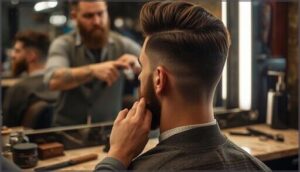
Trimming gets you in the right shape, but grooming is what keeps everything looking intentional. The right techniques can actually train your beard to grow in a more flattering direction over time.
Here’s what to add to your routine.
Brushing and Training Beard Hair
Brushing is one of the cheapest tools in your beard grooming kit — and one of the most overlooked. Start with direction mapping: feel where your hairs naturally resist and go with that grain.
A boar bristle brush manages oil distribution better than plastic. Brush once or twice daily.
For stubborn growth, try light heat training with a dryer on low to set the direction and improve beard symmetry.
Using Beard Balm and Oil
Once brush has done its job, balm and oil take over. The layering order matters — apply 4 to 6 drops of beard oil first, let it absorb for a couple of minutes, then work in a nickel-sized amount of beard balm.
Massage it into thin spots for 30 to 60 seconds. That stimulates follicles and adds hold strength to cover gaps instantly.
Deep Conditioning for Health
Balm and oil handle the surface.
But once a week, go deeper.
A deep conditioning mask addresses what daily beard care routine products can’t — moisture retention at the follicle level, cuticle sealing to lock softness in, and real nutrient infusion for thinner spots.
Apply it to a damp beard, massage into the skin for scalp hydration, wait 20 minutes, rinse cool.
Boosting Beard Growth Naturally

Sometimes a little extra effort behind the scenes makes a real difference in how your beard fills in.
The good news is you don’t need anything fancy — just a few smart habits and the right tools.
Here’s what actually moves the needle.
Improving Diet and Nutrition
Your beard grows from the inside out — and what you eat matters more than most guys think. The right nutrition for hair means feeding your follicles what they actually need:
- Protein-rich meals like chicken or eggs (31 g and 6 g per serving)
- Biotin sources like almonds and egg yolks for keratin strength
- Zinc intake from pumpkin seeds to support testosterone
- Vitamin D foods and omega‑3 fatty acids from salmon for follicle activation
Fix your plate, fix your beard.
Promoting Blood Flow
Getting blood moving to your follicles is one of the simplest wins you can make. Facial massage with a few drops of beard oil — five minutes, small circles along the jaw — wakes up beard blood circulation, which your skin actually reacts to. Warm compresses open vessels fast. Heat-Cool Therapy in the shower adds a pumping effect.
Aerobic exercise does the rest. Neck stretches keep flow moving upward where it counts.
Using Beard Growth Kits
complete beard growth kit simplifies your beard growth management considerably.
The derma roller performs beard microneedling — 10 passes vertically, horizontally, and diagonally every third day. That Microneedling Technique drives absorption when you follow with serum.
Serum Ingredient Benefits stack fast: biotin, Capilia Longa, beard minoxidil, and arginine hit dormant follicles hard.
Stick to Kit Safety Protocols, follow Application Timing Strategies, take your beard supplements, and Travel Kit Organization keeps everything clean and ready.
Maintenance Tips for Lasting Results

Getting results takes more than a good trim — it takes staying consistent.
The real work happens in the small habits you build and stick to over time.
Here’s what to focus on to keep your beard looking sharp and growing right.
Creating a Beard Care Routine
Consistency is everything. solid beard care routine starts with washing once or twice a week, patting dry, then applying 3–5 drops of oil while your pores are still open.
Work a nighttime moisturizing ritual into your wind-down — beard butter seals moisture while you sleep.
Rotate products on a product rotation schedule so your skin doesn’t plateau.
Simple, repeatable beats complicated every time.
Regular Shape and Style Checks
Think of shape checks as quality control for your face. Every 7–10 days, do a lighting inspection under even, shadow‑free light — cool‑toned works best.
Use symmetry templates and edge line measurement to catch drift before it becomes a problem. Snap front and side shots for photo documentation.
A quick weekly brush review keeps your beard styling advice practical, your beard shape sharp, and your beard maintenance routines locked in.
Monitoring Progress and Adjusting
Your beard tells a story over time — you just need to read it right. Use a Photo Timeline to track real progress, not mirror emotions.
- Snap front, side, and under‑chin angles every 2–4 weeks
- Add week counters for clear Growth Metrics
- Schedule Checkpoint Reviews at weeks 4, 8, and 12
- Make a Style Pivot only when photos confirm stalled coverage
That’s smart beard maintenance routines doing the work. Routine Feedback keeps your beard care routine honest, your beard symmetry enhancement on track, and your beard trimming techniques purposeful — no guesswork, no impulsive shaving.
Frequently Asked Questions (FAQs)
How to fix a beard growing unevenly?
Fixing an uneven beard starts with patience. Most beard asymmetry solutions involve understanding your growth patterns first, then applying smart beard trimming techniques to blend fuller zones into patchier ones gradually.
How to fix patchy beard growth?
Patchy beard growth often comes down to genetics, hormones, or nutrition.
Try stress reduction, vitamin supplementation, and consistent beard care.
Hormone testing rules out deeper issues.
Dermarolling technique and beard product usage can help fill gaps.
Why is my beard only growing ok on one side?
One side of your face gets more blood flow, has denser follicles, or cycles through growth at a different pace.
Genetics, sleep position, and hormonal sensitivity variance all quietly tip the scales.
Can beard dye help disguise patchy areas?
Yes.
Beard dye is one of the most underrated tools for patchy beard aesthetics.
Smart shade selection tips and application precision techniques can make sparse spots nearly disappear in one sitting.
Does shaving frequently make beards grow thicker?
No. Shaving more often won’t thicken your beard — that’s pure Shaving Frequency Myth.
Follicle Biology proves shaving never touches the follicle.
Perceived Thickness from blunt stubble is just Hair Shaft Appearance, not real beard growth.
How does sleep quality affect facial hair growth?
Poor sleep tanks your testosterone and DHT synthesis fast. Just five hours nightly can drop hormone levels by 15%.
REM sleep drives growth hormone boost and follicle regeneration — skip it, and your beard pays the price.
Are beard growth supplements safe to use?
Some work, some don’t.
Biotin toxicity, zinc overdose, and minoxidil irritation are real risks.
FDA regulation is minimal, so check ingredients carefully.
Supplement interactions happen.
low doses and watch how your body responds.
Can stress cause permanent damage to hair follicles?
Short-term stress usually won’t permanently damage hair follicles — telogen effluvium is temporary.
But chronic cortisol impact, oxidative damage, and autoimmune triggers can cause follicle miniaturization over time, quietly wrecking your beard health.
Conclusion
A sculptor doesn’t throw out marble because it has veins running through it—he works with them. Your beard is no different.
Learning to style uneven beard growth isn’t about fixing what’s “wrong.” It’s about reading what you’ve got and making smart decisions with it. Trim the fuller areas, train the sparse ones, feed it right, and stay consistent. Give it time. What feels like a flaw now usually becomes the thing people notice first.
- https://ca.braun.com/en-ca/male-grooming/the-world-of-styling-and-trimming/how-to-fix-a-patchy-beard
- https://www.gillette.co.uk/blog/facial-hair-styles/how-to-fix-a-patchy-beard/
- https://livebearded.com/blogs/do-better/how-to-fix-a-patchy-beard
- https://uk.braun.com/en-gb/male-grooming/facial-hair-styles/how-to-chin-strap
- https://www.thebeardstruggle.com/blog/best-facial-hair-styles-for-patchy-beards-style