This site is supported by our readers. We may earn a commission, at no cost to you, if you purchase through links.

Your barber asks, “What number on top?” and suddenly you’re frozen—guessing between a 4 and a 6 like it’s a pop quiz you didn’t study for. That awkward silence? It costs you the exact fade you wanted.
A taper fade length chart eliminates the guesswork entirely. It maps every clipper guard to precise millimeter measurements, so you speak your barber’s language fluently. No more pointing at photos and hoping for the best. When you understand that a #2 guard leaves 6mm while a #3 leaves 10mm, you control the outcome.
Charts also reveal why your low fade needs different maintenance than a high fade—each height fades at different rates as hair grows. Master the numbers, and you’ll walk out with the exact cut you envisioned every single time.
Table Of Contents
- Key Takeaways
- What is a Taper Fade Length Chart?
- Taper Fade Guard Numbers and Lengths
- Types of Taper Fades by Length
- Choosing The Right Taper Fade Length
- How to Communicate Your Desired Fade Length
- Taper Fade Maintenance by Length
- Tools and Techniques for Perfect Fades
- Frequently Asked Questions (FAQs)
- Conclusion
Key Takeaways
- A taper fade length chart maps clipper guard numbers to exact millimeter measurements, eliminating guesswork and letting you control your cut by speaking your barber’s language with precision instead of vague descriptions.
- Different fade heights—low, mid, high, and skin—require different maintenance schedules ranging from every 1-2 weeks for skin fades to every 2-4 weeks for low fades because each style grows out at different rates.
- Clear communication with your barber means stating specific guard numbers at the bottom and blend points rather than using phrases like “just a fade,” combined with reference photos showing front, side, and back views of your target look.
- Mastering fade execution requires understanding that smooth blending comes from overlapping clipper passes with controlled pressure and angle shifts, not just running guards up and down the sides.
What is a Taper Fade Length Chart?
A taper fade length chart shows you exactly which clipper guards create specific fade heights on your head. It removes the guesswork when you’re explaining what you want to your barber or cutting your own hair at home.
Understanding fade clipper guard sizes helps you choose the right numbers for each section of your fade, from the shortest at the bottom to longer on top.
Here’s what makes these charts essential tools for getting consistent results every time.
Purpose and Benefits of a Length Chart
A length chart locks in fade customization with millimeter-level chart accuracy. You get style consistency across barbers and visits—no more “just clean it up” guesswork.
The chart speeds client communication by tying guard numbers and clipper guard sizes to exact outcomes. It tracks hair growth milestones so you can plan your next taper fade haircut with precision.
For a deeper understanding of hair measurement standards, see this hair length chart basics.
| Benefit | How It Helps You |
|---|---|
| Clarity | Eliminates vague requests and barber confusion |
| Precision | Maps each fade level to specific guard numbers |
| Confidence | Gives you control over your haircut outcome |
How Barbers and Clients Use Length Charts
You point to the chart and call out guard numbers—your barber repeats them back for confirmation. This fade consultation cuts through “short on the sides” vagueness and locks in length precision.
Your barber uses the chart during the haircut to show progress and get approval at key milestones. You both speak the same clipper language.
Using helps guarantee everyone knows exactly how much hair will be trimmed.
| Role | Chart Use | Result |
|---|---|---|
| Client | Reference photos + guard numbers | Clear fade vision |
| Barber | Confirms measurements mid-cut | Zero confusion |
| Both | Align on top length and taper depth | Consistent haircut |
Key Elements Included in a Taper Fade Chart
Now that you’re on board with guard numbers and barber consultations, let’s break down what’s actually on the chart.
Every taper fade chart includes guard numbers paired with millimeter lengths—zero through eight covers skin to one inch. You’ll spot fade line placement zones, clipper guard shift points, and hair texture notes. Chart readings map where each blend starts and ends. Style customization markers show high, mid, or low fade techniques for your head shape.
| Chart Element | What It Shows |
|---|---|
| Guard scale | Numbers 0–8 with mm/inch conversions |
| Fade zones | Low, mid, high placement markers |
| Blend points | Where each guard shifts |
| Texture key | Straight, wavy, curly adjustments |
| Style samples | Visual references for final look |
Taper Fade Guard Numbers and Lengths
Clipper guards control how much hair gets cut during a taper fade. Each guard number corresponds to a specific length in millimeters or inches, creating the gradual blend from top to skin.
Understanding how hair clipper guard sizes work helps you choose the right combination—like starting with a #4 on top and blending down to a #1 at the sides.
Understanding these numbers lets you speak your barber’s language and get exactly the fade you want.
Common Clipper Guard Sizes Explained

You need to know guard numbers to control your fade line. Clipper guards snap onto your blade—sizes 0 through 5 are standard. Guard standardization exists across brands, but brand differences matter: Wahl and Andis use similar numbering with slight variances.
The clipper lever impact adjusts length between guards. Guard material affects durability. Guard cleaning after every cut maintains performance.
Master blending techniques by moving through adjacent taper fade guard numbers smoothly.
Guard Number to Millimeter/Inch Conversion

Guard number to inch conversion is your precision trimming foundation. A 1 guard cuts 3.175 millimeters (1/8 inch). Guard 2 delivers 6.35 millimeters (1/4 inch). Guard 3 measures 9.525 millimeters (3/8 inch).
Conversion charts eliminate guesswork during fade haircuts. Clipper guard sizes translate directly: multiply guard number by 3.175 millimeters for quick calculations.
Measurement tools verify accuracy. Fade length calculators aren’t necessary—memorize these taper fade standards instead.
Visual Guide to Taper Fade Lengths
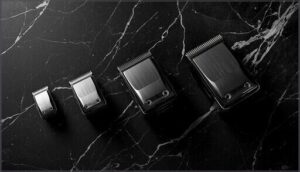
Indexed visual references show how hair length shifts from temple to crown across different taper styles. Low taper fades blend from 3-6 millimeters at the ear to 12-20 millimeters on top. High taper cuts shift more aggressively: 3-6 millimeters bottom, 25-40 millimeters crown.
These fade techniques adapt to face shapes and hair texture for tailored taper fade haircut results.
Types of Taper Fades by Length
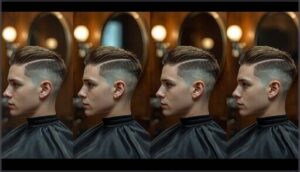
Taper fades aren’t one-size-fits-all—they’re broken down by where the fade starts on your head. Each type creates a different level of contrast between your top length and the sides.
Here’s how low, mid, high, and skin fades stack up regarding guard numbers and visual impact.
Low Taper Fade Length Chart
A Low Taper Fade starts the fade shift around your lower temple and ear area—your barber will set the guideline half an inch to one inch above the bottom edge.
The taper gradually blends upward using Guard Numbers like 1 through 4, preserving more scalp coverage than higher fades.
This Fade Haircut demands trims every 2-4 weeks for crisp Low Fade Styling and clean Taper Maintenance.
Mid Taper Fade Length Chart
A Mid Taper Fade sits at temple height—between your ear and eyebrow—showing balanced skin exposure without going extreme. Your barber starts the blend around Guard 3 at the mid point, then steps down to 1 or 0.5 near the neckline. This Taper Fade Haircut works across all Hair Texture types and demands trims every 2-3 weeks to keep those Fade Techniques sharp and your Taper Styles looking controlled.
- Starting point: Temple height creates visual weight centered on the sides
- Guard Numbers progression: Typical blend from 3 down to 1 or skin
- Maintenance Schedule: Book your Barber Tips session every 14-21 days
High Taper Fade Length Chart
A High Taper starts two to three inches above your ears—right at temple level—then drops sharply to bare skin or Guard 0.5 at the neckline.
You’ll see dramatic contrast when your barber blends Guard 2 or 3 down through 1, using Barber Techniques like freehand flicking to nail those Fade Design Principles.
This High Fade Variation demands Taper Maintenance every 2-3 weeks to preserve that bold silhouette.
Skin (Bald) Taper Fade Length Chart
Want zero skin showing straight through? A Skin Fade takes your Taper Fade Haircut down to bare scalp—no Clipper Guard at the neckline—then ramps up through 0.5, 1, and 2 for that killer Fade Blend.
These Bald Fade Styles demand Skin Fade Techniques like freehand flicking and tight Taper Maintenance every 1–2 weeks to keep Balding Patterns crisp.
Choosing The Right Taper Fade Length

The right fade length isn’t a one-size-fits-all decision—it depends on your hair type, face shape, and the contrast you’re after. What works for thick, coarse hair won’t always suit fine or curly textures, and the same goes for different facial structures.
Here’s how to match your fade to what you’re working with.
Matching Lengths to Hair Type
Your hair texture dictates your fade strategy. Straight hair holds sharp taper fade transitions with guard 1 to 3 blends—curl patterns need longer length ratios to prevent harsh edges.
Wavy haircut types work best with gradual fade techniques: start at guard 2 or higher.
Coily hair shrinks up to 50 percent when dry, so plan your styling options accordingly. Match your haircare approach to your natural texture for maximum control.
Face Shape Considerations
Face symmetry plays a crucial role in determining the placement of the fade line. Jawline balance is achieved with low to mid fades on square faces, softening those angles. Cheekbone enhancement is best with mid to high fades on diamond and heart-shaped faces. Forehead framing requires low fades for wider foreheads and high fades for narrower ones.
- Oval faces: any fade height works—you control the contrast
- Round faces: mid to high fades create vertical length
- Square faces: low to mid fades reduce jaw sharpness
- Heart-shaped faces: low to mid fades balance upper width
- Diamond faces: mid to high fades highlight your strongest feature
Desired Contrast and Style
Contrast levels make or break your taper fade. Low fades with guard numbers 2 to 4 keep things professional—ideal for offices. High fades dropping to a 0 guard create bold, sharp lines that frame face shapes dramatically.
Your hair texture matters: thick hair manages stronger contrast, while fine hair type needs softer blends.
Personal preference rules—your style choices define the final look you own.
How to Communicate Your Desired Fade Length

Getting the fade you want starts with clear communication at the barber shop. You need to speak the same language as your barber—that means knowing guard numbers, fade heights, and how to describe your vision.
Here’s how to walk in confident and leave with exactly what you asked for.
Reference Photos and Charts at The Barber
Bring two or three photos showing front, side, and back views of your target fade. Point to specific features like line height and blend points during your client consultation. These visual aids eliminate guesswork and help you walk out with exactly what you envisioned.
Most barber shops now use reference walls with curated haircut grids and digital displays showing guard sizes beside printed images.
Discussing Guard Numbers With Your Barber
State the exact guard numbers you want at the bottom and where the fade should start. For example, tell your barber, “Guard 1 at the bottom, blend to a 3 mid-way, and leave two inches on top.” This barber communication eliminates confusion about clipper guard sizes.
Ask which fade techniques work best for your hair texture, then confirm the taper fade plan before the first cut.
Avoiding Common Miscommunication
Most miscommunication happens when you say “just a fade” or skip explaining the fade line placement. Avoid vague requests—your barber-client relationship thrives on specific requests like guard numbers and neckline shape.
Use visual aids during consultations, then give feedback during the cut. Don’t assume your barber remembers past taper fade preferences. Clear communication about clipper guard sizes prevents disappointing results.
Taper Fade Maintenance by Length

Your fade’s lifespan depends on how fast it grows out and how sharp you want it looking. A low taper gives you breathing room between cuts, while a skin fade demands constant attention to stay clean.
Here’s what you need to know about keeping each fade type fresh—from trim schedules to styling tricks.
Recommended Trim Frequency for Each Fade
Your fade haircut maintenance schedule depends entirely on fade height.
Low Fade Schedule runs every 2 to 4 weeks: that gradual taper holds its shape longer. Mid Fade Intervals tighten to 2 to 3 weeks—you need sharper definition. High Fade Upkeep demands visits every 1 to 2 weeks for maximum contrast.
Here’s your grooming tips breakdown:
- Low fade: trim every 2-4 weeks
- Mid fade: maintain every 2-3 weeks
- High fade: visit every 1-2 weeks
- Skin fade: refresh every 1-2 weeks
At-Home Vs. Professional Touch-Ups
You control costs when you touch up at home—one clipper set costs less than three shop visits.
Professional barbers bring skill levels and tool differences you can’t match: stronger motors, dedicated trimmers, all-angle precision.
Risk factors climb when you attempt full blending solo; stick to neckline cleanups between cuts.
Time savings favor home edging, but fade haircut maintenance demands real barbering techniques for consistent results.
Styling Tips for Different Fade Lengths
Your hair texture drives product selection—curly tops need lightweight creams while straight hair holds shape with matte paste. Low fades allow heavier styling tricks since top length dominates; high fades demand minimal product to keep focus on contrast.
Daily maintenance means washing twice weekly and applying dime-sized amounts. Different fade lengths require different fade styling tips for consistent haircut styles.
Tools and Techniques for Perfect Fades

Getting a clean taper fade isn’t just about skill—it’s about having the right tools in your hands. Your clippers, guards, and blending techniques make the difference between a sharp fade and a messy one.
Here’s what you need to know to execute fades that look professional every single time.
Essential Clippers and Guard Attachments
Your tools shape your outcome—so pick wisely. Professional Barber clippers with metal guard attachments deliver consistent Fade results through guard numbers 0 to 8. Andis taper blades and Revite blade types handle precise transitions.
Attachment systems must snap flush against the skin for even cuts.
Clipper maintenance—cleaning guards, lubricating blades, checking alignment—prevents uneven trimming techniques that ruin your taper fade vision.
Blending and Transition Techniques
Guard control is only half the fight—mastering blending techniques separates amateur cuts from fluid transitions.
You build smooth fade techniques through overlapping clipper guard passes: start one guard lower, flick outward at the fade line, then layer upward. Texture blending relies on controlled pressure and angle shifts.
Perfect color gradation requires micro-adjustments—no visible steps, just pure layering effects that flow like water.
Perfect fades demand micro-adjustments that eliminate visible steps and create seamless, water-smooth transitions
Professional Tips for Smooth Fades
Smooth fade haircut execution comes down to four final polish moves that separate good from great.
Your barber tools need constant checks—clipper blades, tension, and angle. Hair texture dictates how aggressive you blend: thick curls need lighter guards, fine strands show every mistake. Style consultation before cutting prevents disasters.
- Mirror-check symmetry from three angles: front, sides, back
- Clean your fade lines with a trimmer for razor-sharp edges
- Mist lightly to reveal uneven spots before they dry
- Schedule maintenance every 2–3 weeks for lasting sharpness
Frequently Asked Questions (FAQs)
Can taper fades work with thinning hair?
You can pull off a taper fade with thinning hair—just ask for a mid or low fade to reduce scalp visibility, keep the top longer, and work with your hair density for natural blending.
How do taper fades age over time?
Your fade sharpens your look today, but it loses contrast tomorrow. That’s fade longevity—hair regrowth softens transitions every 1-2 weeks.
Maintenance tips: schedule regular trims to preserve clean lines and prevent style evolution from blurring your taper fade.
Are taper fades suitable for all ages?
Taper fades work across all ages with proper adjustments. Youth cuts use longer guards for gentle blending. Senior styling favors low-contrast fades that respect thinning hair.
Family barbers adapt barbering techniques to fit generational trends and comfort needs.
Can I achieve a taper fade at home?
You can execute a basic taper fade at home using clippers, guard attachments, and self-cutting techniques from taper fade videos.
However, professional barbering techniques and at-home maintenance deliver better blending than most DIY fade kits.
What hair products work best after fading?
Most guys skip the good stuff after a fresh cut—yet your fade begs for Color Protectants, Moisture Masks, and lightweight Styling Creams.
Choose Hair Oils and Fade Serums: they define without weight.
Conclusion
A taper fade length chart is your blueprint—the difference between building what you imagined and settling for whatever shows up. The numbers aren’t restrictions; they’re your control panel.
When you understand that a #1 guard at 3mm creates sharper contrast than a #3 at 10mm, you stop hoping your barber reads your mind. You start dictating exactly what happens.
Master the measurements, own the conversation, walk out with precision every single time.