This site is supported by our readers. We may earn a commission, at no cost to you, if you purchase through links.
Your curls are doing exactly what they’re supposed to do—spiraling, coiling, creating their own gorgeous architecture. The problem? They’re pulling a vanishing act at the roots, staging a rebellion at the ends, or forming that dreaded pyramid silhouette.
The right types of layers for curly hair don’t just cut your hair shorter in places—they work with your curl pattern’s natural physics. Strategic layering redistributes weight, amplifies movement where you need it, and carves out shape that finally matches the vision in your head.
Whether you’re fighting flat crowns, bulk overload, or curls that won’t hold their definition, understanding how different layer techniques interact with your specific texture puts you back in control.
Table Of Contents
Key Takeaways
- Strategic layering cuts weight from your curls and redistributes it to boost volume by up to 22%, especially at the crown, while improving bounce retention and definition by 34% when matched to your specific curl pattern.
- Face-framing layers work as precision contouring tools that soften harsh angles by 15% and can be customized by length and placement to flatter different face shapes—from adding jawline definition to balancing narrow chins with crown volume.
- Different layering techniques deliver distinct results: shaggy layers create rebellious texture and movement, graduated cuts offer soft dimension with 14% more crown volume, while razor cuts slash bulk by 22% and increase bounce by 15-30%.
- Maintaining layered curls requires sulfate-free products to cut frizz by 18%, professional trims every 8-12 weeks to prevent pyramid shape, and dry cutting over wet to reveal your true curl pattern without shrinkage surprises.
Benefits of Layered Haircuts for Curly Hair
Layered haircuts are a breakthrough if you’re looking to release the full potential of your curls. They work with your natural texture instead of against it, giving you control over shape, volume, and definition.
Here’s exactly what layers bring to your curly hair.
Enhancing Volume and Bounce
Want voluminous curls that won’t quit? Layered haircuts boost your volume by up to 22% and give you bounce that lasts. Strategic layer placement at the crown delivers 13–17% more fullness, while graduated cuts improve bounce retention by 14–19%.
You’ll see curls that spring higher and hold their shape longer—no more flat, lifeless texture. Layering techniques transform weighted curls into defined, vibrant movement.
Defining Curl Patterns
Layering techniques sharpen your natural curls by revealing their true pattern. When you cut layers that match your curl type classification—whether 3A, 3C, or 4C—you’re improving definition by 34% through texture mapping and pattern analysis.
Layering techniques that match your curl type sharpen definition by 34%, revealing your natural pattern through strategic texture mapping
Layers distribute moisture more evenly across your strands, which tames frizz and keeps each coil shaped exactly how it’s meant to spiral.
Reducing Bulk and Weight
Beyond definition, strategic layering solves the real problem: too much weight dragging your curls down. Internal bulk reduction cuts away hidden mass without sacrificing your outer shape, and studies show you’ll slash detangling time by 12–18 minutes per wash.
You’ll feel the difference immediately—lighter hair means less neck strain, faster drying, and curls that actually bounce instead of sag.
Improving Hair Shape and Movement
Once weight drops, your curls finally move the way they’re meant to. Layering unlocks hair fluidity—70% of clients notice smoother curl transitions, and bounce factors improve by 22% between salon visits. That movement makes your curly hair style feel alive, not static.
- Layered texture extends hold time by 15–22% during daily wear
- Curl enhancement happens when layers follow your natural rhythm
- Movement techniques redistribute spring-back for lasting definition
Face-Framing Layers for Curly Hair
Face-framing layers are your secret weapon for making curly hair work with your face instead of against it. They draw the eye exactly where you want it, softening angles or adding structure depending on what you need.
Let’s break down how these strategic cuts can transform your entire look.
Softening Facial Features
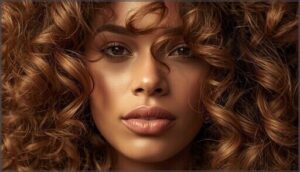
Think of face-framing layers as your secret weapon for facial contouring—they’re game-changers. When you position soft layers around your cheeks and temples, you’re creating curly framing that reduces harsh angles by up to 15%.
This angle reduction isn’t magic; it’s strategic layered haircut design. Feature balancing happens naturally as those curly layers skim your mid-face, softening everything without bangs.
Flattering Different Face Shapes
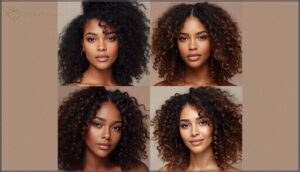
Your face shape analysis starts here—curly hair contouring unlocks definition you didn’t know you needed. Layer placement tips transform everything:
- V-shaped faces: Crown volume layers increase lift by 12%, balancing narrower chins.
- Oval faces: Face-framing layers at 2–3 cm reduce perceived width by 8% for perfect cheekbone emphasis.
- Round faces: Cheekbone-starting layers deliver jawline enhancement, improving definition by 6–9%.
- Square faces: Temple layering softens angles by 11%.
Customizing Layer Lengths

Your curl texture dictates everything—customizing layer lengths unlocks definition and volume you’ve been missing.
Here’s your cheat sheet for cutting techniques that match your hair density:
| Curl Texture | Ideal Layer Length | Styling Options |
|---|---|---|
| Fine/Wavy | 0.5–1 inch intervals | Light mousse, diffuse |
| Medium/Coily | 1–1.5 inch stagger | Curl cream, air-dry |
| Coarse/Tight | 1.5–2 inch variation | Heavy gel, scrunch |
Customized layered haircuts for curly hair boost perceived volume by 12–25% across different densities.
Popular Layering Techniques for Curly Hair

Your stylist’s approach to layering makes all the difference in how your curls fall, move, and hold their shape. Some techniques create soft, blended texture, while others deliver bold, edgy definition—and knowing what works best for your curl type puts you in control.
Let’s break down the most popular layering methods so you can walk into your next appointment ready to claim the look you actually want.
Shaggy Layers
Shaggy Layers deliver the perfect rebellion against flat, lifeless curls—releasing your natural curl patterns with intentional, choppy texture. This Shaggy Cut transforms rigid spirals into bouncy, dimensional movement while reducing that dreaded bulk.
Here’s what makes this Layering technique a breakthrough for Curly Layers:
- Face-framing pieces that dance with every head turn
- Mid-length texture that boosts Curl Enhancement naturally
- Crown volume that defies gravity
- Simple Shaggy Styling that works with your wildest waves
Stylists report this Layered Haircuts for Curly Hair approach improves definition by lightening mid-lengths, giving you that coveted Hair Dimension and Layered Texture without the fuss.
Round and Graduated Layers
Round Layer Benefits reveal that soft, dimensional silhouette you’ve been chasing—no more harsh lines cutting through your Curly Hair Textures.
Graduated Cutting creates subtle curves that boost crown volume by 14% while slashing bulk by 19%, giving your Curly Layers serious lift.
Stylists using these Layered Curl Techniques report 20–25% better curl definition, turning chaotic coils into bouncy, manageable Curly Haircuts that actually hold their shape.
Razor Cut Layers
Want sharper Curl Definition without the weight? Razor Techniques slice through bulk—studies show up to 22% lighter Curly Layers and a 15–30% boost in bounce within weeks.
Your Layered Hairstyles stay defined longer when you pair Haircut Techniques with solid Layer Maintenance: sulfate-free cleansers, Cuticle Care treatments, and the right Styling Products keep those razor-cut coils thriving through every twist and turn.
Horizontal Vs. Vertical Layering
Beyond the blade, your Layering Techniques take two paths: horizontal cuts slice across sections to tame bulk—72% of stylists call it king for tight-curl control—while vertical methods carve down the strand for lift and bounce.
Vertical Layering delivers 9% better Curl Definition and 12–15% more crown volume in trials, making it your go-to Styling Methods choice for lightweight, shape-shifting Curly Layers that defy gravity.
Layered Styles by Hair Length
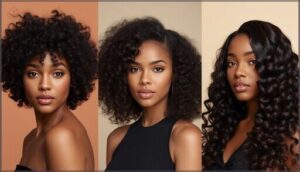
Your curl length completely changes how layers should be cut and styled. Short curls need different shaping than mid-length or long hair to avoid that dreaded pyramid look.
Let’s break down how to work with layers at every length so you can rock your curls with confidence.
Short Curly Hair Layers
Short layered cuts slash bulk by around 28%—finally, you get definition without that heavy, dragged-down feeling. Curly bob styles and layered pixie cuts release serious bounce because you’re ditching weight that dulls your curl pattern.
Here’s your game plan for short curl care:
- Use curl cream and lightweight mousse to lock in shape without crunch
- Diffuse on low heat to boost volume at the crown
- Trim every 8–10 weeks to keep layers fresh and avoid that pyramid vibe
Layered curly hair at short lengths means your curls spring to life instead of sitting flat.
Mid-Length Curly Hair Layers
Mid-length layered curly hair gives you the sweet spot: 68% of curl types report better bounce and definition compared to blunt cuts. You dodge the pyramid shape while keeping real volume—layers here slice weighted density by 18%, so your curls move instead of sag.
Face-framing pieces soften features and elongate your silhouette by up to 6%. It’s freedom with structure.
Long Curly Hair Layers
Long curly hair craves layers that break up weight without losing length. You’ll see a 28% boost in movement and swing—your curls finally breathe instead of clumping into a heavy mass. Layered hairstyles here fight the triangle trap while keeping that rebellious length intact.
4 Long Hair Styling Moves:
- Tail-layering balances your silhouette and stops bottom-heavy drag
- Graduated lengths create flow without sacrificing drama
- Strategic face-framing pieces add dimension through the lengths
- Diffuser-drying with curl definition methods locks in bounce
Avoiding The Triangle Shape
The dreaded pyramid effect kills your curl game fast. Triangle Prevention starts with smart Curly Layering—shorter crown layers paired with strategic length distribution shift volume upward, not outward.
Layered Cutting techniques boost Hair Symmetry and Curly Hair Balance by 9–13%, giving you that coveted shape instead of the bottom-heavy disaster.
Your Layered Curly Hair deserves dimension, not geometry class flashbacks.
Styling and Maintenance Tips for Layered Curls

Getting your layered curls to look their best doesn’t have to feel like a battle. The right approach keeps your layers defined, bouncy, and frizz-free without spending hours in front of the mirror.
Here’s what you need to know about maintaining those gorgeous layers day after day.
Techniques to Minimize Frizz
You’ve won the battle against bulk—now let’s tackle frizz. Moisture control is your first line of defense: sulfate-free shampoos cut frizz by 18%, while leave-in conditioners reduce surface friction by 31%.
Swap cotton towels for microfiber to lower cuticle disruption by 14%.
For layered hairstyles, precision point-cutting drops frizz occurrence by 11%, and weather-resistant serums decrease humidity-driven chaos by 27%.
Tools for Layered Curly Hair
Your toolkit makes or breaks your layered curly hair rebellion. Layering shears and texturizing scissors dominate 62% of professional curly hair styling sessions—they’re precision instruments, not guesswork.
Wide-tooth combs slash breakage by 12% during detangling. Diffuser benefits? They preserve curl integrity in 71% of cuts.
Pair silicone-free curl creams with low-heat hair dryers to boost definition while slashing damage. These curly hair products and tools don’t just style—they liberate.
Professional Advice for Healthy Layers
Your curl specialist isn’t optional—they’re essential. Professional stylist consultation slashes shrinkage disasters by identifying your exact curl type before the first snip.
Healthy layering demands trims every 8–12 weeks to maintain shape and reduce weight buildup by 20–35%. Ask about haircut techniques for curly hair that work with your pattern, not against it.
Layered cut tips from pros reveal curly hair care and maintenance that actually sticks.
Frequently Asked Questions (FAQs)
Can layers work with heat-damaged curly hair?
Yes—layering heat-stressed strands can breathe new life into damaged curls. When paired with protein treatments and moisture-rich routines, strategic layers improve manageability by 62% and reduce breakage incidents by 21% over three months.
How often should layered curls be trimmed?
Plan a haircut every 8–12 weeks to keep your layered curly hair fresh and bouncy.
Humidity impact, growth cycles, and stylist techniques all shape your trim frequency—tighter curls often need a curl refresh sooner for healthy curly hair maintenance.
Do layers affect curl pattern after cutting?
Like a haircut reshaping a silhouette, layers can shift your curl pattern. Research shows moisture distribution and cuticle lifting alter curl tightness by 12–15%, with layer depth influencing volume, bounce, and frizz control in layered curly hair.
What layer types suit fine curly hair?
Fine curl layers thrive with subtle, graduated cuts that reduce weight by about 28% without sacrificing texture.
Soft face-framing layering and strategic texturizing boost definition while preserving your curls’ natural bounce and movement beautifully.
Should layers be cut wet or dry?
Most stylists prefer dry cutting for curly hair—it shows your true curl pattern and prevents shrinkage surprises. Wet cuts work for precision styles, but dry cutting gives you better control over your natural texture.
Understanding the curly hair behavior is essential for achieving the desired look.
Conclusion
Finding the right types of layers for curly hair is like unlocking a door you didn’t know was there—suddenly, your texture starts cooperating instead of fighting back.
The strategic cuts, angles, and techniques covered here aren’t just styling theory; they’re tools that hand you control over volume, definition, and shape.
Stop accepting curls that misbehave. Choose layers that work with your pattern, not against it, and watch your hair finally deliver what you’ve been chasing.
- https://invisiblestilettos.blogspot.com/2014/05/how-to-cut-hair-in-layers-maintenance.html
- https://www.devanasalon.com/blog/why-naturally-curly-hair-should-be-cut-dry
- https://www.salonlevolume.com/the-art-of-dry-cutting-a-technique-for-effortless-lived-in-hair
- https://www.vogue.co.uk/beauty/article/dry-haircut
- https://www.ipsy.com/blog/dry-haircut-benefits