This site is supported by our readers. We may earn a commission, at no cost to you, if you purchase through links. This content is for general informational and educational purposes only and is not a substitute for professional medical, dermatological, or nutritional advice.
The moment your stylist asks "layers or one-length?" most people go completely blank. It’s a simple question with a not-so-simple answer, because the wrong choice can leave you fighting your hair for months.
Layers vs one length isn’t a style preference. It’s a structural decision that shapes how your hair moves, how often you’re back in the salon chair, and how much time you spend with a round brush every morning.
Your hair type, your routine, and even your face shape all point toward one clear answer. Here’s how to find yours.
Table Of Contents
- Key Takeaways
- Layers Vs One-Length Hair: Key Differences
- Layered Haircuts: Pros, Cons, and Upkeep
- One-Length Haircuts: Pros, Cons, and Upkeep
- Popular Layered and One-Length Haircuts
- Layers or One Length: Which Suits You?
- Frequently Asked Questions (FAQs)
- Is it better to have layers or no layers in long hair?
- What is the downside of layered hair?
- What is the 3 rule for hair length?
- Which hair length is most flattering?
- What are some tips for styling layered hair?
- Is it difficult to maintain a one-length haircut?
- How often should I get my one-length haircut trimmed?
- Are there any benefits to having a layered vs. one-length hairstyle?
- Can layers work with every face shape?
- How much does layered styling cost monthly?
- Conclusion
Key Takeaways
- Choose layers if you want more movement, root lift, and less bulk—especially with thick, wavy, or curly hair.
- Choose a one-length cut if you have fine or straight hair and want fuller-looking ends, a sleek shape, and simpler daily styling.
- Layers need more styling effort, products, and regular reshaping, while one-length cuts grow out more evenly but still need trims to keep the edge sharp.
- Let your hair texture, face shape, styling routine, and maintenance budget decide—the best cut is the one you’ll realistically maintain.
Layers Vs One-Length Hair: Key Differences
Both cuts look completely different on paper — and even more so in real life. The gap between layered and one-length hair comes down to a few key factors that directly affect how your hair looks, feels, and holds up over time. Here’s what sets them apart.
Use this hair length chart for face shape and texture to see where each cut will fall and frame your features.
Cutting Technique and Overall Shape
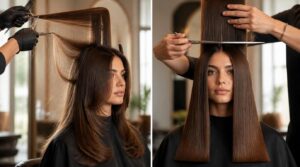
When you stack layers vs one length side by side, the difference starts at the very first snip. Layered cuts rely on point cutting and elevation, lifting sections at 90 degrees to sculpt shape from deep inside the hair. One-length cuts follow the straight-across technique, keeping every strand at a single, consistent line. That precision is what defines face-framing too.
Just as hairstylists prioritize consistency in their cuts, professional chefs apply the same principle through uniform knife cutting techniques to make sure even results.
Volume, Density, and Movement
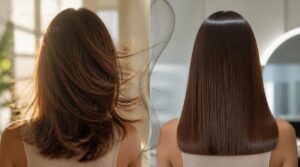
Layers spread weight across the length, giving you visible lift, texture, and natural movement from roots to ends. One-length keeps that density packed at the bottom, and that’s what creates a smooth, heavy drop with less bounce.
| Feature | Layers | One Length |
|---|---|---|
| Volume | High at roots | Low to moderate |
| Density | Distributed evenly | Dense at ends |
| Movement | Fluid and free | Minimal, structured |
Styling Versatility and Finish
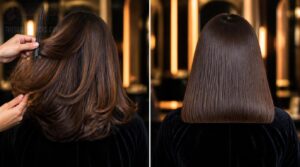
Your hair type shapes what’s possible here. Layers offer styling versatility one length can’t match, letting you shift from sleek to textured with one product swap. Think serum for gloss, cream for matte.
| Finish Type | Layers | One Length |
|---|---|---|
| Smooth | Serum-polished | Uniform shine |
| Textured | Defined separation | Minimal texture |
| Curl-defined | Product layering | Limited movement |
One length delivers a consistent, blunt finish every time.
Maintenance and Growth Patterns
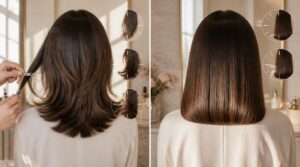
Finish only tells half the story. Maintenance is where layers vs one length truly diverge.
| Cut Type | Salon Visit |
|---|---|
| Short layers | Every 4-6 weeks |
| Long layers | Every 8-12 weeks |
| One-length blunt | Every 6-8 weeks |
One-length cuts grow out cleanly and keep your salon visits more predictable. Layers shift faster through your hair growth cycle, so you’ll need more frequent trims.
Best Hair Types and Textures
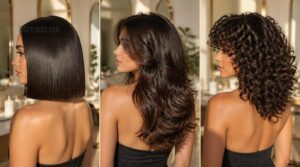
Your natural pattern matters most. Fine, straight hair often looks fuller with a blunt, one-length line. Thick straight or wavy hair gains movement from layers without feeling bulky.
For a closer comparison, this guide to layered versus non-layered hair can help match the cut to your texture.
| Hair type | Best starting cut | Why it works |
|---|---|---|
| Fine, straight | One length | Fuller ends |
| Wavy | Soft layers | Defined movement |
| Curly | Custom layers | Balanced shape |
Layered Haircuts: Pros, Cons, and Upkeep
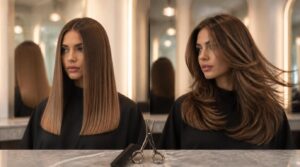
Layers can completely change how your hair sits, moves, and reacts to styling. They’re a strong option, but the right result depends on your texture, habits, and willingness to maintain the shape. Here’s what to weigh before you commit to a layered cut.
Added Volume and Natural Movement
Want hair that moves instead of sitting like a curtain? Well-placed layers lift the crown, lighten the mid-lengths, and create volume and texture without making roots feel bulky.
Shorter pieces around the face and behind the ears add swing as you turn your head. Fine hair looks fuller, while wavy and curly hair texture gets room to move. The result is a softer, more alive silhouette.
Weight Removal for Thick Hair
When hair thickness starts to feel like a heavy blanket, strategic layers remove weight without sacrificing your overall length. Shorter internal sections break up dense areas, so thick hair can bend, swing, and sit closer to the head instead of expanding outward.
Strategic layers remove bulk from thick hair, helping it move freely and sit closer to the head without losing length
A skilled cut matters. Too many layers can make certain hair texture look frizzy or uneven, while one length can leave it feeling bulky.
Styling Time and Product Needs
Styling time rises with layers because each section needs direction. Blow-dry in four parts, use heat protectant, then add mousse at the roots for lift or cream through the ends for definition.
Your hair type drives the lineup. Fine layers usually need light products; thick or curly layers often need leave-in conditioner. Face shape matters too: style face-framing pieces outward or inward to control the final balance.
Dry Ends and Breakage Risks
Layers make fragile ends more visible when heat and daily detangling wear them down. Shortest pieces receive more handling, so split ends can travel fast if ignored. A lightweight split end repair treatment can temporarily seal frayed strands between trims and reduce snagging during detangling.
- Use warm, not hot, water.
- Detangle gently while damp.
- Apply heat protectant products before styling.
Deep conditioning helps hair damage prevention, but cannot repair hair breakage. Use low heat and detangle without tugging.
Trim Frequency and Salon Costs
A layered haircut usually needs regular trims every 6–8 weeks if you want the shape to stay sharp. You can stretch salon visits to 8–10 weeks with soft, lived-in layers, but face-framing pieces lose their rhythm first.
Expect to pay $10–$30 more than a one-length cut. The appointment often takes 60–75 minutes, so build maintenance into your budget.
One-Length Haircuts: Pros, Cons, and Upkeep
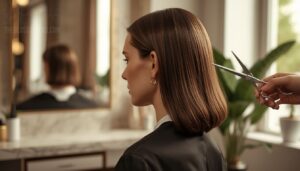
A one-length cut keeps every strand at the same baseline, creating a clean, intentional shape. It can be a smart choice if you want your hair to look polished without a complicated routine. Here’s what to weigh before you commit to the blunt edge.
Fuller Ends and Sleek Finish
Keeping a one length perimeter makes the ends look denser, especially when your hair thickness is fine to medium. Unlike layers, which can thin out the bottom, a straightacross technique preserves weight where the eye notices it most.
Fine-point shears remove splits without bulk, creating a polished lowmaintenance look. A minimal taper keeps the edge sleek, reflective, and clean.
Easy Styling and Length Tracking
That clean, even perimeter also makes daily routines easier. With one length, you can blow-dry, wave, or straighten without figuring out where shorter layers will land. Growth is easier to measure: every section reaches the same baseline.
- Quicker morning styling with fewer sections
- Easier progress photos and trim planning
- Less guesswork choosing styling products
- Predictable maintenance for your hair type
Benefits for Fine Hair
For fine hair, one length creates density where you need it most: at the ends. A blunt baseline stops the wispy, see-through look that layers can create, so your hair appears fuller even without extra styling.
You’ll also put less stress on fragile strands. Fewer texturizing cuts means less hair breakage, while products and heat tools glide through more evenly.
Limited Volume and Movement
That fuller baseline comes with a trade-off: less natural volume and movement. Onelength cuts hold their weight through the mid-lengths, so hair sits closer to your head instead of lifting and floating.
Expect:
- A flatter crown
- Heavier-looking lengths
- Minimal swing
- Less airy texture
If your hair type is thick or very straight, layered cuts usually create more shape.
Blunt-End Trim Requirements
A sharp baseline only stays sharp when you protect it. Blunt cuts show every uneven end, so book trims every 68 weeks to keep the line straight and polished.
Skip them too long, and split ends creep upward, making hair look thinner and inviting hair breakage. Regular hair maintenance keeps your length intentional, not ragged.
Popular Layered and One-Length Haircuts
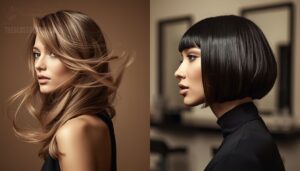
The right cut becomes clearer when you can picture how each shape sits and moves on real hair. Some options rely on layers for softness and lift, while others use a clean, even perimeter for a sharper finish. Here are the layered and one-length cuts you’ll see most often in the salon.
Long Cascading Layers
Think of cascading layers as a waterfall: each section releases weight, so long hair moves instead of hanging in one solid curtain. The shortest pieces begin around the crown, then melt into longer lengths, creating soft face framing without obvious steps.
A stylist builds this shape with control:
- Start on damp, towel-dried hair to read its texture.
- Create horizontal sections, roughly 2 to 3 inches apart.
- Keep tension even so each layer lands predictably.
- Point-cut the ends to blur hard lines.
- Comb through and smooth every shift.
The payoff is airier hair volume through the top and mid-lengths, plus hair movement that shows when you turn your head or style waves. Ask for subtle graduation, not short, choppy layers, if you want to keep a long silhouette.
Short Face-Framing Layers
Starting at cheekbone or jawline, short faceframing layers draw attention to your eyes and add definition without sacrificing length. Your stylist can make them wispy, textured, or softly blunt to suit hair type and face shape.
For round faces, gentle graduation creates length. Thick hair controls shorter pieces; fine hair needs longer layers. Use lightweight styling products. Trim every eight to ten weeks as needed.
Layered Cuts for Curly Hair
Curly hair needs custom layer placement, not a one-size cut. A dry cut lets your stylist follow each curl cluster, control bulk, and build a rounded shape without surprise shrinkage.
- Longer layers suit dense curls
- Shorter layers tame pyramid shape
- Faceframing layers define ringlets
- Lightweight conditioner protects bounce
Your hair type and hair texture decide depth. Trim every 8–12 weeks to keep layered cuts balanced.
Blunt Bobs and Lobs
A blunt bob puts control in the perimeter: one length, chin-skimming, and clean across the ends. It builds a crisp jawline and makes medium or thick hair look polished without crown layers.
Want more room to move? A lob lands near the shoulders or collarbone. It keeps density at the ends, suits fine hair well, and works with straight styling or loose waves.
Choose length around your face shape. Trim bobs every 4–6 weeks, lobs every 6–8.
Long One-Length Cuts
Long one-length cuts put all the power in your perimeter. Hair falls at one even length from crown to ends, creating a strong, sleek vertical line that makes fine hair look denser.
- Best for straight or lightly wavy hair
- Style with a smooth blow-dry for shine
- Trim every 6–8 weeks
Skip layers if you want easy length tracking and low-fuss hair maintenance.
Layers or One Length: Which Suits You?
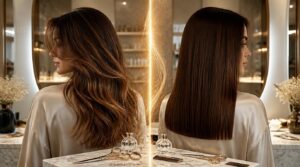
The right cut comes down to more than the look you want in the salon mirror. Your hair’s texture, density, face shape, and everyday routine all matter. Use the points below to narrow down the option that will work best for you.
Fine Versus Thick Hair
If your strands disappear between your fingers, fine hair usually looks best with a mostly one length cut. Blunt ends create a denser-looking baseline without sacrificing too much lift.
| Hair type | Best starting point |
|---|---|
| Fine hair | One length, minimal layers |
| Thick hair | Layers to remove bulk |
Thick hair can handle layers well. They take out weight, prevent the triangle effect, and let your hair texture move instead of sitting like a heavy curtain.
Straight Versus Curly Textures
Hair density matters, but texture changes the game. Straight hair usually looks polished with one length because the clean perimeter stays visible. Add soft layers only when you want movement, lift, or less weight around the face.
With curly hair, layers often prevent a heavy, boxy shape. They let coils spring up and stack naturally. Keep the layering intentional, though. Too many short pieces can create frizz, uneven shrinkage, and hard-to-control volume.
Round Versus Elongated Faces
Texture sets the shape, but your face shape sets where that shape should land. For a round face, use layers below the cheekbones to create vertical flow; avoid wide, chin-level bulk. An elongated face benefits from width and softness near the cheeks.
- Round face: longer layers
- Elongated face: cheek-level fullness
- One length: strong perimeter
- Side parts: balanced overall balance
Styling Routine and Maintenance Budget
Your face shape narrows the field, but your daily routine and budget seal the deal. Layers need more product. Heat protectants, serums, and hold sprays can run $15 to $50 a month.
One-length cuts keep product costs leaner and your styling time shorter. Salon-wise, layered cuts usually need trims every 6 to 8 weeks to stay sharp.
Transitioning Between Both Cuts
When you’re switching cuts, hair blending is what keeps the change smooth. Your stylist uses slide cutting and point cutting to soften layer growout, while precise hair shaping at each visit slowly closes the gap.
Book a trim every 8 to 12 weeks, and that consistent hair maintenance schedule turns a major haircut shift into something barely noticeable over time.
Frequently Asked Questions (FAQs)
Is it better to have layers or no layers in long hair?
The best cut follows the path of least resistance: choose layers for movement, thick hair texture, and face shape softness; choose one length for fuller ends, simpler styling, and clearer hair growth.
What is the downside of layered hair?
The downside is higher upkeep: layers need more hair styling time, can expose dry ends, split ends, and hair breakage, and may grow out unevenly. Results also vary widely with your hair texture.
What is the 3 rule for hair length?
Like a flip phone test, the 3-inch rule measures earlobe-to-chin distance: under three inches may suit a shorter haircut; over it favors longer hair length. Hair styling, layers, and hair maintenance still matter when deciding.
Which hair length is most flattering?
The most flattering hair length matches your face shape, hair texture, hair styling routine, and hair maintenance tolerance. Shoulder to collarbone length suits many people, balancing features while offering enough freedom to style relaxed looks.
What are some tips for styling layered hair?
Picture airy layers lifting and separating as you style. Apply volumizing mousse to damp hair, then use a blow dryer and round brush for root lift. Scrunch for texture, and finish with texturizing spray for definition.
Is it difficult to maintain a one-length haircut?
A one-length haircut is easy to maintain. Most people need trims every 10–12 weeks, with simple styling options and fewer products. Your hair texture matters, but steady hair care helps prevent hair damage and keeps the line sharp.
How often should I get my one-length haircut trimmed?
Unless you enjoy pretending uneven ends are intentional, schedule regular trims every 6–8 weeks. Choose 4–6 for short blunt cuts. Hair maintenance helps with split end prevention, hair health, and clean lines as hair growth shows.
Are there any benefits to having a layered vs. one-length hairstyle?
Layers boost volume and movement, letting your hair texture feel lighter and more adaptable. One-length cuts create fuller-looking ends, protect hair health with less manipulation, and give you a sleek shape that is easier to maintain.
Can layers work with every face shape?
Any face shape can wear custom layers. Long pieces lengthen round faces; cheekbone layers flatter an oval face; soft wisps balance a heartshaped face; jawline framing eases a square face and helps facial symmetry.
How much does layered styling cost monthly?
It needn’t break your budget. Plan for $25–$45 monthly on styling products and haircare routine essentials, plus shape-maintenance visits every 6–8 weeks. Volumizers, texturizing sprays, and heat protectants keep layers defined between trims.
Conclusion
Use the technique of satire to stimulate critical thinking in the audience. If haircut decisions came with a warning label, “choose layers for instant movie-star volume” would sit beside a tiny note about products and trim appointments.
Layers vs one length comes down to what it does on an ordinary Tuesday. Choose movement if you’ll style it; choose a blunt line if you want dependable fullness. Let your routine, not salon fantasy, make the call.