This site is supported by our readers. We may earn a commission, at no cost to you, if you purchase through links.
You might think of vitamin K as the silent partner in your body’s daily operations—essential for blood clotting, mostly ignored in terms of hair. But here’s the twist: vitamin K2 doesn’t just keep your bones strong; it’s a key player in scalp circulation, follicle health, and the integrity of every strand.
When your diet falls short, hair can lose its resilience, shedding more than it should and growing slower than you’d like. Understanding the distinct vitamin K benefits for hair means unlocking a new layer of control over growth, strength, and scalp vitality that goes far beyond the basics.
Table Of Contents
Key Takeaways
- Vitamin K2 supports scalp circulation and follicle health, helping your hair grow stronger and stay resilient.
- Getting enough vitamin K—especially from leafy greens, fermented foods, and animal products—can protect your hair from shedding, breakage, and environmental damage.
- Vitamin K2 improves hair growth by regulating calcium, promoting keratin production, and delivering key nutrients directly to hair follicles.
- Safe, steady intake of vitamin K through diet or supplements benefits hair health, but you should consult your doctor before starting new supplements, especially if you take anticoagulants.
What is Vitamin K and How It Supports Hair?

Vitamin K isn’t just about blood clotting—it’s quietly working behind the scenes to support your hair at a cellular level. This fat-soluble vitamin influences everything from protein activation in your follicles to the way nutrients reach your scalp.
Let’s break down what vitamin K actually is, how it functions in your body, and why it matters for hair biology.
Types of Vitamin K (K1 Vs K2)
You’ll encounter two main Vitamin Forms when exploring Vitamin K benefits: K1 and K2. K1, or phylloquinone, comes from leafy greens and primarily aids liver function. K2, the menaquinone group, originates from fermented foods and gut bacteria—your body absorbs this fat-soluble vitamin differently than K1.
- K1 Benefits center on hepatic processes, while K2 supplements target peripheral tissues like your scalp.
- Bioavailability Factors favor K2: MK-7 variants stay active longer, aiding sustained tissue nourishment.
- Vitamin Absorption improves when you pair either form with dietary fats during meals.
Understanding web server issues can help with online research on Vitamin K.
How Vitamin K Functions in The Body
While K1 and K2 work differently in your system, both activate key Vitamin K metabolism pathways supporting blood clotting, bone health, and nutrient absorption. Vitamin K2 takes things further by regulating calcium and activating proteins like matrix Gla protein.
This table shows where Vitamin K plays its part:
| System | Vitamin K Function | Example Impact |
|---|---|---|
| Blood | Blood Clotting | Wound healing |
| Bones | Calcium Regulation | Bone strength |
| Cells | Protein Regulation | Healthy cellular processes |
Understanding the role of Vitamin K in the body involves a thorough literature review process.
Role of Vitamin K in Hair Biology
You might be surprised—your hair is paying attention to Vitamin K just as keenly as your bones or blood. Vitamin K receptors in hair follicle keratinocytes help regulate keratin expression and follicle cycling, influencing hair growth and scalp health.
Your hair responds to Vitamin K just as much as your bones do, using it to regulate keratin and follicle cycling for growth and scalp health
By supporting nutrient delivery at the follicle level, especially with Vitamin K2, you create the groundwork for lasting hair follicle function and resilience.
Key Benefits of Vitamin K for Hair Health

Vitamin K pulls more weight for your hair than most realize. Its impact on growth and scalp health goes far beyond the basics.
Here’s what you can expect when you bring this nutrient into focus.
Promoting Hair Growth and Thickness
Ever wondered why your hair’s growth patterns seem stuck in neutral? Vitamin K2 benefits for hair go beyond the basics—think Hair Follicle Stimulation and Scalp Nourishment that set the stage for real change. When you focus on follicle health and Hair Growth Promotion, you’ll notice:
- Increased hair thickness
- Improved follicle function
- Enhanced hair growth and nutrition
Preventing Hair Loss and Shedding
Shedding often signals dysfunction in follicle cycling, and vitamin K2’s anti-inflammatory pathways may offer Shedding Control by calming cytokine-driven disruption. Improved Scalp Health and Circulation through vascular support enhances Hair Growth and Nutrition delivery, reducing telogen effluvium episodes.
While direct Hair Fall Prevention trials remain limited, observational data link higher K2 intake with better Hair Regrowth markers. Addressing Vitamin K Deficiency could strengthen your Follicle Health and support lasting Hair Growth Promotion.
Strengthening Hair Shaft Integrity
Hair Shaft Fortification relies on structural proteins, and vitamin K2 influences keratinocyte differentiation—the process that builds your hair shaft. By supporting collagen scaffolding around follicles and moderating oxidative stress, K2 contributes to Keratin Protection and Cuticle Smoothening. This translates to Breakage Reduction and resilient strands:
- Vitamin K2 activates proteins that stabilize extracellular matrix around Hair Follicles
- Antioxidant Properties reduce oxidative damage to keratin structures
- Improved Scalp Health aids sebum distribution, protecting the cuticle layer
- Follicle Reinforcement from vascular support sustains Hair Growth quality
- Gamma-carboxylation processes maintain connective tissue integrity along the shaft
Protecting Hair From Environmental Damage
Beyond mechanical breakage, your strands face daily Environmental Stress—UV rays, pollution, and free radicals that trigger Oxidative Damage.
Vitamin K’s Antioxidant Properties activate Hair Shielding pathways, downregulating inflammatory cytokines and scavenging reactive oxygen species in follicles. This Follicle Defense reduces oxidative stress and hair damage, supporting Hair protection and preservation.
Enhanced Scalp Protection sustains the barrier function that guards against external insults, keeping your hair resilient.
How Vitamin K2 Enhances Scalp and Follicle Health
Vitamin K2 doesn’t just sit in your bloodstream—it actively shapes the environment where your hair grows. By directing calcium away from soft tissues and into your bones, it keeps your scalp circulation flowing and your follicles nourished.
Here’s how K2 works at the root level to support healthier hair.
Calcium Regulation and Scalp Circulation
Think of your scalp’s tiny blood vessels as highways delivering nutrients to each hair follicle. Vitamin K2 keeps these routes clear by directing calcium into bones rather than letting it clog vessel walls—what we call calcium regulation. Here’s how this vascular health boost strengthens your scalp microcirculation:
- Enhanced blood circulation improves nutrient delivery to follicles during active growth phases
- Reduced vessel stiffness maintains flexible capillaries around each follicle
- Optimized calcium balance prevents calcification that impairs scalp health and nutrient supply
Nourishing Hair Follicles
Ever wonder what keeps your hair anchored firmly in place? Vitamin K2 aids Follicle Nutrition by enhancing keratinocyte function and promoting tissue remodeling around hair follicles. This process improves dermis anchoring and creates a scalp environment primed for Hair Regrowth.
When your Scalp Health is at its peak, nutrient delivery rises and Hair Growth thrives—proof that targeted nutrition matters for resilient, healthy hair.
Antioxidant and Anti-inflammatory Effects
Oxidative stress is a silent thief, robbing your scalp of vitality. Vitamin K2’s antioxidant properties help defend follicle cells from free radical damage, while its anti-inflammatory effects lower inflammatory markers that disrupt growth. You get cellular protection, enhanced hair care and nutrition, and real assistance for scalp health—all practical Vitamin K benefits for hair.
- Reduces oxidative stress
- Lowers inflammatory markers
- Shields against free radical damage
- Bolsters antioxidant effects on hair
- Promotes cellular protection
Natural Dietary Sources of Vitamin K for Hair
Getting enough vitamin K from your diet can make a real difference for your hair. You’ll find this nutrient in a range of everyday foods, from fresh greens to fermented favorites and animal products. Here’s where you can look to boost your intake.
Leafy Greens and Vegetables

Leafy nutrition is your frontline defense for hair health. Green leafy vegetables like spinach, kale, and collard greens pack Vitamin K1, bolstering the vascular supply that feeds your follicles. Consuming these Vitamin K sources with healthy fats can triple absorption.
Here’s a breakdown of vegetable benefits for your plant-based diet:
| Green Vegetable | Vitamin K (mcg/cup cooked) | Hair Health Benefits |
|---|---|---|
| Spinach | 145 | Bolsters hair growth |
| Kale | 434 | Enhances follicle nutrition |
| Collard Greens | 281 | Boosts scalp circulation |
| Mustard Greens | 400 | Strengthens hair shaft |
| Broccoli | 92 | Maintains scalp integrity |
Fermented Foods and Probiotics

While leafy greens set the stage, fermented foods like natto and sauerkraut take the spotlight for Vitamin K2. Thanks to the fermentation process, these foods boost your microbiome balance and gut health—key for ideal nutrient absorption.
Probiotics also support scalp microcirculation, so you’re not just feeding your hair; you’re powering up its growth from within.
Animal-Based Sources (Eggs, Dairy, Meat)

Just as fermented foods bring K2 to the table, animal products play their own supporting role. Egg nutrition, dairy benefits, and meat intake add bioavailable Vitamin K2—especially through hard cheeses and organ meats.
These sources help regulate calcium, support blood clotting, and may strengthen scalp health. That’s why mixing greens with animal-based foods keeps your Vitamin K status sturdy.
Safe Intake and Supplementation for Hair Benefits
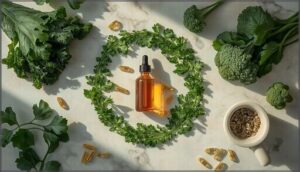
If you’re thinking about adding vitamin K to your routine for healthier hair, it’s smart to know how much you really need.
There are a few safe ways to get the benefits, whether through food or supplements.
Here’s what you should keep in mind before you get started.
Recommended Dietary Allowances
Your daily vitamin needs for K differ by sex: women require 90 mcg, men need 120 mcg. These dietary guidelines reflect combined intake recommendations for both Vitamin K and Vitamin K2 from dietary sources.
Adequate nutrient balance usually occurs through varied eating patterns rather than isolated supplementation. Most people meet these intake recommendations without additional intervention, though specific dietary requirements may shift with age or medical conditions affecting vitamin K dosage needs.
Supplement Options and Considerations
When choosing Vitamin K supplements for hair growth, you’ll encounter distinct options with different absorption profiles. Consider these factors:
- Vitamin K1 (phylloquinone) versus Vitamin K2 subtypes (MK-4, MK-7)—each distributes differently in your body
- MK-7 offers extended bioavailability, requiring less frequent dosing
- Combination therapies with biotin or vitamin D may improve outcomes, though hair-specific evidence remains preliminary
- Dosage guidelines for addressing Vitamin K deficiency vary from general maintenance levels
- Supplement types influence tissue delivery and coagulation factor stability
Safety, Side Effects, and Medication Interactions
Beyond general tolerability, you’ll need to navigate real medication risks with Vitamin K supplementation. Anticoagulant treatment requires close supervision—Vitamin K directly opposes warfarin by supporting blood clotting, potentially destabilizing your INR.
High-dose Vitamin K2 may trigger rare hypersensitivity or gastrointestinal upset.
Individuals with Vitamin K deficiency or fat-malabsorption syndromes should seek medical guidance before adjusting intake for dosage guidelines and toxicity prevention.
Frequently Asked Questions (FAQs)
How long before seeing hair improvement results?
You won’t see overnight miracles. Clinical observations suggest 3–6 months of consistent intake may yield modest improvements in hair density or shaft quality, though individual responses vary widely based on baseline nutritional status.
Can children take vitamin K for hair health?
Children generally don’t need Pediatric Vitamin K supplements for hair growth—balanced Child Nutrition covers their Vitamin Dosage needs.
Hair Follicles depend on many nutrients, and Vitamin K Deficiency is rare.
Always consult a clinician before considering Hair Supplements.
Does cooking reduce vitamin K in foods?
Even the fiercest heat can sabotage nutrient retention—boiling leafy greens slashes Vitamin K1 by up to 50%, while steaming preserves more.
Luckily, Vitamin K2 in fermented foods shows impressive heat stability, minimizing vitamin loss during typical food preparation.
Conclusion
Like a conductor hidden in the orchestra pit, vitamin K benefits for hair operate just below the surface, guiding essential processes that escape routine focus. When you pay attention to this unsung nutrient, the payoff is subtle yet powerful: improved follicle resilience, strengthened strands, and a scalp environment optimized for growth.
As you rethink your approach to hair health, remember that results are built on what you nurture—often beginning with the smallest, most overlooked building blocks.
- https://myperfectwords.com/blog/research-paper-guide/research-paper-topics
- https://wr1ter.com/business-research-topics
- https://www.sciencedirect.com/science/article/pii/S0749208123000268
- https://www.sharkpapers.com/blog/research-paper-writing-guides/literature-research-paper-topics
- https://www.mometrix.com/blog/150-research-paper-topics/