This site is supported by our readers. We may earn a commission, at no cost to you, if you purchase through links. This content is for general informational and educational purposes only and is not a substitute for professional medical, dermatological, or nutritional advice.
Your hair is roughly 25% water by weight. Strip that moisture away and what’s left becomes brittle, dull, and prone to snapping at the slightest tension.
That’s why the idea of drinking water for hair health makes natural sense. But the claims circulating online, like gallon-a-day challenges promising overnight growth, take a real biological relationship and stretch it well past what the science holds up to.
Hydration does matter for your hair. The connection runs deeper than most people realize, touching everything from scalp barrier function to how well your strands hold up under daily stress.
Table Of Contents
- Key Takeaways
- Does Drinking Water Make Hair Grow Faster?
- How Water Supports Strong Hair and a Healthy Scalp
- Can Dehydration Cause Dry Hair, Breakage, or Hair Loss?
- How Much Water Should You Drink for Healthy Hair?
- How to Keep Hair Hydrated Inside and Out
- Frequently Asked Questions (FAQs)
- Can drinking water improve hair?
- What are the big 3 for thinning hair?
- What is the Chinese secret for hair growth?
- How much water should I drink for hair growth?
- How long does it take to see results from drinking more water?
- What are the best ways to make drinking water more appealing?
- Is drinking too much water bad for your hair or scalp?
- Is it possible to drink too much water?
- How much water should I drink if I am pregnant or nursing?
- Does water temperature affect hair growth results?
- Conclusion
Key Takeaways
- Hair is about 25% water by weight, so staying hydrated keeps strands flexible, supports scalp barrier function, and helps prevent brittleness and breakage.
- Drinking water cannot speed up your hair growth cycle—that’s controlled by follicles and hormones—so claims like gallon-a-day challenges for faster growth have no scientific support.
- Dehydration can worsen dryness and reduce hair elasticity, but true hair loss stems from illness, hormones, or deficiencies, not skipped glasses of water.
- Aim for roughly 9 cups of fluid daily for women and 13 for men (more if pregnant or nursing), spread consistently through the day, and pair internal hydration with water-rich foods and moisture-sealing hair care for the best results.
Does Drinking Water Make Hair Grow Faster?

You’ve probably seen the claim everywhere: drink more water and your hair will grow faster. But does hydration actually speed up growth, or is it just another beauty myth? Let’s separate what water really does for your hair from the wishful thinking, so you know exactly where hydration fits in your routine.
Once you understand what hydration actually does, pairing it with the right moisture sealing techniques for natural hair keeps strands flexible and less prone to breakage.
Hydration Benefits and Limits
Although water is essential, it won’t transform your hair overnight. Here’s where Hydration Benefits and Limits really stand.
Because water makes up 25% of each hair strand’s weight, hydration helps hair moisture retention and flexibility. It also aids nutrient transport to roots, feeding follicles from within.
But here’s the honest part: no amount of drinking water speeds up your growth cycle. That’s biology, not a flaw.
Three real benefits:
- Helps scalp moisture balance
- Improves nutrient delivery
- Helps prevent brittleness
Follow daily water intake recommendations consistently, and you’re covering your hair’s hydration foundation.
Hair Growth Myths
Let’s clear up the biggest hair growth myths. No, drinking water doesn’t speed your hair growth cycle. That’s controlled by follicles and hormones, not your water glass. Claims like "drink a gallon daily for inches" have zero dose-response evidence.
What water does support: internal hydration for hair growth through nutrient delivery and hair breakage prevention. Drinking water for hair works as foundation, not fuel.
Keeping strands moisturized from the inside out pairs well with smart external habits, like the ones covered in this guide to preventing moisture loss in natural hair.
How Water Supports Strong Hair and a Healthy Scalp
So water won’t hit the accelerator on hair growth. But that doesn’t make it a bystander. Think of hydration as the road your hair travels on: it doesn’t drive the car, but a smooth road makes every trip easier.
Hydration won’t grow your hair faster, but like a smooth road, it makes the whole journey easier
Your hair shaft is mostly keratin, a protein that holds water. When your body’s well-hydrated, that shaft stays smoother and more flexible. Your scalp benefits too. The stratum corneum, your skin’s outer layer, needs adequate water to maintain its barrier. A hydrated scalp distributes sebum evenly, so moisture and oil work together instead of feeling patchy or heavy.
Here’s where internal hydration for hair growth earns its keep:
- Helps nutrient transport to follicles
- Maintains scalp barrier function
- Keeps keratin flexible and resilient
- Balances sebum spread
Drinking water for hair is about foundation, not speed. Build it, and everything else works better.
Can Dehydration Cause Dry Hair, Breakage, or Hair Loss?

So what happens when you skip that foundation? Dehydration effects on hair are real, but let’s be honest about what they can and can’t do.
Low body water can reduce sweating and leave your scalp feeling tight and dry. That’s genuine. It can also concentrate fluids and throw off your scalp moisture balance, making dryness look worse. But here’s the truth: heat styling, harsh shampoos, and product buildup usually do more damage than your water bottle ever could.
Hair breakage is where dehydration plays a supporting role. A parched shaft loses hair elasticity, so it snaps instead of bending. Combine that with bleach or flat irons, and breakage multiplies.
Now, actual hair loss through proper hydration? That’s a myth worth busting. True shedding traces back to illness, hormones, or deficiencies, not skipped glasses of water. Dehydration compounds damage; it doesn’t cause baldness.
How Much Water Should You Drink for Healthy Hair?

So how much water does your hair actually need? The answer isn’t one-size-fits-all, but it’s easier to figure out than you might think. Let’s break down the numbers, what shifts your personal needs, and the water-rich foods that count toward your daily total.
Daily Fluid Intake Guidelines
So how much water should I drink if pregnant, or just for hair? Guidelines suggest roughly 9 to 13 cups of fluid daily for total intake, though some sources frame needs as 115 to 155 cups of fluid daily across a week.
Your daily targets:
- About 9 cups for women
- About 13 cups for men
- More if you’re pregnant or breastfeeding
And is drinking too much water bad? Rarely, but balance matters. Beverages and water-rich foods both count.
Factors Affecting Hydration Needs
Your water consumption needs aren’t one-size-fits-all. Exercise, heat, and humidity increase sweat losses, draining body water content faster than usual. Illness, fever, and certain medications shift requirements too. Alcohol matters here: avoiding dehydrating beverages protects against systemic dehydration. Remember, nutrition and its impact on hair hydration work together, so adjust intake to your day, not a fixed number.
Water-Rich Foods
Here’s a secret most people miss: your glass isn’t your only water source. Water-rich foods for added hydration count too, delivering fluid alongside fiber and electrolytes that plain water simply can’t match. A dedicated hydration nutrition guide for hair can help you pinpoint exactly which foods deliver the most moisture and scalp-supporting nutrients.
Add these to your water-rich diet for hair:
- Cucumber
- Watermelon
- Oranges
- Strawberries
Each supplies potassium, vitamin C, and antioxidants, supporting your scalp’s tissue environment. Remember: nutrition and its impact on hair hydration goes beyond the tap.
How to Keep Hair Hydrated Inside and Out
Now that you know how much to drink, let’s make every sip count. Hydrated hair isn’t just about water intake; it’s a two-part strategy that works from the inside out and the outside in. Here’s your practical playbook of hydration habits, hair-supporting nutrition, and moisturizing hair care you can start today.
Healthy Hydration Habits

Here’s the truth: your body regulates hydration minute by minute. Chugging a liter at once? Your kidneys just flush it out. Consistent daily sipping wins every time. A time-marked hydration tracker bottle makes steady sipping effortless by showing exactly how much you should have drunk by each hour.
Drink more water for healthier hair by spreading intake across the day. Keep a bottle visible. Check your urine, pale straw means you’re on track.
Avoiding dehydrating beverages like excess alcohol and heavy caffeine matters too. They increase fluid loss, sabotaging your efforts.
Replenishing with an electrolyte drink mix supplement can help restore minerals lost when alcohol or caffeine nudge your body toward dehydration.
Hair-Supporting Nutrition
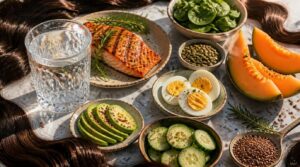
Think of your follicles as tiny factories: they need raw materials. Water delivers them, but food supplies them.
Fuel your hair from within with:
- Protein for keratin, hair’s building block
- Iron and zinc for cell division
- Vitamin D for hair growth cycle support
- Water-rich foods like cucumber and melon for added hydration
Good nutrition means better scalp health and hair growth.
Moisturizing Hair Care
Your scalp produces sebum for a reason: it seals moisture against the hair shaft. Work with it.
A water-based leave-in conditioner applied to damp hair locks in hair shaft moisture content before it evaporates. Follow with a lightweight oil to seal. Keep heat styling minimal.
That barrier you build externally is what your moisture retention in hair actually depends on.
Frequently Asked Questions (FAQs)
Can drinking water improve hair?
Yes. Proper hydration genuinely helps hair health. Water improves blood circulation to your scalp, delivering key nutrients your follicles need. It won’t speed growth dramatically, but keeps your hair stronger and less prone to breakage.
According to nutrition experts, a balanced diet rich in protein, omega-3 fatty acids, and biotin is also essential for supporting healthy hair growth alongside adequate hydration.
What are the big 3 for thinning hair?
The big 3 for thinning hair are minoxidil, finasteride, and a DHT-blocking shampoo. Used together, they target circulation, hormones, and follicle protection simultaneously.
What is the Chinese secret for hair growth?
There’s no single Chinese secret for hair growth. Most claims combine hydration and herbal traditions without proven biological pathways that outperform solid nutrition and consistent hydration habits.
How much water should I drink for hair growth?
There’s no magic number. Aim for 7 liters daily from drinks and water-rich foods to support follicle health. True hydration sustains your body’s foundation; hair growth depends far more on genetics than water intake alone.
How long does it take to see results from drinking more water?
How long does it take to see results? Reduced dryness often shows within one to two weeks. But hair growth cycle regulation means measurable regrowth and noticeable hair shedding decrease take three months or more.
What are the best ways to make drinking water more appealing?
The best ways to make drinking water more appealing are simpler than you’d think. Add lemon, cucumber, or fresh berries to it. Try sparkling water for extra fizz. A hydration app keeps you on track.
Is drinking too much water bad for your hair or scalp?
Guzzling a bathtub’s worth of water daily might sound like dedication, but it genuinely won’t accelerate your hair growth cycle. Excess intake risks electrolyte dilution, disrupting follicle nutrient delivery and your body’s overall hydration balance.
Is it possible to drink too much water?
Yes, though it’s rare. Drinking too much too fast dilutes your blood sodium levels, causing hyponatremia. Symptoms range from headaches and nausea to, in severe cases, seizures. Balance, not excess, is what your body needs.
How much water should I drink if I am pregnant or nursing?
Shouldn’t your fluid intake grow when you’re growing a new life? During pregnancy, aim for 10 cups daily. While nursing, increase to 13 cups to sustain milk production, internal hydration, and nutrient delivery to follicles.
Does water temperature affect hair growth results?
Water temperature doesn’t influence hair growth phase prolongation or follicle nutrient absorption. What drives results is consistent hydration. Focus on hitting your daily fluid targets rather than overthinking whether your water is cold or warm.
Conclusion
Think of drinking water for hair health as your body’s most underrated form of daily maintenance. It won’t replace a good conditioner or a nutrient-rich diet, but without it, everything else works harder for much less.
Chronically low fluid intake quietly chips away at scalp function, strand strength, and growth cycles long before you notice any damage. Start with your glass of water. Build from there. The simplest habits often carry the most lasting weight.