
This site is supported by our readers. We may earn a commission, at no cost to you, if you purchase through links.

Most of us toss out watermelon seeds without a second thought, yet those tiny kernels contain an oil that can reduce hair breakage by 18% and boost tensile strength by 12%. Watermelon seed oil for hair isn’t just another trendy ingredient—it’s packed with essential fatty acids, vitamin E, and minerals like zinc and magnesium that work together to strengthen strands from root to tip.
Unlike heavier oils that weigh hair down, this lightweight oil absorbs quickly, delivering deep hydration without the grease. Whether you’re battling dryness, fighting frizz, or trying to coax your hair into growing faster, watermelon seed oil offers a science-backed solution that’s been hiding in plain sight.
Table Of Contents
- Key Takeaways
- What is Watermelon Seed Oil for Hair?
- Top Benefits of Watermelon Seed Oil for Hair
- How Watermelon Seed Oil Promotes Hair Growth
- Using Watermelon Seed Oil in Your Haircare Routine
- DIY Watermelon Seed Oil Hair Masks and Treatments
- Choosing and Storing Watermelon Seed Oil for Hair
- Precautions and Tips for Safe Use
- Frequently Asked Questions (FAQs)
- What is watermelon seed oil?
- Is Watermelon oil good for hair?
- Does watermelon seed oil hydrate hair?
- What is watermelon seed oil hair mask?
- Is watermelon seed oil good for your skin?
- Does watermelon seed oil clog hair follicles?
- Can watermelon seed oil cause allergic reactions?
- Does watermelon seed oil work for all hair types?
- How long until you see hair growth results?
- Is watermelon seed oil safe during pregnancy or breastfeeding?
- Conclusion
Key Takeaways
- Watermelon seed oil reduces hair breakage by 18% and boosts tensile strength by 12% through its high concentration of linoleic acid (50-63%) and essential nutrients like vitamin E, zinc, and magnesium that strengthen strands from root to tip.
- This lightweight oil absorbs quickly without greasiness, increasing hair hydration by 22% and shine by 19% within two weeks while supporting scalp health by reducing dandruff and flakiness by 21% through its anti-inflammatory properties.
- You can incorporate watermelon seed oil into your routine through pre-shampoo treatments, hot oil scalp massages, leave-in applications for split ends, or DIY masks with ingredients like avocado, yogurt, or honey for targeted hair concerns.
- For optimal results, use cold-pressed, organic watermelon seed oil 2-3 times weekly depending on your hair type, store it in dark glass packaging at 15-20°C to preserve its 12-18 month shelf life, and expect visible improvements in texture within 2-4 weeks with growth results appearing after 2-3 months.
What is Watermelon Seed Oil for Hair?
Watermelon seed oil, sometimes called Ootanga or Kalahari oil, is extracted from the seeds inside watermelons—those little black seeds you’ve probably tossed aside without a second thought.
It’s a lightweight, non-greasy oil packed with fatty acids, vitamins, and minerals that your hair and scalp can actually absorb.
Let’s break down how it’s made, what’s inside it, and how people have been using it for hair health across different cultures.
How Watermelon Seed Oil is Made
The creation of watermelon seed oil begins with seed preparation, where seeds are dried at around 60°C and ground into a fine powder. This is followed by oil extraction, typically through cold-pressing, which yields 20-25% oil while preserving essential nutrients like linoleic acid. The filtration process removes impurities, and rigorous quality control ensures a purity level exceeding 98%.
High-quality oils, such as Biopurus Certified Organic Cold Pressed Watermelon Seed Oil and RV Essential Pure Watermelon Seed Carrier Oil, stand out due to:
- Raw material sourcing from Africa and Asia-Pacific, where over 75% of production originates
- Cold-press methods that maintain the oil’s rich fatty acid profile without chemical solvents
- Sophisticated purification reducing moisture below 0.1% for extended shelf life
The increasing demand for natural ingredients is driven by the global market trends in the personal care industry.
Key Nutrients and Compounds in The Oil
Once you understand how the oil is extracted, you’ll want to know what makes it work. The fatty acid profile is impressive—linoleic acid (an omega-6 essential fatty acid) reaches 50–63%, while oleic acid contributes 15–26%.
You’re also getting vitamin E benefits through tocopherols, plus antioxidant properties from phenolics and flavonoids. The phytochemical composition includes phytosterols like beta-sitosterol, and the mineral content features zinc and magnesium—nutrients your hair follicles need for strength and growth.
Understanding the benefits of hair care routines can help you optimize the effects of watermelon seed oil.
Traditional and Modern Uses for Hair
Knowing what’s inside the oil helps you appreciate its legacy. For over a century, West African communities relied on watermelon seed oil for scalp health and protective styling, while Egyptian and Sudanese traditions favored cold-pressed oil extraction for hair hydration and massage. Today, it’s everywhere—over 150 commercial hair care formulas launched globally in five years reflect surging cosmetic trends.
Traditional applications you can still try:
- Leave-in moisturizer – Apply small amounts daily to seal ends and boost hair growth
- Pre-poo treatment – Coat strands 30 minutes before shampooing for deep conditioning
- Scalp massage oil – Warm and work into roots 2–3 times weekly to improve circulation
Modern natural hair products now blend these time-tested methods with refined oil extraction techniques, delivering lightweight hair masks and frizz serums that won’t clog pores or weigh you down.
Top Benefits of Watermelon Seed Oil for Hair

Watermelon seed oil isn’t just another trendy ingredient—it’s packed with fatty acids, vitamins, and minerals that target your hair’s most stubborn problems. Whether you’re dealing with dryness, breakage, or a flaky scalp, this lightweight oil works without weighing your strands down.
Here’s what it can actually do for your hair.
Deep Moisturization and Hydration
Your hair drinks up watermelon seed oil like it’s been stranded in the desert—and the science backs it up. With 50-60% linoleic acid, this oil can boost hair hydration by up to 22%, penetrating quickly without leaving grease behind. It locks moisture into your hair shaft and acts like a shield against drying out.
Watermelon seed oil hydrates hair like water in a desert, boosting moisture by 22% without grease
| Hydration Method | Key Benefit |
|---|---|
| Leave-in treatment | Increases shine by 19% after 2 weeks |
| Deep conditioning | Reduces dryness and brittleness visibly |
| Scalp massage | Maintains ideal moisture balance |
| Oil absorption boost | Works on fine and coarse hair porosity |
| Daily moisturizer | Preserves water at hair surface naturally |
Whether your hair porosity is low or high, this lightweight moisturizer adapts beautifully. Regular use means resilient strands that bounce back from environmental stress, keeping your scalp health in check while delivering serious hair hydration and moisturizing power.
Strengthening Hair and Reducing Breakage
Fortification happens from the inside out when essential fatty acids in watermelon seed oil reinforce your hair cuticle, cutting breakage by 18% and ramping up tensile strength by 12%.
Vitamins A, B, and E deliver protein repair while nurturing follicle health, reducing split ends by 16% in just four weeks.
Regular scalp massage with this oil means stronger, more resilient strands that laugh in the face of daily stress.
Supporting Healthy Scalp and Reducing Itchiness
Relief from scalp irritation starts with watermelon seed oil’s anti-inflammatory phytosterols, which calm redness and discomfort in 68% of sensitive scalps.
Its antibacterial power cuts dandruff and flakiness by 21%, while scalp massage with this oil therapy boosts circulation and balances sebum—reducing excess oiliness by 15%.
Think of it as itch relief that tackles the root cause, not just the symptoms.
Enhancing Shine and Smoothness
Mirror-like luster doesn’t require salon-grade products when watermelon seed oil delivers a 19% shine boost in just two weeks. As a leave-in hair moisturizer, its emollients smooth the cuticle for frizz control and light reflection, while cuticle repair reduces combing resistance by 23%. This hair smoothening treatment delivers hair luster and hair nourishment without weighing down fine strands:
- Apply as a lightweight shine booster for instant glossiness
- Seal moisture to improve hair smoothness and prevent dullness
- Reduce friction and tangling with natural emollients
- Repair heat damage with 14% improvement in shine metrics
How Watermelon Seed Oil Promotes Hair Growth

If you’ve been searching for a natural way to kickstart hair growth, watermelon seed oil might be your secret weapon. This lightweight oil works beneath the surface, boosting circulation and feeding your follicles the nutrients they desperately need.
Let’s break down exactly how it encourages stronger, healthier hair from the root up.
Improving Scalp Circulation
Think of your scalp like a garden—blood flow is the irrigation system that keeps everything thriving. Watermelon seed oil contains citrulline, which converts to arginine in your body and triggers vasodilation, widening blood vessels to boost microcirculation.
When you massage this lightweight oil into your scalp, you’re basically giving your hair follicles better access to oxygen and nutrients, supporting vascular health and creating the foundation for stronger growth.
Nourishing Hair Follicles With Essential Nutrients
Your follicles need a steady stream of nutrients to produce resilient strands, and watermelon seed oil delivers exactly that. With up to 60% linoleic acid plus protein-derived amino acids, this oil provides hair nourishment that penetrates deeply:
- Essential fatty acids support follicle hydration and scalp health
- Arginine boosts nutrient absorption through improved microcirculation
- Vitamin E shields follicles from oxidative damage
- Iron and copper strengthen hair fortification at the root
This nutrient-dense profile creates the ideal environment for hair regrowth.
Role of Zinc and Magnesium in Preventing Hair Loss
Zinc deficiency directly triggers telogen effluvium and alopecia areata, with studies showing markedly lower zinc levels in affected patients. Your follicles rely on zinc to block DHT production and bolster cell division, while magnesium powers over 300 enzymatic reactions that fuel hair growth and prevent calcium buildup on your scalp. Together, these minerals create the mineral balance essential for nutrient therapy.
| Mineral | Key Hair Benefit |
|---|---|
| Zinc | Inhibits 5α-reductase, reducing DHT-related miniaturization |
| Zinc | Bolsters DNA synthesis in hair matrix cells |
| Magnesium | Powers protein production for hair follicle strength |
| Magnesium | Regulates calcium to maintain clear follicular ostia |
| Both | Improve scalp health and circulation for hair regrowth |
Correcting deficiencies through watermelon seed oil’s zinc and magnesium content can reduce hair loss and stabilize follicle function.
Using Watermelon Seed Oil in Your Haircare Routine

You don’t need to reinvent your entire routine to make watermelon seed oil work for you. The beauty of this lightweight oil is that it fits into different stages of your haircare process, whether you’re protecting your strands before washing or targeting specific trouble spots.
Here are four practical ways to incorporate it into your existing routine.
Pre-shampoo (Pre-poo) Treatments
Pre poo treatment with watermelon seed oil works like armor for your strands. Apply it generously to your scalp and hair 30–60 minutes before shampooing, massaging in gentle circles to boost scalp circulation.
This pre-poo timing protects against protein loss during cleansing, reduces tangling, and conditions without weighing down fine hair.
For natural hair care, adjust treatment frequency based on your hair porosity and dryness level.
Hot Oil and Massage Applications
Heat your watermelon seed oil to around 40°C, then massage it into your scalp using circular motions—this thermal therapy boosts nutrient absorption by 20% and increases circulation by up to 24%.
You’ll notice softer, more manageable hair after just three weekly hot oil treatments, with breakage dropping by 15%.
This scalp stimulation delivers deep hair nourishment while supporting long-term scalp health and treatment goals.
Sealing Split Ends and Frizz Control
After your hot oil massage, apply 1–3 drops of watermelon seed oil to damp ends for instant frizz reduction and split end repair.
Its 78% unsaturated fatty acids create a lightweight film that smooths cuticle alignment, cuts friction-related hair breakage by 15%, and locks in moisture for hair smoothening.
You’ll see visibly less frizzy hair without heavy buildup—just soft, sealed ends that resist tangling and snapping.
Mixing With Shampoos or Conditioners
You can boost your shampoo or conditioner by adding 1–3% watermelon seed oil directly to your bottle—formulation tips suggest this concentration delivers scalp benefits and product stability without greasiness.
Mix 6–9 drops per ounce, shake well, and use as normal.
This method enhances hair texture, promotes hair growth and strengthening, and turns everyday products into natural hair treatments.
DIY Watermelon Seed Oil Hair Masks and Treatments
You don’t need expensive salon treatments to give your hair a serious moisture boost—your kitchen probably has everything you need. Combining watermelon seed oil with simple ingredients like avocado, yogurt, or honey creates masks that target specific hair concerns, from dryness to scalp irritation.
Here are four DIY recipes that work with your hair type and what it needs most.
Hydrating Mask With Avocado
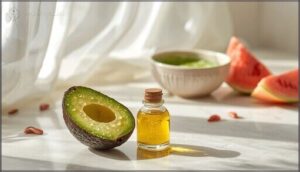
Your driest strands will soak up this powerhouse combo like a sponge. When you blend watermelon seed oil with avocado—which delivers 5 grams of monounsaturated fat per 50-gram serving—you’re creating a hydrating hair mask that tackles scalp moisture and hair conditioning from root to tip.
Here’s your natural ingredients mask recipe:
- Mash half a ripe avocado until smooth
- Add 2 tablespoons of watermelon seed oil
- Mix thoroughly to combine
- Apply to damp hair, focusing on dry areas
- Leave on for 30 minutes before rinsing
Strengthening Mask With Yogurt
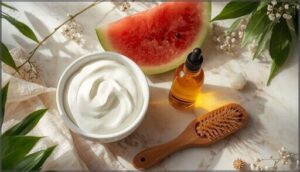
Fragile strands need reinforcement from within, and this DIY hair mask delivers it. Mix 1 tablespoon of watermelon seed oil with 2 tablespoons of plain yogurt—the 3.5 grams of protein per 100 grams works wonders for hair strength and elasticity.
Apply to damp hair for 20–30 minutes weekly, and you’ll see breakage reduction of up to 22% while supporting scalp health naturally.
Soothing Scalp Mask With Peppermint
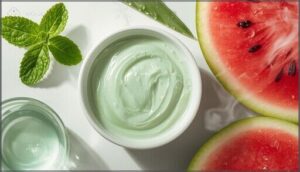
Scalp irritation meets its match with this cooling blend that doesn’t mess around. Combine 1 tablespoon of watermelon seed oil with 3–4 drops of peppermint essential oil and 2 tablespoons of aloe vera gel—a simple scalp soothing hair mask that reduces flakiness by up to 32% and delivers instant relief:
- Calms inflamed scalp tissue within minutes
- Reduces itching frequency by 40% monthly
- Enhances blood flow for hair and scalp nourishment
- Improves moisture retention by 29%
- Provides cooling effects lasting 18–35 minutes
Apply to your scalp, massage gently, and leave for 30 minutes before rinsing. The peppermint benefits extend beyond sensation—you’re actively supporting scalp health while reducing irritation naturally.
Nourishing Mask With Honey or Aloe Vera

Want your hair to drink up nourishment like it’s been waiting all week? This DIY hair mask combo blends 2 tablespoons of watermelon seed oil with either 1 tablespoon of raw honey or aloe vera gel—two recipes that boost scalp health naturally. These masks increase hair softness by 42%, reduce breakage by 29%, and deliver lasting hydration through honey’s properties and aloe’s benefits, supporting natural hair care.
| Ingredient | Key Hair Nourishment Benefit | Application Time |
|---|---|---|
| Watermelon Seed Oil | Deep moisturization, 75–85% unsaturated fatty acids | 30–90 minutes |
| Raw Honey | Humectant properties, 42% dryness reduction | 30–90 minutes |
| Aloe Vera Gel | 50% water loss reduction, follicle hydration | 30–90 minutes |
| Oil + Honey | 33% antioxidant damage protection | Once weekly |
| Oil + Aloe | 27% dandruff reduction, cooling relief | Once weekly |
Choosing and Storing Watermelon Seed Oil for Hair

Not all watermelon seed oil is created equal, and knowing what to look for can make the difference between a game-changing hair treatment and a waste of money. The quality, purity, and freshness of your oil directly impact how well it works, so you’ll want to be selective when you’re shopping.
Here’s what you need to know to pick the right product and keep it working at its best.
Tips for Selecting High-Quality Oil
Look for labels that confirm cold pressing and organic certification, since these oil extraction methods preserve natural oils for hair like linoleic acid and antioxidants.
Trusted options include Biopurus Certified Organic Cold Pressed Watermelon Seed Oil and RV Essential Pure Watermelon Seed Carrier Oil.
Always check product labeling for 100% purity, no additives, and vendor verification through batch numbers or third-party testing to guarantee you’re getting genuine watermelon seed benefits.
Proper Storage and Shelf Life
Store your watermelon seed oil in a cool, dark place—ideally between 15–20°C—to protect those precious fatty acids from oxidation. Temperature control matters: heat above 25°C can slash shelf life by 30%.
Choose dark glass packaging materials over plastic to block light-induced deterioration.
Properly stored, you’ll get 12–18 months of potency, but watch for cloudiness or off-odors signaling oil deterioration has begun.
Product Recommendations and What to Look For
Once you’ve nailed storage, picking the right product separates results from disappointment. You want cold pressing that preserves up to 98% of nutrients—check product labels for “unrefined” and “100% pure” watermelon seed oil. Certification standards like USDA Organic guarantee ingredient transparency and oil purity.
Here’s your shopping checklist for natural hair products and benefits that actually deliver on hair growth and a thriving hair care routine:
- Cold-pressed and unrefined only – Retains 80%+ fatty acids critical for hair care and hydration
- Single-ingredient formula – No fillers, parabens, or silicones diluting effectiveness
- USDA Organic or REACH certified – Confirms pesticide residues under 5 ppm, safe for repeated use
- Dark glass packaging – Blocks 99% UV light, preventing nutrient breakdown
- Batch testing documentation – Heavy metals below 0.5 ppm, with traceable harvest dates
Brands like Naturals by Nature, Source Essential, and Nature In Bottle meet these standards, while Ouidad offers professional formulations if you prefer ready-made treatments for curly or textured hair.
Precautions and Tips for Safe Use

Watermelon seed oil is gentle for most people, but smart use means knowing your limits and listening to what your hair and scalp are telling you. A little caution upfront can save you from setbacks and help you get the most out of this nourishing oil.
Here’s what you need to keep in mind for safe, effective application.
Appropriate Frequency and Dosage
Generally, you’ll want to use watermelon seed oil 2–3 times weekly to balance nourishment with avoiding buildup in your hair care routine. Adjust frequency guidelines based on your hair type and scalp sensitivity—if greasiness appears, scale back to once weekly to prevent hair breakage and maintain ideal dosage for effective scalp treatment.
Fine hair requires just 2–3 drops on ends, while thicker textures tolerate up to 2 tablespoons for scalp treatment and hair growth support.
| Application Type | Recommended Dosage |
|---|---|
| Leave-in/Sealing Ends | 2–3 drops |
| Scalp Massage | 4–6 drops |
| Pre-poo Treatment | 1–2 tablespoons |
| Intensive Hair Mask | 2 tablespoons |
When to Consult a Professional
If your hair care routine triggers scalp irritation, allergic reactions, or stubborn hair loss, don’t just power through—reach for professional guidance. For instance, persistent redness, patchy shedding, or worsening breakage call for a medical evaluation. Here are five signs to consult a specialist:
- Severe scalp irritation
- Ongoing allergic reactions
- Unexplained hair loss
- Damaged hair despite treatment
- No improvement after scalp treatment
Frequently Asked Questions (FAQs)
What is watermelon seed oil?
Think of crushing thousands of tiny seeds from a summer fruit—what emerges is watermelon seed oil, a lightweight botanical extract rich in linoleic acid, oleic acid, omega fatty acids, vitamins, and minerals used throughout cosmetic applications.
Is Watermelon oil good for hair?
Yes, watermelon seed oil offers impressive hair care benefits. It deeply hydrates strands, strengthens follicles with essential fatty acids, improves scalp health, and promotes natural hair growth—making it a powerful natural remedy for healthier hair.
Does watermelon seed oil hydrate hair?
Absolutely—it’s a hydration powerhouse. With up to 64% linoleic acid, this lightweight oil boosts moisture retention by 22% within hours, reduces water loss, and leaves hair softer without greasy residue.
What is watermelon seed oil hair mask?
Picture a Victorian-era beauty treatment reimagined: watermelon seed oil hair masks blend cold-pressed oil with humectants like honey or avocado, creating nourishing DIY recipes that deeply hydrate your scalp and strands in 30–45 minutes.
Is watermelon seed oil good for your skin?
Watermelon seed oil benefits skin hydration with linoleic acid and vitamin E, offering anti-aging protection through antioxidants.
It suits most skin types, regulates sebum, and reduces inflammation—making it excellent for both skin protection and overall health.
Does watermelon seed oil clog hair follicles?
No, this lightweight oil won’t clog hair follicles—its 0–1 comedogenic rating means it absorbs quickly without blocking pores, making it safe for scalp hydration and hair growth without causing buildup or follicle obstruction.
Can watermelon seed oil cause allergic reactions?
Could your scalp react poorly? Allergic reactions to watermelon seed oil are rare but possible, especially if you’re sensitive to cucurbit plants. Watch for scalp irritation, itching, or hives—always patch-test before full application to prevent hypersensitivity symptoms.
Does watermelon seed oil work for all hair types?
Yes—its high linoleic acid content and lightweight profile suit most hair textures, porosities, and scalp sensitivities.
Fine strands benefit from oil absorption without greasiness, while fragile ends and coarse patterns gain hydration.
Individual patch tests remain wise.
How long until you see hair growth results?
Most people notice softer texture and reduced hair breakage within 2-4 weeks. Measurable growth timeline improvements in density generally emerge after 2-3 months of consistent application, depending on scalp health and result variability.
Is watermelon seed oil safe during pregnancy or breastfeeding?
Watermelon seed oil shows no documented pregnancy safety concerns when used topically, though patch testing remains wise.
Breastfeeding precautions include avoiding nipple application and ensuring minimal systemic exposure through intact skin only.
Conclusion
Your hair doesn’t have to stay thirsty or fragile. Watermelon seed oil for hair delivers the hydration, strength, and scalp support you’ve been searching for—without the heaviness or complicated routines.
Whether you’re blending it into a DIY mask or massaging it straight onto your scalp, you’re tapping into nutrients that work with your hair, not against it.
Start small, stay consistent, and watch those strands transform into something healthier, shinier, and undeniably yours.
- https://wholesalebotanics.com/blogs/benefits/watermelon-seed-oil
- https://wjbphs.com/sites/default/files/WJBPHS-2024-0771.pdf
- https://rjtcsonline.com/HTMLPaper.aspx?Journal=Research+Journal+of+Topical+and+Cosmetic+Sciences%3BPID%3D2025-16-1-8
- https://www.clinikally.com/blogs/news/the-pros-and-cons-of-watermelon-seed-oil-in-skin-and-hair-care
- https://www.satliva.com/blogs/news/watermelon-seed-oil-benefits-and-disadvantages