This site is supported by our readers. We may earn a commission, at no cost to you, if you purchase through links. This content is for general informational and educational purposes only and is not a substitute for professional medical, dermatological, or nutritional advice.
One morning you wake up and notice a quarter-sized bald patch on your scalp—perfectly smooth, almost geometric. No itching, no warning. Just gone. That’s alopecia areata: an autoimmune condition where your own immune system turns on your hair follicles.
It affects roughly 2% of people worldwide, cutting across every age group, skin type, and background. The patch might stay small, spread to your beard or eyebrows, or—in rarer cases—progress to total hair loss.
The good news? Hair loss treatment for alopecia areata has come a long way, from FDA-approved oral medications to targeted topical therapies that work at the follicle level. Here’s what the options actually look like.
Table Of Contents
- Key Takeaways
- Alopecia Areata Symptoms and Types
- Causes and Risk Factors
- Diagnosis Before Hair Loss Treatment
- Medical Treatments for Hair Regrowth
- Top 9 Alopecia Areata Hair Treatments
- 1. Biotin Hair Growth Treatment Serum
- 2. Natural Hair Loss Treatment Shampoo
- 3. Alopecia Hair Growth Treatment Solution
- 4. Alopecia Hair Growth Stimulating Oil
- 5. Hair Growth And Repair Oil
- 6. Natural Hair Loss Relief Supplement
- 7. Minoxidil Hair Growth Serum Spray
- 8. Natural Hair Loss Treatment Serum
- 9. Hair growth volumizing conditioner treatment
- Frequently Asked Questions (FAQs)
- Is there a permanent cure for alopecia?
- Can your hair grow back if you have alopecia?
- Can alopecia be prevented?
- What is the best treatment for alopecia hair loss?
- Can you regrow hair from alopecia areata?
- What is the fastest way to cure alopecia areata?
- What is the most successful treatment for alopecia areata?
- How do you stop alopecia from progressing?
- What causes alopecia to flare up?
- What makes alopecia areata worse?
- Conclusion
Key Takeaways
- Alopecia areata is an autoimmune condition where your immune system attacks hair follicles, causing smooth, non-scarring bald patches that can affect the scalp, beard, eyebrows, and even nails.
- FDA-approved oral JAK inhibitors like baricitinib offer the strongest evidence for significant regrowth in severe cases, while corticosteroid injections remain the fastest option, with over 80% of patients seeing results within 12 weeks.
- Because no single treatment works for everyone, dermatologists tailor plans based on patch size and severity, often layering multiple therapies — injections, topical agents, and oral medications — to target inflammation from several angles at once.
- Hair follicles in alopecia areata stay dormant rather than destroyed, meaning regrowth is genuinely possible even after total hair loss, though the condition has no permanent cure and can flare again under stress, illness, or cold weather.
Alopecia Areata Symptoms and Types
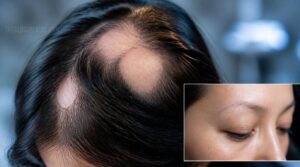
Alopecia areata doesn’t look the same on everyone, and knowing what to watch for can make a real difference in catching it early. The condition shows up in several distinct ways — some more obvious than others. Here are the most common symptoms and types you should know about.
Since alopecia areata behaves differently from other forms of hair loss, it helps to first understand the common causes of hair loss in females so you can better recognize what sets this condition apart.
Circular Smooth Hair Loss Patches
One of the first signs people notice is a round, coin-sized bald patch appearing almost overnight. The skin inside feels smooth and bare — no scaling, no scarring, just exposed scalp.
Look closely at the border and you might spot "exclamation mark" hairs — short strands that taper near the root, signaling active loss. Unlike ringworm, there’s no redness or flaking. This condition is categorized as a non-scarring alopecia caused by an autoimmune response.
Eyebrow and Beard Involvement
Alopecia areata doesn’t stop at the scalp. It can strip eyebrows and beard hair in smooth, non-scarring patches — a pattern called alopecia barbae when it targets facial hair.
Eyebrow shedding can happen fast. Because facial follicles are highly visible, even a small bald patch feels dramatic. Eyelashes may be affected too, making this a multi-site condition worth tracking with your dermatologist.
Nail Pitting and Brittleness
Hair isn’t the only thing this autoimmune disorder targets. Many people with alopecia areata notice changes in their fingernails and toenails too — small dents called nail surface pinholes, or brittleness that causes splitting and crumbling.
That keratin layer damage can leave nails rough, layered, or worn down. It’s a sign the same immune disruption driving your hair loss is affecting nail tissue as well.
Tingling Before Shedding
Some people notice a prickling or burning sensation on their scalp days before any visible hair loss appears. It’s your skin signaling that something’s shifting beneath the surface.
Before hair loss appears, your scalp may already be warning you with a prickling or burning sensation
- Tingling that concentrates near patch borders
- Discomfort that worsens during washing or warmth
- Sensations that flare after stress or illness
This nerve irritation around follicles often marks the start of a new active shedding phase.
Diffuse Sudden Thinning
Sometimes diffuse alopecia areata doesn’t announce itself with round patches — it just quietly thins everything at once.
| What You Notice | What It Means |
|---|---|
| Wider hair part | Density dropping at the scalp |
| "See-through" look under light | Follicles shedding broadly |
Telogen effluvium triggers like stress or illness can accelerate this shift. Dermatological treatments including corticosteroid injections and topical immunotherapy help slow it down.
Causes and Risk Factors
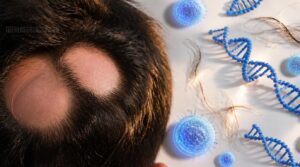
Alopecia areata is an autoimmune condition, which means your own immune system mistakenly attacks your hair follicles. Several factors can raise your chances of developing it or trigger a flare-up. Here’s what puts some people at higher risk than others.
Autoimmune Follicle Inflammation
Your immune system mistakes your own hair follicles for threats. It sends T cells and chemokines like CXCL9 and CXCL10 to attack them, triggering a cycle that’s hard to stop on its own.
Three things happen fast:
- Immune privilege collapses at the follicle
- Inflammation disrupts the hair growth cycle
- Follicles shift out of active growth prematurely
That’s what drives the patches.
Family History and Genetics
Genetics load the gun, but family history pulls the trigger. If a parent or sibling has alopecia areata, your risk rises — and the more first-degree relatives affected, the stronger that signal gets.
The condition doesn’t trace back to one gene. Multiple shared genetic variants contribute, each with a modest effect. Earlier onset in a relative often points to a stronger inherited risk pattern.
Thyroid Disease and Vitiligo
Alopecia areata rarely travels alone. Two frequent companions are vitiligo and thyroid disease — both autoimmune conditions where your body targets healthy tissue.
Supporting scalp health through targeted nutrition may also help, since hair growth oils that boost follicle circulation can complement care routines for those managing autoimmune-related hair loss.
Watch for these overlapping signs:
- Patchy skin depigmentation from vitiligo
- Fatigue or unexplained weight shifts
- Acral depigmentation near the wrists
- Nail changes appearing alongside hair loss
That’s why a dermatologist often orders thyroid screening early. Catching dysfunction matters — imbalances quietly affect energy, weight, and overall health.
Allergies Asthma and Anemia
Your immune system doesn’t always stop at hair follicles. Conditions like asthma and seasonal allergies — known as atopic conditions — are linked to alopecia areata and can quietly raise your anemia risk.
Chronic airway inflammation disrupts iron handling, reducing what’s available for red blood cell production. That matters for overall health and, indirectly, for how your body reacts to treatments like topical minoxidil or corticosteroid injections.
Cold Weather Flare Patterns
Winter isn’t kind to alopecia areata. Cold weather flare patterns are real — many people notice increased shedding as temperatures drop, likely tied to shifts in inflammation levels beneath the scalp.
Your dermatologist may adjust corticosteroid injections or topical immunotherapy timing around seasonal changes to stay ahead of flares before they progress.
Diagnosis Before Hair Loss Treatment
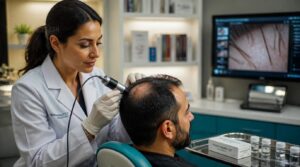
Before your doctor recommends any treatment, they’ll want a clear picture of what’s actually going on with your scalp and hair. Getting the right diagnosis isn’t just a formality — it shapes everything that comes next. Here’s how dermatologists usually assess alopecia areata.
Dermatologist Scalp Examination
A dermatologist doesn’t just glance at your scalp — they look closely for scalp scaling patterns, redness, and whether follicle openings are still present. They use a dermoscope to spot exclamation mark hairs and check for vascular changes around follicles.
They’ll also examine your nails for nail pitting correlations that often accompany alopecia areata, building a complete clinical picture.
Hair Pull Test
After that visual scan, your dermatologist may perform what’s called Sabouraud’s maneuver — more commonly known as the hair pull test or traction test.
They grasp around 40 to 60 hairs near your scalp using three fingers, then slide outward with gentle, steady pressure. If more than 10% of hairs release, that signals active shedding. With alopecia areata, the result usually turns positive in just one scalp region.
Dermoscope Follicle Check
The pull test tells your dermatologist how much hair is shedding — but a dermoscope shows exactly why.
This small magnifying device lets them examine your scalp up close, checking follicular ostia visibility, hair shaft variability, and perifollicular halo patterns. They can also spot keratin plugs and vascular changes around follicles — details invisible to the naked eye.
Nail and Skin Biopsy
When even a dermoscope isn’t enough, a skin or nail biopsy confirms the diagnosis.
Biopsy site selection shapes results:
- Nail pitting → nail unit sampling
- Nail bed changes → avulsion first
- Scalp patches → punch technique
- Nail fold issues → shave or excision
- Unclear skin pathology → tissue depth accuracy
Samples go to a lab for histopathology, with minimal dystrophy risk.
SALT Score Severity Tracking
The SALT score maps your scalp into four weighted regions — right profile (18%), left profile (18%), vertex (40%), and posterior (24%) — then calculates total hair loss as a percentage.
| SALT Score | Subgroup | Severity Level |
|---|---|---|
| 0–24% | S1 | Mild |
| 25–49% | S2 | Moderate |
| 50–74% | S3 | Extensive |
| 75–99% | S4 | Severe |
| 100% | S5 | Complete loss |
Tracking scores across visits shows whether hair regrowth treatments are gaining ground. Clinicians watch for SALT50 — a 50% improvement from baseline — as the key clinical goal.
Medical Treatments for Hair Regrowth
Once your diagnosis is confirmed, your dermatologist can match you with a treatment that fits the severity of your condition. There’s no single fix that works for everyone, but several proven options exist — from injections to oral medications. Here’s a closer look at the main medical treatments used to bring hair back.
Corticosteroid Scalp Injections
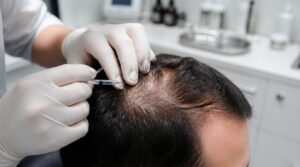
Corticosteroid scalp injections are one of the most effective treatments for alopecia areata. A dermatologist injects triamcinolone acetonide directly into affected patches using a fine needle.
Regrowth can begin after several sessions — not overnight. Side effects include injection site pain, temporary skin atrophy, or pigment changes. Your clinician adjusts the concentration based on your scalp’s response.
Topical Corticosteroids and Minoxidil

Two treatments often work better together than alone. Clobetasol propionate 0.05% — a potent topical corticosteroid — targets scalp inflammation once nightly, while topical minoxidil 5% stimulates dormant follicles twice daily. Regrowth takes consistent effort over weeks.
Prolonged use of clobetasol risks skin thinning, so monitor treated areas closely. Minoxidil can cause mild irritation, but most people tolerate it well.
Topical Immunotherapy Options

When standard treatments stall, dermatologists turn to contact immunotherapy. Three agents — diphencyprone, squaric acid dibutylester, and dinitrochlorobenzene — are applied directly to affected scalp areas to trigger a controlled immune response.
Your clinician adjusts the concentration based on how your skin reacts. Too little and nothing happens; too much causes uncomfortable dermatitis. Sessions happen over multiple clinic visits, making careful dose monitoring essential for safe hair regrowth.
Oral JAK Inhibitors

Oral JAK inhibitors work by blocking enzymes that send your immune system the signal to attack hair follicles. The FDA has approved baricitinib, ritlecitinib, and deuruxolitinib specifically for alopecia areata, with clinical trials showing regrowth rates between 23% and 40%.
These are taken by mouth daily — no infusions needed. That said, your doctor will screen you carefully, since cardiovascular risks and serious infections are real considerations.
Combination Therapy for Severe Cases

When one treatment isn’t enough, doctors layer therapies — targeting inflammation from multiple angles at once.
A typical escalation plan might combine:
- Corticosteroid injections to calm local scalp inflammation
- Topical anthralin or prescription topicals to disrupt immune activity
- Oral corticosteroids for rapid short-term control
- Topical immunotherapy to redirect immune responses
- Minoxidil for follicle support during regrowth
Your doctor monitors side effects closely throughout.
Top 9 Alopecia Areata Hair Treatments
Managing alopecia areata doesn’t stop at your dermatologist’s office. Alongside medical treatments, the right daily-use products can support healthier hair growth and a stronger scalp environment. Here are nine options worth knowing about.
1. Biotin Hair Growth Treatment Serum
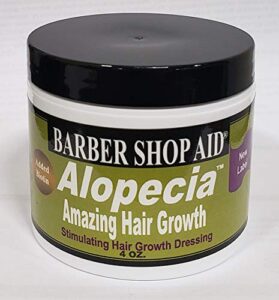
This 4-ounce hair growth dressing is formulated with biotin — vitamin B7 — which helps with keratin production, the protein that makes up your hair strands. It works across all hair types.
It’s lightweight, non-greasy, and free of artificial colors, so daily scalp use won’t feel heavy. The minty scent is noticeable, and some users report mild skin tightness, so patch-test first. Results take weeks, sometimes months — patience matters here.
| Best For | Anyone dealing with hair thinning, alopecia, bald spots, or sparse edges who wants a daily scalp treatment that works across all hair types. |
|---|---|
| Product Type | Hair growth dressing |
| Key Ingredients | Biotin (Vitamin B7) |
| Hair Compatibility | All hair types |
| Results Timeline | Weeks to months |
| Application Frequency | Daily |
| Primary Concern | Thinning, alopecia, bald spots |
| Additional Features |
|
- Contains biotin to support keratin production and encourage hair regrowth
- Lightweight, non-greasy formula that’s comfortable for everyday use
- Free of artificial colors and suitable for all hair types
- Results can take several weeks to months — not a quick fix
- The minty scent is strong and may not suit everyone
- Some users may experience skin tightness or allergic reactions, so a patch test is recommended
2. Natural Hair Loss Treatment Shampoo
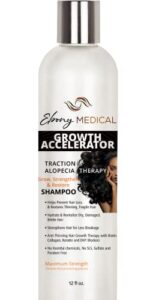
Where the serum targets individual follicles, a good shampoo sets the stage by keeping your scalp clean and calm.
This sulfate-free, paraben-free formula uses botanical extracts — think aloe vera and ginger root — to soothe while you cleanse. At $19.99 for 12 ounces, it’s built for daily use on sensitive or textured scalps without stripping natural oils.
Give it three months of consistent use. Results won’t appear overnight, but your scalp will feel the difference sooner.
| Best For | Women of color, those with textured or color-treated hair, and anyone dealing with thinning, breakage, or a sensitive scalp who wants a gentle daily cleanser. |
|---|---|
| Product Type | Cleansing shampoo |
| Key Ingredients | Aloe vera, ginger root |
| Hair Compatibility | All including textured/color-treated |
| Results Timeline | Three months |
| Application Frequency | Daily |
| Primary Concern | Thinning, breakage, sensitive scalp |
| Additional Features |
|
- Clean, skin-friendly formula — sulfate-free, paraben-free, vegan, and cruelty-free, so it won’t irritate sensitive scalps or strip color-treated strands
- Botanical extracts (like aloe vera and ginger root) actively soothe the scalp while defending against UV damage and pollution
- Supports hair density, hydration, and shine — tackling multiple concerns in one daily step
- Results take time — the manufacturer recommends three months of consistent use before expecting noticeable changes
- Daily use means you’ll go through bottles quickly, adding up in cost over time
- At $19.99 per 12 oz, the per-use cost may feel steep for budget-conscious shoppers
3. Alopecia Hair Growth Treatment Solution
A shampoo cleans the surface — a targeted solution goes deeper.
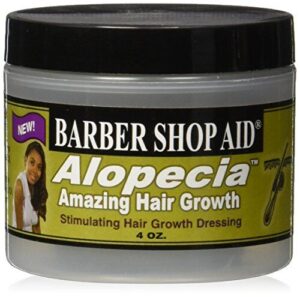
This formula applies directly to affected patches, using a dropper or nozzle to reach the scalp where follicles need support. Ingredients like glycerin and allantoin help keep the area moisturized and calm while active compounds work to stimulate blood flow beneath the skin.
Expect a wait. Consistent daily use for several months is standard before visible regrowth appears. Some users find the texture greasy, so start with a small area first.
| Best For | People experiencing thinning edges, bald spots, or early-stage alopecia who want a targeted, leave-on treatment to support follicle recovery and regrowth. |
|---|---|
| Product Type | Targeted scalp solution |
| Key Ingredients | Glycerin, allantoin |
| Hair Compatibility | All hair types |
| Results Timeline | Several months |
| Application Frequency | Daily |
| Primary Concern | Thinning edges, bald patches |
| Additional Features |
|
- Applies directly to problem areas like temples and edges for focused treatment
- Moisturizing ingredients like glycerin and allantoin help soothe and condition the scalp
- Works for all hair types and can support recovery from traction alopecia
- Results take several months of daily use — not a quick fix
- The texture can feel quite greasy, especially on finer hair
- Won’t address hair loss tied to autoimmune conditions or deeper scalp issues
4. Alopecia Hair Growth Stimulating Oil
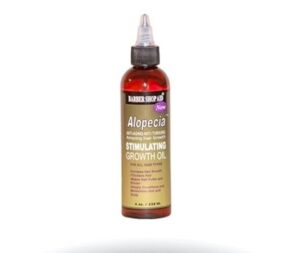
Oil takes a different approach than serums or solutions.
The Barber Shop Aid stimulating oil at $16.55 uses a carrier oil base — think castor, jojoba, and similar plant oils — blended with botanicals like rosemary and capsicum extract to support circulation at the scalp. You massage it directly into patches and edges as part of a daily routine.
Results vary. Some users notice thicker-looking areas over time; others see little change. The scent is strong and not for everyone.
| Best For | People dealing with thinning patches or sparse edges who want an affordable, oil-based option to add to their daily scalp care routine. |
|---|---|
| Product Type | Stimulating oil |
| Key Ingredients | Castor oil, rosemary, capsicum |
| Hair Compatibility | All hair types |
| Results Timeline | Varies by user |
| Application Frequency | Daily |
| Primary Concern | Thinning patches, sparse edges |
| Additional Features |
|
- Affordable at $16.55 — easy to try without a big commitment
- Targets patches and edges directly, making application precise and practical
- Doubles as a moisturizer for hair and nails, adding everyday utility
- Results are hit or miss — some users see no change in hair volume
- The scent is strong and polarizing, with some describing it as pickle-like
- New growth (when it does appear) may come in thinner than original hair
5. Hair Growth And Repair Oil
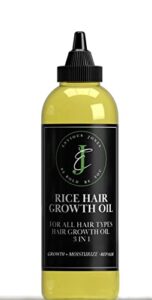
Three jobs in one bottle — that’s the pitch with this hair growth and repair oil. It moisturizes, repairs damage, and works to thicken strands at the same time, using an antioxidant rice-based formula to support follicle activity.
The pointed tip applicator makes it easier to target thinning edges or a balding crown without saturating your whole scalp. Apply it to damp or dry hair three to four times a week.
One real caveat: even small amounts can feel extremely oily, so start light.
| Best For | Anyone dealing with thinning edges, balding spots, or general hair loss — including men, women, and children across all hair types. |
|---|---|
| Product Type | Hair growth oil |
| Key Ingredients | Rice antioxidant formula |
| Hair Compatibility | All hair types |
| Results Timeline | Consistent use required |
| Application Frequency | Three to four times weekly |
| Primary Concern | Thinning edges, balding crown |
| Additional Features |
|
- 3-in-1 formula tackles moisturizing, repair, and thickening in a single step
- Pointed tip applicator lets you target problem areas like edges and crowns with precision
- Works for a wide range of concerns, from dandruff and breakage to alopecia and beard care
- Even small amounts can leave hair feeling extremely oily, so application takes some trial and error
- Requires consistent use several times a week to see real results
- Not a rinse-out product, which may not suit everyone’s routine
6. Natural Hair Loss Relief Supplement
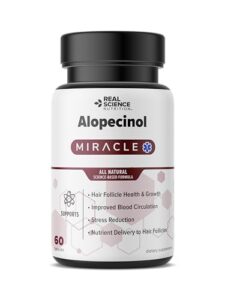
A pill isn’t the first thing most people reach for with alopecia areata — but it might surprise you. This supplement uses a nitric oxide-driven formula with Vinitrox to support scalp circulation, pairing it with GABA, vitamins C, D, K, B6, B12, and folate in a clean, non-GMO mix.
Two capsules a day is all it takes. Results won’t appear overnight — consistent use over several months is realistic. Take it with food if your stomach runs sensitive.
| Best For | People dealing with thinning hair, stress-related shedding, or age-related hair loss who want a clean, simple daily supplement instead of messy topicals. |
|---|---|
| Product Type | Oral supplement |
| Key Ingredients | Vinitrox, vitamins C/D/K/B6/B12 |
| Hair Compatibility | All hair types |
| Results Timeline | Several months |
| Application Frequency | Twice daily with food |
| Primary Concern | Thinning, stress-related shedding |
| Additional Features |
|
- Nitric oxide formula with Vinitrox actively supports scalp circulation and follicle health
- Comprehensive nutrient blend (vitamins C, D, K, B6, B12, and folate plus GABA) in one easy two-capsule dose
- Clean-label, non-GMO, and made in a USA GMP-certified facility for peace of mind
- Results require several months of consistent use — no quick fixes here
- May cause digestive discomfort for sensitive stomachs, so taking it with food is a must
- Individual results vary and aren’t guaranteed, so it may not work for everyone
7. Minoxidil Hair Growth Serum Spray
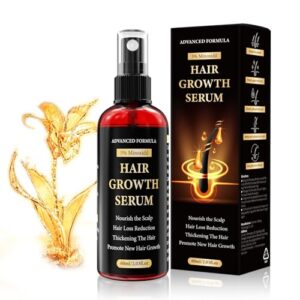
Minoxidil has been a trusted name in hair regrowth for decades — and this 5% minoxidil spray puts that science into an easy daily routine. It works by expanding blood vessels and increasing scalp blood flow to wake up dormant follicles.
The formula pairs minoxidil with batana oil, rosemary oil, and biotin for added nourishment without a greasy feel. Four sprays per application, once daily for women and twice for men.
Don’t expect overnight results. Give it 2–3 months of consistent use.
| Best For | Anyone experiencing genetic hair loss or thinning — men or women — who want a clinically backed, easy-to-use daily treatment. |
|---|---|
| Product Type | Minoxidil spray |
| Key Ingredients | 5% minoxidil, biotin, rosemary oil |
| Hair Compatibility | All hair types |
| Results Timeline | Two to three months |
| Application Frequency | Once or twice daily |
| Primary Concern | Genetic hair loss, thinning |
| Additional Features |
|
- 5% minoxidil is a well-established, proven ingredient for stimulating hair regrowth
- Enriched with batana oil, rosemary oil, and biotin for a nourishing, non-greasy formula
- Spray applicator makes targeted application quick and mess-free
- Results take 2–3 months of consistent daily use before becoming visible
- Dosing schedules differ by gender, which can be easy to mix up
- Effectiveness varies — some users report little to no improvement
8. Natural Hair Loss Treatment Serum
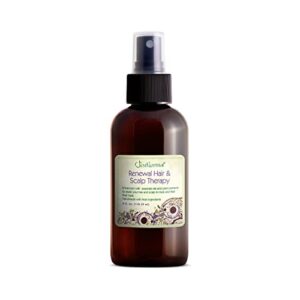
Some serums go beyond a single hero ingredient. This one blends cedarwood, thyme, and rosemary oils to stimulate circulation and strengthen follicles from the root up — a botanical trio with real staying power.
The formula also targets dryness and frizz, leaving a protective layer on each strand. That’s useful when brittleness is already a concern.
One thing to know: it contains sodium laureth sulfate and some unlisted ingredients, so check with your dermatologist if you have sensitivities.
| Best For | Anyone dealing with hair thinning, shedding, or scalp dryness who wants a botanical, multi-ingredient approach to supporting hair growth and density. |
|---|---|
| Product Type | Hair serum |
| Key Ingredients | Cedarwood, thyme, rosemary oils |
| Hair Compatibility | All hair types |
| Results Timeline | Regular use required |
| Application Frequency | Regular use |
| Primary Concern | Thinning, shedding, scalp dryness |
| Additional Features |
|
- Combines three circulation-boosting oils (cedarwood, thyme, and rosemary) to target hair loss from multiple angles
- Adds a protective layer that helps reduce frizz and brittleness with regular use
- Supports overall scalp health, which creates a better environment for hair growth
- Contains sodium laureth sulfate, which may irritate sensitive scalps
- Some ingredients are not fully disclosed, making it harder to vet for allergies or sensitivities
- The scent may be too strong for users sensitive to botanical fragrances
9. Hair growth volumizing conditioner treatment
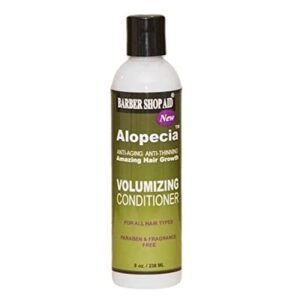
When thinning hair lies flat and looks sparse, volume becomes part of the solution. This botanical mix conditioner coats each strand to increase perceived thickness, making regrown patches mix more easily with surrounding hair.
It’s lightweight enough to moisturize without weighing hair down. That matters when you’re working with fine or fragile strands.
Some users report dryness or extra shedding at first. Individual results vary, so give it a few weeks before drawing conclusions.
| Best For | Anyone dealing with thinning or fine hair who wants more volume and softness as part of their regular hair care routine. |
|---|---|
| Product Type | Volumizing treatment |
| Key Ingredients | Botanical blend |
| Hair Compatibility | All hair types |
| Results Timeline | Varies by user |
| Application Frequency | Regular use |
| Primary Concern | Thinning hair, low volume |
| Additional Features |
|
- Botanical blend formula adds visible volume and perceived thickness to thinning hair
- Lightweight texture moisturizes without weighing fine or fragile strands down
- Helps improve softness and manageability for easier styling
- Some users experience dryness with regular use
- Increased hair shedding has been reported in certain cases, especially early on
- Results for hair growth and regrowth can vary significantly from person to person
Frequently Asked Questions (FAQs)
Is there a permanent cure for alopecia?
No, there’s no permanent cure for alopecia areata. The immune system can quiet down — even for years — but it may stir again. Treatments support regrowth, not lifelong eradication.
Can your hair grow back if you have alopecia?
Yes, your hair can grow back. Alopecia areata is non-scarring, so follicles stay intact. Regrowth is possible even after total hair loss, though timing and outcomes vary by severity.
Can alopecia be prevented?
Alopecia areata can’t be prevented. It’s an autoimmune condition, meaning your own immune system triggers it. Managing stress, eating well, and gentle scalp care may reduce flare-ups, but they won’t eliminate your risk entirely.
What is the best treatment for alopecia hair loss?
No single treatment works best for everyone. Your dermatologist tailors the plan to your patch size, disease severity, and how your body responds — making individualized care the most effective approach.
Can you regrow hair from alopecia areata?
Hair can grow back. Follicles stay dormant, not destroyed, so regrowth is possible — sometimes within a year on its own. With limited patches, your chances are better than you might think.
What is the fastest way to cure alopecia areata?
There’s no silver bullet here. No permanent cure exists yet — but fast results are possible. Corticosteroid injections offer the quickest path, with over 80% of patients seeing regrowth within 12 weeks.
What is the most successful treatment for alopecia areata?
No single treatment wins for everyone. That said, oral JAK inhibitors — especially baricitinib — show the strongest, most consistent evidence for significant hair regrowth in adults with severe alopecia areata.
How do you stop alopecia from progressing?
You can’t fully stop it, but you can slow it down. Early dermatologist treatment, gentle hair care, avoiding smoking, and managing stress all help reduce flare-ups and limit how far the condition spreads.
What causes alopecia to flare up?
Your immune system is the culprit here — it turns on your own hair follicles. Stress, illness, surgery, fever, and nutritional deficiencies like low iron or zinc can all spark a flare.
What makes alopecia areata worse?
Your immune system is the main culprit. When it stays in attack mode — targeting your own hair follicles — patches spread. Stress, illness, and even cold weather can keep that cycle going.
Conclusion
The ball is in your court now. Hair loss treatment for alopecia areata has never offered more real options—from dermatologist-administered corticosteroid injections to JAK inhibitors that work at the immune level.
No single path fits everyone, and that’s actually good news. Your dermatologist can help you build a plan around your specific pattern, severity, and lifestyle. Patches don’t define your future. With the right treatment, your follicles often have more fight left in them than you’d expect.