
This site is supported by our readers. We may earn a commission, at no cost to you, if you purchase through links. This content is for general informational and educational purposes only and is not a substitute for professional medical, dermatological, or nutritional advice.

You left the salon with glossy, ice-cool blonde. Three weeks later, your mirror shows something else: a buttery yellow tint, maybe even a coppery glow near the ends. Yep, that’s brass, and it’s the sneakiest color thief in your bathroom.
So what does brassy hair look like? Think of a warm, tired wash that flattens your shade. Blondes drift toward yellow, while brunettes turn orange and rusty. Sun, hot tools, and hard water all nudge it along (your shower isn’t innocent, either).
Good news: you can spot it early and fix it. Here’s how.
Table Of Contents
- Key Takeaways
- What Does Brassy Hair Look Like?
- Why Does Hair Turn Brassy?
- How Can You Fix Brassy Hair?
- How Can You Prevent Brassy Hair?
- When Should You See a Stylist for Brassy Hair?
- Frequently Asked Questions (FAQs)
- How do I tell if my hair is brassy?
- How do you get rid of brassy hair?
- How can I fix brassy hair color?
- What causes hair to go brassy?
- Can brassy hair happen on natural brunettes?
- Does brassy hair look different on gray hair?
- How often should you use toning shampoo?
- Can hard water make hair look brassy?
- Does brassy hair damage hair health over time?
- Conclusion
Key Takeaways
- Brassiness is a warm yellow (on blondes) or orange (on brunettes) tint that shows up first on your ends and highlights, and you can spot it by holding a strand against something white in daylight.
- Your hair hides warm pigment that lightening exposes, and sun, hot tools, hard water, sulfate shampoos, and porous damaged strands speed up toner fading.
- You can cancel yellow with purple shampoo or orange with blue shampoo once or twice a week, and a stylist’s toner or gloss handles stubborn brass for longer.
- You’ll keep your tone longer by filtering your shower water, switching to sulfate-free products, protecting your hair from heat and UV, and calling a stylist when brassiness, patchiness, or dryness won’t budge at home.
What Does Brassy Hair Look Like?
Brassiness shows up as a warm, unwanted tint that makes your color look tired and a little flat.
If your color keeps drifting orange or yellow between salon visits, this guide to choosing and maintaining warm hair color tones shows which shades hold up best and how to keep them fresh.
On lighter blondes, brassy hair leans toward yellow tones, sometimes with a greenish cast. On darker shades, you’ll see orange tones that look coppery or rusty.
Check the mid-lengths and ends first. They’re older and more porous, so hair color fading shows there before it does at the roots. Highlighted pieces often turn brassier than the rest, which leaves uneven, patchy color.
Not sure? Hold a strand against a white towel in daylight. Warm bulbs fake golden tones, so skip the bathroom light (it’s sneaky!). If your hair looks golden or coppery next to the white, you’ve got it.
Don’t panic! Brassy hair is common, and spotting it early makes it easier to deal with. (Your future self will thank you.)
Why Does Hair Turn Brassy?

Blame your hair’s hidden warmth. Every strand carries yellow tones and orange tones underneath, and lightening brings them out.
Once cool toner starts fading, those warm pigments take over. Here’s what speeds that up:
Since timing, porosity, and starting level all affect how long your toner holds, check this guide on how long to leave toner on brassy hair before your next appointment.
- UV and heat: Sun and hot tools oxidize dye, so cool shades break down.
- Hard water: Calcium, iron, and copper cling to strands and dull your color.
- Sulfate shampoos: They strip toner and rough up the cuticle.
- Chlorine and buildup: Pool water and silicone products change how light bounces off your hair.
Damaged, porous hair makes everything worse, since it soaks up minerals and loses toner fast. That’s why hair color fading looks patchy on bleached ends.
Good news? Knowing the culprits makes brassiness prevention easier. Using a sulfate-free clarifying shampoo before toning removes mineral buildup so your toner can work evenly.
How Can You Fix Brassy Hair?
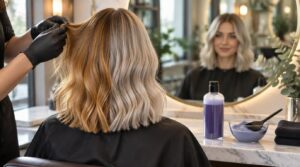
Good news: brassy hair isn’t a life sentence! You’ve got two main fixes to choose from, and each one works a little differently. Let’s look at which one fits your hair best.
Purple Vs. Blue Shampoo
Purple shampoo cools yellow, while blue shampoo calms orange. Same bottle shape, opposite jobs! That’s color theory application at work: violet cancels yellow, blue cancels orange.
If your blonde keeps turning brassy between salon visits, this guide to fixing brassy hair color helps you pick the right toning shampoo for your shade.
Purple shampoo cools yellow and blue shampoo calms orange, because opposite colors on the wheel cancel each other out
| Shampoo | Targets |
|---|---|
| Purple | Yellow brassy hair |
| Blue | Orange, copper tones |
| Strength | Blue hits harder |
Use either as a toning treatment once or twice weekly. Leave it on 1-5 minutes, rinse well, and wear gloves.
Professional Toners and Glosses
Home shampoos only nudge tone, so when brass fights back, call in a professional toning treatment! (Think of it as shampoo’s overachieving big sibling.) Here’s what your stylist might use:
- Demipermanent toners last about 24 to 28 washes.
- Acid color gloss adds shine while neutralizing warmth.
- Hair gloss treatment fades over 4 to 12 weeks.
- Colordepositing conditioner refreshes tone between visits.
How Can You Prevent Brassy Hair?

Filtering your water is the easiest first move. A shower filter catches the minerals that dull lightened hair (your colorist will thank you!).
Next, build a gentle routine:
- Switch to sulfate-free haircare so your toner lasts longer.
- Use purple shampoo once a week, not every wash.
- Add a color-depositing conditioner between salon visits.
Heat and sun count too. Turn your tools down, and try UV protection for hair before long days outside. Sunshine fades toner fast, so why let it win?
Here’s a quick tip from my own chair: a client’s perfect ash blonde turned golden in just three weeks of daily flat-ironing. Lesson learned!
When Should You See a Stylist for Brassy Hair?
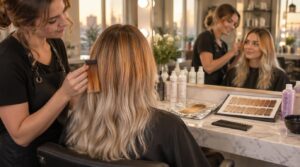
When should you toss the toning shampoo and call in backup? (Yes, it happens to the best of us!) If brassiness sticks around after several washes, or orange creeps in near your roots, your hair needs more than a bottle can give.
Watch for patchy color, too. Past at-home attempts can leave uneven spots, and more rounds of color correction at home often make banding worse. Dry, rough strands? A stylist should fix condition first. If your color is only mildly warm and your strands are healthy, a gentle at-home hair toner for brassiness can bridge the gap between salon visits.
Pros do real brassiness neutralization with strand tests, choosing a toner or gloss for your exact shade. Then they’ll set up your hair color maintenance plan so the tone lasts. Need someone fast? Try a salon locator and book a consult. Your hair says thanks!
Frequently Asked Questions (FAQs)
How do I tell if my hair is brassy?
Spot brassiness by checking for yellowing or orange brass where you want cool blonde. Look at your lightest sections in white light.
Still seeing warm undertones even after toning? That’s your cue for color correction.
How do you get rid of brassy hair?
Pick your shampoo by shade: purple shampoo cancels yellow in blondes, while blue works on orange in brunettes. Use it twice weekly, then add a toning conditioner. Still stubborn? An ash toner from your colorist resets everything.
Since the right toner depends on your undertone too, browsing these hair color ideas for cool skin tones can help you pick a shade that stays fresh between salon visits.
How can I fix brassy hair color?
Brass won’t beat you, not in a million years! Start with purple shampoo for yellow tones, or a color depositing shampoo in blue for orange. Then use toning conditioner weekly. Stubborn? Ask for an ash toner.
What causes hair to go brassy?
Lightening exposes warm pigment, and that’s how brassy hair starts.
Then hard water minerals, chlorinated water, sun exposure, and UV damage to hair pile on. Your porous strands lose cool toner fast, so warmth wins!
Can brassy hair happen on natural brunettes?
Yes, it can! Your natural hair pigment already hides warm yellow and orange tones, so brassy hair can show up when sun, heat, or rough cleansing wears down your brown.
Does brassy hair look different on gray hair?
Absolutely, and it’s sneaky! On gray or silver hair, brassiness shows up louder. There’s no dark pigment to mute it, so yellow and orange glow in the mid-lengths. Pigmented toning products help, and your toning frequency matters!
How often should you use toning shampoo?
Worried about overdoing it? Fair! Match your toning frequency to brassiness: purple shampoo once or twice weekly on color-treated hair, then stretch it out.
Dull or ashy? Ease off. Toners and UV-protectant spray help too.
Can hard water make hair look brassy?
Hard water can totally play a part! Its calcium and magnesium leave mineral buildup that dulls your shine and makes brassy hair look warmer.
For brassiness prevention, try a shower filter and cooler final rinses.
Does brassy hair damage hair health over time?
Your cuticle has roughly six to ten layers, and brassy hair isn’t hair damage itself. But high hair porosity often signals it, so smart hair color maintenance and hair cuticle sealing help protect your strands!
Conclusion
Picture a gold coin left out in the rain, dull and a little green around the edges. That’s your color without a plan.
So, what does brassy hair look like? Now you know: warm, tired, and fixable. Sun, heat, and hard water cause it, while purple or blue shampoo and glosses tone it back down.
Catch it early, treat it kindly, and call your stylist when home care stalls. Your cool tone is worth keeping!