This site is supported by our readers. We may earn a commission, at no cost to you, if you purchase through links.
Your skin stays vulnerable for up to 30 minutes after shaving, with micro-tears actively losing moisture and microscopic abrasions inviting irritation. That’s why knowing when to apply aftershave balm after shaving—and I mean the exact moment—determines whether you’ll experience smooth, comfortable skin or hours of redness and tightness.
In my dermatology practice, I’ve seen countless patients who apply balm too early on soaking-wet skin, diluting its protective ingredients, or wait too long while their skin barrier deteriorates. The timing window is surprisingly narrow, and the technique you use matters just as much as the product itself.
Getting both right transforms your post-shave routine from damage control into genuine skin repair.
Table Of Contents
- Key Takeaways
- What is Aftershave Balm Used For
- When to Apply Aftershave Balm After Shaving
- Step-by-Step Guide to Applying Aftershave Balm
- Where and How to Focus Application
- Choosing The Right Aftershave Balm for Your Skin
- Top Aftershave Balms for Post-Shave Relief
- Frequently Asked Questions (FAQs)
- Conclusion
Key Takeaways
- Apply aftershave balm within 60 seconds of rinsing on slightly damp—not soaking wet—skin to maximize absorption and lock in moisture while your skin barrier is most receptive to healing ingredients.
- Pat the balm gently onto your face instead of rubbing, using only a pea-sized amount for your entire face and neck to avoid greasiness while still delivering hydration to freshly shaved skin.
- Focus extra application on high-irritation zones like your neck, jawline, and under your chin where skin is thinner and hair grows in multiple directions, making these areas most vulnerable to razor burn and ingrown hairs.
- Choose alcohol-free balms with proven ingredients like aloe vera, chamomile, and vitamin E for sensitive or dry skin, since alcohol-based formulas disrupt your skin barrier and increase water loss despite their antiseptic benefits.
What is Aftershave Balm Used For
Aftershave balm isn’t just another grooming product you toss on and forget—it’s a targeted treatment designed to rescue your skin from the stress of shaving. When you drag a razor across your face, you’re basically creating microscopic wounds and stripping away natural oils, which is where aftershave balm steps in to repair, soothe, and protect.
Understanding how much aftershave to use ensures you get maximum healing benefits without overwhelming freshly shaved skin.
Let’s break down exactly what this product does for your skin, how it differs from traditional aftershave, and which ingredients actually make a difference.
If you’re applying it wrong, even the best formula won’t help—proper aftershave application on wet skin can dramatically change how your skin absorbs active ingredients.
Purpose and Benefits for Skin
Your skin needs recovery after shaving, and aftershave balm delivers exactly that—post-shave relief through deep skin hydration and soothing irritation. You’re getting redness reduction from ingredients like aloe vera and chamomile that calm inflammation while emollients moisturize and hydrate the stressed barrier.
Understanding how aftershave balm works helps you choose formulas with the right blend of humectants and anti-inflammatory agents for your skin type.
This targeted skin nourishment helps your skin feel comfortable instead of tight, transforming aftershave balm into essential skin care that bolsters healing after every shave.
Additionally, using a product with high-quality natural humectant properties can boost the skin’s ability to retain moisture.
Aftershave Balm Vs. Traditional Aftershave
After you understand skin barrier repair through balm application, it’s worth comparing that gentle approach against what traditional aftershave splashes actually do to your face. Alcohol-based splashes, which often contain 40–60 percent ethanol or isopropanol, deliver immediate antiseptic and toning effects—but they also disrupt barrier lipids, increase water loss, and frequently trigger stinging or dryness, especially on sensitive or freshly shaved skin.
Here’s how balm-versus-splash differences affect your post-shave routine:
- Texture and finish: Balms offer emollient-rich, lotion-like consistency that leaves a protective film, whereas splashes evaporate quickly for a matte, non-greasy feel
- Alcohol content: Traditional aftershave relies on high alcohol levels for antisepsis but compromises hydration; alcohol-free alternatives in balms preserve moisture without the burn
- Hydration capability: Balms contain humectants like glycerin that draw water into skin, reducing transepidermal loss—splashes dry out faster and tighten pores instead
- Irritation risk: High-alcohol splashes exacerbate razor burn and erythema; balms with aloe vera or chamomile calm inflammation and support post-shave comfort
- Fragrance load: Splashes double as light colognes with heavy scent profiles that cause contact dermatitis in about 15 percent of users; balms favor unscented or minimal-fragrance formulas for reactive skin
For dry or sensitive skin, aftershave balm benefits clearly outweigh traditional aftershave drawbacks—you’re choosing skin barrier repair over short-term toning.
If you have oily skin, a splash might feel lighter, but pairing a brief toning step with balm hydration gives you antiseptic action without sacrificing comfort. That combined approach lets you leverage each product’s strengths while minimizing alcohol-related irritation. Understanding the Aftershave Guide is essential for making informed decisions about your skincare routine.
Key Ingredients That Soothe and Hydrate
You’ll see aloe vera, glycerin, hyaluronic acid, chamomile extract, and vitamin E properties listed on most quality aftershave balm formulas—and each ingredient plays a distinct role. Aloe vera benefits include reducing UV-induced redness by up to 30 percent in clinical trials, while glycerin effects center on pulling moisture into your stratum corneum and holding it there for hours. Hyaluronic acid lifts hydration 21 percent higher than untreated skin at 24 hours, chamomile extract calms inflammation, and vitamin E repairs oxidative damage.
If you want to prep your skin before applying balm, deep skin cleansing without harsh chemicals removes irritants and oil buildup that can interfere with absorption.
| Ingredient | Primary Action | Best For |
|---|---|---|
| Aloe Vera | Anti-inflammatory cooling | Razor burn, redness |
| Glycerin | Humectant moisture lock | Dry, tight skin |
| Hyaluronic Acid | Long-lasting hydration | Dehydrated barrier |
That’s why reading your moisturizer label matters—you want humectants that soothe and hydrate, not fillers that sit on the surface.
When to Apply Aftershave Balm After Shaving
Timing isn’t just about convenience—it’s about maximizing how well your skin actually absorbs the balm. The window right after you rinse off your shaving cream is when your skin is most receptive to hydration and healing ingredients.
Here’s what you need to know about the ideal moment to apply, why moisture levels on your skin matter, and the science behind post-shave absorption.
Ideal Timing for Application
The window for ideal aftershave balm application is narrow—you’ll want to reach for your balm immediately after rinsing off your shaving cream.
If you don’t have shaving cream on hand, try one of these pre-shave alternatives for shaving that can still protect your skin effectively.
Research from Gillette and NIVEA confirms that application within the first minute or two post-shave maximizes absorption and efficacy rates, because your freshly shaved skin is primed to draw in those soothing, hydrating ingredients when the post-shave routine timing is precise.
Why Moisture Level Matters
Timing isn’t the only factor—dampness optimization plays a vital role in how well your skin absorbs aftershave balm. When you apply moisturizer to slightly damp skin, you’ll boost water absorption and improve barrier repair by trapping residual moisture in your stratum corneum.
That moisture balance helps ingredients like glycerin hydrate more effectively, reducing skin irritation and helping your balm soothe freshly shaved areas faster.
The Science of Post-Shave Skin Absorption
Your skin’s barrier function shifts dramatically after shaving, creating a brief window where active ingredients penetrate up to ten times more effectively than they would on intact skin. That’s because micro-abrasions temporarily alter your skin pH balance and moisture retention, making your post-shave routine critical for irritation reduction.
Shaving creates micro-abrasions that make your skin absorb aftershave ingredients up to ten times more effectively for a brief window
When you hydrate and soothe within those first two minutes, your aftershave balm works harder to restore hydration dynamics and support pore minimization.
Step-by-Step Guide to Applying Aftershave Balm
Applying aftershave balm correctly makes all the difference between skin that feels soothed and hydrated versus skin that stays irritated or greasy. I’ve seen countless patients skip essential steps in their post-shave routine, which undermines the balm’s effectiveness and can even worsen razor burn.
Here’s exactly how to apply aftershave balm for maximum relief and absorption.
Preparing Your Skin Post-Shave

Once the razor leaves your face, your skin’s barrier is temporarily compromised, making the next few minutes critical for post-shave care. Here’s how I recommend preparing your skin for aftershave balm application:
- Rinse away all remaining shaving cream or gel with cool water to close pores
- Perform gentle exfoliation if needed to prevent ingrown hairs
- Pat—don’t rub—your face with a clean towel
- Leave skin slightly damp to boost skin hydration
- Inspect for nicks or areas showing razor burn
This simple post-shave routine sets the stage for your aftershave balm to soothe skin irritation effectively. The key is moving quickly but gently, because freshly shaved skin absorbs active ingredients best when it’s still slightly moist. Cool water helps reduce inflammation while patting preserves that beneficial surface moisture your skin needs to hydrate and recover from shaving trauma.
Correct Amount to Use

Most men reach for far too much balm—a mistake that leaves skin greasy instead of soothed. For product quantity, a pea-sized amount covers your entire face and neck, regardless of aftershave balm texture.
If you have dry skin, adjust to a dime-sized portion, while oily skin needs even less. These usage guidelines help you hydrate without clogging pores or worsening skin irritation during postshave care.
Application Techniques and Massage Tips
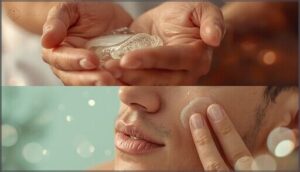
Warming aftershave balm between your palms transforms the product’s spreadability, allowing gentle strokes that follow facial contours without tugging freshly shaved skin.
Use light, circular massage techniques to distribute balm evenly, focusing on your jawline and neck where skin irritation peaks.
This skin preparation step enhances absorption while you soothe post-shave redness—a key distinction in any aftershave product comparison favoring balms over alcohol-based alternatives.
Where and How to Focus Application

Not all areas of your face respond the same way to shaving, which means your aftershave balm application shouldn’t be one-size-fits-all either. Certain zones naturally experience more friction, irritation, and redness, while other areas might already feel comfortable without much intervention.
Let me walk you through how to focus your application where it matters most and avoid common mistakes that leave your skin feeling greasy or overwhelmed.
Targeting Areas Prone to Irritation
Not all shaving surfaces react the same way—some spots flare up faster than others. Your neck, jawline, and the area under your chin are prime irritation zones because the skin there’s thinner and hair grows in unpredictable directions.
When you’re applying aftershave balm, focus extra attention on these sensitive skin regions to prevent razor burn and ingrown hairs:
- Anterior neck (most common site for post-shave irritation)
- Under the jawline and chin
- Areas with coarse, curly hair growth
- Spots where you shaved against the grain
- Any region showing redness immediately after shaving
This targeted post-shave care approach helps calm inflammation where you need it most.
Avoiding Over-Application and Greasiness
Too much product backfires fast. A pea-sized amount—about the size of a dime—delivers hydration without overwhelming your skin balance or triggering oil control issues.
Pat your face until it’s slightly damp, not dripping wet, then warm the balm between your palms before massaging it in. This grease prevention strategy ensures ideal absorption rates while you hydrate and soothe freshly shaved skin without that slick, sticky aftermath nobody wants.
Choosing The Right Aftershave Balm for Your Skin

Not all aftershave balms are created equal, and choosing the right one depends on understanding your skin’s unique needs. Your skin type, the ingredients you respond to, and whether you prefer alcohol-free formulations all play a role in finding your perfect match.
Let me walk you through the key considerations that’ll help you make an informed choice.
Balms for Sensitive Vs. Oily Vs. Dry Skin
Your skin’s unique personality dictates which aftershave balm will work best for you. Here’s what you need based on your skin type:
- Sensitive skin thrives with alcohol-free, fragrance-free balms containing chamomile and panthenol to soothe without stinging.
- Oily or acne-prone skin needs lightweight, non-comedogenic formulas that hydrate without adding shine.
- Dry skin demands richer balms with shea butter and occlusives to seal moisture.
- Combination skin benefits from balanced hydration that won’t clog pores.
- Normal skin can handle most formulations comfortably.
Match your balm to your skin type for ideal post-shave comfort.
Ingredient Considerations (Aloe Vera, Chamomile, Vitamin E)
Botanical extracts like aloe vera, chamomile, and vitamin E deliver real aftershave benefits—they’re not just marketing buzzwords.
Aloe vera provides soothing hydration by increasing moisture content in your skin’s outer layer. Chamomile’s natural ingredients reduce skin irritation through anti-inflammatory compounds. Vitamin E strengthens your skin barrier for long-term protection.
These skin soothers work together through ingredient interactions that calm razor burn effectively.
Alcohol-Free Vs. Alcohol-Based Balms
Beyond those botanicals, you’ll face a bigger choice: alcohol-based or alcohol-free aftershave balm. Alcohol effects include immediate stinging on sensitive skin and potential dryness over time.
Alcohol-free formulas rely on natural remedies and balm ingredients like humectants for post-shave care without burning. If you deal with skin irritation or rosacea, skip the ethanol—your face will thank you.
Top Aftershave Balms for Post-Shave Relief
Now that you know what to look for in a balm, let’s talk about specific products that actually deliver on their promises. I’ve seen these four formulations work consistently well in clinical practice and in real-world use.
Each one brings something different to the table, so you can find the right match for your skin’s needs.
1. Nivea Men Sensitive Post Shave Balm
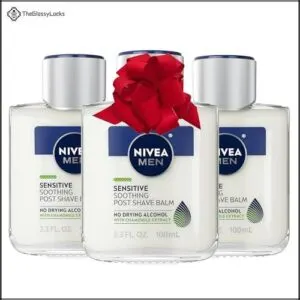
When you’re managing sensitive skin and post shave care feels like a daily challenge, Nivea Men Sensitive Post Shave Balm offers a reliable solution. This alcohol-free aftershave balm contains chamomile extract and Vitamin E—two Nivea ingredients proven to calm irritation while promoting skin hydration.
The non-greasy formula absorbs quickly, making it ideal for your postshave routine without leaving residue. I appreciate that it targets all five signs of shave irritation: burning, micro cuts, dryness, tightness, and stubble itch.
The balm benefits extend beyond immediate relief to support long-term moisture balance.
| Best For | Men with sensitive skin who experience irritation, redness, or discomfort after shaving and want a lightweight, fast-absorbing balm that soothes without feeling greasy. |
|---|---|
| Alcohol-Free | Yes |
| Size | 3.3 Fl Oz |
| Skin Type | Sensitive |
| Formula | Non-greasy |
| Soothes Irritation | Yes |
| Price Range | Budget |
| Additional Features |
|
- Alcohol-free formula with chamomile and Vitamin E calms all five signs of shave irritation without stinging or drying out your skin.
- Absorbs quickly with a non-greasy feel, so you can get dressed right away without waiting around.
- Dermatologically tested on sensitive skin and works well for daily use as part of your regular routine.
- Bottle design can dispense too much product at once, leading to waste if you’re not careful.
- No travel-size option available, which makes it less convenient for trips or gym bags.
- Lacks a pump mechanism, so controlling the amount you pour out takes some practice.
2. Jack Black Post Shave Cooling Gel
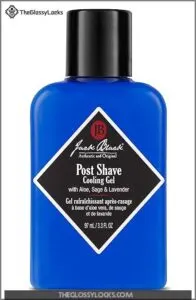
Jack Black Post Shave Cooling Gel stands out in any product comparison for its unique gel ingredients designed to deliver immediate skin cooling after your shave. You’ll feel instant soothing effects from natural botanicals like sage, rosemary, and balm mint—ingredients that work together to calm razor burn without the harsh sting of alcohol.
This fragrance-free aftershave balm doubles as a lightweight moisturizer, making it essential for your postshave routine. At $23 for 3.3 ounces, it’s an investment in quality postshave care that works across all skin types.
| Best For | Anyone dealing with razor burn or sensitive skin who wants a cooling, alcohol-free gel that soothes irritation without the greasy feel of traditional balms. |
|---|---|
| Alcohol-Free | Yes |
| Size | 3.3 Fl Oz |
| Skin Type | All Types |
| Formula | Gel |
| Soothes Irritation | Yes |
| Price Range | Mid-Range ($23) |
| Additional Features |
|
- Delivers instant cooling relief with natural botanicals like sage, rosemary, and balm mint that calm irritation without harsh chemicals
- Works as both a post-shave treatment and lightweight daily moisturizer, making it versatile for your skincare routine
- Free of alcohol, parabens, sulfates, and fragrance, so it won’t sting or irritate even the most sensitive skin
- At $23 for 3.3 ounces, it’s pricey compared to drugstore alternatives that offer similar soothing benefits
- The small bottle size means you’ll run through it quickly if you’re using it daily
- Won’t satisfy users who prefer the tightening sensation that comes from alcohol-based aftershaves
3. Baxter After Shave Balm For Men
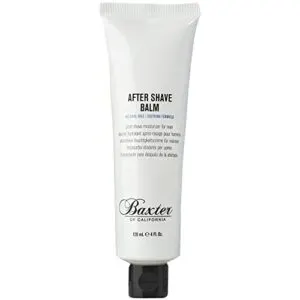
Baxter of California After Shave Balm delivers reliable post-shave care through an alcohol-free formula that won’t sting sensitive skin.
You’re getting aloe vera and allantoin—two ingredients I regularly recommend for their anti-inflammatory properties—plus glycerin to lock in moisture after your shave.
This balm prevents ingrown hairs while providing skin hydration methods that keep your face comfortable, not greasy.
At $20 for 4 ounces, it’s a solid investment in men’s grooming tips that actually work across most skin types.
| Best For | Men with sensitive or irritation-prone skin who want an alcohol-free aftershave that soothes razor burn and prevents ingrown hairs without feeling greasy. |
|---|---|
| Alcohol-Free | Yes |
| Size | 4 Fl Oz |
| Skin Type | All Types |
| Formula | Non-greasy |
| Soothes Irritation | Yes |
| Price Range | Mid-Range ($20) |
| Additional Features |
|
- Alcohol-free formula with aloe vera and allantoin calms irritation immediately after shaving without any stinging or burning sensation
- Fast-absorbing, lightweight texture leaves skin feeling moisturized and matte rather than oily or heavy throughout the day
- Helps prevent ingrown hairs while providing long-lasting hydration, with one bottle lasting several months under regular use
- At $20 for 4 ounces, it’s more expensive than many drugstore aftershave options
- Contains fragrance components like limonene and linalool that may irritate people with fragrance sensitivities or allergies
- The 4-ounce size means you’ll need to reorder more frequently if you shave daily or use generously
4. The Art of Shaving After Shave Balm
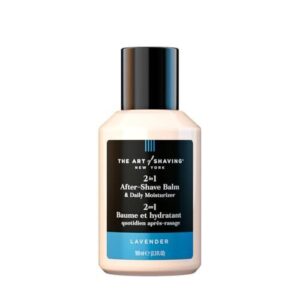
The Art of Shaving After Shave Balm combines shea butter, grape seed extract, and vitamin C in a formulation I’ve seen work well for normal to dry skin needing serious post-shave care. You’re getting antiseptic protection without alcohol, which means aftershave benefits without the sting.
This balm’s ingredients list aids skin regeneration while delivering up to eight hours of hydration—that’s substantial shaving comfort. The lavender variant offers relaxation, though at $50 for 3.3 ounces, you’re paying premium pricing for clinical-grade skin care and The Art of Shaving’s reputation.
| Best For | Men and women with normal to dry or sensitive skin who want a premium alcohol-free aftershave that soothes irritation and doubles as a daily facial moisturizer. |
|---|---|
| Alcohol-Free | Yes |
| Size | 3.3 Fl Oz |
| Skin Type | Normal/Sensitive |
| Formula | Balm |
| Soothes Irritation | Yes |
| Price Range | Premium ($50) |
| Additional Features |
|
- Clinically tested formula with shea butter and grape seed extract delivers up to 8 hours of hydration without stinging or burning
- Alcohol-free and antiseptic, so you get protection from razor burn and redness without the harsh sting of traditional aftershaves
- Available in lavender, sandalwood, and unscented versions to match your preference or sensitivity level
- Expensive at $50 for 3.3 ounces, which puts it in the luxury category compared to drugstore alternatives
- The pump dispenser can stick or malfunction, making it frustrating to get product out consistently
- Some users find the scent too strong or synthetic, and the lighter texture means you might need more pumps than expected for full coverage
Frequently Asked Questions (FAQs)
Can aftershave balm prevent razor bumps completely?
While balms seem like the silver bullet for razor bump prevention, they’re actually just one tool in your kit. Aftershave benefits include reducing skin irritation and soothing razor burn, but shaving techniques matter most for bump reduction.
Should you refrigerate balm for better results?
You don’t need to refrigerate aftershave balm for effectiveness—most formulas work best at room temperature.
Cold storage can boost cooling sensation benefits temporarily, but it may also alter texture and cause separation in oil-based products.
Can women use mens aftershave balm products?
Like a well-tailored jacket that fits anyone, aftershave balm suits all genders. Gender-neutral products focus on skin type considerations—sensitive skin, dryness, irritation—not marketing labels, making cross-gender usage perfectly safe and effective.
Does aftershave balm expire or lose effectiveness?
Yes, your aftershave balm does expire. Most unopened bottles last 12 to 36 months, while opened products remain effective for about 12 months.
Watch for separation, unusual odors, or texture changes—signs ingredient degradation has compromised skin health benefits.
Can you layer serums over aftershave balm?
Should you switch your layering order? Generally no—aftershave balm formulations create barriers that block serum penetration.
For ideal skin health tips, apply serums first, then balm. This product layering sequence maximizes absorption in your post-shave skin care routine.
Conclusion
Last week, a patient told me his razor burn vanished entirely after he started patting—not rubbing—balm onto damp skin within sixty seconds of his final rinse. That shift from guesswork to precision made all the difference.
When you apply aftershave balm after shaving matters as much as which balm you choose. Master that narrow window between towel-off and absorption, and your skin stops fighting inflammation and starts rebuilding its protective barrier instead.
- https://www.niveausa.com/advice/men/what-does-aftershave-do
- https://bartsbalm.co.uk/blogs/news/get-the-closest-shave-possible-a-users-guide-to-aftershave-balms
- https://sharpologist.com/a-simple-upgraded-post-shave-skin-routine-for-the-middle-aged-wet-shaver/
- https://thebeardclub.com/blogs/beard-culture/dry-skin-after-shaving
- https://www.wilkinsonsword.com/blogs/mens/what-is-post-shave-balm-and-how-to-use-it