This site is supported by our readers. We may earn a commission, at no cost to you, if you purchase through links.
Your beard shouldn’t feel like sandpaper rubbing against your face, but for most men during the first few weeks of growth, the itch becomes almost unbearable. The culprit isn’t the beard itself—it’s the parched skin underneath and the sharp, freshly-cut hair ends that curl back and irritate your face.
Beard oil works because it targets the root cause: it delivers moisture directly to your skin through carrier oils like jojoba and argan, which mimic your skin’s natural sebum and create a protective layer against environmental irritants. When you understand how dry skin triggers the itch-scratch cycle and how specific oils break that pattern, you’ll know exactly what to look for in a product and how to apply it for maximum relief.
Table Of Contents
- Key Takeaways
- Why Does Beard Itchiness Occur?
- How Beard Oil Relieves Itchiness
- Key Ingredients in Beard Oils for Itch Relief
- Proper Application of Beard Oil for Best Results
- Choosing The Right Beard Oil for Sensitive Skin
- Beard Oil Vs. Beard Balm for Itchiness
- Integrating Beard Oil Into Your Grooming Routine
- Additional Tips for Preventing Beard Itch
- Frequently Asked Questions (FAQs)
- Does beard oil help with itching?
- What makes your beard stop itching?
- How to reduce itchiness of beard?
- Can beard oil help with patchy beard growth?
- Does beard oil expire or lose effectiveness?
- Will beard oil make my face feel greasy?
- Can I use beard oil on stubble?
- How long until beard oil reduces itchiness?
- Conclusion
Key Takeaways
- Beard itch stems from dry skin beneath facial hair and sharp cut hair ends that curl back and irritate your face, not the beard itself, which is why moisturizing the skin directly addresses the root cause.
- Beard oil works by delivering moisture through carrier oils like jojoba and argan that mimic your skin’s natural sebum, creating a protective barrier while balancing oil production to stop the itch-scratch cycle.
- Apply beard oil within three minutes after showering on damp skin using circular massage motions focused on the skin beneath your beard, with amounts varying from 0.1-0.2 ml for stubble up to 2.5 ml for long beards.
- Choose organic, fragrance-free formulations with ingredients like jojoba for sebum mimicry, rosehip for healing, and argan for nourishment while avoiding synthetic fragrances that trigger contact dermatitis in sensitive skin.
Why Does Beard Itchiness Occur?
That persistent itch under your beard isn’t random, it’s your skin sending a distress signal. Several distinct factors trigger this irritation, from what’s happening at the follicle level to conditions you mightn’t even realize you’re dealing with.
If you’re noticing flakiness alongside that relentless itch, you’re likely dealing with dry skin under your beard, which worsens when moisture gets stripped away during cleansing.
Here’s what’s actually causing the problem beneath your facial hair.
Dry Skin Beneath The Beard
Dryness beneath your beard appears as rough, flaky patches that often worsen in winter or dry climates, when indoor heating strips moisture from your skin.
Thick facial hair traps dead cells and oils, demanding regular facial exfoliation to prevent buildup. Harsh cleansers and hot water rob your skin of natural oils, creating dry patches that trigger persistent itching—exactly what beard oil benefits target by restoring skin moisture and supporting proper beard hydration for effective itch prevention.
Beard oil fights persistent itch by restoring the moisture harsh cleansers and hot water strip from skin beneath facial hair
For more detailed causes and prevention methods, you can read about dry skin under beard.
Ingrown Hairs and Inflammation
When beard hairs curl back and re-enter your skin, they create small bumps that turn red, tender, and itchy as your immune system reacts to the trapped follicle.
Curly or coarse facial hair increases this risk, especially after shaving with dull blades sharpens hair tips.
Without proper follicle care, these ingrown hairs can develop bacterial infections, forming pustules that worsen beard itch and may lead to persistent skin irritation or folliculitis-like beard infection.
In some cases, dead skin clogs hair follicles, forcing beard hair to grow sideways and increasing the risk of ingrown hairs.
Environmental and Lifestyle Factors
Your surrounding environment hits your facial skin harder than you might think, and poor air quality in cities dumps pollutants directly onto your beard area, triggering inflammation and itch relief challenges. Climate shifts between cold outdoor wind and dry indoor heat strip moisture fast, leaving dry skin vulnerable to beard itch.
- Hard water minerals dry the skin beneath facial hair after washing
- Low humidity indoors pulls moisture from your face, worsening itching
- Outdoor activities expose you to UV rays and pollutants that irritate skin conditions
Skin Conditions Affecting The Beard Area
Beyond external triggers, medical skin conditions often drive persistent beard itch that won’t quit with moisturizer alone.
Seborrheic dermatitis creates greasy yellow scales along your beard line, while folliculitis treatment becomes necessary when infected follicles form red pustules.
Psoriasis management requires prescription creams for thick plaques that crack beneath facial hair, and tinea barbae—a contagious fungal infection—demands antifungal medication.
Eczema relief strategies differ entirely, targeting inflammation that flares unpredictably in bearded regions.
How Beard Oil Relieves Itchiness

Now that you know what’s behind the itch, you can understand how beard oil actually addresses the problem. It doesn’t just sit on the surface and look pretty, it works at the skin level to address the root causes we just covered.
Here’s how it breaks the itch cycle and gives your face real relief.
Moisturizing The Skin Under Facial Hair
Your skin needs moisture to stay calm, especially when facial hair steals its natural oils. Beard oil delivers lightweight hydration beneath the beard, using ingredients like hyaluronic acid and jojoba oil to lock in facial moisture and strengthen your skin barrier.
This targeted moisturizing prevents the flaking and irritation that trigger itching, transforming beard care into genuine itch prevention through consistent beard conditioning.
Balancing Natural Oil Production
Your sebaceous glands shift into overdrive when harsh cleansers strip too much oil, triggering a cycle of compensation.
Beard oil benefits include sebum regulation through natural ingredients that mimic your skin’s chemistry:
- Jojoba oil mirrors natural sebum, teaching glands they don’t need to overproduce
- Consistent hydration prevents rebound oiliness after washing
- Lightweight formulas support oil balance without clogging follicles
- Natural remedies restore barrier lipids for steadier production
- Daily application trains your skin toward equilibrium
This calibration improves beard health while keeping skin hydration stable.
Creating a Protective Barrier Against Irritants
Your beard faces daily assault from dust, pollen, and pollutants that cling to hair and trigger beard itch. Beard oil benefits include irritant shielding through a thin protective film that blocks environmental particles from reaching follicles.
Natural ingredients for beard care restore lipid layers, supporting barrier function and moisture retention. This defense maintains skin pH balance, delivering itch relief and prevention while managing skin conditions before they flare.
Key Ingredients in Beard Oils for Itch Relief

Not every beard oil works the same way, and the difference comes down to what’s actually inside the bottle.
The carrier oils you choose determine whether your skin gets the relief it needs or just more irritation. Here’s what you should look for when you’re reading labels and building your itch-fighting arsenal.
Jojoba Oil and Sebum Mimicry
Jojoba oil isn’t technically an oil, it’s a liquid wax ester that mirrors human sebum so closely, your skin can’t tell the difference. This near-perfect match enhances skin barrier function, reduces transepidermal water loss, and promotes lipid regulation without clogging pores.
For beard itch relief, jojoba delivers facial hydration through sebum balance, moisturizing dry skin beneath your beard while maintaining a comfortable, non-greasy feel.
Rosehip Oil for Skin Healing
Rosehip oil delivers potent skin regeneration through vitamins A, C, and E, plus essential fatty acids like linoleic acid that restore barrier function and calm inflammation. For facial healing beneath your beard, this natural remedy works wonders.
- Reduces scar appearance and promotes collagen synthesis for smoother tissue
- Evens skin tone by promoting cell turnover and decreasing hyperpigmentation
- Soothes dermatitis-related itching through polyphenols that calm irritated skin
Apply 3-4 drops twice daily for maximum beard oil benefits.
Argan and Avocado Oils for Nourishment
Argan oil and avocado oil pack oleic and linoleic fatty acids that penetrate your skin barrier, reducing water loss and restoring lipid balance for serious beard nourishment.
These natural ingredient sourcing champions deliver vitamin E antioxidants that shield against environmental stress while moisturizing both skin and hair.
Oil blend ratios matter—their lightweight texture prevents clogged pores, maximizing beard oil benefits without greasiness, so beard itch disappears and your beard care routine actually works.
Avoiding Irritating Additives and Fragrances
While nourishing oils soothe your skin, synthetic fragrance and hidden allergens sabotage beard oil benefits, triggering contact dermatitis and worsening beard itch instead of relieving it.
Fragrance-free options protect sensitive skin care needs:
- Choose unscented formulas without essential oil alternatives that irritate
- Avoid synthetic fragrance mixtures hiding undisclosed chemical compounds
- Select natural ingredients for beard care with transparent INCI labeling
- Patch-test new products before full application
- Favor simple ingredient lists addressing skin conditions without masking agents
Proper Application of Beard Oil for Best Results
You’ve picked a quality beard oil with the right ingredients, now you need to apply it correctly to actually stop the itch. The timing, amount, and massage technique all influence how well the oil penetrates your skin and conditions your facial hair.
Let’s break down the application process so you get maximum relief from every drop.
When and How to Apply Beard Oil

Timing matters more than you’d think for beard oil absorption. Apply within three minutes after showering, when pores are open and receptive. Pat your beard damp, not soaking, then warm a few drops between your fingers for 5 to 10 seconds. Massage the oil into the skin beneath using small circles, focusing on cheeks and jaw where itch flares up most.
| Timing | Skin Preparation | Application Tips |
|---|---|---|
| Within 3 minutes post-shower | Towel-dry to damp | Warm oil between fingers 5-10 seconds |
| Morning or evening routine | Open pores from steam | Use circular motions on skin |
| Allow minutes for oil absorption | Focus on dry, itchy zones | Brush through for even distribution |
Amount Needed for Different Beard Lengths

Once pores are ready, the question becomes how much beard oil you actually need. For stubble up to 3 mm, use 0.1 to 0.2 ml to prevent slickness while keeping itch at bay.
Medium beards, about 16 mm to 7.5 cm, require 0.5 to 1.0 ml depending on beard density. Long beards beyond 7.5 cm demand 1.5 to 2.5 ml to saturate skin and hair, ensuring itch prevention through proper beard oil application and consistent beard care.
Massaging Technique for Maximum Absorption

You’ve applied the right dose, but oil uptake depends on how you work it in. Light to moderate pressure with your fingertips drives absorption without irritating skin. Use small circular motions directly on the skin beneath your beard, then stroke outward to the hair tips. This finger massage stimulates blood flow, conditions facial hair, and addresses beard itch at the source through smart absorption techniques.
- Start at the jawline, massaging 60 to 90 seconds to saturate root areas and improve skin stimulation.
- Apply on slightly damp skin after showering to trap moisture and boost oil uptake.
- Wait 60 to 90 seconds before brushing so the oil settles into follicles for lasting beard conditioning and itch relief.
Consistent technique transforms beard care from guesswork into relief.
Choosing The Right Beard Oil for Sensitive Skin
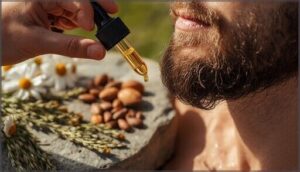
When you have sensitive skin, most beard oils won’t just fail to help—they’ll actively make things worse.
You need a product that works with your skin’s biology, not against it, which means understanding what to look for and what to avoid.
Here’s how to choose a beard oil that actually calms irritation instead of triggering it.
Organic and Natural Formulations
Organic beard oil with certifications like USDA Organic or COSMOS gives you verified purity, free from hidden petrochemicals that irritate sensitive skin.
Natural ingredients sourced through sustainable methods—cold-pressed jojoba, argan, and plant extracts—deliver beard oil benefits without synthetic fragrances or harsh preservatives.
Eco-friendly packaging and gentle preservation systems maintain stability, so you’re choosing a product that’s clean, effective, and aligned with natural ingredients for beard care that truly soothes beard itch.
Ingredient Selection for Specific Skin Concerns
Skin type analysis guides ingredient matching so your beard oil benefits address your exact concerns.
Oily skin reacts to niacinamide, which balances production and calms inflammation, while dry, itching skin needs ceramides and panthenol to restore barrier function.
Sensitive skin care demands squalane and hyaluronic acid—natural ingredients for beard care that hydrate without triggering reactions, targeting skin conditions and beard itch at their source.
Scent Considerations and Allergies
When choosing scented beard oil, you’re gambling with fragrance allergens like linalool and cinnamyl alcohol, compounds that trigger itching and skin conditions in sensitive users.
Essential oil safety matters—tea tree and lavender oxidize on contact, amplifying allergy risks.
Unscented benefits win here: fragrance-free formulas prevent allergies while delivering itch relief without respiratory irritation or contact dermatitis.
Beard Oil Vs. Beard Balm for Itchiness
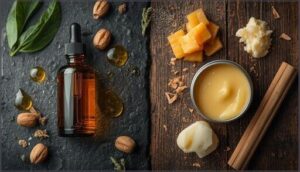
You’ve probably seen both beard oil and balm on the shelf, and they’re not interchangeable despite what marketing might suggest. Each product addresses itchiness through a different mechanism, and understanding these differences helps you choose the right one for your specific situation.
Let’s break down how texture, timing, and combined use affect your results.
Differences in Texture and Benefits
You’ll notice beard oil and balm differ in how they feel and what they deliver to your beard health. Light oils absorb quickly, leaving a satin finish that soothes itching without weight, while dry oil blends provide moisturizing relief with minimal residue. Beard serum offers instant smoothness for beard care, and balm benefits include waxier texture with lasting hold, though it may feel heavier on your skin.
| Product Type | Texture & Absorption | Primary Benefit |
|---|---|---|
| Light Oils | Quick absorption, satin finish | Fast itch relief, non-greasy |
| Dry Oil Blends | Minimal weight, smooth feel | Moisturizing without residue |
| Beard Serum | Non-greasy layer, instant smoothness | Lightweight comfort |
| Balm | Waxier, heavier surface layer | Styling hold, glossy appearance |
When to Use Balm Instead of Oil
Balm benefits shine when dry skin persists despite regular beard oil use, particularly in cold or low-humidity environments. You’ll need balm’s wax barrier for coarse beard types, sensitive patches, or overnight itch relief that lasts longer than oil alone. Apply a pea-sized amount to target stubborn areas where beard itch defies standard beard care, sealing moisture where your skin needs extra protection.
| Scenario | Why Balm Works Better | Balm Application Tip |
|---|---|---|
| Extreme dry skin under beard | Wax creates semi-impermeable barrier against wind, cold | Use thin layer in morning before outdoor exposure |
| Sensitive or irritated patches | Minimal water content reduces irritation risk | Patch test first, then apply to inflamed spots |
| Thick, coarse beard types | Concentrated formula traps moisture oil can’t reach | Small amount covers scruffier patches without residue |
| Overnight itching episodes | Maximizes absorption during sleep without grease | Light application before bed, rinse excess in morning |
Combining Products for Enhanced Relief
Layering beard oil with complementary products amplifies itch relief through moisture locking and targeted barrier support. Combining oil and a fragrance-free balm extends hydration for eight to twelve hours, while oil blending with jojoba plus a hyaluronic moisturizer boosts skin water retention.
Serum layering with ceramides before oil strengthens your skin barrier, reducing beard itch duration substantially through strategic product pairing.
| Relief Strategy | Product Combination | Timing and Application |
|---|---|---|
| Maximum overnight hydration | Beard oil followed by lightweight balm | Evening routine, oil first then balm within 3 minutes |
| Deep moisture for dry patches | Jojoba oil + hyaluronic acid moisturizer | Apply to damp skin after washing, allow 5 minutes absorption |
| Barrier reinforcement | Ceramide serum under carrier oils blend | Serum first, wait 5 minutes, then layer natural ingredients |
| Sensitive skin calming | Rosehip oil + fragrance-free thermal spray | Mist before oiling, reduces inflammation markers by 20 percent |
Integrating Beard Oil Into Your Grooming Routine

You can’t just slap on beard oil once and call it a day, consistency is what turns temporary relief into long-term comfort.
The trick is weaving it into a routine that actually works with your skin’s natural rhythm, not against it. Here’s how to build a solid grooming practice, spot the products that support itch prevention, and sidestep the common errors that keep your beard feeling like sandpaper.
Daily Beard Care Practices
Building your beard care routine around beard oil transforms beard hygiene from a chore into relief. Start with these grooming tips to prevent beard itch and maintain skin balance.
- Cleanse with a sulfate-free wash every other day, using lukewarm water to protect natural oils and beard texture.
- Apply beard oil after showering when pores are open for maximum oil absorption.
- Brush morning and evening to distribute moisture evenly beneath the hair.
Complementary Products for Itch Prevention
Your beard oil works best with the right support team. Pair it with beard butters for extra hydration, aftershave balms to calm post-trim irritation, and facial serums rich in natural ingredients.
Skin toners restore pH balance after cleansing, while carrier oils like jojoba reinforce your barrier. Shaving creams matter too—choose sulfate-free options that won’t trigger beard itch between applications.
Common Mistakes to Avoid
Even your best products can backfire. Overuse risks clogged pores, incorrect timing dilutes effectiveness, and skipping patch testing invites reactions on sensitive skin.
Here’s what derails itch relief:
- Applying too much oil daily, trapping dirt and worsening beard itch
- Oiling waterlogged skin right after showering instead of towel-dried
- Choosing fragranced blends without testing for allergies first
- Inconsistent routine that disrupts moisture balance
- Ignoring cleansing between applications, letting buildup trigger itching
Additional Tips for Preventing Beard Itch
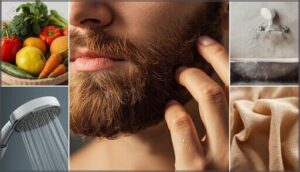
Beard oil works best when you support it with smart habits that address the root causes of itch. Beyond your grooming shelf, simple changes to how you cleanse, what you eat, and when you seek help can make a real difference.
Here’s what else you need to know to keep your beard comfortable for good.
Gentle Cleansing and Exfoliation
Your skin craves a reset beneath that beard, and gentle exfoliation delivers it. Use a mild sulfate-free cleanser twice daily, then exfoliate 2 to 3 times weekly with fine-particle scrubs or a soft silicone brush to remove dead skin cells and prevent ingrown hairs. Pat dry, skip vigorous scrubbing, and follow with beard oil to lock in moisture and support your skin barrier.
| Cleansing Technique | Frequency & Method |
|---|---|
| Mild cleanser | Twice daily with warm water |
| Gentle exfoliation | 2 to 3 times per week |
| Pat dry | After every wash |
| Apply beard oil | Post-cleansing for barrier support |
Hydration and Diet for Healthy Skin
Water is your first defense against an itchy beard, so aim for 2 to 3 liters daily to maintain skin hydration and elasticity.
Omega-rich foods like salmon and flaxseed strengthen your moisture barrier, while antioxidants from berries and leafy greens reduce inflammation that drives itching.
Balanced mineral intake enhances collagen and skin repair, making beard oil more effective when your foundation is solid.
Addressing Persistent Itch With Professional Help
Persistent itching demands clinical attention when home remedies fall short, so schedule a skin exam if discomfort lingers beyond two weeks or worsens despite your best efforts.
A focused history and exam can pinpoint whether eczema, ingrown hairs, or fungal infections drive your itch, leading to these treatment options:
- Topical corticosteroids for inflammation
- Antifungal creams for confirmed infections
- Targeted antibiotics for bacterial causes
- Patch testing to identify allergens
- Medical referral to a dermatologist for complex cases
Specialist care ensures accurate itch diagnosis and prevents lasting skin damage.
Frequently Asked Questions (FAQs)
Does beard oil help with itching?
Yes, beard oil addresses that maddening facial prickle by delivering moisture directly to parched skin beneath your whiskers, calming inflammation from trapped hairs, and restoring the natural barrier that keeps irritants at bay.
What makes your beard stop itching?
You stop beard itch by moisturizing the skin beneath facial hair, preventing ingrown hairs through gentle exfoliation, and applying beard oil to restore your skin barrier and lock in hydration daily.
How to reduce itchiness of beard?
Think of beard itch as a red flag, your skin sending an SOS.
Beard itch remedies start with daily beard oil application, gentle exfoliation, and natural oil therapies that repair your skin barrier and restore facial hair hydration.
Can beard oil help with patchy beard growth?
Beard oil won’t transform patchy beard growth overnight, but jojoba and castor oils nourish follicles, reduce breakage, and moisturize skin beneath facial hair—helping your beard look fuller and healthier over time.
Does beard oil expire or lose effectiveness?
Most beard oils last one to two years if stored properly in cool, dark places, but oil degradation happens faster with heat or light exposure—watch for rancid smells or separation as expiration signs.
Will beard oil make my face feel greasy?
Quality formulas absorb quickly into facial hair porosity and skin, leaving no residue.
Non greasy formulas with fast oil absorption rates won’t make your face feel slick if you apply the right amount for your beard length.
Can I use beard oil on stubble?
You can absolutely apply beard oil to stubble—those first few millimeters of facial hair benefit from moisturizing skin beneath and softening coarse beard hair, reducing itching and irritation common during early beard growth.
How long until beard oil reduces itchiness?
You’ll feel initial relief within 24 to 48 hours as oil absorption rate softens skin and hair, but consistent daily application benefits deliver full itch relief timeline results in 1 to 2 weeks once skin barrier repair completes.
Conclusion
Take Mike, a marketing executive who nearly shaved his two-month beard because the constant scratching disrupted client meetings. After one week of applying jojoba-based oil daily, the irritation vanished completely.
That’s why beard oil helps with itchiness—it doesn’t just mask symptoms, it restores the moisture balance your skin lost when those hair follicles started competing for sebum. Your face produces the oil, but your beard steals it. Replenish what’s missing, and the itch stops.
- https://journals.sagepub.com/doi/full/10.1097/DER.0000000000000580
- https://www.healthline.com/health/essential-oil-allergic-reaction
- https://www.verywellhealth.com/allergy-to-essential-oils-83218
- https://www.thebeardstruggle.com/blog/what-beard-oil-ingredients-you-should-avoid-and-why
- https://www.nhs.uk/conditions/contact-dermatitis/causes