This site is supported by our readers. We may earn a commission, at no cost to you, if you purchase through links.
That sharp tug on your scalp mid-haircut isn’t just annoying—it’s your clippers telling you something’s wrong. Hair clippers pull hair when the blades can’t do their one job: slice cleanly through each strand. Instead of cutting, they grip and drag.
The culprit could be dull blades, dirty cutting teeth, a misaligned blade, or even how you’re holding the clippers. Most people assume their clippers are just old and buy new ones. Often, a two-minute fix is all it takes to get back to smooth, painless cuts.
Table Of Contents
- Key Takeaways
- Why Do Hair Clippers Pull Hair?
- Common Maintenance Issues That Cause Pulling
- How Hair Type and Preparation Affect Pulling
- Solutions to Stop Clippers From Pulling Hair
- When to Repair or Replace Your Clippers
- Frequently Asked Questions (FAQs)
- Why are my clippers pulling hair?
- How to stop Wahl clipper guards from pulling hair?
- Can clipper guards cause hair to pull?
- Does hair length affect how clippers perform?
- Which clipper oil brands work best?
- How often should clippers be professionally serviced?
- Do corded clippers pull less than cordless ones?
- Conclusion
Key Takeaways
- Hair clippers pull when blades are dull, dirty, misaligned, or under-lubricated—not because the clipper is old or broken, but because basic maintenance was skipped.
- Most pulling problems resolve with a two-minute fix: clean the blades after every cut, oil them with clipper-specific oil, check blade alignment, and ensure screws are properly tightened.
- Your cutting technique matters as much as your equipment—pressing too hard, angling incorrectly, or rushing through thick hair causes snagging even with sharp, well-maintained blades.
- Tangled, wet, or product-laden hair dramatically increases resistance and pulling, so always start with dry, clean, detangled hair before cutting.
Why Do Hair Clippers Pull Hair?
That yanking feeling mid-haircut usually isn’t bad luck — something specific is causing it.
Whether your stylist uses layered or non-layered cutting techniques won’t change that — the real culprit is usually dull shears, tangled sections, or hair that wasn’t properly detangled beforehand.
Most of the time, it comes down to one of a handful of fixable problems. Here’s what’s actually going on.
Dull or Blunt Blades
Dull blades are the number one reason your clippers pull instead of cut. Think of edge geometry like a knife — a sharp angle slices clean, a blunt one drags. Blade material matters too; worn edges create friction instead of reducing it.
Dull blades don’t cut — they drag, snag, and punish your hair with every pass
Here’s what dull blades actually do:
- Snag coarse hair instead of cutting through it
- Force multiple passes over the same spot
- Heat up faster, irritating your scalp
Blade maintenance and regular sharpening aren’t optional — they’re everything.
Dirty or Unlubricated Blades
Even sharp blades fail when they’re dirty or dry. Hair residue and debris build up fast, creating friction that makes your clipper drag instead of glide. That’s where dirty blade effects really show — snagging, pulling, uneven cuts.
| Problem | Cause | Fix |
|---|---|---|
| Blade pulls hair | Insufficient lubrication | Apply clipper oil types like light mineral oil |
| Rust and stiffness | Moisture exposure | Blade rust prevention: dry thoroughly after use |
| Sluggish cutting | Dirty blade buildup | Use proper blade cleaning methods after every cut.” |
Clipper maintenance starts with two habits: clean and oil. Blade maintenance isn’t complicated — it’s consistent.
Misaligned or Loose Blades
Clean blades still fail when blade alignment is off. Misaligned blades catch hair instead of cutting it — that dragging, pinching feeling isn’t in your head.
Watch for these loose blade fix red flags:
- Misaligned blades sit at an angle, pulling instead of slicing
- Loose blades wobble from worn screws or a damaged arbor
- Arbor inspection reveals hidden debris throwing off blade geometry
- Spacer adjustment corrects blade height so teeth feed evenly
- Clipper maintenance means checking blade seating after every reassembly
Tighten, realign, inspect.
Low Battery or Weak Motor
Blades can be perfectly aligned and still drag — because the problem is power. Low battery kills motor efficiency fast. When voltage drops, the motor can’t maintain speed through thick hair, and that’s when you feel hair clippers pulling hair.
Budget cordless clippers are especially prone to this, which is why understanding corded vs. cordless clipper power differences can help you choose a model that won’t quit mid-cut.
Watch your power settings and charging habits. A weak motor from a dying cell isn’t cutting — it’s grabbing.
Incorrect Clipper Technique
Your hand movement matters more than most people realize. Wrong technique is one of the sneakiest causes of pulling — and it’s 100% fixable. Blade pressure that’s too heavy digs in and grabs. Clipper angle too steep? Same problem.
For preventing hair pulling, keep your stroke direction consistent, your cutting speed steady, and use smooth, controlled passes. Clipper technique is a skill — practice it.
Common Maintenance Issues That Cause Pulling
Most clipper problems come down to one thing: neglect. Skipping basic upkeep is what turns a smooth cut into a painful tug-of-war.
Here are the most common maintenance issues that cause your clippers to pull.
Infrequent Blade Cleaning
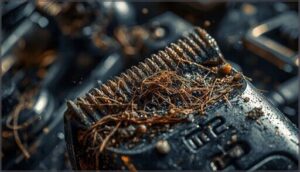
Skipping regular cleanings is one of the fastest ways to wreck your clippers. Blade debris — old hair, skin cells, product buildup — packs into the teeth and quietly destroys your edge maintenance routine.
Here’s what happens:
- Grit acts like sandpaper, dulling blades faster
- Clogged teeth alter blade alignment and gap
- Debris forces incorrect tension across the cutting edge
Stick to consistent cleaning schedules — your clippers will thank you.
Lack of Regular Oiling
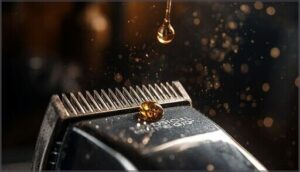
Dry blades are brutal. Insufficient lubrication turns smooth cutting into a painful yanking session — and it happens faster than you’d think. Blade lubrication isn’t optional; it’s what keeps metal gliding instead of grinding.
For proper clipper maintenance, apply hair clipper oil every one to two cuts. Smart lubricant selection and consistent oiling handle friction reduction effortlessly. These simple oil application tips protect your investment.
Worn or Damaged Guards
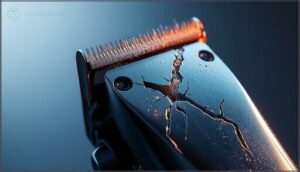
Your guards do more than you think. A cracked or loose guard throws off fit issues instantly — even a tiny 0.1 mm shift creates gaps that let debris sneak into moving parts.
Fastener failure is sneaky too; bolts loosen after heavy use, causing incorrect tension that leads to clippers pulling hair. Check guard materials and mounting points regularly — it’s basic hair clipper maintenance that prevents real clipper troubleshooting headaches.
Old or Poor-Quality Clippers
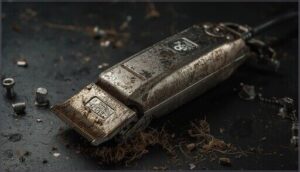
Old clippers and poor quality clippers are often the real culprits behind hair clippers pulling hair. Clipper durability matters — old models wear down motors, lose blade precision, and can’t hold correct tension anymore. Cheap materials and faulty design cut corners that cost you comfort.
Watch for these red flags:
- Dull blades that won’t stay sharp after sharpening
- Incorrect tension that keeps slipping out of adjustment
- Weak motors that bog down on thicker hair
- Poor craftsmanship in the housing or blade assembly
Sometimes clipper maintenance can’t save them. Replacing is smarter. If you want more insight on preventing these problems, learn about how regular maintenance improves clipper performance.
How Hair Type and Preparation Affect Pulling
Your hair type isn’t always the problem — sometimes your hair is. The type, condition, and hair prep of your hair can make a huge difference in how smoothly your cut goes.
Here’s what you need to know before you pick up those clippers.
Coarse or Thick Hair Challenges
Coarse hair is basically playing the game on hard mode. Those thicker strands — sometimes double the diameter of fine hair — create serious resistance against clipper blades.
Hair texture issues like this put extra stress on your clippers, especially if there’s incorrect tension or any blade dullness involved.
Thick hair styling requires slower passes and sharper blades to stop clippers pulling hair before it starts.
To learn more about the differences between coarse and thick hair, check out this guide on hair type characteristics and care.
Cutting Tangled or Uncombed Hair
Thick hair struggles are real — but tangled hair? That’s a whole other battle. Improper hair preparation is one of the fastest ways to turn a smooth cut into a painful tug-of-war. When your hair type includes natural curl or coarseness, tangles multiply fast.
Detangling tools like wide-tooth combs or detangling brushes, combined with smart cutting techniques and proper clipper settings, make tangle prevention straightforward. Always comb first — your scalp will thank you.
Importance of Dry, Clean Hair
Tangles aren’t the only prep mistake that causes clippers pulling hair — damp or dirty hair is just as bad. Dry cutting techniques work better because dry strands separate cleanly and don’t drag the blade.
Clean hair tips start simple: wash out styling products, towel dry thoroughly, then comb. Improper hair preparation costs you comfort. Don’t skip it.
Solutions to Stop Clippers From Pulling Hair
The good news is that most pulling issues are totally fixable once you know where to look.
A few targeted changes to your routine can make a night-and-day difference in how your clippers perform.
Here’s exactly what you need to do.
Sharpening or Replacing Blades
Dull blades don’t just cut badly — they punish your hair. Before spending money on replacement costs, check if sharpening can restore the edge geometry.
A fine sharpening stone or precision sharpening tools can bring most stainless steel blades back to life. But if the blade materials show chips or warping, skip the hassle — replace them. Proper clipper blade care starts with knowing when to sharpen versus swap.
Cleaning and Oiling Blades Properly
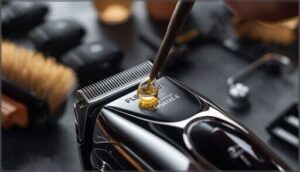
Sharp blades mean nothing if they’re dirty or dry. Start with blade sanitizing — brush off debris, then wipe with 70% isopropyl alcohol. Once dry, oiling takes two minutes: drop 2–3 drops of hair clipper oil along the blade, run it briefly, wipe the excess.
That’s your entire clipper maintenance routine. Do it every session, no excuses.
Adjusting Blade Alignment and Tension
Misaligned blades are sneaky — they look fine but cause clippers to pull hair every single pass. Before touching any screws, disconnect power first.
Then, to address the issue, follow these steps:
- Check blade alignment — both edges should sit parallel to the housing
- Use a straight edge to spot any tilt or gap
- Loosen screws, shift the blade centered, then tighten in a crisscross pattern for blade balancing
- Test-run and listen — grinding means your tension adjustment or screw tuning isn’t right yet
Improving Cutting Technique
Your technique matters just as much as your tools. Wrong technique is one of the most overlooked causes of pulling. Keep the clipper angle flat against the scalp, move with slow and steady cutting motion, and never rush through dense sections.
Hair sectioning gives you better blade control. These simple technique tips transform a painful experience into a clean, smooth cut.
When to Repair or Replace Your Clippers
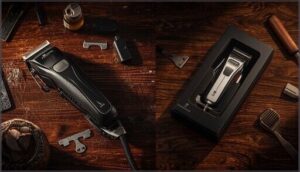
Sometimes, even your best maintenance efforts won’t save a tired pair of clippers. Knowing when to cut your losses — and what to look for in a replacement — makes all the difference.
Here’s what you need to know.
Signs Your Clippers Are Beyond Repair
Some clippers just can’t be saved. If you’re dealing with motor failure — grinding noises, inconsistent power, blades stalling mid-cut — that’s not a maintenance fix.
Blade damage, guard malfunction, and deep clipper wear beyond what oiling or realigning can solve are your exit signs. When hair clipper problems keep coming back despite your best clipper maintenance, those poor quality clippers have hit their repair limits.
Choosing High-Quality Replacement Clippers
Not all clippers are created equal — and poor quality clippers are what started your hair clipper problems in the first place. Look for solid clipper blade materials like stainless steel or ceramic, strong motor efficiency, and ergonomic design that won’t fatigue your hand.
Cordless options with long battery life add real flexibility. Brand reputation matters too — Wahl, Andis, and Oster consistently deliver.
Maintaining New Clippers for Longevity
New clippers won’t stay that way without consistent care. Regular lubrication — oiling blades after every full cut — keeps friction from grinding down performance. Blade sharpening every few months prevents that dreaded tug.
Wipe down after each use, handle clipper sanitizing weekly, and take motor maintenance seriously. Smart clipper storage in a dry case seals the deal on long-term clipper maintenance and care.
Frequently Asked Questions (FAQs)
Why are my clippers pulling hair?
Your sharpest tool can become your worst enemy. Dull blades are usually the culprit when clippers pull hair, but dirty equipment, poor blade sharpness, weak motors, and hair texture also contribute to painful snagging.
How to stop Wahl clipper guards from pulling hair?
Start by cleaning your guard regularly to prevent buildup. Apply Wahl hair clipper oil to the blade before each use, check clipper alignment, and make sure of proper blade sharpening to stop pulling hair.
Can clipper guards cause hair to pull?
Yes, guards absolutely can pull hair.
When they don’t click securely, have damaged teeth, or contain cracks, hair snags on the guard edge instead of gliding through smoothly during each pass.
Does hair length affect how clippers perform?
Hair length directly affects clipper performance. Longer hair increases resistance on the clipper blade, requiring higher motor speed and proper guard size.
Thick hair and coarse hair demand better cutting technique to prevent clippers pulling hair.
Which clipper oil brands work best?
Your blades won’t last five minutes without proper lubrication. Wahl Clipper Oil, Andis Clipper Oil, and Oster Professional Clipper Oil lead the pack—all are refined mineral oils designed for fast, friction-free cutting.
How often should clippers be professionally serviced?
Professional tuning every six to twelve months keeps your clippers running smoothly. Book blade sharpening, motor inspection, and full lubrication at least twice yearly if you’re cutting daily—that’s regular inspection done right.
Do corded clippers pull less than cordless ones?
Power type alone won’t fix pulling hair clippers—but corded models keep Motor Response steady under load, while Cordless Clippers can bog down as batteries drain, making Cordless Limitations feel tuggy on thick hair.
Conclusion
Next time your clippers tug, you’ll know exactly what went wrong—and how to fix it in minutes. Dull blades, skipped maintenance, or sloppy technique: these are the real reasons why hair clippers pull hair.
You don’t need new clippers. You need sharp blades, clean teeth, and proper alignment. Handle those three, and pulling stops. Your clipper isn’t broken. It just needs you to pay attention. Now you can.
- https://nafisgroominglab.com/blogs/best/zero-gap-trimmers
- https://en.wikipedia.org/wiki/Hair_clipper
- https://www.mayoclinic.org/diseases-conditions/folliculitis/symptoms-causes/syc-20361634
- https://www.menshealth.com/grooming/a19529471/how-to-cut-your-own-hair/
- https://bestbomg.com/blogs/news/why-are-my-clippers-pulling-hair