This site is supported by our readers. We may earn a commission, at no cost to you, if you purchase through links. This content is for general informational and educational purposes only and is not a substitute for professional medical, dermatological, or nutritional advice.
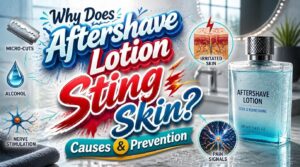
That sharp, searing sensation after applying aftershave isn’t your skin overreacting—it’s a precise biological event. Alcohol concentrations between 60 and 90 percent lower your pain receptors’ heat threshold so dramatically that your nerve endings register the product as literal burning, even at room temperature. Add microscopic razor wounds that bypass your skin’s outer defenses entirely, and the sting makes perfect sense.
Most people assume aftershave hurts because their skin is sensitive. The real culprit is chemistry meeting compromised skin—a predictable reaction once you understand what shaving actually does to your barrier. Knowing why does aftershave lotion sting skin puts you in control of the burn, and more importantly, how to stop it.
Table Of Contents
- Key Takeaways
- Why Does Aftershave Lotion Sting Skin?
- How Shaving Makes Skin Vulnerable
- Alcohol’s Role in Aftershave Sting
- Ingredients That Cause Burning Sensations
- Aftershave Lotion Versus Other Types
- Skin Types Most Likely to Sting
- How to Prevent Aftershave Burn
- Top 6 Aftershave Products Compared
- When Stinging Means Skin Irritation
- Frequently Asked Questions (FAQs)
- Conclusion
Key Takeaways
- Alcohol-based aftershaves lower your nerve endings’ heat threshold from 43°C to roughly 34°C, so your skin genuinely reads a cool splash as a burn — it’s not sensitivity, it’s basic chemistry.
- Every shave strips your skin’s outer barrier and leaves microscopic cuts, giving irritants a direct route to live nerve endings before any aftershave even touches your face.
- The sting you feel scales with alcohol concentration — higher percentages hit more nerve receptors, strip more protective oils, and evaporate faster, compounding the discomfort all at once.
- Switching to an alcohol-free, fragrance-free balm with ceramides or glycerin protects your skin barrier post-shave without triggering the nerve response that causes burning.
Why Does Aftershave Lotion Sting Skin?

That familiar sting after shaving isn’t random — your skin is reacting to some very specific triggers. Understanding what’s actually happening makes it a lot easier to manage. Here’s what’s going on beneath the surface.
Knowing those triggers is just the start — daily facial moisturizing for men is one of the simplest ways to keep your skin resilient and less reactive over time.
Quick Answer
That sharp sting when aftershave hits freshly shaved skin isn’t random — it’s your skin telling you something real is happening. Microscopic wounds from the razor open direct pathways for ingredients to reach nerve endings fast. Alcohol-based aftershave, the most common formula, amplifies that signal further.
The good news? Understanding what’s behind the burn puts you in control of stopping it. When purchasing soothing products, you should also be aware of the data privacy policy used by retailers.
Alcohol and Nerve Endings
Alcohol is the main reason aftershave stings. It targets TRPV1 receptors — nerve sensors that normally fire around 42°C.
Ethanol lowers that threshold to roughly 34°C, so your nerves misread a cool splash as a burn. That’s not damage — it’s a false alarm your nervous system genuinely can’t distinguish from heat.
Shaving Micro-cuts
Alcohol’s false burn signal gets amplified when your skin is already compromised.
Every shave leaves microscopic wounds across freshly shaved skin — invisible cuts most common along the chin, jawline, and neck. These tiny breaks give alcohol-based aftershave a direct path to live nerve endings, turning what should be a quick splash into a sharp, immediate sting.
Skin Barrier Damage
Beyond micro-cuts, the razor strips away part of your skin’s outer barrier — and that damage runs deeper than you’d expect.
Your stratum corneum acts like a brick wall. The lipid matrix — made mostly of ceramides — fills the gaps between skin cells, locking moisture in. When you shave, you’re not just cutting hair. You’re also depleting those ceramides, triggering:
- Transepidermal water loss, which dries skin within minutes
- pH imbalance, making the surface more reactive to aftershave sting
- Faster penetration of irritants straight into live tissue
That combination turns ordinary razor burn into real skin irritation.
Normal Sting Versus Irritation
Not every sting means something’s wrong. A normal aftershave sting from an alcohol-based aftershave is sharp, brief, and fades within 30–60 seconds as the liquid evaporates. Irritation lingers — burning, tightening, or itching that stays long after your skin is dry.
| Feature | Normal Sting vs. Irritation |
|---|---|
| Onset | Immediate vs. Delayed |
| Duration | Under 2 min vs. Over 5–10 min |
| Sensation | Sharp/brief vs. Hot/tender/itchy |
| Skin changes | Minimal vs. Redness, bumps, rash |
| Area | Shaved zone only vs. Spreads beyond |
Sensitive skin and a compromised skin barrier raise your risk of crossing that line.
How Shaving Makes Skin Vulnerable
Every shave does more to your skin than it looks. Before aftershave even touches your face, the razor has already done the groundwork for that sting. Here’s what’s actually happening beneath the surface.
Stratum Corneum Removal
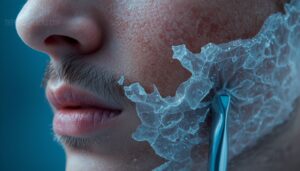
Think of your stratum corneum as a brick wall — thin but essential. On facial skin, it’s only 10 to 20 micrometers thick. Every razor pass scrapes away surface corneocytes through a process called Corneocyte Exfoliation, which is basically the Shaving Exfoliation Effect in action.
Here’s what that means for your skin barrier:
- Barrier Lipid Loss disrupts ceramides, cholesterol, and fatty acids that normally seal moisture in
- Freshly shaved skin loses water faster because that protective layer is thinner
- Daily shaving doesn’t allow full Skin Barrier Recovery before the next pass
- A weakened barrier lets alcohol-based aftershave penetrate deeper, intensifying aftershave sting and razor burn
Invisible Razor Abrasions
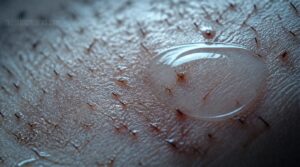
Your razor does more damage than you realize. Each pass creates microscopic cuts invisible to the naked eye. Microcut Visibility is nearly zero, yet these abrasions disrupt the skin barrier and delay Barrier Recovery. Environmental Factors like cold air worsen healing times. Using a Sharp Razor reduces trauma, shortens the Healing Timeline, and lessens aftershave sting near sensitive TRPV1 pathways.
| Razor Condition | Microcut Risk | Healing Timeline |
|---|---|---|
| Sharp blade | Minimal abrasions | 24–48 hours |
| Dull blade | High skin trauma | 3–5 days |
| Multi-blade cartridge | Repeated abrasion | Varies by skin |
Exposed Nerve Endings

Shaving strips away the stratum corneum, leaving free nerve endings — called nociceptors — dangerously close to the surface. These bare sensory fibers normally sit protected beneath layers of skin.
Once exposed, TRPV1 receptors (your skin’s built-in heat sensors) can fire at much lower thresholds. Inflammatory mediators released post-shave lower that threshold further, so even mild alcohol contact feels like a sharp burn.
Dull Blade Damage
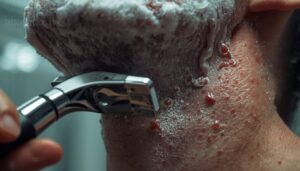
A dull razor doesn’t just cut poorly — it punishes your skin in four compounding ways.
- Blade drag friction forces you to press harder, scraping off more surface cells than intended
- Hair pulling stress yanks follicles before cutting, leaving surrounding tissue tender and reactive
- Repeated pass trauma strips away lubricant, so later strokes hit raw, unprotected skin
- Follicle inflammation risk rises sharply, making aftershave sting far more intense on arrival
Increased Water Loss
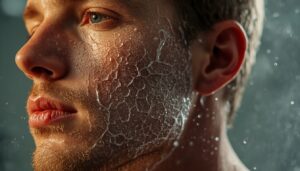
Every razor pass quietly chips away at your skin’s water seal. The stratum corneum — your moisture barrier — gets partially stripped, triggering increased water loss that leaves skin tight and reactive within minutes. Cold air and indoor heating accelerate that evaporation.
That stinging sensation from traditional aftershave isn’t damage—it’s your nerves reacting to alcohol on already-compromised skin, as explained in this breakdown of why aftershave application stings and how it affects your skin barrier.
Ingredients like glycerin or ceramides support barrier repair, while high alcohol content worsens skin dehydration fast.
Alcohol’s Role in Aftershave Sting

Alcohol is the main reason aftershave stings — and it’s not just because it’s harsh. It actually tricks your nervous system into feeling heat that isn’t there. Here’s what’s really happening beneath the surface.
Ethanol and TRPV1 Receptors
Here’s what’s really happening beneath the surface. Your skin contains tiny sensors called TRPV1 receptors — or vanilloid receptor 1 — that normally fire pain signals at heat around 43°C.
Ethanol lowers that activation threshold considerably, so these nociceptors trigger at temperatures your freshly shaved face already sits at. The result? Your nerves fire as if something’s burning you.
Burn Signal Confusion
So your nerves have already been tricked into firing — but here’s where it gets interesting. Your brain doesn’t receive a label marked "chemical" or "heat." It simply reads the nociceptor response pattern and fills in the blank: burn.
Your brain cannot tell the difference between a chemical sting and real heat — it just registers burn
This is shared nociceptive coding — the same alarm system, regardless of the trigger. Chemical irritation and actual heat look identical to your brain.
Higher Alcohol, Stronger Sting
The sting you feel isn’t random — it scales directly with alcohol concentration. A 70% ethanol splash puts more than twice as much solvent on your skin as a 30% formula.
That extra load triggers more TRPV1 receptors, strips more surface lipids, and evaporates faster, hitting sensitive skin all at once rather than gradually. Higher alcohol content simply means a harder hit.
Antiseptic Benefits
All that sting does earn its keep. Alcohol’s immediate microbial kill happens fast — most surface bacteria are neutralized within 15 to 30 seconds.
Those invisible razor nicks you just made? They’re open doors for bacteria like Staphylococcus aureus, a common trigger of post-shave folliculitis. Applying aftershave right away lowers that microbial load before contamination has a chance to set in.
Skin Dryness Risk
But alcohol’s antiseptic work comes at a cost. Ethanol strips the natural surface lipids — ceramides, cholesterol, fatty acids — that normally lock moisture in. Once those are gone, transepidermal water loss accelerates fast, leaving skin feeling tight within minutes.
Older adults and people with dry or eczema-prone skin lose a larger share of already limited protection, so dryness risk rises sharply for them.
Ingredients That Cause Burning Sensations
Alcohol isn’t the only ingredient you need to watch out for. Several common aftershave components each trigger stinging in their own distinct way. Here’s what’s actually behind that burn.
Alcohol-based Solvents
Think of ethanol as a liquid that does two jobs at once: it kills bacteria and carries fragrance. In an alcohol-based aftershave, concentrations between 60–90% denature bacterial proteins efficiently.
But that same lipid layer dissolution strips your skin’s natural oils. The solvent evaporation rate is fast — seconds — producing a brief cooling sensation, but leaving freshly shaved skin tight and reactive.
Witch Hazel Effects
Witch hazel works differently than ethanol. Its plant-based tannins bind to surface proteins — a process called tannin binding — creating that tight, almost shrink-wrapped sensation on freshly shaved skin. It temporarily improves pore appearance and aids bleeding control on small razor nicks by constricting surface tissue.
The tradeoff? Repeated use strips moisture. For sensitive skin, that dryness makes the next application sting harder.
Menthol Cooling Sting
Menthol feels cool at first — then it bites. That "bite" happens because menthol activates TRPM8 ion channels, the same cold-sensing receptors that respond to actual cold temperatures. Your nerve endings receive a cold signal almost instantly, even though your skin temperature barely changes.
Here’s where it gets complicated. After shaving, your stratum corneum is partially removed, which increases skin permeability considerably. Menthol reaches exposed nerve endings faster and more intensely than on unshaved skin. Tiny razor nicks act like open doors — they let ingredients bypass the skin’s normal defenses entirely.
At the same time, if your aftershave combines menthol with ethanol, you’re doubling the sensory load. Alcohol already activates vanilloid receptor 1 (TRPV1) — your heat-sensing receptor — triggering a chemical burn sensation. Add menthol’s TRPM8 activation on top, and your brain is simultaneously processing both cold and pain signals. That overlap is why menthol aftershave can feel sharper than expected.
Here’s what drives menthol sting intensity:
- Higher menthol concentration levels produce stronger prickling, burning eyes, and skin irritation
- Razor abrasions lower the stimulation threshold for nearby nerve endings
- Dry or eczema-prone skin allows deeper chemical penetration due to a compromised barrier
- Combined ethanol and menthol formulas intensify each ingredient’s individual sting
- Individual tolerance variation means one product can feel pleasant to one person and painfully harsh to another
The cooling duration comparison is worth noting too. That sharp initial sting commonly fades within seconds or minutes. The cooling sensation itself often lingers longer — that’s TRPM8 still firing. But burning beyond a few minutes signals irritation, not normal cooling, and shouldn’t be dismissed.
Synthetic Fragrance Reactions
Synthetic fragrances can activate TRPV1, your heat-sensing receptor, sending false burn signals through exposed nerve endings.
| Allergen | Reaction Type |
|---|---|
| Cinnamal | Contact dermatitis |
| Isoeugenol | Delayed immune response |
Labels like "parfum" often hide dozens of individual chemicals. Reactions commonly appear 12–72 hours after application, not immediately. Persistent redness along your jawline or neck warrants a patch test to identify the fragrance trigger.
Salicylic Acid Sensitivity
Salicylic acid turns up in some aftershaves as an acne and razor bump fighter — but on freshly shaved skin, it can bite hard. Even a 0.5–2% concentration penetrates more easily after shaving because your skin barrier is already compromised.
Three things worth knowing:
- Post-shave timing matters — waiting 10–15 minutes before applying reduces aftershave sting noticeably.
- Patch test protocol first: test on your inner arm for 24–48 hours.
- Low strength formulas (0.5%) are gentler starting points for sensitive skin.
Aftershave Lotion Versus Other Types
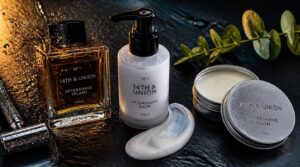
Not all aftershave products are built the same, and that difference matters more than most people realize. The formula you choose directly affects how much your skin stings, hydrates, or reacts after shaving. Here’s how each type compares.
Splash Formulas
Of all aftershave types, splash formulas sting the most. That’s largely because of their high alcohol content — usually 50–90% — which hits freshly shaved skin fast. Ethanol reaches invisible razor nicks within seconds, triggering TRPV1 nerve receptors almost immediately.
The thin liquid film spreads quickly, then evaporates rapidly, leaving little protection. Witch hazel adds astringent effects, while menthol intensifies the sensory hit.
Balm Formulas
Balms sit at the opposite end of the spectrum from splashes. Where alcohol-based aftershave hits fast and burns, aftershave balm works gently — its base is water and emulsifiers, not ethanol.
- Emollient oils like jojoba and squalane fill gaps between skin cells, reducing friction on freshly shaved skin.
- Humectants like glycerin and panthenol draw moisture into the outer skin layer.
- Barrier support ingredients such as ceramides and dimethicone help restore what shaving strips away.
- Soothing additives like bisabolol and allantoin calm redness without the sharp sting.
That said, even alcohol-free balm can irritate — fragrance, menthol, or witch hazel can still trigger skin sensitivity.
Lotion Formulas
Lotions sit right between splashes and balms. They’re oil-in-water emulsions — mostly water, with light emollients like caprylic/capric triglyceride and dimethicone blended in.
That water-rich base spreads easily and absorbs quickly, without the heavy feel of a balm. You still get humectants like glycerin drawing moisture in, plus soothing agents like allantoin — all without the burn of high-alcohol splashes.
Gel Formulas
Gels take a different approach than lotions. Built on a water-rich gel base with polymer thickeners like carbomer, they spread thin and absorb fast. A solid humectant blend — glycerin, propylene glycol — keeps moisture in.
Most gels include a cooling additive like menthol, giving that brisk sensation. The light finish suits oily skin well, though dry skin may feel tight afterward.
Alcohol-free Options
If stinging is your main concern, alcohol-free aftershaves are worth your attention. They skip ethanol entirely, relying instead on water-based formulas that hydrate without the burn. Ingredients like aloe vera soothing, glycerin moisturizing, and panthenol hydration work together to calm the skin barrier after shaving. Going fragrance-free removes another common irritant, making these ideal for sensitive skin and daily post-shave discomfort.
| Feature | Alcohol-Free Options |
|---|---|
| Main Base | Water + humectants |
| Best For | Sensitive or dry skin |
Skin Types Most Likely to Sting
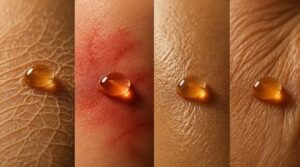
Not everyone reacts to aftershave the same way — your skin type plays a bigger role than most people realize. Some skin types are simply more vulnerable to that familiar burn. Here’s what you need to know about which types tend to react the most.
Sensitive Skin
If your skin is prone to react before you’ve even rinsed off the product, you likely have sensitive skin. Facial nerve fibers fire quickly when they meet ethanol or menthol, often producing burning or tingling before any redness appears.
That’s why alcohol-free aftershaves are the safer starting point — they protect the skin barrier without triggering unnecessary skin inflammation.
Dry Skin
Dry skin — clinically called xerosis — already has a compromised stratum corneum, so alcohol content in aftershave lotion hits harder. Your barrier can’t hold moisture efficiently, making every application sting more intensely.
Prioritize barrier repair with alcohol-free formulas containing moisturizing agents like ceramides. In winter, humidifier benefits are real — drier indoor air worsens xerosis management considerably.
Oily Skin Tolerance
Oily skin actually tolerates aftershave lotion better than most other skin types. Sebum production balance provides a natural buffer — that surface oil slows ingredient penetration and reduces nerve exposure after shaving.
- Oil-free moisturizers keep hydration light without adding shine
- Larger pores aid product absorption but raise clog risk
- Alcohol content in splashes is generally well-tolerated on oily skin
Eczema-prone Skin
Eczema-prone skin is already fighting an uphill battle before the razor even touches it. The skin barrier is weaker, meaning irritants pass through more easily and nerves sit closer to the surface.
Alcohol-based or fragranced aftershaves can trigger immediate stinging, inflammation, or full-blown contact dermatitis. Stick to alcohol-free, fragrance-free balms with ceramides or barrier-repair moisturizers instead.
Cold Weather Irritation
Winter is a hidden multiplier for postshave discomfort. Cold air holds less moisture, indoor heating drops humidity further, and both accelerate transepidermal water loss — leaving your skin barrier already compromised before aftershave even touches it.
High alcohol content hits that weakened barrier hard. Stick to barrier-repair balms with ceramides, apply them immediately after patting dry, and consider a humidifier indoors to slow moisture loss overnight.
How to Prevent Aftershave Burn
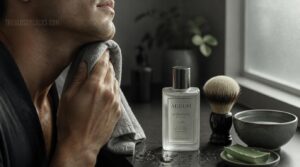
The sting doesn’t have to be part of your routine. A few small adjustments before and after you shave can make a real difference in how your skin responds. Here’s what actually helps.
Use Sharp Razors
Honestly, your razor matters more than you think. A sharp blade slices hair cleanly instead of tugging it, so you get fewer nicks and cuts and less friction overall. That means fewer shave passes and less microcut risk—both major causes of razor burn.
Notice pulling or dragging? That’s your sign to swap blades. Simple razor maintenance equals reduced skin irritation before aftershave even touches your skin.
Shave With Grain
A sharp blade only helps if you move it the right way. Shaving with the grain means following your hair’s natural growth—down on cheeks, sideways on the neck. This shaving technique reduces tugging, razor burn, and bumps.
It also means less alcohol-induced sting later, since skin stays calmer.
- Less redness
- Fewer ingrown hairs
- Calmer, comfortable skin
Finish with a cold water rinse to tighten pores before aftershave balm.
Apply Pre-shave Lubrication
Before the blade ever touches skin, give it something to glide on. A few drops of preshave oil, spread evenly, create a moisture barrier that boosts glide and softens hair. Wait about a minute—this lubricant wait period lets it settle before shaving creams go on top.
| Product | Best For | Glide Level |
|---|---|---|
| Pre-shave oil | Coarse hair | High |
| Silicone formula | Sensitive skin | Medium |
| Cream | Dry skin | Moderate |
Rinse With Cold Water
Once you’ve rinsed off the lubricant, switch to cold water for 30-60 seconds. This triggers vasoconstriction, calming the heat-sensing vanilloid receptor-1 before alcohol hits.
Benefits:
- Reduces aftershave burn
- Tightens skin temporarily
- Lowers skin sensitivity
- Regulates body temperature
- Promotes post-shave cooling
Pat Skin Dry
After the cold rinse, pat skin dry — don’t rub. Rubbing a towel across freshly shaved skin adds friction that worsens sensitivity and strips away surface moisture your barrier needs.
Gentle towel patting leaves slight dampness, which helps your aftershave absorb evenly and reduces the sharp bite of alcohol in aftershave hitting already vulnerable nerve endings.
Top 6 Aftershave Products Compared
Choosing the right aftershave comes down to knowing what your skin actually needs. These six products cover a solid range — from alcohol-free balms to cooling splashes — so there’s likely a fit for your skin type. Here’s how they compare.
1. Nivea Men Real Madrid Sensitive Post Shave Balm
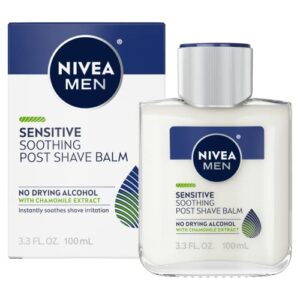
If your skin leans sensitive, the NIVEA Men Real Madrid Sensitive Post Shave Balm is worth a close look. Its alcohol-free formula skips the sting entirely — no TRPV1 receptor activation, no burn. Instead, you get panthenol, vitamin E, chamomile extract, and glycerin working together to calm irritation and lock in moisture. It absorbs quickly without feeling greasy.
For daily shavers with reactive skin, this balm relieves all five post-shave discomforts: burning, dryness, tightness, redness, and itchiness.
| Best For | Guys with sensitive skin who shave daily and want something that soothes without the burn or greasy residue. |
|---|---|
| Volume | 3.3 fl oz |
| Texture | Lotion |
| Scent | Fragrance-free |
| Skin Benefit | Reduces irritation & dryness |
| Skin Type | Sensitive |
| Key Ingredient | Vitamin E & Chamomile |
| Additional Features |
|
- Alcohol-free, so no stinging — great if your skin tends to react badly after shaving
- Tackles five common post-shave issues at once: burning, dryness, tightness, micro cuts, and stubble itch
- Absorbs fast and doubles as a makeup primer thanks to its silicone base
- Can’t be used near the eyes, which limits how close to the face you can apply it
- Limited edition packaging means what you get might look different from what you ordered
- The Real Madrid branding isn’t for everyone — purely cosmetic, but worth knowing
2. Bee Bald HEAL Aftershave Healing Balm
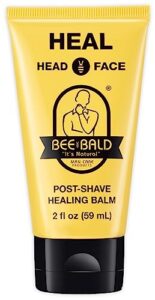
Shaving your head or face demands a gentler recovery formula — and Bee Bald HEAL delivers exactly that. This 2 fl oz healing balm blends honey, pollen extract, willow bark, and licorice root to calm razor burn, redness, and bumps without any alcohol sting.
Willow bark gently exfoliates to prevent ingrown hairs, while licorice root actively reduces irritation. It absorbs fast, leaves no greasy residue, and works on your scalp, face, and neck — making it a strong pick for sensitive skin.
| Best For | Anyone with a shaved head or sensitive skin who wants a fast-absorbing, no-fuss balm to calm razor burn and redness after shaving. |
|---|---|
| Volume | 2 fl oz |
| Texture | Balm |
| Scent | Subtle & mild |
| Skin Benefit | Calms razor burn & bumps |
| Skin Type | Sensitive |
| Key Ingredient | Honey & Bee Pollen |
| Additional Features |
|
- Honey and bee pollen give it real soothing power — not just marketing fluff
- Absorbs quickly without leaving your skin feeling sticky or greasy
- Works on your head, face, and neck, so one product covers it all
- At 2 fl oz, it’s a pretty small bottle and will run out fast if you shave daily
- Some people may need a few extra applications before irritation fully settles down
- Results can vary — it may work faster for some than others
3. Gillette Cool Wave After Shave
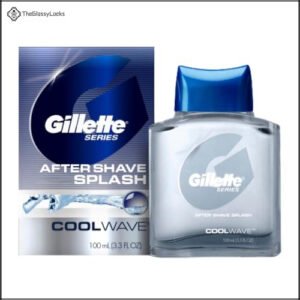
If you want straightforward disinfection without a complex ingredient list, Gillette Cool Wave keeps it simple. Its formula is built on Alcohol Denat. as the primary ingredient, which means you’ll feel that familiar sting — especially over fresh micro-cuts. What you do get is a clean, crisp scent and a cooling post-shave sensation that many men find invigorating.
It’s best suited for oily or normal skin types that can handle high-alcohol splashes without drying out.
| Best For | Guys with oily or normal skin who want a no-fuss, alcohol-based post-shave that cools, tones, and smells clean without a lot of extras. |
|---|---|
| Volume | 3.3 fl oz |
| Texture | Lotion |
| Scent | Cool Wave |
| Skin Benefit | Tones & balances skin |
| Skin Type | Male skin |
| Key Ingredient | Moisturizer blend |
| Additional Features |
|
- Leaves skin feeling refreshed and cool right after a shave
- Blended with moisturizers, so it does more than just disinfect
- The Cool Wave scent is crisp and masculine without being overpowering
- The alcohol will sting if you’ve got sensitive skin or fresh razor burn
- The scent runs on the lighter side, so don’t expect it to last all day
- Not always easy to find in stores depending on where you live
4. Proraso Eucalyptus Menthol After Shave Lotion
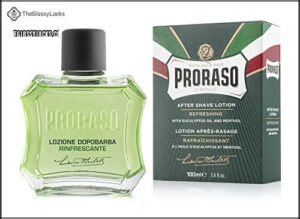
Proraso’s eucalyptus and menthol formula is a classic for a reason — but it does sting. The alcohol denat. is the first ingredient, so expect a sharp hit over any nicks. Witch hazel adds extra astringency on top.
That said, menthol and eucalyptus oil deliver genuine cooling relief almost immediately. It’s better suited for normal to oily skin that tolerates alcohol well. Sensitive or dry skin types should approach this one carefully.
| Best For | Guys with normal to oily skin who want a classic, no-fuss post-shave refresh with real cooling power. |
|---|---|
| Volume | 3.4 fl oz |
| Texture | Liquid Splash |
| Scent | Eucalyptus & menthol |
| Skin Benefit | Cools & tones skin |
| Skin Type | All types |
| Key Ingredient | Eucalyptus & Menthol |
| Additional Features |
|
- Eucalyptus and menthol kick in fast, leaving skin genuinely cool and toned
- Clean formula — no parabens, silicones, or mineral oils
- Light, subtle scent that won’t clash with your cologne
- Alcohol-first formula stings on nicks — sensitive skin types, beware
- The menthol hit is strong, which some people find overwhelming
- Thinner splash texture won’t give you the moisturizing feel of a balm
5. Harrys Post Shave Balm with Aloe
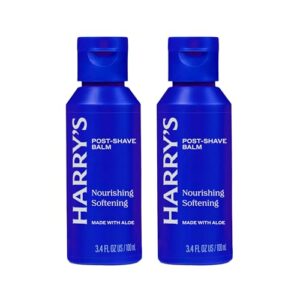
Harry’s Post-Shave Balm with Aloe takes a gentler approach — no alcohol, no sharp sting. Aloe vera and cucumber extract work together to cool and calm freshly shaved skin without triggering those sensitized nerve endings.
The quick-drying, non-greasy formula is especially practical for daily use. Bisabolol and panthenol support barrier repair, while glycerin pulls moisture in.
At 4.6 stars from over 350 ratings, it consistently earns trust from sensitive skin users who just want relief without the burn.
| Best For | Anyone with sensitive skin who wants a calming, no-sting post-shave without the greasy aftermath. |
|---|---|
| Volume | 3.4 fl oz |
| Texture | Lotion |
| Scent | Light |
| Skin Benefit | Reduces bumps & redness |
| Skin Type | All types |
| Key Ingredient | Aloe Vera & Cucumber |
| Additional Features |
|
- Aloe vera and cucumber extract cool and soothe irritated skin fast
- Quick-drying, non-greasy finish — no residue left behind
- Clean formula with no parabens, sulfates, or animal testing
- The 3.4 oz bottle feels small compared to similar products
- You have to go light on application, so it takes some getting used to
- The scent isn’t consistent for everyone, which might be a dealbreaker for some
6. Gillette After Shave Gel for Men

If Harry’s plays it safe, Gillette takes a different angle. The Gillette After Shave Gel for Men leans into cooling — fast. Menthyl lactate in the formula creates that immediate chill on freshly shaved skin, which helps mask post-shave sensitivity rather than just moisturizing over it.
The non-greasy, quick-absorbing gel suits sensitive skin without feeling heavy. At 4.8 stars from nearly 1,000 ratings, it’s clearly doing something right for daily shavers who want fast relief.
| Best For | Men with sensitive skin who want fast, cooling relief right after shaving without any greasy residue. |
|---|---|
| Volume | 2.5 fl oz |
| Texture | Gel |
| Scent | Masculine |
| Skin Benefit | Cools & soothes skin |
| Skin Type | Sensitive |
| Key Ingredient | Specialized gel formula |
| Additional Features |
|
- Cools skin almost instantly — that menthyl lactate hit is genuinely satisfying after a close shave
- Absorbs quickly and doesn’t leave that sticky, heavy feeling some aftershaves do
- Works beyond just post-shave — use it anytime your skin needs a refresh
- The light masculine scent might not be for everyone, especially if you’re sensitive to fragrance
- Harder to find in local stores, so you may need to order online and plan ahead
- At 2.5 oz per unit, a six-pack is the main buy — not ideal if you want to try just one first
When Stinging Means Skin Irritation

A little sting after shaving is normal — but some reactions are worth paying attention to. Your skin is trying to tell you something when the discomfort crosses a certain line. Here’s how to recognize the signs that your aftershave is doing more harm than good.
Lingering Redness
A little post-shave redness is normal — it should fade within minutes. But redness lasting hours or days is a different story entirely.
- Skin looks flushed long after aftershave burn subsides
- Vessel visibility increases with repeated alcohol exposure
- Temperature triggers like heat or cold worsen dilation
- Barrier restoration slows without proper moisturizing strategies
- Redness duration signals active inflammation, not just irritation
Severe Burning
Persistent redness fading into intense, prolonged burning is your skin telling you something’s wrong. When aftershave burn lasts beyond ten minutes, that’s no longer a normal sting — it’s active tissue distress.
High-concentration alcohol overstimulates vanilloid receptor 1, flooding your nervous system with false heat signals your brain can’t distinguish from a real burn.
Itching or Rash
Burning that fades but leaves behind itching or a rash signals a different problem — contact dermatitis. Alcohol in aftershave strips your skin’s barrier, letting irritants reach exposed nerve endings. Synthetic fragrances are common triggers.
Allergic reactions can appear 24–48 hours later as redness, swelling, or blistering.
Switch to an alcohol-free, fragrance-free balm to support skin barrier repair and calm the reaction.
Fragrance Sensitivity Signs
Some people’s reactions go far beyond skin. Fragrance sensitivity signs can include eye wateriness, nasal congestion, and even breathing difficulty — symptoms triggered by inhaling scented aftershave vapors. Fragrance-induced headaches, dizziness, or nausea may follow shortly after exposure.
These responses involve more than skin — they signal your immune system reacting to specific allergens like linalool or limonene. Switch to a fragrance-free formula immediately.
Frequently Asked Questions (FAQs)
Can aftershave sting worsen with repeated daily shaving?
Yes, it can. Daily microtrauma accumulation means your skin never fully heals between shaves. Each session thins the barrier further, making alcohol in aftershave sting more sharply over time.
Does beard length affect how much aftershave stings?
Beard length matters more than you’d think. A close shave exposes far more skin than a trim does, giving alcohol direct access to irritated nerve endings — which is where the real sting begins.
Can aftershave products expire and become more irritating?
Aftershave can absolutely expire. Once opened, oxidation degrades fragrance compounds like limonene, making them more allergenic. Watch for sour scent, cloudiness, or separation — those signal it’s time to replace the bottle.
Does skin age influence sensitivity to aftershave stinging?
Age doesn’t automatically turn up the burn — but aging barrier function and age-related dryness stack the odds. Slower skin barrier repair and menopausal hormonal changes can make aftershave burn sting sharper and last longer.
Conclusion
The sting finally makes sense—and that’s the sharpest cut of all. Most men never stop to question why aftershave lotion stings skin, but the answer is firmly rooted in real biology. Exposed nerve endings, a stripped skin barrier, and high-alcohol formulas are always a predictable combination.
You don’t have to accept the burn. Choose gentler formulas, sharpen your blade, and protect your skin before and after. Every shave can end without the fire.