This site is supported by our readers. We may earn a commission, at no cost to you, if you purchase through links.
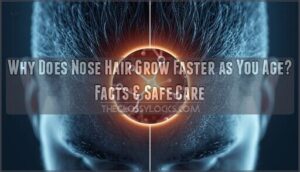
Your scalp hair thins and recedes with each passing decade, yet the vibrissae protruding from your nostrils seem to flourish with remarkable vigor, a paradox that perplexes many adults over fifty.
This incongruous shift stems from androgenic hormones, particularly dihydrotestosterone (DHT), which exert opposing effects on follicles depending on their anatomic location, suppressing growth cycles on the scalp while simultaneously extending the anagen phase within nasal passages.
As you age, your nasal follicles become increasingly sensitized to these circulating androgens, a phenomenon termed follicle hormone shift, which triggers longer, coarser hair growth precisely where you notice it most.
Understanding the biological mechanisms behind this age-related transformation clarifies why your body prioritizes nasal filtration capacity even as it surrenders scalp density.
Table Of Contents
- Key Takeaways
- Why Does Nose Hair Grow Faster With Age?
- What Function Does Nose Hair Serve?
- How Aging Affects The Hair Growth Cycle
- Are There Health Risks With Excess Nose Hair?
- How to Safely Manage Nose Hair Growth
- Frequently Asked Questions (FAQs)
- What part of the body grows hair fastest?
- Is there a way to stop nose hairs from growing?
- Does diet or nutrition affect nose hair growth?
- Can medications influence nose hair growth rate?
- Is excessive nose hair growth ever a concern?
- Do women experience similar nose hair changes?
- Does climate or environment impact nose hair density?
- Conclusion
Key Takeaways
- Dihydrotestosterone (DHT) and other androgenic hormones exert opposing effects on hair follicles depending on their location, suppressing growth cycles on the scalp while extending the anagen phase in nasal passages, which explains why nose hair becomes longer and coarser as scalp hair thins with age.
- Nasal hair serves essential respiratory functions by filtering airborne particulates, allergens, and pathogens before they reach your lungs, with this protective capacity becoming increasingly important as aging reduces your respiratory system’s overall resilience and efficiency.
- The perception that nose hair “grows faster” with age stems not from accelerated growth rates but from prolonged growth phases lasting months instead of weeks, caused by heightened follicle sensitivity to circulating androgens that intensifies as you grow older.
- Safe management requires trimming visible hairs with rounded scissors or electric trimmers every four to six weeks while avoiding plucking, which damages follicles and increases infection risk, thereby preserving the filtration barrier your nasal hair provides without compromising appearance.
Why Does Nose Hair Grow Faster With Age?
You’ve probably noticed that nose hairs seem to sprout with alarming enthusiasm as the years pass, a phenomenon that has less to do with actual growth speed and more to do with hormonal shifts that extend the duration of active growth.
If you’re tired of the constant trimming cycle, strategies to slow regrowth and manage nose hair long-term can help you stay ahead of this surprisingly stubborn grooming challenge.
This isn’t your imagination—the same androgens that may thin the hair on your scalp are simultaneously causing your nasal vibrissae to enter prolonged growth phases, resulting in longer, coarser, and more visible hairs.
The same androgens that thin scalp hair make nose hairs grow longer, coarser, and more visible with age
Understanding the biological mechanisms behind this age-related change requires examining how hormones interact with follicle sensitivity and why nose hair behaves so differently from scalp hair as you grow older.
The Role of Hormones in Hair Growth
Hormone balance orchestrates your hair’s destiny through intricate signaling pathways that vary by body region. Androgens like testosterone and dihydrotestosterone (DHT) bind to receptors in your hair follicle cells, profoundly altering growth cycles and follicle behavior, while estrogen influence helps sustain longer anagen phases in certain areas throughout your reproductive years.
Key hormonal influences on hair include:
- Androgen hormones shorten anagen phases in scalp follicles while paradoxically extending them in nasal passages
- Testosterone converts to DHT through local enzyme activity, intensifying androgen effects on susceptible follicles
- Estrogen influence promotes fuller hair by prolonging growth phases, especially during pregnancy
- Thyroid hormones regulate follicle metabolism and timing, with imbalances causing widespread thinning
- Insulin-like growth factor-1 (IGF-1) enhances anagen duration when present at adequate levels
For more about the relationship between hormones and hair, read about. Understanding these hormonal changes enables you to anticipate and manage shifting hair patterns as you age.
Changes in Hair Follicle Sensitivity Over Time
As you age, your hair follicles don’t just respond to androgen hormones—they become hypersensitive to them, a phenomenon called follicle hormone shift. Receptor expression intensifies over time, meaning the same testosterone level triggers longer growth cycles in your nose while shortening them on your scalp.
This aging follicle response explains why sensitivity thresholds decline, making vibrissae more prominent even as cellular regeneration slows elsewhere, fundamentally altering your hair growth patterns. The hair follicle environment changes with age, further influencing how different areas of hair respond and grow.
Differences Between Nose Hair and Scalp Hair Growth
Your nasal follicles, unlike scalp follicles, are smaller with specialized glands that trap particulates, and they complete shorter growth cycles—anagen phases lasting weeks instead of years—resulting in hair that rarely exceeds a centimeter yet regrows rapidly after trimming.
While trimming is safe and preserves these protective hairs, plucking nose hair can damage follicles and increase infection risk in this sensitive area.
This hair follicle structure contrast, combined with heightened hormonal effects on nose hair density as you age, explains why your nasal hair appears persistently prominent while scalp hair thins.
What Function Does Nose Hair Serve?

You might find yourself wondering why nature equipped your nostrils with such an apparently inconvenient feature, particularly as those nose hair become more prominent with age.
The truth is that nose hair provides several critical physiological functions, functioning as your body’s first line of defense against environmental threats to your respiratory system. Understanding these protective mechanisms helps explain why maintaining, rather than eliminating, your nasal hair contributes to long-term respiratory health.
Nose Hair as a Respiratory Filter
Your vibrissae serve as the respiratory system’s first line of defense, intercepting dust, debris, and airborne contaminants before they penetrate deeper airways. This air filtration mechanism relies on particle capture at the nasal vestibule, where hairs disrupt airflow and promote deposition onto the mucus-coated surfaces.
Maintaining nasal balance through adequate nasal hair function enhances respiratory health by reducing the particulate burden entering your lungs, thereby improving overall air quality and health.
Protection Against Allergens and Particulates
Beyond mechanical filtration, your nasal filters actively defend against allergen barriers, trapping pollen and particulate matter that trigger allergic rhinitis and compromise respiratory health.
Enhanced nasal hair function works as natural air purification, reducing indoor allergen load in conjunction with home air quality measures, while dense vibrissae have been associated with measurable decreases in asthma risk among individuals exposed to seasonal allergens.
Impact on Respiratory Health With Age
Resilience of your respiratory system diminishes with aging lungs, as elastic recoil declines, chest walls stiffen, and alveolar surface area contracts, all contributing to respiratory decline and breathing difficulty during exertion.
While nasal function and nasal hair provide critical frontline defense against airway obstruction from particulates, their protective capacity becomes increasingly essential as aging and respiratory health converge, making preserved air quality and health essential for maintaining gas exchange efficiency in your aging respiratory system.
How Aging Affects The Hair Growth Cycle

To understand why nose hair seems to grow faster with age, you need to know how hair follicles operate throughout your life. Every hair on your body moves through distinct biological phases that determine its length, thickness, and visibility.
As you get older, hormonal changes alter these phases in ways that make your nasal vibrissae more prominent than they were in your younger years.
The Anagen, Catagen, and Telogen Phases Explained
Your hair doesn’t just sprout on a whim—it follows a precise Hair Growth Cycle governed by distinct phases that control Follicle Development, Cell Regeneration, and Phase Duration.
The Hair Growth Cycle consists of the following phases:
- Anagen Phase: Active growth as your Hair Follicle rapidly divides, lasting years on your scalp.
- Catagen Phase: Brief two-to-three-week shift where the follicle shrinks.
- Telogen Phase: Resting period of two to four months before shedding.
- Hormone Influence: Androgens modulate each phase’s length and intensity.
- Independent cycling: Each follicle operates on its own timeline.
Prolonged Growth Phases in Older Adults
As you age, follicle sensitivity to testosterone and other androgens intensifies, particularly in your nasal hair follicle populations, which extends the anagen phase from weeks to months—a hallmark of aging mechanisms that shifts hair growth patterns.
| Factor | Young Adults | Older Adults |
|---|---|---|
| Anagen Phase duration | 2–4 weeks | 3–6 months |
| Hormone Influence intensity | Moderate | High |
| Genetic Factors expression | Baseline | Amplified |
This prolonged hair growth cycle, driven by heightened androgen receptor activity and epigenetic shifts, produces the longer vibrissae you notice—an unavoidable consequence of aging and hair growth biology.
Why Hairs Become Thicker and More Noticeable
Hormonal influence on hair doesn’t stop at length—follicle changes driven by aging effects also increase hair shaft diameter, transforming fine vellus hairs into coarse terminal strands that catch your eye in the mirror.
Elevated dihydrotestosterone alters hair texture by thickening the medulla, the central core of each strand, while prolonged anagen phases allow more keratin deposition, making your nose hairs visibly sturdy and wiry as follicles respond to shifting hormonal influence on hair growth.
Are There Health Risks With Excess Nose Hair?
While your nose hair acts as a natural defense system, you might wonder whether having more of it poses any problems. The answer isn’t as straightforward as you’d expect, since both too little and too much nasal hair can affect your respiratory function and overall comfort.
Let’s examine the relationship between nose hair density and your health, the hygiene concerns that arise when growth becomes excessive, and the underlying medical conditions that may accelerate or alter this process.
Air Quality, Nose Hair Density, and Asthma
Your nose hairs function as nasal filters, trapping particulate matter before it reaches your lungs and influences respiratory health. Dense nasal hair improves protection against asthma triggers by:
- Catching coarse dust and pollen that worsen airway inflammation
- Reducing direct exposure to air pollution like PM2.5 and ozone
- Supporting mucociliary clearance that helps control asthma symptoms
Poor air quality compounds these effects, making filtration efficiency essential.
Overgrown Nose Hair and Nasal Hygiene
When you let vibrissae extend noticeably beyond your nostril opening, you disrupt nasal hygiene by trapping excess mucus and irritants that can trigger nasal irritation and compromise respiratory health.
Hair trimming restores nasal balance without removing the protective barrier your aging nasal hair growth provides, allowing you to maintain proper nose hair care while preserving filtration efficiency that promotes long-term respiratory health.
Medical Conditions That Influence Growth
Several growth disorders and hormonal imbalances can accelerate or suppress vibrissae development beyond typical aging patterns, including growth hormone deficiency, hypothyroidism, and androgen-related conditions that alter follicle sensitivity.
Chronic illnesses like inflammatory bowel disease, celiac disease, and kidney disorders affect hair loss prevention by disrupting nutritional absorption and hormonal health, while genetic factors in Turner syndrome or achondroplasia reshape nasal hair function through altered endocrine signaling that compounds normal aging and health trajectories.
How to Safely Manage Nose Hair Growth
While you can’t alter the hormonal shifts that drive nose hair growth, you can maintain a groomed appearance without compromising the protective function that vibrissae serve.
The key lies in selecting appropriate methods that preserve the filtration barrier while addressing cosmetic concerns. Understanding which techniques are safe, which tools are effective, and which common beliefs lack scientific support will help you navigate this aspect of personal grooming with confidence.
Best Practices for Trimming and Grooming

Keeping up with nasal vibrissae requires careful attention to Safe Trimming practices and appropriate Grooming Techniques. You should use clean, sanitized Nose Hair Trimmers with protective guards every four to six weeks, a Trimming Frequency that maintains a natural appearance while preserving respiratory filtration.
Personal Grooming routines benefit when you trim only visible hairs in well-lit conditions, as this Hair Care and Maintenance approach minimizes irritation risk while supporting ideal nasal function.
Tools and Techniques to Avoid
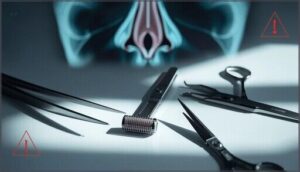
While proper nose hair trimmers support personal grooming, certain methods pose significant risks you should avoid.
Four dangerous approaches include: 1) metal tweezers that scratch nasal mucosa and invite infection, 2) electric epilators that irritate delicate tissue by plucking multiple vibrissae simultaneously, 3) sharp scissors designed for facial hair that can slip and injure nasal passages, and 4) household tools never intended for trimming within sensitive respiratory structures.
Myths About Nose Hair Removal and Regrowth
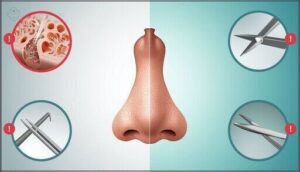
How accurate are popular nose hair myths? Many people believe trimming causes thicker regrowth, yet regrowth facts confirm that regular trimming safety practices don’t alter hair texture or follicle behavior, dispelling common nose hair myths about escalating density.
Understanding removal risks—such as infection from plucking—and applying proper hair care tips ensures you manage nasal hair growth sensibly as aging shifts androgen sensitivity without triggering unfounded concerns about permanent changes.
Frequently Asked Questions (FAQs)
What part of the body grows hair fastest?
While body hair and nose hair creep along at leisurely paces, scalp hair claims the crown—averaging half an inch monthly thanks to prolonged growth phases driven by hair follicles responding to testosterone and the natural aging process.
Is there a way to stop nose hairs from growing?
You can’t fully stop nose hair growth, but laser hair removal offers follicle reduction and permanent removal options.
Regular trimming with proper tools remains the safest natural regulator for managing unwanted hair without compromising your nasal filter.
Does diet or nutrition affect nose hair growth?
Like watering a houseplant, nutrient intake influences nose hair growth through vitamin balance and mineral effects supporting follicle health, though dietary habits have limited impact compared to the aging process hormonal changes driving nasal hair development.
Can medications influence nose hair growth rate?
Yes, certain hormone therapies and medications that alter testosterone or androgen pathways can promote or inhibit hair growth in your nasal follicles, though individual responses vary based on genetics and dosage.
Is excessive nose hair growth ever a concern?
Excessive nasal hair growth rarely signals medical problems, though overgrowth can trap debris, irritate the vestibule, and increase infection risk if you pluck aggressively.
Making regular gentle trimming essential for nasal health issues prevention is crucial, as it helps prevent these problems.
Do women experience similar nose hair changes?
Many women notice subtle hormonal shifts after menopause that prolong the growth phase of nasal follicles, producing longer, coarser vibrissae as circulating androgens exert greater influence on follicle sensitivity and activity patterns.
Does climate or environment impact nose hair density?
Climate effects and air pollution can influence nasal hair density, as elevated particulate matter and humidity levels prompt protective filtration responses, while temperature fluctuations and environmental factors shape airflow patterns that affect perceived hair growth.
Conclusion
Your nose may one day sprout hair rivaling a walrus’s whiskers, but this doesn’t signal decline—it reflects your body’s enduring commitment to respiratory defense. Understanding why nose hair grows faster as you age enables you to manage these vibrissae safely, preserving their protective function while maintaining appearance.
Trim judiciously with rounded scissors or electric trimmers, never pluck, and recognize that this conspicuous growth, though aesthetically unwelcome, continues filtering particulates and pathogens long after your scalp follicles have surrendered their density.