This site is supported by our readers. We may earn a commission, at no cost to you, if you purchase through links. This content is for general informational and educational purposes only and is not a substitute for professional medical, dermatological, or nutritional advice.
Caillou’s bald head has sparked more debate than most cartoon design choices ever do.
Parents notice it.
Kids accept it without a second thought.
And somewhere in between, a surprisingly persistent rumor spread that the four-year-old must have a medical condition.
He doesn’t.
The baldness traces back to the original picture books by Christine L’Heureux, where infant characters simply looked like infants—smooth-headed and round-faced.
When the show adapted those books, the creators kept the look.
It made him easier to animate, instantly recognizable, and oddly timeless.
The real story behind why Caillou is bald is simpler than the internet wants it to be.
Table Of Contents
- Key Takeaways
- Caillou’s Bald Origin
- Why Caillou is Bald
- Caillou’s Age Factor
- Medical Condition Rumors
- Recognizable Character Trait
- Animation and Production
- Cultural Impact and Criticism
- Frequently Asked Questions (FAQs)
- Does Caillou have cancer?
- What does Caillou mean in French?
- Does Caillou have a bald head?
- Why does Caillou have no hair?
- What’s the story behind Caillou being bald?
- Why is Caillou always 4?
- What race is Caillou?
- What is the Inspiration Behind Caillou’s Character?
- What Is the Summary of the Caillou TV Show?
- What Is the Caillou Books Series About?
- Conclusion
Key Takeaways
- Caillou is bald purely by design — creators kept his baby look when aging him up because it made him instantly recognizable and easier to animate consistently.
- The cancer and alopecia rumors are Internet myths; Chouette Publishing has confirmed no medical condition was ever part of the character’s story.
- A smooth, hairless head cuts real production costs by removing the need to animate hair movement, freeing up budget for better storytelling.
- His gender-neutral, ethnically ambiguous look was intentional — it gives every kid watching a character they can see themselves in.
Caillou’s Bald Origin
Caillou’s bald head didn’t happen by accident — there’s a real story behind it. A key decisions shaped how he looks and why that look stuck around for decades.
Here’s actually went into it.
Character Design Choices
Caillou’s bald head wasn’t a random call — it was a precise design decision. The creators leaned into line simplicity and silhouette consistency to make him instantly recognizable, even on tiny screens.
His pale color palette and minimal texture keep the face clean and readable. Those facial proportions? Deliberately oversized.
That’s how baldness became less of a quirk and more of a visual trademark built straight into the branding. The use of a distinct silhouette consistency ensures instant recognizability across media.
Inspiration From Book Series
Before the cartoon ever existed, there were books. Caillou started as a French-Canadian infant character in Christine L’Heureux’s picture books — naturally bald, like most babies.
That baby-bald look turned out to be surprisingly ahead of its time, echoing the confidence seen in today’s most iconic bald celebrities.
When Cookie Jar Entertainment adapted the series for TV, keeping that look was a no-brainer for narrative consistency.
Here’s what shaped that decision:
- Infant realism rooted in Canadian children’s media traditions
- Fantasy quest motifs reimagined through everyday moral storytelling
- Archetypal helpers and chapter-like structure carried from page to screen
- Publisher design choices preserving reader familiarity across formats
Symbolism of Baldness
A bald head isn’t just a design shortcut — it carries real weight. Across cultures, baldness signals wisdom authority, spiritual renunciation, and modern efficiency.
For a toddler character, it quietly communicates social maturity without saying a word.
| Symbol | Cultural Meaning | Caillou Connection |
|---|---|---|
| Wisdom Authority | Elder figures, calm leaders | Relatable, grounded presence |
| Spiritual Renunciation | Simplicity over vanity | Innocence, no pretense |
| Powerful Silhouette | Instant recognition | Iconic visual trademark |
| Modern Efficiency | Clean, no-fuss design | Clear emotional storytelling |
Why Caillou is Bald
So why is Caillou bald? The reason behind Caillou’s baldness is refreshingly simple — it came down to smart design decisions in children’s animation, not any medical mystery.
When creators aged him from baby to preschooler, giving him hair would’ve meant extra animation frames, movement tracking, and styling details every single episode. That adds up fast on a tight budget.
But cost wasn’t the only driver. His bald head delivers something harder to measure: iconic simplicity. A clean, smooth silhouette reads clearly on any screen size, enhances merchandise simplicity on toys and books, and keeps visual accessibility front and center — your eye goes straight to his face and emotions.
There’s also a quiet genius in the gender neutrality of his look. It gives Caillou a kind of universal appeal — he belongs to every kid watching, not just some of them.
Caillou’s gender-neutral look gives him a universal appeal that makes every child feel he belongs to them
Caillou’s Age Factor

Caillou’s age plays a bigger role in his look than most people realize. When creators moved him from baby to preschooler, that shift shaped nearly everything about how he appears on screen. Here’s how his age factored into the design decisions that followed.
Impact on Character Design
His baldness isn’t just a quirk — it’s a smart design choice that holds everything together.
The silhouette consistency makes him pop on screen, on packaging, and across merchandise adaptation without losing visual identity.
That clean, simple outline translates across media without confusion. Audience recognition stays strong because the design strips away distraction and lets his face do the talking.
Simple works.
Aging Process in The Show
Here’s something worth noting: aging in the show relies more on voice actor transitions and behavioral maturity than any physical change. Caillou’s storyline time jumps shift him across an age range without updating his visual identity. Educational content evolution drives each episode forward, but physical growth indicators simply don’t apply here.
- Age shown through voice, not hair
- Behavior signals developmental stages
- Design stays fixed across time jumps
- Recognition stays consistent for young viewers
Consistency in Appearance
No matter the episode, you always know it’s Caillou at a glance. That’s silhouette stability doing its job. His bald head, fixed skin palette, and steady lighting consistency make his visual identity impossible to miss.
Palette uniformity, rigging standards, and texture continuity keep every frame feeling familiar. This design choice turned baldness into a visual trademark that drives brand recognition across merchandise, packaging, and screens everywhere:
- Young viewers spot him instantly
- His character design never drifts between seasons
- A clean silhouette reads clearly even on tiny screens
Medical Condition Rumors
If you grew up watching Caillou, you’ve probably heard the rumors — that he’s bald because of cancer, alopecia, or some other medical condition. It’s one of those internet myths that just won’t die.
Here’s what the creators actually said, and why the real answer is a lot simpler than you’d think.
Debunking Alopecia Claims
Let’s kill the health misinformation right away. You’ve probably seen rumors floating around that Caillou has alopecia or some other condition — but that’s pure medical mythology.
Official statements from Chouette Publishing confirm no such diagnosis exists. Creators never wrote a single episode addressing hair loss.
Expert clarifications and fact-checking sources all agree: baldness is purely a design choice. full stop.
Design Choice Vs Medical Condition
Think of it this way: design rationale wins over medical mythology every single time.
Caillou’s bald head isn’t hiding a diagnosis — it’s a calculated aesthetic efficiency move that shapes everything about the show. This is one of the most deliberate design decisions in children’s animation, and it pays off in ways you might not expect:
- Bald characters in animation are easier to draw consistently across hundreds of episodes
- A smooth head creates trademark identity that works across toys, books, and screens
- Storyboard economy improves when hair movement is completely removed
- Facial expressions become the clear visual focus
- The reason behind Caillou’s baldness reflects cultural perception of toddler innocence, not illness
Creators’ Intentions
The creators never wanted you puzzling over Caillou’s head — they wanted you watching his face. Keeping him bald was about audience accessibility and storytelling simplicity above all else.
| Design Intention | Result |
|---|---|
| Visual Uniformity | Merchandise Consistency across toys and books |
| Brand Identity | Instant recognition for young viewers |
| Reasons behind Caillou’s baldness | Pure creative choice, never medical |
Recognizable Character Trait
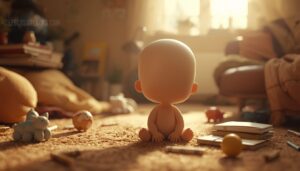
Caillou’s bald head didn’t just explain itself away — it became the whole point. What started as a design shortcut turned into something much bigger: a look you can’t mistake for anyone else.
Here’s how that smooth head shaped the show’s identity in ways nobody really planned.
Baldness as a Distinct Feature
Caillou’s bald head works as a powerful audience memory cue — you see that minimalist silhouette once and it sticks. Among bald characters in animation, few carry the same symbolic innocence he does.
This child-friendly design strips away distraction, keeping your eye on his face and feelings. That visual identity, rooted in deliberate design decisions in children’s animation, makes the reason behind Caillou’s baldness genuinely clever.
Impact on Show’s Branding
That sticky silhouette does more than just look cute — it’s a brand recognition strategy hiding in plain sight. His bald head threads through every visual branding element seamlessly:
- Merchandise Consistency keeps toys, books, and packaging instantly unified
- Logo Integration pairs his clean silhouette with title treatments effortlessly
- Color Palette Cohesion amplifies cross-media recognition across platforms
That’s how brand equity growth happens — one bald head at a time.
Cultural Significance
That bald silhouette didn’t stay on PBS — it broke into the internet wild. His hairless head sparked memetic evolution across platforms, turning a preschool character into a symbol of childhood frustration and parenting discourse worldwide.
| Cultural Dimension | Real-World Impact |
|---|---|
| Social Media Trends | Viral memes reframe childhood nostalgia |
| Parenting Discourse | Sparked debates about role models |
| International Adaptations | Bald look translated across cultures |
| Merchandise Symbolism | Iconic image drives lasting recognition |
Animation and Production
Caillou’s bald head wasn’t just a creative whim — it actually made the whole show easier to produce. There are a few practical reasons the animators stuck with that smooth look.
Here’s how it played out behind the scenes.
Simplifying Animation Process
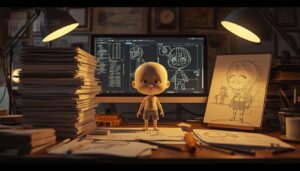
Animation studios make design decisions in children’s animation for very practical reasons. Caillou’s smooth head skips the need for hair entirely—no flowing locks, no frame-by-frame movement to track.
That simplifies everything downstream:
- Asset templates stay lean with fewer lines per character build
- Modular rigging snaps into place faster without hair physics layered on top
- Scene graph optimization runs cleaner when visual simplicity cuts unnecessary geometry
Less complexity means animators spend more time where it counts—on expressive faces.
Reducing Production Costs

Keeping a character hairless cuts real money out of every episode. No hair means simpler asset libraries, faster batch rendering, and cleaner efficient rigging across hundreds of scenes.
| Production Area | Cost Benefit |
|---|---|
| Asset Libraries | Fewer character components to build |
| Batch Rendering | Faster processing per frame |
| Efficient Rigging | Simpler skeletal setup |
| Procedural Texturing | Minimal surface detail needed |
| Voiceover Outsourcing | Savings redirected here instead |
That’s budget-friendly animation working exactly as intended — visual simplification funding better stories.
Focus on Facial Expressions
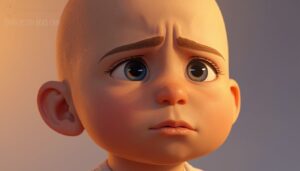
Without hair in the way, Caillou’s face becomes the whole story. His bald design puts every emotion front and center:
- Eyebrow dynamics signal surprise or worry instantly
- Eye gaze cues draw you straight to his focus
- Mouth and lip cues make happiness or frustration unmistakable
- Cheek muscle cues and micro-expression cues register in milliseconds
These design decisions in children’s animation shape character appearance and audience perception powerfully. The visual identity of characters like Caillou proves a clean face communicates faster than words.
Cultural Impact and Criticism

Caillou’s bald head didn’t just spark design debates — it sparked a whole cultural moment. The show built a surprisingly loud legacy, from devoted fans to equally devoted critics.
Here’s how the public really felt about Caillou, and why the controversy still follows him today.
Public Perception of Caillou
Few cartoon characters have stirred up more Social Media Buzz than Caillou.
Parent Opinions have been split for years — some appreciate his relatable, everyday struggles, while others blame the show for their toddler’s sudden meltdown phase.
Online Backlash has been real, and Meme Culture turned his bald head into internet gold.
Audience Sentiment often circles around three complaints:
- Kids mimicking his whining after episodes
- Parents feeling the show normalizes tantrums
- Caregivers questioning the Cultural impact of Caillou on young viewers
Controversy Surrounding The Show
The real controversy surrounding Caillou isn’t his bald head — it’s his behavior.
Parental complaints pile up around one thing: the whining.
Critics point to a pattern where tantrums go uncorrected and bad behavior gets rewarded, fueling a Behavior Modeling Critique that’s hard to ignore.
The Educational Value Debate and Screen Time Concerns have parents asking whether the show belongs on at all.
Urban legends about TV characters like Caillou having cancer distract from the actual issue.
- Kids copying whining to get what they want
- Tantrums rarely facing real consequences on-screen
- Sibling conflict going unaddressed in episodes
- Controversy over educational value of Caillou among caregivers
- Merchandise ethics questioned when a poor role model drives toy sales
Frequently Asked Questions (FAQs)
Does Caillou have cancer?
No, Caillou doesn’t have cancer. That’s pure urban legend. Official sources and creators confirm he has no hair loss disorder or chemotherapy storyline — just a simple animation design choice.
What does Caillou mean in French?
In French, Caillou means "pebble" or "small stone." The etymology roots trace back to Latin Latin calculus.
It’s also used as a French nickname for young children — a perfect fit for this Montreal-born character.
Does Caillou have a bald head?
Yes, Caillou has a completely bald head.
That hairless aesthetic isn’t accidental — it’s one of the most deliberate design decisions in children’s animation, giving him an iconic silhouette kids recognize instantly.
Why does Caillou have no hair?
Hair today, gone forever — and honestly, it was always the plan.
Caillou has no hair because of deliberate design decisions in children’s animation, rooted in visual accessibility and educational simplicity from his earliest book illustrations.
What’s the story behind Caillou being bald?
The creators designed him as a baby with little hair, then kept him bald when aging him up—purely a design choice to maintain recognition across the show’s international broadcast and merchandise branding.
Why is Caillou always 4?
Caillou stays four years old to match his preschool audience.
That fixed age promotes narrative consistency and educational content structure, keeping every episode relatable and developmentally appropriate for kids aged two to four.
What race is Caillou?
Nobody pinned a flag on Caillou.
His ethnic ambiguity is completely intentional — universal representation through skin tone neutrality means every kid watching sees themselves in that little bald face from Montreal.
What is the Inspiration Behind Caillou’s Character?
Rooted in French-Canadian folklore and early childhood innocence, Christine L’Heureux drew from educational philosophy to shape Caillou as every child’s mirror — curious, emotional, and refreshingly simple in design.
What Is the Summary of the Caillou TV Show?
Like a window into a toddler’s world, the TV series Caillou follows a four-year-old exploring everyday adventures through imaginative play, family dynamics, and social lessons — pure preschool learning wrapped in a warm Canadian package.
What Is the Caillou Books Series About?
The book series from Chouette Publishing follows a four-year-old through routine activities like visiting the doctor and riding a bike, using simple vocabulary and emotional learning moments to build social skills through everyday adventures.
Conclusion
The internet went looking for a diagnosis and found a design choice instead. That’s the real answer to why is Caillou bald—no illness, no hidden meaning, just a children’s book character who never grew past his baby look.
What started as simple illustration became a signature that millions recognized instantly.
Sometimes the most talked-about details have the most straightforward explanations.
A bald head. A four-year-old. A show that didn’t overthink it.