This site is supported by our readers. We may earn a commission, at no cost to you, if you purchase through links.
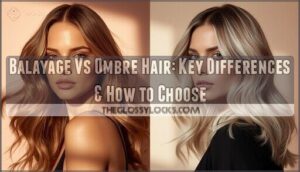
Walk into any salon and you’ll overhear it at least once—someone pointing to a photo saying, "I want this, but I don’t know if it’s balayage or ombre."
These two techniques get mixed up constantly, even though they deliver pretty different results.
Balayage sweeps color on freehand for a soft, grown-out glow, while ombre builds a bolder gradient from root to tip.
Knowing the difference saves you from leaving the chair with the wrong look.
Whether you’re chasing beachy and low-key or something with more contrast and edge, choosing between balayage vs ombre hair comes down to a few key factors worth understanding before your next appointment.
Table Of Contents
- Key Takeaways
- What is Balayage Hair?
- What is Ombre Hair?
- Key Differences Between Balayage and Ombre
- Balayage Pros and Cons
- Ombre Pros and Cons
- Balayage Vs Ombre: Maintenance Needs
- Suitability for Hair Types and Lengths
- Customizing Your Look: Color Options
- Choosing The Right Technique for You
- Frequently Asked Questions (FAQs)
- Does ombré hair look good on everyone?
- What is the difference between balayage and Ombre hair?
- Are balayage and ombré twins?
- How do I get a balayage & ombré look?
- Are balayage highlights Ombre?
- Does Ombre balayage make your hair lighter?
- What is balayage hairstyle?
- Which is better, balayage or ombré?
- What is the downside of balayage?
- Is ombré still in style in 2024?
- Conclusion
Key Takeaways
- Balayage uses freehand painting for a soft, sun-kissed grow-out that needs touching up only every 10–16 weeks, while ombré creates a bolder dark-to-light gradient that fades faster and needs refreshing every 6–8 weeks.
- Your lifestyle drives the choice more than anything — balayage is the low-effort option, while ombré suits anyone who loves high-impact color and doesn’t mind more upkeep.
- Both techniques work on all hair types and lengths, but your face shape, skin tone, and texture should guide where your colorist places the color for the most flattering result.
- Bring at least ten reference photos to your salon consultation and share your full color history — it’s the fastest way to get the result you actually want.
What is Balayage Hair?
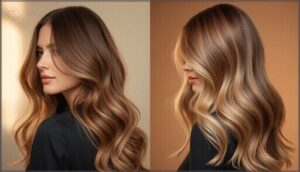
Balayage has been a salon favorite for decades, and honestly, it’s not hard to see why.
The technique’s lasting appeal makes sense when you realize that today’s best at-home balayage kits can deliver that same sun-kissed, blended finish without a salon appointment.
It’s one of those techniques that works quietly in the background — giving you that effortlessly sun-kissed look without screaming "I just got my hair done."
Here’s what you need to know about where it comes from, how it works, and the results you can expect.
Definition and Origins
Balayage traces its roots back to the 1970s Carita salon in Paris, where French colorists first developed this now‑iconic hair coloring technique. The word itself comes from "balayer," meaning to sweep — and that etymology sweep perfectly describes the method.
From those French salon roots, balayage gradually made its way to celebrity chairs worldwide, becoming one of the most beloved color shift styles in modern hair. Balayage is also praised for its low maintenance coloring.
Application Technique
So, what makes this technique stand out among hair coloring techniques? It’s all in the freehand painting method. Your colorist skips foil placement entirely and hand‑paints lightener directly onto sections using brushes or even fingers — sweeping from mid‑length to ends.
The low maintenance balayage technique offers a smooth grow‑out that blends naturally with your hair.
- Ear-to-ear sectioning patterns keep placement consistent
- Nape gets mirrored half-V slants for soft blending
- Mid-back uses W-formation panels for full coverage
- Sides feature face-framing diagonal strokes
- No heat during processing time protects hair integrity
Typical Results and Effects
All that freehand painting pays off beautifully. You get a sunlit shine that looks like you spent the summer outdoors — no harsh lines, just soft gradient depth that moves naturally with your hair.
The regrowth blend is so smooth, it can go three to four months without looking grown out.
Add a face framing glow around your features, and this natural looking highlighting technique genuinely flatters everyone.
What is Ombre Hair?
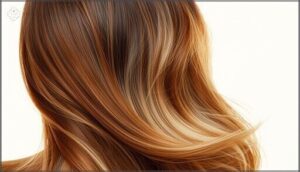
Now, if balayage is the subtle one in the room, ombre is its bold, head-turning counterpart — and honestly, it deserves its moment.
Ombre (French for "shaded") is all about a dramatic color shift: darker roots that gradually melt into lighter ends. Think classic brunette fading into golden blonde tips, or even copper shifting into something completely unexpected. That gradual color shift is the whole point — it’s intentional, structured, and meant to be noticed.
Unlike the freehand sun-kissed effect of balayage, ombre follows a more defined gradient pattern. Celebrity inspiration has kept this look alive across seasonal trends, making it a consistent favorite for anyone craving a high-impact, fashion-forward style without constant upkeep.
Key Differences Between Balayage and Ombre
Balayage and ombré might look similar at first glance, but they’re actually pretty different once you know what to look for.
A few key things set them apart — from how the color is applied to the kind of finish you’ll walk out with.
Here’s a closer look at where they differ.
Color Transition Styles
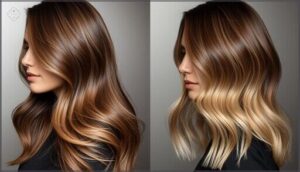
Here’s where balayage vs ombre really part ways — it’s all about how the color moves.
Balayage gives you a soft gradient, a sun‑kissed hair effect that melts naturally from root to tip through color melting.
Ombre goes bolder with sharp contrast and a defined shift at mid‑length.
Love something subtler? Sombre blend and reverse ombre are worth exploring too.
Technique and Application Methods
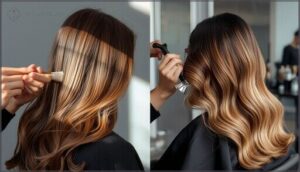
Think of the two techniques as total opposites in approach. Freehand brush control defines balayage — your colorist hand-paints a clay lightener mix directly onto dry hair, using precise sectioning patterns and foil-free processing.
Ombre flips that entirely, relying on backcombing, controlled saturation, and foiled highlights to lock in that gradient. different color techniques, different tools — but both deliver stunning hair coloring results.
Visual Impact and Finish
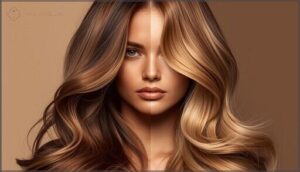
Side by side, the finish tells the whole story.
Balayage gives you that SunKissed, Dimensional Hair glow — soft Sunlit Sheen with natural Color Depth that moves with your hair. Ombre brings Contrast Brightness and bold Color Shift from root to tip.
Here’s how the Glossy Texture and Highlight Radiance break down:
- Balayage retains 80–90% natural base for low-contrast dimension
- Ombre transforms 50–70% to lighter tones for high-impact drama
- Balayage blending spans 4–6 inches for smooth softness
- Ombre’s defined fade creates striking color blocking
- Both gain luminosity with gloss treatments
Balayage Pros and Cons
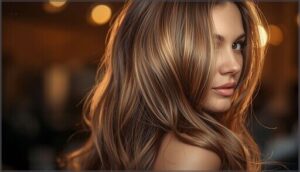
Balayage has a lot going for it — but like anything, it’s not perfect for everyone.
Before you book that appointment, it helps to know what you’re signing up for.
Here’s a quick look at the pros, the cons and who it actually works best for.
Advantages of Balayage
One of the biggest perks of balayage is how effortlessly it mimics a natural sun-kissed glow — like you spent a summer outdoors, not hours in a salon. The low-maintenance grow-out is a significant improvement, with touch-ups every three to four months.
Custom face-framing placement flatters your features, while texture versatility means it works on any hair type.
Plus, reduced damage keeps your natural hair color healthy and dimensional.
Potential Drawbacks
It’s not all sunshine and highlights, though. Freehand painting leaves room for color unevenness if your stylist isn’t experienced — patchy spots or streaky results are real possibilities. Hair damage is another concern, especially on fine or previously bleached strands. And don’t overlook the hidden costs:
- Scalp irritation if lightener overlaps the roots
- Brassiness requiring toners every few weeks
- Maintenance cost from glossing appointments adding up fast
- Limited suitability for highly damaged or over-processed hair
- Color correction visits if the tone lands off
Who Balayage Suits Best
Balayage is honestly a great fit for almost anyone — but it truly shines for certain people. If your lifestyle calls for low-maintenance hair that still looks polished, this is your technique.
| Best For | Why It Works |
|---|---|
| Warm skin tones | Golden and caramel shades boost natural glow |
| Oval or round face shapes | Soft placements flatter and frame beautifully |
| Wavy or curly hair textures | Dimension stays visible through natural movement |
Ombre Pros and Cons
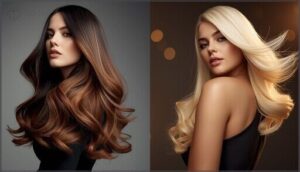
Ombré has a way of making a serious statement without saying a word.
It’s bold, it’s beautiful, and honestly, it’s not for everyone — and that’s exactly what makes it so appealing to the right person.
Here’s a look at where ombré really shines and who it most often works best for.
Advantages of Ombre
Ombre really does deliver on so many fronts. Here’s why it keeps showing up in Hair Color Trends year after year:
- Low-maintenance roots — your natural dark base grows invisibly, stretching touch‑ups to 4+ months
- Reduced hair damage — lightener only hits mid‑lengths and ends, sparing your roots
- Gradient dimension effect — that dark-to-light Color Shift adds instant depth and movement
- Flexible color options — from caramel to copper, the possibilities are endless
Plus, those Cost-effective savings add up fast.
Who Ombre Suits Best
So, who’s the perfect ombre candidate? If your Lifestyle Preference leans low-effort, this one’s calling your name.
It works across every Hair Texture and Hair Density, though medium-to-long Hair Length really lets that Color Shift shine.
Your Skin Tone, Face Shape, and Features guide the shade — warm caramel for olive complexions, ash for fair ones.
Bold taste? Ombre delivers.
Balayage Vs Ombre: Maintenance Needs
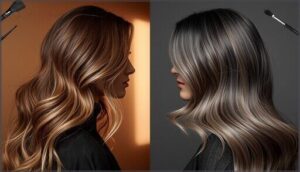
Once you’ve picked your color style, keeping it fresh is the next thing to think about. Balayage and ombré don’t ask the same things of you — and that gap matters more than most people expect.
Here’s a look at what maintenance really looks like for each.
Upkeep Frequency
How often you’re back in the salon chair really comes down to which technique you chose.
Balayage fits a flexible salon refresh cycle — most clients come in every 8 to 12 weeks, with bigger sessions stretched to every 12 to 16 weeks.
Ombre needs a tighter toner interval, usually every 6 to 10 weeks, to keep those light ends looking intentional.
| Hair Care and Maintenance Factor | Balayage | Ombre |
|---|---|---|
| Salon Refresh Cycle | Every 8–16 weeks | Every 8–12 weeks |
| Gloss Frequency | Every 8–12 weeks | Every 6–10 weeks |
| Heat Styling Impact | Moderate fading | Faster tip fading |
| At‑Home Care | Sulfate-free + deep condition | Sulfate-free + extra moisture |
| Low‑Maintenance Hair Options | High flexibility | Moderate flexibility |
Color Fading and Regrowth
Fading and regrowth tell very different stories depending on your technique.
With balayage, regrowth blending is almost easy — roots ease in softly, staying invisible for up to 8–12 weeks. Ombre’s fade timeline runs shorter, with ends dulling around 6–10 weeks. Porosity impact matters too; porous hair loses pigment faster, making brass neutralization a regular part of your hair maintenance routine.
| Factor | Balayage Vs Ombre |
|---|---|
| Regrowth Blending | Smooth up to 12 weeks |
| Fade Timeline | Ombre fades faster at ends |
| Porosity Impact | High porosity speeds fade 20–30% |
| Brass Neutralization | Every 8 weeks for ombre |
| Maintenance Frequency | Lower for balayage overall |
Salon Vs At-Home Care
Choosing between salon services and at-home kits really comes down to what you value most — results or savings.
Salons win on Application Precision, Product Quality, and Customization Options every time.
DIY kits cut costs upfront, but you risk patchy color and faster fading.
| Factor | Salon vs At-Home |
|---|---|
| Cost Comparison | $150–$500 vs $20–$80 |
| Time Duration | 2–4 hours optimized |
| Product Quality | Professional-grade vs box dye |
| Application Precision | Expert vs trial-and-error |
| Customization Options | Custom vs pre-formulated |
Suitability for Hair Types and Lengths
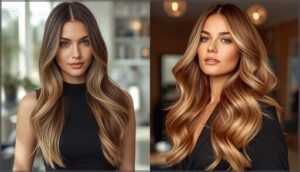
Not every technique works the same on every head of hair — and that’s actually a good thing.
Knowing your hair type, length, and face shape can help you land on the look that works best for you.
Here’s what to keep in mind before you book that appointment.
Since results vary so much by curl pattern, it’s worth reading this guide to how Sisterlocks work on different hair textures to set realistic expectations for your maturation timeline.
Best Hair Textures for Each Technique
Your hair texture matters more than you might think when picking between balayage and ombre. Here’s a quick cheat sheet:
- Fine Straight Balayage adds dimension without weight — a win for thin strands
- Medium Wavy Ombre follows your natural movement beautifully, enhancing every wave
- Coarse Thick Balayage breaks up heaviness with warm, rich tones like caramel
- Curly Coily Ombre defines curl shape while creating a gorgeous sun-bleached finish
Recommended Hair Lengths
Length changes everything.
A Short Pixie Balayage adds face-framing dimension without overwhelming fine strands, while a Medium Bob Ombre creates a sleek, modern gradient with just enough room to blend.
Shoulder-Length Ombre balances drama and Low-Maintenance Hair beautifully.
For Long Layered Balayage, you’ve got the perfect canvas — rich, flowing color that moves with every strand.
Face Shape and Color Placement
Your face shape quietly guides where color should land — and getting it right makes all the difference.
- Oval Face Highlights use soft balayage sweeps at the cheekbones for smooth, natural balance
- Round Face Lengthening works best with vertical highlights drawn downward from the ears
- Square Jaw Softening calls for curved, feathered balayage around the temples and jawline
- Heart Forehead Balancing benefits from lower color concentration, letting ombre draw the eye downward
- Diamond Temple Accents add subtle width through light sweeps near the ears
Whether you’re exploring Balayage vs. Ombre, smart Color Shift placement transforms Hair Styling and Coloring into something that genuinely flatters your Face Shape and Features — and that’s always on‑trend with today’s Hair Color Trends.
Customizing Your Look: Color Options
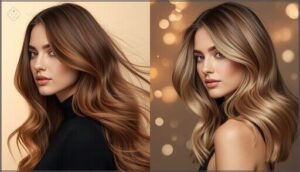
One of the best parts about both balayage and ombré is how much room there’s to make the look truly yours. Whether you’re drawn to soft, natural tones or something a little more daring, your color options are wider than you might think.
Here’s a closer look at how to customize your color, from blending techniques to the shades everyone’s loving in 2026.
Natural Vs Bold Color Choices
Natural colour lovers tend to gravitate toward balayage — think warm shade options like honey, caramel, or beige that offer subtle skin tone harmony without screaming "I just left the salon."
Bold hair color? Ombre owns that space, delivering bold contrast that turns heads.
Hair color trends for 2026 lean into trendy color combos like copper-to-rust and ash-to-platinum, so maintenance frequency becomes part of the decision too.
Blending and Face-Framing Techniques
Where color lands on your head changes everything. Precision matters here:
- Money Piece Placement brightens the face using balayage hand painting high along the hairline.
- Ombre Shift Blending uses color melting techniques and vertical strokes for a smooth color transition.
- Face-Shape Highlighting guides sectioning control — so your colorist places lightness where it flatters you most.
Trendy Color Ideas for 2026
Now that placement is sorted, let’s talk shades — because 2026 is serving some seriously gorgeous options.
| Balayage | Ombré |
|---|---|
| Buttercream Blonde | Spiced Copper |
| Teddy Bear Blonde | Molten Brunette |
Mocha Brown balayage and sunkissed hair trends are huge right now too. Whether you want soft gradient hair or bold contrast, these hair color trends have you covered.
Choosing The Right Technique for You
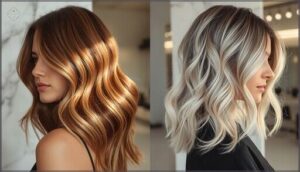
So you’ve learned the differences — now it’s time to figure out which technique actually fits your life.
The right choice comes down to a few key things, like how much upkeep you’re willing to do and the look you’re going for. What to think about before booking that appointment.
Lifestyle and Maintenance Preferences
Your lifestyle honestly drives this decision more than anything else.
If your schedule is packed, balayage is your low-maintenance hair option — salon visit frequency drops to every 10–16 weeks, and grow-out looks naturally smooth.
Ombre needs refreshes every 6–8 weeks. Factor in your home care routine, budget considerations, and seasonal color care needs.
Active lifestyle tips like cool rinses and weekly masks keep both styles looking great.
Desired Final Look
Think about what you actually want to see in the mirror.
If soft dimension and a sunlit glow speak to you — that easy, “I woke up like this” hair — balayage is your match.
Balayage is for anyone who wants effortless, sunlit dimension that looks naturally yours
But if bold contrast and an edgy finish make your heart race, ombre delivers.
Face-framing brightness? Balayage wins there.
Drama from roots to ends? That’s pure ombre energy.
Consultation Tips for Salon Visits
Once you know the look you want, the next step is finding the right colorist — and showing up prepared.
Bring a portfolio checklist of at least ten reference photos matching your hair length and texture. Share your full color history, including any box dyes or toners.
A quick texture analysis and honest product inventory help your stylist recommend custom hair care and the best hair color techniques for you.
Frequently Asked Questions (FAQs)
Does ombré hair look good on everyone?
ombré hair comes close to universal.
With the right skin tone match, face shape impact, and hair texture suitability, it genuinely flatters almost everyone.
What is the difference between balayage and Ombre hair?
Balayage hand-paints color for soft, natural highlights with low root visibility.
ombré creates a bolder gradient from dark roots to light ends — two very different results in styling flexibility and color saturation levels.
Are balayage and ombré twins?
They’re more like siblings than twins. Balayage is a technique; ombré is a result.
Similar gradient definition and maintenance similarities, yes — but their visual vibe and application are clearly their own.
How do I get a balayage & ombré look?
Picture sun-warmed strands catching light mid-breeze. To get that look, you’ll need solid prep hair health, smart tool selection, clean sectioning techniques, good blend timing, and a steady aftercare routine.
Are balayage highlights Ombre?
Not exactly. Balayage is a technique, while ombré is a finished look.
Your colorist can use balayage to create an ombré gradient — but balayage highlights alone won’t always give you that bold, dark-to-light result.
Does Ombre balayage make your hair lighter?
Yes — ombre balayage does make your hair lighter. Bleach lifts color 2 to 4 levels, with developer strength and porosity impact shaping how bright your ends actually go.
What is balayage hairstyle?
Balayage is a freehand painting hair coloring technique that sweeps sun-kissed highlights onto your strands for a natural, low-maintenance glow.
Think easy face-framing light and smooth texture blending — no harsh lines, just beautiful dimension.
Which is better, balayage or ombré?
Neither wins outright — it truly depends on your lifestyle. Want low-maintenance hair with a natural glow? Go balayage. Crave bold, head-turning color? Ombré delivers that drama beautifully.
What is the downside of balayage?
It’s not all sunshine and highlights. Hair damage, scalp irritation, high cost, and time-intensive sessions are real concerns. Uneven results can also happen, so choosing a skilled colorist is non-negotiable.
Is ombré still in style in 2024?
Ombré is absolutely still in style.
It ranked among the top hair color trends of 2024, with smoky ash gradients, pastel ombré resurgence, reverse ghost roots, face-framing highlights, and grey coverage blends leading the way.
Conclusion
You don’t need to commit to just one—some of the best results come from blending both techniques.
But when you’re choosing between balayage vs ombre hair, the real question is how you want to live with your color day to day.
Want easy, grow-out-friendly softness? Balayage.
Crave something with bolder drama and definition? Ombre delivers.
Know your lifestyle, bring reference photos, and trust your colorist to make it work for your hair.