This site is supported by our readers. We may earn a commission, at no cost to you, if you purchase through links. This content is for general informational and educational purposes only and is not a substitute for professional medical, dermatological, or nutritional advice.
One pass at 450°F can drop your hair’s strength by more than half. That’s not a scare tactic—it’s what happens when heat unravels keratin’s alpha-helix structure and snaps the disulfide bonds holding your strands together. Most clients don’t notice until the damage shows up as straw-like ends or color that fades in patches.
Here’s the thing: heat styling itself isn’t the enemy. Bad technique is. The wrong temperature, skipping protectant, or reaching for hot tools every single day turns manageable hair into a dry, tangled mess.
Once you understand what’s happening inside each strand, spotting the warning signs gets easier—and so does fixing it.
Table Of Contents
- Key Takeaways
- What Causes Heat Damage in Hair
- How to Spot Heat Damaged Hair
- How to Prevent Further Heat Damage
- How to Treat and Repair Damaged Hair
- Best Products and Routines for Hair Recovery
- Frequently Asked Questions (FAQs)
- How to fix damaged hair from heat styling?
- How long does it take for hair to recover from heat styling?
- Does heat styling always damage hair?
- How to prevent hair damage from heat styling?
- How do you fix damaged hair from heat?
- How can I style my hair with heat without damaging it?
- What does damaged hair from heat look like?
- Will hair grow back from heat damage?
- Can heat damage cause permanent hair loss?
- How long does heat damage take to occur?
- Conclusion
Key Takeaways
- Heat above 300°F breaks down keratin’s structure and forces out moisture, causing irreversible damage like weakened strands, cracked cuticles, and patchy color fading.
- Spot heat damage early by checking for straw-like texture, frequent split ends, excessive frizz, high porosity, and uneven color retention.
- Prevent further damage by using ceramic or tourmaline tools, applying heat protectant spray, matching temperature to your hair type, limiting styling to 2-3 times weekly, and sleeping on a silk pillowcase.
- Repair damaged hair with a consistent routine of bond-building treatments like Olaplex or K18, weekly deep conditioning, hydrolyzed keratin application, sulfate-free cleansing, and regular trims.
What Causes Heat Damage in Hair
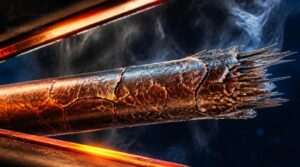
Heat styling doesn’t just dry your hair out. It breaks it down at a molecular level, from the protein structure to the cuticle layer. Here’s what’s actually happening every time you reach for that flat iron.
Repeated exposure weakens the cuticle until it can no longer lie flat, which is exactly what leads to those frustrating split ends versus healthy hair textures you notice when your strands feel rough or start snagging.
Protein Denaturation Explained
Damage starts at the molecular level, long before you see split ends. Heat forces keratin chains to unwind, converting alpha-helix structure into a weaker beta-sheet form. Disulfide bonds break down under high heat.
- Ortho-cortical cells denature near 220°C
- Para-cortical cells hold out until 230°C
- This structural loss is irreversible
- Fiber strength drops sharply
- Elasticity won’t bounce back
This process can lead to keratin protein denaturation and permanent structural weakening.
Moisture Loss From Heat
Water evaporation starts fast once heat hits your strands. Hair holds about 17% water in its cortex, and temps above 300°F force it out.
Wet hair? Worse. Steam generation causes vacuole rupture, cracking the shaft from inside.
| Hair State | Moisture Risk |
|---|---|
| Wet | High |
| Dry | Lower |
| Repeated heat | Cumulative loss |
| Untreated | Chronic dehydration |
| Protected | Reduced |
Cuticle Cracking and Lifting
That evaporation doesn’t just dry hair out — it warps the cuticle layer itself. Outer cells shrink faster than the cortex underneath, creating tensile stress that cracks the surface.
This micro-fracture progression starts as tiny edge lifts, then splits into full separation. Result: surface roughness jumps up to 400%, and cuticles lose their hydrophobic barrier, leaving strands rough, dull, and porous.
Heat Styling Tool Temperatures
Not every strand needs the same heat. Match temperature to hair type: fine or damaged hair, 250-325°F; normal hair, 325-375°F; thick or coarse hair, 375-400°F.
If you’re working with shorter styles, this guide to choosing the best straightener for short hair breaks down which settings and plate sizes work best.
Skip guesswork. Tools with ceramic vs tourmaline plates and stable heat tech avoid hot spots. Smart sensors read strands thousands of times per second, adjusting output before damage sets in.
Color Fading From Open Cuticles
Once heat lifts the cuticle layer, dye molecules slip right out. That’s dye molecule escape in action.
- Rinse with lukewarm, not hot, water
- Skip alkaline shampoos (pH above 7.0)
- Use acidic conditioners (pH 4.5-5.5)
- Lower styling temps below 350°F
- Deep condition weekly to seal cuticles
Porosity determines how much color you lose. Damaged, porous hair fades fastest.
If your strands soak up dye too eagerly, easing off harsh permanent formulas and exploring gentler semi-permanent hair color choices can help protect porous, fade-prone hair.
How to Spot Heat Damaged Hair
Heat damage doesn’t hide once it sets in. Your hair sends clear signals when the cuticle and cortex take a hit. Here’s what to check for.
Straw-Like, Brittle Texture

Grab a strand and stretch it. Snap instead of stretch? That’s brittle hair talking.
Moisture below 10% causes this straw feel—heat breaks cuticles, drains hydration, and disrupts protein-moisture balance. Test porosity: drop a strand in water. Sinks fast? Cuticles are damaged.
Fix it with deep conditioning treatments and protein masks to restore strength before breakage worsens.
Frequent Split Ends
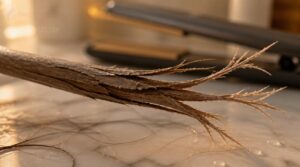
Split ends multiply fast once heat cracks the cuticle. Watch for these warning signs:
- Double split ends: a "V" shape from friction
- Fork splits: multi-directional, dehydration-driven
- Tree splits: branch-like fraying, severe damage
- Partial splits: early dryness, still fixable
Curly hair splits more often. Schedule trims every 6-8 weeks to stop splits from climbing the shaft.
Excessive Frizz and Tangling

Raised cuticles catch on each other, turning smooth strands into a tangled mess by noon.
Humidity swells the hair shaft, forcing open cuticles to grab neighboring strands. Heat-damaged hair loses moisture retention, so it fights for hydration from the air, triggering frizz.
Skip narrow-tooth combs on dry hair. Saturate strands fully when detangling, and switch to a silk pillowcase to cut overnight friction.
Increased Hair Porosity
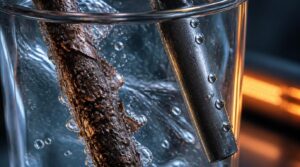
Porosity spikes when heat lifts the cuticle, leaving gaps that suck up water fast but hold nothing.
- Spray bottle test: water beads on healthy hair, absorbs instantly on damaged strands
- Strand sinks in a glass within 10 seconds
- Diameter swells 15-20% after soaking
This hygral fatigue cycle wrecks moisture retention. Products absorb within minutes, meaning you’re reapplying constantly just to keep hydration locked in.
Uneven Color Retention
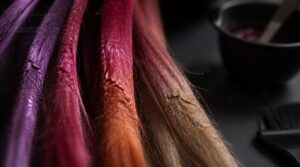
Color that fades in blotches, not evenly, points straight to heat damage. Cuticle lifting creates gaps that leak pigment unevenly, so some strands hold color while others wash out fast.
Check your ends versus roots — the root end gradient shows vibrant color up top, dull below. Porosity variation and heat pigment breakdown both accelerate this split, especially without a heat protectant.
How to Prevent Further Heat Damage
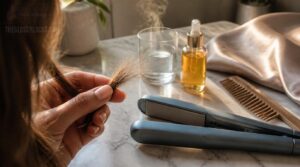
Once damage shows up, your job shifts to damage control. The right tools and habits can stop things from getting worse. Here’s what actually works.
Choosing Ceramic or Tourmaline Tools
Ever wonder why your straightener still fries your hair even on "low"? The plate material matters more than the number on the screen.
- Ceramic: even heat distribution, gentle on fine or color-treated hair, max 350°F
- Tourmaline: emits negative ions, cuts frizz up to 70%, works well on coarse hair above 380°F
- Hybrid plates: boost ion output 300%
- Digital displays: precise temp control, ±2°F
Applying Heat Protectant Sprays
Great plates mean nothing without a barrier underneath. Spray from 6-8 inches, sectioning hair into quadrants for full coverage.
| Hair State | Apply Before | Purpose |
|---|---|---|
| Damp | Blow-drying | Reduces water loss |
| Dry | Flat iron | Blocks direct heat |
Light mist only—buildup weighs hair down. Comb through so every strand gets coated before styling.
Setting Safe Styling Temperatures
Match the dial to your hair type. Fine or color-treated hair: 250-325°F. Normal hair: 300-375°F. Thick or coily strands: up to 410°F.
Start low, raise by 25°F increments only if hair resists styling. Section hair at 0.8cm for even heat distribution—thicker chunks force longer contact time and more damage. Match your protectant’s rated ceiling to your tool setting, or that barrier fails.
Limiting Weekly Heat Styling
Getting the temperature right doesn’t matter if you’re reaching for the iron every day. Cap heat styling at 2-3 times weekly—daily use weakens elasticity even with protectant.
Alternate with heatless styling: braids, twist-outs, roller sets. Build in recovery days between sessions.
Fine or treated hair? Stretch it to once every 7-every 7-10 days for real strength gains.
Silk Pillowcases for Overnight Care
Sleeping on cotton undoes your styling work fast—cotton fibers pull moisture straight out of hair overnight.
Switch to silk pillowcases instead. Silk reduces friction that causes hair breakage and cuticle disruption while you sleep. It also prevents product absorption, keeping leave-in treatments on your strands, not your pillow.
Choose 22 momme weight for durability—it withstands up to 150 wash cycles without losing its protective smoothness.
How to Treat and Repair Damaged Hair
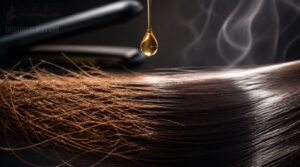
Damaged hair doesn’t fix itself. You need a real plan, not just a good conditioner. Here’s what actually rebuilds strength from the inside out.
Scheduling Regular Trims
Split ends don’t fix themselves. Trim on a schedule based on your hair type: fine hair every 6-8 weeks, medium 8-10, thick 10-12.
Pairing regular trims with smart washing habits—like the ones in this summer hair care guide for healthier, longer-lasting styles—keeps your hair looking its best between salon visits.
When you sit down for that trim, be upfront about your must-haves, budget, and styling time limits so your stylist can tailor the cut to fit your real life.
- Split ends visible? Book within two weeks
- Fine, heat-styled strands? Shorten the interval
- Curly hair? Stretch to 12-16 weeks seasonally
A professional dusting trim removes damage without sacrificing length. Skip it, and breakage travels up the shaft fast.
Deep Conditioning Treatments
Deep conditioning treatments work harder than your regular conditioner—20-30 minutes of contact time versus 2-3 minutes.
Apply to freshly shampooed, damp hair for better absorption. A warm shower cap boosts scalp temperature 5-10°F, opening the cuticle.
| Step | Detail |
|---|---|
| Contact time | 20-30 min |
| Application | Damp hair |
| Heat source | Shower cap |
| Rinse | Cool water |
Finish with a cool rinse to seal in moisture.
Bond-Building Protein Treatments
Not all repair products work the same depth. Bond-building treatments target disulfide bonds—the strongest structural bonds in hair—rather than just surface hydrogen bonds.
Olaplex No.3 uses bis-aminopropyl diglycol dimaleate to rebuild broken bonds. K18’s peptide formula penetrates the cortex for keratin chain reconstruction.
Healthy hair needs weekly treatments. Damaged hair needs 2-3 weekly sessions until strength returns and structural integrity improves.
Hydrolyzed Keratin Application
Keratin peptides work at the molecular level, slipping into gaps left by heat damage.
- Daily: mix into conditioner, apply mid-length to ends, rinse after 5-10 minutes
- Deep repair: thick application under a warm towel, 15-20 minutes
- Leave-in spray: 1% dilution with glycerin and water on damp hair
- At-home Brazilian systems: root-to-tip application, 1-1.5 hour processing
Consistency rebuilds strength over time.
Sulfate-Free Cleansing Routine
Sulfates strip more than dirt — they strip your hair’s natural lipid barrier. Switch to plant-based surfactants like coco betaine and decyl glucoside.
| Surfactant | Source | Benefit |
|---|---|---|
| Coco betaine | Coconut | Gentle lather |
| Decyl glucoside | Corn | Removes dirt |
| Saponified coconut | Coconut | No stripping |
These biodegradable formulas protect scalp microbiome balance and pigment, keeping your hair care routine gentler wash after wash.
Best Products and Routines for Hair Recovery
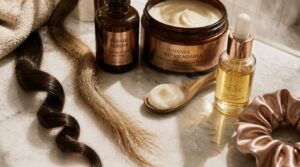
Knowing how to repair damage is one thing. Picking the right products to actually do it is another. Here’s what belongs in your recovery routine, and why each one earns its spot.
Olaplex and K18 Comparisons
Olaplex rebuilds disulfide bonds; K18 targets polypeptide chains with sh-Oligopeptide-78, reaching deeper into the cortex.
Cost per milliliter favors Olaplex ($0.30 vs. $0.75), but K18 delivers visible repair in 4 minutes—no waiting on cumulative treatments.
Fine or curly hair types respond well to K18’s lightweight bond-building technology. Thicker, color-treated strands often do better with Olaplex’s richer protein treatment for restoring structural integrity.
DIY Avocado and Coconut Masks
Mash one ripe avocado, add 2 tbsp coconut oil and 1 tbsp honey—a natural humectant that locks in moisture. Mix until creamy, no clumps.
Apply to dry strands, focus on ends, and massage into scalp to boost circulation.
Leave 20-30 minutes.
Great budget alternative between salon visits:
- Avocado + egg yolk for protein
- Coconut milk for extra slip
- Olive oil for added shine
Leave-in Oil Serums
Skip the mask days? Reach for a leave-in oil serum instead—your daily shield.
Apply to damp hair post-wash for max absorption, or dry ends before styling. Look for formulas rated up to 450°F protection.
Match to your hair type: jojoba for fine strands, argan mixtures for thick hair.
| Serum Type | Best For | Protection Level |
|---|---|---|
| Jojoba | Fine hair | Up to 400°F |
| Argan | Thick/coarse | Up to 450°F |
| Castor mixture | Damaged ends | 350-400°F |
| Hyaluronic | Dry/dehydrated | Moisture lock |
| Shea-based | Curly/coily | Frizz control |
Professional Salon Treatments
In-salon keratin treatments rebuild bond structure fast. Stylists apply hydrolyzed keratin, process 45-90 minutes, then activate with titanium irons—370°F for damaged hair, 410°F for normal strands.
Nanoplastia goes deeper without opening the cuticle, using formaldehyde-free formulas for 6-8 months of smoothness.
Wait 48-72 hours before washing. Results depend heavily on your bond-building aftercare routine.
Building a Long-Term Repair Routine
Real recovery isn’t a single product. It’s a rhythm.
Real hair recovery isn’t a single product—it’s a consistent rhythm of care
Build a weekly treatment cycle: bond-builder one day, moisture mask another, cool-water rinses always. Track porosity monthly and adjust.
- Protein treatment
- Deep conditioner
- Overnight oil wrap
- Scalp massage with sulfate-free cleanser
Keep protein-moisture balance steady, protect scalp health, and apply heat protectant daily. Consistency repairs what heat destroyed.
Frequently Asked Questions (FAQs)
How to fix damaged hair from heat styling?
Start with bond-building treatments like Olaplex No. 3 to relink broken disulfide bonds, then follow with hydrolyzed keratin to fill cuticle gaps. Add weekly DIY moisture masks, switch to sulfate-free shampoo, and always apply heat protectant before styling again.
How long does it take for hair to recover from heat styling?
Think of it like regrowing a burned forest: the ground heals fast, but tall trees take years.
Mild damage improves in weeks; severe cases need 6-12 months.
Full texture restoration, factoring shedding cycles and regrowth, often takes two to three years.
Does heat styling always damage hair?
No. Below safe temperature thresholds and matched to your hair type tolerance, heat styling won’t damage hair. Damage comes from cumulative thermal impact—repeated high-heat exposure without protectants, tool precision accuracy, or breaks between sessions.
How to prevent hair damage from heat styling?
Switch to ceramic or tourmaline tools, spray heat protectant 6-8 inches away before every session, and keep temps under 350°F. Limit styling to twice weekly, use silk pillowcases, and preserve hair elasticity while preventing breakage.
How do you fix damaged hair from heat?
Repair works like rebuilding a cracked foundation, one layer at a time.
Book regular trims, add weekly bond-building treatments, and use hydrolyzed keratin peptide masks.
Deep condition often, skip heat tools temporarily, and seal moisture with a leave-in serum.
How can I style my hair with heat without damaging it?
Section your hair, apply heat protectant spray on damp strands, let tools heat 1-2 minutes, style below 350°F, limit passes, and reapply protectant every 60-90 minutes for lasting thermal protection.
What does damaged hair from heat look like?
Run the snap test: gently stretch a strand. Damaged hair snaps instantly, feels gummy wet but straw-like dry, and shows white nodules along the shaft, dull shine loss, frizz, tangling, and a fading curl pattern.
Will hair grow back from heat damage?
Yes. Your hair follicles stay untouched by heat damage — new growth emerges healthy at roughly 5 inches monthly. Trim damaged ends, pair protein treatments with protective styling, and visible new growth appears within 3-4 months.
Can heat damage cause permanent hair loss?
Your styling tools rarely reach the follicle temperature threshold (around 70°C) needed for permanent damage. Most heat styling damage causes breakage, not true heat induced alopecia. Scalp burns from direct contact are the real risk to follicle health.
How long does heat damage take to occur?
Damage feels instant yet builds silently: protein denaturation starts within seconds above 300°F, but visible breakage often takes 2-4 weeks of repeated exposure—cumulative thermal injury, not a single pass, causes the real molecular damage.
Conclusion
Funny thing about hot tools: the ones promising shiny, salon-perfect hair are often the same ones quietly destroying it. That’s the irony behind hair damage from heat styling—it hides behind good intentions and careless habits.
Your strands aren’t fragile by nature. They’re fragile by neglect. Grab a protectant, dial back the heat, and treat your hair like the investment it is. Healthy hair isn’t luck. It’s maintenance, done right, every single time.