This site is supported by our readers. We may earn a commission, at no cost to you, if you purchase through links. This content is for general informational and educational purposes only and is not a substitute for professional medical, dermatological, or nutritional advice.
That razor burn crawling up your neck isn’t bad luck. It’s usually a chemical reaction—sulfates and synthetic fragrance stripping oils your skin needed in the first place. Swap in coconut oil or shea butter, and blades glide instead of drag.
Cosmetic labs know this: fewer, smarter ingredients often outperform a 20-item list of foam boosters. Aloe and chamomile calm skin on contact, while glycerin keeps moisture locked in long after you rinse.
These natural shaving cream tips cover the ratios, techniques, and ingredient swaps that turn a scratchy morning routine into something your skin actually thanks you for.
Table Of Contents
- Key Takeaways
- Why Choose Natural Shaving Cream
- Key Natural Ingredients for Shaving Cream
- How to Make Natural Shaving Cream
- Natural Shaving Cream Tips for Sensitive Skin
- Pairing Natural Shaving Cream With Better Technique
- Frequently Asked Questions (FAQs)
- What can I use as a natural shaving cream?
- What is the healthiest shaving cream to use?
- How do I shave my pennis properly?
- How do you make homemade shaving cream?
- What is the 3:1:1 rule for shaving cream?
- How long does homemade shaving cream last?
- Can natural shaving cream clog bathroom drains?
- Whats the best storage method for DIY cream?
- How much homemade shaving cream per shave?
- Does natural shaving cream work for legs?
- Conclusion
Key Takeaways
- Sulfates and synthetic fragrances in store-bought shaving cream strip your skin’s natural oils, causing razor burn, so swapping in natural emollients like coconut oil and shea butter helps blades glide instead of drag.
- A basic natural shaving cream recipe uses roughly 1/3 cup coconut oil, 1/3 cup shea butter, and 1/4 cup olive or jojoba oil, melted in a double boiler, chilled, then whipped for about 3 minutes for a fluffy texture.
- Key ingredients each serve a specific purpose: coconut oil forms a protective moisture barrier, shea butter boosts razor glide, aloe vera and glycerin hydrate, and vitamin E repairs micro-cuts from shaving.
- Technique matters as much as formula, so prepping skin with lukewarm water, shaving with the grain at a 30–45 degree angle, and maintaining sharp, rinsed blades all reduce irritation and improve results.
Why Choose Natural Shaving Cream
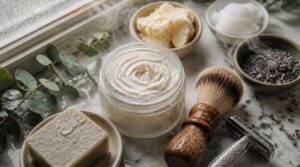
Store-bought shaving cream can leave your skin tight, irritated, or covered in ingredients you can’t pronounce. Switching to a natural version fixes more than just razor burn—it changes your skin, your wallet, and your bathroom trash. Here’s exactly what makes the switch worth it.
If you’re ready to make the switch, this guide to the best natural shaving cream alternatives for legs breaks down which ingredients actually deliver that smoother, calmer skin.
Soothes Sensitive Skin Naturally
Ever finish shaving and feel like your neck’s on fire? Sensitive skin doesn’t need harsh chemicals, it needs calm, natural support. Plant extracts like aloe vera and chamomile ease redness and heat fast.
Sensitive skin doesn’t need harsh chemicals, it needs calm, natural support like aloe vera and chamomile
Using natural ingredients for sensitive skin can help soothe inflammation and restore your skin barrier.
Here’s what a good natural formula does for you:
- Cools post-shave heat instantly
- Calms visible redness
- Prevents micro-irritation
- Offers natural anti-inflammatory relief
- Keeps skin comfortable, not stinging
That’s real irritation relief, minus the burn.
Cuts Plastic and Chemical Waste
Calming your skin is only half the win. Every disposable cartridge you skip keeps plastic out of landfills and oceans, cutting microplastic runoff at the source.
| Choice | Waste Created | Better Swap |
|---|---|---|
| Plastic cartridges | High | Safety razor |
| Aerosol cans | High | DIY recipe |
| Synthetic tubs | Moderate | Biodegradable packaging |
That’s zero waste, chemical-free shaving in action.
Saves Money Over Time
Skip the landfill guilt and your wallet wins too. Bulk buying coconut oil and shea butter drops your unit price fast, and one batch covers months. Multi-purpose ingredients double as body lotion, cutting future purchases. Skin-friendly formulas also mean fewer dermatologist visits.
- Bulk ingredients lower cost per ounce
- One recipe lasts 2-3 months
- Fewer repurchases, less shipping
- Reduced irritation-related doctor visits
- Stable, predictable grooming budget
Nourishes Skin While Shaving
Your skin isn’t just along for the ride here, it’s getting fed. Every swipe of homemade shaving cream delivers essential fatty acids, glycerin’s humectant moisture retention, and vitamin E’s antioxidant nourishment. Shea butter helps with lipid barrier repair, while squalane adds conditioning silkiness. That’s real skin hydration, not just slip.
Pairing that homemade cream with a good follow-up routine matters too, since how aftershave balm prevents skin dryness explains how to seal in that hydration long after you rinse off.
Natural skincare doesn’t just protect during the shave, it actively rebuilds afterward.
Key Natural Ingredients for Shaving Cream
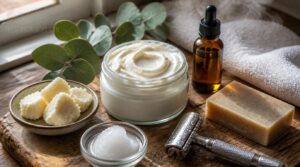
Not every ingredient in your shaving cream is pulling its weight, and that’s the problem worth fixing. Some are doing the heavy lifting for hydration and protection, while others just sit there smelling nice. Here’s what actually earns its spot in the mix.
Coconut Oil for Protective Barrier
Coconut oil is your skin’s bodyguard against moisture loss. It melts on contact, spreading into a smooth emollient layer that limits transepidermal water loss and fights post-shave tightness.
- Lauric acid brings real antimicrobial benefits
- Low water content forms a lasting protective coating
- Fatty acids fill gaps in your skin’s barrier
- Best worked into slightly damp skin first
That barrier protection is why so many natural shaving cream recipes start here.
Shea Butter for Razor Glide
Think of shea butter as the cushion between your blade and your skin. This thick, fatty texture creates instant Enhancing Blade Smoothness, cutting friction so the razor slides instead of scrapes.
Its fatty acids deliver real Moisturizing Skin Barrier support, locking hydration in while Preventing Razor Burn. Whip it into homemade shaving cream for glide that store-bought stuff can’t match.
Aloe Vera and Glycerin Benefits
Hydration is where this duo shines. Aloe Vera Gel delivers instant cooling skin relief, while glycerin’s humectant moisture retention locks water into your skin.
Together, they’re doing double duty:
- Reducing tightness after rinsing
- Preventing post-shave flaking
- Strengthening skin barriers
- Boosting skin hydration
- Adding real moisturizing power
That’s the secret behind natural shaving cream tips that actually work long-term.
Vitamin E for Post-Shave Repair
Your razor just created dozens of tiny micro-cuts you can’t even see, and that’s where Vitamin E Oil earns its keep. This fat-soluble antioxidant fights oxidative damage while supporting barrier moisture retention, so skin holds onto hydration instead of drying out.
Because it’s oil-based, it blends beautifully into moisturizing balm formulas, delivering real skin irritation relief and postshave care exactly when your skin needs backup most.
Calming Essential Oils to Add
Scent turns a good shaving cream into a ritual. Lavender brings calming, stress-melting relaxation, while Roman chamomile helps with restful sleep with its honey-floral warmth.
Try these scent combos:
- Lavender + chamomile (bedtime calm)
- Bergamot (mood-balancing mornings)
- Cedarwood (grounding, earthy evenings)
- Ylang ylang + lavender (tension relief)
Skip peppermint or citrus oils—they’re often too irritating for sensitive, freshly-shaved skin.
How to Make Natural Shaving Cream
Ready to actually make this stuff? Good news: you don’t need a lab coat or fancy equipment, just a few ingredients and about fifteen minutes. Here’s exactly what you’ll need and how to put it all together, step by step.
If you want to go deeper on technique and timing, this guide on egg masks for hair growth and thickness breaks down exactly how to get the smoothest, strongest results.
Ingredients and Measurements Needed
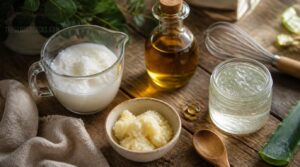
Good shaving cream is really just chemistry with better manners. Start with 1/3 cup coconut oil, 1/3 cup shea butter, and 1/4 cup olive or jojoba oil, roughly 5–20% oil by volume.
Add a spoonful of aloe vera gel for glide, and measure liquids in a proper cup, not "eyeballing it," since ratios matter more than confidence.
Melting and Whipping Steps

Once your oils are measured, set up a double boiler and melt on low heat until glossy and uniform, don’t rush this part.
Chill until solid, then whip with a hand mixer for 3 minutes. Cooling triggers crystal formation, trapping air for that fluffy texture. Keep aeration speed moderate; too fast turns things grainy instead of cloud-like.
Adding Essential Oils Safely
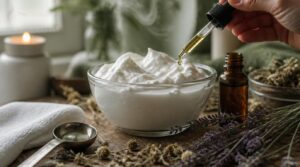
Once whipped, fold in essential oils gently to avoid deflating your fluffy base. Keep dilution below 1%, roughly 6 drops per ounce of base. Stick to gentle picks like lavender or chamomile, skip "hot" oils like cinnamon or clove.
Undiluted oils irritate skin fast. Patch test first, and stop immediately if you notice redness or burning.
Proper Storage for Longer Shelf Life
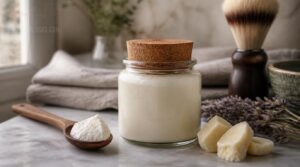
{"tool_calls": []}
Natural Shaving Cream Tips for Sensitive Skin

Sensitive skin doesn’t have to mean sitting out the natural shaving cream trend. A few smart tweaks make all the difference between soothing your face and setting it on fire. Here’s what to check for before that new batch touches your skin.
Patch Testing New Ingredients
Skip a step here and you might end up looking like a lobster. Dab diluted product on your inner wrist, leave it undisturbed, and wait a full 24 hours—delayed reactions often hide until then.
Watch for redness signaling irritation prevention gone wrong. This simple habit protects your skin barrier and keeps your natural skincare routine truly nontoxic.
Choosing Fragrance-Free Formulas
Fragrance free" and "unscented" sound like twins, but they’re not. Unscented can still hide odor-masking ingredients, while true fragrance-free means no added parfum, period. Check your ingredient list for these red flags:
- "Fragrance" or "parfum" listed anywhere
- Unfamiliar odorant names
- Vague "unscented" claims with no ingredient breakdown
For sensitive skin, verifying labels beats trusting marketing every time.
Soothing Ingredients Like Chamomile
Think of chamomile as your skin’s peacemaker. This daisy-like botanical extract brings bisabolol and chamazulene, compounds shown to calm reactive skin and reduce redness after shaving.
Add a few drops to your whipped shaving cream, and you’re supporting your skin barrier while it settles post-razor. It’s a classic among skin-soothing herbs, pairing beautifully with plant-based skincare recipes you’re already mixing at home.
Ingredients to Avoid Irritation
Once you know what soothes your skin, know what wrecks it. Sulfates strip natural oils, leaving skin raw and reactive. Parabens and synthetic fragrance? Common allergy triggers, especially for sensitive types. Skip harsh acids too—they disrupt your skin barrier fast.
Read labels like a detective. Chemical-free shaving means fewer surprises, less redness, and a smoother ride every time you shave.
Pairing Natural Shaving Cream With Better Technique
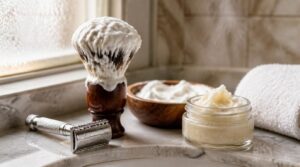
Great shaving cream can only do so much on its own. Pair it with the right moves and tools, and you’ll notice the difference fast. Here’s what actually makes a shave smoother, safer, and easier on your skin.
Prepping Skin With Warm Water
Here’s the truth: your razor works better on wet, warm skin than dry, cold skin, every time.
The best water temperature means lukewarm, not scalding—hot water strips oils and dries you out. Splash your face for 30 seconds before lathering.
This softens facial hair, reduces skin friction, and helps your natural shaving cream glide instead of drag. Result? Better hydration, less razor burn, smoother skin.
Shaving With The Grain
Your cheeks might grow hair straight down, while your neck twists sideways or up—one face, multiple grain directions. That’s why mapping your growth pattern matters so much before you ever touch metal to skin.
Run a finger over your stubble and feel which way it "pulls." Follow that path, keep your razor angle steady between 30 and 45 degrees, and let your natural shaving cream do the lubricating work.
- Map each zone separately—cheeks, jaw, and neck rarely match
- Hold a shallow angle for cleaner, single-pass cuts
- Limit repasses—fewer strokes means less irritation
- Keep blades sharp to avoid tugging or skipped hairs
Using a Safety Razor and Brush
A safety razor and a boar bristle brush turn shaving into a craft, not a chore. Load the brush on your soap, swirl until lather thickens, then apply with light, circular strokes.
| Tool | Job | Quick Tip |
|---|---|---|
| Brush | Loads lather | Swirl 20–30 seconds |
| Razor | Cuts hair | Hold at 30 degrees |
| Soap | Builds cushion | Add water gradually |
Keep strokes short, angle steady, and let the lather do the work.
Maintaining Blades for Clean Shaves
A sharp blade only stays sharp if you treat it right. Rinse after every stroke with warm water, never blow on it (that just adds moisture and grime). Blot dry, then air-dry upright to fight rust.
Brush out trapped hair weekly, oil lightly for storage, and swap blades at the first tug. That’s shaving naturally, without irritation.
Frequently Asked Questions (FAQs)
What can I use as a natural shaving cream?
Your kitchen already holds what you need. Whip coconut oil and shea butter together, smooth on aloe vera gel, or massage coconut oil straight onto damp skin—plant oils give razors serious glide without a single synthetic ingredient.
What is the healthiest shaving cream to use?
Your healthiest pick is an irritant-free, alcohol-free formula rich in glycerin and shea butter for slip and cushion. These humectant, chemical-free ingredients minimize mechanical irritation, keeping shaves gentle, nourishing, and truly skin-friendly, whether store-bought or homemade.
How do I shave my pennis properly?
One nick down there and you’ll rethink everything. Warm water first, then map hair growth, shave with the grain using short strokes, keep skin taut, and rinse the safety razor often to reduce irritation.
How do you make homemade shaving cream?
Melt coconut oil and shea butter in a double boiler, cool, then whip until fluffy. Add castile soap for lather, aloe for slip, and custom essential oils last for scent, once cooled.
What is the 3:1:1 rule for shaving cream?
Picture packing your DIY shea butter mixture for a flight, only to have TSA toss it. This "rule" actually means TSA’s 3-1-1 policy: containers under 4 oz, one quart bag, one per passenger—homemade or store-bought shaving cream included.
How long does homemade shaving cream last?
Stored cool and dry with a tight lid, your batch stays fresh six to twelve months.
Skip the water splashes near the jar—wet fingers and humidity invite microbial growth fast, turning that creamy texture watery, grainy, or downright off long before its time.
Can natural shaving cream clog bathroom drains?
Like a Victorian pipe fitter’s nightmare, yes: oily residue buildup from coconut oil and shea butter can harden in pipes. Use sparingly, rinse with hot water, and dispose of excess before it hardens into stubborn, hair-tangled clogs.
Whats the best storage method for DIY cream?
An airtight glass jar in the fridge’s back, away from the door, keeps ingredients from separating. Cold, sealed storage slows microbial growth and oxidation. For longer stretches, freeze portioned cubes—thaw only what you need.
How much homemade shaving cream per shave?
Half a teaspoon (about 5 milliliters) is your sweet spot—a thin layer, not a thick coat. That single tub yields roughly 83 shaves, so DIY shaving cream stretches further than expected, especially with one pass over two.
Does natural shaving cream work for legs?
Yes, it works great on legs. Coconut oil and shea butter boost glide, cut friction, and lock in moisture, so you get smoother skin with less tugging, fewer nicks, and way less irritation than store-bought foam ever gave you.
Conclusion
Picture your razor gliding through whipped shea and coconut oil like a warm knife through butter, no drag, no burn, just smooth skin left behind.
That’s the real payoff of natural shaving cream tips: fewer ingredients, better results, skin that thanks you instead of stinging you.
Melt it, whip it, store it right, and every shave becomes a small ritual of care.
Your neck won’t look like a lobster again.
Smooth skin isn’t luck.
It’s chemistry, done right.