This site is supported by our readers. We may earn a commission, at no cost to you, if you purchase through links. This content is for general informational and educational purposes only and is not a substitute for professional medical, dermatological, or nutritional advice.

Your hair is thinning, and the sheer volume of treatment options flooding your search results isn’t helping. Between prescription drugs, over-the-counter foams, natural serums, and laser devices, it’s tough to separate marketing hype from treatments that deliver real results.
The good news: decades of clinical research have pinpointed which ingredients genuinely regrow hair and which ones are overpriced placebos. But here’s the catch—what works for one person’s hair loss might fail for another’s, depending on the root cause and your biology.
That’s why we’ve reviewed seven leading treatments, comparing their active ingredients, clinical evidence, side effects, and real-world performance so you can choose the option that matches your specific situation.
Table Of Contents
- Key Takeaways
- Common Causes of Hair Loss
- Key Ingredients in Hair Loss Treatments
- Top 7 Hair Loss Treatments Reviewed
- 1. NutraM Hair Serum DHT Blocker
- 2. Keranique Hair Regrowth Treatment For Women
- 3. Hers Minoxidil Hair Regrowth Treatment Solution
- 4. BosleyMD Minoxidil Hair Regrowth Treatment Men
- 5. Hers Minoxidil Foam Hair Regrowth Treatment
- 6. Keeps Minoxidil Hair Regrowth Treatment Men
- 7. Rogaine Mens Hair Regrowth Foam
- Evaluating Treatment Effectiveness and Results
- Side Effects and Safety Considerations
- Frequently Asked Questions (FAQs)
- Which hair loss treatment works best?
- Which is the best treatment for hair fall?
- What is the best permanent treatment for hair loss?
- Can pregnant women use hair regrowth treatments?
- What causes hair loss after COVID recovery?
- Are natural oils effective for hair growth?
- How much hair shedding is considered normal?
- Do hair growth supplements actually work effectively?
- How much do hair loss treatments typically cost?
- Can hair loss treatments work for receding hairlines?
- Conclusion
Key Takeaways
- Minoxidil (2-5% concentration) and finasteride are the only FDA-approved treatments with decades of clinical evidence showing real hair regrowth, though results take 3-6 months and stop working once you quit using them.
- Your hair loss cause matters more than the product—genetic thinning responds to DHT blockers, while nutritional deficiencies need supplements, and stress-related shedding often resolves on its own without treatment.
- Higher concentrations work better but bring more side effects: 5% minoxidil delivers 45% more regrowth than 2% formulas, while finasteride’s 2-4% sexual side effect rate keeps some men from trying it.
- Combination therapy beats single treatments in clinical trials, and starting early gives you the best shot at regrowth since severely miniaturized follicles won’t respond to topical treatments alone.
Common Causes of Hair Loss
Hair loss doesn’t happen in a vacuum—there’s always a reason behind it. Whether it’s something you inherited from your parents or a result of what’s happening in your body right now, understanding the cause is the first step toward finding a solution.
Let’s break down the most common culprits so you know what you’re dealing with.
Genetic Factors and Family History
Your DNA plays a starring role in hair loss. Around 80% of male pattern baldness risk comes from genetic factors, and if your father is bald, you’re roughly five times more likely to follow suit. Here’s what’s inherited:
- Heritability estimates show androgenetic alopecia runs strongly in families
- Genetic loci over 200 variants shape follicle sensitivity to hormones
- Familial clustering appears in non-androgenetic alopecias like alopecia areata too
However, you can still modify your fate because medical and surgical approaches can help overcome hair loss.
Hormonal Changes and Imbalances
Beyond genes, your hormones often pull the strings. Androgenetic alopecia affects up to 50% of adults and rises with age—local DHT sensitivity triggers follicle miniaturization even when serum levels stay normal.
Postpartum shedding peaks around three months after delivery, when estrogen crashes and up to 30% of hairs shift to telogen.
Thyroid disorders, PCOS impact, and stress hormones like cortisol can all worsen hair loss or delay recovery. This condition, known as androgenetic alopecia (AGA), is a genetic condition.
Nutritional Deficiencies (Iron, Biotin, Etc.)
What you eat—or don’t—matters more than you might think. Iron and ferritin deficits often trigger telogen effluvium, especially in women under 45. Biotin supplementation helps some patients, though deficiency isn’t universal. Zinc deficiency and low vitamin D levels also correlate with thinning hair. Diet and hair growth are linked, so consider micronutrient testing if shedding persists.
- Iron stores drop before anemia shows, making ferritin a useful early marker
- Biotin improved shedding in 23% of deficient patients after three months
- Zinc above 10 µmol/L predicted better regrowth in 88% of responders
Stress, Illness, and Medications
Beyond diet, your body’s stress response and health history shape your hair’s fate. Elevated cortisol from chronic stress can lock follicles in a resting phase, triggering stress-induced alopecia.
Similarly, protective styling myths — like those explored in this guide on whether braids actually promote hair growth — show how stress on the scalp and follicles can be just as misleading as cortisol’s grip on the hair cycle.
Severe illness often leads to telogen effluvium about three months later—illness-related shedding that’s usually temporary. Medications like SSRIs and chemotherapy also cause hair loss, though chemotherapy regrowth generally completes within six months.
Autoimmune hair loss from alopecia areata affects roughly 2% of people worldwide.
Hair Styling Practices and Product Damage
Heat styling with hair dryers and curling irons damages over 89% of users who blow-dry or straighten regularly. Chemical relaxers triggered hair loss in 95% of one outbreak’s victims. Tight weaves and braids cause traction alopecia in roughly one-third of women.
Sulfates in hair products strip protective oils, while heat plus styling products generates airborne emissions—more than 10 billion nanoparticles per session.
Key Ingredients in Hair Loss Treatments
Not all hair loss treatments are created equal, and the ingredients inside make all the difference. Some ingredients have solid research backing them up, while others rely more on tradition or marketing claims.
Let’s look at what actually works and what the science says about each option.
Minoxidil and Its Effectiveness

Minoxidil stands as the only FDA-approved ingredient proven to reverse hair loss, making it central to most hair loss treatment reviews. Topical efficacy increases with concentration—5% solutions show 45% greater regrowth than 2% formulations.
Here’s what matters for hair loss treatment effectiveness:
- Time course: You’ll see results in 3–6 months with consistent use
- Oral efficacy: Low-dose oral minoxidil matches topical treatments for hair growth
- Adverse effects: Scalp irritation and unwanted hair growth occur occasionally
Finasteride and DHT Blockers

Finasteride is a preferred treatment for androgenetic alopecia, reducing DHT by up to 70% and increasing hair count by approximately 24% over the long term. Topical finasteride offers similar efficacy with fewer systemic effects. Dutasteride, on the other hand, reduces DHT by over 90% and has been shown to outperform finasteride in head-to-head trials.
| Treatment | DHT Reduction | Sexual Side Effects |
|---|---|---|
| Oral Finasteride | 60–70% | 2–4% |
| Topical Finasteride | 50–70% (scalp) | 1–2% |
| Dutasteride | >90% | Similar to finasteride |
| Placebo | None | Baseline |
Post-finasteride syndrome, characterized by persistent sexual dysfunction and mood changes, affects a small subset of individuals even after discontinuation of the medication.
Natural Ingredients (Saw Palmetto, Biotin, Redensyl)

Looking for natural alternatives to pharmaceuticals? Saw palmetto, biotin, and Redensyl are popular hair growth supplements, but the evidence varies:
- Saw Palmetto DHT: Reduces DHT by about 30%, with 83% of users seeing improved density in seven studies—though individual response rates ranged from just 38% to 60%.
- Biotin Efficacy: Works only if you’re deficient; no controlled trials show benefit in healthy individuals.
- Redensyl Results: Increased hair growth rate by 47% and thickness by 81% at 120 days in recent trials, making it a promising ingredient in hair loss product reviews.
Supplement synergies matter—combining saw palmetto with 5% minoxidil boosted hair counts by an additional 15% compared to either hair loss remedy alone.
Low-Level Laser Therapy for Hair Regrowth

Red light therapy sounds futuristic, but low-level laser therapy has solid evidence behind it. FDA-cleared laser combs and LED caps deliver 630–660 nm wavelengths that increase hair density by about 15% at 24 weeks in controlled trials—comparable to topical minoxidil.
LLLT protocols generally involve 18–25 minutes, three times weekly. Combination therapies pairing red light with minoxidil show even better patient outcomes, with minimal side effects reported.
Top 7 Hair Loss Treatments Reviewed
Now that you know what to look for in a product, let’s talk about what’s actually available.
I’ve reviewed seven treatments that show up consistently in my practice and in clinical research. These options range from prescription-strength formulas to over-the-counter solutions, each with different delivery methods and target users.
1. NutraM Hair Serum DHT Blocker
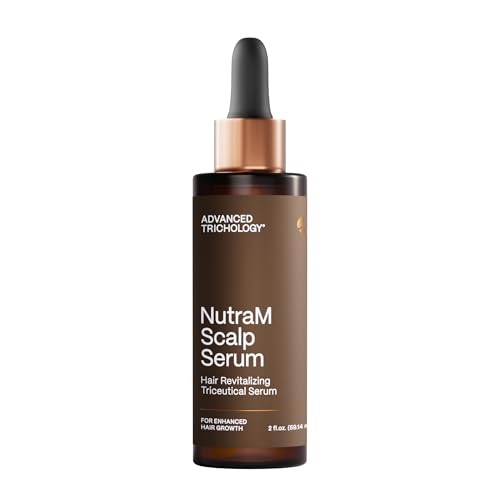
NutraM Hair Serum DHT Blocker takes a different path than prescription options—it’s a topical melatonin formula marketed to block DHT locally on your scalp. The application protocol is straightforward: you apply about 1 ml nightly to thinning areas.
While the brand’s efficacy claims mention clinical development and improved hair density, full peer-reviewed data aren’t publicly available. Its safety profile appears reasonable, with occasional scalp flushing reported.
If you’re exploring hair growth products beyond minoxidil, this scalp serum offers a botanical approach to hair thinning worth considering.
Best For: People looking for a non-prescription, natural alternative to address hormonal hair thinning with a topical DHT-blocking serum they can use at home.
- Uses topical melatonin and herbal extracts instead of oral medications, avoiding systemic hormone exposure
- Simple once-daily application that absorbs quickly without leaving hair greasy or oily
- Backed by two decades of use in trichology clinics and positioned as part of a comprehensive hair-loss system
- No publicly available peer-reviewed clinical data specific to NutraM’s formula to verify efficacy claims
- Some users report unpleasant smell, scalp irritation, redness, or increased shedding during use
- Contains alcohol which may cause burning or reactions in people with sensitive skin or chemical sensitivities
2. Keranique Hair Regrowth Treatment For Women
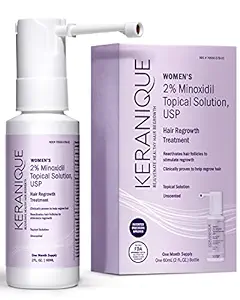
Unlike botanical alternatives, Keranique Hair Regrowth Treatment for Women delivers 2% minoxidil—the FDA-approved concentration for female androgenetic alopecia. You’ll apply 1 ml twice daily using the precision sprayer, targeting areas of hair thinning along your part line.
Clinical data show 19% of women achieve moderate hair regrowth after 8 months of treatment duration, with another 40% seeing minimal improvement. User reviews consistently mention scalp irritation and initial shedding before new hair growth appears. Expect visible results around month four if you’re a responder.
Best For: Women with gradual thinning on the crown or top of the scalp who want an FDA-approved treatment and can commit to twice-daily application for at least four months.
- Contains 2% minoxidil, the only FDA-approved ingredient clinically proven to regrow hair in women with androgenetic alopecia
- Precision spray applicator makes it easy to target specific thinning areas without mess or waste
- Clinical studies show 19% of users achieve moderate regrowth and 40% see minimal improvement after 8 months of consistent use
- Common side effects include scalp irritation, itching, dryness, and temporary increased shedding in the first few weeks
- Results vary widely—some users report no regrowth at all, and you won’t know if you’re a responder until month four
- Requires lifelong twice-daily use to maintain any regrowth, with hair loss returning within months if you stop treatment
3. Hers Minoxidil Hair Regrowth Treatment Solution

Hers delivers the same 2% minoxidil concentration in a dropper-bottle solution rather than a spray. You’ll apply 1 ml to thinning areas twice daily—the routine remains identical to Keranique, but the application method differs.
Clinical trials report 19% moderate and 40% minimal hair regrowth at 8 months, matching other 2% formulations. User reviews mention scalp dryness and occasional facial hair growth as trade-offs.
Plan for 3–4 months before visible improvement, and remember: stopping treatment reverses your gains.
Best For: Women with mild to moderate pattern hair loss who prefer a precise dropper application and are comfortable with a twice-daily routine that takes several months to show results.
- Clinically proven 2% minoxidil formula with 19% of users seeing moderate regrowth and 40% seeing minimal regrowth after 8 months
- Dropper bottle allows targeted application directly to thinning areas without overspray or waste
- FDA-approved over-the-counter treatment that’s widely available through major retailers and online
- Common side effects include scalp dryness, irritation, and potential unwanted facial hair growth
- Requires 3–4 months of consistent twice-daily use before visible improvement, with full results taking 6–8 months
- Hair loss resumes if you stop treatment, meaning you’re committed to ongoing daily use indefinitely
4. BosleyMD Minoxidil Hair Regrowth Treatment Men
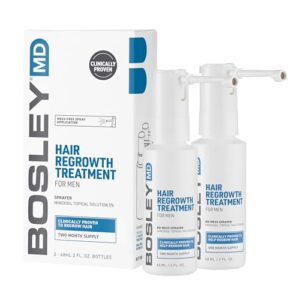
BosleyMD steps up the minoxidil concentration to 5%—approved exclusively for men with androgenetic alopecia. You’ll spray it directly onto a dry scalp twice daily, letting the higher dose reactivate dormant follicles.
Clinical data show 62.8% of men rate 5% minoxidil effective or very effective after 4 months, and about 67% see a smaller balding area. Expect visible results around 16 weeks, though some users report dripping during application. Like all minoxidil treatments, stopping reverses your progress within months.
Best For: Men with hereditary hair loss who want a clinically proven, FDA-approved treatment and don’t mind committing to twice-daily application for at least 4 months to see results.
- Higher 5% minoxidil concentration delivers 45% more regrowth than 2% formulas, with nearly two-thirds of men seeing real improvement after 4 months
- No-mess sprayer makes application easier than foam or dropper versions, though some dripping can still occur
- Unscented liquid won’t interfere with other hair products or daily grooming routines
- Requires permanent twice-daily use—stop applying and you’ll lose your new hair within 2–3 months
- Application design isn’t perfect; some users report the liquid streams or drips instead of staying where you spray it
- No returns allowed, so you’re committed once you open the bottle
5. Hers Minoxidil Foam Hair Regrowth Treatment
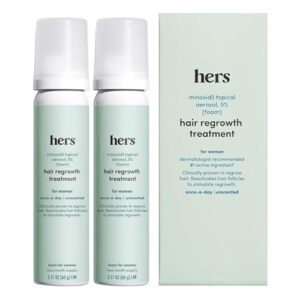
Women facing thinning hair often prefer foam over liquid—it’s less messy and dries quickly. Hers delivers 5% minoxidil in a once-daily foam that clinical studies show performs as well as twice-daily 2% solution, with fewer complaints about scalp irritation or itching.
You’ll apply half a capful to a dry scalp and wait 30 minutes before lying down. Most users notice regrowth around 3 to 6 months, though some report stiff hair texture or unwanted facial hair. Stopping reverses your gains, so daily use becomes routine.
Best For: Women with hereditary hair thinning who want a once-daily foam that’s clinically proven and less irritating than liquid minoxidil, and who can commit to 3–6 months of daily use.
- Works as well as twice-daily 2% solution with just once-daily application, and studies show less scalp itching and irritation compared to liquid formulas.
- Quick-drying, mess-free foam that won’t interfere with styling or leave your hair feeling greasy.
- Clinically backed 5% minoxidil formula that can deliver visible regrowth in 3–6 months for women with female pattern hair loss.
- Can make hair feel stiff, crunchy, or leave residue that some users describe as a “dirty” texture after application.
- May cause unwanted facial hair growth or scalp irritation in some users, requiring discontinuation.
- Requires daily use indefinitely to maintain results—stopping brings hair loss back to baseline, and some reviews mention the canister doesn’t last as long as expected.
6. Keeps Minoxidil Hair Regrowth Treatment Men
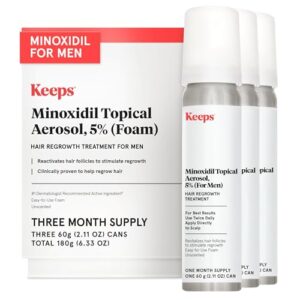
Keeps packages 5% minoxidil foam in a monthly subscription that starts around $10 to $15, reflecting the reality that hair loss treatment isn’t a one-time fix—you’re in it for the long haul.
Twice-daily application to your crown can trigger visible hair growth after two to four months, though minoxidil effectiveness peaks near 12 months in clinical trials.
Side effects like scalp itching occur more often at 5% strength than lower doses. Stop using it, and you’ll lose the regrowth within months, so long-term use becomes part of your routine.
Best For: Men with thinning hair at the crown who are willing to commit to twice-daily application and long-term subscription treatment to see and maintain results.
- Clinically proven 5% minoxidil formula that can produce visible hair regrowth within 2-4 months and stronger effects by 12 months of consistent use
- Lightweight foam format applies easily and absorbs quickly without the mess of traditional liquid solutions
- Affordable subscription pricing starting around $10-15 per month makes it accessible compared to other hair loss treatments
- Higher rate of scalp itching and irritation compared to lower-strength formulas, with some users experiencing rashes or headaches
- Requires indefinite twice-daily use to maintain any regrowth—stopping treatment leads to hair loss within months
- Only effective for vertex (crown) thinning, not frontal baldness or receding hairlines, limiting who can benefit
7. Rogaine Mens Hair Regrowth Foam
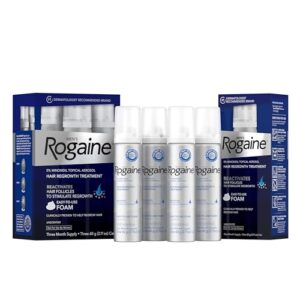
Rogaine’s name recognition stems from decades of clinical validation: its 5% minoxidil foam formulation increased hair count substantially above placebo in 16-week trials, with gains maintained through 12 months of continued use.
You’ll pay roughly $17 monthly for a three-month supply, nearly double generic alternatives that match efficacy in head-to-head studies.
Scalp irritation stays mild for most users, but expect four months before visible hair growth emerges—and indefinite use to preserve results, since stopping minoxidil triggers shedding within weeks.
Best For: Men with mild to moderate hereditary hair loss on the crown who are willing to commit to twice-daily application and ongoing costs for sustained results.
- Clinically proven to increase hair count significantly over placebo, with gains maintained through a year of continued use
- Foam formulation causes less scalp irritation than liquid minoxidil solutions while delivering the higher 5% concentration shown to outperform 2% by 45%
- Easy twice-daily application fits into most routines, and the unscented foam dries quickly without the mess of topical solutions
- Costs about $17 monthly for branded Rogaine versus $11 for generics that showed equivalent efficacy in 24-week head-to-head trials
- Requires at least four months before visible regrowth appears, and stopping treatment triggers rapid hair loss within weeks
- Works best for younger men with recent hair loss on the crown—less effective for advanced balding or frontal hairline recession
Evaluating Treatment Effectiveness and Results

You want to know if these treatments actually work, and the answer isn’t always straightforward. Results depend on the type of hair loss you have, how consistently you use the product, and how long you stick with it.
Let’s break down what the research shows, how long you’ll wait for results, and what realistic outcomes look like for different situations.
Clinical Studies and Research Outcomes
Rigorous research shapes what actually works for hair loss. Randomized controlled trials show that 5% minoxidil increased hair count by roughly 18 hairs/cm² at 24 weeks—far more than placebo. Finasteride results showed men gained about 86 hairs in targeted areas after 12 months, while placebo groups lost hair.
JAK inhibitors and topical dutasteride are proving effective in double-blind studies. Saw palmetto trials document modest gains, though finasteride remains better.
Timeframe for Noticeable Hair Regrowth
You’ll generally see reduced shedding with topical Minoxidil by weeks 8 to 12, with fine regrowth appearing around month 3. Finasteride onset takes 3 to 4 months before noticeable changes emerge. LLLT results show measurable gains by week 17. Combination therapy often shortens the wait—some patients notice changes earlier.
Perceived changes lag behind what instruments detect, so tracking hair growth with photos at 3, 6, and 12 months helps you evaluate hair growth objectively.
Long-Term Use and Maintenance
Most hair loss treatments demand ongoing commitment—stopping usually means losing your gains within months. Minoxidil dependence is real: studies show roughly 60% of users see relapse within a year of quitting. Finasteride durability holds up over a decade if you stick with it.
Adherence challenges derail many patients—fewer than 12% maintain treatment past year one. Combination therapies and relapse prevention strategies help sustain hair loss treatment benefits long-term.
Managing Expectations Based on Hair Type and Cause
Your hair type and what caused your loss shape what you can realistically expect. Androgenetic alopecia plateaus after a year on minoxidil, while acute telogen effluvium resolves in six months once triggers vanish. Traction alopecia caught early reverses within months—wait too long and scarring blocks regrowth potential.
Textured hair needs foam formulations to dodge breakage that masks treatment performance. Severity predictors matter: established thinning responds less than early cases, so realistic timelines hinge on matching hair loss causes to evidence-based regrowth windows.
Side Effects and Safety Considerations

Every hair loss treatment comes with its own risk profile, and knowing what to watch for keeps you safe. Some side effects are mild and manageable, while others require immediate medical attention.
Here’s what you need to know about staying protected while treating your hair loss.
Common Side Effects of Topical Treatments
When you’re applying topical hair loss treatments like Minoxidil, you should know what to watch for. Most people tolerate these products well, but some experience bothersome reactions:
- Scalp irritation affects roughly 14% of users—itching, redness, or flaking that makes you want to scratch
- Hypertrichosis (unwanted facial hair growth) appears in about 12% of women using stronger formulations
- Cardiovascular effects like dizziness or chest discomfort occur rarely but need immediate attention
Foam versions generally cause fewer problems than alcohol-based solutions.
Oral Medication Risks and Warnings
Prescription hair loss treatments like finasteride carry more serious warnings than topical options. Sexual side-effects—reduced libido and erectile dysfunction—occur in about 2% to 4% of men, though some report persistent problems even after stopping.
Finasteride’s reproductive effects include lowered sperm counts, and oncologic concerns exist around high-grade prostate tumors.
Oral minoxidil poses cardiovascular risks, including fluid retention and heart rate changes, especially with liver impairment.
Interactions With Other Health Conditions
Beyond direct side effects, hair loss medications can interact with your underlying health. If you have autoimmune conditions like thyroid disease or vitiligo, alopecia may signal broader immune dysregulation.
Men with early-onset hair loss face higher metabolic syndrome and cardiovascular risks.
Cancer survivors dealing with chemotherapy-induced hair loss often experience mental health challenges that complicate treatment choices, requiring careful coordination with your healthcare team.
When to Consult a Dermatologist
Sometimes over-the-counter treatments aren’t enough. You should schedule a hair loss consultation if you notice sudden hair loss exceeding 100 hairs daily, scarring signs like burning or scaling patches, or diagnostic uncertainty about what’s causing your thinning. Pediatric hair loss always warrants evaluation.
Even without red flags, declining quality of life from progressive shedding justifies a dermatologist visit for proper hair loss diagnosis and individualized care.
Frequently Asked Questions (FAQs)
Which hair loss treatment works best?
Minoxidil 5% and finasteride lead hair loss treatment options, backed by decades of clinical data. DHT blockade with finasteride shows greater long-term durability, while topical minoxidil brands offer safer profiles with measurable regrowth within months.
Which is the best treatment for hair fall?
For androgenetic alopecia, combination therapies using DHT-blockers plus minoxidil outperform single-agent regimens in clinical trials.
Telogen effluvium responds best when you correct nutritional deficiencies, making etiology essential to choosing hair loss treatment options.
What is the best permanent treatment for hair loss?
Hair transplantation offers the most permanent hair loss solution for androgenetic alopecia, with graft survival rates of 90–95%. Transplanted follicles persist lifelong, unlike medical treatments requiring continuous use to maintain results.
Can pregnant women use hair regrowth treatments?
Better safe than sorry—most hair regrowth treatments carry fetal safety concerns. Minoxidil risks and finasteride dangers make these off-limits during pregnancy. Postpartum shedding usually resolves naturally without medical intervention.
What causes hair loss after COVID recovery?
After COVID recovery, your body faces multiple stressors triggering hair loss. Immune response inflammation disrupts follicle cycles, while microcirculation impact reduces scalp oxygen.
Additionally, nutritional deficiencies and stress management challenges further compound the shedding.
Are natural oils effective for hair growth?
Yes, certain natural oils show promise. Rosemary oil matched minoxidil in one trial, and peppermint benefits follicle depth in animal studies.
Coconut penetration strengthens shafts, while castor properties support scalp health—though evidence limits remain significant.
How much hair shedding is considered normal?
Shedding fifty to one hundred strands daily is typical. Seasonal shedding variations and postpartum hair loss temporarily increase that number.
Visual shedding indicators like widening part lines warrant evaluation when individual shedding factors persist beyond normal patterns.
Do hair growth supplements actually work effectively?
Supplements like Nutrafol and Biotin show mixed results. Clinical evidence indicates specific formulations for telogen effluvium and early-stage thinning, but ingredient quality and market regulation vary widely, affecting supplement efficacy and long-term safety outcomes.
How much do hair loss treatments typically cost?
Think of hair loss treatments like investments in your scalp’s future. Minoxidil costs $3–45 monthly, finasteride pricing runs $5–97, LLLT expenses reach $600–3,000 upfront, while transplant costs span $7,400–25,000 depending on technique.
Can hair loss treatments work for receding hairlines?
Hair loss treatments can thicken receding hairlines when started early. Minoxidil and finasteride show frontal hairline regrowth in clinical trials, but complete restoration of late-stage recession usually requires surgical intervention rather than topical solutions alone.
Conclusion
Think of hair regrowth like planting a garden—you need the right tools, patience, and realistic expectations.
These hair loss treatment reviews show that minoxidil-based products deliver the most consistent clinical results, while DHT blockers work best for genetic thinning.
Your success depends on matching the treatment to your specific cause of hair loss. Start with evidence-backed options, give them at least four months, and consult a dermatologist if you’re not seeing progress.