This site is supported by our readers. We may earn a commission, at no cost to you, if you purchase through links. This content is for general informational and educational purposes only and is not a substitute for professional medical, dermatological, or nutritional advice.
Your legs feel like they’re on fire minutes after shaving, and the mirror shows an angry red rash spreading across your skin. That sting isn’t your imagination. Razor burn on legs happens when a blade drags against skin that’s already stripped of its natural barrier, leaving nerve endings exposed and irritated.
Most people blame dull razors, but dehydration and rushed technique play a bigger role than you’d think. The good news: relief doesn’t require guesswork. From cool compresses that calm inflammation fast to knowing when hydrocortisone actually helps, you’ll find a clear path from raw and red back to calm, healthy skin.
Table Of Contents
- Key Takeaways
- How Razor Burn Affects Legs
- Fast Razor Burn Relief
- Home Remedies for Sore Legs
- Best Products for Recovery
- Prevent Razor Burn on Legs
- Frequently Asked Questions (FAQs)
- How long do razor burns last on legs?
- What can be mistaken for razor burn?
- What cream is good for razor burn?
- Does Vaseline help razor burn on legs?
- How to get rid of razor burn on legs quickly?
- How long does razor burn on legs take to heal?
- How long does razor burn last on legs?
- Can razor burn lead to permanent scarring?
- When should you see a doctor for razor burn?
- Is razor burn contagious to other people?
- Conclusion
Key Takeaways
- Razor burn shows up as flat, diffuse redness and stinging within hours of shaving, while razor bumps form as raised, hard lesions where hair curls back into the follicle—so knowing which one you have changes how you treat it.
- Most mild razor burn clears up in 24-48 hours with quick action: a cool compress for 10-15 minutes, followed by aloe vera gel, then a fragrance-free moisturizer to rebuild your skin’s barrier.
- Prevention beats treatment every time—shave at the end of a warm shower, use a sharp blade (replaced every 5-7 shaves), and always stroke in the direction hair grows.
- See a dermatologist if you notice pus-filled bumps, fever, spreading redness after 48 hours, or irritation that lingers past a week, since these signs point to something beyond ordinary razor burn.
How Razor Burn Affects Legs

Your legs take the brunt of shaving more than almost any other area. That means knowing what’s normal, and what’s not, really matters. Here’s what to watch for on your legs, and how to tell one issue from another.
Ingrown hairs and razor burn often show up together, so it helps to walk through this guide to common leg shaving problems before assuming you know the cause.
Common Leg Symptoms
Your legs tell you fast when shaving goes wrong. Redness spreads across shaved patches, often paired with itching, burning, or a stinging sensation. Skin feels tender, sometimes raw to the touch. Mild swelling can follow too. Symptoms usually show up within hours and stand apart from razor bumps, which feel more like small, hard bristles under the skin.
Leg discomfort from shaving may be worsened by existing issues like dehydration and electrolyte imbalance.
Razor Burn Versus Razor Bumps
Not every bump on your legs is razor burn. Razor burn shows up as diffuse redness across the shaved area, while razor bumps form as individual pimple-like lesions at hair follicles.
The cause differs too: burn comes from friction and barrier damage, bumps from hair curling back into skin. Bumps also take longer to heal, often lasting weeks.
Irritation Versus Ingrown Hairs
Confusion often comes from lumping two different skin reactions together. Razor burn is straightforward irritation. Ingrown hairs happen when a cut hair curls back into the follicle, causing follicle inflammation and a hard, raised bump.
- Razor burn: flat, diffuse redness
- Ingrown hairs: raised bumps with visible hair
- Curly hair raises ingrown hair risk
- Burn comes from friction, not follicle blockage
- Bumps may need antiinflammatory care
Typical Healing Timeline
Once you know what you’re dealing with, timing becomes the next question. Most mild razor burn heals within 24 to 48 hours, especially with cool compresses and moisturizer.
| Stage | Timeframe | What Happens |
|---|---|---|
| Onset | 1–2 hours | Redness, stinging |
| Improvement | 12 hours | Less redness |
| Resolution | 2–3 days | Skin barrier repair |
| Severe cases | Up to 2–3 weeks | Extended healing |
Fast Razor Burn Relief
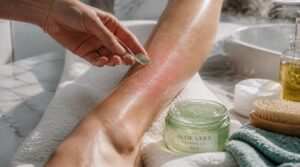
Razor burn feels worse than it looks, but relief usually starts within minutes. You don’t need anything fancy, just a few smart moves done in the right order. Here’s what actually calms your skin down fast.
Razor burn looks worse than it feels, but with the right moves, relief can start in minutes
Cool Compress Treatment
Cold works fast on angry skin. Grab a cool compress or a cold, damp washcloth and press gently for 10-15 minutes, no rubbing. Cooling constricts blood vessels, cutting redness and itching quickly.
For more tips on soothing irritated skin after hair removal, check out this guide on calming razor burn after waxing.
Skip ice-direct-to-skin; wrap it first. Recheck skin every few minutes, and stop if it turns pale or numb. Repeat through the first 24-48 hours as needed.
Aloe Vera Gel
Once the compress dries your skin, reach for aloe vera gel. It’s mostly water, roughly 99%, so it delivers instant skin hydration without heaviness.
The remaining fraction holds acemannan, a polysaccharide tied to soothing minor skin injuries.
- Cools burning fast
- Moisturizes without grease
- Calms redness
- Eases itching
- Helps healing
Apply a thin layer, 2-4 times daily.
Fragrance-Free Moisturizer
Next, lock in that hydration with a fragrance-free moisturizer. Look for ceramide lipid support to rebuild your skin barrier, plus glycerin for humectant action that pulls water in.
Squalane softens skin without clogging pores, and ethylhexylglycerin keeps the formula stable. These barrier repair formulations work best on damp skin.
Choose an alcohol-free moisturizer and apply it right after shaving to lock in hydration.
Hydrocortisone Cream
Still stinging after a day or two? Reach for 1% hydrocortisone cream, sold over the counter for razor burn and mild skin irritation.
Apply a thin layer once or twice daily for itching relief, and moisturize the area afterward. Limit use to 7-10 days; stinging past five minutes means stop.
Skip it on broken skin or fungal infections. Aloe or oatmeal work as gentler alternatives.
Avoid Shaving Temporarily
Sometimes the best treatment is doing nothing. Putting the razor down for a few days gives your skin a real Skin Recovery Break, letting shaved hairs grow past the surface instead of curling back in.
This Follicle Rest Period cuts infection risk, too, since you’re not dragging a blade over irritated, healing skin. Moisturize the area daily, and resume once redness fades completely.
Home Remedies for Sore Legs

Sore, irritated legs don’t need anything fancy to feel better. Your kitchen and bathroom cabinet likely already hold what you need. Here are five home remedies worth trying.
Oatmeal and Honey
Kitchen staples make a surprisingly effective anti-inflammatory mixture. Mix equal parts ground oatmeal and plain yogurt, then stir in a teaspoon of honey.
This creates a hydrating treatment paste:
- Apply to affected skin
- Let dry 30 minutes
- Rinse with warm water
Do this twice daily for three days. Yogurt’s probiotics support barrier repair, while oatmeal’s beta-glucan and honey’s antibacterial properties calm redness fast.
Diluted Tea Tree Oil
Want something stronger than oatmeal? Tea tree oil brings real antibacterial properties, but never apply it undiluted.
Mix 2-3 drops per tablespoon of carrier oil like coconut or almond oil. Patch test on unshaved skin first.
Apply with a cotton pad twice daily. This antiinflammatory treatment calms redness while gently skin soothing irritated legs.
Witch Hazel Application
Tea tree oil calms inflammation, but witch hazel controls redness. This natural astringent works twice daily on clean, dry skin.
Choose an alcohol-free formula to protect your skin barrier. Sensitive skin? Dilute it 1:1 with water first.
Pair with aloe vera for extra soothing. Patch test before applying to larger areas.
Cucumber Yogurt Mask
Reach for your fridge next. Mix half a cucumber with two tablespoons plain yogurt for a cucumber hydration boost paired with yogurt probiotic repair.
This natural anti-inflammatory mix cools skin fast. Apply after shaving, leave 10-15 minutes, then rinse with cool water.
- Cucumber’s 95% water content hydrates instantly
- Yogurt’s lactic acid gently exfoliates
- Combined antioxidants strengthen capillary walls
Your skin healing accelerates with regular use.
Black Tea Compress
Your pantry has another fix: black tea bags. Tannic acid in black tea reduces redness and calms irritation fast.
Brew one bag 10 minutes, discard, then re-steep in fresh water for a weak tea solution. Cool it, soak a cloth, and apply this cold compress for 20 minutes, 4-5 times daily for soothing skin healing.
Best Products for Recovery

The right products can speed up healing and calm your skin fast. Not every cream or lotion works the same way, so ingredients matter. Here’s what to look for when picking your recovery products.
Barrier Repair Creams
Your skin barrier took a beating from the blade. Look for ceramide lipid repair creams with niacinamide barrier support and hyaluronic acid hydration.
Ceramides rebuild lipids; niacinamide calms redness; hyaluronic acid pulls in water. An occlusive moisture seal (think petrolatum or dimethicone) locks it all in. Ectoin stress protection helps shield irritated skin. Apply as emollient application, twice daily, for real epidermal repair.
Soothing Shave Lotions
Once burn strikes, swap your regular shaving cream for a soothing shave lotion built for damaged skin. Look for jojoba seed oil, shea butter, and aloe vera—these calm inflammation while cutting razor drag.
- Fragrance-free formulas (avoid irritation)
- Cooling lotion benefits (soothes on contact)
- Barrier-supporting oils (jojoba, shea)
- Healing ingredient blends (aloe plus botanicals)
Massage in gently, then rinse.
Alcohol-Free Aftercare
Check labels for ethanol or denatured alcohol—these dry out irritated skin fast. Choose a fragrance-free moisturizer or alcohol-free ointment with 41% petrolatum instead.
Pat legs dry first, then apply an alcohol-free moisturizer or aftershave balm using gentle upward strokes. A barrier repair cream with aloe vera locks in moisture without stinging.
Skip the oatmeal bath here—save that soak for later relief.
Sensitive Skin Ingredients
Not every ingredient suits angry, freshly shaved skin. Look for calming, non-irritating formulas: chamomile, panthenol, and allantoin repair the skin barrier without stinging.
Aloe vera and oatmeal soothe inflammation, while diluted tea tree, witch hazel, or a cucumber yogurt mix calm redness naturally. Skip fragrances and harsh acids until your legs fully heal.
When Vaseline Helps
Sometimes the simplest jar in your bathroom cabinet works best. Vaseline creates an occlusive barrier that locks in moisture and blocks irritants.
- Locks in hydration for hours
- Speeds healing, cuts scab formation
- Prevents chafing between shave and recovery
- Works best applied post-shave, slightly damp skin
- Layers safely under aloe or hydrocortisone
Prevent Razor Burn on Legs
Treating razor burn is one thing, but stopping it before it starts is the real win. Most cases come down to a few habits in your shaving routine, not luck or genetics. Here are five simple changes that make a real difference.
Shave After Showering

Timing changes everything. Shave at the end of your bath or shower, once warm water has softened hair and skin. This eases blade glide, cuts friction, and lowers razor burn risk.
| Shower Stage | Skin Condition |
|---|---|
| Start | Dry, tight |
| Midway | Softening |
| End | Hydrated, supple |
| After | Prime for shaving |
Use Sharp Razors

A dull blade tugs at hair instead of cutting it clean, forcing your skin to take the brunt. That extra pressure causes micro-cuts and burning. If irritation does creep in after a lackluster shave, resist the urge to scrub right away—timing your post-shave exfoliation correctly gives skin a real chance to heal first.
Replace blades every 5-7 shaves. Sharp edges cut hair in one pass, protecting your skin barrier and keeping shaving technique smooth from ankle to knee.
Shave With Hair Growth

A sharp blade only helps if you use it right. Direction matters more than most people think.
Growth patterns run differently on every leg, so check yours before each stroke.
Shave with hair growth, not against it, to avoid pulling and razor burn. Mind your blade angle and keep strokes light, especially with sensitive skin—your legs will thank you.
Exfoliate Between Shaves

Direction is only half the job—buildup around hair follicles matters too. Exfoliating your skin clears dead skin cells that trap the razor and cause tugging.
Skip it right after shaving. Wait a couple of days, then use a gentle scrub or mild glycolic or salicylic acid. Over-exfoliating weakens your skin barrier, so once or twice weekly is plenty.
Pairing smart exfoliation with the right diet and sun protection can transform your results, as explored in these natural remedies for glowing skin that cover all three pillars.
Wear Loose Clothing

What you put on your legs after shaving matters as much as what you put on your skin. Choose loose cotton or bamboo fabrics—they breathe, cutting heat that worsens burning.
Skip tight jeans for 24-72 hours. Loose fits prevent friction and pressure points, while smooth seams stop scabs from tearing loose during daily movement.
Frequently Asked Questions (FAQs)
How long do razor burns last on legs?
Good things come to those who wait, and that’s true here too. Mild irritation fades within hours to two days; skin redness and itch relief follow as healing skin progresses, depending on severity and how well you moisturize.
If irritation lingers, switching to a gentler formula like the one covered in this Coty Airspun loose face powder review may help sensitive skin recover faster.
For best results without the irritation, try leaving mayo in your hair for 30 to 45 minutes, giving its nourishing fats time to work.
What can be mistaken for razor burn?
Several conditions mimic it: folliculitis (raised, pus-filled bumps), fungal rash (spreading, persistent), contact dermatitis (allergic reaction to products), ingrown hairs or razor bumps, herpes (fluid-filled blisters, recurring), and eczema flares (chronic, itchy patches returning over time).
What cream is good for razor burn?
Think of your skin as a fence after a storm — it just needs the right patch, not paint. A fragrance-free moisturizer with ceramides, aloe vera gel, or 1% hydrocortisone cream calms redness fast.
Does Vaseline help razor burn on legs?
Yes. Vaseline gives barrier protection and locks in moisture, easing stinging and dryness. Apply a thin layer post-shave for soothing irritated skin—but skip it on broken or infected skin; pair with aloe vera for faster skin healing time.
How to get rid of razor burn on legs quickly?
Start with a cool washcloth for 5-10 minutes, then apply aloe vera and let it dry. Follow with fragrance-free moisturizer, add hydrocortisone if inflamed, and skip shaving for a few days.
How long does razor burn on legs take to heal?
Most healing takes a day or two, sometimes a few hours. Keep skin moisturized and skip shaving during postshave care. If irritation lingers past a few weeks, that’s when to worry—call your dermatologist.
How long does razor burn last on legs?
Most cases fade within a few hours to a few days. Dull blades, dry shaving, or wrong-direction strokes can stretch healing longer. If irritation lingers past a few weeks, check in with a doctor.
Can razor burn lead to permanent scarring?
On its own, razor burn stays surface-level and clears without marks. But repeated irritation or infected ingrown hairs can trigger excess collagen, raising scarring risk—especially with genetic predisposition or coarse hair texture prone to deeper inflammation.
When should you see a doctor for razor burn?
Like a stubborn cold that won’t budge, some irritation needs real care. See a dermatologist if you notice warm, pus-filled bumps, fever, spreading redness past 48 hours, or symptoms lingering beyond a week.
Is razor burn contagious to other people?
No, it’s not contagious — it’s skin irritation, not infection. But shared razors and towels spread bacteria, raising skin infection risk. Practice good towel hygiene, avoid razor sharing, and watch for signs needing a topical antibiotic cream.
Conclusion
Angry skin calms the way a storm settles, slowly and then all at once.
Successful razor burn on legs treatment relies on patience, not force. Cool the skin, protect the barrier, and give irritated follicles room to heal. Skip a shave when your skin asks for one. It isn’t fighting you; it’s signaling for gentler handling. Master the basics—sharp blades, hydration, proper technique—and calm, smooth legs become your normal, not the exception.